
Our readers keep the lights on and my morning glass full of iced black tea. As an Amazon Associate, I earn from qualifying purchases.
Your air conditioner is the biggest electricity drain in your home. But a ceiling-mounted fan can pull cool air through your whole house, drop indoor temperatures by 5 to 10 degrees Fahrenheit (a measure of how much the air cools), and let you keep the AC off for weeks — all for pennies an hour. The trick is picking the right system for your home’s size and attic setup. Choosing by price alone will leave you with not enough airflow or a fan that sounds like a jet engine.
I’m Min — the founder and writer behind Gadgets Feed. This guide is built by comparing the manufacturers’ published specifications and the patterns across verified customer reviews, so you get each pick’s real strengths and trade-offs instead of marketing spin.
Let’s find the best air ventilation system for home that actually fits your house, your budget, and your tolerance for installation work.
Quick Picks
- Centric Air QA-Deluxe 5500 Whole House Fan — Top Performer
- QA-Deluxe 6500 Whole House Fan — Best Airflow
- Quietcool QC CL-4700 RF Classic Advanced Whole House Fan — Quiet Champion
- Centric Air QA-Deluxe 3300 Whole House Fan — Value Pick
- Master Flow GAF 24″ Direct Drive 4500 CFM Whole House Fan — Budget Pick
How To Choose The Best Air Ventilation System For Home
Picking a whole house fan comes down to matching three things: the fan’s airflow to your home’s size, your attic’s ability to vent that hot air, and the type of control you prefer. Here is what matters most.
Airflow Capacity (CFM) and Your Home Size
CFM stands for Cubic Feet per Minute — it measures how much air the fan pushes out of your home each minute. A good rule is you want 1 CFM for every 1 to 1.5 square feet of living space. A 1,500-square-foot home needs a fan moving 1,000 to 1,500 CFM. A 3,000-square-foot home needs 2,000 to 3,000 CFM. Too low, and the fan won’t create enough suction to cool the whole house. Too high, and it can create negative air pressure (a vacuum effect) that pulls air from unwanted places like your chimney or dryer vent.
Attic Ventilation Area (Net Free Area)
This spec beginners miss. Your fan pushes hot air into the attic. If the attic has no space for that air to escape, the fan struggles, noise increases, and attic temperatures stay high. Every whole house fan lists a required “net free attic venting” number, measured in square feet. The Quietcool QC CL-4700 RF, for example, needs 5.89 square feet. If your attic only has small gable vents (vents in the side walls) totaling 2 square feet, you will need to add more vents or choose a different fan.
Sound Level (Decibels) and Insulated Dampers
Noise is measured in decibels (dB) — a scale where every 10 dB sounds about twice as loud. Lower is better for sleeping with the fan on. A level of 37 dB — like the Quietcool QC CL-4700 RF — is around a quiet library or a soft whisper. At 51 dB, you are closer to a normal conversation, which some find fine and others find distracting. The R-5 insulated damper rating tells you how well the cover over the fan opening blocks heat when the fan is off. R-5 (a measure of thermal resistance; higher numbers mean better insulation) is standard for premium models, so less hot attic air seeps back into your rooms at night.
Quick Comparison
On smaller screens, swipe sideways to see the full table.
| Model | Best For | Airflow (CFM) | Control Type | Motor Warranty | Amazon |
|---|---|---|---|---|---|
| Centric Air QA-Deluxe 5500 | Large homes needing remote control | 5,072 CFM | 2-speed remote with timer and temp | 10 years | Amazon |
| QA-Deluxe 6500 | Maximum airflow for big houses | 5,878 CFM | Single-speed remote with timer | 10 years | Amazon |
| Quietcool QC CL-4700 RF | Quiet operation and easy DIY install | 4,415 CFM | Wireless RF 2-speed with timer | 10 years | Amazon |
| Centric Air QA-Deluxe 3300 | Smaller homes on a tight budget | 3,219 CFM | 2-speed wall switch with timer | 10 years | Amazon |
| Master Flow GAF 24″ WHFS24M | Budget entry for basic cooling | 4,500 CFM | Pull-chain 2-speed | Limited (motor only) | Amazon |
In‑Depth Reviews
1. Centric Air QA-Deluxe 5500 Whole House Fan
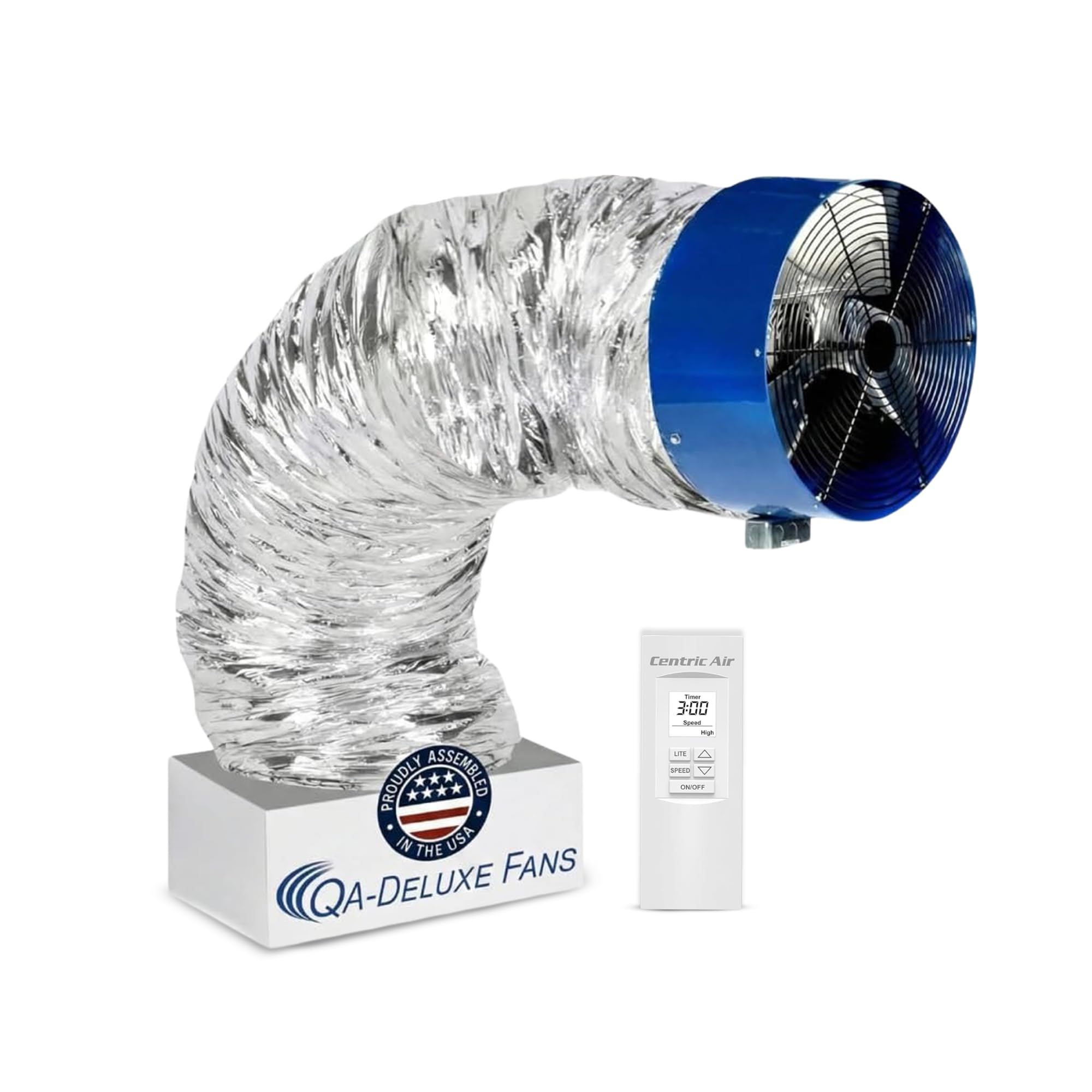
The remote-controlled powerhouse that cools a 3,400-square-foot home while staying affordable.
This fan moves 5,072 cubic feet of air per minute (CFM) — enough to cool a home up to 3,400 square feet. The wireless remote has a temperature sensor (so you see the room temp on the remote) and a timer that shuts the fan off automatically after a set period. One reviewer noted it dropped the temperature in a 1,700 sq ft home by over 10 degrees Fahrenheit in just 25 minutes. On low speed, it is quieter than the QA-Deluxe 6500. On high, it runs at 51 dB — about as loud as a normal conversation. It fits between standard 16 to 24 inch joist spacing without extra framing, unlike the Master Flow which buyers report needing modifications. You also get a 10-year motor warranty, while the Master Flow has no such coverage.
The catch shared by some reviewers: the foam dampers (the insulated covers that close when the fan is off) can rattle on windy days or when the fan shuts down — a common quirk on this Centric Air line. The auto controller uses a scrolling menu that one buyer found annoying, though the remote works fine for basic on/off and speed changes.
Why it’s great
- 5,072 CFM airflow handles large homes well
- Remote control with temperature readout and timer
- 10-year motor warranty — a sign of long-term reliability
Good to know
- Dampers can rattle in windy conditions
- On high speed, 51 dB is audible — not whisper-quiet
Best for: owners of 1,500 to 3,400 sq ft homes who want a powerful remote-controlled fan with temperature monitoring
Skip if: you need whisper-quiet overnight operation — the 51 dB on high may disturb light sleepers
2. QA-Deluxe 6500 Whole House Fan

The single-speed beast that moves 83% more air than the entry-level Centric Air 3300 — best for very large homes where raw speed matters.
With 5,878 CFM, this fan moves 83% more air than the Centric Air QA-Deluxe 3300 (3,219 CFM). It fits homes up to 4,400 square feet. The downside is simplicity: it is single-speed only — you get full power or off. An on/off remote with a timer is included. It needs about 5.5 square feet of attic ventilation, so check your existing vents before buying. One buyer in central California said it “paid for itself in 1 year” by slashing AC use. The fan housing uses acoustical ducting (sound-dampening material inside the housing) and an aluminum body to reduce vibration. But one buyer mentioned they could still sleep with it on, which suggests it is not whisper-quiet.
Build quality steps above the Master Flow: you get an R-5 insulated damper (so hot attic air does not leak in when the fan is off), rigid support brackets with rubber bushings to reduce vibration, and a 10-year motor warranty. The single-speed limitation means you cannot dial it down for quieter nights — it is full blast or nothing. The Centric Air QA-Deluxe 5500 is better if you want a low-speed option for overnight cooling.
Why it’s great
- 5,878 CFM is the highest airflow in this lineup
- R-5 insulated damper blocks attic heat transfer
- Aluminum housing and rubber bushings cut vibration
Good to know
- Single-speed only — no low-speed setting for quiet nights
- Overkill for homes under 2,500 sq ft
Best for: very large homes (up to 4,400 sq ft) where maximum cooling speed is the priority
Skip if: you want a two-speed fan for quiet nighttime operation — this is a single-speed design
3. Quietcool QC CL-4700 RF Classic Advanced Whole House Fan
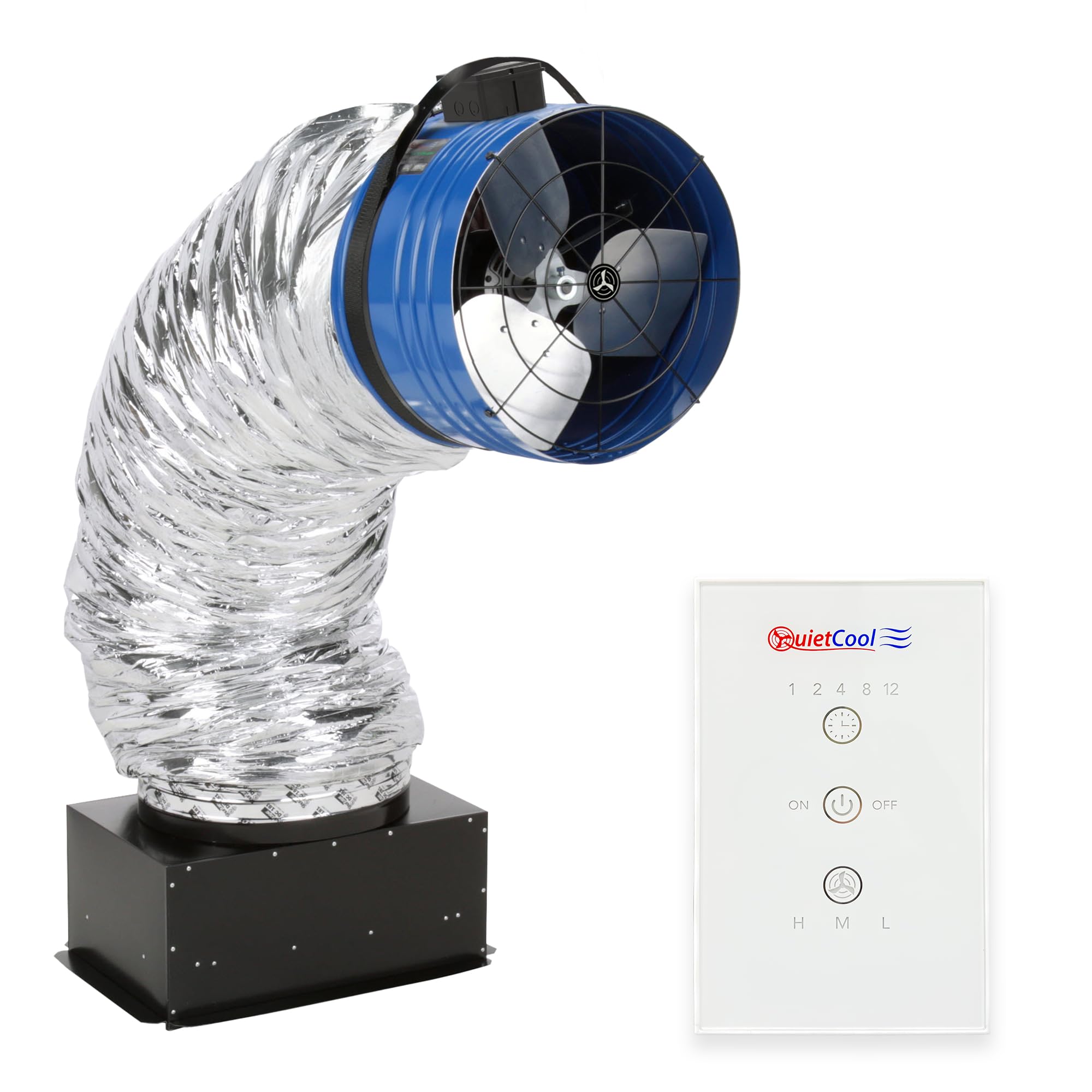
The whisper-quiet fan that owners mention runs at 37.2 dB — quieter than a typical box fan on low — ideal for 2,200 sq ft homes where noise matters most.
Noise is the number one complaint with whole house fans. Quietcool solves it with a 37.2 dB sound level. For comparison, the Centric Air QA-Deluxe 5500 runs at 51 dB on high. This fan moves 4,415 CFM on high and 3,402 CFM on low, making it ideal for homes up to 2,208 square feet. One buyer installed it in a 1,900 sq ft home in 3.5 hours and said overnight cooling kept the house in the 60s Fahrenheit all day even when outside temps hit the mid-80s. The wireless RF (radio frequency, a type of wireless signal) remote has a 12-hour countdown timer and window locks for safety, so you run it while you sleep and it turns off automatically. Unlike the Centric Air models, this one needs 5.89 sq ft of net free attic venting — a bit higher, so check your attic before buying.
The trade-off per some buyers: the clamps holding the damper doors are poorly designed — one reviewer needed duct tape to secure them. The remote must be paired with the fan before you head into the attic, which is easy to forget. Still, the low noise, easy install (no joist cutting — it fits 16 or 24 inch centers), and a 10-year warranty make this a standout for DIY owners who value quiet over raw CFM numbers.
Why it’s great
- Ultra-quiet 37.2 dB — great for sleeping
- Two-speed wireless remote with 12-hour timer
- No framing required; fits 16 or 24 inch joist spacing
Good to know
- Damper door clamps can be weak; duct tape may be needed
- Requires more attic vent area (5.89 sq ft) than some other models
Best for: homeowners who prioritize quiet operation and want an easy DIY install for homes up to 2,200 sq ft
Skip if: your attic vents are limited — this fan needs more ventilation than many other models
4. Centric Air QA-Deluxe 3300 Whole House Fan
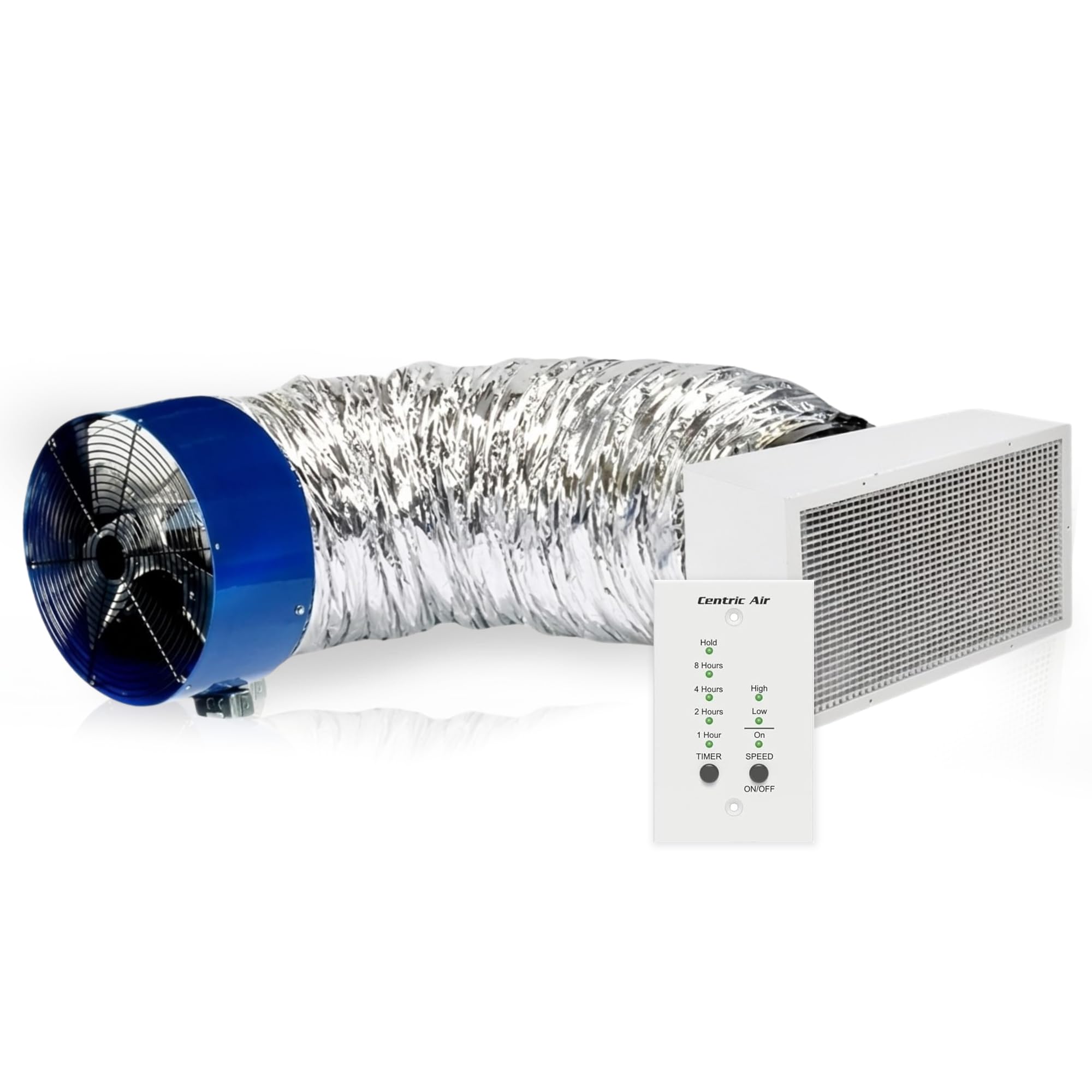
A quiet, budget-friendly entry into whole-house cooling that customers note is quieter than a box fan — for homes under 1,500 sq ft.
The QA-Deluxe 3300 moves 3,219 CFM — enough for a 1,450-square-foot two-story home or a 950-square-foot single-story home. It uses a 2-speed wall switch with a timer instead of a wireless remote, keeping the price lower than the QA-Deluxe 5500. You still get an R-5 insulated damper and a 10-year motor warranty — features you won’t find on the cheaper Master Flow. One owner reported “it’s more quiet than a box fan.” It measures 28.5 inches deep by 14 inches wide by 14 inches high (the QA-Deluxe 5500 is 28 inches deep by 14 inches wide by 14 inches high — only a 2% depth difference) and fits between 16 to 24 inch joist spacing with no framing needed.
One limitation: for a similar price, the Master Flow WHFS24M moves 4,500 CFM — 40% more air. The reason to pay more for this Centric Air is build quality. The Master Flow has significant reliability concerns (bent fan blades reported), while this one has overwhelmingly positive feedback for quiet, trouble-free operation. The 2-speed wall switch is simpler than a remote, which some buyers prefer for reliability.
Why it’s great
- Very quiet operation — quieter than a standard box fan
- R-5 insulated damper keeps attic heat out
- 10-year motor warranty at a budget-friendly price
Good to know
- 3,219 CFM is lower than some cheaper alternatives — not for large homes
- Wall switch with timer, not a wireless remote
Best for: smaller homes (under 1,500 sq ft) where quiet and reliability matter more than maximum airflow
Skip if: you need to cool a 2,000+ sq ft home — the 3,219 CFM will not be enough
5. Master Flow GAF 24″ Direct Drive 4500 CFM Whole House Fan
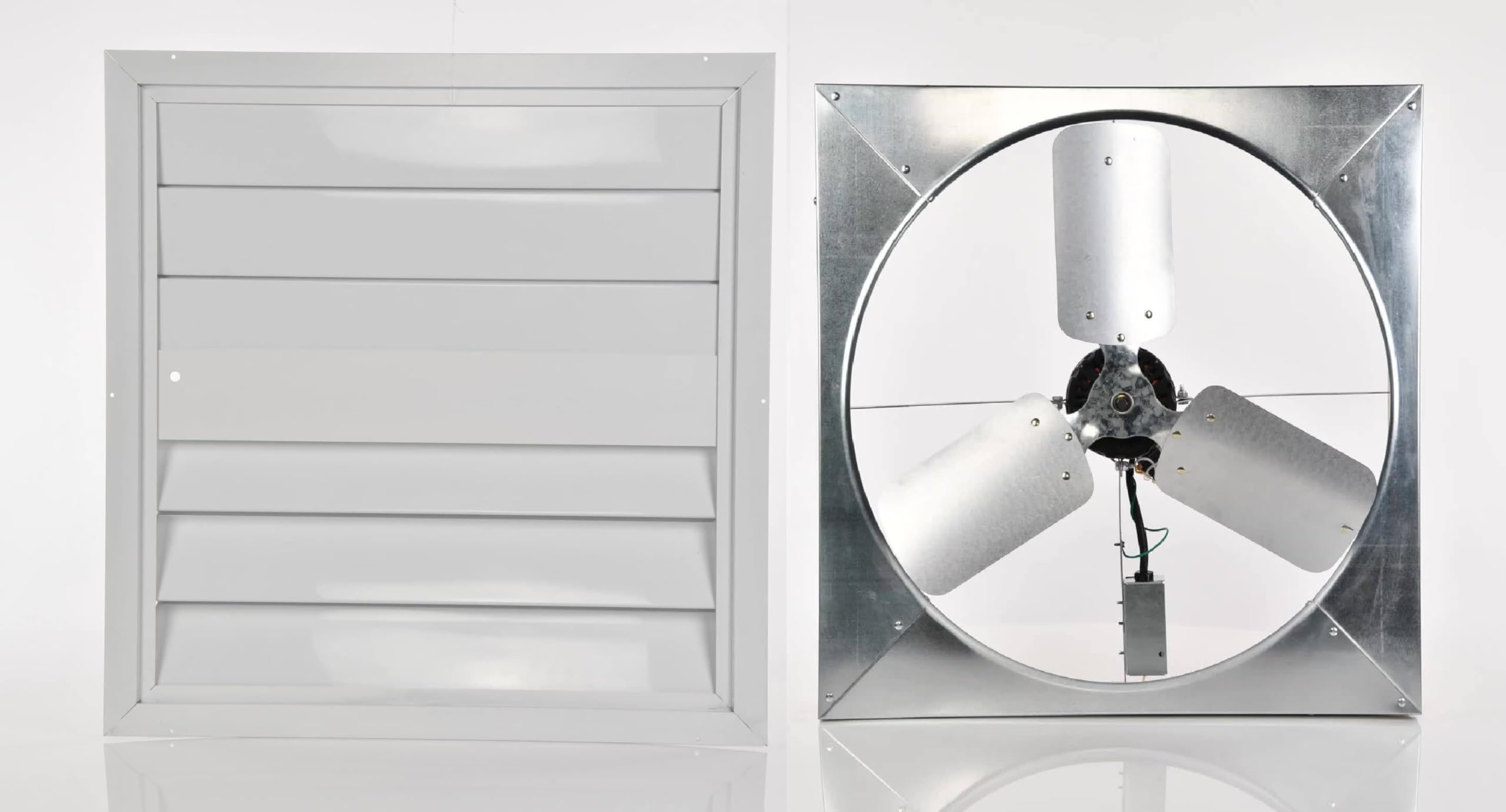
The cheapest way to move 4,500 CFM — but be ready for a build-quality gamble and a tricky install.
At its price, the Master Flow WHFS24M delivers the most CFM per dollar in this comparison — 4,500 CFM for a fraction of the cost of the Centric Air models. It uses a 1/4 HP permanent split-capacitor motor (PSC, a type of AC motor that is simple and reliable in basic applications). Control is a pull-chain with two speeds. For a 1,500 sq ft home, it can be effective — one customer observed it “cools the house” and praised the quiet motor and easy installation. An automatic ceiling shutter seals the attic opening when the fan is off, which helps energy efficiency.
The low price comes with real quality-control risk. One user highlighted: “after two nights in use, fan blades caught the shroud (the metal housing around the blades) and bent it. Noisy, one speed. We had to trash it.” Another received a used, non-working unit. Instructions are a common complaint — one reviewer called them “inaccurate and useless” and spent 4 hours rigging the install because the grate’s inner lip (27 inches) would not fit the fan’s wooden box (26 inches). You get a UL safety listing (Underwriters Laboratories, a safety certification), but no 10-year motor warranty like the Centric Air and Quietcool models.
Why it’s great
- 4,500 CFM at the lowest cost in this lineup
- Includes automatic ceiling shutter for energy efficiency
- Direct drive motor for low vibration
Good to know
- Multiple buyer reports of bent fan blades and noise after short use
- Instructions are confusing — expect a challenging install
- No multi-year motor warranty; no customer service track record
Best for: a tight budget with a 1,500 sq ft home and a willingness to handle a rough install and potential warranty claims
Skip if: you want a reliable long-term fan — the build quality complaints suggest you may be replacing it within a season
Understanding the Specs
CFM (Cubic Feet per Minute)
This is the most important number. CFM measures how much air the fan moves out of your house each minute. For a roughly 2,000-square-foot home, you want at least 2,000 CFM. A higher number cools faster, but if your attic cannot vent that much air, the fan loses efficiency and gets louder. The QA-Deluxe 6500’s 5,878 CFM is overkill for a 1,000 sq ft home, while the Centric Air 3300’s 3,219 CFM will leave a 3,000 sq ft home feeling stuffy.
R-Value of the Insulated Damper
The damper is a set of insulated doors that close over the fan opening when it is off. R-value (thermal resistance) measures how well they block heat transfer. An R-5 damper (found on all Centric Air and Quietcool models) is 5 times better at blocking heat than a plain metal shutter. A higher R-value means your home stays cooler during the day because less hot attic air seeps back down through the fan hole. The Master Flow model uses a basic metal shutter with no insulating barrier.
FAQ
Will a whole house fan work in a two-story home?
How much attic ventilation do I need for a whole house fan?
Can I install a whole house fan myself?
Is a whole house fan better than an attic fan?
How loud is a whole house fan in decibels?
Can I run a whole house fan with the AC on?
What size whole house fan do I need for a 2,000 square foot home?
How long does a whole house fan motor last?
Do I need to open windows when running a whole house fan?
What is the difference between single-speed and two-speed whole house fans?
Final Thoughts: The Verdict
For most buyers, the best air ventilation system for home is the Centric Air QA-Deluxe 5500 because it gives you high CFM (5,072), a useful remote with temperature and timer controls, and a 10-year warranty — all at a mid-range price that undercuts the 6500 model. If you need the highest possible airflow for a very large home, grab the QA-Deluxe 6500. For quiet, easy DIY installation in a home up to 2,200 sq ft, choose the Quietcool QC CL-4700 RF with its 37.2 dB noise level — it is dramatically quieter than the Centric Air models at 51 dB.
How We Picked
We do not accept paid placement, and we did not hands-on test every unit. Instead, we match each pick to a real buyer and use-case by comparing the manufacturers’ published specifications against the patterns in verified customer reviews — so you get each pick’s real strengths and trade-offs instead of marketing copy.
Sources & Methodology
Specifications: manufacturer listings and product documentation. Review insights: verified customer reviews, as of June 2026. Pricing: not shown on this page (it changes often); check the current price via the retailer link.
As an Amazon Associate, Gadgets Feed earns from qualifying purchases. This does not affect which products we feature.
Product prices and availability are accurate as of the date/time indicated and are subject to change. Any price and availability information displayed on Amazon at the time of purchase will apply to the purchase of this product. As an Amazon Associate I earn from qualifying purchases.
CERTAIN CONTENT THAT APPEARS ON THIS SITE COMES FROM AMAZON. THIS CONTENT IS PROVIDED "AS IS" AND IS SUBJECT TO CHANGE OR REMOVAL AT ANY TIME.
Amazon and the Amazon logo are trademarks of Amazon.com, Inc. or its affiliates.