
Our readers keep the lights on and my morning glass full of iced black tea. As an Amazon Associate, I earn from qualifying purchases.
You need winter boots that keep your feet warm and dry without costing a fortune, but many cheap models fall apart after one slushy season or don’t insulate well enough to handle real cold. This guide focuses on boots that deliver genuine waterproofing, solid insulation, and reliable traction without the premium price tag.
I’m Min — the founder and writer behind Gadgets Feed. This guide is built by comparing the manufacturers’ published specifications and the patterns across verified customer reviews, so you get each pick’s real strengths and trade-offs instead of marketing spin.
Whether you commute in wet snow, need sturdy boots for outdoor work, or want a dependable pair for weekend hikes, these picks cover the best value in the market. This is the list of affordable winter boots for men that actually earn their keep.
Quick Picks
- FREE SOLDIER Mens Snow Winter Boots — Best Value
- The North Face Men’s Chilkat V Lace-up Waterproof Snow Boot — Top Performer
- SOREL Men’s Buxton Pull On Waterproof Boot — Pull-On Warmth
- Kamik Men’s Forester Boot — Wet Weather Specialist
- Lands’ End Expedition Insulated Winter Boots for Men — Versatile Entry
- XPETI Men’s Crest Thermo High-Top Winter Hiking Boots — Hiking Hybrid
- Trudave Rubber Boots for Men with Steel Shank — Work & Hunt
How To Choose The Best Affordable Winter Boots For Men
Not all winter boots are built the same, and the wrong pick can mean cold, wet feet or a pair that falls apart mid-season. Check these three things before you buy.
Waterproof Construction Is Non-Negotiable
Look for boots made with rubber, neoprene (a synthetic rubber that is also insulating), or a sealed waterproof membrane (a thin layer inside the boot that blocks water but lets sweat escape). A simple “water-resistant” spray coating will not hold up against puddles or slush. Rubber shells, like the ones found on the Kamik Forester, are the most reliable for keeping water out entirely.
Insulation Type and Weight
Insulation is measured in grams (g), and the higher the number, the warmer the boot. For mild winter days (around 30°F to 40°F), 200g insulation, like the kind in The North Face Chilkat, is enough. For standing around in freezing temperatures (below 20°F), you want 400g or more, often found in fleece-lined or neoprene-lined boots like the FREE SOLDIER Snow Boots.
The Outsole and Traction Pattern
A deep, aggressive tread with wide lugs (the rubber bumps on the bottom) gives you grip on packed snow and ice. Smooth soles are a danger in winter. Rubber compounds that stay flexible in the cold also help, as stiff plastic soles can become slippery. The Trudave boots, for instance, use a dedicated anti-slip outsole for this reason.
Quick Comparison
On smaller screens, swipe sideways to see the full table.
| Model | Best For | Waterproofing | Insulation | Weight (per pair) | Amazon |
|---|---|---|---|---|---|
| FREE SOLDIER Snow Boots | Budget-friendly warmth | Suede upper + rubber shell | Fleece lining (full interior) | 3 lbs | from $75.99Amazon |
| The North Face Chilkat V | Premium all-around snow boot | Waterproof membrane (DWR treated) | 200g | — | $135.00Amazon |
| SOREL Buxton Pull On | Warm, pull-on convenience | Waterproof suede + rubber | 200g + felt plug | 4.13 lbs | from $115.15Amazon |
| Kamik Forester | Heavy wet weather durability | 100% rubber (oil & acid resistant) | Insulated rubber | — | $62.38$79.99Amazon |
| Lands’ End Expedition | Versatile lace or slip-on | Waterproof construction | Insulated (unspecified type) | — | $64.98$69.98Amazon |
| XPETI Crest Thermo | Lightweight winter hiking | Waterproof | Insulated (unspecified type) | — | $68.99Amazon |
| Trudave Rubber Boots | Wet outdoor work and hunting | Rubber + 5mm neoprene | 5mm neoprene | — | $69.99Amazon |
In-Depth Reviews
1. FREE SOLDIER Mens Snow Winter Boots
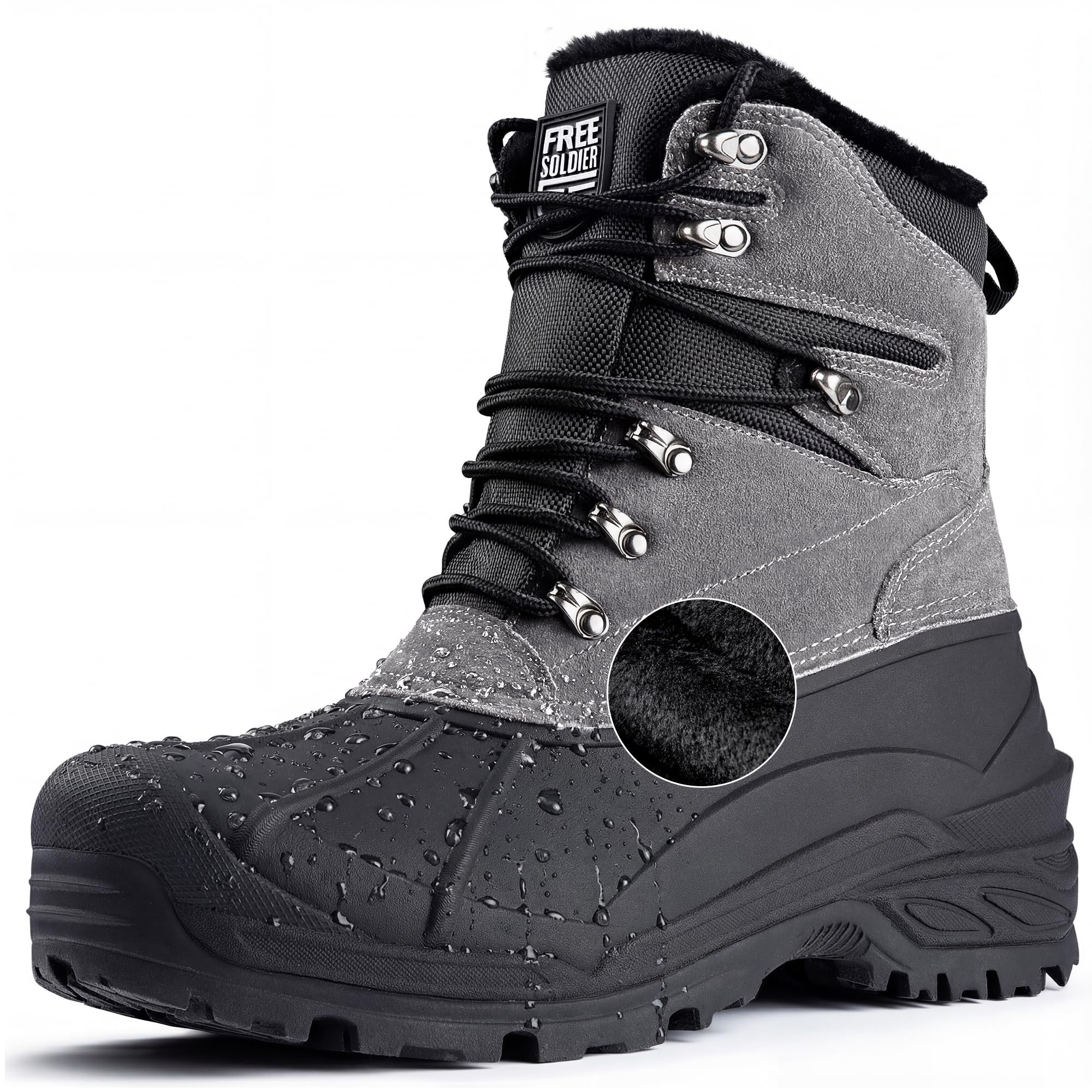
This boot keeps your feet warm with a full fleece lining and weighs 3 lbs per pair, a full 38% less than the SOREL Buxton — so you can walk farther without fatigue.
The FREE SOLDIER boots deliver good all-around insulation without the bulk. Inside, a full fleece lining wraps your foot like a thick warm sock, which helps keep the cold out during walks or light hiking. The suede upper is waterproof and durable, and a sturdy rubber shell protects your feet from slushy puddles and accidental bumps. Buyers report that the boots run true to size and feel comfortable even with thick winter socks.
At just 3 pounds for the pair, these boots are noticeably lighter than the SOREL Buxton, which weighs 4.13 pounds. That lighter weight makes a real difference when you are walking longer distances or need to move quickly in snow. The quick lace hooks on top also make them easier to pull on and off compared to traditional lacing. If you need a solid, warm boot for everyday winter use without paying for a premium brand name, this is the one to get. But if you plan to stand in deep, wet puddles for hours, the full-rubber Kamik Forester is a more waterproof choice.
Why it’s great
- The full fleece lining keeps feet warm in cold conditions without being too bulky.
- The lightweight design (3 lbs per pair) makes them easy to wear for long periods or on hikes.
- The quick lace hooks make putting on and taking off the boots much faster.
Good to know
- The suede upper may not hold up to heavy, constant submersion in water as well as a full-rubber boot.
- The sole is good for snow but may not be aggressive enough for pure ice or hard-packed trails.
Best for: Everyday winter wear, light hiking, and anyone wanting warmth without the weight.
Skip if: You need a boot that can handle hours of standing in deep, wet puddles.
2. The North Face Men’s Chilkat V Lace-up Waterproof Snow Boot

With 200g of insulation and a waterproof membrane, this boot keeps your feet dry and comfortable during active use in the 20s and 30s, outgripping the FREE SOLDIER on icy sidewalks.
The North Face Chilkat V is built for those who want a trustworthy snow boot from a brand known for outdoor gear. It comes with 200g of premium insulation — that is the amount of insulation material packed into the boot — which is enough for temperatures in the 20s and 30s. A waterproof membrane (a thin layer inside the boot that stops water from getting in while letting sweat escape) keeps your feet dry in slush and light puddles, while the outer fabric is treated with a non-PFC Durable Water-Repellent (DWR) finish that helps water bead off the surface.
Reviewers mention the boot is comfortable right out of the box, with a solid tread that grips well on icy sidewalks and packed snow. Unlike the cheaper boots, the Chilkat uses a sealed construction that gives you more confidence in wet conditions. The catch is that the 200g insulation is lighter than the full fleece lining of the FREE SOLDIER boots, so it is better suited for active use rather than prolonged standing in extreme cold. For a mid-range all-rounder, it is hard to beat. Pick this over the FREE SOLDIER if you prioritize a trusted brand and a precise fit for active winter tasks like shoveling or commuting.
Why it’s great
- The 200g insulation and waterproof membrane offer good warmth and dryness for most winter conditions.
- The DWR finish adds an extra layer of water resistance, helping snow and rain slide off.
- Owners mention the boot fits well and feels broken-in from the first wear.
Good to know
- The 200g insulation is not as warm as thicker options for extreme cold (below 10°F).
- It is a lace-up boot, which takes slightly longer to put on than a pull-on design.
Best for: Active winter use like shoveling, commute walking, and mild-to-moderate cold climates.
Skip if: You need a boot for standing still for hours in sub-zero temperatures.
3. SOREL Men’s Buxton Pull On Waterproof Boot
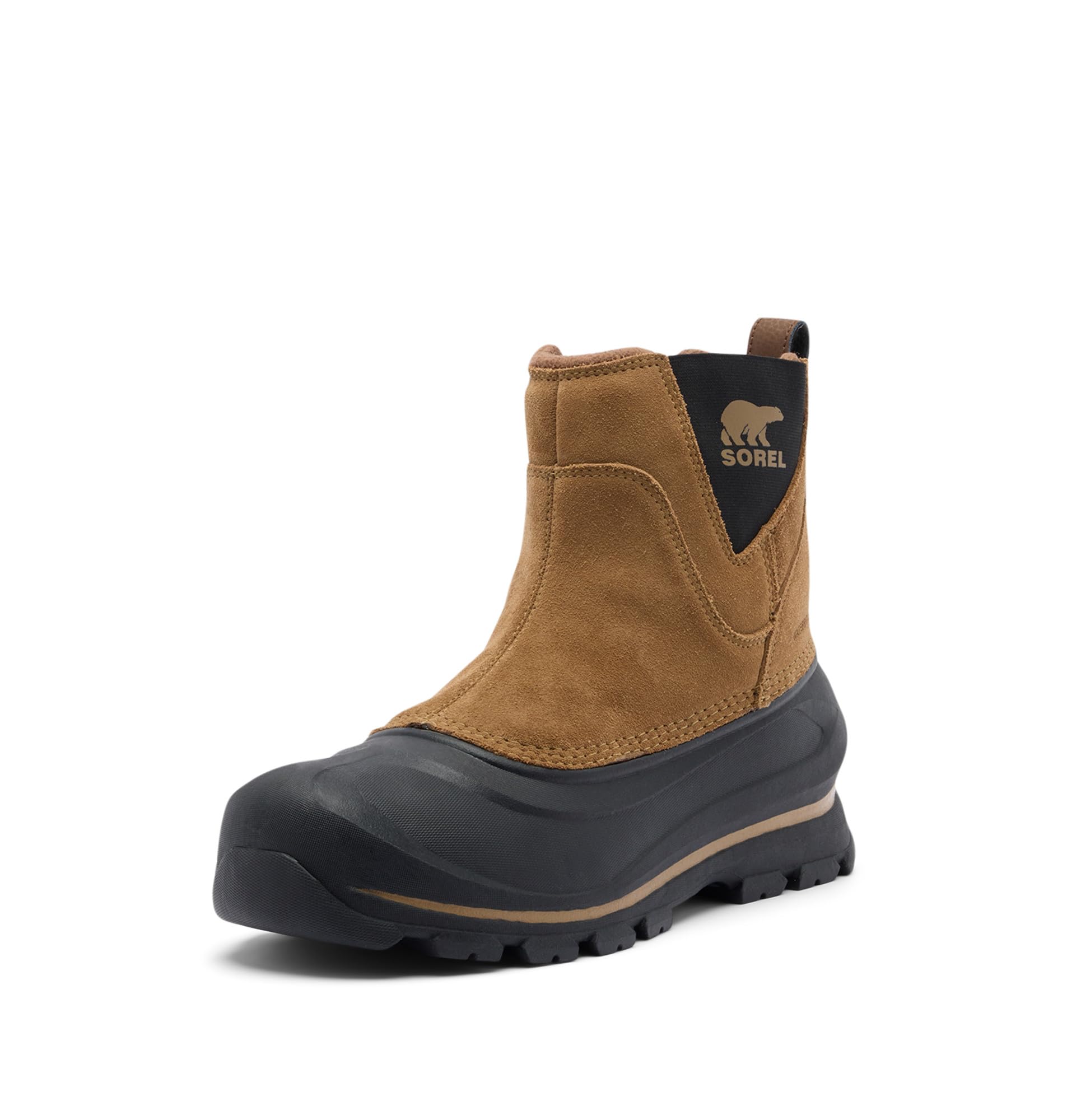
A pull-on boot with a 2.5mm felt plug in the sole, so cold from the ground stays out — ideal for quick errands without laces.
The SOREL Buxton is built for the person who values speed and simplicity. It uses a pull-on design (no laces) with a padded collar and tongue for comfort, making it easy to slide on and off when you are rushing out the door. The waterproof suede upper is combined with an injection-molded thermal rubber lower that creates a durable seal against wet snow. Inside, 200g of insulating fabric lining helps trap warmth, and a 2.5 mm felt anti-freeze plug in the sole prevents cold from seeping in from the ground below.
The biggest trade-off is weight. At 4.13 pounds, the Buxton is noticeably heavier than the FREE SOLDIER boots (3 pounds), so it is less ideal if you plan to walk miles in them. However, the rubber construction and felt plug make it better than many competitors for standing on cold ground. If quick on-off access and warm feet are your top priorities, this is a strong choice. Choose this over the The North Face Chilkat if you hate laces and want a warmer sole for stationary use in the cold.
Why it’s great
- The pull-on design with padded collar makes for lightning-fast entry and exit.
- The 2.5mm felt anti-freeze plug in the sole blocks cold from coming up through the bottom.
- The waterproof suede and rubber shell offer good protection against wet snow.
Good to know
- At 4.13 pounds, it is a heavy boot that can be tiring for long walks.
- The lack of laces means you cannot fine-tune the fit across your foot.
Best for: Quick errands in snow, city wear, and anyone who hates tying laces.
Skip if: You need a lightweight boot for hiking or long-distance walking.
4. Kamik Men’s Forester Boot
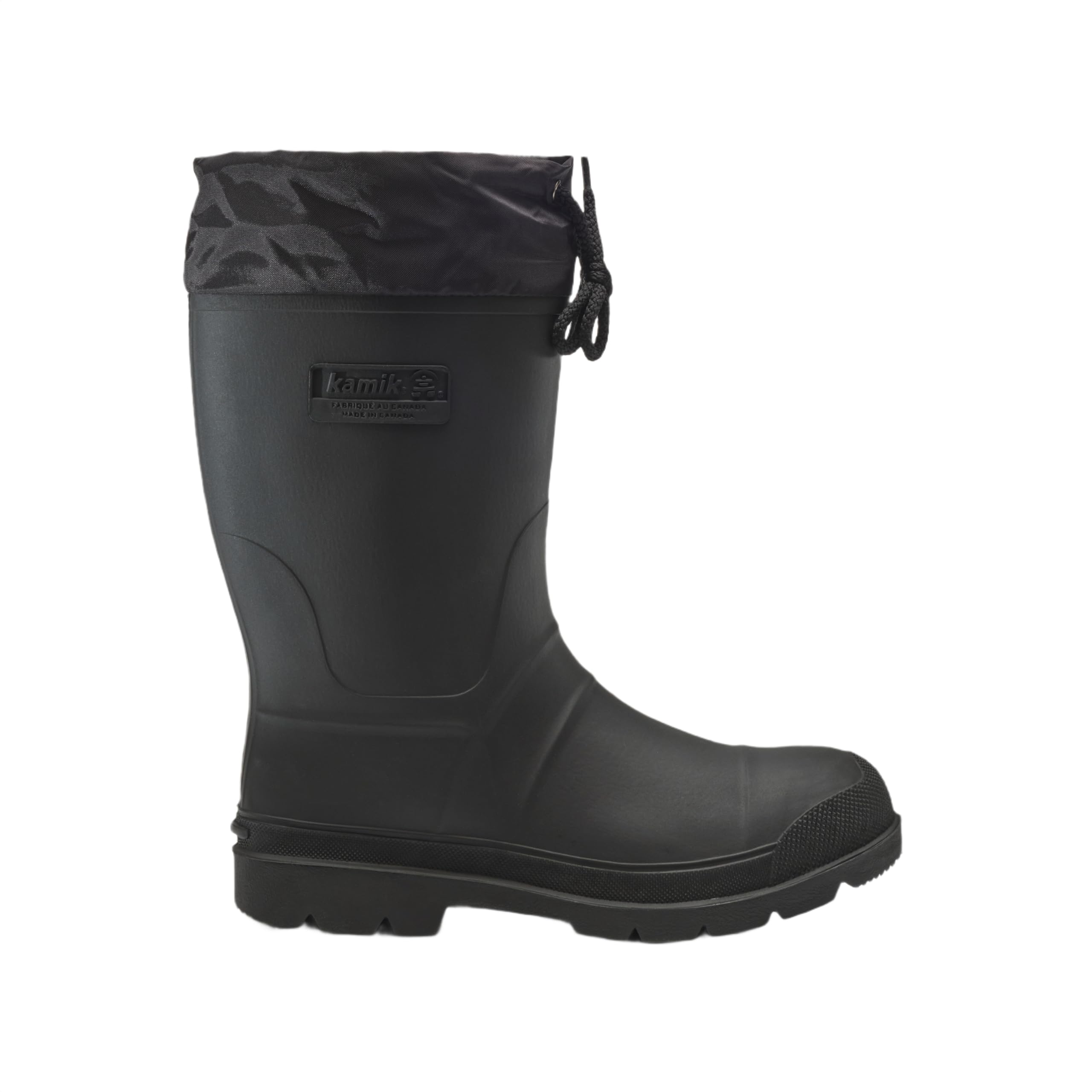
Made from 100% waterproof rubber that is oil- and acid-resistant, this boot handles puddles and chemicals far better than any fabric boot — but it does not breathe, so expect sweatier feet during active use.
The Kamik Forester is the boot you grab when you know you will be standing in puddles, mud, or slush all day. It is made from 100% waterproof rubber that is also oil and acid resistant, which means it holds up far longer than fabric or suede boots when exposed to harsh chemicals or constant moisture. This is a no-nonsense design — it is not the sleekest-looking boot, but it is built to endure. The manufacturer claims it is ready for wherever the trail leads, and the thick rubber construction backs that up.
Unlike the The North Face Chilkat, which uses a lighter waterproof membrane, the Kamik relies on a solid rubber shell that cannot be easily punctured or worn through. The downside is that pure rubber boots do not breathe as well, so your feet may sweat during active use. They also lack the heavy puffy insulation of fleece-lined models, making them better for moderately cold wet weather rather than deep-freeze arctic conditions. For wet work, hunting, or rainy slush, they are hard to beat at the price. If you are choosing between this and the Trudave for heavy rain, pick the Kamik if you need oil/acid resistance; pick the Trudave if you want more insulation from neoprene.
Why it’s great
- The 100% rubber construction is genuinely waterproof and resistant to oils and acids.
- The sturdy shell offers excellent protection for outdoor work, rain, and slush.
- Customers note the boots hold up well over multiple seasons in tough conditions.
Good to know
- The rubber does not breathe well, leading to sweatier feet during active use.
- It is not as insulated as fleece-lined boots for extreme cold (below 20°F).
Best for: Rain, mud, wet outdoor work, and heavy slush in moderate cold.
Skip if: You need a boot for sub-zero temperatures or a lot of walking in dry snow.
5. Lands’ End Expedition Insulated Winter Boots for Men
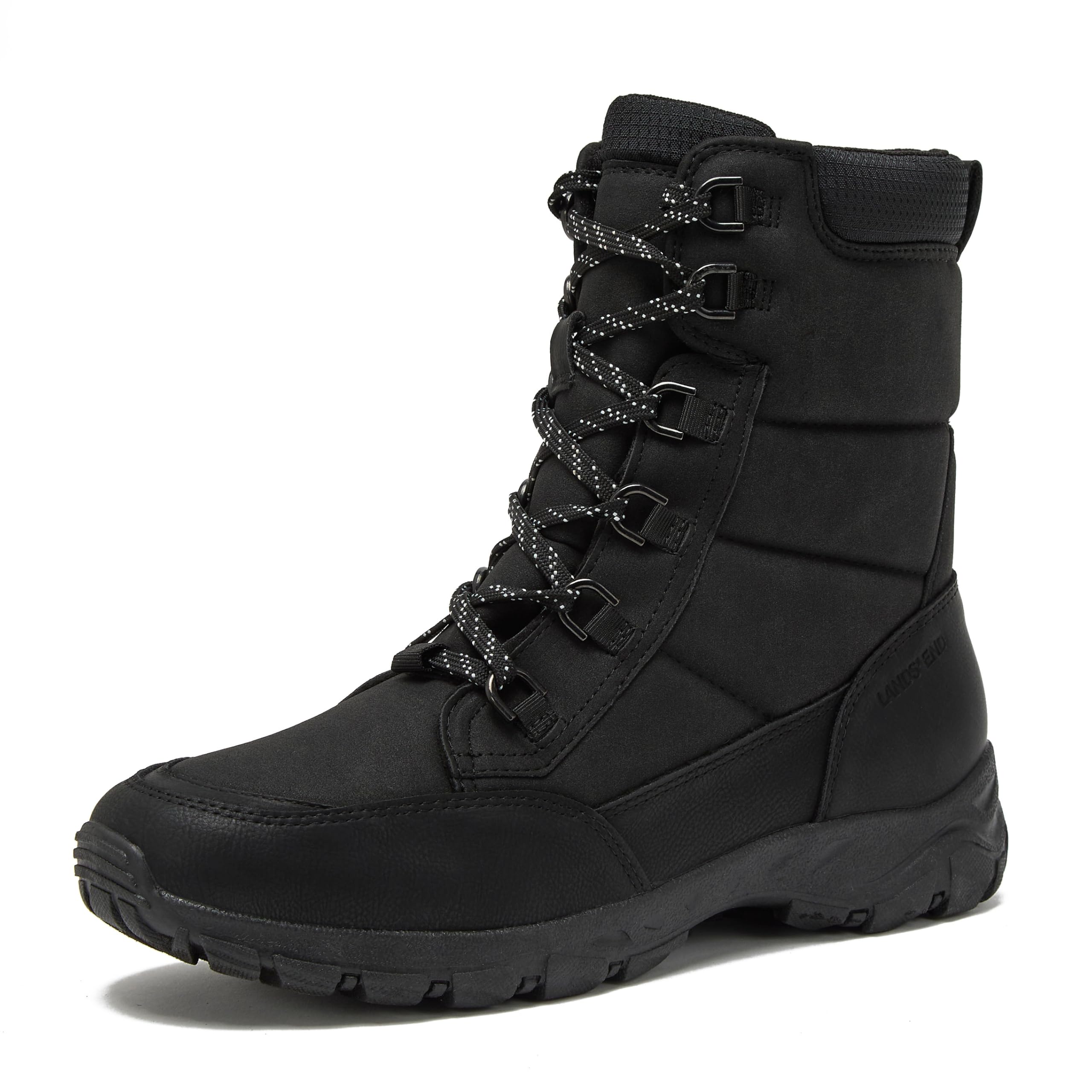
Available in lace-up or slip-on styles, plus medium or wide widths in men’s sizes 8 to 13, this boot solves the fit problem that many winter boots ignore.
Lands’ End has a solid reputation for practical, well-made clothing, and the Expedition Winter Boot follows that pattern. It is available in both lace-up and slip-on versions, so you can choose how you prefer to secure the boot. It also comes in medium or wide widths for men’s sizes 8 to 13 (Black, Brown, Green, or Grey), which is a real advantage if you have wider feet that are often squeezed in standard boots. The boot features a waterproof construction to keep your feet dry in wet snow and slush.
The trade-off is that the exact type and weight of insulation are not clearly specified in the description, so you are relying on the Lands’ End brand name for warmth. This makes it a slightly less sure bet for very cold climates than the FREE SOLDIER or The North Face boots, which clearly state their insulation. However, for mild-to-moderate winter wear and for buyers who prioritize a good fit over extreme cold protection, it is a versatile and comfortable entry-level choice.
Why it’s great
- Available in lace-up or slip-on styles, plus medium or wide widths for a better fit.
- Waterproof construction means dry feet in most wet winter conditions.
- The range of color options (Black, Brown, Green, Grey) gives you style choices.
Good to know
- The exact insulation type and weight are not listed, making it harder to gauge warmth.
- As an entry-level pick, it may not hold up as long as a more rugged rubber boot.
Best for: Walkers with wider feet and anyone wanting the flexibility of lace or slip-on.
Skip if: You need a boot with clearly specified heavy insulation for deep cold.
6. XPETI Men’s Crest Thermo High-Top Winter Hiking Boots
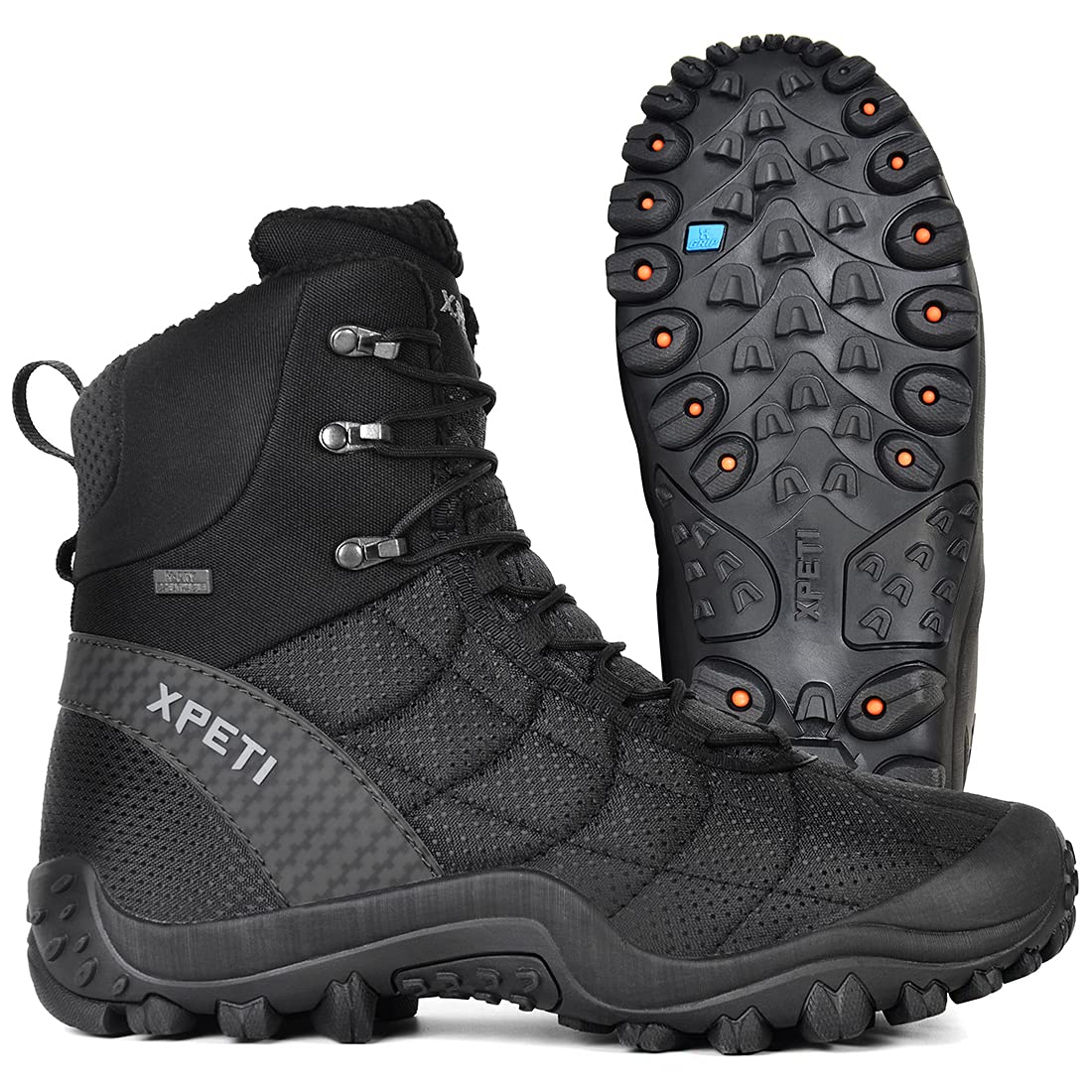
A sleek, high-top boot that covers your ankle for stability on the trail, with a waterproof finish — but its unspecified insulation means it is best for moderate winter hikes in the 30s and 40s.
The XPETI Crest Thermo is designed for the person who wants a winter boot that looks good on the trail and around town. It is a high-top boot (meaning it covers the ankle for extra stability and snow protection) with a waterproof finish and insulation to keep your feet warm. The design is noticeably slimmer and more athletic than the bulky Kamik or SOREL boots, making it a better match for hiking and active winter walks. Reviewers point out that the boot is comfortable and provides decent ankle support.
The main limitation here is the same as with the Lands’ End boot: the exact insulation weight is not specified in the available data. This makes it tough to compare its warmth directly to the 200g insulation of the The North Face boot. It is likely fine for moderate winter hiking (30s to 40s°F), but if you plan to be out in single-digit temperatures, a boot with a clearly stated, higher insulation weight would be a safer choice. For casual winter hikes and daily wear, it is a stylish and functional option.
Why it’s great
- The high-top design provides good ankle support for uneven winter terrain.
- The slim and athletic profile is more stylish and less clunky than traditional winter boots.
- Waterproof construction helps keeps feet dry on wet trails and slushy sidewalks.
Good to know
- Undisclosed insulation weight makes it hard to know how it will perform in extreme cold.
- The lighter build may not be as durable as a heavier rubber boot for rough work.
Best for: Light winter hiking and anyone who wants a sleeker-looking winter boot.
Skip if: You need heavy, clearly-rated insulation for sub-zero temperatures.
7. Trudave Rubber Boots for Men with Steel Shank

With 5mm neoprene lining for insulation and a steel shank for arch support on uneven ground, this boot is built for hours of standing in mud or water — not for casual city wear.
The Trudave boot is a heavy-duty work and hunting boot designed for people who spend their day in mud, water, or snow. It features a full rubber construction with 5mm neoprene lining (a synthetic rubber-like material that provides insulation and flexibility), which offers more warmth and comfort than a standard thin rubber boot. The interior is designed to stay warm and dry all day, and an anti-slip outsole keeps you steady on wet surfaces. A reinforced protective toe covers the front of the boot for safety.
One of the standout features is the steel shank (a supportive piece built into the sole that provides arch support and stability when walking on uneven ground or carrying heavy loads). This makes it a far better choice for serious outdoor work than the lighter FREE SOLDIER boots. One limitation is that the boot is quite bulky and the 5mm neoprene, while warm, makes it less breathable than a standard hiking boot. It is best suited for standing work, hunting, or fishing, rather than casual city wear.
Why it’s great
- The steel shank provides excellent support for your arch on uneven, muddy ground.
- The 5mm neoprene lining offers good warmth and flexibility for a rubber boot.
- The anti-slip outsole and protective toe make it a durable option for work sites and hunting.
Good to know
- The boot is bulky and not breathable, so it is less suited for casual long walks.
- It runs large, so you might need to size down for a secure fit.
Best for: Outdoor workers, hunters, and anyone standing in wet or muddy conditions for hours.
Skip if: You just need a lightweight boot for walking around town or commuting.
Understanding the Specs
Insulation Weight
This is measured in grams (g) and it tells you how much insulation material is packed into the boot. More grams generally mean more warmth. For example, a boot with 200g insulation is good for moderate winter (20s to 30s°F), while a boot with 400g or more is better for below-zero temperatures. Some boots use “fleece lining” or “neoprene” instead of a gram rating, which also provides warmth but is harder to compare directly.
Waterproof Rating
Not all waterproof boots are equal. A boot with a “waterproof membrane” (a thin inner layer that blocks water) offers good protection but can be less durable than a solid-rubber boot. A “100% rubber” construction is the most reliable for keeping water out entirely, but it does not breathe as well. A “water-resistant” coating is only useful for light snow and will fail in slush or puddles.
Outsole Traction
The outsole is the bottom part of the boot that contacts the ground. A good winter outsole has deep, wide lugs (rubber bumps) that dig into snow and ice. The rubber compound also matters — some rubber stays flexible and grippy in the cold, while others stiffen up and become slippery. Look for “anti-slip outsole” or “aggressive tread” in the product description for the best grip.
FAQ
Can I wear these boots for heavy rain or just snow?
How do I know if a boot will be warm enough for very cold weather?
Are rubber winter boots warmer than leather boots?
What is the difference between a steel shank and no shank?
Will a 200g insulated boot be warm enough for shoveling the driveway?
Can I use these boots for ice fishing or standing still in the cold?
Are neoprene boots better than fleece-lined boots for wet snow?
How much should I spend on a good pair of affordable winter boots?
Final Thoughts: The Verdict
For the majority of shoppers, the affordable winter boots for men winner is the FREE SOLDIER Snow Boots because it offers the best combination of warmth, weight, and price. If you want a reliable all-rounder from a trusted outdoor brand, grab the The North Face Chilkat V. And for quick on-off use in wet snow without fussing with laces, the SOREL Buxton Pull On is your best bet.
How We Picked
We do not accept paid placement, and we did not hands-on test every unit. Instead, we match each pick to a real buyer and use-case by comparing the manufacturers’ published specifications against the patterns in verified customer reviews — so you get each pick’s real strengths and trade-offs instead of marketing copy.
Sources & Methodology
Specifications: manufacturer listings and product documentation. Review insights: verified customer reviews, as of June 2026. Pricing: not shown on this page (it changes often); check the current price via the retailer link.
As an Amazon Associate, Gadgets Feed earns from qualifying purchases. This does not affect which products we feature.
Product prices and availability are accurate as of the date/time indicated and are subject to change. Any price and availability information displayed on Amazon at the time of purchase will apply to the purchase of this product. As an Amazon Associate I earn from qualifying purchases.
CERTAIN CONTENT THAT APPEARS ON THIS SITE COMES FROM AMAZON. THIS CONTENT IS PROVIDED "AS IS" AND IS SUBJECT TO CHANGE OR REMOVAL AT ANY TIME.
Amazon and the Amazon logo are trademarks of Amazon.com, Inc. or its affiliates.