
Our readers keep the lights on and my morning glass full of iced black tea. As an Amazon Associate, I earn from qualifying purchases.
Specs are compiled from manufacturer listings and verified buyer reviews and can change over time — please confirm the key details on the product page before buying.
Trying to drill a deep, straight hole through a thick oak beam or a knotty pine board with a dull bit that wanders, burns the wood, and leaves a ragged mess is frustrating. An auger bit designed for wood solves that — its screw tip pulls itself into the grain, and the sharp cutting edges shear the fibers cleanly, so you get a smooth exit hole without tear-out.
I’m Min — the founder and writer behind Gadgets Feed. This guide is built by comparing the manufacturers’ published specifications and the patterns across verified customer reviews, so you get each pick’s real strengths and trade-offs instead of marketing spin.
Choosing the right auger bit for wood depends on matching the flute design (spiral grooves that clear wood chips) and tip durability to the material you are drilling and the drill you use, whether you run electrical wire through framing timbers or bore holes for cabinet hardware.
Quick Picks
- Diablo DAG2070 3/4″ x 13″ Auger Bit — Top Performer
- Bosch NKMT09 9/16″ x 13″ Daredevil Auger Bit — Nail Biter
- WOBLLMX 1″ x 12″ Tri-Flute Auger Drill Bit — Wide Bores
- TOOLMAYS 1″ x 12″ Auger Drill Bit — Budget 1-Inch
- NICAVKIT 7/8″ x 12″ Auger Drill Bit — Cabinet Pulls
How To Choose The Best Auger Bit For Wood
An auger bit is not a one-size-fits-all tool. The right choice depends on the wood you drill, the hole depth you need, and whether you will hit hidden nails. Here are the three things that matter most.
Flute Design and Count
The spiral grooves (flutes) that wrap around the bit carry wood chips up and out of the hole (chip evacuation). A single-flute bit has one large open channel that moves debris fast, which helps if you drill deep holes in softwood. A triple-flute (tri-flute) bit clears chips through three smaller channels — that extra edge contact also helps cut through harder wood and even small nails, though you may need to back the bit out more often to clear the flutes.
Screw Point and Self-Feeding Action
Unlike a standard twist drill, an auger bit has a sharp threaded point at the tip. As you push the bit into the wood, that screw thread pulls the bit forward on its own — so you apply far less downward force (self-feeding). This makes drilling less tiring but also means the bit can grab aggressively and bind if your drill does not have a clutch (a device that disengages the drive when torque is too high) or a low-speed setting. A pilot hole (a smaller guide hole you drill first) can tame that bite.
Cutting Diameter and Total Length
Auger bits are defined by two measurements: the cutting diameter (the size of the hole it leaves) and the overall length (how deep you can reach). Typical lengths run 12 to 13 inches, giving you enough reach for double-stud walls or thick beams. Diameters range from narrow 3/4-inch bores up to a full 1-inch hole. Match the diameter to whatever you run through the hole — a bundle of ethernet cables fits a 3/4-inch hole comfortably, while a 1-inch bore gives more room for multiple Romex wires or pipe. The working length (the flute section minus the shank) tells you the real maximum depth your bit can drill.
Quick Comparison
On smaller screens, swipe sideways to see the full table.
| Model | Best For | Cutting Diameter | Total Length | Number of Flutes | Amazon |
|---|---|---|---|---|---|
| Diablo DAG2070 | Nail-embedded wood and clean holes | 0.75 Inches | 13″ | 3 | Amazon |
| Bosch NKMT09 | Nail cutting and long life in treated lumber | 0.56 Inches | 13″ | 3 | Amazon |
| WOBLLMX 1″ Tri-Flute | Large diameter deep holes in softwood | 25.4 Millimeters (1″) | 12″ | 3 | Amazon |
| TOOLMAYS 1″ x 12″ | Budget single-flute 1-inch bores | 1 Inches | 12″ | 1 | Amazon |
| NICAVKIT 7/8″ x 12″ | Entry-level single-flute for cabinet pulls | 0.88 Inches | 12″ | 1 | Amazon |
In‑Depth Reviews
1. Diablo DAG2070 3/4″ x 13″ Auger Bit
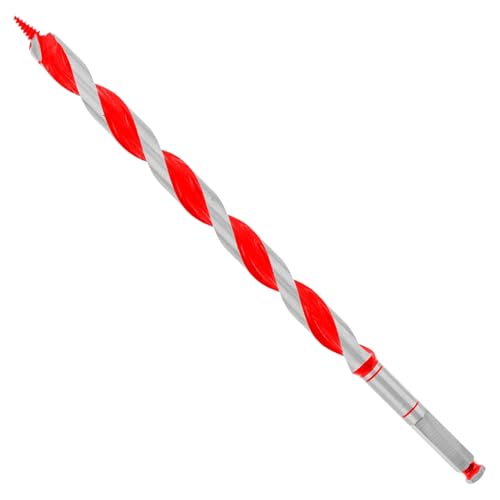
The Diablo DAG2070 punches through nails without dulling and leaves a hole clean enough to skip sanding — that is why it tops this list.
This is the bit you grab when drilling into old framing that could have hidden nails. Diablo’s Dura-Tip Technology (a special carbide-infused edge, according to the brand) keeps the cutting edge sharp even after repeated nail hits, and the two-step cutting action shears the wood fibers before the tip clears the hole, so you get a smooth exit. The bit weighs 2.4 ounces versus the Bosch NKMT09 at 6.4 ounces, which makes it noticeably less fatiguing on overhead drilling, though it still needs a powerful drill to drive it.
Buyers report that it works best with a corded half-inch drill; a battery drill, they say, is insufficient for the aggressive self-feed. The bit has 3 flutes to clear chips, and at 0.75 inches of cutting diameter it leaves a hole big enough for multiple cables but not as wide as the 1-inch offerings from WOBLLMX or TOOLMAYS.
The case for it: The 13-inch total length and 3-flute design give you deep reach plus fast chip evacuation, while the 7/16-inch hex shank stays locked in the chuck without slipping. It leads on nail durability over any single-flute bit in this list.
The catch: As one reviewer cautioned, the self-feeding screw tip bites aggressively — drilling a pilot hole half the diameter of the screw tip reduces the risk of the bit binding and wrenching your wrist. You also need a powerful plug-in drill; a lightweight cordless driver will stall.
Best for: Drilling clean, deep holes in nail-embedded wood and dense timber with a corded drill
Skip if: You only have a compact battery drill or need a 1-inch bore for larger conduit
2. Bosch NKMT09 9/16″ x 13″ Daredevil Auger Bit
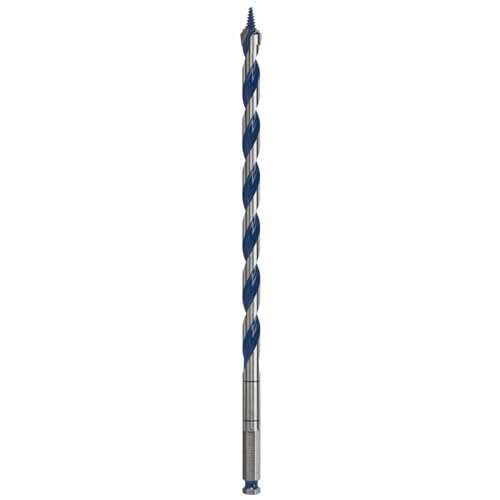
The Bosch Daredevil is built to survive repeated nail strikes in pressure-treated lumber where cheaper bits chip — ideal if you work through old studs that are full of fasteners.
Bosch designed this bit with dual cutting edges that deliver easier nail cutting, plus a reinforced tip that withstands repeated nail hits. At 6.4 ounces, it is heavier than the Diablo DAG2070 at 2.4 ounces — you feel the mass in your hand, but that heft also contributes to the bit’s stability as it powers through tough material. The open-faced flute improves chip removal, so you spend less time backing the bit out to clear sawdust.
Owners mention the bit cuts nails repeatedly without damage and lasts a long time in treated wood. One seasoned reviewer called it a “must-have for any installer.” The downside is the 9/16-inch cutting diameter — noticeably narrower than the 3/4-inch Diablo and far smaller than the 1-inch models — so it is best for smaller holes like running single cables or pilot holes for larger bits. Reviewers also warn that it pulls in aggressively, especially at higher speeds, so Bosch recommends keeping the drill under 600 RPM.
Why it’s great
- Reinforced tip handles repeated nail hits without dulling
- Open-faced flute design moves chips out faster than closed flutes
- Self-feeding screw point starts easily with minimal pressure
Good to know
- 9/16-inch diameter is too small for multiple cables or large conduit
- Aggressive self-feed can cause violent torque at high speed; keep under 600 RPM
- Heavier than comparable bits at 6.4 ounces
Best for: Running single wires through nail-embedded treated lumber with a low-speed drill
Skip if: You need a wide bore over 3/4 inch or prefer a lighter bit for overhead drilling
3. WOBLLMX 1″ x 12″ Tri-Flute Auger Drill Bit
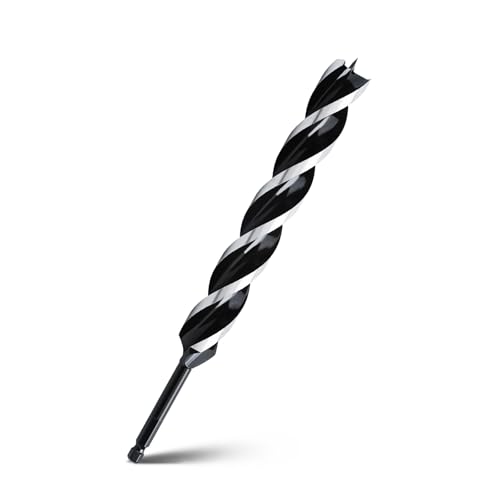
The WOBLLMX 1-inch tri-flute clears chips fast while boring the widest holes in this roundup — useful when feeding multiple Romex wires or a pipe through a single bore.
That extra width matters when you need to feed multiple Romex wires, a bundle of ethernet cables, or a pipe through a single bore. The tri-flute design (three spiral grooves) uses precision-milled hollow centers to speed chip clearance, and the 3/8-inch quick-change hex shank fits most impact drivers and standard chucks without slipping. The total length is 12 inches versus the 13-inch Diablo, so you lose one inch of reach.
Customers note it performs well in pine, drilling 10-inch deep holes with decent chip clearing, though they note they had to pull it completely out of the hole about twice per hole to clear packed shavings. One reviewer used it for rebar holes in 6×6 timbers and called it “very easy.” The self-positioning tip helps it start accurately, but the aggressive screw point can still grab hard if you push too fast.
The case for it: Three flutes plus a wide 1-inch bore give you the best combination of hole size and chip removal speed for deep softwood drilling. The hex shank means no chuck slip on high-torque drills.
The trade-off: The extra flute surface creates more friction in dense hardwood — expect to back out periodically to clear the flutes. The 12-inch total length is fine for most jobs but falls short by an inch compared to the Diablo if you are reaching through a thick double-stud wall.
Best for: Boring deep, wide holes in softwood for multiple cables or pipes
Skip if: You drill mostly in hardwood or need the extra inch of reach that a 13-inch bit provides
4. TOOLMAYS 1″ x 12″ Auger Drill Bit
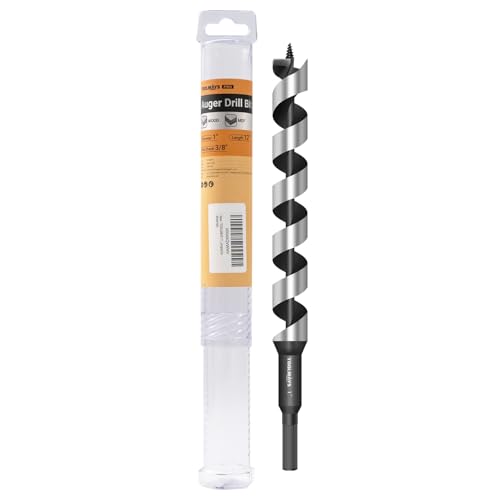
The TOOLMAYS single-flute bit gives you a full 1-inch bore at a budget-friendly price, with a solid center core for rigidity.
Like the WOBLLMX, this bit cuts a 1-inch hole, but it uses a single-flute design instead of three flutes. That single large channel moves chips efficiently, and the solid center design boosts rigidity — the bit is less likely to flex or wobble when you push hard into dense wood. The spiral point tip helps with self-feeding, and the 3/8-inch hex shank fits standard impact drivers and chucks. At 1 pound, it is noticeably heavier than the 2.4-ounce Diablo, so you feel that heft on long drilling sessions.
Reviewers point out it got the job done for a one-time floating mantle project, though the edges of the holes were a bit rough — the single cutting edge does not shear as cleanly as the dual-edge designs on more expensive bits. One reviewer noted it cut through a knot without issue, which is a solid test of the carbon steel’s edge retention. The bit comes in a PVC storage tube that protects the tip and flutes when you toss it in a toolbox.
Why it’s great
- One-inch cutting diameter matches premium tri-flute bits at a lower cost
- Solid center core keeps the bit rigid in dense wood and knots
- PVC storage tube protects the sharp tip between uses
Good to know
- Single cutting edge leaves rougher hole edges than dual-edge or tri-flute bits
- Heavier build at 1 pound can tire your wrist during extended drilling
- No nail-durability reinforcement — keep it away from embedded fasteners
Best for: Occasional wide-bore drilling in softwood where hole finish is not critical
Skip if: You drill through old lumber with hidden nails or want consistently clean exit holes
5. NICAVKIT 7/8″ x 12″ Auger Drill Bit
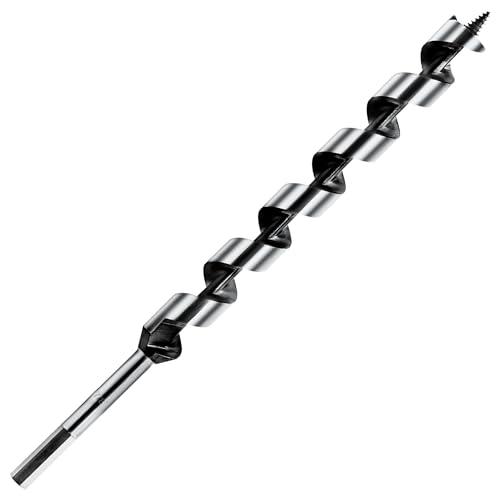
The NICAVKIT 7/8-inch bit is the entry-level pick that makes clean holes in cabinet doors without chipping the veneer — a good starting point for light woodwork.
Measuring 0.88 inches in cutting diameter, this bit sits between the 3/4-inch Diablo and the 1-inch models. The single-flute channel is large enough to clear chips fast, and the self-feeding coarse screw point helps you start accurately without walking across the surface. It is made from 1045 high-carbon steel that has been specially hardened, and the hex shank measures 2/5 of an inch so it locks into most chucks securely.
Shoppers say it works perfectly for drilling holes for cabinet pulls without tear-out — the sharp dual cutting edges carve the wood like a knife rather than tearing it. Another reviewer used it to drill a hole in a tree stump and then fill it with gas to burn the stump, calling it “great” for that rugged task. The main limit: like all single-flute carbon-steel bits, it is not designed to hit nails, and the manufacturer suggests using a high-power corded drill or bench drill for best results.
The case for it: At a 0.88-inch diameter, it is wide enough for most cable and hardware pass-throughs but narrower than a full 1-inch bit, which reduces the risk of splitting thin cabinet wood. The single-flute design clears chips quickly in softwood and plywood.
One limitation: The cutting edge is not reinforced for nail hits, and the bit needs a powerful drill to drive its aggressive self-feed. If you are drilling into thick hardwood or old timber with embedded fasteners, step up to the Diablo or Bosch.
Best for: Clean cabinet-pull holes and occasional softwood boring where budget matters most
Skip if: You regularly drill into nail-embedded lumber or need a bit that lasts through heavy daily use
Understanding the Specs
Flute Count
The number of spiral grooves (flutes) wrapping around the bit determines how fast wood chips escape. A single-flute bit (like the NICAVKIT and TOOLMAYS) has one large open channel — great for rapid chip removal in softwood but leaves rougher hole edges. A triple-flute (tri-flute) bit (like the Diablo, Bosch, and WOBLLMX) has three smaller channels that clear chips through multiple paths, plus gives you more cutting edges for a cleaner hole. The compromise: tri-flute bits generate more friction, so you may need to back out periodically in deep hardwood bores.
Hex Shank
Instead of a smooth round shaft that can spin in the chuck (the part of the drill that holds the bit), an auger bit uses a hexagonal shank — a six-sided end that the chuck grips on flat surfaces instead of round ones. That shape prevents the bit from slipping when the self-feeding screw point grabs into the wood. Common sizes you will see are 7/16-inch (found on the Diablo) and 3/8-inch (used on the WOBLLMX and TOOLMAYS); both fit standard three-jaw chucks and most impact driver chucks, but always check that your drill’s chuck can open wide enough to accept the shank.
FAQ
Can an auger bit drill through nails?
What RPM should I run an auger bit at?
How deep can a 12-inch auger bit drill?
Will a hex shank fit any drill chuck?
What is the difference between a ship auger and a standard auger?
Do I need a pilot hole for an auger bit?
How do I keep the bit from binding in a deep hole?
Can I use a wood auger bit in drywall or plastic?
What is the best way to store auger bits?
Is a tri-flute bit always better than a single-flute?
Final Thoughts: The Verdict
If you want one dependable pick, the top auger bit for wood is the Diablo DAG2070 because it blends nail-embedded durability with a clean-cutting 3-flute design at a weight that does not exhaust your arm on long jobs. If you need a full 1-inch bore and prefer a tri-flute that clears chips fast, grab the WOBLLMX 1″ Tri-Flute. And for budget-friendly wide bores in softwood where hole finish is less critical, the TOOLMAYS 1″ x 12″ will get the job done without straining your wallet.
How We Picked
We do not accept paid placement, and we did not hands-on test every unit. Instead, we match each pick to a real buyer and use-case by comparing the manufacturers’ published specifications against the patterns in verified customer reviews — so you get each pick’s real strengths and trade-offs instead of marketing copy.
Sources & Methodology
Specifications: manufacturer listings and product documentation. Review insights: verified customer reviews, as of July 2026. Pricing: not shown on this page (it changes often); check the current price via the retailer link.
As an Amazon Associate, Gadgets Feed earns from qualifying purchases. This does not affect which products we feature.