
Lower back pain stops you from bending, lifting, sitting through a meeting, or even sleeping on your side. A quality lumbar support belt transfers load from your strained spinal muscles to a rigid frame around your waist, giving your discs and nerves the mechanical break they need to heal. The right back brace acts like an external skeleton for your L1-to-sacrum region — but the wrong one either slides up your torso or collapses after three wears.
I’m Min — the co-founder and writer behind Gadgets Feed. I analyze thousands of verified customer reviews and technical spec sheets each year, comparing compression systems, stay materials, and pulley mechanics across medical-grade and consumer-tier braces to isolate what actually delivers lasting relief..
This guide breaks down the seven best options on the market — from an entry-level SI belt to a dual-pulley LSO rig — so you can confidently choose a back brace that matches your specific pain pattern, activity level, and body type.
How To Choose The Best Back Brace
Every back brace works by limiting the range of motion in your lumbar spine and transferring mechanical load away from injured tissue. But the right brace depends entirely on whether you need to stabilize an acute flare-up, support a chronic condition, or prevent re-injury during heavy lifting. Here are the three specs that separate a useful brace from a useless one.
Compression System: Pulley vs. Standard Straps
A standard hook-and-loop strap delivers even pressure across the whole belt, but it requires upper-body strength to pull tight and often leaves the top looser than the bottom. A pulley system — like Aspen’s patented 4:1 mechanism — multiplies your pulling force and allows independent top-and-bottom tension. If you have arthritis, grip issues, or need precise localized compression, a pulley-based brace is the smarter investment.
Stay Material and Count
Stays are the rigid strips that prevent the brace from rolling up and provide the actual structural support. Budget braces use thin PP (polypropylene) strips that flex and fatigue quickly. Mid-range and premium models use memory-aluminum stays that are roughly four times harder and retain their shape after months of wear. Look for at least three reinforced stays — five is ideal for demanding daily use or heavy lifting.
Profile: Low-Profile vs. Full LSO
A low-profile brace (under 9 inches tall) fits discreetly under clothing and works best for mild to moderate sciatica, muscle fatigue, or SI joint instability. A full LSO (Lumbosacral Orthosis) brace extends higher up the back and wraps around the abdomen with a rigid plate; it is designed for post-surgery recovery, severe stenosis, or herniated discs. Choose the profile that matches your pain severity and your need for discretion at work.
Quick Comparison
On smaller screens, swipe sideways to see the full table.
| Model | Category | Best For | Key Spec | Amazon |
|---|---|---|---|---|
| FEATOL 5-Stay Brace | Premium Stay | Daily work & heavy chores | 5 reinforced memory-aluminum stays | Amazon |
| ASPEN Lumbar Support | Medical-Grade | Localized compression with pulley | 4:1 pulley system, independent tabs | Amazon |
| NEENCA Lower Back Brace | Medical-Grade | All-day wear under clothes | Medical-grade Polyester & Spandex | Amazon |
| LSO Decompression Plate Brace | Maximum Support | Spinal stenosis & post-surgery | 26° adjustable arch, dual pulley | Amazon |
| Bracepost Bionic Spine Brace | Hot/Cold Therapy | Daily stabilization with ice/heat | Quadruple-hard memory-aluminum stays | Amazon |
| Sparthos Back Brace | Value Compression | Sciatica & muscle fatigue | Adjustable lumbar pad, vertical stays | Amazon |
| BLITZU SI Joint Hip Belt | SI Joint Focus | SI joint & sciatic nerve pain | Dual double-pull tension straps | Amazon |
In‑Depth Reviews
1. FEATOL Lower Back Brace with 5 Reinforced Stays
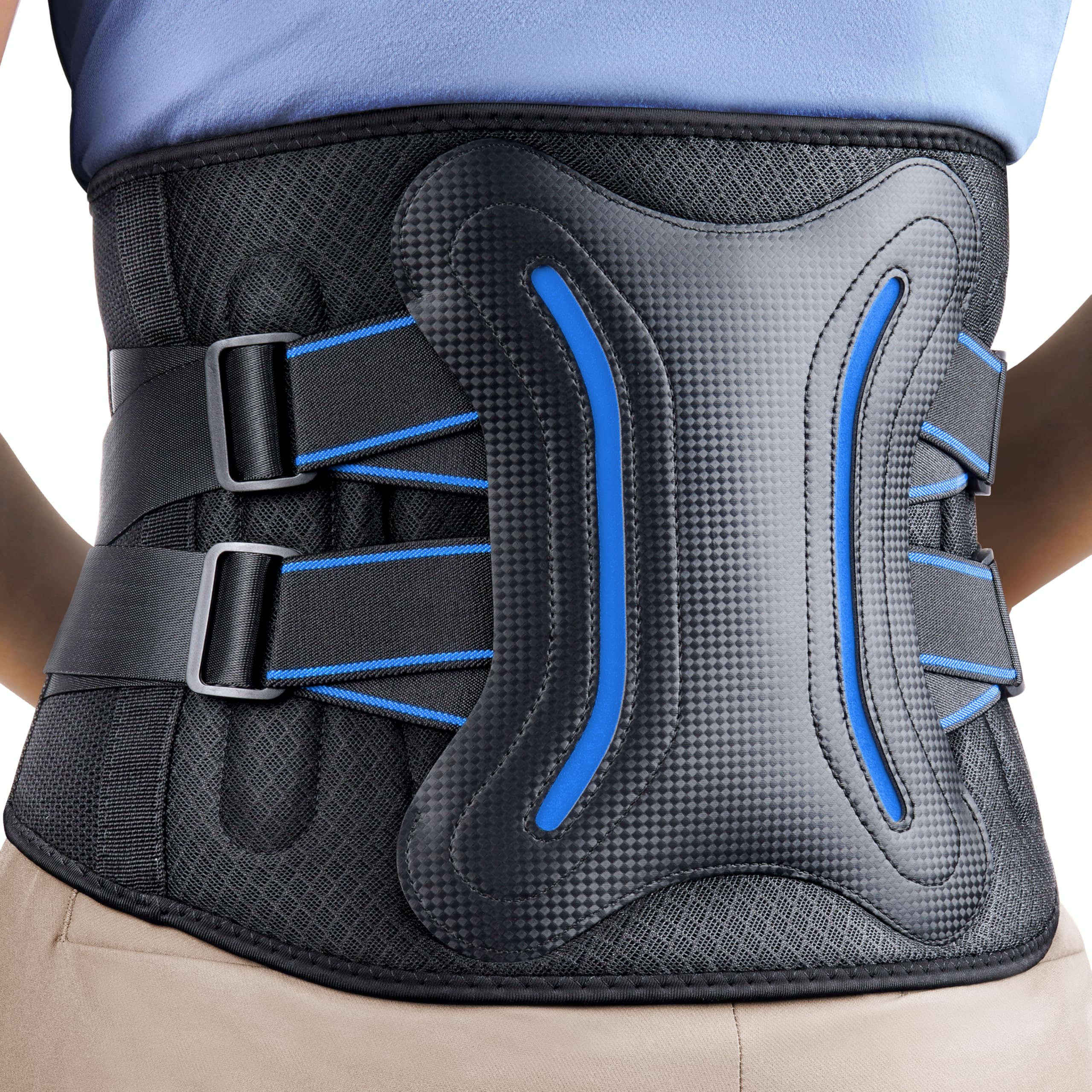
The FEATOL brace packs five reinforced stays — three memory-aluminum strips and two additional support plates — that deliver true 360° lumbar stability. This is the highest stay count in this roundup, and it translates directly into no-roll performance whether you are bending to lift a box or standing for a full shift. The dual-tension elastic straps let you dial in the snugness independently at the top and bottom, so the brace stays locked on your L1-to-sacrum region without creeping upward.
Breathable mesh fabric prevents heat buildup during extended wear, and the low-profile design tucks under most work pants and jeans without obvious bulging. Verified buyers in their mid-70s report handling two-hour yardwork sessions pain-free, while users recovering from severe spinal stenosis describe it as a confidence restore for daily mobility. The only minor complaint is the lack of printed instructions to remove the cloth covering from the Velcro tensioning straps before first use.
Finger loops on the straps make application straightforward even for users with limited hand strength, and the heavy-duty Velcro shows no sign of wear after months of daily tightening. If you need a brace that can survive a demanding physical job or long household chores without slipping, the FEATOL’s five-stay architecture is the benchmark.
Why it’s great
- Five reinforced stays provide uncompromising anti-roll support
- Breathable mesh and low profile work under regular clothing
- Dual-tension straps allow fine-tuned top/bottom compression
Good to know
- No printed instructions for removing Velcro protective covering
- Feels slightly bulky under very tight-fitting tops
2. ASPEN Lumbar Support Back Brace

The Aspen brace’s defining feature is its patented 4:1 pulley tightening system — every inch you pull on the tabs translates into four inches of strap compression, delivering immense localized force without requiring upper-body strength. This is the same mechanical leverage found in hospital-grade orthoses, and it makes a noticeable difference for users with arthritis or grip limitations. The inelastic material acts as an external skeleton, locking the lumbar spine in place during heavy lifting or acute flare-ups.
Separate adjustment tabs for the top and bottom of the brace let you fine-tune compression independently depending on whether you are sitting, standing, or bending. Users report that the brace hugs the lower back securely and relieves pain during long walks, and physical therapists have been seen recommending this exact model — noting that comparable prescription-grade versions cost substantially more. The low-profile, breathable build allows extended wear under clothing.
The Aspen runs small, so sizing up is common advice from verified buyers. The Velcro closure requires occasional cleaning to prevent lint fouling, and the rigid inelastic design is not suited for athletic activity or yoga. But for pure mechanical support on the job site or during recovery, the pulley system puts this brace in a league of its own.
Why it’s great
- 4:1 pulley creates immense compression with minimal pulling effort
- Independent top and bottom tension for seated vs. standing support
- Medical-grade inelastic material provides external skeletal stabilization
Good to know
- Sizing runs small — size up if between measurements
- Zero stretch makes it unsuitable for sports or yoga
3. NEENCA Lower Back Brace Medical Grade

The NEENCA brace is constructed from medical-grade Polyester and Spandex that meets hospital safety standards while remaining thin enough to wear unnoticed under a dress shirt or blouse. The multi-point support design distributes pressure evenly across the lumbar curve, reducing spinal load for conditions like herniated discs, sciatica, and general muscle fatigue. Two elastic Velcro straps provide a customizable fit across a wide range of body types — the size chart extends from a 25.9-inch waist up to 65 inches.
Verified buyers consistently describe it as a favorite after comparing it with cheaper models; an RN with a bulging disc reports that the pull straps deliver effective relief that caught the attention of coworkers. The slim profile is a standout: it does not create the wasp-waist bulge that some wider braces produce, making it the best option for office workers who need to move between meetings without obvious gear. The metal rod running along the spine adds rigidity without feeling like a cage.
Machine washable construction simplifies long-term maintenance, though a spine surgeon quoted in the reviews advises limiting continuous wear to about two hours to avoid weakening abdominal muscles. The NEENCA is a strong midpoint between basic elastic belts and full clinical braces — enough support for moderate conditions without the bulk of an LSO.
Why it’s great
- Medical-grade fabric is durable, safe, and machine washable
- Low-profile design disappears under most work clothing
- Multi-point support effectively reduces herniated disc and sciatica pain
Good to know
- Spine surgeons recommend limiting wear to 2-hour sessions
- Not rigid enough for heavy lifting or severe stenosis
4. LSO Back Brace with Decompression Plate & Dual Pulley

This LSO brace combines a bionic decompression plate that stabilizes the L1-to-S1 vertebrae with a 26-degree adjustable arch you can set for lumbar extension, protection, or prevention. The dual pulley system — similar in concept to the Aspen but with two independent pull tabs — gives users with limited grip strength the ability to achieve clinical-level compression without help. An extension Velcro pocket and removable soft plastic abdominal plate add maximum abdominal support, making this brace suitable for postpartum recovery and obesity-related lumbar pain.
Verified buyers with severe conditions — spinal stenosis, herniated discs, CRMO in adolescents — report that the brace immobilizes roughly 80% of lower back movement, allowing them to function during flare-ups that would otherwise keep them bedridden. A user recovering from surgery describes it as very comparable to the expensive model provided by the surgeon, keeping it as a backup for a three-month wear period. The adjustable arch is noticeably more effective than a flat stay at maintaining the natural curve of the spine.
At its highest arch setting, the brace functions as a lumbar stretcher for pre-activity correction, then loosens for everyday protection. The trade-off is bulk: this is a full LSO rig, not a discreet under-clothes solution. The abdominal plate and arch system add about 1.2 pounds of structure, so it is best suited for home recovery, desk work, or controlled activity rather than unrestricted movement.
Why it’s great
- 26° adjustable arch corrects lumbar alignment in three support modes
- Dual pulley system delivers clinical compression with minimal effort
- Removable abdominal plate supports postpartum and obesity-related pain
Good to know
- Bulky profile is not suitable for wearing under tight clothing
- Adjustable arch requires a short learning curve to set properly
5. Bracepost Bionic Spine Back Brace with Hot/Cold Pack

The Bracepost brace builds its structure around memory-aluminum stays that are quadruple harder than standard PP strips, shaped in a 1:1 ratio with the human spine for a contoured fit that does not dig into the skin. Side metal spring strips add flexibility during bending while maintaining firm vertical support.
Soft modal and breathable mesh fabric with added ventilation holes make this one of the most comfortable braces for extended wear during weightlifting, housework, or a full workday. Internal silicone grips on both sides prevent migration when you bend or stand up, which is a common failure point on cheaper belts. Users with severe chronic back injuries describe it as providing enough support to prevent acute episodes without triggering the post-removal muscle spasms that rigid metal braces cause.
The front section is narrowed so it does not press against your thighs when sitting, and the wider Velcro stays flat under a shirt without awkward bumps. The only durability concern reported is that the Velcro can weaken over several months of daily use, requiring replacement sooner than a fully medical-grade brace. If you want both mechanical support and thermotherapy in one unit, this is the most complete package at this level.
Why it’s great
- Memory-aluminum bionic spine stays offer quadruple-hard structural support
- Integrated pocket fits two reusable hot/cold packs for thermotherapy
- Silicone grips and narrow front prevent rolling and thigh pressure
Good to know
- Velcro closure may weaken after several months of daily use
- Full support level can feel restrictive for very active movement
6. Sparthos Back Brace for Lower Back Pain
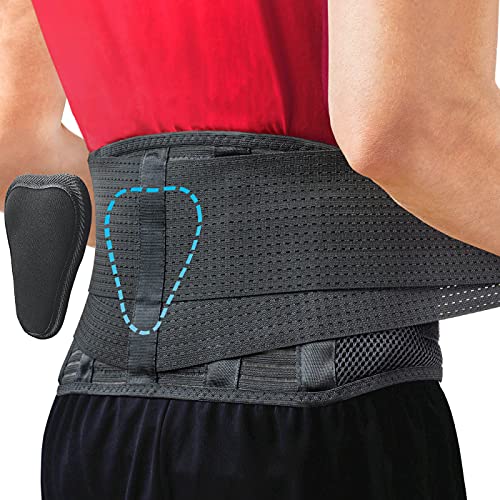
The Sparthos brace relies on a removable adjustable lumbar pad combined with vertical support stays that keep the brace from rolling down during movement. The design prioritizes compression and posture correction over raw rigidity — it pulls the shoulders back slightly and reduces slouching, which is particularly effective for users with spinal stenosis, osteoarthritis, or mild scoliosis. The breathable nylon fabric and low bulk make it one of the easiest braces to wear under clothing for a full work shift.
Verified buyers with physical jobs describe it as a game changer for daily wear; one user reported using it for a full year with the stays and Velcro still holding strong. The fit is precise when you follow the size chart — the Large covers a 44–52 inch waist — but the front section measures about 11 inches wide, which can create a wasp-waist effect on shorter torsos. It is not wide enough to support flank hernias or provide full LSO-level stabilization.
The brace is hand-wash only, and the Velcro is notably strong — several reviews warn against pulling it loose from pants fabric. It offers a great balance of support and affordability for mild to moderate lower back pain, but if your condition requires rigid immobilization, the FEATOL or Aspen models would serve better.
Why it’s great
- Adjustable lumbar pad targets sciatica and muscle tension precisely
- Breathable and slim enough for all-day wear under work clothes
- Durable construction holds up well after a full year of use
Good to know
- 11-inch front width can feel bulky on shorter body types
- Not sufficient for severe herniated discs or post-surgery recovery
7. BLITZU Sacroiliac SI Joint Hip Belt

The BLITZU is purpose-built for sacroiliac joint dysfunction and sciatic nerve pain rather than general lumbar support. It wraps around the hips at the level of the SI joint — not the stomach — and uses two independent double-pull tension straps to compress and stabilize the pelvic ring. This targeted approach reduces motion at the SI joint and relieves referred pain in the hip, pelvis, and leg. The neoprene and breathable mesh construction keeps it cool during extended wear, and the slim profile fits under pants without creating a visible line.
Verified buyers with L5-S1 bulges and hip pain report that the belt provides effective hip and sacral compression that braces focused on the upper lumbar spine cannot reach. The S/M size fits a hip circumference of 30–45 inches, while the L-XL covers 45–65 inches — note that you measure the hip, not the waist. The silicone strips on the interior help prevent slipping, which is critical for an SI belt that shifts during walking.
A few users noted that the belt runs slightly large and may not provide enough upper-back support for weightlifting — this is by design, as it targets the pelvic floor, not the mid-spine. If your pain originates in your SI joint or manifests as sciatica down the leg rather than centralized lower back ache, this specialized belt treats the root cause better than a general lumbar brace.
Why it’s great
- Targets SI joint and sciatic nerve pain with hip-level compression
- Dual double-pull straps allow precise tension adjustment for the pelvic ring
- Slim neoprene design wears discreetly under fitted pants
Good to know
- Not designed for upper lumbar support or weightlifting
- Runs slightly large — verify hip measurement before ordering
FAQ
How long should I wear a back brace each day?
Should I choose an SI joint belt or a full lumbar brace?
Can I wear a back brace while sleeping?
Final Thoughts: The Verdict
For most users, the back brace winner is the FEATOL 5-Stay Lower Back Brace because its five reinforced memory-aluminum stays deliver unmatched no-roll stability across a full range of daily activities without the bulk of a clinical LSO rig. If you need precise mechanical leverage for localized compression and have grip limitations, the ASPEN Lumbar Support with its 4:1 pulley system is the smarter choice. And for severe spinal conditions requiring adjustable arch support and immobilization, nothing beats the LSO Decompression Plate Brace.