
Walking onto a snow-covered slope for the first time is thrilling, but nothing ruins that moment faster than fogged-up lenses, a pinched nose bridge, or a strap that slips off your helmet. The difference between a great first day and a frustrating one often comes down to one piece of gear, and beginner ski goggles sit at the center of that experience.
I’m Min — the co-founder and writer behind Gadgets Feed. I’ve spent years diving deep into spec sheets, comparing lens technologies, and analyzing user reports to identify which features actually matter when you’re starting out. (And Homer 🐱 supervised this guide from the warmest spot next to the space heater, unimpressed by the concept of cold weather).
Whether you are buying your first pair or upgrading from a rental shop pair, the best beginner ski goggles balance optical clarity, a comfortable over-the-glasses fit, reliable anti-fog performance, and a price that makes sense before you commit to this sport long-term.
How To Choose The Best Beginner Ski Goggles
Picking your first pair of goggles means ignoring marketing hype and focusing on three pillars: lens performance, physical fit, and long-term value. Beginners often overestimate how often they need to swap lenses or underestimate how critical an anti-fog coating is on a humid, active day.
Lens Type and VLT Ratings
Cylindrical, spherical, and toric refer to the curvature of the lens. Spherical and toric lenses reduce glare and offer a wider field of view but cost more. VLT (Visible Light Transmission) tells you how much light the lens lets in. For beginners skiing in changing conditions, a lens around 20-35% VLT works as a do-it-all daytime lens, and a second lens around 50-70% VLT handles flat light or storm days.
Anti-Fog and Ventilation
Fogging is the number one complaint from new skiers. Look for goggles with a double-layer lens, an anti-fog coating on the inner surface, and a frame with vents that allow airflow while still sealing out snow. Thermal lenses and silicone bead technology add cost but nearly eliminate fog when used correctly.
Over-The-Glasses (OTG) Fit
If you wear prescription glasses, an OTG-compatible frame is essential. These goggles have deeper internal volume to accommodate frames without pinching the arms or pushing them against your face. Check that the frame notch sits above your glasses bridge to avoid pressure points.
Magnetic vs. Clip Lenses
Magnetic interchangeable lenses are the modern standard for convenience. They let you swap from a dark daytime lens to a clear or yellow low-light lens in seconds without fumbling with clips in freezing temperatures. Clip-on lenses are more secure once set but can be fiddly when wearing gloves.
Helmet Compatibility
A goggle strap that slips off your helmet mid-run is a safety hazard. Look for a silicone bead or grippy strip on the inside of the strap, and make sure the goggle frame width matches the helmet’s vent profile. Most brand-specific helmets and goggles from the same manufacturer fit seamlessly.
Quick Comparison
On smaller screens, swipe sideways to see the full table.
| Model | Category | Best For | Key Spec | Amazon |
|---|---|---|---|---|
| SMITH Squad | Premium | Optical clarity & color contrast | ChromaPop lens, 185° FOV | Amazon |
| Wildhorn Roca Pro | Premium | Widest peripheral view | 185° toric lens, 100% UV | Amazon |
| OutdoorMaster Heron | Mid-Range | Magnetic toric lens system | HD Toric lens, 2 lenses included | Amazon |
| Giro Cruz | Mid-Range | Brand-reliable OTG comfort | EXV frame, cylindrical lens | Amazon |
| Odoland Magnetic Set | Mid-Range | Bundled case & spare lens | 20 magnets, 2 lenses, hard case | Amazon |
| VANRORA Frameless | Value | Budget-friendly magnetic swap | Magnetic + clip lock lens | Amazon |
| COPOZZ G1 OTG | Budget | Glasses-friendly entry price | Spherical lens, 24.5% VLT | Amazon |
In‑Depth Reviews
1. SMITH Squad Goggles with ChromaPop Lens

The SMITH Squad stands apart with its ChromaPop lens technology, which enhances color contrast and depth perception on flat light days — a game-changer for beginners trying to read the snow surface. The lens is spherical and offers a panoramic 185-degree field of view that eliminates blind spots, and the anti-fog treatment holds up even during high-exertion runs in humid conditions.
This goggle feels remarkably lightweight at just over 100 grams, and the adjustable strap with silicone grip keeps it planted on any helmet. Reviewers consistently praise the clarity and lack of distortion across the entire lens surface, and the easy-to-swap lens system means you can carry a low-light spare for storm days.
The only trade-off is price — this is the premium option in this list. But for a beginner who wants one pair that will last through years of progression, the optical quality and build make it worth the investment.
Why it’s great
- ChromaPop lens delivers exceptional color contrast for reading snow terrain
- Anti-fog performance holds up in wet, humid conditions
- Lightweight frame with comfortable fit for all head sizes
Good to know
- Premium price point relative to other options
- Spare low-light lens is sold separately
2. Wildhorn Roca Pro Ski Goggles
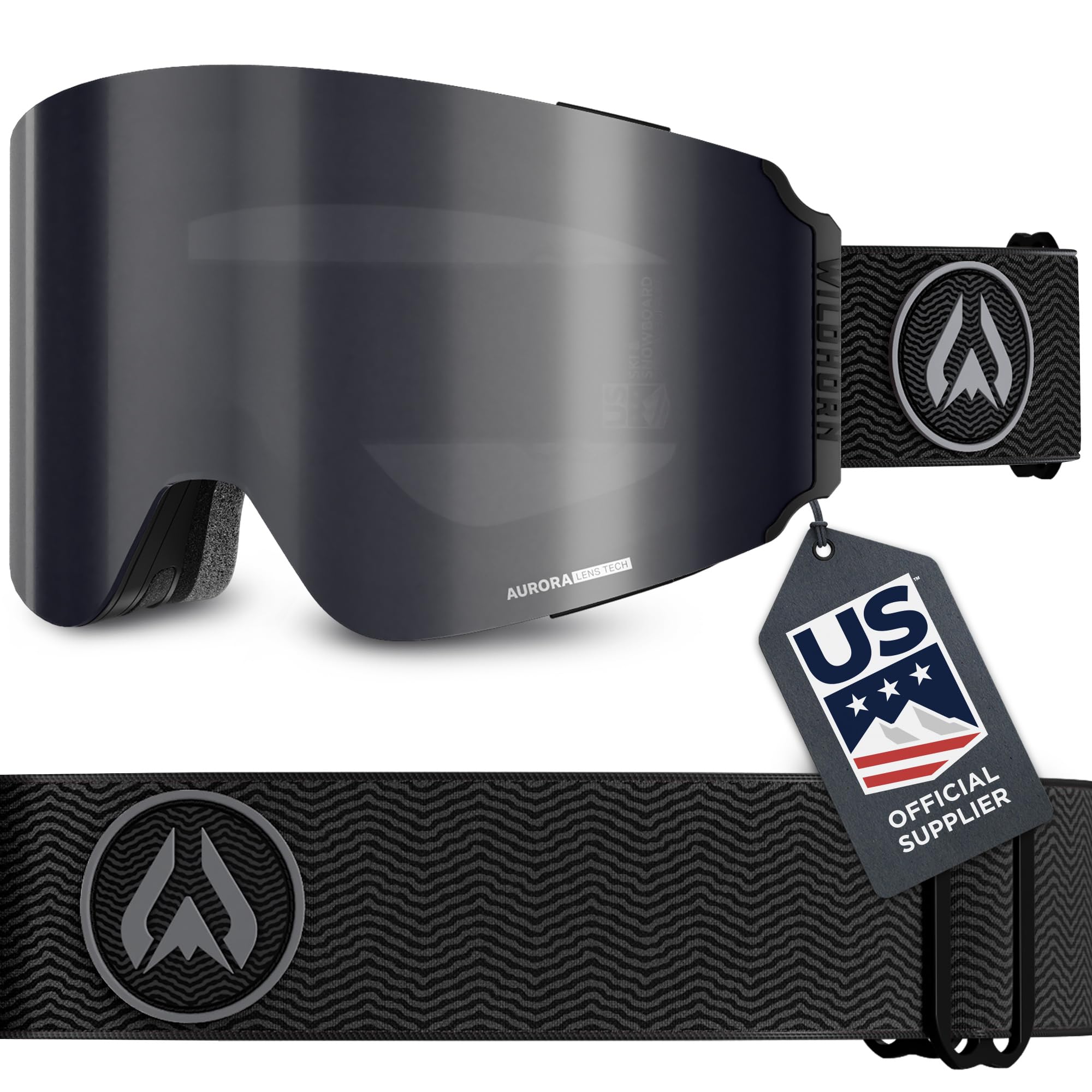
The Wildhorn Roca Pro uses a toric lens curvature that pushes the field of view to an ultra-wide 185 degrees, giving beginners a level of peripheral awareness they won’t get from a standard cylindrical lens. The magnetic lens lock snaps into place with an audible click, and the frame is specifically designed to sit flush with most helmet contours without leaving a gap for snow or wind.
Testers report excellent anti-fog performance and a scratch-resistant coating that holds up to repetitive lens swapping. The foam is triple-layer and medium-density, providing a strong seal without feeling too tight on the cheekbones. At 75 grams, it is one of the lightest options with this wide a field of view.
Some users noted that delivery can be slower than Amazon’s usual speed, and the included low-light lens is slightly less effective than the dedicated sunny lens. For the price, the peripheral coverage and magnetic convenience are hard to beat.
Why it’s great
- Ultra-wide 185° field of view enhances situational awareness
- Magnetic lens lock is quick and secure for on-mountain swaps
- Scratch-resistant coating and effective anti-fog
Good to know
- Low-light lens performance is good but not as strong as the sunny lens
- Shipping speed has been inconsistent for some buyers
3. OutdoorMaster Heron Ski Goggles with 2 Lens

The OutdoorMaster Heron punches well above its mid-range price by offering an HD toric lens, which is a step up from spherical in terms of distortion-free peripheral clarity. The magnetic lens system is reinforced with side clips, so even strong impacts won’t pop the lens out. Two lenses are included — a darker lens for sunny
Experienced reviewers with large head circumferences (up to 65 cm) report that the strap extends sufficiently for a comfortable fit even with a bulky helmet, and the triple-layer foam seals well without creating hot spots. The anti-fog coating has a textured surface that resists condensation buildup, and users with hyperhidrosis reported fog-free sessions in subzero temperatures.
The only caution is that the strap at its maximum length may barely fit some oversized helmets, so check compatibility if you wear a large helmet with a molded slot. The included lens pouch is soft, but a hard case would be better for travel.
Why it’s great
- HD toric lens offers premium optical quality at a mid-range price
- Two included lenses cover both sunny and low-light conditions
- Excellent anti-fog performance even in extreme cold
Good to know
- Strap at max length may not fit all oversized helmets
- Only a soft pouch included, no hard case
4. Giro Cruz Snow Goggle

The Giro Cruz is engineered specifically for skiers who wear prescription glasses, with an oversized interior cavity that accommodates frames without pressing the arms into your temples. The EXV (Expansion View) frame design shaves down the rim and adds frameless zones to maximize peripheral vision, giving you a 30% larger field of view than a standard goggle of the same size.
The cylindrical thermoformed lens is paired with Giro’s anti-fog coating, and the double-layer face foam includes a microfleece lining for comfort against the skin. The silicone strap is wide and grips securely, and Giro helmets are guaranteed to mate without any gap. Users report that the fit is medium-sized and comfortable for most adults.
This model includes only one clear lens, so you will need to buy a second lens separately if you want to handle both sunny and storm conditions. The Cruz feels noticeably heavier than frameless alternatives, but the build quality and reliable anti-fog performance justify the weight.
Why it’s great
- Excellent OTG fit for prescription glasses without pressure points
- EXV frameless zones provide a wider field of view than standard goggles
- Silicone strap stays secure on any helmet
Good to know
- Only one lens included; a second lens is a separate purchase
- Heavier than frameless options in the same price range
5. Odoland Magnetic Interchangeable Ski Goggles Set

The Odoland set is the most complete beginner package on this list, including the goggles, two lenses (day and low-light), a hard shell carrying case, and a soft pouch. The frame uses 20 magnets around the rim to secure the lenses, which feels over-engineered but results in a rock-solid hold that competitors with fewer magnets sometimes lack.
The spherical lens offers a 177-degree field of view, and the dual-layer anti-fog system includes two-way ventilation channels that prevent moisture buildup even during active runs. The TPU frame is flexible enough to withstand cold temperatures without cracking, and the triple-layer foam is soft enough for all-day wear.
Some users report that the yellow-tinted low-light lens can impair contrast at dusk, so it works best as a daytime storm lens rather than a true night lens. The frame is also slightly bulkier than frameless designs, but the included hard case solves the storage issue entirely.
Why it’s great
- Complete kit with hard case, pouch, and two lenses
- 20-magnet lens retention system is extremely secure
- 177° spherical lens provides great peripheral clarity
Good to know
- Yellow low-light lens may reduce contrast in twilight conditions
- Frame is bulkier than frameless alternatives
6. VANRORA Ski Goggles Frameless Interchangeable Lens
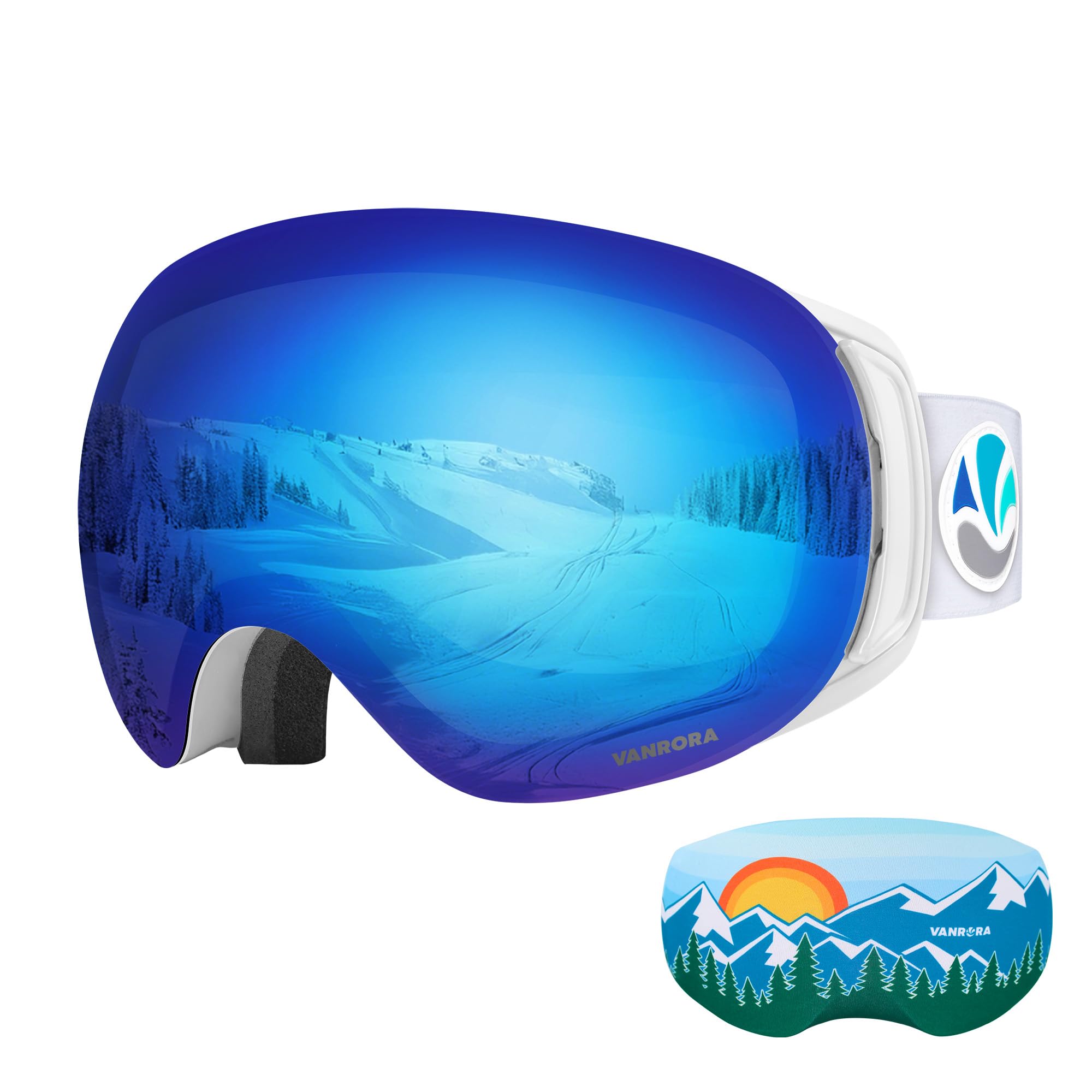
The VANRORA frameless design uses a hybrid magnetic-and-clip-lock system that keeps the lens secure while still allowing tool-free swaps. The frameless construction eliminates the frame’s upper edge, giving you an unbroken field of view that feels much wider than its actual measurement. It fits over most prescription glasses without pulling them off, and the strap expands enough to accommodate both helmeted and helmetless use.
A 20-year snowboarding veteran gave these a full endorsement, noting zero fogging during intense sessions and a lens that stayed locked even on rough terrain. The anti-fog coating works effectively, and the silicone bead on the strap prevents any slipping. Users with smaller faces appreciate the relatively compact frame dimensions.
The main downsides are that the strap adjustments can loosen during a full day of wear, and the magnetic clips occasionally pop open if you accidentally brush the frame against a tree branch. There is no included storage case, only a basic pouch.
Why it’s great
- Frameless design maximizes field of view without distortion
- Magnetic + clip lock system provides redundant lens security
- Fits comfortably over prescription glasses
Good to know
- Strap adjustments can loosen over a full day of use
- No hard case included for storage or travel
7. COPOZZ Ski Goggles G1 OTG Snowboard Snow Goggles
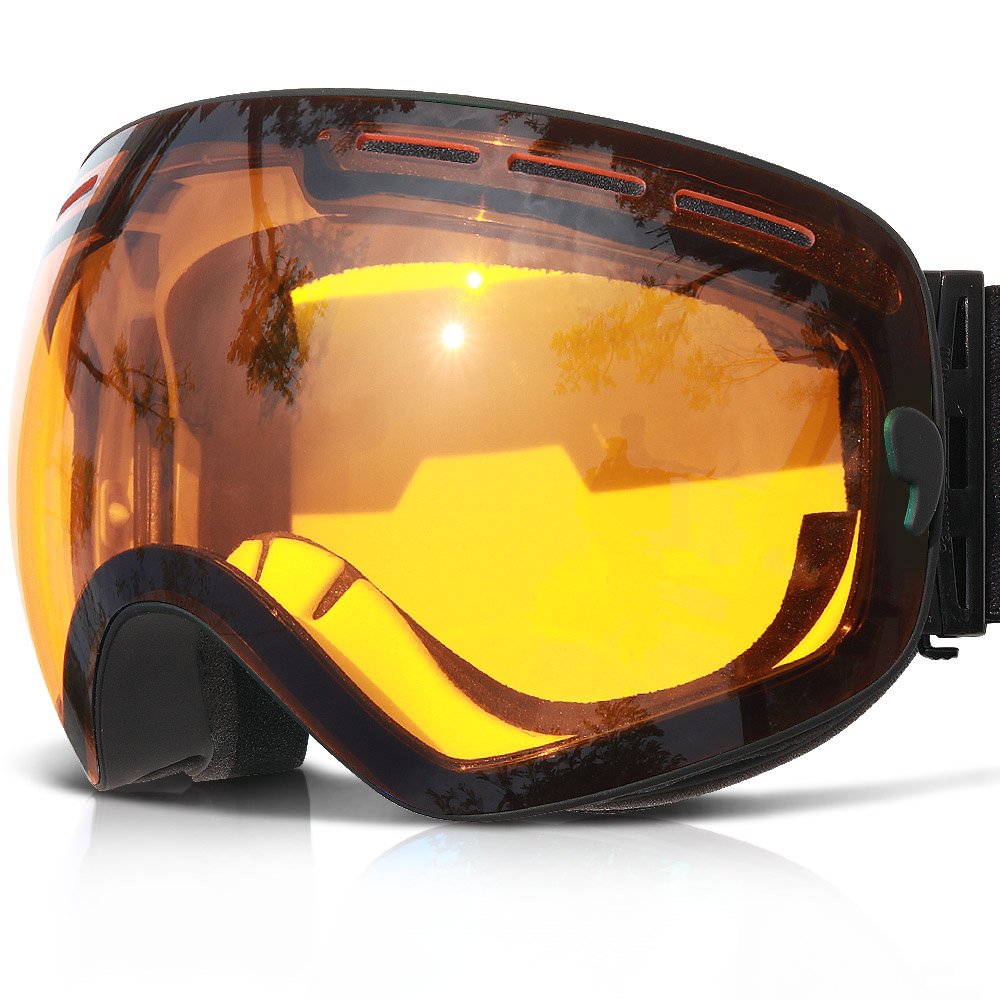
The COPOZZ G1 is the most affordable spherical-lens goggle in this guide, and it is a strong option for anyone who wants a single-lens solution for sunny days. The VLT of 24.5% is optimized for bright conditions, and the spherical curvature reduces glare more effectively than most cylindrical lenses at this price point. The foam is thick and comfortable, and the strap is highly adjustable for use with or without a helmet.
Testers confirm that the OTG fit works well with standard prescription frames, and the yellow lens included with some variants helps brighten flat morning light. The anti-fog coating does not require activation and stays effective across a full day on the slopes. Lens swapping is simple with a twist-lock mechanism on the frame.
The biggest omission is the lack of a hard case — only a small fabric bag is provided, which offers minimal protection during travel. The frame is also slightly basic compared to magnetic-swap competitors, and users who want rapid lens changes mid-run will prefer the magnetic options above.
Why it’s great
- Spherical lens provides superior glare reduction for vibrant snow
- Reliable OTG fit that accommodates most prescription glasses
- Thick foam and comfortable strap for all-day wear
Good to know
- Only a soft pouch included; no hard storage case
- Single-lens design limits versatility in changing light
FAQ
Can I wear prescription glasses under any beginner ski goggles?
How do I prevent ski goggles from fogging up?
Is a magnetic lens system worth the extra cost for beginners?
Final Thoughts: The Verdict
For most users, the best beginner ski goggles winner is the SMITH Squad because its ChromaPop lens delivers unmatched clarity and color contrast that helps new skiers read the snow surface. If you want a wide peripheral view at a lower price, grab the Wildhorn Roca Pro. And for budget-conscious beginners who wear glasses, the COPOZZ G1 OTG is a solid entry-level choice.