
A 16-inch box fan is the most no-nonsense cooling tool you can plug into a wall—it shoves a column of room air from one side of the room to the other, pulling stale heat out and forcing fresh movement in. But not every square frame delivers the same cubic feet per minute, and the cheap ones just wobble and whine without actually moving anything.
I’m Min — the co-founder and writer behind Gadgets Feed. I’ve spent years dissecting consumer fan specs, comparing CFM ratings, motor types, and blade designs to separate high-velocity workhorses from plastic disappointments. (And Homer 🐱 quality-checked each fan’s airflow by parking directly in front of it and refusing to move.)
After combing through real-user feedback and technical spec sheets, I’ve identified the models that actually earn their spot in your window or on your floor. Here is my definitive take on the 16 inch box fan market broken down by real-world performance.
How To Choose The Best 16 Inch Box Fan
A 16-inch box fan looks simple, but the specs underneath the grille tell the real story. Picking the right one means understanding airflow volume, motor efficiency, and how you intend to use it—whether it’s for a bedroom window, a garage workshop, or whole-room circulation.
CFM: The Real Measure of Air Moving Power
Cubic feet per minute (CFM) is the single most important number. A typical budget box fan pushes around 1,500–1,800 CFM, while high-velocity models can exceed 2,800 CFM. For a standard 12×12 bedroom, 2,000 CFM is plenty. For a garage or large living area, look for 2,400 CFM or higher. Ignore marketing speed settings—count the CFM.
Motor Type: AC vs DC
AC motors are the industry standard: they are cheap, durable, and move a lot of air, but they consume more power (typically 60W–110W). DC motors are newer, quieter, and sip power at around 28W while offering variable speed control, but they cost more upfront. If the fan runs 8+ hours daily, a DC motor pays for itself in electricity savings within a season.
Form Factor: Box Fan vs Air Circulator
A true box fan has a square, shroud-like frame designed to sit in a window or on the floor and move air in a broad column. An air circulator (like Vornado’s Vortex line) uses a ducted shroud and a specific blade pitch to create a concentrated, high-velocity stream that bounces off walls and stirs the entire room. Both are 16 inches, but they behave very differently. Choose a box fan for window exhaust or direct cooling; choose an air circulator for whole-room air mixing.
Build Quality and Noise Tolerance
All-metal construction lasts longer and feels more stable than all-plastic, but it often transmits motor vibration as noise. Plastic fans can be quieter at low speeds but may wobble at high settings. Check the decibel rating: budget models often hit 65–70 dB at max speed (conversation-level noise), while premium DC models can dip below 50 dB at low speeds. Decide your noise threshold before buying.
Quick Comparison
On smaller screens, swipe sideways to see the full table.
| Model | Category | Best For | Key Spec | Amazon |
|---|---|---|---|---|
| Vornado Model 80X | Air Circulator | Whole-room air mixing | Variable 1–99 speed control | Amazon |
| Vornado Model 80 | Air Circulator | Targeted cooling + durability | 5-speed, 5-year warranty | Amazon |
| Hurricane Wall Mount | High Velocity | Garage / workshop cooling | 2,400 CFM, aluminum blades | Amazon |
| Tornado Pro Series | High Velocity | Industrial / commercial use | 2,850 CFM, UL listed | Amazon |
| Holmes Chrome Stand Fan | Stand Fan | Bedroom with remote control | 2,190 CFM, all-metal build | Amazon |
| Amazon Basics DC Pedestal | Pedestal Fan | Energy-efficient quiet cooling | 28W DC motor, 12 speeds | Amazon |
| Amazon Basics AC Pedestal | Pedestal Fan | Budget-friendly whole-room | 60W AC motor, remote | Amazon |
In‑Depth Reviews
1. Vornado Model 80X High Velocity Box Fan
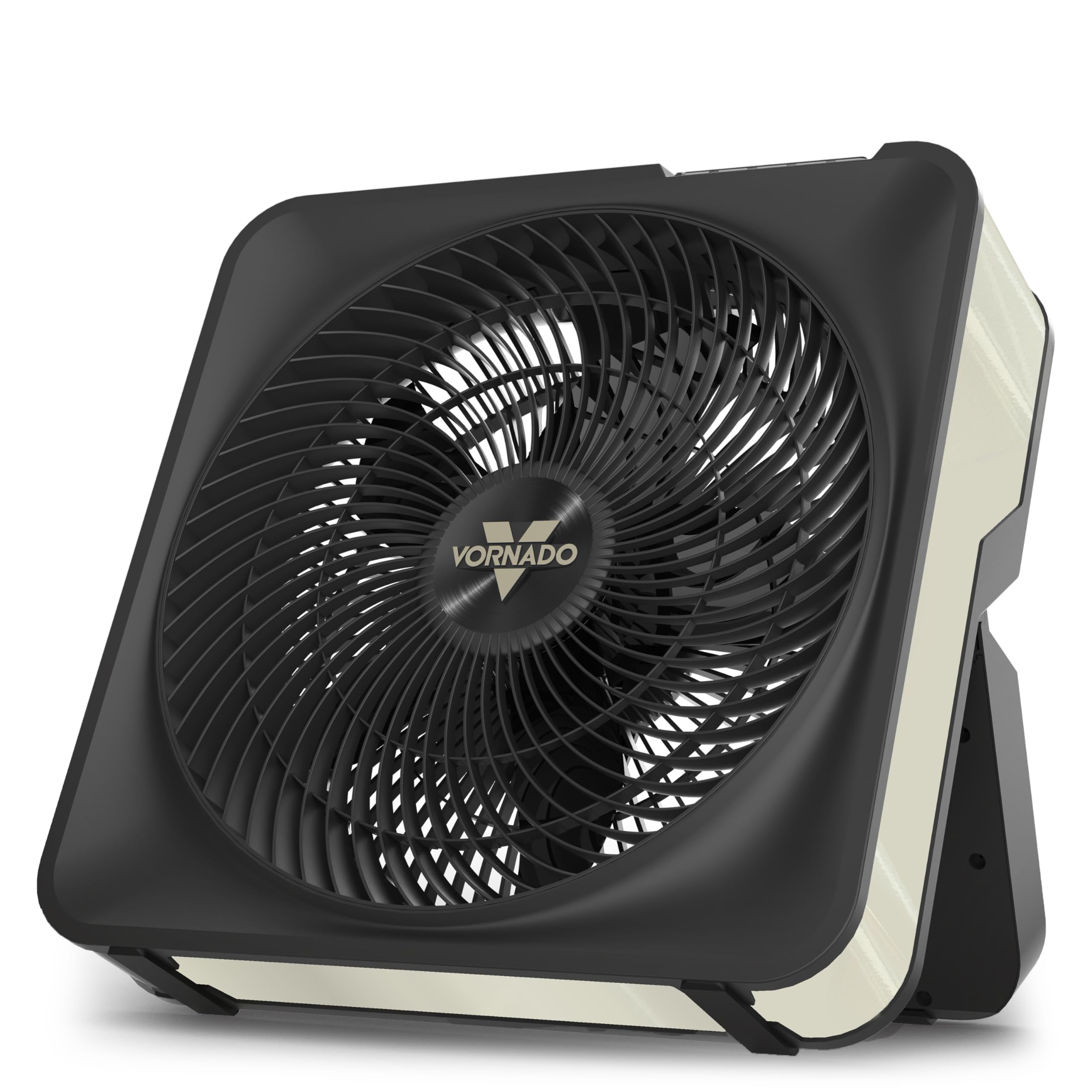
The Vornado Model 80X is the most refined box fan on the market right now, packing a variable-speed motor that lets you dial in any level from a whisper-quiet 1 to a full-throttle 99. That granular control is a game-changer for anyone who sleeps with a fan—you can find the exact airflow/noise sweet spot that standard 3-speed units simply cannot offer. The built-in kickstand tilts the fan vertically, so it works equally well on the floor, a windowsill, or a tabletop without propping it up on books.
At top speeds, the 80X moves massive air—easily on par with Vornado’s larger models—yet the noise at speeds under 40 is barely a whoosh. The removable grille makes deep cleaning simple, and the 12-hour timer is a thoughtful addition for nighttime use. Owners consistently praise the fine speed tuning, with many using it as the core of a DIY air purifier because the variable speed handles filter resistance better than stepped controls.
The trade-off is the premium price tag, which positions it well above standard box fans. But for serious buyers who value precision, build quality, and whole-room circulation, the 80X is the definitive choice. The 5-year replacement warranty from Vornado adds long-term confidence.
Why it’s great
- 99-speed variable control for perfect airflow/noise balance
- Excellent build quality with removable grille for cleaning
- Built-in kickstand and 12-hour timer add real utility
Good to know
- Premium price may not suit budget-focused shoppers
- Buttons instead of a rotary knob; some prefer tactile dials
2. Vornado Model 80 High Velocity Electric Box Fan

The Vornado Model 80 is the simpler sibling of the 80X, and it proves that you don’t need 99 speeds to get superb airflow. With five clearly marked settings, you get a light breeze on 1 and a concentrated jet on 5 that triples the output of a standard box fan. The deep-pitched Vortex blade and ducted shroud create a focused column of air that bounces off walls and circulates the entire room rather than just blowing in one straight line.
Users consistently note that the Model 80 feels heavy and solid—the thick plastic housing and rubber feet keep it planted even at max speed. The removable grille makes dusting quick, and the 5-year replacement warranty from Vornado is the best in the category. Many owners report using these fans for years without any performance degradation, which justifies the higher upfront cost compared to commodity fans.
The noise level is the main consideration: on settings 4 and 5, this fan is loud—a pronounced whoosh from the high-velocity motor. On settings 1–3, it is noticeably quieter and still moves excellent air. If you need a fan for a garage, workshop, or living room where airflow matters more than silence, the Model 80 delivers unbeatable value.
Why it’s great
- True air circulator design moves 3x more air than standard box fans
- Sturdy build with grippy rubber feet and 5-year warranty
- Removable grille for easy cleaning
Good to know
- Loud at high settings (4–5); best used where noise is less critical
- Starts at maximum speed by default; lower speeds require manual adjustment
3. Hurricane 16″ High Velocity Pro Oscillating Wall Mount Fan
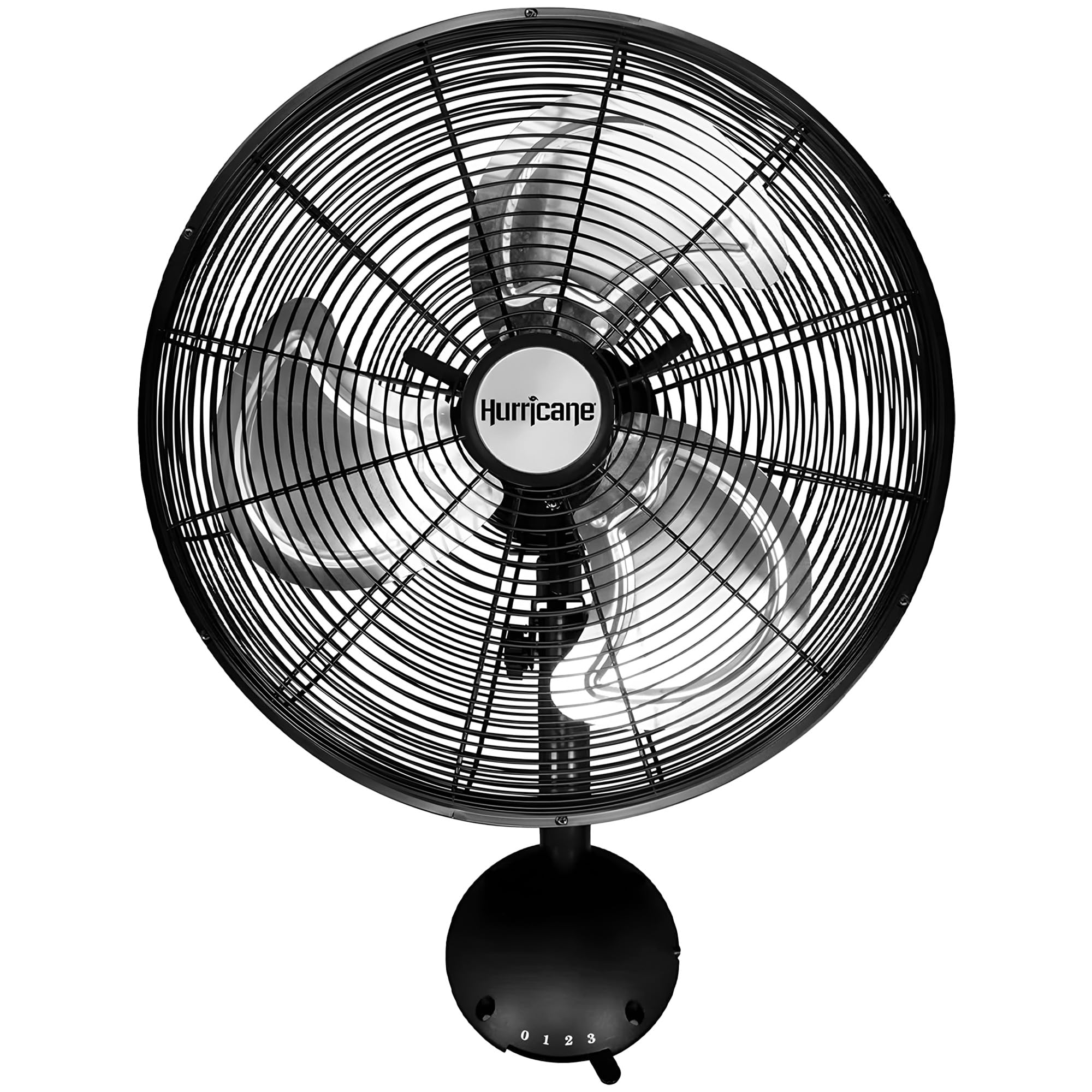
The Hurricane wall mount fan is built for spaces where floor space is at a premium—garages, workshops, greenhouses, and gyms. Using the included heavy-duty bracket, it mounts securely to wall studs and delivers 2,400 CFM of high-velocity airflow at 1,450 RPM. The aluminum blades are a standout feature here: they are lighter than steel but stiffer than plastic, cutting through air more efficiently and resisting deformation over time.
All-metal construction with a powder-coated finish means this fan can handle dust, humidity, and temperature swings without rust or wobble. The three manual speed settings are basic but effective, and the oscillation function sweeps 75 degrees to cover a wide work area. The thermally protected motor includes automatic shutoff if overheating occurs, which is a welcome safety feature for unattended use in a shop.
The main limitation is the short power cord and the fact that the fan angle adjustment is minimal—a few degrees of tilt rather than a full pivot. Some units have arrived with cosmetic damage or been sent as refurbished when ordered new, so check the seller feedback. But for raw airflow per dollar in a wall-mounted format, this Hurricane model is tough to beat.
Why it’s great
- Aluminum blades + all-metal housing for industrial durability
- 2,400 CFM moves serious air in large utility spaces
- Wall mount saves valuable floor space
Good to know
- Short power cord; may require an extension cord
- Limited tilt adjustment—only a few degrees of vertical aim
4. Tornado 16″ Pro Series Oscillating Wall Mount Fan
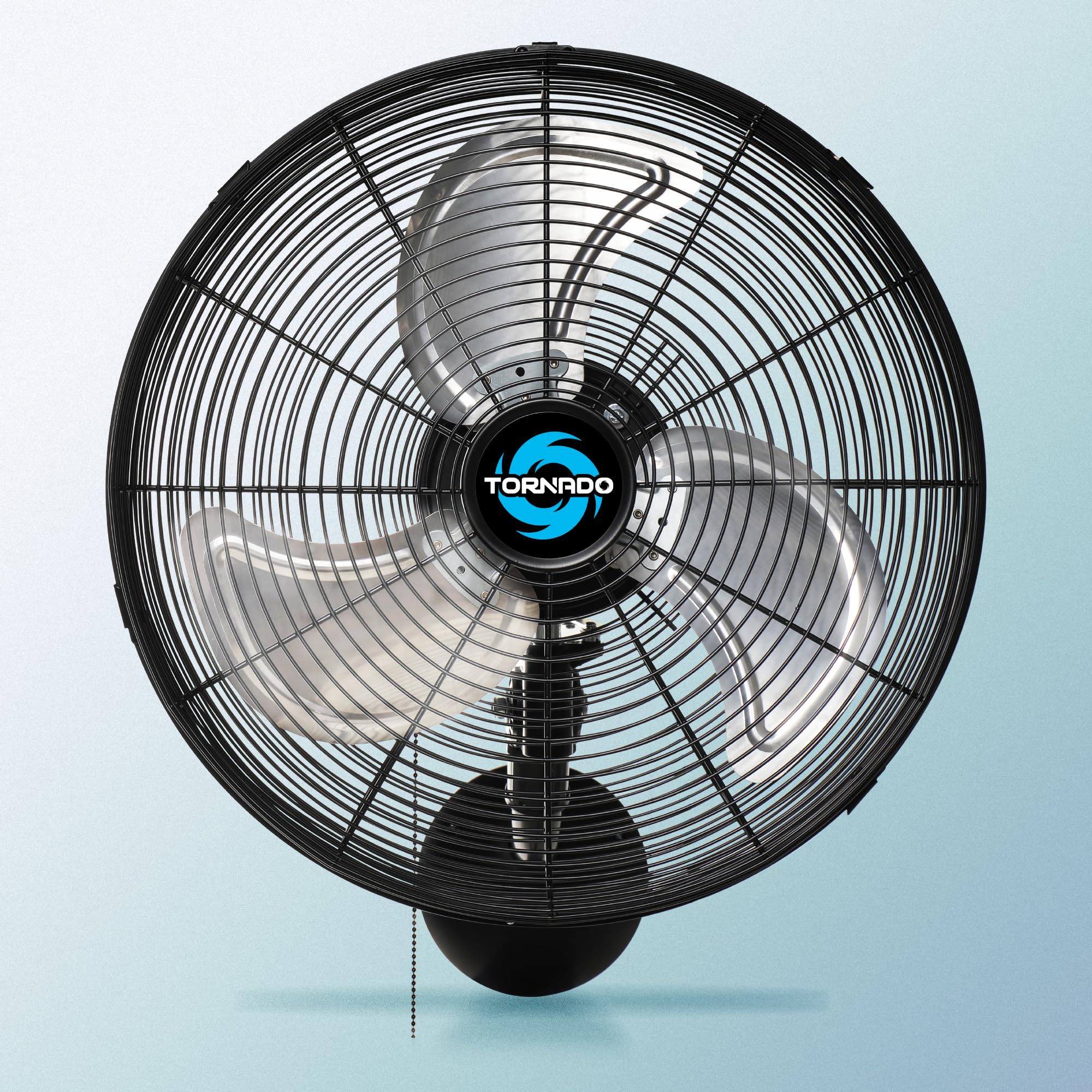
The Tornado Pro Series is the most powerful fan on this list, rated at 2,850 CFM on its highest setting—enough to create a legitimate breeze across a two-car garage. Built from a combination of aluminum and steel with a rust-resistant grille, this fan is designed for continuous duty in commercial, industrial, and demanding home environments. The 110W, 1/6 HP ball-bearing motor is thermally protected and UL listed, meeting OSHA safety standards for workplace use.
It oscillates 75 degrees left to right and tilts 40 degrees vertically, giving you precise control over the air direction even when mounted high on a wall. The 6.6-foot SJT-R power cord is noticeably longer than most wall-mount fans, reducing the need for extension cords. Users report that despite the massive airflow, the noise is reasonable—a deep whoosh rather than an irritating whine, thanks to the advanced motor design.
Assembly requires attention: the set screw on the blade hub must face the motor for proper airflow direction, and the speed order runs low/medium/high instead of the expected low/medium/high labeling confusion. The oscillation knob sits on top of the motor housing, which can be awkward to reach if the fan is mounted high. For sheer CFM output and build integrity, though, this Tornado is the heavy hitter in the category.
Why it’s great
- Highest CFM rating on this list at 2,850
- All-metal aluminum/steel construction with rust-resistant grille
- UL listed and OSHA compliant for commercial use
Good to know
- Blade orientation is critical during assembly; improper install causes poor performance
- Oscillation knob on top of motor can be hard to reach when mounted high
5. Holmes 16 Inch Chrome Digital Metal Stand Fan
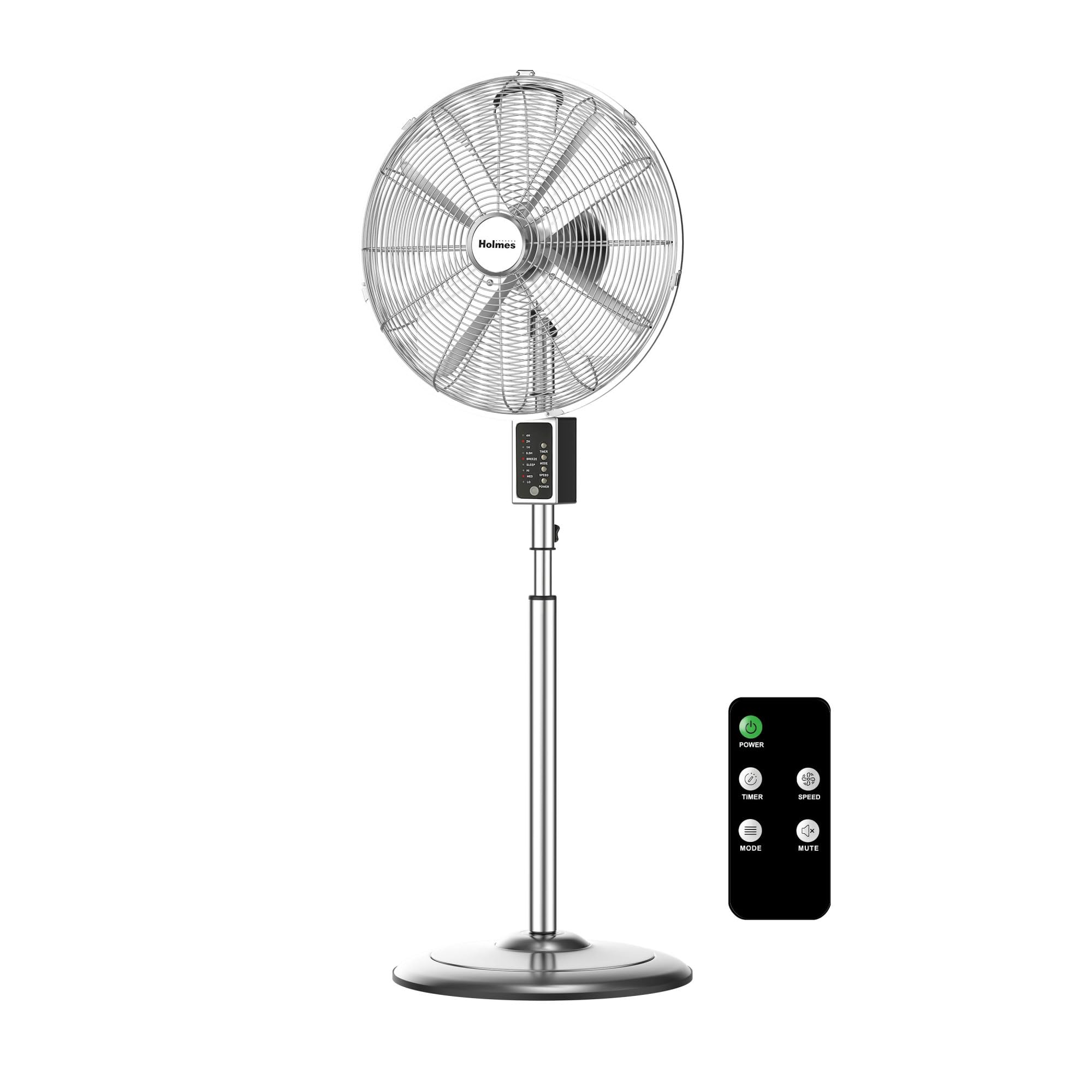
The Holmes Chrome Digital Metal Stand Fan brings an industrial aesthetic to the bedroom or living room with its full chrome finish and all-metal construction. At 2,190 CFM, it moves more air than most plastic stand fans, and the 75-degree motorized oscillation ensures the breeze reaches across large living areas. The 3-speed motor with normal, breeze, and sleep modes gives you multiple airflow patterns without needing variable-speed electronics.
The adjustable height ranges from 44 to 49 inches, and the 20-degree head tilt helps aim air exactly where you need it. Owners consistently highlight the remote control as a major plus—it comes with batteries included and allows you to change speed, oscillation, and mode from across the room. The noise level is typical for an AC motor at 64 dB on max speed—conversation-level but not whisper-quiet.
The chrome finish looks premium but does show fingerprints and dust more readily than matte or black finishes. Some users have reported reliability concerns with the high-speed setting failing after extended use, though the 3-year warranty covers that. For anyone who wants a stand fan that looks as good as it performs and doesn’t mind a bit of fan noise, the Holmes delivers strong value.
Why it’s great
- All-metal chrome construction feels premium and sturdy
- 2,190 CFM with 75° oscillation covers large rooms
- Remote control with included batteries for easy operation
Good to know
- Chrome finish shows fingerprints and dust easily
- Some reports of high-speed failure after sustained use
6. Amazon Basics 16-inch Quiet DC Motor Standing Floor Fan

The Amazon Basics DC Motor floor fan is the most energy-efficient option in this lineup, consuming only 28 watts compared to the 60–110 watts of AC-powered competitors. Over a summer of daily use, that electricity savings can be significant, and the DC motor runs noticeably quieter at low speeds—perfect for a bedroom where noise matters. The 12 speed settings give you much finer control than a standard 3-speed fan, and the three breeze modes (Normal, Nature, Sleep) let you set an airflow pattern that mimics natural wind.
The dual-tier blade system uses ten blades to break up the air stream into a softer, less mechanical-feeling breeze. The adjustable height ranges from about 44 to 53 inches, and the head tilts for directional control. The remote and digital touch display make operation a breeze from the bedside. The build quality is solid—heavy enough to stay stable even on the highest speed without wobbling.
The instructions for assembly are notoriously poor, with multiple users noting that fitting the fan cage requires some mechanical patience. Also, the remote is very sensitive—light presses work best, but hard pushes can cause double-taps. If you can tolerate the assembly quirks, this DC motor fan is the quietest and most power-frugal choice for bedrooms and living spaces.
Why it’s great
- 28W DC motor is extremely energy-efficient and quiet
- 12 speeds + 3 breeze modes for personalized airflow
- Dual-tier blades create a softer, natural-feeling breeze
Good to know
- Assembly instructions are poor; requires mechanical patience
- Remote buttons are overly sensitive and prone to double-tap
7. Amazon Basics 16″ Pedestal Fan with Remote

The Amazon Basics AC pedestal fan is the entry-level workhorse of this list, offering a reliable 60W motor with three speed settings and three breeze modes at a price that undercuts most competitors. The 16-inch dual-layered blades are made of plastic, but they move enough air for medium to large rooms like living rooms, kitchens, and offices. The adjustable height (up to 53 inches) and tilt head give you decent directional control without any complex setup.
The remote control works well for adjusting speed, mode, and oscillation from across the room, and the 90-degree oscillation range is wider than average, covering more space per sweep. Users consistently praise how quiet it runs on low and medium speeds—quiet enough for TV in the same room. On high speed, the white noise blends into the background and actually helps some people sleep. The build is surprisingly sturdy for the price point, with a weighted base that prevents tipping.
The biggest drawback is the poorly written assembly instructions, which several users describe as the worst they have ever seen. The fan cage is particularly fiddly to attach, requiring trial and error rather than clear steps. The breeze mode selection is also a bit unclear—the manual doesn’t explain the differences well. For the budget-conscious buyer who can handle some assembly frustration, this is a solid performer that punches above its weight class.
Why it’s great
- Quiet operation on low/medium speeds; excellent for bedroom use
- 90° wide oscillation covers more room area
- Good build quality with weighted base for stability
Good to know
- Assembly instructions are poorly written and confusing
- Breeze mode selection is unclear; mode labels lack explanation
FAQ
Can I use a 16-inch box fan in a window year-round to exhaust heat?
What is the ideal CFM rating for cooling a 12×12 bedroom?
Final Thoughts: The Verdict
For most users, the 16 inch box fan winner is the Vornado Model 80X because its 99-speed variable control lets you dial in the perfect airflow-to-noise ratio for any room. If you want an air circulator with proven longevity and a lower price, grab the Vornado Model 80. And for heavy-duty garage or workshop use where CFM is king, nothing beats the Tornado Pro Series at 2,850 CFM.