
Living with nocturnal enuresis as an adult brings a specific frustration: the technology has aged in place for children, but the stakes — disrupted relationships, ruined mattresses, and the quiet toll on self-esteem — are far higher. The core challenge isn’t finding an alarm; it’s finding one with the decibel range, vibration amplitude, and sensor reliability to actually pull a deep-sleeping adult out of a full sleep cycle.
I’m Min — the co-founder and writer behind Gadgets Feed. I’ve buried myself in the clinical data on conditioning-based enuresis treatment and cross-referenced hundreds of user reports to identify which wireless range, battery endurance, and alert modalities matter most for the adult bedwetting demographic..
This guide breaks down the seven most capable solutions on the market, with a hard focus on wake-up power and sensor speed. Whether you’re buying for yourself or a loved one, these are the only options that justify the investment when you search for the bedwetting alarm for adults.
How To Choose The Best Bedwetting Alarm For Adults
Adult bedwetting requires a different threshold than a child’s system. The alarm must pierce deeper sleep, attach securely to adult-sized garments, and survive nightly use without battery fade. Here are the three critical factors to weigh before buying.
Alert Modalities: Why Sound Alone Fails
An 80 dB tone may rouse a five-year-old, but an adult in deep N3 sleep needs a multi-sensory assault. The best alarms combine a loud speaker (at least 90 dB), a high-amplitude vibration motor, and a bright flashing LED. Products that offer vibration-only mode are also essential for users who share a bed with a partner, allowing the sleeper to wake without disturbing the other person.
Sensor Sensitivity and Attachment
False alarms from sweat or humidity are the number one complaint across this category. Look for sensors with a patent or clear mechanism for distinguishing urine from moisture — some models use a specific electrode pattern that only triggers on the higher conductivity of urine. The clip must also provide enough jaw tension to stay anchored to adult underwear or thin pajamas through a night of movement.
Wireless Range and Battery Endurance
Wired alarms are cumbersome for adults. A wireless system with at least a 100-foot open-air range lets you keep the receiver on a nightstand or carry it to another room. Rechargeable units (USB-C preferred) eliminate the recurring cost of coin or alkaline cells. Look for a minimum of 10 days per charge to avoid the alarm dying mid-week.
Quick Comparison
On smaller screens, swipe sideways to see the full table.
| Model | Category | Best For | Key Spec | Amazon |
|---|---|---|---|---|
| Zexyvor Wireless | Wireless | Deep Sleepers & Special Needs | Triple alert (sound/vibration/flash) | Amazon |
| DryEasy Pro | Wireless | Long-Duration Training | 6 selectable sounds + volume control | Amazon |
| ReYang Wireless | Wireless | Adults & Seniors | Magnetic USB charging case | Amazon |
| Wet-Stop 3 | Wireless | Proven Methodology | 6 tones + strong vibration | Amazon |
| DOVERC Wireless | Wireless | Budget-Conscious Users | 9 melodies + UV sanitizing mode | Amazon |
| Vastaint Wireless | Wireless | Simple One-Button Operation | 100-foot wireless range | Amazon |
| MERLRR Bed Sensor | Motion Sensor | Fall Prevention & Monitoring | 58 melodies, 110 dB max | Amazon |
In‑Depth Reviews
1. Zexyvor Wireless Bedwetting Alarm
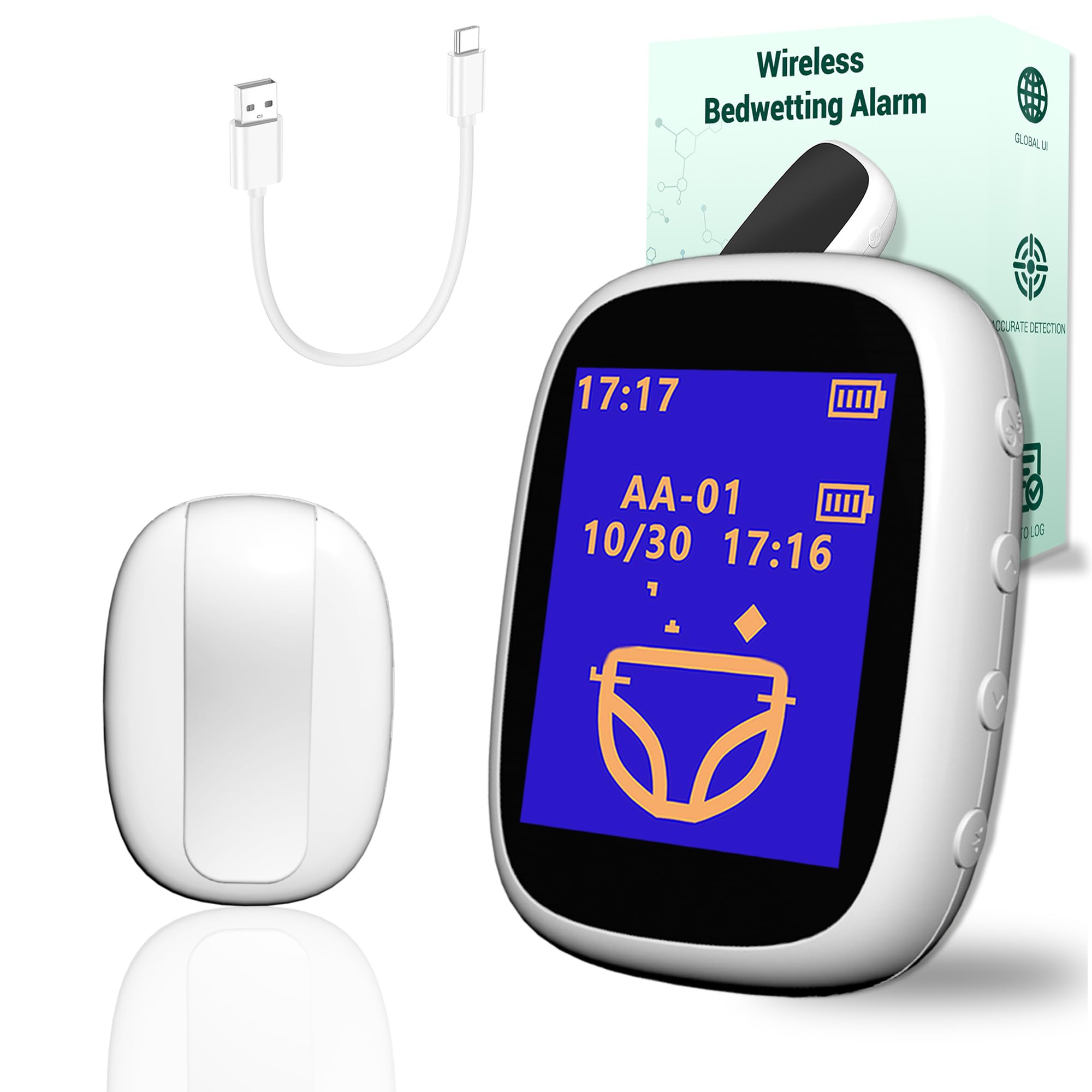
This is the unit specifically engineered for the demographic that wired alarms fail: deep sleepers, older teens, and adults. The triple alert system layers a loud tone with a strong vibration motor and a bright flashing light, giving the user three distinct sensory channels to trigger a cortical arousal. The IPX8-rated sensor detects moisture within one second, making it one of the fastest on the market, and the USB-C rechargeable battery delivers a claimed 336 hours (14 nights) per charge.
What sets this model apart for adult use is the multi-transmitter support. One receiver pairs with unlimited transmitters, which is useful for couples where both users need monitoring or for caregivers managing multiple individuals. The backlit digital display shows battery life and built-in progress tracking, eliminating misplaced paper logs. The dual-attachment sensor uses a clip plus magnetic hold to stay secure on adult underwear without slipping off during movement.
A small percentage of users report the sensor body feels like standard plastic rather than medical-grade silicone, and some found the menu interface rough around the edges with spelling errors. However, for raw wake-up power and wireless freedom, the Zexyvor is the strongest candidate for an adult who needs the alarm to actually do its job every single time.
Why it’s great
- IPX8 waterproof sensor withstands submersion for easy cleaning and reliability.
- Triple alert (sound + vibration + flash) engineered for the deepest sleep cycles.
- 14-day USB-C rechargeable battery and multi-transmitter pairing for household use.
Good to know
- Clip may require practice to secure on very thin or slippery pajama fabric.
- Menu interface has minor spelling errors and non-standard character sorting.
2. DryEasy Pro Wireless Bedwetting Alarm
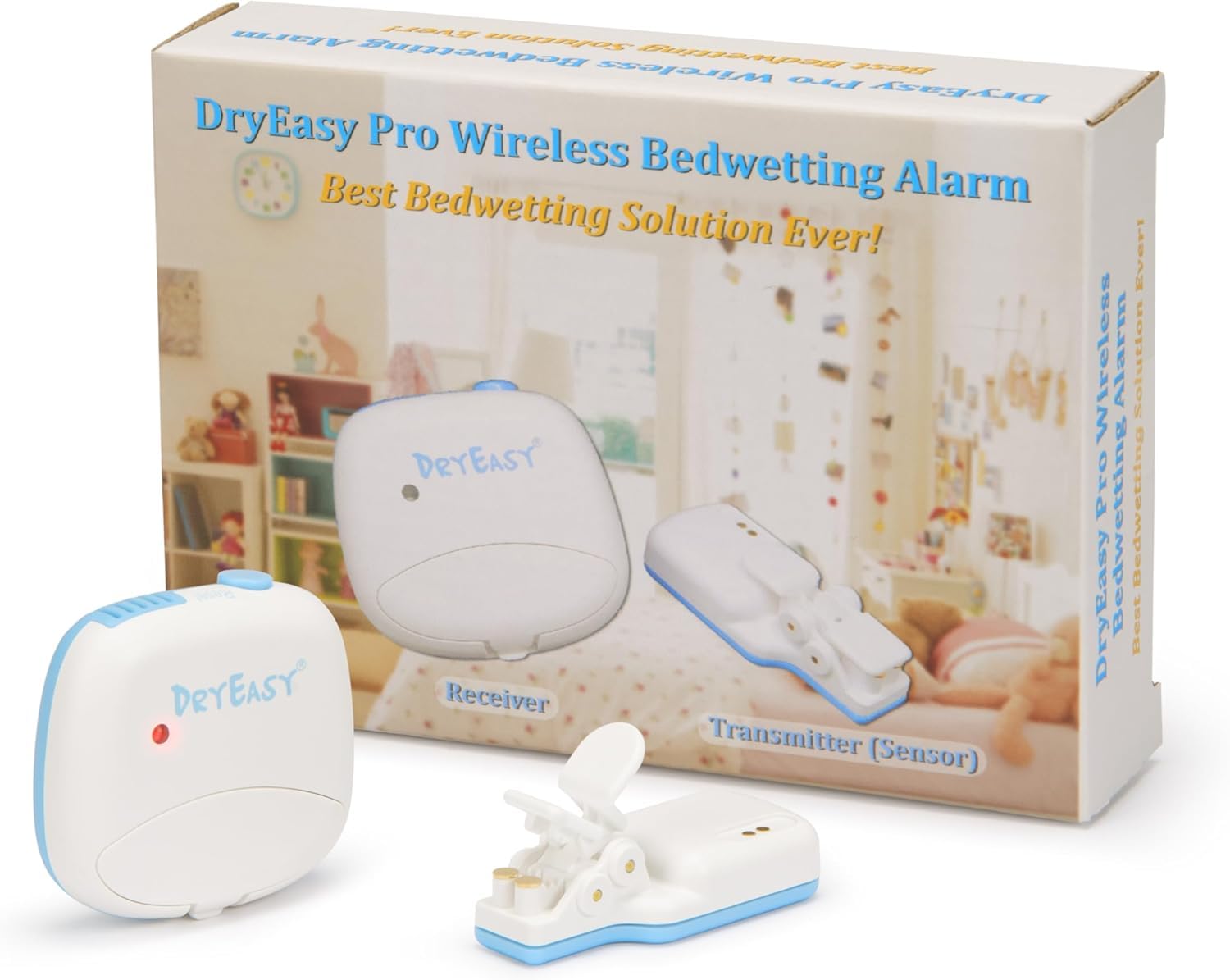
The DryEasy Pro solves the habituation problem that plagues single-tone alarms. With six selectable sounds and a random-play option, the brain cannot acclimate to a single tone and learn to sleep through it. This is critical for adults undergoing conditioning therapy, where the alarm must remain a novel stimulus over weeks or months of use. The toggle clamp on the transmitter provides a more secure attachment than simple clips, and users with ADHD or autism spectrum conditions have reported success within 10 days of consistent use.
Battery life is a standout feature — multiple verified buyers report over one month between charges on the included lithium-ion cells. The three operation modes (sound only, vibration only, sound plus vibration) give the adult user flexibility: vibration-only mode for shared sleeping arrangements, full alert for solo use. The receiver is compact enough to clip to a caregiver’s belt or set on a nightstand with the included stand.
The notable downside is the small size of both the transmitter and receiver. Because the system is wireless, the transmitter is a separate piece that can be accidentally thrown away with bedding or laundry. A few reviews complain that the sensor requires direct water contact to trigger — it may miss smaller leaks that the user needs to condition against, making proper sensor placement more critical than with some competitors.
Why it’s great
- Six selectable sounds with random-play prevent auditory habituation over time.
- Excellent battery endurance exceeding 30 days in real-world use.
- Improved toggle clamp keeps transmitter secure on adult underwear.
Good to know
- Small components are easy to misplace or discard accidentally with laundry.
- Sensor may not trigger on very small leaks unless directly contacted.
3. ReYang Wireless Bedwetting Alarm
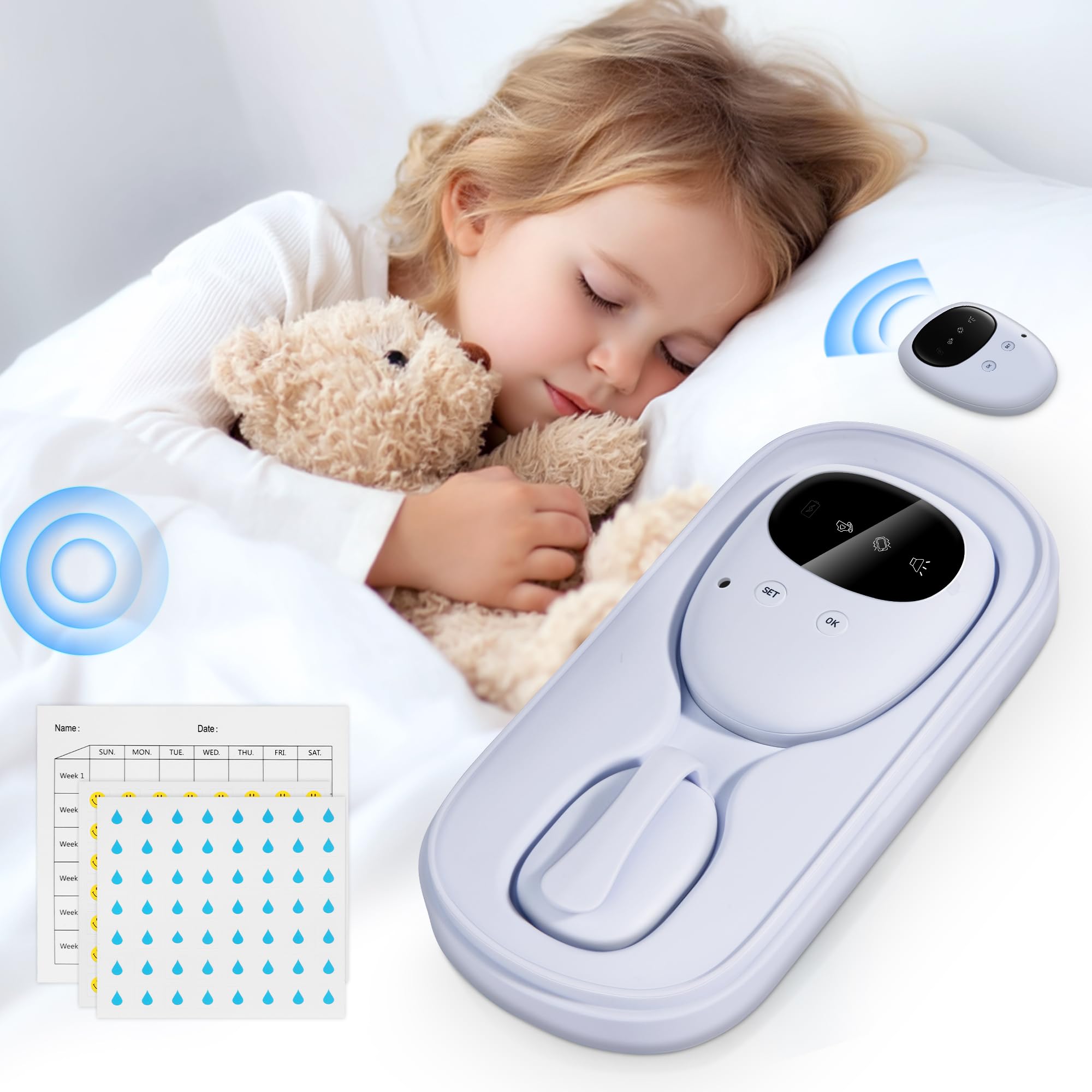
The ReYang system addresses the two biggest adult pain points: charging convenience and travel portability. The magnetic USB charging and storage case holds both the transmitter and receiver, so the entire system stays organized and charges simultaneously. The sensor uses a lightweight clip that attaches securely to underwear, and the included 12-week tracking chart with reward stickers brings a gamified structure to the conditioning process. Adults who respond well to visible progress tracking find this more motivating than digital-only logs.
The highly sensitive sensor triggers instantly on moisture, with three modes: vibration, sound, and combined. The receiver maintains a strong signal through walls and across rooms, which matters when the caregiver or partner needs to be alerted from another part of the house. The product dimensions (approximately 3.86 x 1.97 x 6.73 inches for the kit) make it compact enough to slip into a travel bag without adding bulk.
Long-term reliability has been a concern. Multiple verified reviews report the system working well for the first two months, then suddenly failing with no response from product support. The sensor is fully waterproof and easy to rinse, but the transmitter’s internal battery appears to have a finite lifespan that may not survive a full multi-month training program. Consider this a solid starter unit with the understanding that you may eventually need to replace it.
Why it’s great
- Magnetic charging case stores and charges both components for travel-friendly use.
- Stable wireless signal maintains connection across walls and through multiple rooms.
- 12-week tracking chart and reward stickers provide structured motivation.
Good to know
- Some units have stopped functioning after 2 months with poor post-sale support.
- Transmitter internal battery may not last through an entire multi-month training protocol.
4. Wet-Stop 3 Blue Bedwetting Alarm

The Wet-Stop 3 has the longest clinical track record of any alarm in this roundup. It is a wired system — the sensor connects to the alarm unit via a cord — which eliminates the wireless pairing issues and battery anxiety that plague many modern units. Two AAA batteries power the compact alarm, keeping the overall weight low. The patented sensor is easy to clean and extremely responsive to the conductivity difference between urine and sweat, though some users wrap it in a paper towel to filter out false alarms from humidity.
The inclusion of six varying alarm tones plus a vibration alert gives the user options, and the two-step shut-off method (press the button and dry the sensor simultaneously) prevents accidental disabling — a critical safety feature for deep sleepers who may reflexively hit a single button. The system also includes a downloadable copy of “The Complete Bedwetting Book” and a reward chart with star stickers, providing a complete methodology rather than just hardware.
The most significant limitation is the cord itself. Wired alarms restrict movement and create a tripping hazard, which is less than ideal for adults who toss and turn. The alarm is rated at 80 dB, which may not be loud enough to wake a heavy-sleeping adult sharing a room, especially without vibration amplification. A small percentage of users report the alarm being too traumatic or startling for sensitive individuals. This remains the most respected system in the category, but the design feels stuck in a prior decade.
Why it’s great
- Decades of real-world validation with documented success stories showing lasting results.
- Two-step shut-off prevents reflexive disabling during sleep, maintaining conditioning.
- Patented sensor design with good urine-versus-sweat discrimination.
Good to know
- Wired design restricts movement and creates a tripping hazard for adult users.
- 80 dB maximum volume may be insufficient for very deep sleepers or noisy environments.
5. DOVERC Wireless Bedwetting Alarm
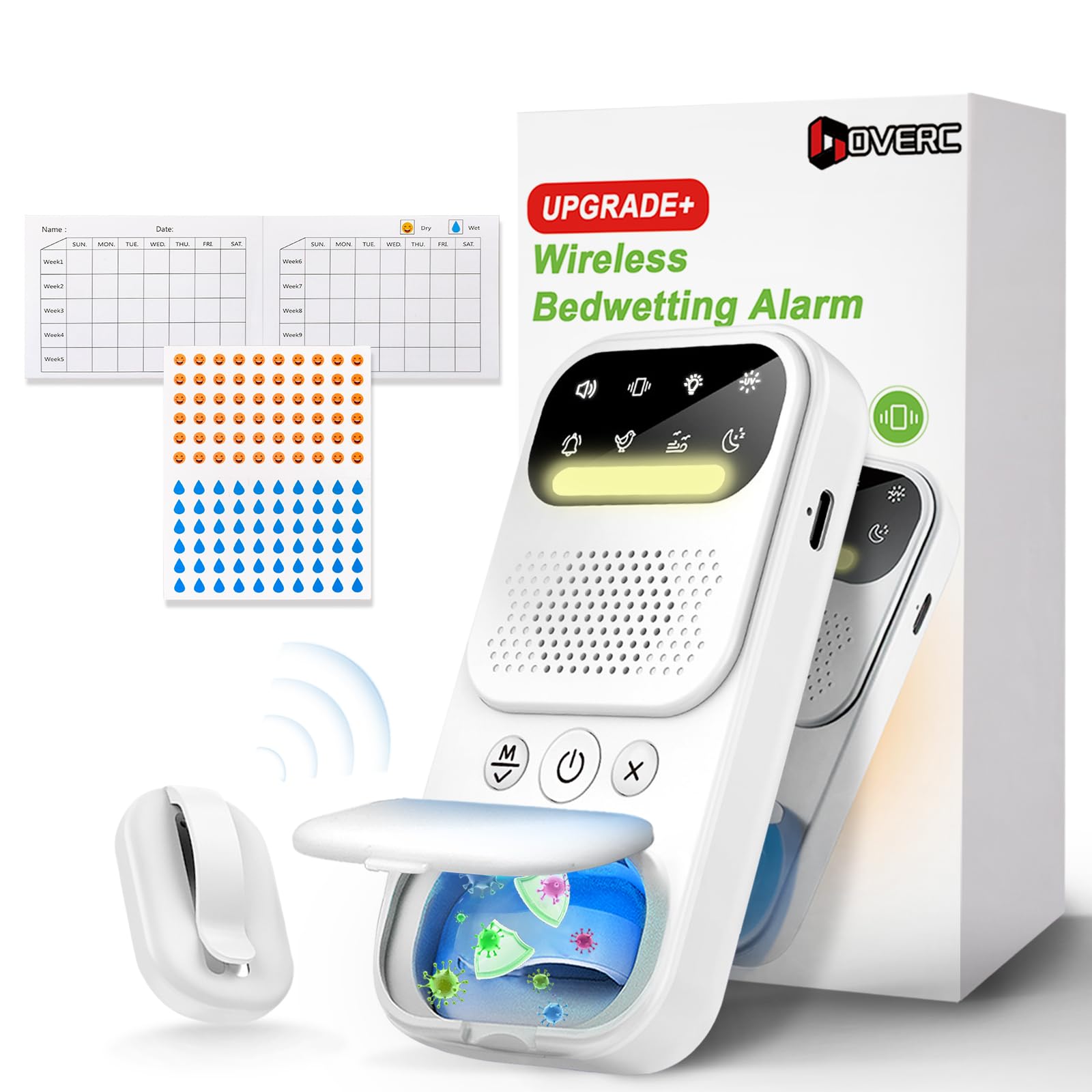
DOVERC brings a feature set that punches well above its entry-level price tag. The US-patented instant detection technology claims to trigger on the first drop of urine, and the wireless receiver offers nine different melodies and three alert modes (sound, vibration, and a combination). A UV sanitizing mode on the sensor is a rare hygiene feature that adult users will appreciate — urine exposure demands rigorous cleaning, and UV light provides chemical-free sterilization between washes.
The USB-C rechargeable battery is rated for up to 20 days of continuous use, which puts it near the top of the category for endurance. The package includes a progress card and stickers, which some adults may find infantilizing, but the same structure works well for caregivers managing adult dependents with cognitive impairments. The compact 4.97-ounce sensor clips onto underwear securely, and the receiver has a built-in night light to help with nighttime navigation to the bathroom.
Reliability is inconsistent. A significant verified review reports the sensor failing to detect moisture about half the time during actual accidents, with the clip detaching during sleep. This is a catastrophic failure for an enuresis alarm — a miss rate above 20% destroys the conditioning protocol. The entry-level price makes it an attractive first try, but users with more severe or persistent bedwetting should budget for a more reliable unit if the DOVERC proves inconsistent.
Why it’s great
- UV sanitizing mode provides chemical-free hygiene for the urine-exposed sensor.
- USB-C rechargeable battery with up to 20 days of real-world endurance.
- Nine melody options and a built-in night light for nocturnal bathroom navigation.
Good to know
- Reported intermittent detection failures — the sensor may miss half of actual accidents.
- Clip can detach from underwear during active sleep, rendering the system useless.
6. Vastaint Wireless Bedwetting Alarm
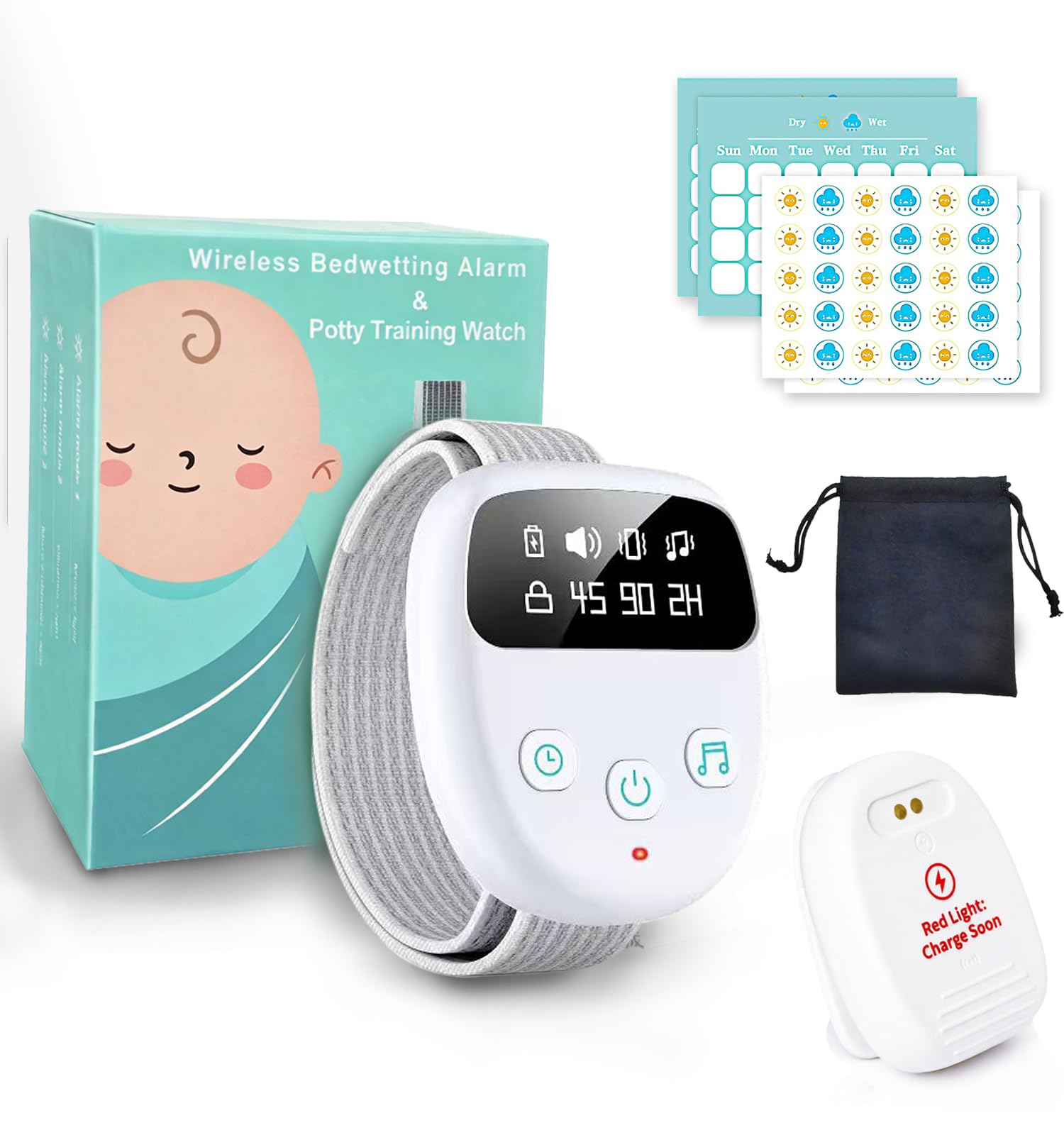
Vastaint strips the complexity down to a single-button interface. The wireless system consists of a sensor that clips to underwear and a receiver that sits up to 100 feet away — enough range to alert a caregiver in another wing of the house. Two AA batteries power the system, which avoids the built-in rechargeable battery decay that plagues sealed units, but it also means you’ll be buying replacement cells regularly.
The high-precision moisture sensor offers zero-delay detection, triggering an ultra-loud alarm that verified users confirm wakes heavy sleepers. The soft, adjustable strap is comfortable enough that adults report wearing it through the night without irritation. The compact dimensions (2.1 x 1.7 x 1.1 inches for the alarm body) are unobtrusive enough for travel.
The AA battery requirement is the main friction point — at a lower price point this is acceptable, but users in this category are better served by a rechargeable system that doesn’t require purchasing batteries at the same time they’re managing bedwetting. Some reviews mention the unit is effective but takes weeks of consistent use to show results, which is true of all conditioning alarms but can feel discouraging without the coaching structure provided by more complete systems.
Why it’s great
- 100-foot wireless range provides ample coverage for multi-room monitoring.
- Single-button operation makes it the easiest system to set up and use nightly.
- Zero-delay detection triggers on the first drop of moisture for immediate conditioning.
Good to know
- Requires AA batteries rather than a built-in rechargeable cell, adding ongoing cost.
- Lacks coaching or progress tracking elements found in more complete systems.
7. MERLRR Bed Sensor Alarm and Fall Prevention

The MERLRR is not a conventional bedwetting alarm — it is a motion sensor system designed to detect when a person gets out of bed. For adults whose bedwetting is tied to mobility issues, dementia, or the inability to reach the bathroom in time, this device offers a different approach: it monitors the bed exit and alerts a caregiver to intervene before an accident happens. The motion sensor can be placed on the floor or at the door, with an adjustable range of up to 500 feet.
The 58 melodie options with 4-level volume control up to 110 dB are overkill for enuresis alone, but they make the system usable for multiple caregiving scenarios beyond bedwetting. The receiver includes a hanging rope and belt clip, so a caregiver can carry it while moving through the house. Up to 20 motion sensors can pair with unlimited receivers, allowing comprehensive coverage of a care facility or large home.
This is not the right tool for an otherwise healthy adult who simply needs a wetness alarm to condition against nocturnal enuresis. It is purpose-built for fall prevention and bed-exit monitoring. The motion sensor may detect the user shifting position and trigger false alerts. If your primary concern is classic bedwetting conditioning, choose one of the moisture-sensor alarms above. But if you’re managing an elderly or disabled adult who wets the bed because they cannot reach the bathroom in time, this proactive system is more appropriate than a reactive sensor.
Why it’s great
- Proactive fall prevention and bed-exit monitoring can intercept accidents before they happen.
- 58 melodies with 110 dB maximum volume suit a wide range of hearing sensitivities.
- Expandable system supports up to 20 sensors and unlimited receivers for facility care.
Good to know
- Motion sensor may generate false alerts from normal sleeping movement.
- Not designed for classic conditioning therapy — does not detect moisture directly.
FAQ
Can a bedwetting alarm for children work effectively for an adult?
What is the difference between a moisture sensor alarm and a motion sensor alarm?
How long does it take for a bedwetting alarm to work for an adult?
Why does my bedwetting alarm keep giving false alarms from sweat?
Final Thoughts: The Verdict
For most adults, the best bedwetting alarm for adults is the Zexyvor Wireless Bedwetting Alarm because its triple-alert system, IPX8 waterproof sensor, and 14-day USB-C battery provide the most reliable wake-up stimulus and daily practicality for adult use. If you want six selectable sounds and proven habituation resistance for a longer training cycle, grab the DryEasy Pro. And for caregivers managing elderly or mobility-impaired adults who need fall prevention alongside bedwetting support, nothing beats the expandable MERLRR Bed Sensor Alarm system.