
The quiet groan underfoot or the cold draft seeping through your laminate floor often traces back to one overlooked layer: the underlayment. A quality 15 felt paper isn’t just a roll of material; it’s the critical buffer that absorbs impact noise, smooths subfloor imperfections, and protects your flooring investment from moisture and wear.
I’m Min — the co-founder and writer behind Gadgets Feed. I spend my days dissecting product specs, comparing material densities and tensile strengths, and filtering through thousands of real-user reviews to separate marketing hype from genuine performance..
We’ve analyzed seven of the top-rated 15-foot felt and fiber underlayment options, weighing factors like recycled content, moisture resistance, acoustic ratings, and ease of installation. The goal is simple: help you find the right 15 felt paper for your specific project without wasting time on products that don’t deliver.
How To Choose The Best 15 Felt Paper
Whether you’re prepping a subfloor for laminate, protecting an above-ground pool liner, or stabilizing a garden path, the right 15-foot felt material depends on density, moisture resistance, and intended application. Here are the key decisions you’ll face.
Match the Material to Your Project
Recycled fiber pads (like the QEP SuperFelt) excel at sound absorption and thermal insulation under hardwood or laminate indoors. Non-woven polypropylene geotextile fabrics (like the VEVOR or UNDERGUARD) are engineered for drainage, weed blocking, and ground stabilization in landscaping and pond projects. Foam-based products (like ROBERTS Unison) prioritize moisture resistance and cushioning for floating floors. Using the wrong type — such as placing a landscaping fabric under a floating floor — can void your flooring warranty.
Check Thickness, Density, and Acoustic Ratings
For flooring underlayment, a 3mm to 6mm thick pad is standard. Thicker isn’t always better if it compromises stability. Look for IIC (Impact Insulation Class) ratings above 60 and STC (Sound Transmission Class) ratings above 65 for meaningful noise reduction. For geotextile applications, density matters more — a 4-ounce or 6-ounce non-woven fabric offers far better tensile strength and puncture resistance for heavy-duty use under rocks or pool liners.
Verify Moisture Protection and Warranty
A built-in moisture barrier or vapor retarder (like the DriWick layer in QuietWalk Plus) is essential for concrete subfloors or below-grade installations. For pool underlayment, the material must allow water to drain through while blocking roots and sharp debris. A limited lifetime warranty (common on premium felt underlayments) indicates confidence in long-term compression resistance, while a 20-year warranty on geotextile fabric signals durability in outdoor conditions.
Quick Comparison
On smaller screens, swipe sideways to see the full table.
| Model | Category | Best For | Key Spec | Amazon |
|---|---|---|---|---|
| QuietWalk Plus | Premium Underlayment | Laminate & Floating Floors | GREENGUARD Gold & DriWick Barrier | Amazon |
| UNDERGUARD UG10X15 | Geotextile Fabric | Ponds & Landscape Stabilization | 6 oz Nonwoven Polypropylene | Amazon |
| GLI Armor Shield | Pool Underlayment | Above Ground Pool Liner Protection | 15 ft Round, Geotextile Polypropylene | Amazon |
| TIEBOLA Pool Liner Pad | Eco Pool Pad | Round Above Ground Pools | 15 ft, Eco-Friendly Recycled Material | Amazon |
| ROBERTS Unison 2-in-1 | Value Underlayment | Engineered Wood & Laminate | Closed-Cell Polyethylene Foam | Amazon |
| QEP SuperFelt | Recycled Fiber Pad | Noise Reduction Under Flooring | Recycled Fibers, 3mm Thick | Amazon |
| VEVOR Landscape Fabric | Budget Geotextile | Weed Barrier & Drainage | 4 oz Nonwoven, 350N Tensile Strength | Amazon |
In‑Depth Reviews
1. QuietWalk Plus Underlayment (100 sq ft)
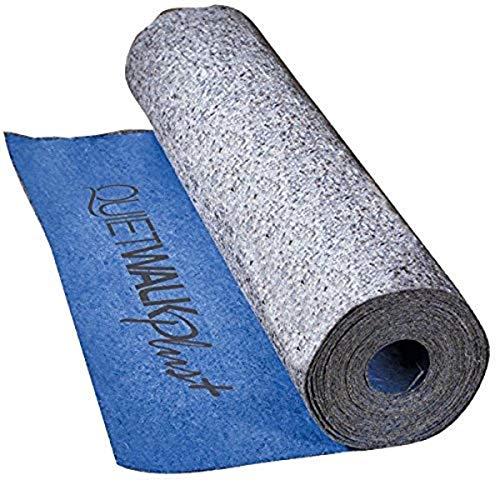
This premium underlayment from MP Global Products stands apart with its dense recycled fiber core bonded to a DriWick moisture barrier — a combination that delivers both sound absorption and subfloor vapor protection. It is GREENGUARD Gold Certified, meaning it meets strict standards for low volatile organic compound emissions, so it is safe for indoor air quality even in bedrooms and nurseries. The 100-square-foot roll is compatible with laminate, hardwood, engineered wood, and even radiant heating systems, giving it broad application flexibility.
The integrated seam tape makes alignment and sealing straightforward, and its 6mm-thick construction provides noticeable cushion underfoot while resisting compression from furniture and foot traffic. Real-world installers consistently report less creaking and a warmer, quieter floor compared to standard foam underlayments. The material cuts cleanly with a roller cutter or kitchen shears, though a standard box knife tends to struggle with the dense fiber layer.
Its premium positioning is justified by the combination of environmental certifications, integrated moisture protection, and proven acoustic performance. For homeowners installing floating floors over concrete or wood subfloors who prioritize indoor air quality and long-term durability, this is the most well-rounded option available. The only caveat: verify you receive the “Plus” variant, as some shipments have been known to include the standard QuietWalk, which has a different density rating.
Why it’s great
- Bundles acoustic padding with an effective vapor barrier
- GREENGUARD Gold ensures low VOCs for healthier indoor air
- High density resists compression and reduces floor noise noticeably
Good to know
- Requires sharp scissors or a roller cutter to cut cleanly
- Premium price may be overkill for temporary or rental installations
2. UNDERGUARD Nonwoven Geotextile UG10X15
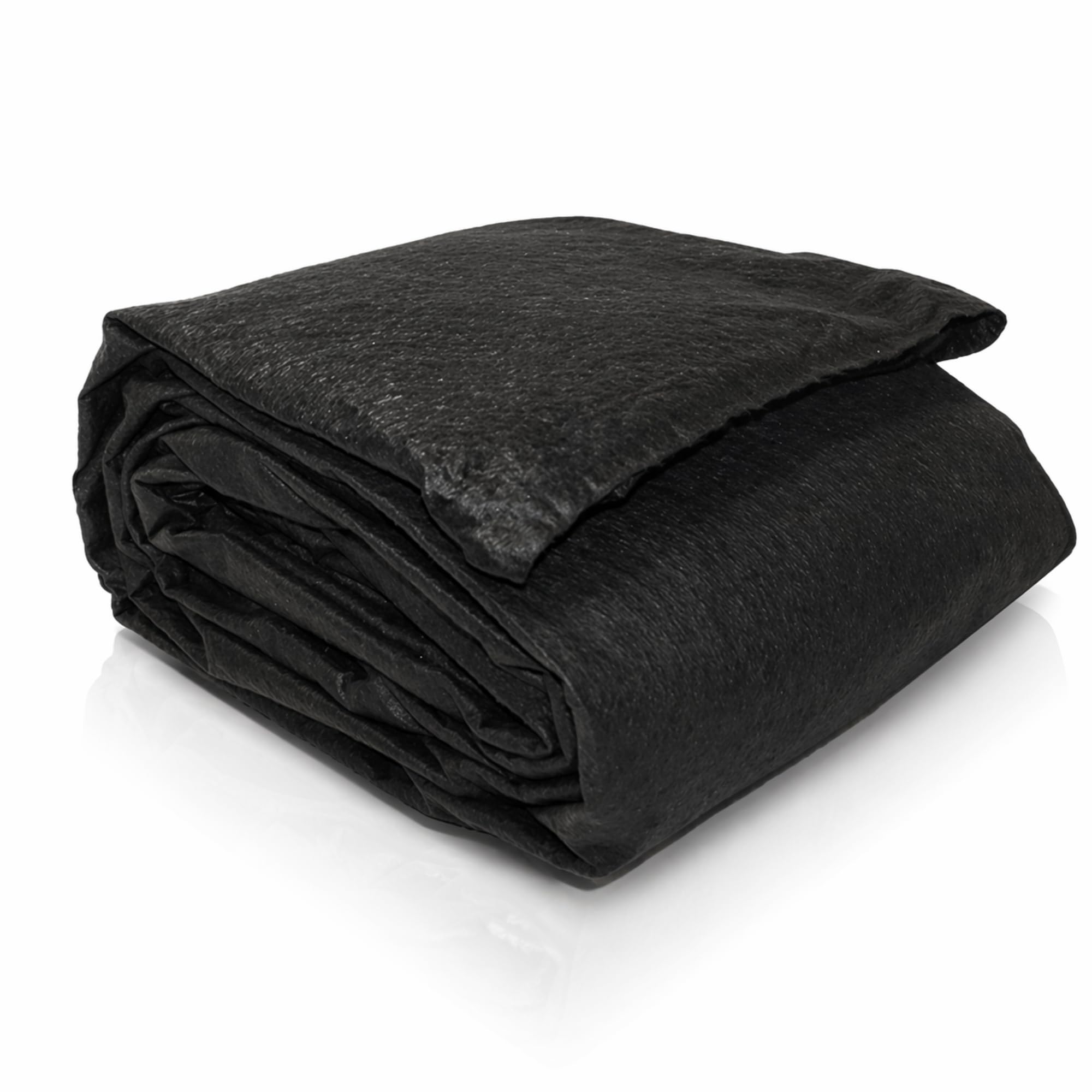
Anjon Manufacturing’s 6-ounce nonwoven geotextile fabric is built for serious ground-level protection. Its dense needle-punched polypropylene construction delivers the tensile strength needed to separate sharp rocks from pond liners or to stabilize walkways and retaining walls. The 10-foot by 15-foot sheet arrives folded in a box — it is not rolled — which simplifies transport but requires careful unfolding to avoid creases that can be difficult to flatten completely on-site.
Installers praise its ability to handle boulders weighing several hundred pounds without tearing, making it a favorite for koi ponds and large landscaping projects. The fabric is permeable enough to allow water drainage while blocking soil migration, keeping gravel beds clean and french drains functional. It cuts easily with a utility knife, and overlapping sections by 12 inches ensures uninterrupted coverage for critical areas.
A 20-year limited manufacturer warranty underscores the manufacturer’s confidence in this material’s UV stability and long-term durability. It is one of the thicker residential-grade geotextiles available at this price point, and while its stiffness makes it less suited for wrapping around curved pond contours, its puncture resistance is exceptional. For anyone building a water feature or reinforcing a driveway base, this is a reliable heavy-duty choice.
Why it’s great
- Thick 6 oz weight provides superior puncture and tear resistance
- 20-year warranty signals long-term outdoor durability
- High permeability prevents water pooling while filtering sediment
Good to know
- Folded packaging can create stubborn creases that resist laying flat
- Stiffer material is less flexible for tight radius curves
3. GLI Armor Shield Floor Pad (15-Feet Round)

The GLI Armor Shield is purpose-built for above-ground swimming pools, providing a protective felt-like geotextile layer between the vinyl liner and the sand or soil base. Its 15-foot diameter is designed to match standard round pool footprints, though many users report it works well under 12-foot pools with ample overhang. The material is lightweight — weighing only about a pound — and easy to position before filling the pool.
While described as a floor pad, the Armor Shield is relatively thin — roughly comparable to heavy-duty landscape fabric rather than a cushioned mattress pad. Its primary job is to block punctures from rocks, roots, and sharp debris, which it does effectively. Some users pair it with an additional weed barrier cloth for extra insurance, especially on uneven ground or in areas with aggressive grass growth. Water readily drains through its nonwoven structure, preventing trapped moisture from damaging the pool base.
The material shows no edge deterioration after a full season outdoors, and it can be power washed, dried, and reused if the pool is moved. It also provides a small measure of convective heat retention, keeping the pool floor slightly warmer on cool nights. For pool owners looking for a dedicated, correctly-sized protective layer, this is a straightforward solution that removes the guesswork of cutting generic roll goods.
Why it’s great
- Pre-cut 15 ft round shape eliminates cutting and trimming
- Lightweight and easy to position under an empty pool frame
- Durable enough to withstand multiple seasons of use
Good to know
- Thin material doesn’t provide significant cushioning underfoot
- May need supplemental weed barrier in areas with heavy vegetation
4. TIEBOLA 15 Foot Eco-Friendly Pool Liner Pad
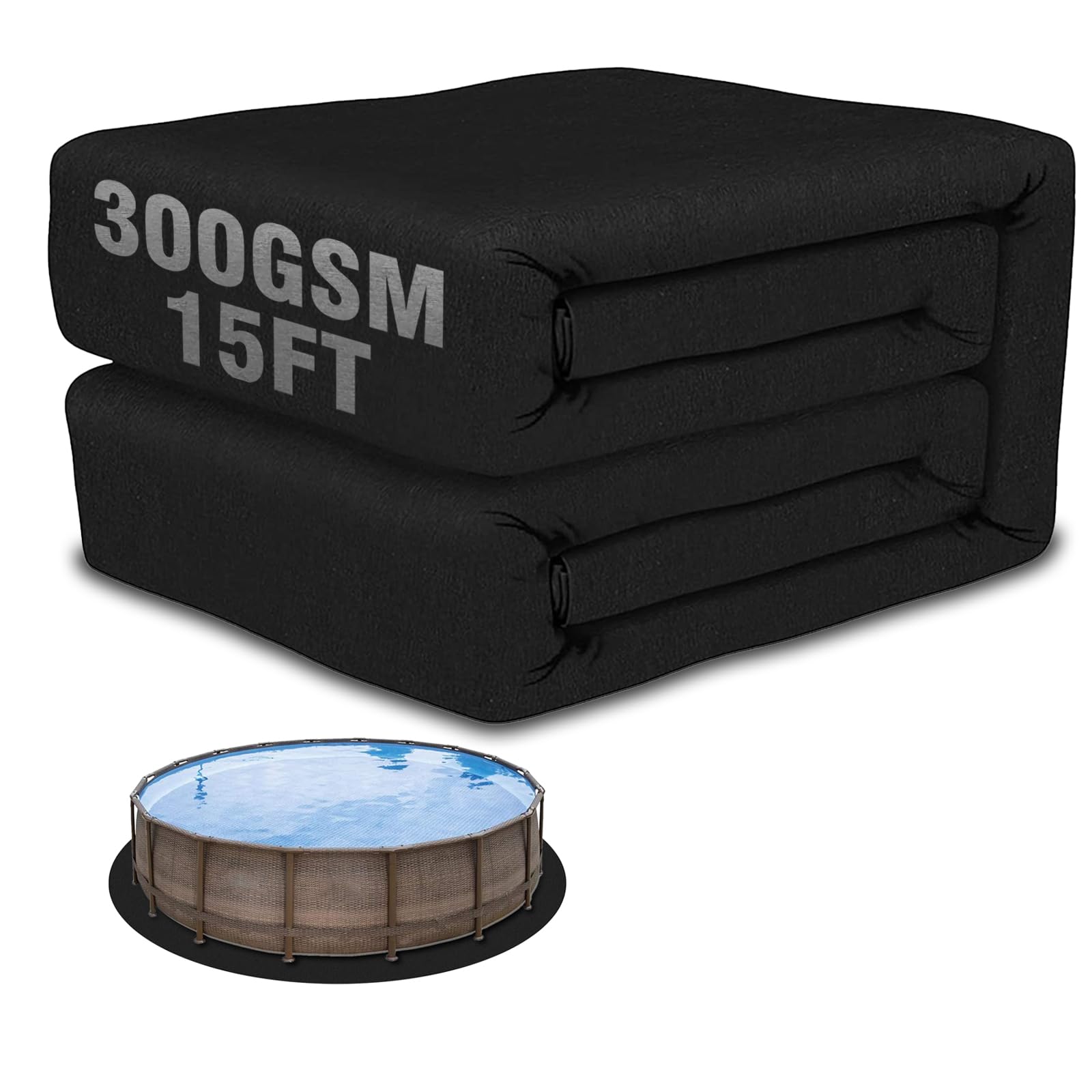
The TIEBOLA pool liner pad provides an affordable alternative for protecting above-ground pool liners from ground debris and root intrusion. It uses eco-friendly recycled materials that resist mold and mildew while still allowing water and air to pass through the fabric. At 15 feet in diameter, it is sized to match standard round pool kits, with some users deliberately going one size larger to ensure the pad stays in place during heavy rain or snowmelt.
The pad’s thickness is comparable to a heavy landscape fabric rather than a cushioned pad, so it should be viewed primarily as a puncture barrier rather than a comfort layer. Users consistently report that it successfully prevents sharp stones and sticks from damaging the pool bottom, and it helps reduce uneven settling of the sand base over time. Installation is straightforward: level the ground, lay the pad, center the pool on top, and fill.
Multiple repeat buyers mention purchasing this pad across several seasons, which points to reasonable durability for the cost. It is noticeably less dense than the GLI Armor Shield, but for budget-conscious pool owners or those using inflatable pools where liner replacement is inexpensive, it is a sound investment. The trade-off is a slightly lower puncture resistance, which can be mitigated by adding a layer of sand or an old tarp underneath for extra protection.
Why it’s great
- Affordable entry-level protection for above-ground pools
- Eco-friendly recycled material resists mold and mildew
- Easy to trim and install with standard tools
Good to know
- Thinner than premium alternatives; less puncture protection
- May require a secondary barrier for very rocky or root-heavy soil
5. ROBERTS Unison Premium 2-in-1 Underlayment (100 sq ft)

The ROBERTS Unison is a 100-square-foot roll of closed-cell polyethylene foam underlayment that combines a built-in moisture barrier with integrated seam tape for easy installation. At roughly 3/16 inch thick, it provides moderate cushioning under laminate and engineered wood floors while its dense cell structure resists moisture, mold, and mildew. It is suitable for use over radiant heated floors, making it more versatile than some foam alternatives that degrade under heat cycles.
Installers consistently mention the value: this roll often costs significantly less than comparable products from big-box home improvement stores while matching them in quality. The built-in tape strips are wide enough to secure seams effectively, though some reviewers wish the adhesive strips were slightly wider to prevent peeling under heavy foot traffic. The material is easy to cut with a utility knife and unrolls smoothly without the stubborn curling common to some foam underlayments.
One real-world consideration: the foam is noticeably “squishy,” which helps absorb minor subfloor imperfections but may not provide the firm support required for very thin click-lock vinyl planks. For thicker laminate and engineered wood, it performs admirably, delivering noticeable warmth and sound dampening. Backed by a 2-year warranty and a strong reputation from QEP, this is the go-to budget-friendly option for indoor flooring projects where moisture resistance matters more than maximum acoustic isolation.
Why it’s great
- Excellent cost-to-performance ratio versus retail box stores
- Closed-cell foam provides strong moisture and mold resistance
- Compatible with radiant floor heating systems
Good to know
- Seam tape adhesive can lose grip if repeatedly walked over during installation
- Less suitable as a sound barrier compared to denser fiber-based pads
6. QEP SuperFelt Underlayment (100 sq ft)

The QEP SuperFelt, sold under the ROBERTS brand, is a 3mm-thick recycled fiber underlayment that prioritizes acoustic performance over moisture isolation. Its IIC rating of 67 and STC rating of 66 place it well above typical foam underlayments for impact and airborne sound reduction — critical for multi-story homes or units above basements. The fibers are treated at high temperatures during manufacturing, providing inherent thermal insulation and a comfortable underfoot feel.
Users consistently report a noticeable drop in footstep noise and a “solid” feel under bamboo, laminate, and nail-down hardwood compared to foam pads. The material includes an integrated film layer and an adhesive strip at the seam, making it easy to join rolls during large installations. While the built-in adhesive allows for repositioning before final pressing, some users note that the film can tear if boards are forcefully removed after installation — a minor issue during maintenance rather than initial setup.
The main trade-off is the 3mm thickness: it does not bridge larger subfloor gaps as effectively as thicker pads, so a well-leveled subfloor is recommended. Cutting the dense fiber material requires sharp scissors — a utility knife tends to drag and leave jagged edges. Backed by a limited lifetime warranty, this is the top pick for homeowners whose primary concern is reducing noise transfer between floors without adding significant height to the flooring assembly.
Why it’s great
- Top-tier IIC 67 and STC 66 acoustic ratings for real noise reduction
- Made from recycled fibers; environmentally friendly choice
- Lays flat with no curling and includes easy seam taping
Good to know
- Hard to cut; requires sharp scissors rather than a utility knife
- 3mm thickness offers less subfloor gap coverage than thicker pads
7. VEVOR 15ft x 20ft Non-Woven Geotextile Landscape Fabric

The VEVOR 15-foot geotextile fabric offers an accessible entry point for landscaping and drainage projects that require a non-woven polypropylene barrier. At 4 ounces per square yard with a 350-Newton tensile strength, it is lighter than the UNDERGUARD but still substantially stronger than typical woven weed barriers found at garden centers. Its needle-punched construction provides a stable yet flexible sheet that conforms well to uneven ground contours around french drains, flower beds, and gravel paths.
Users consistently mention that this fabric is easy to cut and install with standard landscape staples, and its permeability ensures effective water drainage while keeping clay and silt out of gravel layers. Several reviewers used it successfully as a base for drainage ditches before adding river rock, noting that the fabric showed no tears under the weight of stone. It is worth noting that the 15ft x 20ft dimension provides generous coverage for medium-sized landscaping projects, and the material’s dark color helps it disappear visually under mulch or stone.
While it is heavy-duty for its price range, the 4-ounce density means it is best suited for residential landscaping rather than heavy construction or pond underlayment where sharper rocks or heavier loads are present. For standard weed suppression, soil stabilization under footpaths, and french drain filtration, it performs admirably without overspending. The primary compromise is long-term wear: thinner geotextiles naturally degrade faster under direct sunlight exposure, so covering with mulch or stone is recommended.
Why it’s great
- Generous 300 sq ft coverage at a very low cost per square foot
- Non-woven design provides excellent drainage and soil filtration
- Heavier than standard woven weed barriers; resists tearing during installation
Good to know
- 4 oz density is not suitable for heavy pond liner or construction use
- UV degradation faster than premium 6 oz geotextiles without coverage
FAQ
Can I use landscaping geotextile as flooring underlayment?
How do I cut recycled fiber underlayment cleanly?
Final Thoughts: The Verdict
For most users, the 15 felt paper winner is the QuietWalk Plus because it combines GREENGUARD-certified recycled fiber with an integrated moisture barrier, delivering both acoustic performance and subfloor protection. If noise reduction is your single biggest concern, grab the QEP SuperFelt with its IIC 67 rating. And for heavy-duty outdoor use under ponds or gravel, nothing beats the UNDERGUARD 6 oz Geotextile with its 20-year warranty.