
If you have flat feet, every step can feel like a compromise. Traditional orthotic-heavy shoes try to prop you up, often weakening the intrinsic muscles that should be doing the work. The right barefoot shoe flips the script — offering a wide toe box, zero-drop platform, and a thin, flexible sole that lets your foot engage naturally, while still offering enough structure to prevent overpronation and arch fatigue.
I’m Rikta — the co-founder and writer behind Gadgets Feed. I’ve spent years analyzing the biomechanics of minimalist footwear, comparing drop heights, toe-box measurements, and insole flexibility to separate genuine muscle-strengthening designs from ones that just look barefoot. (And Homer 🐱 supervised every fitting session from a pile of shoe boxes, napping only on the ones with the widest toe boxes).
This guide cuts straight to the models that combine genuine barefoot feel with the arch-friendly geometry flat feet actually need. Whether you need a trail runner, a daily walker, or a transition shoe, the barefoot shoes for flat feet on this list deliver the ground feedback and foot freedom your arches have been missing.
How To Choose The Best Barefoot Shoes For Flat Feet
Flat feet need a shoe that encourages natural arch engagement without relying on aggressive orthotic molding. The wrong shoe can either overcorrect (causing knee or hip pain) or leave the arch completely unsupported. Focus on these three criteria when shopping.
Zero-Drop Platform vs. Minimal Drop
A true zero-drop shoe places your heel and forefoot at the same level, promoting a midfoot or forefoot strike. For flat feet, this encourages the arch to flex and strengthen naturally. Models with a 2–4mm drop can still work as a transition option, but the best long-term choice for arch rebuilding is a firm zero-drop platform.
Toe-Box Width and Shape
Splayed toes provide a wider base of support, which improves stability for flat arches. Look for a genuinely anatomical toe box — not merely “rounded” — where the big toe can lie straight without being squeezed inward. Measure your foot width at its widest point (typically across the ball) and match it against the shoe’s stated internal width.
Sole Thickness and Flexibility
Barefoot soles range from 3mm to 10mm in thickness. Thinner soles (3–5mm) offer maximum ground feel and muscle activation but require a slower transition for flat feet. Soles in the 6–8mm range provide a gentler ramp for beginners while still allowing the foot to flex naturally. Avoid any sole that is completely rigid; flexibility at the ball of the foot is non-negotiable.
Quick Comparison
On smaller screens, swipe sideways to see the full table.
| Model | Category | Best For | Key Spec | Amazon |
|---|---|---|---|---|
| ALTRA Lone Peak 9 | Trail Runner | Long-distance hiking & trail running | Zero-drop with 25mm stack | Amazon |
| Merrell Vapor Glove 6 Leather | Minimalist Trainer | Office, data center & light trail | 4mm stack height (leather) | Amazon |
| Xero Shoes Prio Neo (Women’s) | Training / Gym | Gym, walks & transition shoe | Removable 3mm insole | Amazon |
| Xero Shoes Prio Suede (Men’s) | Everyday Casual | City walking & casual daily wear | Suede upper, 5.5mm FeelTrue sole | Amazon |
| New Balance MT10V1 Minimus | Minimal Trail | Smooth trails & summer running | 4mm drop, 6.6 oz weight | Amazon |
| Hike Footwear HF Stride | Unisex Daily | Budget entry-level barefoot | Thin sole, ultra-lightweight | Amazon |
| Orthopedic Wide Toe Box Barefoot | Orthotic-Friendly | Flat feet needing arch support | Zero-drop with 2 extra insoles | Amazon |
In‑Depth Reviews
1. ALTRA Men’s Lone Peak 9 Trail Running Shoe

The ALTRA Lone Peak 9 is the gold standard for flat-footed adventurers who need genuine zero-drop geometry combined with real cushioning for long miles. With a 25mm stack height, it sits just inside the minimalist category but offers the shock absorption that makes it suitable for rocky terrain and all-day standing. The FootShape toe box is among the widest available, allowing your metatarsals to spread fully — critical for flat feet that tend to collapse inward under load.
Reviewers consistently praise its stable, grippy MaxTrac outsole on mud and dry rock alike, and several note that it accommodates custom orthotic arch supports without crowding the toes. The fit runs slightly large, so sizing down half from your usual measurement is a common recommendation. At roughly 1.5 pounds per pair, it is not the lightest barefoot shoe here, but the trade-off is genuine trail durability over hundreds of kilometers.
For flat-footed hikers or anyone who spends entire shifts on their feet, the Lone Peak 9 delivers the zero-drop alignment and toe freedom that naturally encourages arch engagement without forcing it. It is the most versatile performer in this lineup for mixed-terrain use.
Why it’s great
- Wide anatomical toe box fits orthotics easily
- Zero-drop platform with real cushioning for long days
- Excellent traction on varied trail surfaces
Good to know
- Runs half a size large — size down
- Heavier than dedicated minimalist trainers
2. Merrell Men’s Vapor Glove 6 Leather Trail Running Shoe
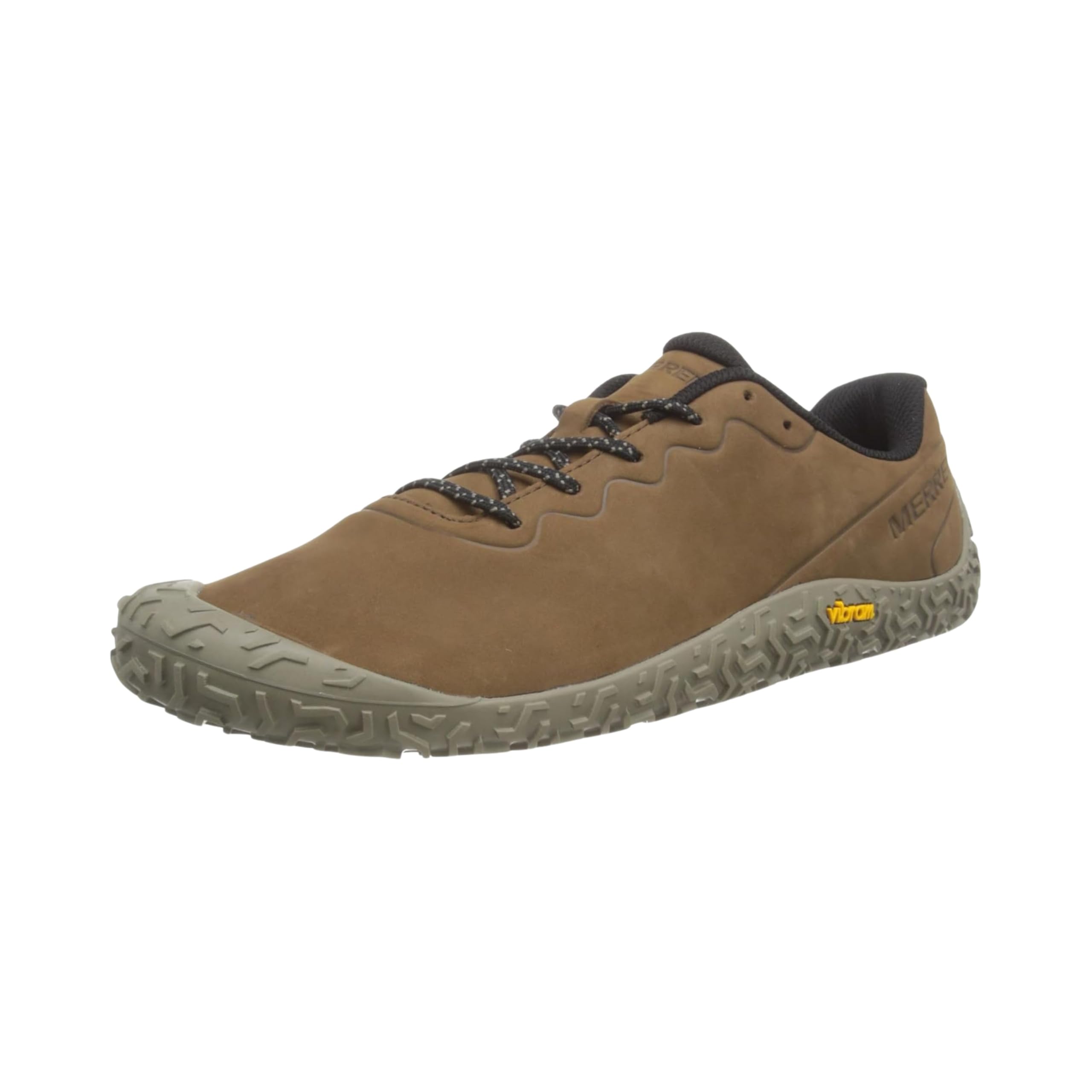
The Merrell Vapor Glove 6 Leather is the rare barefoot shoe that bridges the gap between an office-appropriate aesthetic and a true ground-feel experience. Its 4mm stack height is among the thinnest in this roundup, giving you maximum proprioceptive feedback — ideal for flat feet that need to re-learn natural gait mechanics. The leather upper adds durability over mesh models and resists picking up dirt, making it a favorite for reviewers who wear it in data centers and casual offices.
Testers note that this version is tougher and less prone to breaking down than earlier mesh Vapor Gloves. The fit suits narrow to medium feet, which may be a limitation for those with very wide flat feet unless you size up. At under 6 ounces per shoe, it disappears on the foot, and the Vibram outsole provides enough traction for light trail use and pavement.
If your priority is the thinnest possible sole for muscle activation in a package that doesn’t scream “trail shoe,” the Vapor Glove 6 Leather is your best bet for flat feet making the transition to minimalist walking.
Why it’s great
- Ultra-thin 4mm sole for maximum ground feel
- Leather upper adds durability and office-friendly looks
- Extremely lightweight and breathable
Good to know
- Best for narrow to medium width feet
- Not suitable for very rugged or technical trails
3. Xero Shoes Women’s Prio Neo Barefoot Training Shoe
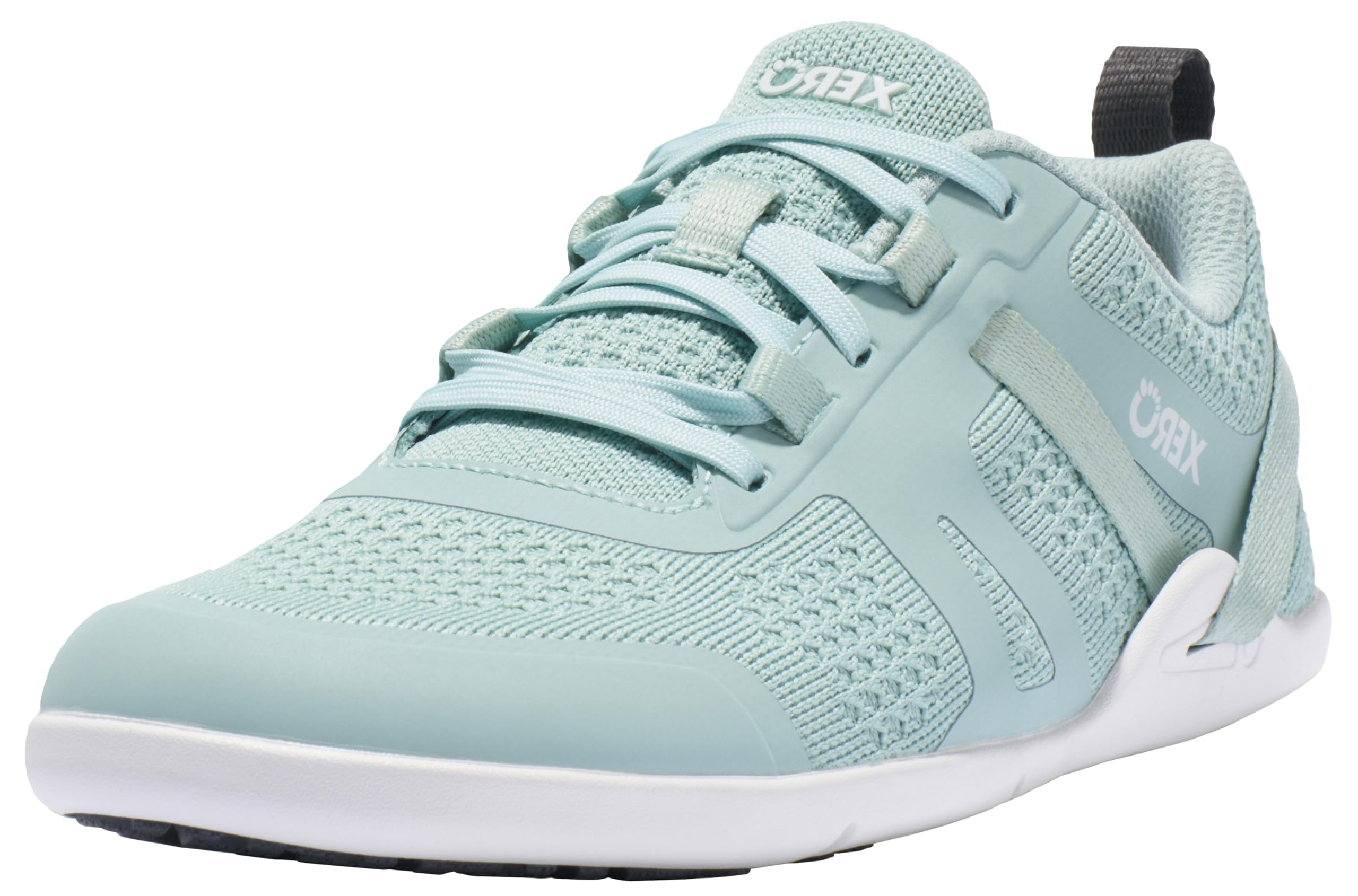
The Xero Shoes Prio Neo is widely recommended by reviewers transitioning from traditional stability shoes — especially women moving from models like the Brooks Glycerine. It features a removable 3mm insole that lets you ease into barefoot feel: start with the insole for mild arch support, then remove it as your foot strengthens. The wide toe box and stretchy upper accommodate splaying toes, which is essential for flat feet that need to widen their base of support during walking and gym work.
Testers report that the Prio Neo corrected their heel-strike pattern and improved overall stability, though several noted a temporary adjustment period involving calf and knee soreness — a normal sign of the foot muscles waking up. The shoe runs shorter than its listed size by about 1 to 1.5 inches at the toe tip, but the actual internal room for the toes is generous. The ridiculously long laces are a minor annoyance that can be trimmed or replaced.
For flat-footed women looking for a do-everything barefoot trainer that leaves room for orthotics during the transition phase, the Prio Neo is the most forgiving entry point in this lineup.
Why it’s great
- Removable insole lets you control support level
- Wide toe box with stretchy top for a secure fit
- Excellent for gym, walks, and daily wear
Good to know
- Runs short; check the length guide carefully
- Laces are excessively long and may come undone
4. Xero Shoes Men’s Prio Suede Barefoot Athletic Sneaker
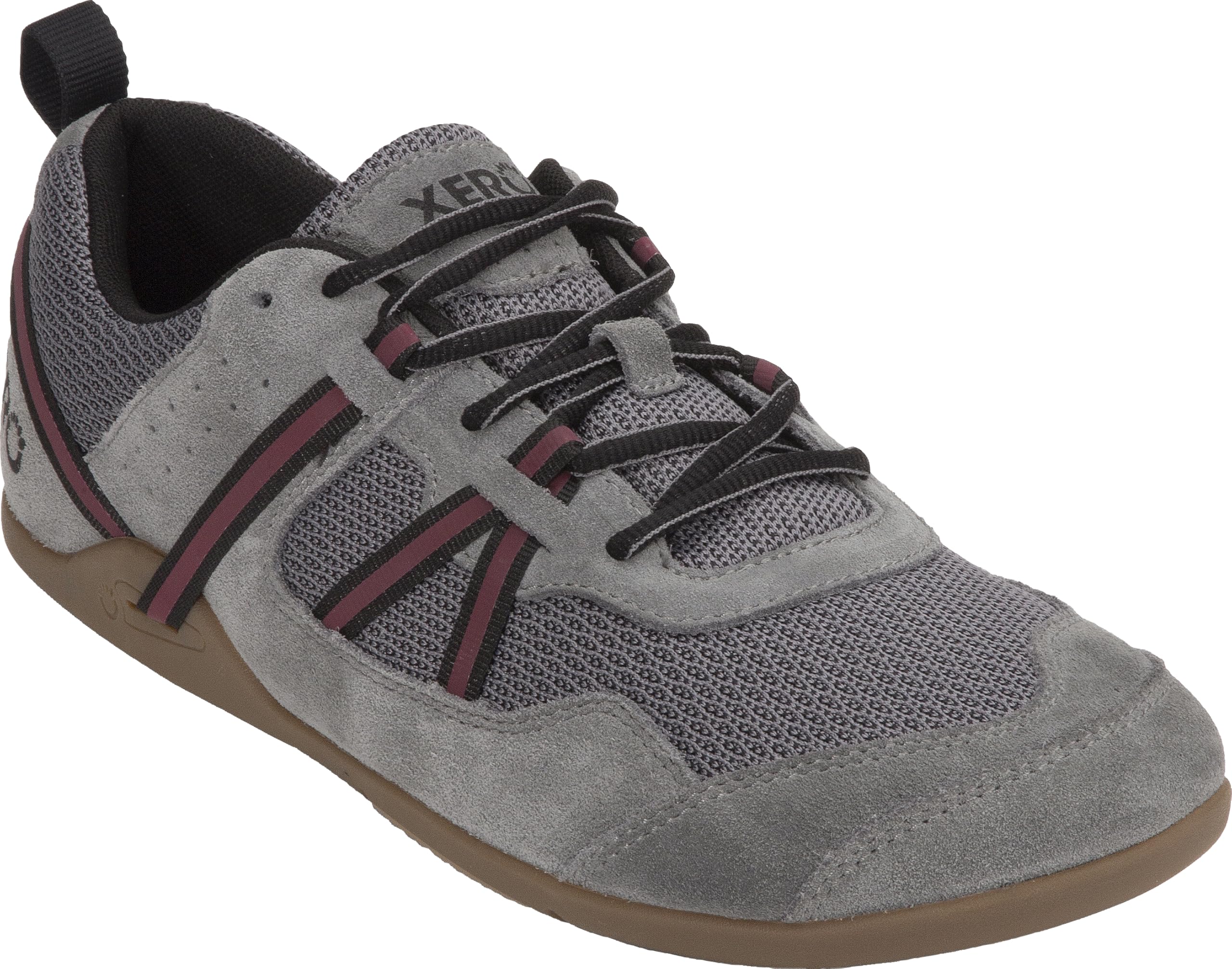
The Xero Shoes Prio Suede is a proven workhorse for men who want a durable everyday barefoot shoe without paying premium prices. Its 5.5mm FeelTrue sole offers a middle ground between ground feel and protection, making it suitable for concrete warehouse floors and city sidewalks alike. The suede upper stands up to daily abuse far better than mesh alternatives, and reviewers note that after a year of use it still looks presentable.
One reviewer with scoliosis-related gait issues credited the Prio Suede with reducing his limp after seven months of use, praising its wide enough shape and extreme comfort. The huarache-style straps are the weakest durability point — they may splice over extended wear — but at this price point, the value proposition is undeniable. The toe box is wide but not quite as anatomical as ALTRA’s FootShape last, so ultra-wide feet may still feel some constriction at the pinky toe.
For men with flat feet who need a reliable, affordable barefoot shoe for daily pounding on hard surfaces, the Prio Suede delivers consistent arch-free support that builds foot strength over time.
Why it’s great
- Durable suede upper withstands daily wear
- Excellent ground feel on hard indoor surfaces
- Proven track record with long-term users
Good to know
- Huarache straps may be the first failure point
- Toe box is wide but not fully anatomical
5. New Balance Men’s MT10V1 Minimus Trail Running Shoe
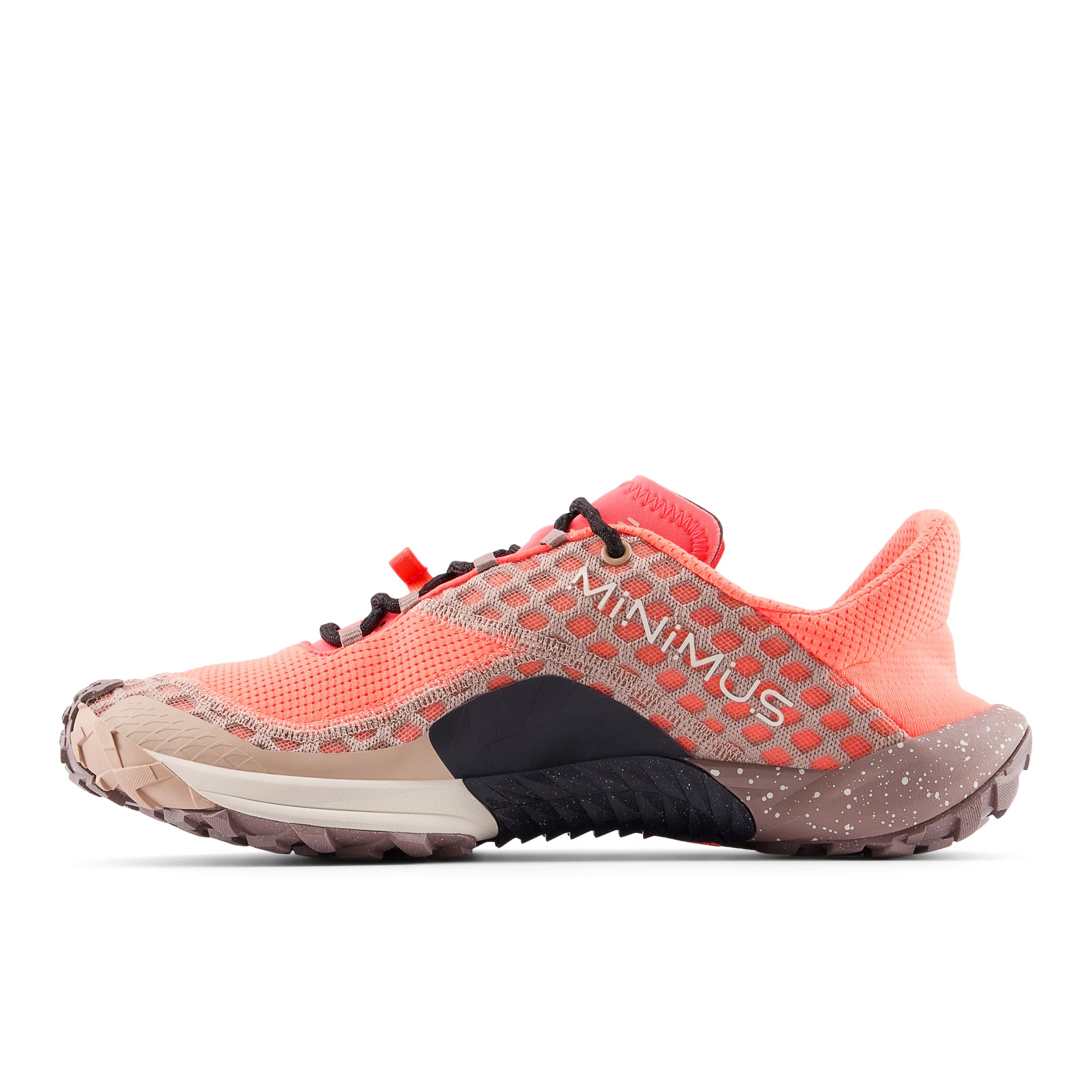
The New Balance MT10V1 Minimus is a cult-classic minimalist trail shoe that weighs just 6.6 ounces per shoe — among the lightest options for flat-footed runners. Its 4mm drop is slightly higher than a true zero-drop shoe, which can ease the transition for those moving from traditional footwear while still encouraging a more natural stride. The Vibram outsole provides excellent traction on smooth trails, and the shoe sheds water and heat quickly, making it a strong choice for wet or summer conditions.
However, this is a narrow shoe. Reviewers with wide flat feet consistently note that it runs very narrow and provides minimal padding, which can be uncomfortable for sensitive arches during longer runs. It excels on smooth, non-technical terrain but lacks the underfoot protection for jagged rocks. Several long-term users lament that the model has been discontinued, though remaining stock still provides good value for those with narrow to medium feet who prioritize weight savings.
If you have narrow flat feet and need a featherlight trail shoe for summer runs and smooth paths, the Minimus is an excellent choice — just be aware of its specific fit limitations.
Why it’s great
- Extremely lightweight at 6.6 oz per shoe
- Excellent Vibram traction on smooth trails
- Quick-drying and breathable for summer use
Good to know
- Runs narrow — not ideal for wide flat feet
- Minimal padding; less comfortable on rough terrain
6. Hike Footwear HF Stride – Hands-Off & Ergonomic Barefoot Shoes
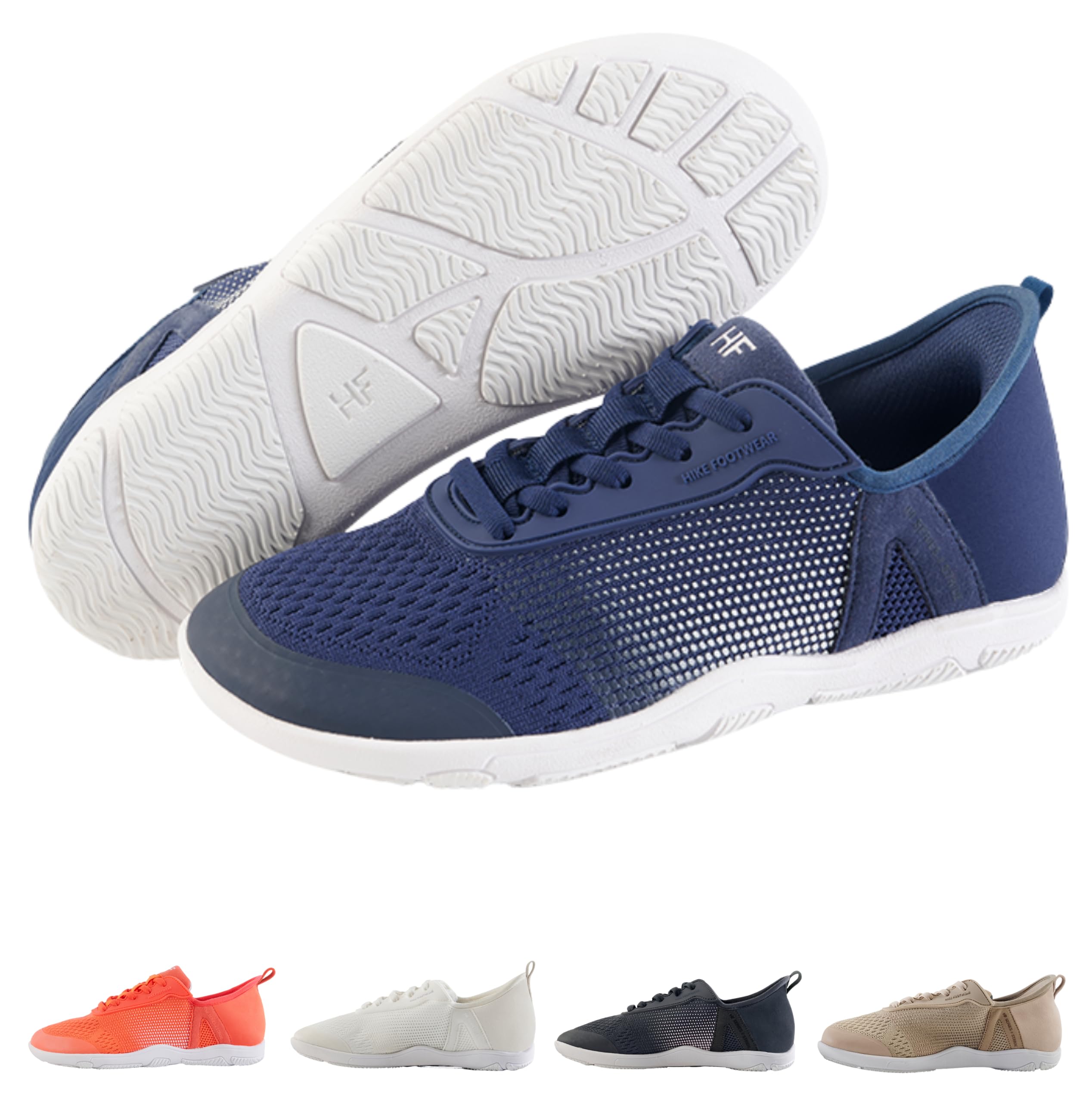
The Hike Footwear HF Stride is the entry-level gateway for budget-conscious flat-footed buyers who want to test the barefoot waters without a major investment. It features a thin, ultra-light sole and a wide toe box that several reviewers say improved their balance dramatically after just one week of wear. The unisex sizing can be tricky — the shoe runs small for half-sizes, so ordering up a full size is recommended if you plan to wear socks.
Testers note that the HF Stride provides good stability and traction for daily walking, with several reporting noticeable improvements in back, hip, and knee pain after transitioning from traditional footwear. The slip-on-like design with stretch lace option makes it easy to wear both with and without socks. It is not designed for rugged trails or high-impact running, but for casual walking and errand-running, it holds up well.
For flat feet just beginning their barefoot journey on a tight budget, the HF Stride offers a legitimate wide-toe experience and genuine ground feedback at the lowest entry point in this guide.
Why it’s great
- Very affordable entry point for barefoot beginners
- Ultra-lightweight and easy to slip on
- Reviewers report improved balance and reduced joint pain
Good to know
- Runs small for half sizes — order up
- Not suitable for trail running or heavy impact
7. Orthopedic Wide Toe Box Barefoot Shoes with Arch Support

This Orthopedic Wide Toe Box model occupies a unique niche: it offers a zero-drop platform with a genuinely wide toe box, but pairs it with built-in arch support and two extra insoles for customizable cushioning. This makes it the most orthotic-friendly option for flat feet that cannot go completely unsupported during the transition phase. Reviewers with wide, flat feet (including size 13 EE) confirm it provides roomy toe splay with soft arch support.
The shoe has a cushioned, spongy feel underfoot rather than the hard ground-contact sensation of true minimalist shoes. This makes it less effective for pure muscle-strengthening but much more comfortable for all-day wear, especially for those with plantar fasciitis. The zero-drop geometry is maintained, so your gait remains more natural than in a typical supportive shoe. The breathable mesh upper and non-slip outsole work well for gym, walking, and light daily tasks, though it is not waterproof and less suitable for hiking.
For flat-footed users who need a compromise between barefoot geometry and traditional arch support, this shoe provides a safe middle ground that won’t shock your arches.
Why it’s great
- Zero-drop design with built-in arch support
- Comes with two extra insoles for custom fit
- Roomy toe box accommodates very wide feet
Good to know
- Cushioned feel reduces pure ground feedback
- Not waterproof; avoid for hiking in wet conditions
FAQ
Can barefoot shoes help rebuild fallen arches?
Should I use orthotic insoles in my barefoot shoes?
How long does the transition period take for flat feet?
Final Thoughts: The Verdict
For most users, the barefoot shoes for flat feet winner is the ALTRA Lone Peak 9 because it combines a proven zero-drop platform with a wide foot-shaped toe box and enough cushioning for all-day use on mixed terrain. If you want a true ground-feel training shoe for the gym and walks, grab the Xero Shoes Prio Neo. And for flat-footed hikers who need orthotic-friendly space and trail durability, nothing beats the ALTRA Lone Peak 9.