
Clover is a legume, which means it pulls its own nitrogen from the air — so when you apply a standard high-nitrogen fertilizer, you are literally paying to feed the weeds instead of the crop. The real game for clover lies in phosphorus and potassium: phosphorus drives the root depth and density that makes a plot resilient through drought and grazing, while potassium powers the plant’s ability to move sugars and withstand cold winter die-off. A targeted 0-20-20 blend delivers exactly those two macronutrients without the unnecessary nitrogen that can actually stunt a legume’s natural nitrogen-fixing ability.
I’m Min — the co-founder and writer behind Gadgets Feed. After spending hundreds of hours cross-referencing soil science data, application rates, and real-field performance reports across dozens of fertilizer formulations, I have zeroed in on the specific chemistry that makes a clover plot thrive in the first season and stay productive for multiple years.
Whether you are managing food plots for deer, renovating a pasture, or building a pollinator strip, choosing the right balance of phosphorus and potassium determines whether your stand thickens or fizzles. This guide breaks down the best options to find the 0-20-20 fertilizer for clover that matches your soil test and your scale.
How To Choose The Best 0-20-20 Fertilizer For Clover
A true 0-20-20 fertilizer is a specialty blend, so most of the products on this list are individual phosphorus and potassium sources that you can mix to get that exact ratio. The key is understanding which form of phosphorus and which form of potassium your soil profile needs.
Phosphorus Source: Phosphate vs. Phosphite
Standard triple phosphate (0-45-0) releases phosphorus slowly and is excellent for building long-term soil reserves before or at planting. Phosphite forms (found in some liquid products) are foliar-absorbed and act as both a nutrient and a systemic fungicide booster — great for correcting a mid-season deficiency or pushing stressed plants through a dry spell.
Potassium Source: Chloride vs. Sulfate
Muriate of potash (0-0-60) is the most concentrated and cost-effective potassium source, but the chloride content can accumulate in sensitive soils or burn young clover seedlings in high concentrations. Sulfate of potash (0-0-50) carries a lower salt index and adds sulfur, which can help with protein synthesis in the clover leaf — worth the premium if your soil is sandy or you are seeding into a no-till situation.
Granular vs. Liquid Application
Granular products are your foundation: broadcast them before seeding or as a dormant top-dress, and let soil moisture carry the nutrients down to the root zone. Liquid concentrates shine for foliar feeding on established stands — they bypass soil tie-up and get potassium directly into the leaf tissue within hours, which is critical when you see purple leaf margins (phosphorus deficiency) or scorched leaf edges (potassium deficiency).
Quick Comparison
On smaller screens, swipe sideways to see the full table.
| Model | Category | Best For | Key Spec | Amazon |
|---|---|---|---|---|
| Prevegenics MKP 0-52-34 | Premium Powder | High-concentration bloom push | 52% P₂O₅ / 34% K₂O | Amazon |
| Espoma Triple Phosphate 0-45-0 | Granular Phosphate | Pre-plant root development | 45% phosphate, 6.5 lb bag | Amazon |
| Down To Earth Island Phosphate 0-11-0 | Organic Granules | Certified organic clover plots | 11% phosphate from seabird guano | Amazon |
| Antler King Clover Fuel | Liquid Concentrate | Foliar feeding on established stands | Legume-specific liquid, 32 oz | Amazon |
| Greenway Biotech KCl 0-0-62 | Soluble Potassium | Dissolving for drip or fertigation | 62% K₂O, 5 lb powder | Amazon |
| Pendelton Turf Phosphite 0-0-26 | Liquid Potassium | Stress resistance and root strength | 26% soluble potash, 32 oz | Amazon |
| Supply Solutions Muriate 0-0-60 | Bulk Granules | Large-acreage dormant applications | 60% K₂O, 50 lb bag | Amazon |
In‑Depth Reviews
1. Prevegenics MKP 0-52-34
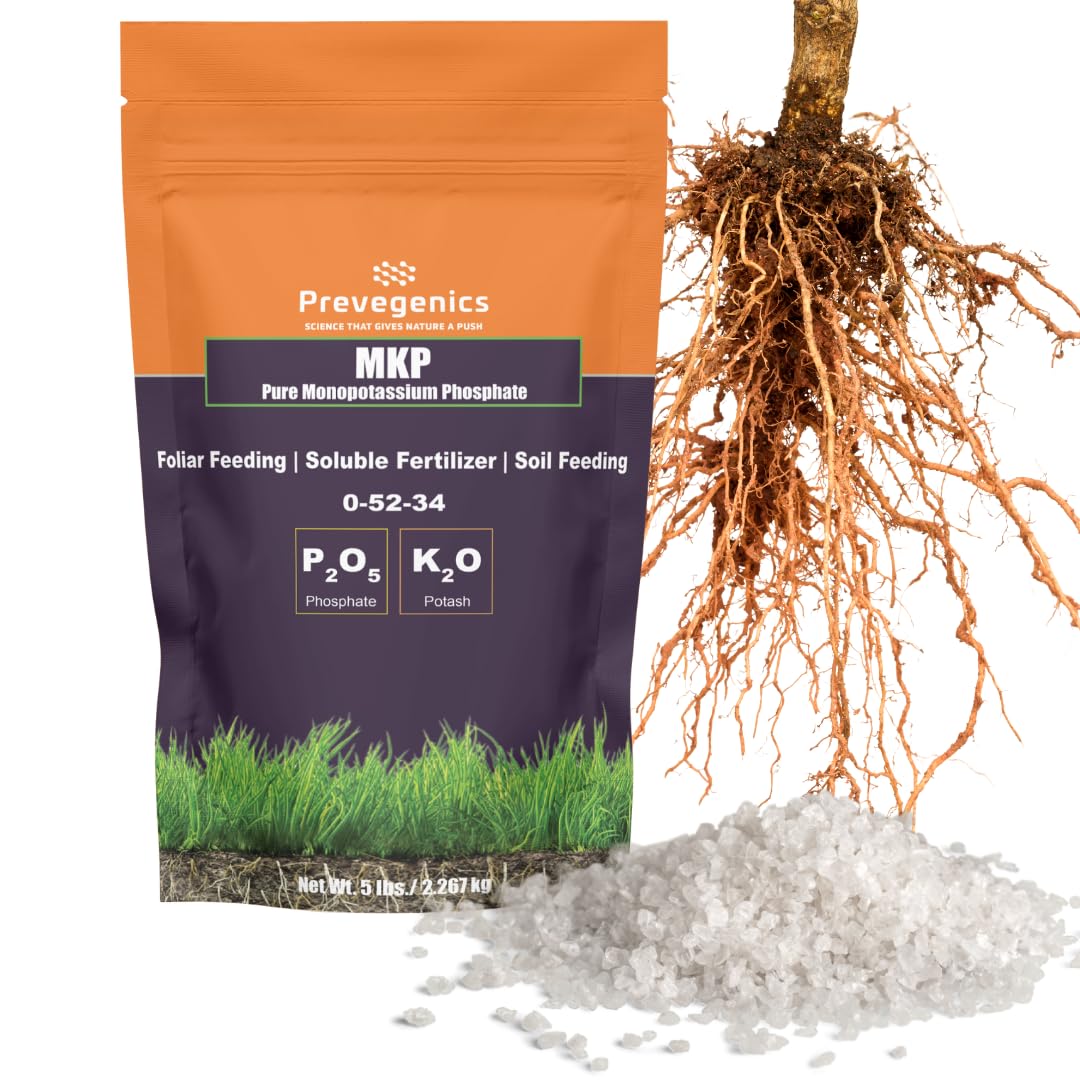
This is not a 0-20-20 blend by the numbers, but it is the most potent phosphorus and potassium source on this list — 52% phosphate and 34% potash in a fully water-soluble monopotassium phosphate crystal. When you mix this at a 1:128 dilution rate (roughly 1 tablespoon per gallon), you get a foliar feed that delivers an immediate bloom and root signal to clover without any nitrogen baggage. Users report visible thickening of clover stands within two weeks of application, and the zero-nitrogen chemistry means you are not feeding the grass and broadleaf weeds that compete with your legume.
The powder dissolves completely in water with no sediment, which makes it ideal for backpack sprayers, hose-end sprayers, or even drip irrigation systems on larger food plots. Because the concentration is so high, a 5-pound bag goes a very long way — at the recommended rate, it covers more than 2,000 gallons of spray solution. This is the product to reach for when you need to correct a phosphorus deficiency fast during the growing season.
The only catch is that it has zero calcium or micronutrients, so it works best as a supplement to a balanced soil fertility program rather than a standalone foundation. You will want to pair it with a soil test to ensure your calcium and magnesium levels are adequate. No scoop is included, so you will need a kitchen scale or a measuring spoon to dial in the rate.
Why it’s great
- Extremely high P and K concentrations mean small doses go far
- Fully soluble with zero sediment for clean sprayer operation
- Zero nitrogen — will not feed weed competition in clover stands
Good to know
- Does not include a scoop for measuring
- Lacks calcium and micronutrients — needs a complete soil program
2. Espoma Triple Phosphate 0-45-0 (6.5 lb Bag)

This is pure triple phosphate in granular form — 45% phosphorus with zero nitrogen and zero potassium. For a clover plot that needs a phosphorus foundation, you broadcast this before seeding or as a dormant top-dress at a rate of roughly 3 to 5 pounds per 1,000 square feet depending on your soil test. The granules break down slowly with soil moisture, feeding the developing clover root system through the entire first growing season without the risk of leaching that comes with synthetic liquid forms.
Espoma is a trusted name in organic gardening, and this product is made in the USA with no fillers, sewage sludge, or synthetic additives. The 6.5-pound bag is manageable for a small to medium food plot — think a quarter-acre or less. If you are establishing a new clover stand, this is the most straightforward way to get a heavy phosphorus dose into the root zone before the clover runners start spreading.
The limitation is obvious: it provides only phosphorus, so you will need a separate potassium source like muriate of potash or sulfate of potash to reach a 0-20-20 balance. Also, the bag can arrive torn during shipping — several users note that the outer bag splits easily in transit, so inspect it upon delivery and transfer to a sealed container.
Why it’s great
- High-concentration phosphate with zero filler or nitrogen
- Slow-release granular form builds long-term soil reserves
- Trusted OMRI-listed brand with reliable quality control
Good to know
- Provides only phosphorus — requires separate potassium product for 0-20-20 ratio
- Bag can arrive split; transfer to a bucket or zip bag
3. Down To Earth Organic Island Phosphate 0-11-0
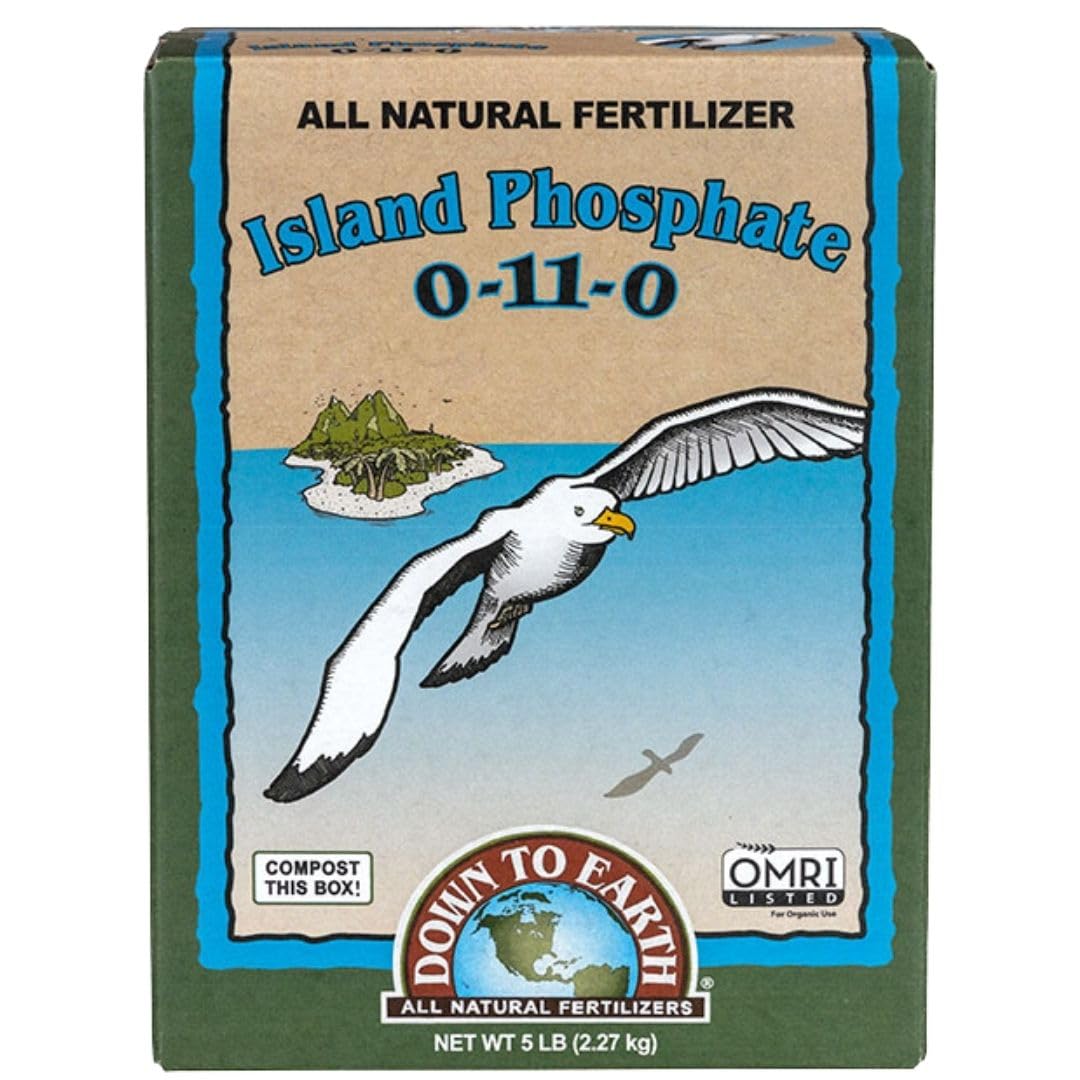
For certified organic clover plots, this is the cleanest phosphorus source available — seabird guano that has been naturally deposited over centuries on remote islands, mined, and granulated without any synthetic processing. The 0-11-0 analysis means roughly 11% phosphorus by weight, so you apply about four times more product by volume compared to triple phosphate. The trade-off is that this also brings in trace minerals and organic matter that build soil biology — beneficial mycorrhizal fungi thrive on the carbon in guano-based fertilizers, and those fungi form symbiotic partnerships with clover roots to extend phosphorus uptake.
The granules are fast-acting for an organic product — users report visible greening and bloom response within 10 to 14 days of application. It works well as a top-dress on established clover stands or mixed into potting soil for clover starts. The smell is notably strong (it is bird guano, after all), so wear gloves and a mask when handling it, and apply on a calm day to avoid drift.
The low phosphorus concentration means you need to apply a heavier rate to match the phosphorus delivered by synthetic products like Espoma Triple Phosphate. At roughly 2 to 4 pounds per 100 square feet for a moderate phosphorus boost, a 5-pound bag covers only a small area. It is best for small organic plots, container clover, or as a compost tea ingredient.
Why it’s great
- Certified organic with trace minerals that support soil biology
- Fast-acting granules show visible results within two weeks
- Ideal for compost tea brewing for clover foliar feeding
Good to know
- Low phosphorus concentration means heavy application rates
- Strong odor — requires mask and gloves during handling
4. Antler King Clover Fuel (32 oz)
Antler King formulated Clover Fuel specifically for legume food plots — it is not a random fertilizer repurposed for clover. The liquid concentrate is designed to be applied both pre-plant (2 bottles per acre mixed with 20 gallons of water) and as a monthly foliar feed after emergence (1 bottle per 10 gallons per acre). This dual-phase approach delivers phosphorus and potassium directly to the leaf surface when soil conditions might be locking up those nutrients — a common problem in cold, wet spring soils or high-pH clay.
Users across the hunting community consistently report that Clover Fuel makes clover stands thicker, greener, and more drought-tolerant than granular-only programs. Because it is a liquid, it can be tank-mixed with herbicides like Clethodim or Poast to knock out grass competition while simultaneously feeding the clover. The conventional granular burn risk is eliminated — the liquid goes straight into the leaf with zero salt index stress on the seedlings.
The biggest drawback is the coverage cost: one 32-ounce bottle covers roughly half an acre for a single foliar application at the post-emergence rate. For a large food plot (several acres), you will need multiple bottles per application cycle, and the per-acre cost is significantly higher than building a 0-20-20 blend from bulk granular sources. It is best for small to medium plots where the convenience and foliar absorption justify the premium.
Why it’s great
- Specifically formulated for legume biology, not repurposed from other crops
- Can be tank-mixed with grass-selective herbicides
- Zero burn risk — safe for young clover seedlings
Good to know
- High per-acre cost for large plots
- Requires monthly reapplication through the growing season
5. Greenway Biotech Potassium Chloride 0-0-62 (5 lb)
This is pharmaceutical-grade muriate of potash (potassium chloride) in a fully water-soluble powder form. With 62% K₂O, it is the most concentrated potassium source on this list — a little goes a very long way. For a 0-20-20 blend, you would combine this with a phosphorus source like the Espoma Triple Phosphate or the Prevegenics MKP. The water solubility means you can dissolve it in a watering can or injection system and apply it as a soil drench or through drip irrigation, bypassing the slow breakdown of granular potash.
Potassium is the nutrient that drives the transport of sugars and starches in clover, which directly impacts winter hardiness and regrowth vigor after grazing or mowing. Users report that clover treated with this potassium source shows noticeably darker green color and thicker stems within a week of application. The powder dissolves without cloudiness, making it suitable for sprayers that might clog with less refined potassium sources.
The product has a mild chlorine content inherent to muriate of potash — not a concern for most soils, but if you are growing clover in a saline or sodic soil, you may prefer a sulfate-based potassium instead. Also, the bag does not include a scoop, so you need a precise measuring spoon or scale to avoid over-application.
Why it’s great
- Extremely high potassium concentration for small-dose efficiency
- Fully soluble with no sediment for clean fertigation
- Quick response — visible improvement in stem thickness within days
Good to know
- Chloride content may not suit high-salinity soils
- No measuring scoop included in the bag
6. Pendelton Turf Supply Phosphite 0-0-26 (32 oz)
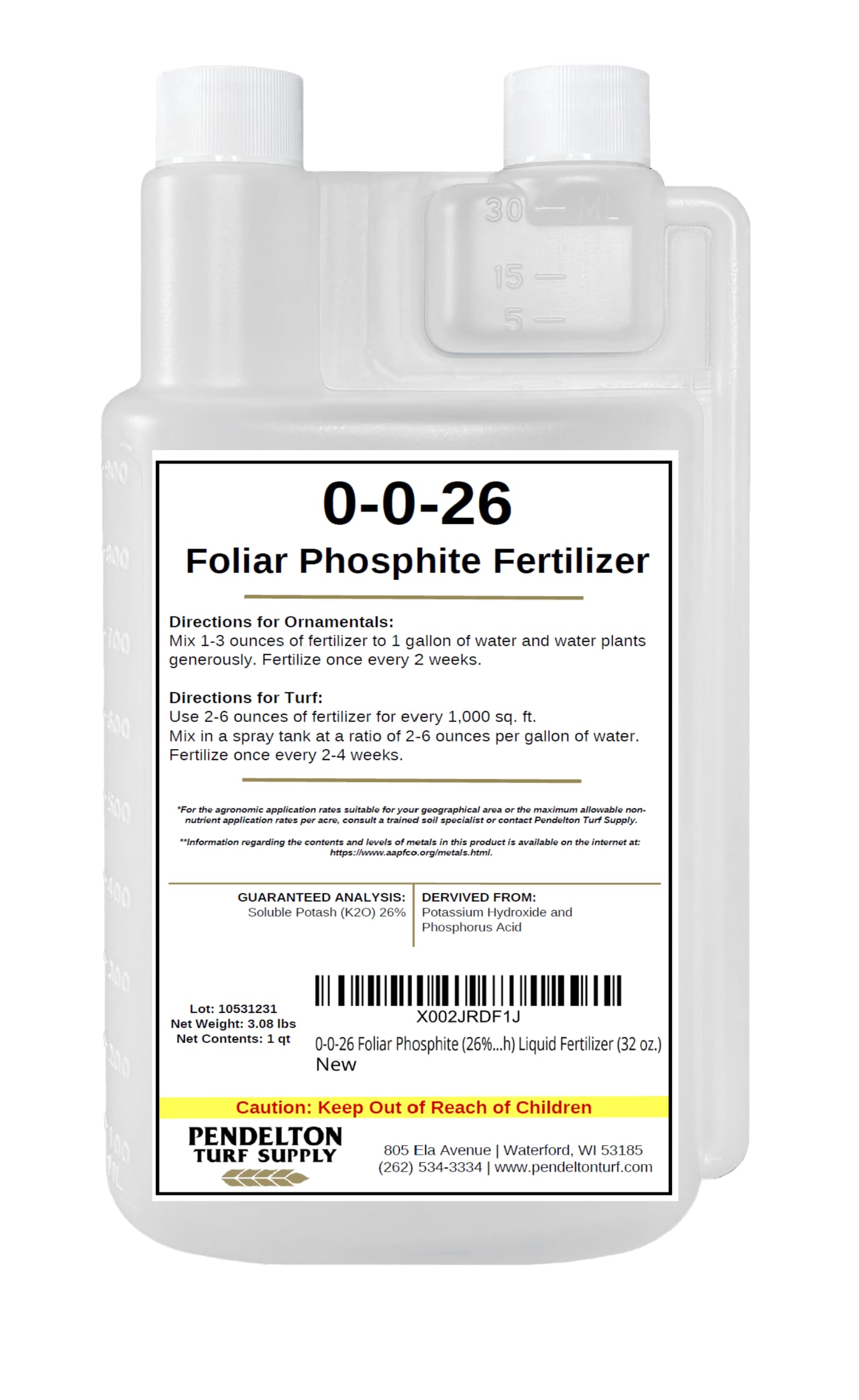
This is not a standard potassium fertilizer — it is a phosphite formulation (not phosphate) that delivers 26% soluble potash in a form that the plant can absorb through the leaf cuticle within hours. Phosphite compounds have a secondary function: they trigger the plant’s systemic acquired resistance (SAR) pathway, which boosts a clover stand’s natural immunity against fungal pathogens like root rot and powdery mildew. For clover plots that struggle with wet-spring diseases or post-harvest die-off, this dual-action nutrient-protectant chemistry is invaluable.
The squeeze-and-pour bottle makes measuring straightforward — for established clover, mix 2 to 3 ounces per gallon of water and apply as a foliar spray every two weeks through the growing season. Users report that treated clover stands green up faster after mowing and show less leaf spotting during humid summer months. The 32-ounce bottle covers roughly 1,000 to 1,500 square feet per application at the ornamental rate.
The primary limitation is that this supplies only potassium (0-0-26), so you still need a separate phosphorus source to reach a 0-20-20 balance. Additionally, the phosphite form is not a substitute for a balanced soil fertility program — it is a supplement for stress periods and disease prevention. Some users also report leaky packaging during shipping, so inspect the bottle seal upon arrival.
Why it’s great
- Phosphite form provides both nutrition and disease resistance
- Fast foliar absorption bypasses soil nutrient lock-up
- Easy squeeze-and-pour measuring bottle
Good to know
- Supplies only potassium — requires separate phosphorus source
- Packaging may leak during shipping
7. Supply Solutions Muriate of Potash 0-0-60 (50 lbs)
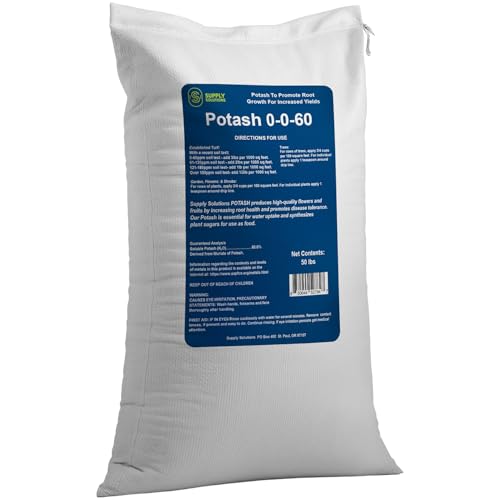
When you are managing a clover plot measured in acres rather than square feet, the granular 0-0-60 from Supply Solutions is the most cost-effective way to build soil potassium reserves. The 50-pound bag broadcasts easily through a standard rotary spreader — set your spreader to a medium setting and apply at 2 to 4 pounds per 1,000 square feet depending on your soil test. The granules are uniform in size, which means even distribution without the dust that fine powders generate.
Potassium is the nutrient that determines how your clover stand handles the winter — adequate potassium levels in leaf tissue lower the freezing point of cell sap, reducing winterkill. Users in northern climates report that clover plots treated with this potash product in late summer emerge significantly greener in the spring compared to untreated areas. The bag features a resealable zipper top, which is rare for a 50-pound bulk bag and genuinely useful for portioning out smaller applications over time.
Because this is muriate of potash (potassium chloride), it adds chloride to the soil. For most clover soils this is irrelevant, but if you are growing in a high-salt environment or are concerned about chloride sensitivity in young seedlings, consider splitting the application or using a sulfate-based potassium instead. Also, the bag is heavy — at 50 pounds, it is a two-hand lift for many users.
Why it’s great
- Lowest cost per pound of K₂O on this list for large plots
- Uniform granules spread evenly through rotary spreaders
- Resealable zipper bag for convenient portioning
Good to know
- Chloride content may be a concern in saline or sandy soils
- 50-pound bag is heavy and awkward to handle
FAQ
Can I use a 0-20-20 fertilizer on clover if I also have grass in the same plot?
How do I know if my clover plot is deficient in phosphorus or potassium?
Is it better to apply 0-20-20 fertilizer before planting clover or after emergence?
Can I mix a phosphorus source and a potassium source to create my own 0-20-20 blend?
Final Thoughts: The Verdict
For most users, the 0-20-20 fertilizer for clover winner is the Prevegenics MKP 0-52-34 because its high-concentration soluble powder allows you to dial in a precise zero-nitrogen phosphorus and potassium feed that produces visible thickening and bloom response within days. If you prefer an all-in-one liquid with legume-specific biology, grab the Antler King Clover Fuel. And for large-acreage bulk applications where cost per pound matters most, nothing beats the Supply Solutions Muriate of Potash 0-0-60 paired with the Espoma Triple Phosphate 0-45-0 for a custom blended foundation.