
The jump from a SATA SSD to an NVMe drive is transformative, but choosing the right 1 TB NVMe SSD today means navigating PCIe generations, controller architectures, and thermal throttling thresholds. Your operating system, game library, and creative projects demand bandwidth that older hardware can’t deliver, and the market is crowded with drives that look similar on paper but diverge wildly in real-world sustained performance.
I’m Min — the co-founder and writer behind Gadgets Feed. I’ve spent countless hours analyzing controller specs, NAND flash types, and host-memory-buffer implementations to separate the drives that genuinely accelerate workloads from those that shine only in benchmark burst tests.
Whether you are upgrading a laptop, building a PS5 storage expansion, or future-proofing a high-end desktop, the right drive must balance sequential throughput against thermal behavior and endurance. This guide distills the research to help you identify the best 1 tb nvme ssd for your specific workload.
How To Choose The Best 1 TB NVMe SSD
The primary differentiator in the NVMe market right now is the PCIe generation. Gen 4 drives saturate at roughly 7,000–7,500 MB/s, while Gen 5 drives push past 10,000 MB/s, but those peak numbers only matter if your motherboard and workload can utilize them. For gaming and general productivity, Gen 4 remains the sweet spot; for professional video editing and AI model loading, Gen 5 shaves seconds off every transfer.
Controller, DRAM, and NAND Architecture
The controller is the drive’s brain. Premium controllers include a dedicated DRAM cache that holds the mapping table, reducing latency during random reads and writes. Many budget-friendly Gen 4 drives use a Host Memory Buffer (HMB) that borrows system RAM instead of using onboard DRAM — fine for gaming and boot drives, but noticeable when you hammer the drive with sustained file copies. NAND type matters too: TLC (Triple-Level Cell) is the standard for performance, while QLC (Quad-Level Cell) trades write endurance and sustained speed for lower cost.
SLC Cache Behavior and Sustained Performance
Most TLC NVMe drives use a pseudo-SLC cache — a portion of the NAND programmed in single-level cell mode for burst writes. After the cache fills, the drive must write directly to TLC at much lower speeds. A drive’s true sustained write speed and its cache recovery time separate a good SSD from a great one. This matters less for booting Windows and loading games, but critically for transferring large video files or installing massive game updates.
Quick Comparison
On smaller screens, swipe sideways to see the full table.
| Model | Category | Best For | Key Spec | Amazon |
|---|---|---|---|---|
| WD_Black SN8100 1TB | PCIe Gen 5 | Maximum Gen 5 Throughput | 14,900 MB/s Read | Amazon |
| Crucial P510 1TB | PCIe Gen 5 | Affordable Gen 5 Upgrade | 11,000 MB/s Read | Amazon |
| acer Predator GM7 1TB | PCIe Gen 4 | High-End Gen 4 Gaming | 7,400 MB/s Read | Amazon |
| BIWIN Black Opal NV7400 1TB | PCIe Gen 4 | PS5 and Laptop Storage | 7,450 MB/s Read | Amazon |
| fanxiang S880E 1TB | PCIe Gen 4 | PS5 Compatibility | 7,000 MB/s Read | Amazon |
| Kingston NV3 1TB | PCIe Gen 4 | Reliable Everyday Upgrade | 6,000 MB/s Read | Amazon |
| Patriot P400 Lite 1TB | PCIe Gen 4 | Budget-Conscious Builds | 3,500 MB/s Read | Amazon |
In‑Depth Reviews
1. WD_Black SN8100 1TB
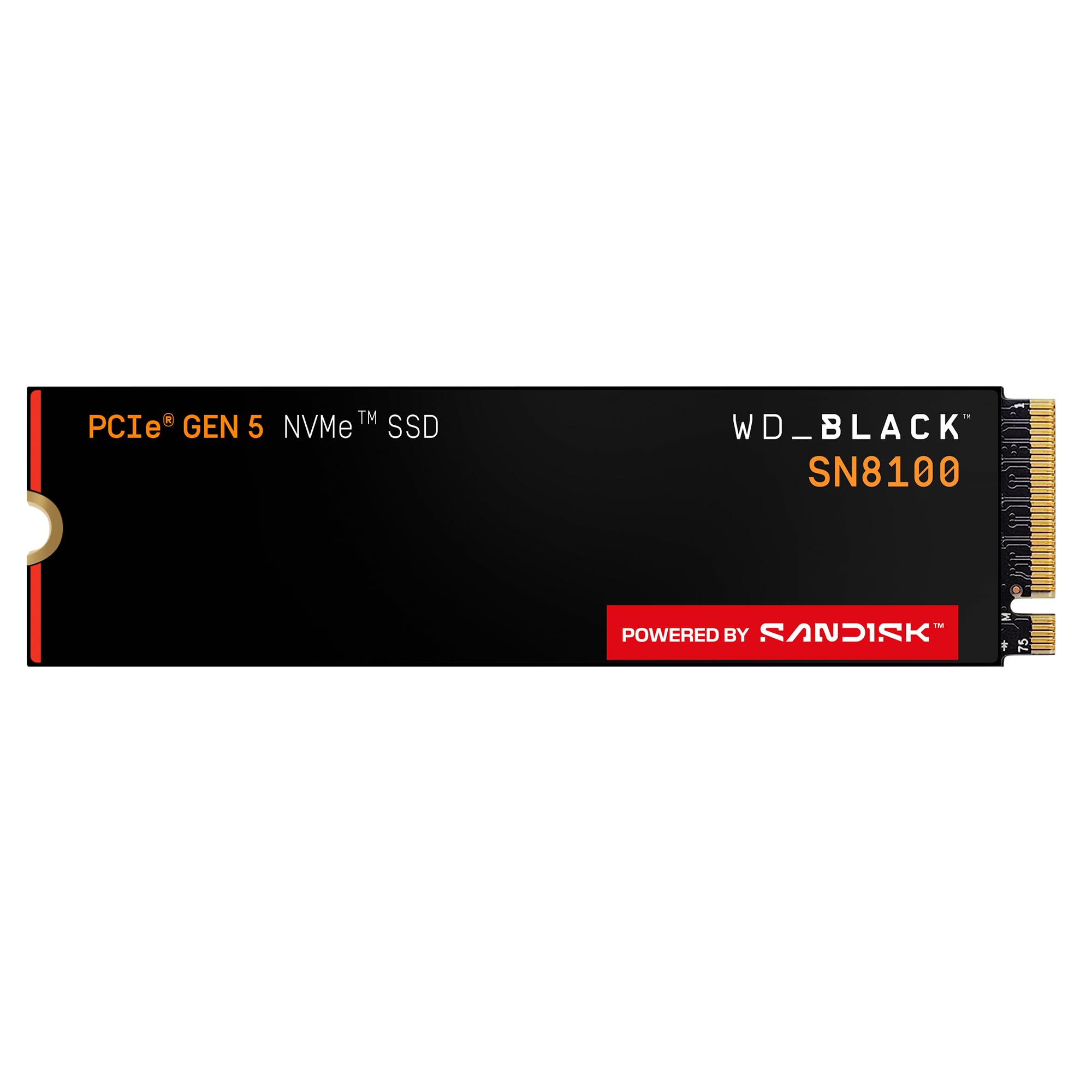
The WD_Black SN8100 represents the absolute peak of consumer NVMe performance in the 1 TB category. With sequential reads reaching 14,900 MB/s and writes up to 11,000 MB/s, this SanDisk-powered drive leverages PCIe Gen 5 x4 to double the bandwidth of the best Gen 4 drives. Its TLC 3D CBA NAND and advanced controller deliver over 2,300,000 IOPS in random performance, making it ideal for AI model loading, high-bitrate video editing, and cutting load times to the bone.
Real-world benchmarks on a Gen 5 platform like the MSI X670E ACE show sustained read/write speeds comfortably above 10,000 MB/s, with average operating power kept under 7.5W thanks to exceptional power efficiency. The drive maintains stability even under heavy sustained writes, and the included SanDisk Dashboard software provides drive health monitoring and firmware updates. For users with a compatible PCIe 5.0 motherboard, the SN8100 eliminates any storage bottleneck.
The primary consideration is motherboard compatibility — you need a Gen 5 x4 M.2 slot to unlock its full potential. In a Gen 4 or Gen 3 slot, the drive will operate at the slower interface speed, making the premium investment harder to justify. The 1 TB capacity is also modest relative to the drive’s otherworldly throughput, but for OS and primary application duties it remains a powerhouse.
Why it’s great
- Industry-leading sequential read/write speeds
- Excellent power efficiency for a Gen 5 drive
- Strong thermal management with no throttling under sustained load
Good to know
- Requires PCIe Gen 5 motherboard for full performance
- Premium price point reflects top-tier specs
2. Crucial P510 1TB

The Crucial P510 brings Gen 5 performance to a more accessible price point without sacrificing reliability. Rated at 11,000 MB/s read and 8,500 MB/s write, this Micron-built drive uses advanced G8 NAND and a compact Gen 5 controller to deliver dramatic upgrades over any Gen 4 SSD. Backward compatibility means it works in Gen 4 and Gen 3 slots too, making it a future-proof choice for builds you plan to upgrade later.
In practical use, the P510 shines for gamers and content creators who want snappier load times without the absolute premium of the top-tier Gen 5 drives. The drive includes Acronis True Image cloning software for easy migration, plus a one-month Adobe Creative Cloud subscription. Thermal control is well-managed out of the box, though a dedicated heatsink is recommended for sustained heavy workloads. The 5-year warranty and 600 TBW endurance backing add peace of mind.
The P510’s main trade-off is that its sequential write speed, while excellent, falls short of the fastest Gen 5 drives. For typical use cases — game loading, boot drives, file transfers — this difference is rarely noticeable. It also lacks onboard DRAM, relying on Host Memory Buffer, which may present a minor penalty during very heavy sustained writes compared to DRAM-equipped alternatives.
Why it’s great
- Unlocks Gen 5 speeds at a mid-range price
- Backward compatible with older PCIe generations
- Includes Acronis cloning software and Adobe subscription
Good to know
- No dedicated DRAM cache (HMB only)
- Heatsink recommended for sustained writes
3. acer Predator GM7 1TB
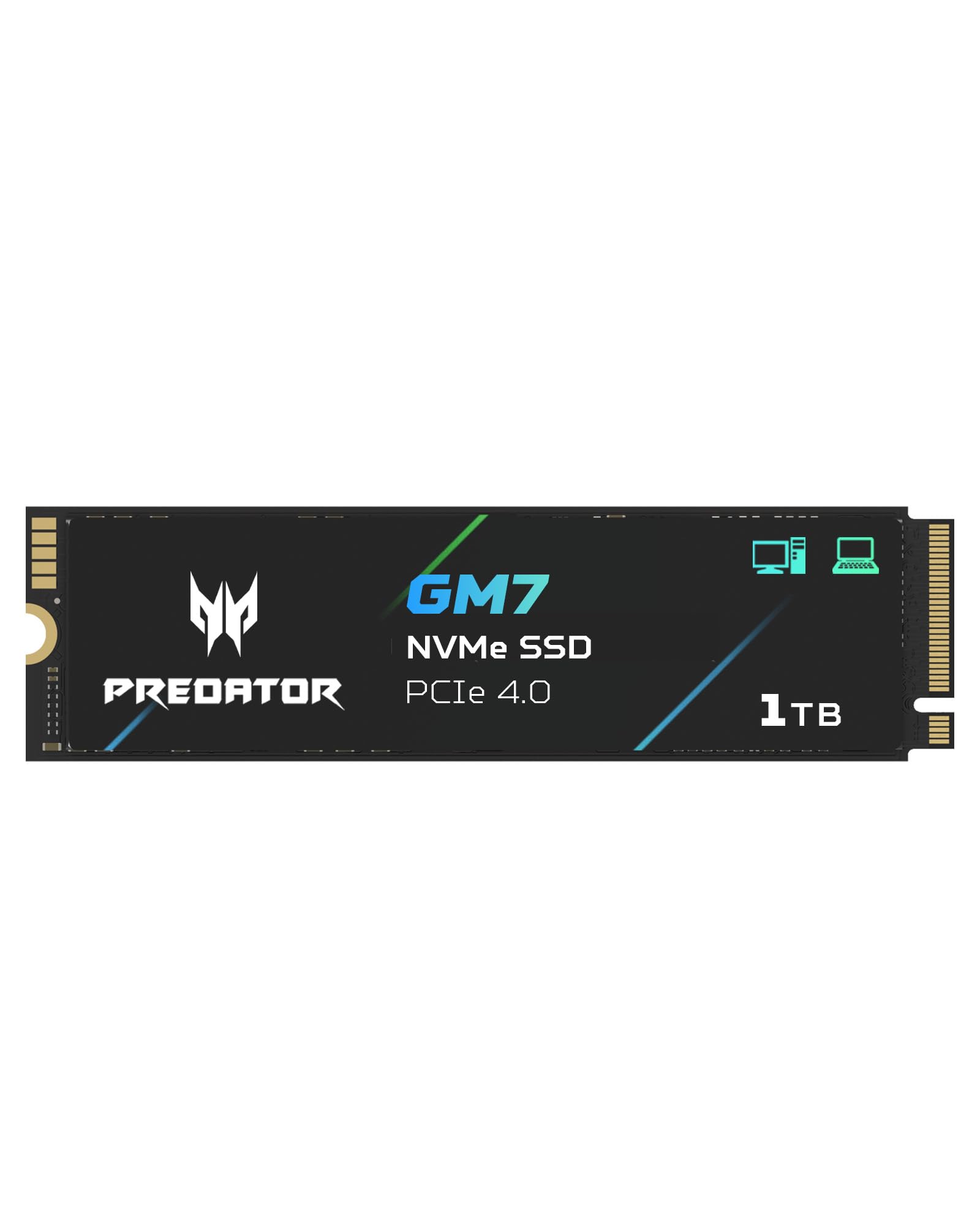
The acer Predator GM7 stands at the top of the Gen 4 performance tier, pushing up to 7,400 MB/s reads and 6,500 MB/s writes using the PCIe 4.0 interface and NVMe 2.0 protocol. Its combination of SLC Cache and Host Memory Buffer (HMB) technology ensures that game loads and large file transfers remain snappy even when the pseudo-SLC cache is exhausted. The drive runs cool thanks to its Thermal Throttling and Power Management features, making it suitable for laptops and PS5 enclosures.
Users consistently report fast game loads and smooth performance in both desktop and PS5 configurations. The Predator GM7 is easy to install and works immediately with Sony’s PS5 storage expansion slot. The Biwin Intelligence software allows you to monitor performance, update firmware, and clone drives directly from a simple dashboard. For a Gen 4 drive, it offers near-maximum bandwidth that will saturate the Gen 4 interface.
As with any HMB-based design, the GM7 relies on your system’s RAM for the mapping table, which means random read/write latencies can be slightly higher than a DRAM-equipped alternative under extreme workloads. The 1 TB version also lacks a dedicated heatsink in the box, so you may need to source one separately for sustained professional use.
Why it’s great
- Near-maximum Gen 4 sequential speeds
- Excellent thermal management
- Compatible with PS5 and desktop
Good to know
- No dedicated DRAM cache
- Heatsink sold separately
4. BIWIN Black Opal NV7400 1TB

The BIWIN Black Opal NV7400 squeezes every drop of bandwidth from the PCIe Gen 4 interface, achieving a rated read speed of 7,450 MB/s and write speed of 6,500 MB/s with random IOPS reaching 1,000K. It employs a composite PMIC (Power Management Integrated Circuit) to improve power distribution efficiency, and its 0.5mm graphene-aluminum heatsink keeps temperatures under control during extended sessions. Combined with HMB technology, it maintains stable operation even under heavy workloads.
This drive is a strong candidate for both PS5 expansion and desktop use. Users report consistent temperatures around 42°C when running as an OS drive, and the drive handles large game installs and file transfers without noticeable throttling. The included Biwin Intelligence software provides performance testing, data migration, and firmware updates, giving you full control over drive health and maintenance.
The NV7400 does not include a dedicated DRAM cache, relying instead on HMB, which may affect performance in scenarios involving heavy concurrent random writes. At its price point, it competes directly with other high-end Gen 4 drives, and the value proposition depends on how much you prioritize the absolute maximum sequential throughput versus sustained random performance.
Why it’s great
- Highest Gen 4 sequential speeds available
- Integrated graphene heatsink included
- PS5 ready with easy installation
Good to know
- HMB-based, no dedicated DRAM
- Premium pricing for Gen 4
5. fanxiang S880E 1TB

The fanxiang S880E targets the PS5 storage expansion market with a PCIe Gen 4 design rated at 7,000 MB/s reads and 3,000 MB/s writes. Built with 3D NAND flash and a graphite-coated copper foil layer for thermal control, it promises sustained performance even during extended gaming sessions. It supports NVMe 2.0 and DirectStorage, making it a natural fit for modern game consoles and Windows gaming rigs alike.
User feedback highlights smooth PS5 operation, simple installation, and fast game loads. The drive is also popular in NAS environments, where its sequential throughput significantly outperforms SATA alternatives for multi-user file transfers. The 5-year warranty and lifetime technical support from a brand with over two decades of manufacturing experience provide an extra layer of confidence.
The S880E’s write speed of 3,000 MB/s is notably lower than competing Gen 4 drives, and it lacks a dedicated DRAM cache. For pure gaming and casual file copying, the write deficit rarely matters, but content creators moving large video files may notice the difference. The drive is explicitly not compatible with macOS, so Apple users should look elsewhere.
Why it’s great
- Excellent PS5 compatibility out of the box
- Good thermal control with graphite-copper foil
- 5-year warranty and good value for the performance
Good to know
- Write speed capped at 3,000 MB/s
- Not compatible with macOS
6. Kingston NV3 1TB
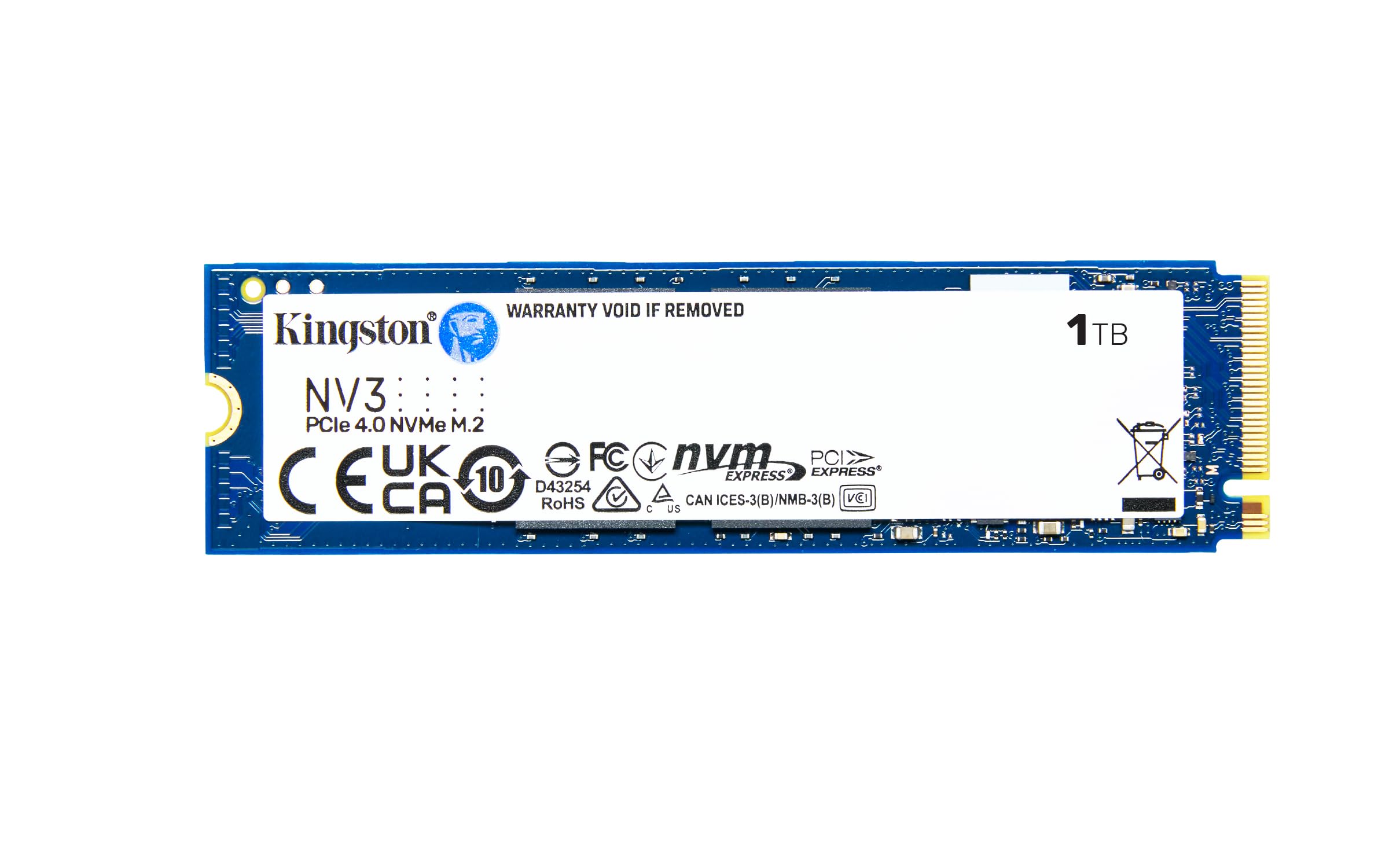
The Kingston NV3 is the grown-up choice for users who want predictable, reliable performance without chasing benchmark records. Rated at 6,000 MB/s read and offering Gen 4×4 connectivity, it delivers instant boot times, fast app loading, and smooth file transfers in both desktop and laptop configurations. Its 1TB capacity is ample for a system drive with room for a handful of modern games.
Kingston’s reputation for compatibility is well-earned here: the NV3 works seamlessly across different motherboard chipsets and runs cool and stable without aggressive throttling. Users report easy installation and immediate system recognition. The drive is shock-resistant and built with power efficiency in mind, making it a solid option for laptops where battery life matters.
The NV3 sits at a lower sequential throughput than the fastest Gen 4 drives, and like most drives in its class, it uses HMB rather than a dedicated DRAM cache. For the typical user — boot drive, everyday applications, light gaming — the difference is imperceptible. The drive’s price has fluctuated, but it generally represents strong value for a 1 TB Gen 4 upgrade.
Why it’s great
- Reliable, consistent performance across systems
- Runs cool, ideal for laptops
- Trusted brand with broad compatibility
Good to know
- Moderate sequential speeds compared to rivals
- No dedicated DRAM cache
7. Patriot Memory P400 Lite 1TB

The Patriot P400 Lite takes a pragmatic approach to NVMe storage, offering Gen 4 connectivity at 3,500 MB/s read and 2,700 MB/s write speeds. This is roughly half the throughput of premium Gen 4 drives, but still a massive leap over SATA SSDs. Its slim graphene heatshield keeps thermals in check, and it supports end-to-end data path protection for data integrity in budget builds.
User experiences vary: some units exceed rated speeds significantly, while others match the spec sheet. The drive uses a DRAM-less design with a smaller pseudo-SLC cache than competitors, meaning sustained heavy writes will cause performance to drop sooner. For a secondary game drive or a budget OS drive, the P400 Lite offers genuine value and has satisfied buyers using it in PS5, desktop, and NAS environments.
The inconsistency in performance due to potential component changes is the biggest risk. If you need guaranteed high-speed sustained writes or plan to hammer the drive with large file transfers, spending a bit more for a faster Gen 4 drive is wise. For casual users upgrading from a hard drive or SATA SSD, the P400 Lite remains an attractive entry point to the NVMe world.
Why it’s great
- Lowest-cost 1 TB Gen 4 NVMe entry
- Graphene heatshield included
- Massive improvement over SATA SSDs
Good to know
- Performance can vary between batches
- SLC cache is smaller than competitors
FAQ
Will a PCIe Gen 5 drive work in a Gen 4 or Gen 3 slot?
Do I need a heatsink for my 1 TB NVMe SSD?
What is SLC cache and why does it matter?
Can I use any 1 TB NVMe SSD in a PS5?
What does TBW mean and how much do I need?
Final Thoughts: The Verdict
For most users, the best 1 tb nvme ssd winner is the acer Predator GM7 because it delivers near-maximum Gen 4 speeds with strong thermal management and PS5 compatibility at a balanced price point. If you want future-proof Gen 5 performance without the highest premium, grab the Crucial P510. And for absolute top-tier bandwidth on a Gen 5 motherboard, nothing beats the WD_Black SN8100.