
A colorless, odorless gas fills your home without a single warning from your senses. The only way to know carbon monoxide is present is through a detector that never sleeps and never runs out of power. A sealed, 10-year battery eliminates the annual chore of swapping cells and the annoying low-battery chirps that drive homeowners to remove the batteries entirely—a dangerous workaround that leaves families unprotected.
I’m Min — the co-founder and writer behind Gadgets Feed. I’ve spent countless hours cross-referencing UL standards, sensor types, and real-world failure reports to build a guide that separates genuinely reliable detectors from units prone to false alarms or early end-of-life beeps.
This guide evaluates the top contenders for a 10 year carbon monoxide detector, focusing on sensor accuracy, alarm loudness, and the real-world durability of their sealed lithium power sources.
How To Choose The Best 10 Year Carbon Monoxide Detector
Every detector reviewed here meets the core requirement of a sealed 10-year battery, but differences in sensor calibration, alarm patterns, and display features separate adequate models from truly excellent ones. Focus on the sensor type, the alarm loudness measured in decibels, and whether the unit offers a digital readout of ambient CO levels.
Electrochemical Sensor vs. Dual-Sensor Combo Units
A standalone CO detector uses an electrochemical cell that reacts specifically to carbon monoxide molecules, offering high accuracy with virtually no false triggers from steam or cooking. Combo units stack a photoelectric smoke sensor alongside the CO cell, which trades a slightly larger footprint for dual-threat coverage. If you already have smoke detectors, a dedicated CO unit keeps the form factor compact.
Digital Display and Peak Level Memory
A backlit numerical readout shows the current parts-per-million (PPM) of CO in real time, letting you spot a slow leak before the 85-decibel alarm activates. Peak-level memory stores the highest concentration recorded since the last reset, which is invaluable for technicians diagnosing intermittent furnace issues. Without a display, you only know about CO once it reaches 70 PPM for over an hour.
Quick Comparison
On smaller screens, swipe sideways to see the full table.
| Model | Category | Best For | Key Spec | Amazon |
|---|---|---|---|---|
| Kidde 30CUA10-V (3-Pack) | Premium Combo | Hardwired with voice alerts | 120V AC with 10-year battery backup | Amazon |
| First Alert CO710A | Premium CO-Only | Digital display & peak level memory | Backlit PPM readout + temperature | Amazon |
| Kidde 30CUD10 (2-Pack) | Mid-Range Combo | Battery-powered dual protection | 25% faster smoke detection | Amazon |
| First Alert PRC710 | Mid-Range Combo | Nuisance-free photoelectric smoke | Photoelectric + electrochemical | Amazon |
| First Alert SMCO210 | Mid-Range Combo | Slim profile, Precision Detection | Half-depth of standard alarm | Amazon |
| SITERWELL GS886-H02 | Value Combo | Bilingual voice alerts | English/French 85dB warnings | Amazon |
| Kidde 30CUD10 (4-Pack) | Budget Multi-Pack | Whole-home single-purchase solution | 4 units, LED status indicators | Amazon |
In‑Depth Reviews
1. Kidde 30CUA10-V (3-Pack) — Hardwired with Voice Alerts
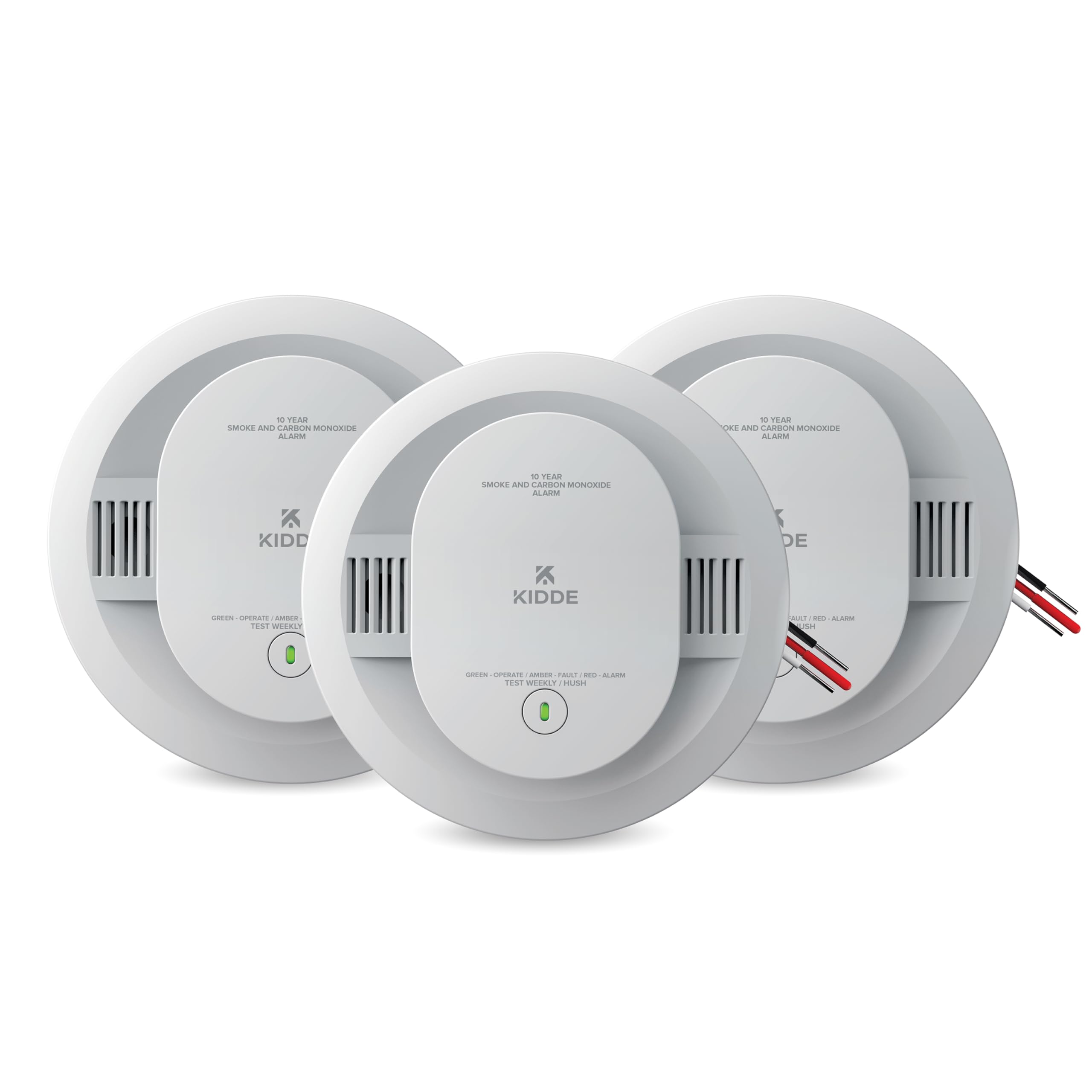
The 30CUA10-V runs on 120V AC power with a sealed 10-year lithium battery backup, ensuring it stays operational even during a power outage—a critical feature when a furnace malfunction or generator use creates CO risks. Its voice alert system audibly announces “Fire” or “Warning, Carbon Monoxide,” which immediately directs the correct response, especially helpful for sleeping children or elderly family members who might panic during a generic tone.
Interconnect capability links up to 24 Kidde units so that a CO detection in the basement triggers alarms across every floor. The enhanced sensing technology reduces false alarms from cooking steam, and the 85-decibel alarm with red LED provides clear visual confirmation. At 5 inches wide and 1.88 inches deep, the profile sits flush on standard junction boxes.
Some users reported missing mounting hardware in the box, and a minority experienced false alarms in the middle of the night that prompted brand switching. The 10-year limited warranty covers the alarm from the purchase date, not manufacturing date, so verify the replace-by sticker upon arrival.
Why it’s great
- Voice alerts reduce confusion during emergencies
- Hardwired with sealed battery backup for outage protection
- Interconnectable for whole-home simultaneous alarms
Good to know
- Some units arrived without mounting hardware
- Inconsistent false-alarm reports from a small user subset
2. First Alert CO710A — Digital Display & Temperature

The CO710A is a dedicated CO detector—no smoke sensor—that uses a true electrochemical cell for pinpoint carbon monoxide detection. Its backlit digital display shows current CO concentration in parts per million (PPM) and ambient room temperature, which is rare among battery-only units. The peak-level memory function retrieves the highest CO reading since the last reset, allowing you to identify intermittent spikes from a water heater or attached garage.
Because there is no smoke sensor, the form factor is noticeably lighter and more compact than combo units. It sits comfortably on a tabletop or mounts directly to the wall with the included bracket. The sealed 10-year lithium battery means zero maintenance between installation and the end-of-life chirp, which triggers after a decade of continuous monitoring.
The display only activates when CO is present or when the test button is pressed, meaning you cannot casually glance at PPM levels during normal operation. Some users found this limitation disappointing for monitoring slow, sub-alarm-level leaks. The 85-decibel alarm is loud enough for a single floor but may not penetrate into a finished basement from an upstairs hallway.
Why it’s great
- Backlit digital display shows real-time PPM and temperature
- Peak-level memory helps diagnose intermittent CO leaks
- Compact, lightweight design for travel or tabletop use
Good to know
- Display only lights up during alarm or button press
- CO-only — no smoke detection included
3. Kidde 30CUD10 (2-Pack) — Battery Combo with Faster Smoke Detection

The Kidde 30CUD10 combines electrochemical CO sensing with photoelectric smoke detection in a battery-powered package that requires no wiring. Kidde claims over 25% faster smoke detection compared to previous models, achieved through redesigned smoke chamber geometry. The 85-decibel alarm activates a red flashing LED that clearly indicates the hazard type, helping occupants differentiate between smoke and CO before evacuating.
The advanced sensing algorithm reduces nuisance alarms from cooking grease and shower steam, a common complaint with earlier Kidde generations. Each unit runs exclusively on its sealed 10-year lithium battery, eliminating the low-battery chirp cycle entirely. The mounting bracket twists into place and fits standard ceiling or wall locations without an electrician.
Some units arrived with a stuck red activation screw that prevented the battery connection, leaving the unit dead on arrival. Kidde’s customer service response was reported as slow by several users, and warranty exchanges sometimes required shipping back the defective unit first. The 10-year limited warranty covers the alarm itself but explicitly does not guarantee the battery will last the full decade.
Why it’s great
- 25% faster smoke detection vs previous Kidde models
- Reduced nuisance alarms from steam and cooking
- Battery-powered — no wiring required, easy retrofit
Good to know
- Some units shipped with defective battery activation screw
- Kidde customer service response times can be slow
4. First Alert PRC710 — Nuisance-Free Photoelectric Combo

The PRC710 uses a photoelectric smoke sensor paired with an electrochemical CO cell, making it one of the most affordable dual-threat units with a sealed 10-year battery. Photoelectric sensors are inherently less prone to false alarms from cooking vapors and bathroom steam compared to ionization sensors, which matters in open-concept kitchens where the alarm sits near the cooking area. The 85-decibel alarm is standard, and the test/hush button silences nuisance triggers for several minutes without disabling detection.
This unit is battery-only with no hardwiring option, making it an easy replacement for existing battery-powered alarms. The mounting bracket uses a standard twist-lock mechanism that fits most wall and ceiling locations. At 6.4 ounces, it is one of the lighter combo units, reducing strain on drywall anchors in ceiling installations.
Some users noted that the mounting bracket design changed compared to older First Alert models, requiring removal of the previous backplate even when replacing an older First Alert unit. The absence of a digital display means you cannot monitor CO levels until the alarm threshold is reached. A few units triggered early end-of-life chirps before the advertised 10-year mark.
Why it’s great
- Photoelectric sensor resists false alarms from kitchen steam
- Very affordable for a sealed 10-year combo unit
- Lightweight at 6.4 oz, easy ceiling installation
Good to know
- Mounting bracket changed from older First Alert models
- No digital display for CO concentration levels
5. First Alert SMCO210 — Slim Profile with Precision Detection
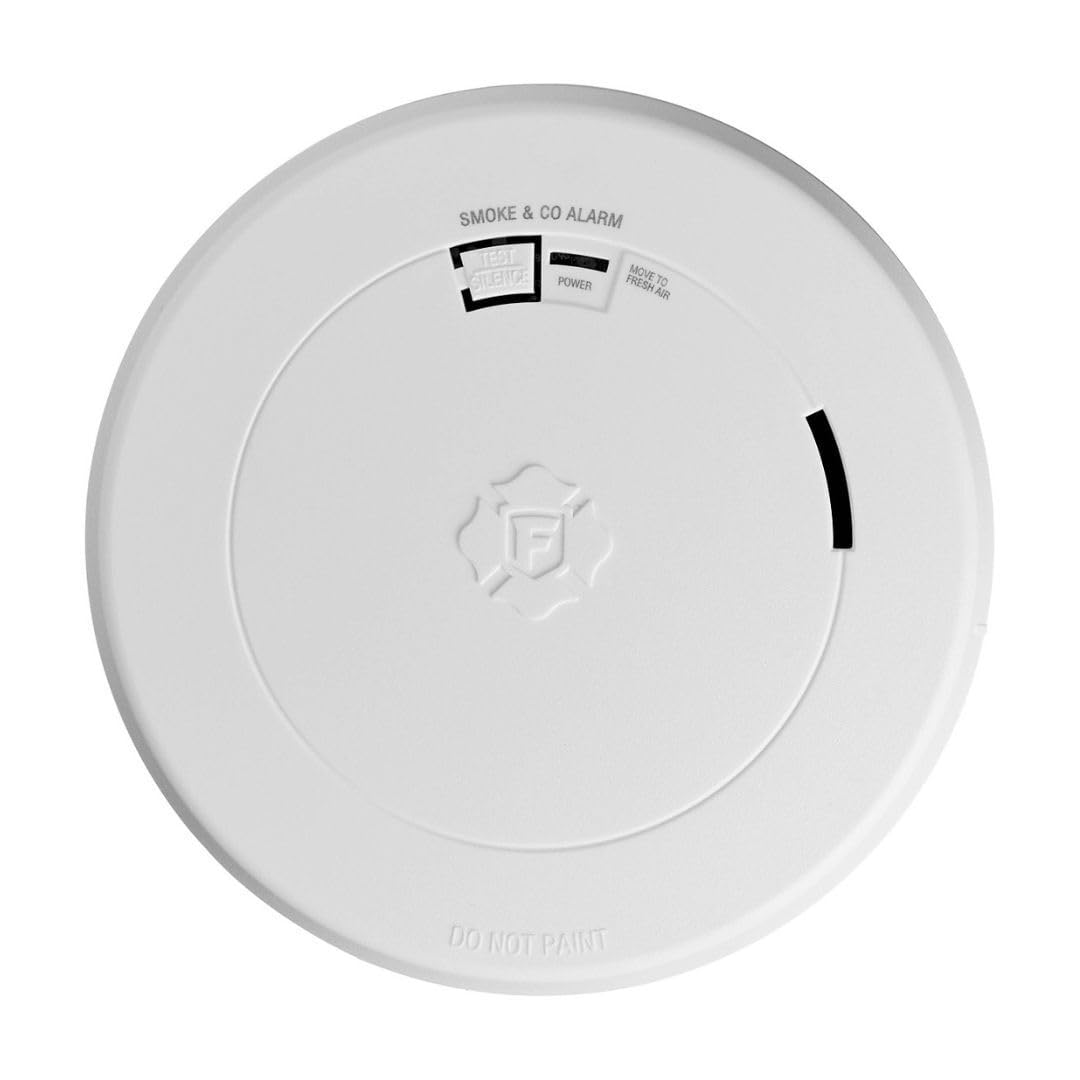
The SMCO210 is half the depth of a standard alarm at just 1 inch thick, making it the most discreet option for hallways and bedrooms where aesthetics matter. First Alert’s Precision Detection technology adjusts the sensor threshold to differentiate between slow-smoldering fires and fast-flaming fires while maintaining UL 217 compliance. The sealed 10-year battery powers both the smoke photoelectric chamber and the electrochemical CO cell without requiring any wiring.
The slim profile does not sacrifice alarm volume—it still produces the standard 85-decibel tone that wakes most sleepers within a single floor. The end-of-life warning chirps once per minute for 30 days, giving ample time to replace the unit before protection drops. The test button cycles through both smoke and CO circuits, confirming each sensor independently.
Several users reported frequent false alarms, with some units triggering multiple times per night at hours like 1:00 AM and 2:15 AM, suggesting a sensitivity calibration issue in certain batches. The 10-year warranty covers defects but does not cover false-alarm nuisance. A small number of units arrived with a replace-by date that was already several months old, reducing the effective service life.
Why it’s great
- Ultra-slim 1-inch depth for low-profile installation
- Precision Detection adjusts to fire type
- Tests both smoke and CO sensors independently
Good to know
- Some batches have false-alarm issues at night
- Replace-by date may be months old upon arrival
6. SITERWELL GS886-H02 — Bilingual Voice Alerts Combo
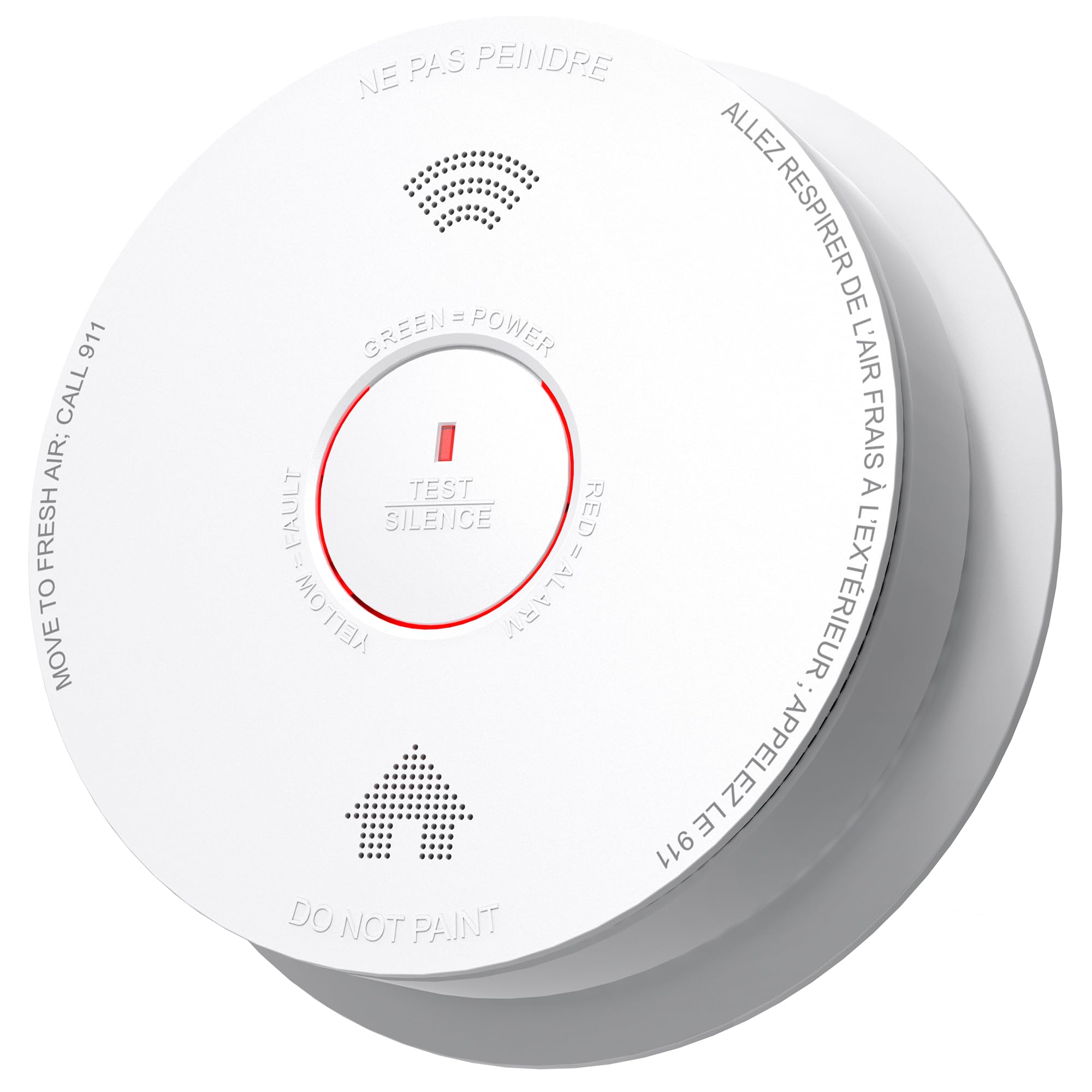
The SITERWELL GS886-H02 punches above its price point with bilingual English and French voice alerts that audibly identify whether the threat is smoke or carbon monoxide. The 85-decibel alarm includes a spoken danger level, which is rare in the budget tier and can reduce response time by up to 40% according to the manufacturer. The dual-wave smoke detection technology uses two optical wavelengths to distinguish between fast-flaming and slow-smoldering fires while rejecting common nuisance sources like toast and shower steam.
This standalone model requires no rewiring and installs in minutes using the included mounting bracket with screws and anchor plugs compatible with drywall, wood, or concrete. The sealed 10-year lithium battery provides continuous power management that never requires a mid-life swap. It complies with UL 217 8th Edition, California’s latest smoke alarm regulations, and New York’s 10-year sealed battery mandate.
The interconnectivity feature is limited compared to hardwired systems—this unit only signals other SITERWELL units and does not connect to third-party or older hardwired systems. Some users noted that cooking steam still triggered occasional false alarms despite the dual-wave technology, though far less frequently than standard ionization detectors. The 1.65-inch depth is slightly thicker than the slim-profile competitors.
Why it’s great
- Bilingual voice alerts (English/French) identify the specific hazard
- Dual-wave technology reduces kitchen nuisance alarms
- Complies with UL 217 8th Edition and state mandates
Good to know
- Interconnect only works with other SITERWELL units
- Slightly thicker than slim-profile alternatives
7. Kidde 30CUD10 (4-Pack) — Whole-Home Single Purchase

This 4-pack version of the Kidde 30CUD10 is designed for homeowners who want to replace every detector in a single transaction. Each unit shares the same electrochemical CO sensor and photoelectric smoke chamber as the 2-pack, with enhanced sensing that meets UL 217 9th Edition and UL 2034 4th Edition. The three-color LED system provides at-a-glance status: green for normal operation, amber for an error condition, and red during an active smoke or CO alarm.
A self-testing function continuously monitors the internal electronics and sensor health, chirping if a component fails between manual tests. Despite the automation, Kidde recommends a weekly manual button test to verify the alarm horn and LED indicators. The sealed 10-year battery eliminates the low-battery chirp cycle that often leads users to disable their alarms.
Several buyers reported that 2 out of 8 units began false-alarming after approximately 15 months in an all-electric home with no gas appliances. The test/hush button reportedly failed on those same units, making them unusable. Kidde’s return process requires contacting customer support and shipping units back before a replacement is issued, which leaves gaps in protection. The 10-year limited warranty does not cover the battery’s actual lifespan, only the alarm electronics.
Why it’s great
- Four units in one box for whole-home coverage
- Self-testing electronics monitor sensor health continuously
- Three-color LED for instant status checks
Good to know
- Some units fail with false alarms after 15 months
- Warranty replacement process requires return shipping first
FAQ
Does the 10-year battery actually last a full decade?
What does the end-of-life chirp sound like on a 10-year detector?
Can I install a 10-year CO detector in a vacation home or rental property?
Final Thoughts: The Verdict
For most users, the 10 year carbon monoxide detector winner is the Kidde 30CUA10-V because its hardwired design with voice alerts and sealed backup battery provides the highest level of failsafe protection. If you want a dedicated CO monitor with a real-time PPM display, grab the First Alert CO710A. And for a budget-friendly whole-home solution in a single box, nothing beats the Kidde 30CUD10 4-Pack.