
Finding a Chromebook that offers a genuinely useful 100GB of local storage without emptying your wallet is the real challenge. You need enough space for offline documents, downloaded media, and app caches, but you also want the modern convenience of USB-C charging that lets you power up with the same cable as your phone or tablet. The market is flooded with budget 32GB models, making the hunt for a capable, spacious machine feel overwhelming.
I’m Min — the co-founder and writer behind Gadgets Feed. I evaluate Chromebooks by dissecting their processor benchmarks, storage configurations, port selection, and real-world battery performance to separate marketing claims from actual usability. This guide focuses specifically on models that pair at least 64GB of internal flash storage (effectively giving you 100GB-plus of usable space) with a dedicated USB-C charging port.
Whether you’re a student juggling assignments or a professional working remotely, understanding which hardware delivers on both storage and versatile charging is critical. This deep dive into the 100 gb chromebook with type-c charging port market will help you make an informed choice without overspending.
How To Choose The Best 100 GB Chromebook With Type-C Charging Port
Selecting a Chromebook with ample storage and modern charging isn’t just about picking the cheapest option. You need to balance processor speed, memory, display quality, and connectivity to get a machine that handles your daily workload without frustration. Here are the key factors to examine before you buy.
Storage Capacity and Type
Look for at least 64GB of internal eMMC or UFS storage. While a 32GB model might seem adequate for cloud-only use, local app caches, downloaded files, and offline Google Drive sync will quickly eat that space. Models with 128GB give you the breathing room for a substantial offline library without relying solely on a microSD card. UFS storage is faster than eMMC, offering snappier boot times and app launches.
USB-C Charging and Power Delivery
A true USB-C charging port must support Power Delivery (PD). This standard allows the charger to negotiate the correct voltage and current, ensuring safe and efficient charging. A Chromebook with a single USB-C port used for both charging and data is far more versatile than one requiring a dedicated barrel connector. Check that the port supports display output as well for connecting to external monitors.
Processor and RAM Balance
An Intel N-series or MediaTek Kompanio processor paired with 4GB of RAM is sufficient for basic web browsing and document editing. If you plan to juggle multiple tabs or use Android apps heavily, prioritize 8GB of RAM. The processor’s clock speed and core count directly affect how smoothly the system feels during multitasking, especially with Progressive Web Apps and Linux containers.
Display Quality and Size
A 14-inch or 15.6-inch Full HD (1920×1080) IPS display offers the best balance of screen real estate and sharpness for productivity. Anti-glare coatings reduce eye strain during long sessions. While HD (1366×768) panels are cheaper, they feel cramped for split-screen work and detailed spreadsheets. Touchscreens add a layer of convenience for navigating Android apps, but they are not essential for most users.
Build Durability and Port Selection
Consider a model with a spill-resistant keyboard if it will accompany you to coffee shops or lecture halls. A magnesium alloy chassis is lighter and more durable than plastic. Ensure the port selection includes at least two USB-C ports so you can charge while connecting an external drive or display. A microSD card slot provides a cheap way to expand storage for media files without using a USB adapter.
Quick Comparison
On smaller screens, swipe sideways to see the full table.
| Model | Category | Best For | Key Spec | Amazon |
|---|---|---|---|---|
| Acer Chromebook Plus 515 | Premium | Power Users & Creative Work | Intel Core i3-1305U, 256GB SSD | Amazon |
| Samsung Galaxy Chromebook Go | Mid-Range | Students & Frequent Travelers | 12-Hour Battery, Spill-Resistant Keyboard | Amazon |
| HP Chromebook 14 (Intel N100, 8GB RAM) | Mid-Range | Multitasking & 4K Streaming | Intel N100, 8GB RAM, 128GB UFS | Amazon |
| ASUS Chromebook CX15 | Mid-Range | Engineering & Linux Workflows | 8GB LPDDR5 RAM, MIL-STD 810H | Amazon |
| Lenovo Chromebook 14 Touchscreen | Mid-Range | Touch-First Navigation | MediaTek Kompanio 520, 128GB Total | Amazon |
| ASUS C424MA-AS48F | Value | Budget-Conscious Productivity | FHD Anti-Glare, 180° Hinge | Amazon |
| Acer 15.6” FHD Chromebook | Value | Media Consumption & Large Screen | 15.6” IPS, Numeric Keypad | Amazon |
| HP 14 inch Chromebook (Intel N200) | Entry-Level | Basic Web & Document Tasks | Intel N200, 128GB eMMC | Amazon |
| ASUS 14″ FHD Chromebook | Entry-Level | Portable Daily Driver | MediaTek Kompanio 520, Wi-Fi 6 | Amazon |
In‑Depth Reviews
1. Acer Chromebook Plus 515
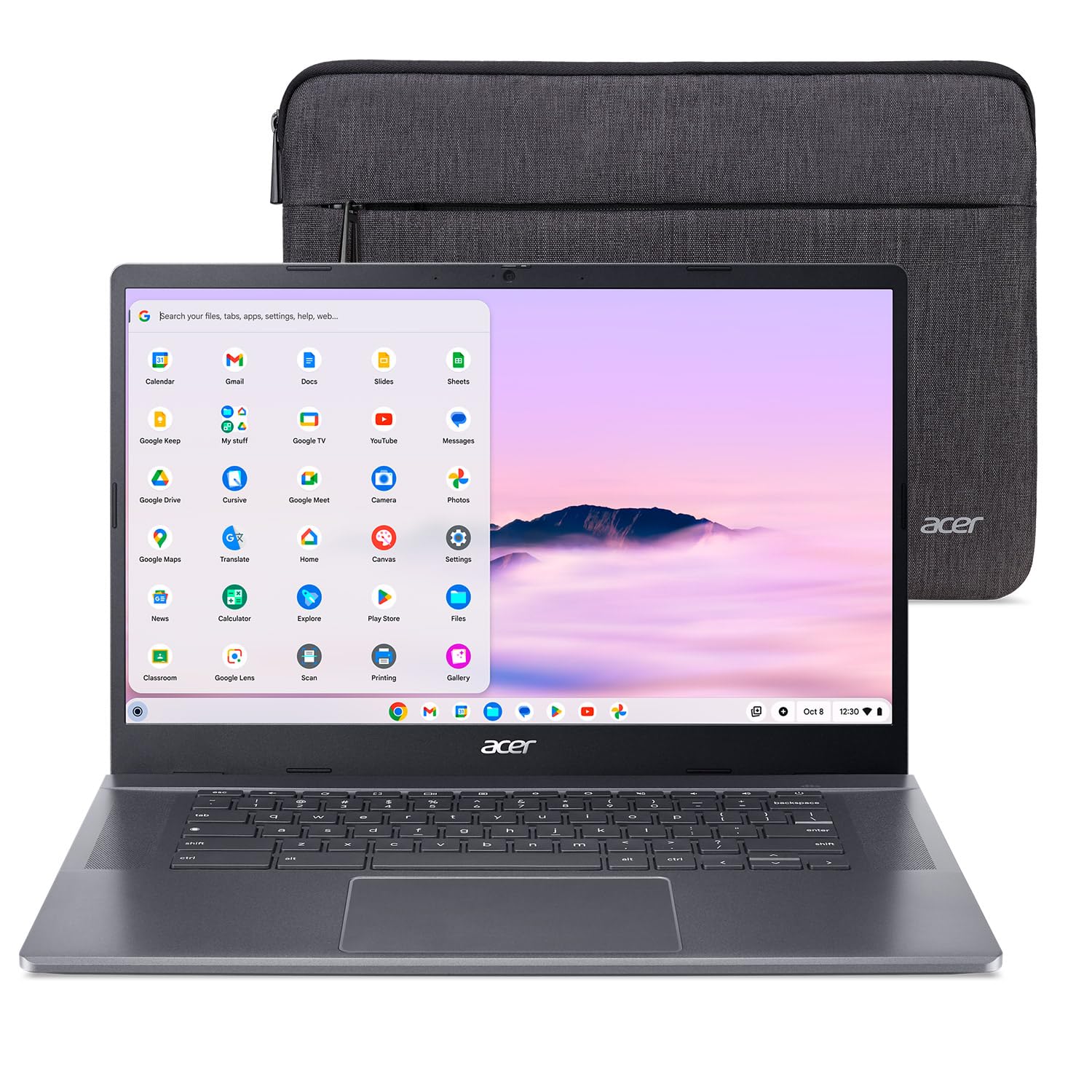
The Acer Chromebook Plus 515 delivers desktop-class performance with its 13th Gen Intel Core i3-1305U processor, capable of boosting up to 4.5GHz. Paired with 8GB of LPDDR5X RAM and a 256GB PCIe Gen4 SSD, this machine handles heavy multitasking, photo editing in Adobe Photoshop, and even light gaming via GeForce NOW without stuttering. The 15.6-inch Full HD IPS touchscreen provides vibrant colors and wide viewing angles, making it ideal for creative work.
Connectivity is future-proofed with Wi-Fi 6E and two USB-C ports that support charging and DisplayPort output. The inclusion of a 720p FHD webcam with a privacy shutter and DTS Audio makes it a serious contender for remote professionals. The battery delivers up to 10 hours, which is competitive for a device with this much horsepower. It also includes a 12-month Google AI Pro subscription, adding value for users who want to leverage Gemini tools.
However, the keyboard lacks backlighting, which is a surprising omission at this tier. The chassis, while sturdy, is not as premium-feeling as some fully metal competitors. For those who need genuine workstation-level performance in a Chromebook, the Acer Plus 515 is the clear frontrunner.
Why it’s great
- Exceptional CPU and SSD combo for snappy app launches
- Vibrant 15.6-inch IPS touchscreen with high resolution
- Wi-Fi 6E and dual USB-C with PD support
Good to know
- Keyboard is not backlit
- Chassis is plastic, not metal
- Battery life can dip under heavy loads
2. Samsung Galaxy Chromebook Go
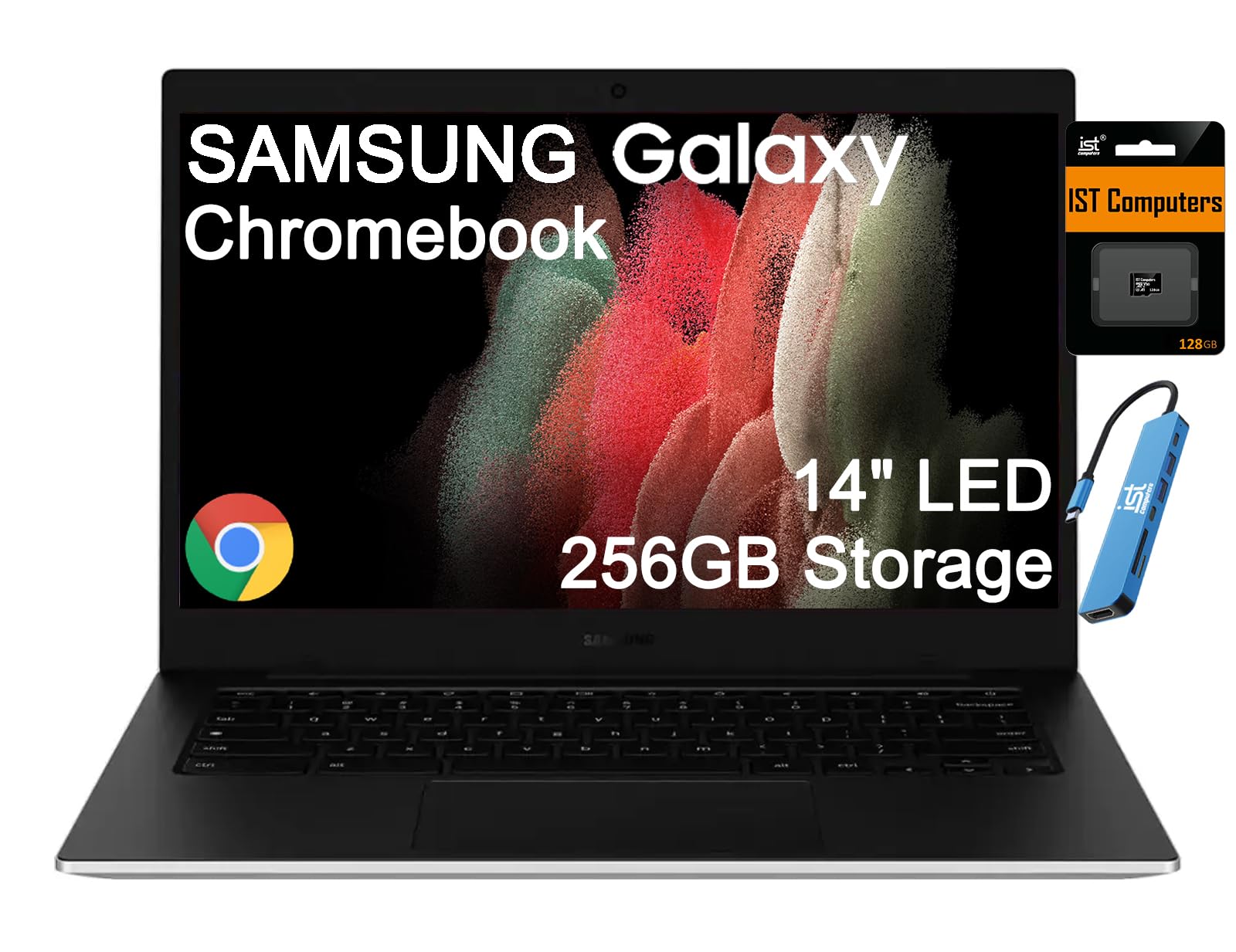
The Samsung Galaxy Chromebook Go is engineered for life on the move. Its military-grade durability and spill-resistant keyboard mean it can survive the bumps of a backpack and an accidental coffee spill. The Intel Celeron N4500 processor, paired with 4GB of RAM, is adequate for web apps, streaming, and document creation. Storage is addressed with a 128GB eMMC plus an additional 128GB SD card, giving you over 256GB total for offline files.
The 14-inch LED display features anti-glare technology, which significantly reduces reflections when working outdoors. With a rated 12-hour battery life and fast-charging support via USB-C, you can easily power through a full school day or transatlantic flight. The bundled 7-in-1 hub adds HDMI and USB-A ports, overcoming the limited built-in port selection. The Auto Update Expiration (AUE) date is set for June 2031, ensuring long-term security updates.
That said, the HD (1366×768) screen resolution is a step down from Full HD, making text appear less sharp. The processor can feel sluggish if you push it beyond 10 active tabs. For students or travelers who prioritize durability and all-day battery over raw performance, this Samsung is a smart buy.
Why it’s great
- Exceptional 12-hour battery life with fast USB-C charging
- Rugged, spill-resistant design for travel
- Large combined storage (128GB eMMC + 128GB SD)
Good to know
- Screen resolution is HD, not Full HD
- Performance with Celeron N4500 is entry-level
- Comes with an additional hub to expand ports
3. HP Chromebook 14 (Intel N100, 8GB RAM)

The HP Chromebook 14 punches far above its price point by packing an Intel N100 processor (a 12th-gen Alder Lake-N chip) and 8GB of LPDDR5 RAM. This combination delivers noticeably snappier performance than the typical Celeron-based competition, allowing you to juggle a dozen Chrome tabs and stream 4K video without major lag. The 128GB of UFS storage is faster than eMMC, making boot times and app launches feel near-instant.
The 14-inch HD (1366×768) anti-glare display is adequate for indoor use, though the resolution is a compromise. Intel UHD Graphics handles casual Android gaming and smooth video playback. The USB-C port supports charging and data transfer, keeping your setup clutter-free. The chalkboard gray chassis feels well-constructed for its class, and the lightweight design makes it easy to toss into a bag.
Port selection is minimal—one USB-A, one USB-C, and a headphone jack—so expect to use a hub for connecting multiple peripherals. The display could also be brighter for sunny outdoor use. If you value responsive multitasking over a high-resolution screen, this HP model is the best bang for your buck.
Why it’s great
- Fast Intel N100 processor with 8GB RAM for smooth multitasking
- 128GB UFS storage offers quick read/write speeds
- Lightweight and well-built plastic chassis
Good to know
- Screen is only 1366×768, not Full HD
- Limited to one USB-C port
- No backlit keyboard
4. ASUS Chromebook CX15
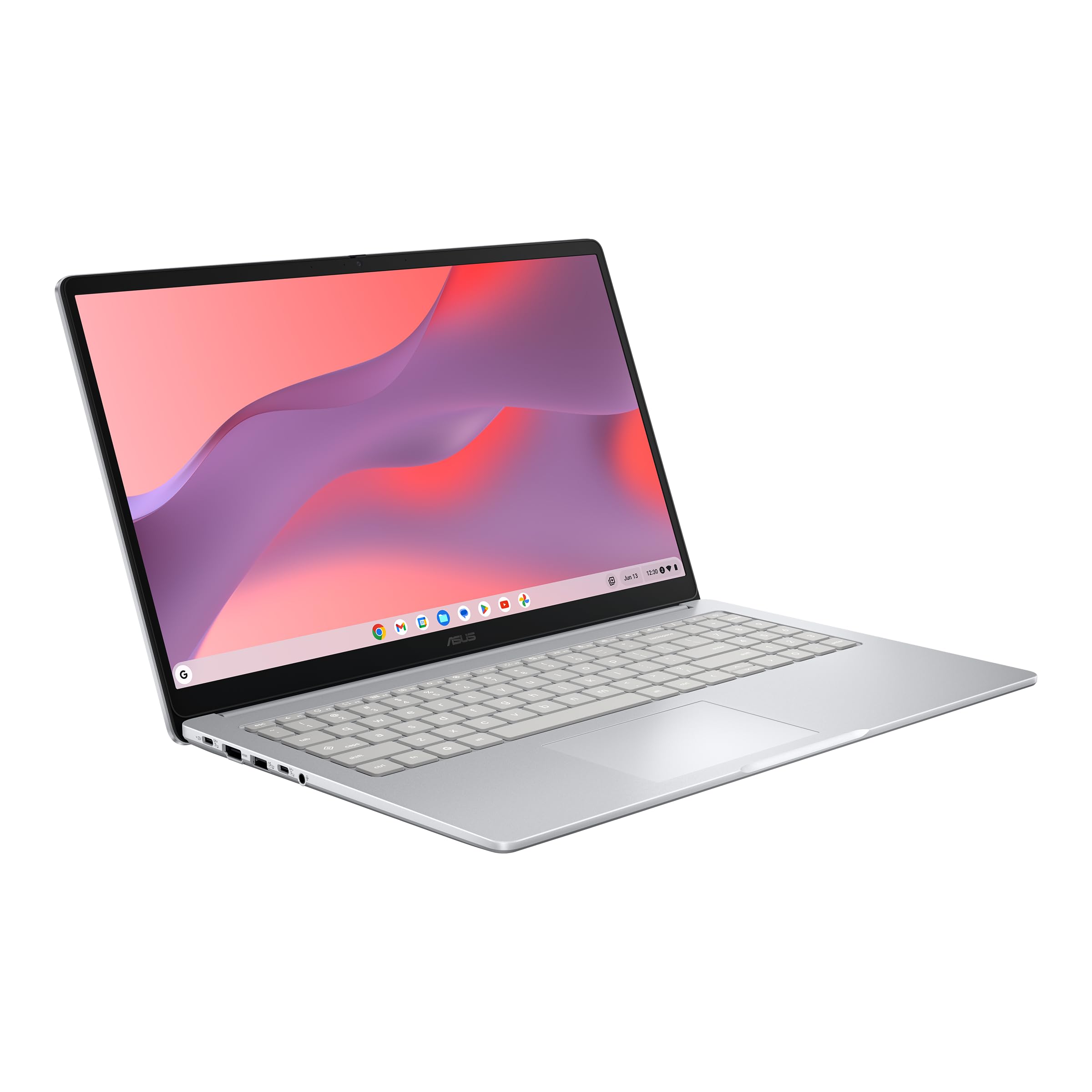
The ASUS Chromebook CX15 brings a premium feature set to the mid-range category. It is powered by an Intel Processor N50 and equipped with 8GB of LPDDR5 memory, which is notably faster than DDR4 and helps with quick app switching. The 128GB storage is complemented by a spacious 15.6-inch Full HD NanoEdge anti-glare display, providing excellent screen real estate for spreadsheets and documents. A numeric keypad is included for efficient number entry.
Build quality is a standout feature here—it meets MIL-STD 810H military standards for durability, yet it remains lightweight at just 3.53 lbs. The I/O is comprehensive with two USB-C Gen 1 ports, one USB-A, and an HDMI 1.4 port. Users have reported success running engineering tools like Fusion 360 and VS Code via Linux containers, a testament to the capable hardware. The battery is rated for up to 10 hours.
Some users have reported that the battery drains faster than expected under heavy use, dropping below the advertised 10 hours. The display is not a touchscreen, which may disappoint those used to tablet-like navigation. For users needing a rugged, large-screen Chromebook for demanding workflows, the CX15 is a flexible choice.
Why it’s great
- Full HD 15.6-inch display with anti-glare coating
- 8GB LPDDR5 RAM for heavy multitasking
- MIL-STD 810H durability rating
Good to know
- Battery life can be inconsistent under load
- Not a touchscreen display
- Some users note rapid battery drain
5. Lenovo Chromebook 14 Touchscreen

The Lenovo Chromebook 14 brings a responsive Full HD touchscreen to the table, making it excellent for navigating Android apps and zooming into documents with your fingers. Under the hood is an octa-core MediaTek Kompanio 520 processor, which excels at power efficiency and provides snappy performance for web apps and cloud gaming. The base configuration includes 4GB of RAM and 64GB of eMMC storage, but it ships with an additional 64GB memory card, giving you 128GB total storage right out of the box.
The 14-inch IPS display offers wide viewing angles and bright colors, which is great for media consumption. The included bundle adds a 6-in-1 USB-C hub, a wireless mouse, and a mouse pad, dramatically enhancing the out-of-box experience. The battery life is rated at an impressive 13.5 hours, and the slim profile (0.73 inches thick, 2.86 lbs) makes it highly portable. Wi-Fi 6 ensures fast wireless connectivity.
The 4GB RAM can become a bottleneck if you push beyond 8-10 tabs or run heavy Android apps. Some reviewers noted that performance with Linux-based software is limited, and the eMMC storage, while adequate, is slower than UFS. For the price, this is a fantastic option for students who want a touchscreen experience and long battery life without breaking the bank.
Why it’s great
- Bright and responsive 14-inch Full HD touchscreen
- Excellent 13.5-hour battery life
- Comes with USB-C hub and wireless accessories
Good to know
- 4GB RAM limits heavy multitasking
- eMMC storage is slower than UFS
- Not ideal for complex Linux workflows
6. ASUS C424MA-AS48F

The ASUS C424MA offers a rare combination at its price point: a Full HD 1920×1080 anti-glare NanoEdge display on a sub- Chromebook. The screen makes a significant difference for text clarity and comfort during long study sessions. It is powered by an Intel Dual-Core Celeron N4020 processor and 4GB of LPDDR4 RAM, which are sufficient for browsing, Google Docs, and streaming. The 128GB eMMC provides enough local space for essential files and offline access.
One unique feature is the 180-degree hinge, allowing you to lay the screen flat for easy content sharing. The port selection includes USB Type-C and Type-A ports, enabling charging and peripheral connectivity. The build quality is surprisingly good for the price, with a solid plastic chassis and strong hinges that feel durable. Users report excellent battery life and a snappy Chrome OS experience out of the box.
The processor can feel slow if you try to run complex web apps or multiple heavy extensions simultaneously. It also gets noticeably warm during system updates. The trackpad has some limitations, and the system does not support a touchscreen. For pure budget-conscious productivity with a great display, this ASUS model is a solid choice.
Why it’s great
- Excellent Full HD anti-glare display at this price point
- Versatile 180-degree lay-flat hinge
- Solid build quality with good battery life
Good to know
- Processor can struggle with heavy multitasking
- Gets warm during intensive updates
- No touchscreen functionality
7. Acer 15.6” FHD Chromebook
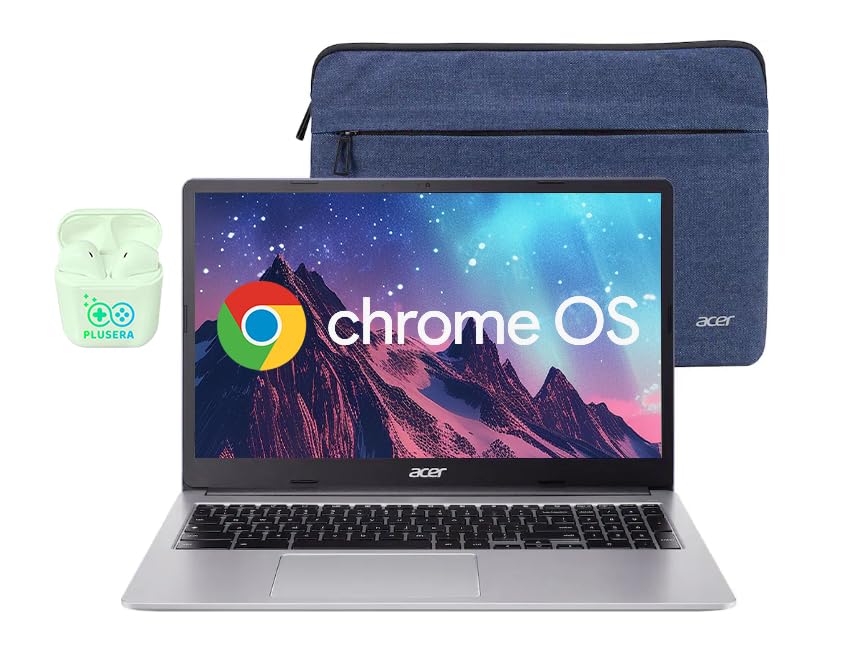
The Acer 15.6-inch Chromebook delivers a large IPS display with Full HD resolution, making it perfect for users who want a big screen for spreadsheets, watching videos, or working with multiple windows side by side. It runs on an Intel Celeron N4500 processor with 4GB of LPDDR4X RAM. Storage is a key strength: it comes with 64GB of eMMC plus a 128GB SD card, giving you 192GB of usable space for downloads and offline media.
A numeric keypad is included, which is a significant productivity gain for anyone who enters data regularly. Connectivity is robust with two USB-C 3.2 ports, two USB-A 3.2 ports, and a microSD card reader. The 15.6-inch form factor also allows for a full-sized, comfortable keyboard. The included PLUSERA earphones add a nice touch of convenience.
The screen is not a touchscreen, and some customers were confused by listings suggesting otherwise. The chassis is also quite large, making it less portable than 14-inch competitors. For stationary use where screen size and a number pad matter most, this Acer is a strong contender.
Why it’s great
- Large 15.6-inch Full HD IPS screen
- Includes numeric keypad for data entry
- Excellent combined storage of 192GB
Good to know
- 4GB RAM limits multitasking capacity
- Large and less portable than smaller models
- Not a touchscreen
8. HP 14 inch Chromebook (Intel N200)

The HP 14-inch Chromebook is a straightforward, no-frills entry into the Chromebook world. It features an Intel N200 processor, which is a decent step up from older Celeron chips, and 4GB of RAM for basic tasks. The 128GB of eMMC storage ensures you have ample room for your files without needing to immediately use cloud storage. The 14-inch HD display is serviceable for indoor use.
The design includes a privacy camera shutter, a welcome security feature for video calls. The compact and lightweight silver chassis makes it easy to carry between classes or workstations. It runs Chrome OS smoothly out of the box, with fast startup times and a clean user interface. For the price, you get a brand-name laptop with enough storage to stay relevant.
The HD display lacks the sharpness of Full HD panels. It is best suited for users with very simple needs: email, single-document editing, and light web browsing. If your workload is minimal, this is a functional and affordable gateway.
Why it’s great
- Reliable HP build quality with a privacy camera shutter
- Ample 128GB eMMC storage for budget tier
- Lightweight and portable design
Good to know
- Performance is slow with multiple tabs open
- HD display lacks sharpness
- 4GB RAM is minimal for modern web apps
9. ASUS 14″ FHD Chromebook (MediaTek)
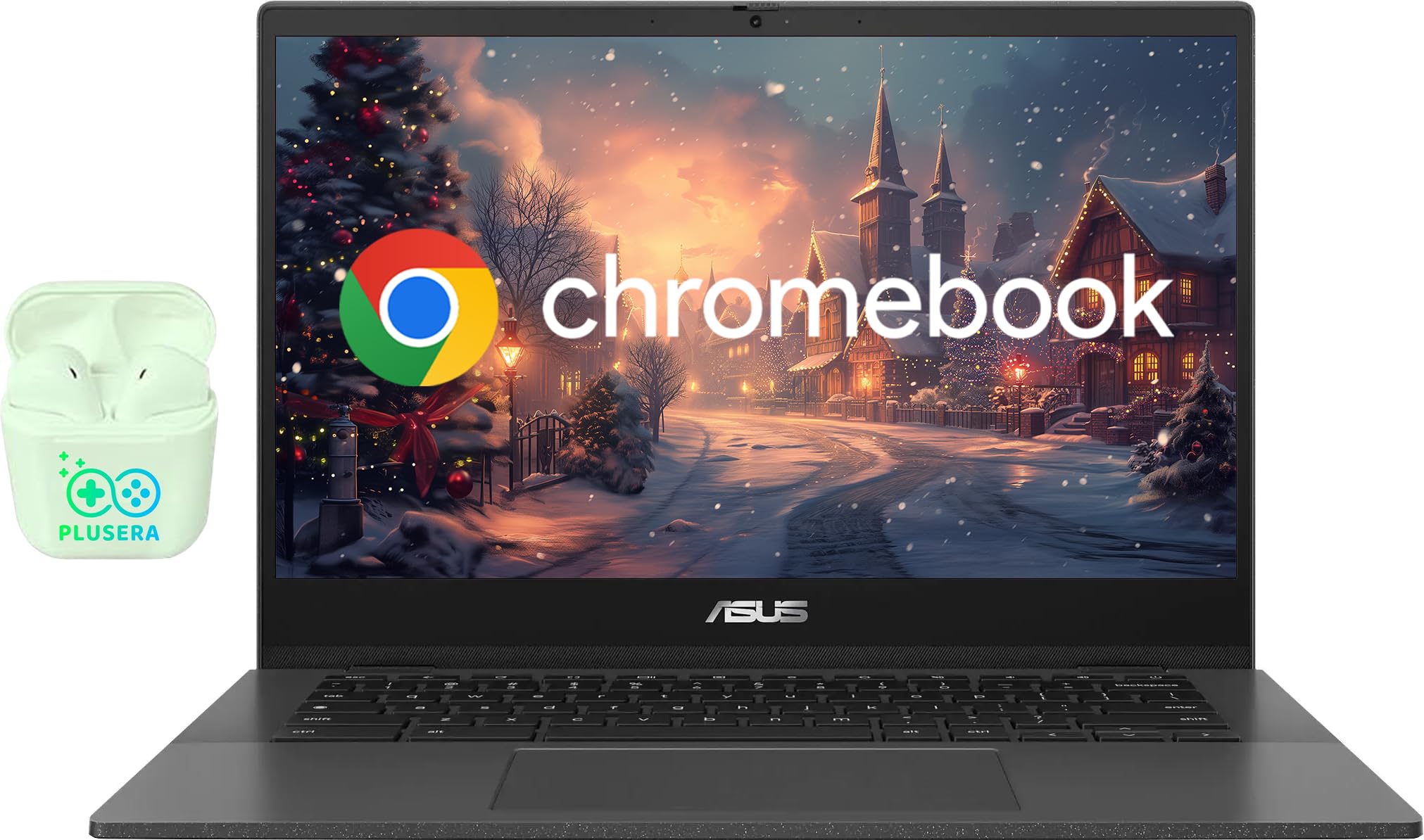
The ASUS 14-inch FHD Chromebook is built around an octa-core MediaTek Kompanio 520 processor, which offers impressive power efficiency and enough muscle for smooth Chrome OS operations. It comes with 4GB of LPDDR4X RAM and a unique storage configuration of a 64GB eMMC plus a 256GB SD card, totaling 320GB of space. This makes it one of the most generous storage offerings in its class for offline files and media.
The 14-inch Full HD LED display provides crisp visuals for streaming and productivity. The ultra-thin case design emphasizes portability, making it an easy companion for travel. Wi-Fi 6 support ensures fast wireless connections, and the USB-C 3.2 ports handle both charging and data transfer. A camera privacy shutter is also included for peace of mind. The battery is rated for up to 15 hours, which is excellent for all-day use.
The performance is adequate for basic tasks, but the 4GB RAM can become a bottleneck with heavy multitasking. The eMMC storage, while large in total capacity, is slower than a dedicated SSD. The included 256GB SD card adds flexibility but feels less integrated than internal storage. For users who prioritize massive storage and long battery life over raw speed, this ASUS is a compelling choice.
Why it’s great
- Massive total storage of 64GB + 256GB SD card
- Excellent 15-hour battery life
- Portable ultra-thin design with Wi-Fi 6
Good to know
- 4GB RAM limits heavy multitasking
- eMMC storage is slower than UFS or SSD
- SD card feels like an add-on, not native storage
FAQ
Can I use any USB-C charger with my Chromebook?
Is 4GB of RAM enough for a Chromebook in 2025?
How long do Chromebooks receive software updates?
Can I expand the storage on a Chromebook?
Do all USB-C Chromebooks support display output?
Final Thoughts: The Verdict
For most users, the 100 gb chromebook with type-c charging port winner is the HP Chromebook 14 (Intel N100, 8GB RAM) because it delivers a fast, modern processor and responsive 8GB of RAM at an accessible price, paired with genuinely useful 128GB UFS storage. If you want a touchscreen and the longest battery life, grab the Lenovo Chromebook 14 Touchscreen. And for true workstation-level power with a gorgeous display, nothing beats the Acer Chromebook Plus 515.