
A 12-inch flex duct that collapses under its own weight or tears at the first sign of tension isn’t a duct—it’s a bottleneck. When you’re moving serious air volume through an HVAC system, a grow room, or a commercial exhaust setup, the duct’s ability to maintain its full diameter under bends and pressure is the single factor that separates a working system from a noise-generating, efficiency-sucking headache. The right 12-inch flex duct delivers clean airflow where rigid metal can’t go, but the wrong one introduces static pressure drops that kill your fan’s performance.
I’m Min — the co-founder and writer behind Gadgets Feed. This guide came from cross-referencing hundreds of verified customer reports on material thickness, insulation density, and real-world length accuracy to separate the durable four-layer builds from the flimsy single-ply options that fail under tension.
Whether you’re routing air through a crawlspace, exhausting a paint booth, or conditioning a grow tent, this breakdown of the best 12 inch flex duct will cut through the marketing and show you exactly which build quality and insulation level fits your specific job.
How To Choose The Best 12 Inch Flex Duct
Selecting a 12-inch flex duct is about matching the material and insulation to your specific environment. An uninsulated aluminum duct in a hot attic will sweat and dump condensation, while a heavy insulated R-6 duct is overkill for a short run inside conditioned space. Here is what to check before you buy.
Layer Count and Wall Thickness
The number of material layers determines puncture resistance and air-tightness. Single-ply aluminum foil ducts are cheap but tear easily, especially when snagged on joists or pulled through tight spaces. Four-layer designs that sandwich PET and PVC between aluminum foil and a steel-wire helix resist cuts, hold their shape under negative pressure, and won’t develop pinhole leaks over time. For permanent installations, four-layer is the minimum.
Insulation Type and R-Value
Insulated ducts come with either fiberglass or foam-based wraps. Fiberglass offers higher R-values (R-4.2 to R-6) and better sound absorption, but the fibers shed during installation and can irritate skin and lungs. Foam and PVC-based insulation is cleaner to handle but typically provides lower thermal resistance. For long runs through unconditioned attics or crawlspaces, aim for R-6 insulation to prevent condensation and maintain supply air temperature.
Wire Helix Strength
The steel wire helix is the skeleton of the duct. A wire gauge that is too thin allows the duct to kink at bends, effectively reducing the internal diameter and choking airflow. Thicker spring-steel wires maintain the round profile even under 90-degree bends, which keeps static pressure low and fan efficiency high. D-shaped rings on some PVC ducts serve the same purpose, allowing the duct to be hung smoothly without sagging.
Quick Comparison
On smaller screens, swipe sideways to see the full table.
| Model | Category | Best For | Key Spec | Amazon |
|---|---|---|---|---|
| AC Infinity Flexible 12-Inch | Premium | High-airflow ventilation | Four-layer protection | Amazon |
| GAF Master Flow R6 | Premium | Thermal efficiency | R-6 Insulation | Amazon |
| InfiniPower Insulated Duct | Mid-Range | Noise reduction | Four-layer foil + PET | Amazon |
| Simple Deluxe Aluminum Ducting | Mid-Range | Grow tent / HVAC | Four-layer aluminum build | Amazon |
| VEVOR PVC Flexible Duct | Mid-Range | Heavy-duty exhaust | Explosion-proof PVC | Amazon |
| Rubber-Cal Insulated-Flex | Budget | Portable AC exhaust | Acoustic & thermal wrap | Amazon |
| Cuchiilo Insulated Flex Duct | Budget | Central HVAC systems | R-4.2 Owens Corning wool | Amazon |
In‑Depth Reviews
1. AC Infinity Flexible 12-Inch Aluminum Ducting

The AC Infinity four-layer duct is the benchmark for 12-inch flexible ventilation. Its combination of aluminum foil, PET, PVC, and a stout steel-wire helix creates a hose that holds its circular profile even under sharp bends, which directly translates to lower static pressure and higher delivered airflow from your fan. Users consistently report that it resists kinking better than standard aluminum-only ducts and feels substantially heavier in hand.
At 25 feet, this duct includes two stainless steel clamps that actually fit the 12-inch diameter without needing to be swapped. The black outer jacket disguises dirt and dust, which matters for long-term installs in basements or crawlspaces. One minor caveat: a few buyers measured the stretched length at closer to 20 feet, so if you need the full 25 feet for a run, verify before cutting.
The 0.0625-inch nominal wall thickness gives this duct a rigidity that cheaper options lack, making it ideal for permanent runs where you need the duct to stay open without external support. For the price-to-quality ratio, this is the safest bet for anyone connecting an inline fan to a vent hood, grow room exhaust, or HVAC supply register.
Why it’s great
- Four-layer construction resists tears and leaks better than single-ply aluminum
- Stainless steel clamps included match the 12-inch diameter
- Helix holds shape without kinking, maintaining full airflow
Good to know
- Stretched length may be slightly under 25 feet for some units
- Heavier than uninsulated aluminum ducts
2. GAF Master Flow 12″ x 25′ Insulated Flex Duct

When condensation control is the priority, the GAF Master Flow R6 duct is the clear choice. Its R-6 insulation delivers 33 percent more thermal resistance than standard R-4.2 ducts, which prevents the outer jacket from reaching dew point in unconditioned spaces. That matters in humid basements or hot attics where uninsulated ducts drip water onto ceilings and drywall.
The heavy-duty silver Mylar jacket is surprisingly resilient—one reviewer described it as stretching like a high-quality trash bag rather than tearing, which makes it easier to pull through tight joist bays. The inner liner is HDPE-based rather than bare foil, so it doesn’t crinkle or collapse under negative pressure from a powerful exhaust fan. It is ETL listed to UL181 standards, which matters for code compliance in residential and light commercial HVAC installs.
This duct is heavier than non-insulated options at 19 pounds for the 25-foot length, and the foil jacket can be tricky to tape without proper mastic or foil tape. But for anyone running a long supply or return through unconditioned space, the R-6 rating alone pays for itself in avoided energy loss and condensation damage.
Why it’s great
- R-6 insulation is the highest rating available for flex duct, preventing condensation
- ETL and UL181 listed for code-compliant installation
- HDPE inner liner resists tearing during rough pulls
Good to know
- Heavier and stiffer than non-insulated ducts, harder to maneuver solo
- Foil jacket requires proper tape or mastic for airtight seal
3. InfiniPower Insulated Flexible Duct 12″ x 25′
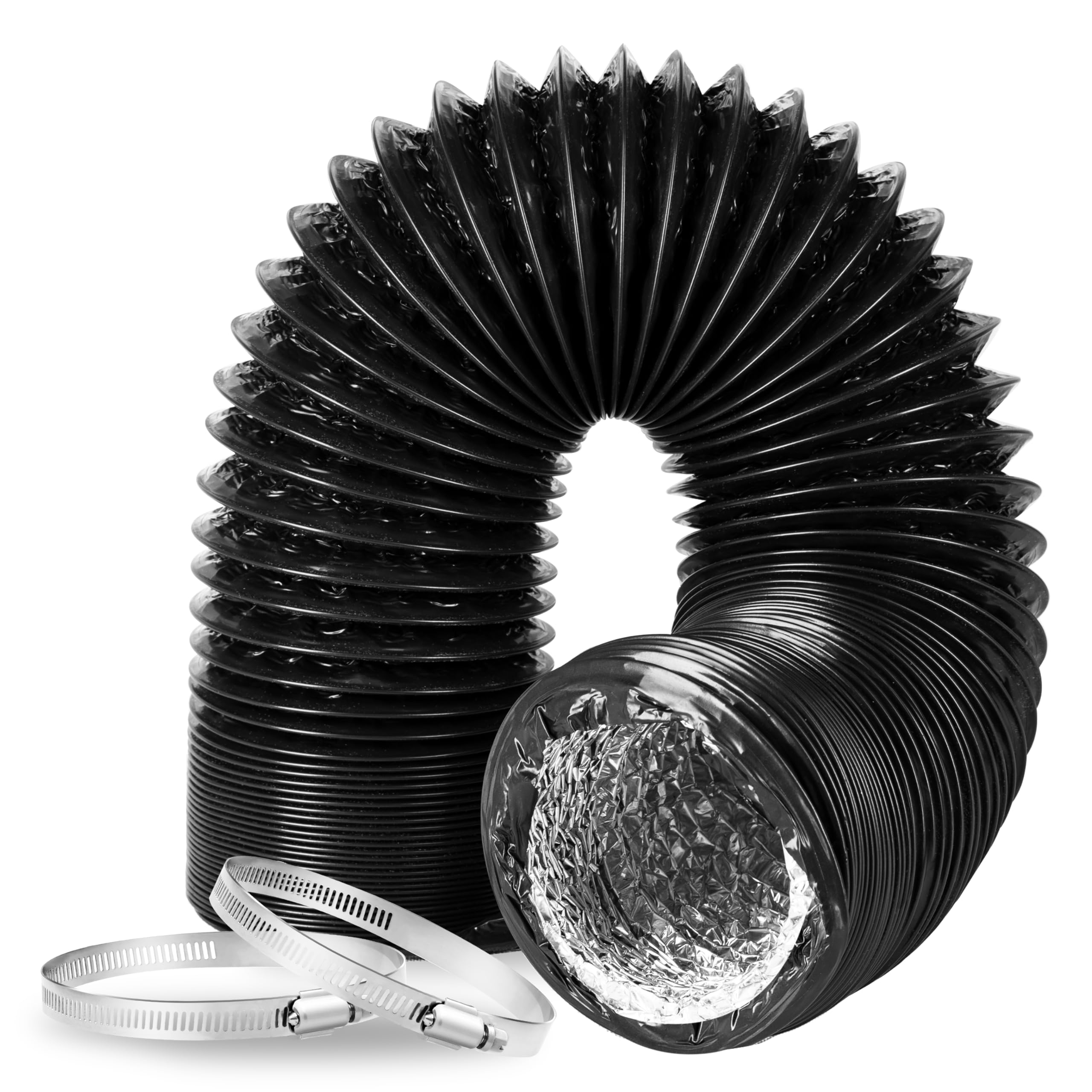
The InfiniPower duct targets a specific pain point: fan noise. Its four-layer design specifically claims to cut airborne noise by up to 50 percent compared to uninsulated aluminum ducts, which is noticeable if you are placing the run near a living area. The construction sandwiches three layers of aluminum foil with a PET core, giving it more mass to dampen vibration without adding the bulk of fiberglass wrap.
Fire resistance is another strong suit here—the aluminum layers don’t off-gas at high temperatures, and the duct maintains its integrity through a -30°C to 150°C range. That makes it a solid option for dryer exhaust or heat-extraction systems where safety codes demand non-combustible materials. Buyers consistently rate it as more durable than store-bought options, with multiple reviews noting the plastic lining reinforcement stiffens the wall without making it brittle.
One tradeoff is that the inner diameter runs slightly small. Some users report it fits tightly over standard 12-inch connectors, sometimes requiring it to sit inside the fitting rather than over it. Plan your adapter rings accordingly if you are coupling to existing rigid pipe.
Why it’s great
- Multi-layer aluminum construction dampens fan noise effectively
- Fire-resistant design handles high-heat exhaust applications
- PET liner adds structural rigidity without weight penalty
Good to know
- Inner diameter may be undersized for some standard 12-inch couplings
- Quieter operation comes at a higher price than basic aluminum duct
4. Simple Deluxe 12″ x 25′ Aluminum Ducting
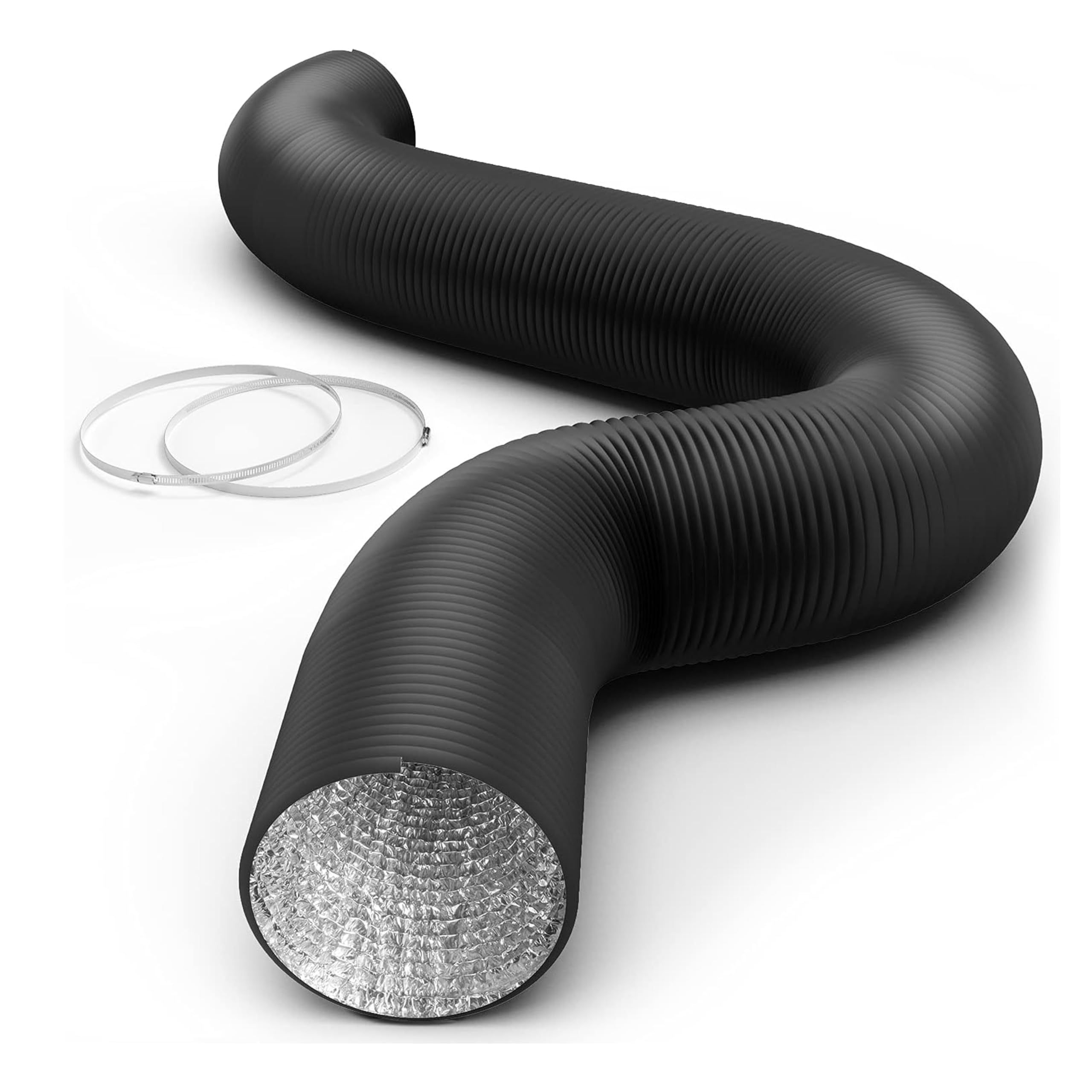
Simple Deluxe brings the same four-layer, steel-wire construction as pricier competitors but at a lower entry point. The build layers PVC, aluminum foil, PET, and more aluminum foil—making it thicker than the single-ply silver ducts you find at big-box stores. Multiple buyers noted that it stretches without kinking and resists tearing even when bent sharply around ductwork in tight crawlspaces.
The black PVC outer layer prevents light leaks, which is a priority for grow tent users who need complete darkness during the flowering cycle. It also hides dust accumulation better than silver ducts. The included stainless steel clamps are a welcome addition since most budget ducts force you to buy them separately, adding cost and friction to the install process.
The one recurring sizing complaint involves the 12-inch diameter: the inner diameter is slightly smaller than a standard 12-inch register or coupling, meaning it fits inside the connector rather than over it. For some setups this is fine, but if you need the duct to slide over the outside of a pipe, consider buying one size up.
Why it’s great
- Four-layer construction at a price that beats most competitors
- Black outer jacket blocks light for grow tent applications
- Two stainless steel clamps included save an extra purchase
Good to know
- Actual ID runs slightly small; may not fit over standard 12-inch connectors
- Not designed for high-heat or solvent-laden exhaust streams
5. VEVOR 25ft PVC Flexible Duct Hosing

VEVOR takes a different approach with this PVC-based duct, prioritizing durability and chemical resistance over flexibility and light weight. The vinyl is thick—3 millimeters nominal wall thickness—and reinforced with a woven polyester scrim that resists punctures and abrasion better than aluminum foil can. The D-shaped spring rings allow the duct to be hung smoothly from overhead points without sagging into a flat shape that restricts airflow.
The “explosion-proof” designation comes from the PVC’s anti-static properties and resistance to spark generation, making this a safer choice for environments with combustible dust, fumes, or volatile off-gassing. Users have deployed it successfully for paint booth exhaust, chemical ventilation, and negative air scrubbers—all scenarios where a pinhole leak or rip could be hazardous. The bright orange color also makes it easy to spot on job sites or in dark crawlspaces.
The tradeoff is weight: at nearly 10 pounds for the 25-foot length, this is significantly heavier than aluminum options. The thick vinyl also resists compression, so storing it in a tight coil is harder than with foil ducts. The duct does not include a clamp, requiring a separate worm-gear clamp purchase for a secure seal.
Why it’s great
- 3mm thick vinyl with woven scrim resists punctures far better than foil
- Explosion-proof PVC is safer in combustible environments
- D-shaped rings allow overhead hanging without sagging
Good to know
- Heavier than aluminum ducts and harder to compress for storage
- No clamp included; purchase a worm-gear clamp separately
6. Rubber-Cal HVAC Insulated-Flex Ducting

Rubber-Cal’s insulated duct hits a sweet spot for portable AC and temporary exhaust setups where thermal insulation is needed but the budget doesn’t justify a premium R-6 product. The fiberglass wrap provides both acoustic damping—quieting the sound of rushing air—and thermal isolation that prevents the outer surface from getting hot or cold to the touch. The aluminum outer jacket is standard foil, but the interior fiberglass layer is where the value lies.
Being compressible makes this duct easier to transport and store than rigid PVC options. When fully stretched, the 12-inch by 25-foot run holds its shape well on straight sections but can sag slightly on long horizontal runs without support straps. Buyers strongly recommend rolling the outer foil sheath back during installation to contain the fiberglass fibers, which can irritate skin and lungs if handled bare.
The fiberglass insulation’s R-value is not explicitly listed on the product page, which creates uncertainty for contractors who need specific thermal performance numbers for code compliance. However, for general-purpose use like exhausting a portable air conditioner or running temporary ventilation on a job site, the value proposition is solid.
Why it’s great
- Fiberglass wrap provides genuine thermal and acoustic insulation
- Compressible design makes storage and transport convenient
- Cost-effective alternative to premium R-6 ducts for temporary use
Good to know
- Fiberglass insulation sheds heavily during installation; wear gloves and a mask
- R-value is not documented, so it may not meet code for permanent HVAC
7. Cuchiilo 12 Inch Insulated Flex Duct

The Cuchiilo duct uses Owens Corning glass wool as its insulation core, giving it an official R-4.2 rating that is documentable for HVAC code compliance. The construction layers aluminum foil on the outside and inside, with a steel wire helix and a middle layer of compressed fiberglass wool. The manufacturer claims up to 85 percent noise reduction, which aligns with the density of the wool absorbing sound energy rather than reflecting it.
This duct arrives vacuum-packed, expanding when you unroll it. Several buyers noted that the actual stretched length came up short of the advertised 25 feet—one measured 23.5 feet, another closer to 20 feet for a 6-inch variant. If your run requires the full 25 feet, plan for extra to compensate. The included duct clamps are metric and don’t accept a standard socket bit, requiring a flathead screwdriver to tighten.
The inner foil layer is relatively thin compared to the AC Infinity build. One reviewer tore it while attaching it to a vent, needing aluminum tape for reinforcement. For gentle installations where the duct won’t be flexed repeatedly or pulled over sharp edges, this product delivers solid insulation at a budget-friendly price. But for high-traffic or permanent structural installs, the marginal savings may not be worth the reduced durability.
Why it’s great
- Documented R-4.2 rating with Owens Corning glass wool insulation
- Vacuum-packed for compact shipping and storage
- High-density wool provides rated noise reduction up to 85%
Good to know
- Actual stretched length may be 1 to 5 feet shorter than advertised
- Inner foil layer is thin and can tear if handled roughly against sharp edges
- Metric clamps require flathead screwdriver; no socket bit fits
FAQ
Can I use a 12-inch flex duct for dryer exhaust?
Should I choose insulated or non-insulated 12-inch flex duct?
How do I prevent a 12-inch flex duct from sagging or kinking?
Final Thoughts: The Verdict
For most users, the best 12 inch flex duct winner is the AC Infinity Flexible 12-Inch because its four-layer construction and rigid steel helix deliver consistent diameters under bends without the premium upcharge of the heavily insulated products. If you need thermal efficiency and condensation control in an unconditioned space, grab the GAF Master Flow R6. And for heavy-duty exhaust environments where puncture resistance and chemical safety are priorities, nothing beats the VEVOR PVC Duct.