
Finding a reliable 12V DC battery for your trolling motor, fish finder, solar setup, or RV can feel like a guessing game if you don’t know which chemistry and capacity actually fit your draw. The difference between a unit that delivers consistent power all weekend and one that sags under load comes down to the cell type and the BMS protecting it.
I’m Min — the co-founder and writer behind Gadgets Feed. I’ve spent countless hours analyzing technical specifications, cycle life claims, and real-world customer feedback to separate marketing hype from genuinely useful performance in the 12V DC battery category.
This guide breaks down the top options by capacity, weight, and application so you can confidently pick the best 12v dc battery for your off-grid or marine needs.
How To Choose The Best 12V DC Battery
Not all 12V batteries are built the same. The chemistry — LiFePO4, AGM, or standard lead-acid — dictates weight, cycle life, and how deeply you can discharge it without damage. Pair that with the right amp-hour capacity for your gear, and you avoid both runtime anxiety and premature failure.
Chemistry Matters: LiFePO4 vs. AGM vs. Lead-Acid
Lithium iron phosphate (LiFePO4) batteries offer 4,000 to 15,000 deep cycles, weigh about 60% less than lead-acid, and maintain steady voltage until fully depleted. AGM (Absorbent Glass Mat) is a sealed lead-acid type that costs less upfront but typically lasts only 300-500 cycles. Standard flooded lead-acid is the cheapest but requires maintenance and vents gas. For frequent cycling, solar storage, or portable gear, LiFePO4 delivers the best long-term value.
Capacity (Ah) and Your Daily Draw
Amp-hour (Ah) rating tells you how many amps the battery can deliver over one hour. A 20Ah battery can run a 1A fish finder for 20 hours, but run a 10A trolling motor, and runtime drops to roughly 2 hours. Estimate your total daily load in amp-hours (device wattage ÷ 12V = amps, then multiply by hours of use). Choose a battery with at least 1.5x that daily number to avoid deep cycling below 20% state of charge — a common cause of shortened lifespan.
BMS and Safety Protections
A Battery Management System (BMS) safeguards against overcharge, over-discharge, short circuits, and overheating. In LiFePO4 batteries, the BMS also balances individual cells. Look for a BMS that matches your peak current draw — a 100A BMS can handle a 55lb trolling motor on full throttle, while a 15A BMS is better suited for a fish finder and LED lights.
Quick Comparison
On smaller screens, swipe sideways to see the full table.
| Model | Category | Best For | Key Spec | Amazon |
|---|---|---|---|---|
| DC HOUSE 12V 100Ah | LiFePO4 | Bluetooth monitoring & trolling motors | 100Ah / 100A BMS | Amazon |
| DUMFUME 12V 150Ah | LiFePO4 | High-capacity solar & off-grid | 150Ah / 1920Wh | Amazon |
| WEIZE 12V 100Ah AGM | AGM | Reliable backup & budget-friendly high capacity | 100Ah / 63 lbs | Amazon |
| GOLDENMATE 12V 16Ah | LiFePO4 | Compact fish finder & portable gear | 16Ah / IP67 | Amazon |
| ZapLitho 12V 22Ah | LiFePO4 | Ham radio & LCD voltage display | 22Ah / LCD Display | Amazon |
| ECO-WORTHY 12V 20Ah | LiFePO4 | Value-oriented solar & backup | 20Ah / 3-year warranty | Amazon |
| Newport 12V 50Ah AGM | AGM | Heavy-duty marine trolling | 50Ah / 32 lbs | Amazon |
In‑Depth Reviews
1. DC HOUSE 12V 100Ah LiFePO4 Trolling Motors Battery
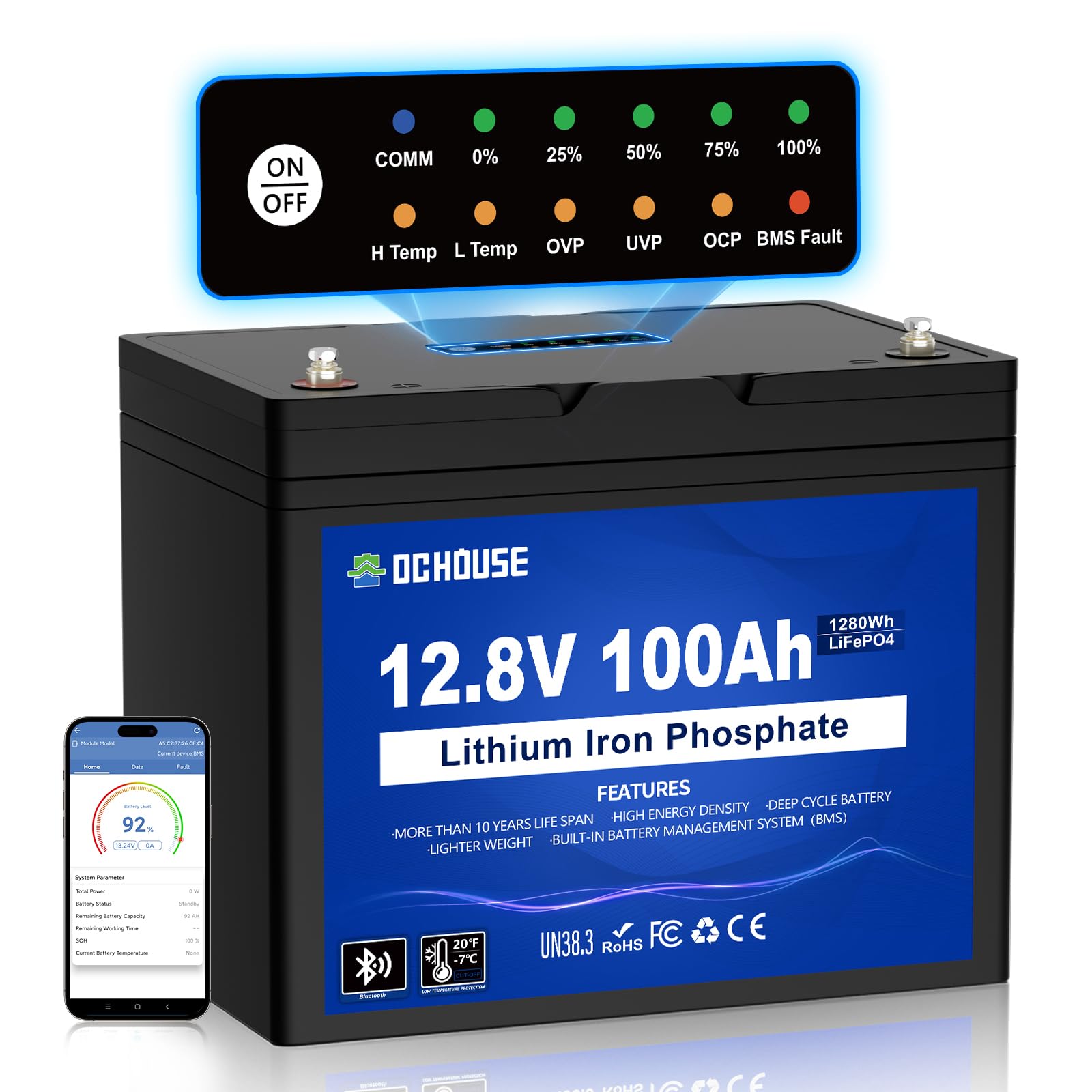
This 12V 100Ah LiFePO4 battery from DC HOUSE packs a smart BMS rated at 100A, a Bluetooth monitoring app, and built-in state-of-charge LED indicators — features usually reserved for much pricier units. It uses Grade A cells certified to UL and UN38.3 standards, and claims up to 15,000 cycles with a 10-year service life. The low-temperature cut-off kicks in below 19.4°F, protecting the cells from charging damage during winter storage.
At roughly 23.8 pounds, it shaves over 30 pounds compared to a comparable lead-acid battery, making it a practical upgrade for trolling motors and RV house banks. Users report running a 55lb trolling motor for 18 hours at 5 mph — a dramatic improvement over AGM batteries that struggle to deliver 4 hours in the same application. The Bluetooth function provides real-time voltage, current, and per-cell data, which helps diagnose potential issues before they cause a shutdown.
Some reviews note the voltage settles to about 13.2V after a full charge (instead of the expected 13.6V), though the battery holds steady under load and delivers its full rated capacity. The newer version also includes anti-swelling technology, but it adds about half an inch in height — double-check your compartment dimensions before ordering. Overall, this is a feature-rich LiFePO4 option that competes well with batteries costing significantly more.
Why it’s great
- Bluetooth app shows per-cell status and fault codes
- 100A BMS handles full-throttle trolling motor draws
- Low-temp cut-off protects against winter charging damage
Good to know
- New version is 0.5″ taller — verify fit in existing trays
- Voltage may sit at 13.2V after full charge instead of 13.6V
2. DUMFUME 12V 150Ah LiFePO4 Deep Cycle Battery
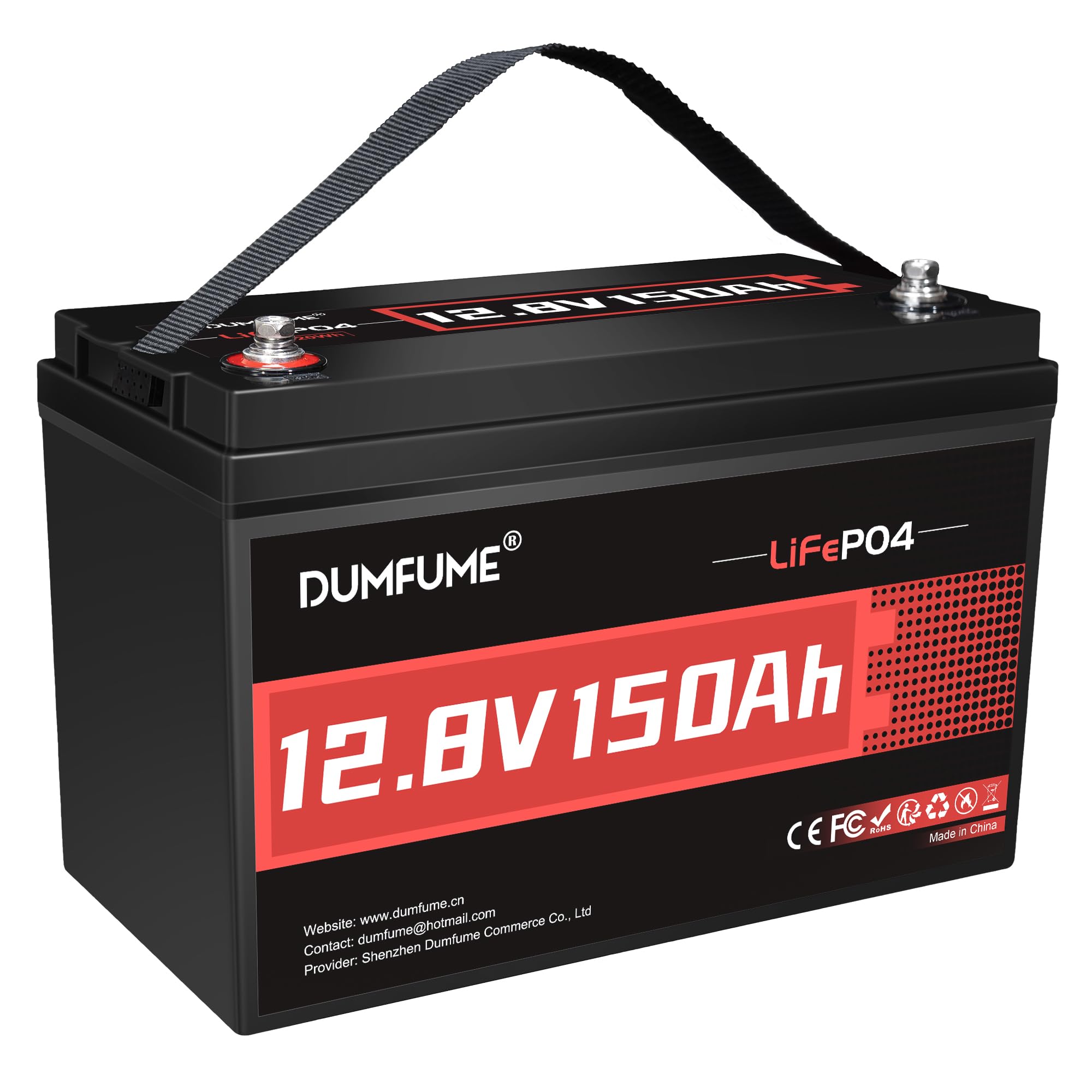
If your off-grid setup demands serious runtime between charges, the DUMFUME 150Ah LiFePO4 delivers 1920Wh of stored energy in a package that weighs just 22 pounds. That’s roughly one-third the weight of a lead-acid battery with the same amp-hour rating. The built-in 100A BMS protects against overcharge, over-discharge, short circuit, and overheating, while supporting series and parallel expansion up to 4S4P — enough capacity to build a 48V, 600Ah bank.
Real-world testing shows this battery actually exceeds its rated capacity by about 7Ah, and after a year of twice-weekly cycling, it still performs above spec. The Group 31 footprint fits standard battery trays, and the 13.05 x 6.78 x 8.66-inch dimensions leave room for wiring in tight RV cabinets. A 50A charge current is well within its capabilities, so recharging from a solar array or alternator is reasonably fast.
A minority of units arrive with low voltage (12.2-12.4V) and may require a parallel jump start to wake the BMS. One user reported a dead battery after one year in a campervan, and warranty support is handled directly by the manufacturer rather than through Amazon — keep your purchase documentation handy. Despite that, the general consensus is that these are well-constructed, no-frills batteries that offer excellent bang for the buck in the high-capacity segment.
Why it’s great
- Delivers 1920Wh in a 22-pound package
- Exceeds rated capacity in independent tests
- Supports 4S4P expansion for large solar banks
Good to know
- Some units arrive with low voltage requiring a BMS jump start
- Warranty is through the manufacturer, not Amazon
3. WEIZE 12V 100Ah Deep Cycle AGM Battery

For buyers who need 100Ah of storage at the lowest possible upfront cost, the WEIZE Group 31 AGM battery is a proven workhorse. It’s a sealed lead-acid battery with a spill-proof, maintenance-free design that eliminates the water-level checks required by flooded batteries. The 63-pound weight reflects the denser lead content typical of AGM construction, but users regularly pair multiple units in parallel for RV solar banks and emergency backup systems.
In practice, this battery holds its charge well — users report a self-discharge rate of about 3% per month, which is solid for an AGM. It delivers 1150A max discharge current, enough to power a 2000W inverter for short bursts. Two of these batteries with a pair of 150W solar panels have kept an off-grid RV running for two years without issues, powering a 700W inverter to run a crock pot and TV. It also works as a drop-in replacement for UB121000 and Renogy 100Ah batteries.
The 63-pound weight is the main practical drawback — moving these batteries in and out of a compartment is a two-person job, especially if you need four of them for a 48V system. Additionally, AGM chemistry degrades faster than LiFePO4 if discharged below 50% depth of discharge (DoD) repeatedly. If your daily draw routinely taps below 50Ah, a lithium chemistry will offer better long-term value despite the higher sticker price.
Why it’s great
- Reliable 100Ah AGM performance at a budget-friendly price
- Sealed, spill-proof, and maintenance-free
- High 1150A max discharge supports inverter loads
Good to know
- Heavy 63-pound weight makes installation awkward
- AGM chemistry degrades faster if regularly discharged below 50%
4. GOLDENMATE 12V 16Ah LiFePO4 Battery
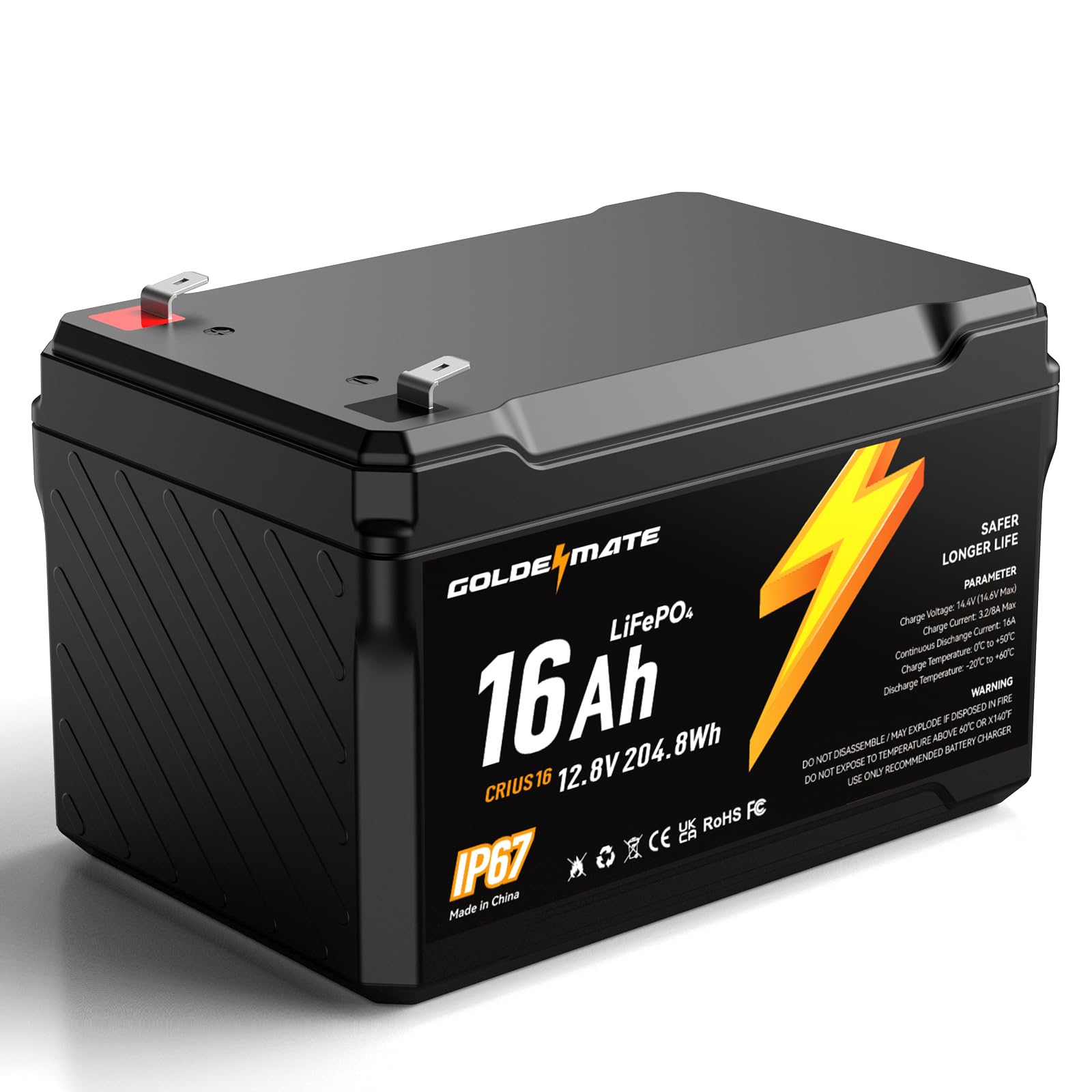
When space and water exposure are primary concerns, this GOLDENMATE 16Ah LiFePO4 stands out with its IP67 rating — fully protected against dust and immersion in up to one meter of water for 30 minutes. Weighing just 3.97 pounds and measuring roughly the size of a hardcover book (3.86 x 5.94 x 3.66 inches), it fits easily into kayak hatches, battery boxes on small boats, and portable solar kits. The built-in 16A BMS handles overcharge, over-discharge, over-current, and short-circuit protection.
Users running fish finders and live-scope systems report consistent voltage throughout an entire day of use, with no performance degradation even when the battery is nearly depleted. In a parallel configuration, two of these batteries (effectively 32Ah at 12V) power a solar webcam and LED setup overnight with minimal draw. The 5000+ cycle claim is realistic for LiFePO4 chemistry with a proper BMS, making this a long-term companion for low-draw applications.
The 16Ah capacity is the limiting factor — it’s adequate for a fish finder, router, or LED lighting, but a 30Ah or larger unit would be more appropriate for a trolling motor or sustained ham radio operation. GOLDENMATE also supports series and parallel expansion up to 8 batteries (4S2P or other configurations), so you can start small and scale up as needed. Just make sure you use a dedicated LiFePO4 charger at 14.6V rather than a lead-acid charger.
Why it’s great
- IP67 waterproof rating ideal for kayaks and outdoor gear
- Extremely lightweight at just under 4 pounds
- 5000+ cycle life with reliable BMS protection
Good to know
- 16Ah capacity limits use to low-draw devices
- Requires a LiFePO4-specific charger (14.6V)
5. ZapLitho 12V 22Ah LiFePO4 Battery with LCD Display
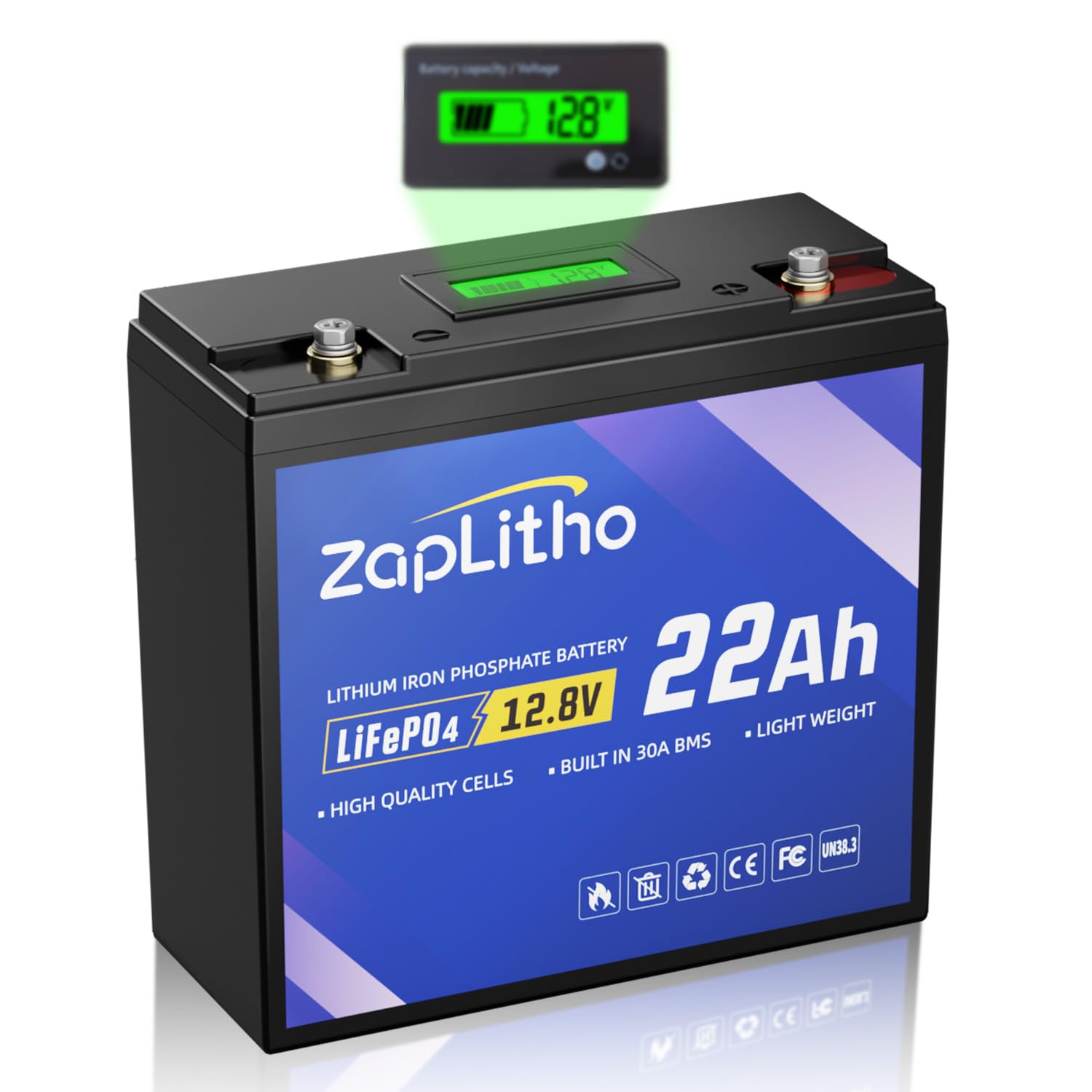
The ZapLitho 22Ah LiFePO4 battery adds an integrated LCD voltage display that shows remaining charge at a glance — a handy feature when you’re powering a ham radio or a clay thrower and need to know when to recharge. It uses Grade A cells with a 30A BMS, which provides a solid safety margin for loads up to about 360W continuous. The M5 terminal standard allows easy wiring and supports 4P4S expansion if you need more capacity later.
Ham radio operators report that this battery easily powers a 100W Yaesu FT-891 at full transmit without voltage sag, though the 22Ah capacity is best suited for a day of field operation — weekend-long excursions might require a larger unit or parallel batteries. For more unusual applications, one reviewer runs a Vevor 10-quart fridge/freezer for 4.5 days before the LCD showed two bars remaining. The built-in potting process secures internal components, making the battery tolerant of vibration during mobile use.
At 5.5 pounds and measuring just 3 x 7.1 x 7 inches, it slips into tight battery compartments or cargo bins easily. The manufacturer warns that water resistance is limited to splashes only — submersion or heavy rainfall voids the warranty, so keep it in a dry enclosure. Also, it’s not intended as a starter battery for vehicles; the BMS cannot handle the high cranking amps required by a car or motorcycle engine.
Why it’s great
- Built-in LCD display shows voltage and remaining charge
- Grade A cells with 30A BMS for reliable performance
- Compact 5.5-pound design fits tight spaces
Good to know
- Water resistance is limited to splashes only
- Not suitable as a starter battery for vehicles
6. ECO-WORTHY 12V 20Ah LiFePO4 Lithium Battery
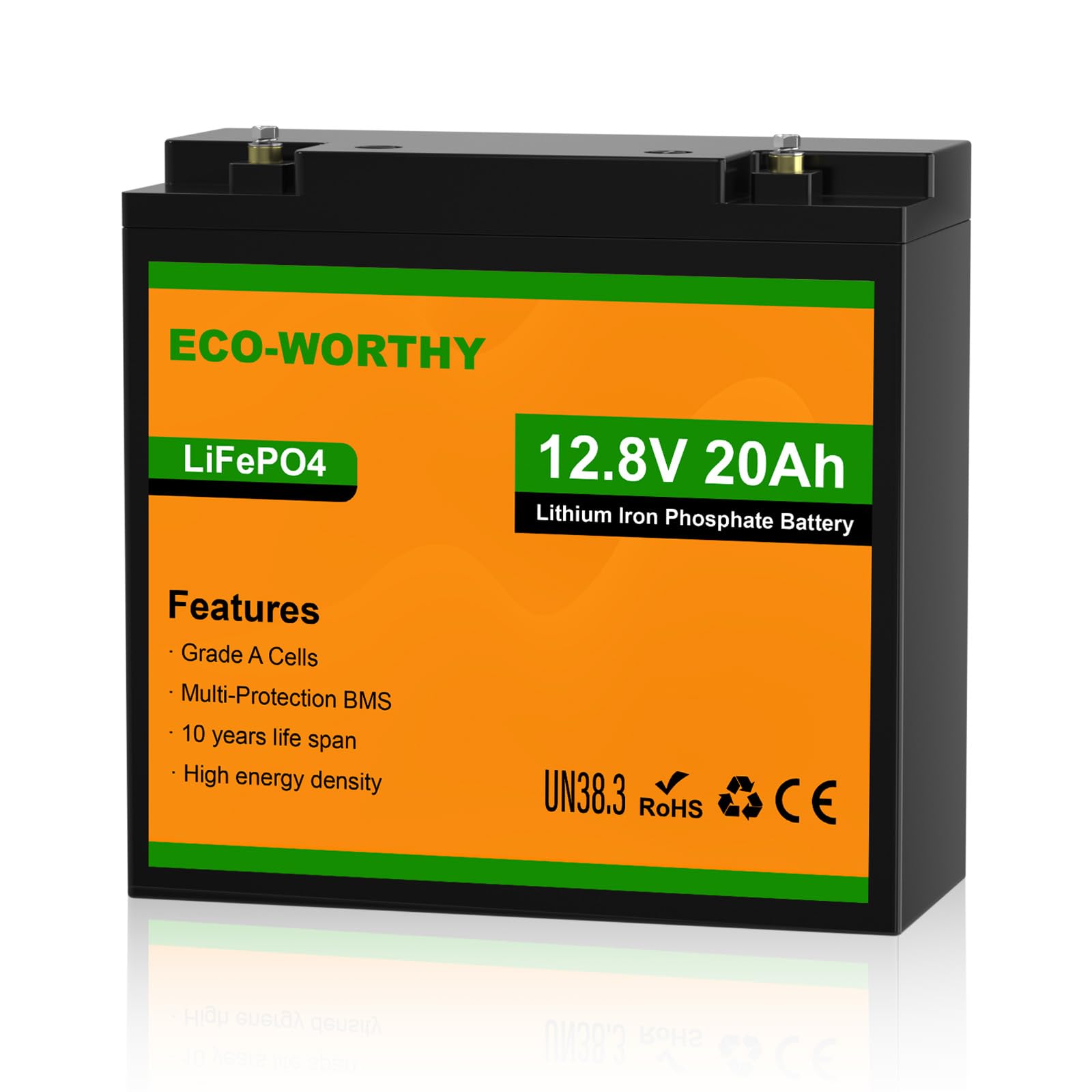
ECO-WORTHY’s 20Ah LiFePO4 battery hits a sweet spot between price and daily usability for light to moderate loads. At 5.73 pounds and measuring roughly 7.2 x 6.7 x 3 inches, it’s easy to pack for camping trips or fit into a power station enclosure. The built-in BMS protects against overcharge, over-discharge, and short-circuit, and the battery is certified under UN38.3 and CE standards. It supports up to 4 identical batteries in series or parallel, allowing configurations up to 4P2S or 2P4S.
In real-world testing, a 60W bulb ran for 21.7Ah before the 10.8V cutoff kicked in — exceeding the rated 20Ah capacity. Ham radio operators using 50W FM and 25W FT8 digital modes report no voltage drop during keying, and the battery delivered 19.6Ah (247.2Wh) before the radio shut down, after which it recovered to 12V on receive. This consistency makes it a solid choice for POTA (Parks on the Air) activations and emergency backups.
The 3-year warranty is a clear advantage over many budget LiFePO4 options that only offer one year. A few reviewers noted that the initial unit they received was defective, but the company’s customer service replaced it quickly, indicating a responsive support system. One minor limitation is the absence of a built-in charge indicator — you’ll need a multimeter or external battery monitor to check the state of charge accurately.
Why it’s great
- Exceeds its rated 20Ah capacity in controlled tests
- 3-year warranty and UN38.3/CE certifications
- Works well for ham radio, solar, and backup applications
Good to know
- No built-in state-of-charge indicator
- Limited to 4 identical batteries in series or parallel
7. Newport 12V 50Ah Deep Cycle Marine AGM Battery
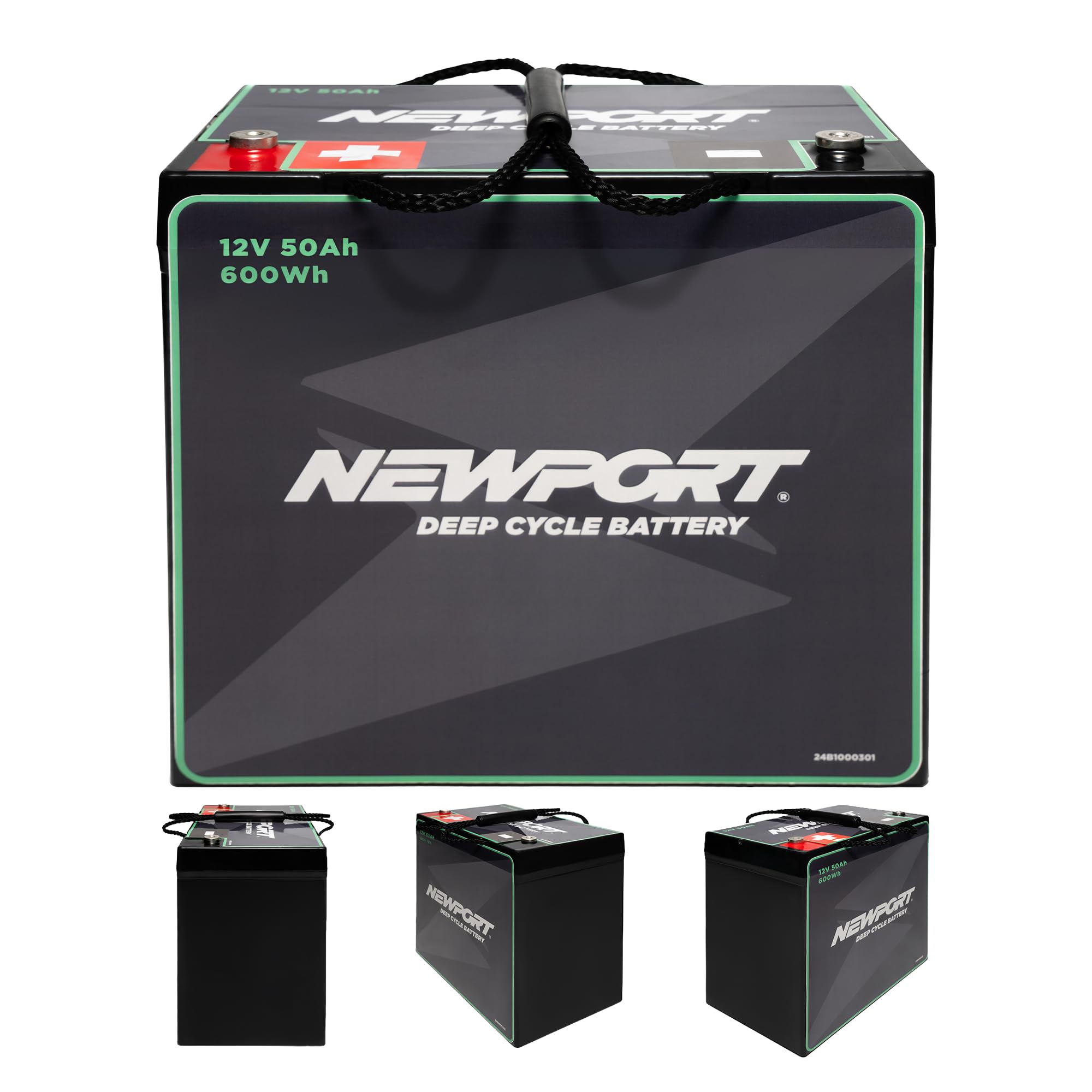
The Newport 12V 50Ah AGM battery is a purpose-built marine deep-cycle battery designed for trolling motors and boat electronics. At 32 pounds, it’s significantly lighter than flooded lead-acid batteries of similar capacity, making it manageable for a single person to carry. The sealed, leak-proof construction means it can be mounted in any orientation without the risk of acid spills — a key advantage on a bouncing boat or in a kayak hatch.
Users report that this battery powers a 55lb trolling motor for over 4 hours at moderate speeds without noticeable voltage sag, and a 25lb motor on a kayak lasts about 7 hours at full throttle on a single charge. The marine terminal design accepts standard ring connectors, and the unit’s dimensions fit typical Group 24 battery trays. It also doubles as a backup power source for sump pumps and other 12V emergency gear.
The main drawback is the lack of a built-in charge indicator — you’ll need an external voltmeter or battery monitor to track state of charge. Some users expected longer runtime and noted that the battery might not arrive fully charged from the factory, so a full 12-hour charge before first use is recommended. As an AGM battery, it has a cycle life of roughly 300-500 deep cycles, which is fine for seasonal boaters but less economical for daily-use solar systems compared to a LiFePO4 alternative.
Why it’s great
- Sealed, leak-proof AGM design ideal for marine environments
- 32-pound weight is manageable for solo installation
- Steady power delivery for 4+ hours on a 55lb trolling motor
Good to know
- No built-in charge indicator — needs external monitor
- 300-500 cycle life is far less than LiFePO4 chemistry
FAQ
Can I replace a lead-acid battery with a LiFePO4 battery without changing my charger?
How many cycles does a 12V LiFePO4 battery really last?
Can I connect different brands of 12V batteries together in parallel?
Final Thoughts: The Verdict
For most users, the 12v dc battery winner is the DC HOUSE 12V 100Ah LiFePO4 because its Bluetooth app, 100A BMS, and long cycle life make it the most versatile option for both trolling motors and solar backup. If you want maximum capacity for off-grid living, grab the DUMFUME 12V 150Ah LiFePO4 for its 1920Wh of energy in a lightweight frame. And for a compact, budget-friendly fish finder battery, nothing beats the GOLDENMATE 12V 16Ah LiFePO4 with its IP67 waterproof rating.