
Slapping the wrong rubber on your 29er is the single fastest way to ruin a ride. A tire that rolls slow on pavement, washes out in loose corners, or flats on the first rock garden turns a great bike into a frustrating machine. The 29-inch wheel size is dominant in modern mountain biking because it rolls over obstacles with authority, but that advantage vanishes if the tread, casing, and compound aren’t matched to your terrain and weight.
I’m Min — the co-founder and writer behind Gadgets Feed. I’ve spent countless hours parsing lab-level compound data, customer stress tests, and thread-count certs to separate genuine trail performance from marketing claims.
Whether you are chasing KOMs on hardpack, grinding gravel on a commuter, or tackling technical singletrack, choosing the right set of rubber transforms your bike. This guide analyzes the best options for every rider, from budget-conscious replacements to pro-grade race rubber, to help you find your ideal 29 inch bicycle tires.
How To Choose The Best 29 Inch Bicycle Tires
A 29-inch tire is defined by three intersecting specs: width, tread, and casing construction. The width determines how much air volume you can carry — wider tires (2.25 to 2.6 inches) let you run lower pressures for grip without pinch-flatting, while narrower tires (2.1 to 2.2) accelerate faster on hard surfaces. The tread pattern is the single biggest predictor of on- and off-road behavior: a continuous center ridge rolls fast on pavement but slides on loose over gravel, while tall, widely spaced knobs bite into dirt but hum loudly on asphalt. The casing — specifically its TPI count and bead type — dictates ride quality and puncture resistance.
Width: Find Your Sweet Spot
Internal rim width dictates the safe tire width range. On a modern 30mm internal rim, a 2.25-inch tire balloons into a squared profile that corners predictably. On a narrow 19mm rim, the same tire pinches into a lightbulb shape that can roll over in hard turns. For trail and enduro, 2.3 to 2.5 inches is the norm. For commuting and light XC, 2.1 to 2.2 inches saves weight and drag. Always match tire width to your rim’s internal measurement.
Casing and Puncture Protection
TPI (threads per inch) measures the casing density. A 60 TPI casing is tougher and more resistant to cuts, making it ideal for rocky, sharp terrain at the cost of some suppleness. A 30 TPI casing is lighter and more flexible but more vulnerable to sidewall slices. Many tires add a dedicated puncture belt — Bell’s Flat Defense, Fincci’s 1mm nylon layer, Maxxis’ EXO — that blocks thorns and sharp flint without adding significant weight. If you ride in goathead country or jagged limestone, prioritize a tire with an explicit puncture-protection layer.
Tread for Your Terrain
There are three broad tread categories for 29-inch tires. Slicks or semi-slicks (like the WTB Slick) have a continuous center tread for low rolling resistance on pavement; they rely on grooved shoulders for cornering grip. All-condition knobbies (like the Bell Flat Defense or Fincci Maori) use tightly spaced center knobs for a balance of speed and bite on dirt, gravel, and tarmac. Aggressive trail tires (like the Maxxis Minion DHR II and Aggressor) have tall, ramped center knobs and massive side knobs for maximum braking and cornering traction in loose, steep, or technical terrain.
Quick Comparison
On smaller screens, swipe sideways to see the full table.
| Model | Category | Best For | Key Spec | Amazon |
|---|---|---|---|---|
| Maxxis Minion DHR II | Premium Trail | Aggressive cornering & braking in steep terrain | EXO Sidewall Protection, 2.6″ | Amazon |
| Maxxis Aggressor (2-Pack) | Premium Trail/Enduro | Fast rear tire on hardpack & rocky trails | Dual Compound, EXO, E25, 2.3″ | Amazon |
| Fincci Maori 29×2.25 | Mid-Range Trail | Versatile mixed-terrain riding | 60 TPI, Kevlar Bead, 1mm Nylon Puncture | Amazon |
| Fincci 29 x 2.10 | Mid-Range Value | Budget Kevlar folding tire for light trail & hybrid | Kevlar Folding Bead, 30 TPI, 800g | Amazon |
| WEEROCK MTB Tire Two Pack | Budget All-in-One | Complete wheel swap with tubes & levers | 2 Tires + 2 Tubes + Levers, 2.1″ | Amazon |
| WTB Slick 29 x 2.2 | Commuter Semi-Slick | Fast, quiet pavement commuting | DNA Compound, Wire Bead, 979g | Amazon |
| Bell Flat Defense 29 x 2.25 | Budget All-Condition | Durable, puncture-resistant trail tire | Flat Defense Layer, Carbon Steel Bead | Amazon |
In‑Depth Reviews
1. Maxxis Minion DHR II

The Minion DHR II is the gold standard for rear traction in aggressive trail and enduro riding. Its signature feature is the widened side knobs borrowed from the legendary DHF, now spaced and shaped to provide braking bite that rivals a full downhill tire. In loose-over-hardpack conditions, the ramped center tread accelerates cleanly while the shoulder lugs hook up at lean angles that would wash out a less aggressive tire.
This 29-inch version uses Maxxis’ Dual Compound — a harder center for rolling efficiency and softer shoulders for cornering grip. The EXO sidewall material adds a cut- and abrasion-resistant layer that handles rocky chunder without needing a full downhill casing. The tan sidewall option is a cosmetic bonus that many riders specifically seek out for vintage-style builds.
E25 certification means it’s rated for light e-bike use up to 16 mph, extending its lifespan on pedal-assist trail bikes. The 2.6-inch width delivers a massive air volume that lets you run pressures in the low 20s (psi) for outstanding grip without rim strikes. Riders report long wear and consistent performance over years of use.
Why it’s great
- Exceptional cornering and braking traction in loose and steep terrain
- EXO sidewall offers real cut resistance for rocky trails
- Wide 2.6″ casing allows very low pressures for maximum grip
Good to know
- Heavy and slower-rolling on pavement than XC or semi-slick tires
- Single tire purchase — buying a set costs significantly more
2. Maxxis Aggressor (2-Pack)

The Maxxis Aggressor is purpose-built as a high-speed rear tire for hardpack and rocky trails. Its tread pattern uses tightly spaced, ramped center knobs that minimize rolling resistance while maintaining reliable braking bite, making it a popular pairing with a Minion DHF or Assegai up front. The 2.3-inch width is a versatile middle ground that clears most frames and stays efficient on climbs.
Dual Compound construction puts a harder rubber in the center for durability and a softer compound on the edges for cornering. The EXO sidewall protection is included, making it suitable for technical XC and light trail riding where sharp rocks are a concern. E25 rating again allows e-bike compatibility.
This listing is a 2-pack, which delivers significant savings over buying two singles. Riders report that the Aggressor sheds mud better than the Minion series, and the 60 TPI casing provides a good blend of suppleness and toughness. It is tubeless-ready, so you can ditch tubes for lower pressure and fewer punctures.
Why it’s great
- Fast-rolling tread pattern ideal for rear-wheel use on hardpack
- 2-pack value is cheaper per tire than buying individually
- E25 and EXO rated for e-bikes and rocky trails
Good to know
- Not aggressive enough for soft mud or deep loose-over-hardpack as a front tire
- 2.3″ width may feel narrow for riders used to modern 2.5″ plus tires
3. Fincci Maori 29×2.25
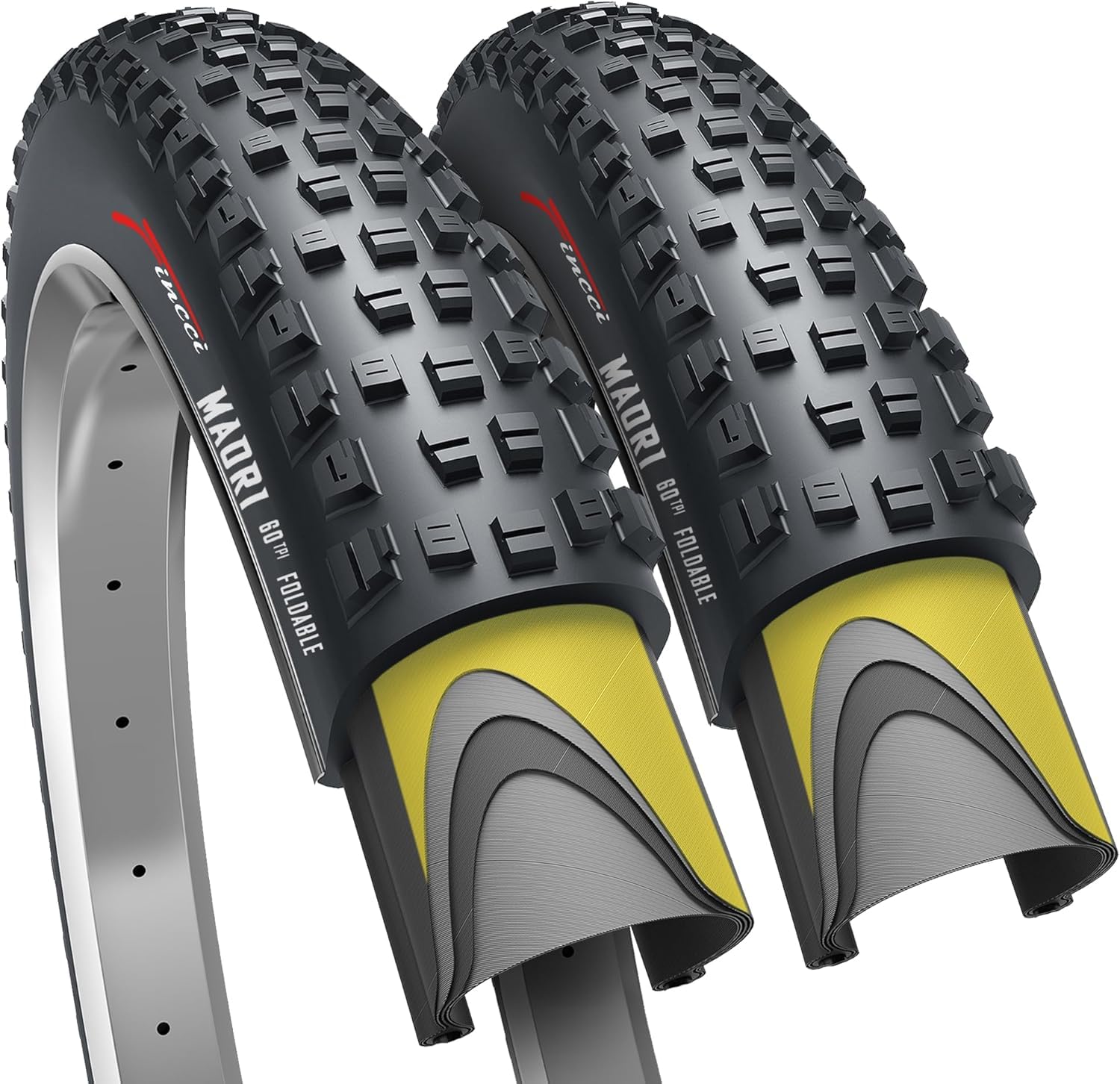
The Fincci Maori hits a rare sweet spot: a folding Kevlar-bead tire with a 60 TPI casing and a 1 mm nylon puncture belt, all at a price that undercuts most premium single tires. The 29 x 2.25 size is a classic trail width that fits modern mountain bikes and hybrid frames, providing enough volume for comfort without feeling sluggish on climbs.
The tread pattern uses tightly spaced center knobs with a low profile that rolls well on pavement and packed dirt, while the shoulder knobs are tall enough to generate bite in loose corners. Riders report good grip on both gravel and tarmac, making it a strong all-condition tire for riders who mix road approaches with dirt segments.
At 925 grams each, the Maori is not a lightweight XC race tire, but the puncture protection and 60 TPI casing give it a durability edge over budget wire-bead options. The Kevlar bead makes installation easier than stiff steel beads, and the folding design simplifies storage or packing a spare. Riders note that after hundreds of miles the knobs still show minimal wear.
Why it’s great
- Folding Kevlar bead for easy installation and storage
- 60 TPI casing with 1 mm nylon puncture protection
- Excellent all-condition tread for mixed pavement and gravel
Good to know
- Heavier than pure XC tires at 925g each
- Not aggressive enough for deep mud or technical enduro terrain
4. Fincci 29 x 2.10
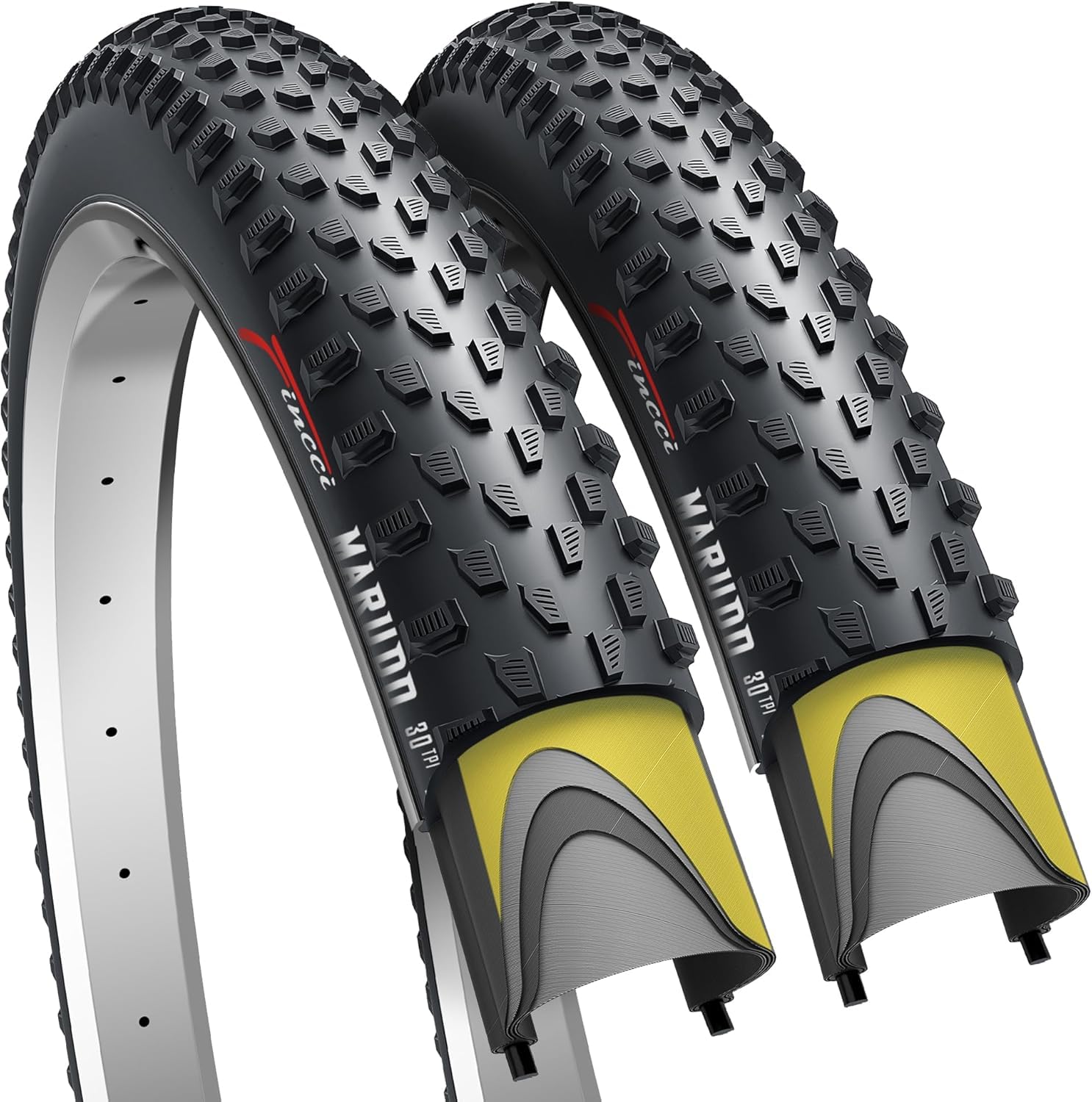
The entry-level Fincci 29 x 2.10 delivers a folding Kevlar bead at a price that typically only buys wire-bead tires. The 30 TPI casing is lighter and more supple than heavy-duty casings, which translates to a smoother ride on gravel and hardpack. The 2.10-inch width is narrower than most modern MTB tires, making it a better fit for XC and hybrid bikes with standard-width rims.
Users specifically praise the easy, tool-free installation — the Kevlar bead is flexible enough to seat with just thumb pressure. The directional tread pattern requires attention during mounting, but once installed, riders report consistent grip on forest trails and asphalt. The 800-gram weight makes it one of the lighter budget 29-inch options available.
This is a focused tire for riders who want the weight and foldability benefits of Kevlar without paying premium prices. It works well as a replacement for heavy stock tires on entry-level mountain bikes and hybrid commuters, offering noticeably better acceleration and comfort.
Why it’s great
- Folding Kevlar bead at a budget-friendly price point
- Lightweight 800g each, improving acceleration
- Tool-free installation for most standard rims
Good to know
- 30 TPI casing is less durable on sharp rocks than 60 TPI options
- Narrow 2.10″ width limits low-pressure stability
5. WEEROCK MTB Tire Two Pack
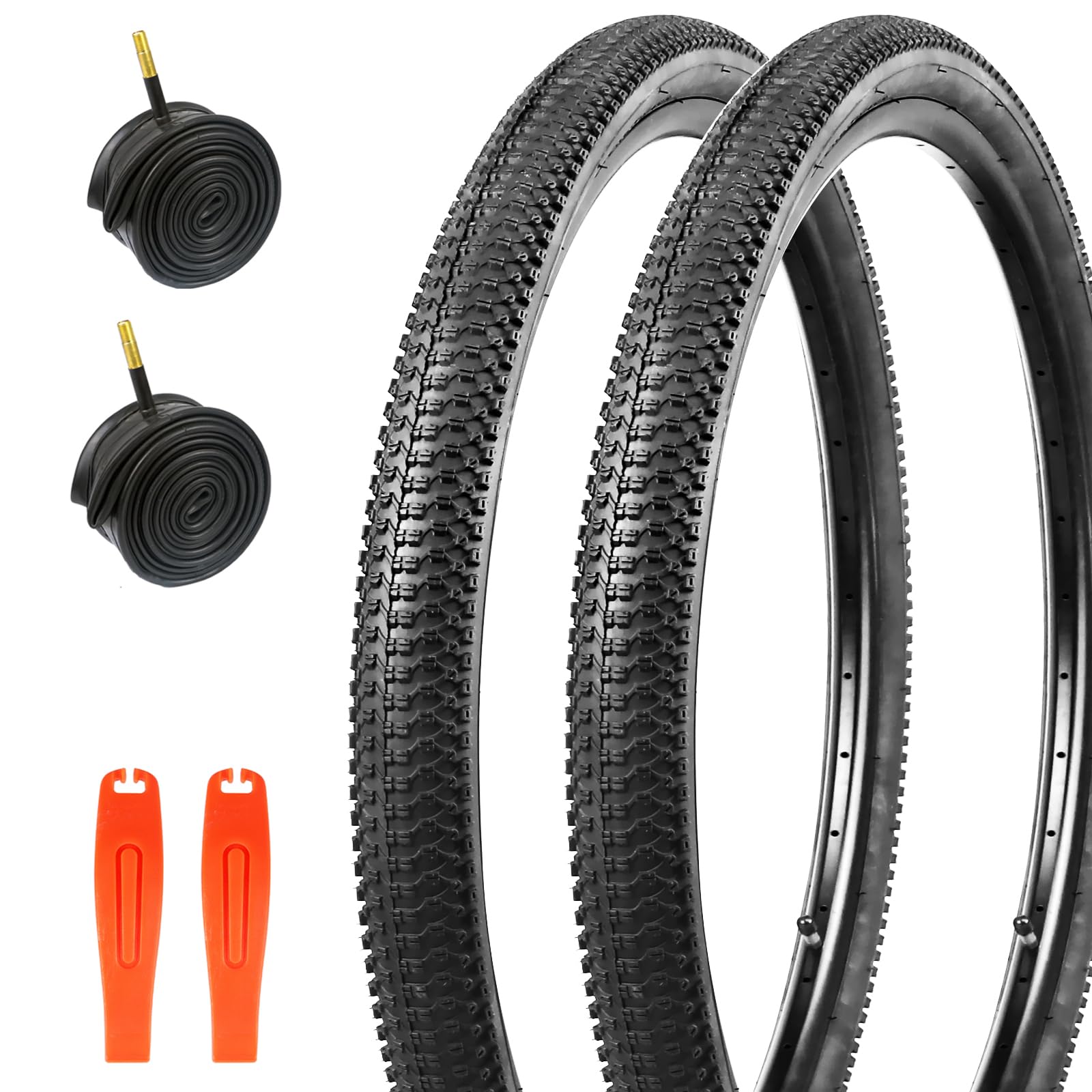
The WEEROCK two-pack is the ultimate value proposition for a complete wheel swap: you get two tires, two inner tubes, and two tire levers in one box. The 29 x 2.1 size is a standard XC width that fits most mountain bikes and hybrid frames. The wire bead construction is heavier than Kevlar but makes the tire more affordable and structurally stiff.
The tread uses a concave-convex pattern designed to provide grip during climbing and turning. Riders on e-bikes specifically note that the tire holds up well to the additional torque and weight of a motor, and the included tubes seal standard Presta or Schrader valves reliably. Maximum pressure is rated at 40 PSI with a 100 kg load limit.
This is not a lightweight or high-performance option, but it excels as a replacement set for a second bike, a kid’s bike, or a budget build where cost is the primary constraint. The included tubes and levers mean no extra trip to the shop, and users report the tires hold air better than the OEM tires that came with their bikes.
Why it’s great
- Complete kit with 2 tires, 2 tubes, and levers for a full swap
- Works well on e-bikes with higher torque demands
- Decent tread pattern for mixed dirt and pavement use
Good to know
- Wire bead is heavy and harder to install than Kevlar
- 30 TPI casing and 2.1″ width limit low-pressure off-road grip
6. WTB Slick 29 x 2.2
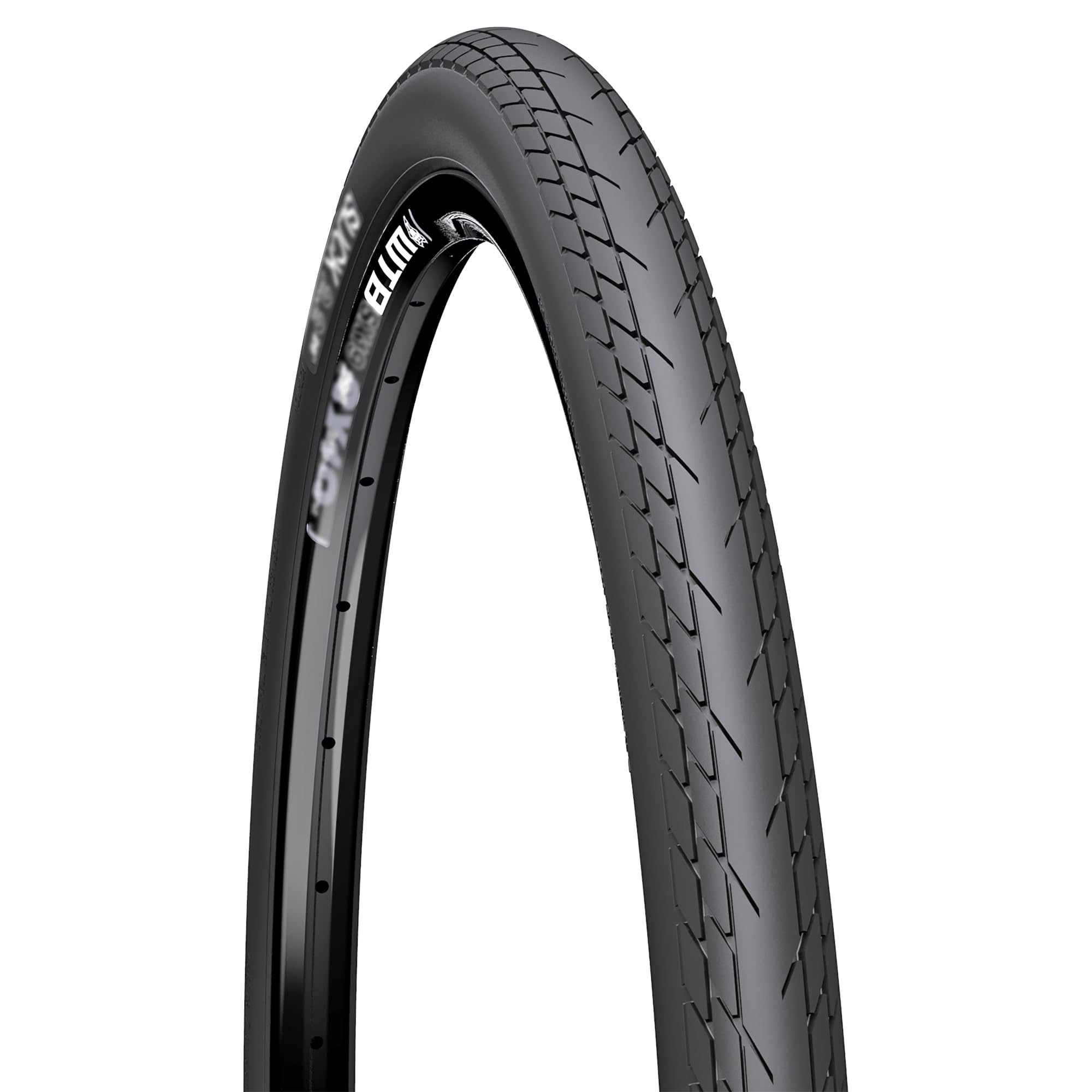
The WTB Slick is designed for the daily pavement and bike-path commuter who wants speed and silence. Its slick centerline offers minimal rolling resistance, while the grooved outer tread provides predictable cornering grip in wet conditions. The proprietary DNA rubber compound is engineered to balance efficiency and traction, even when the asphalt is damp.
Construction uses a wire bead and durable rubber sidewalls with a Comp casing that prioritizes longevity over feather weight. At 979 grams, it is not a lightweight tire, but riders report excellent flat protection and long tread life. The 2.2-inch width is wide enough to provide a cushioned ride on rough pavement at higher pressures (55-65 PSI).
Installation is straightforward with standard rims, but the tire is not tubeless-compatible — plan to run tubes. Riders who switch from knobby MTB tires notice a dramatic improvement in speed and noise, often gaining several mph on their average commute speed. The grooved outer tread provides enough bite for gravel paths and fire roads if your commute includes a short off-road section.
Why it’s great
- Slick centerline delivers very low rolling resistance on pavement
- Grooved outer tread offers reliable cornering grip in wet conditions
- Durable Comp casing with good puncture resistance for urban debris
Good to know
- Wire bead is heavy and stiff, making installation harder than folding tires
- Not tubeless compatible — requires inner tubes
7. Bell Flat Defense 29 x 2.25
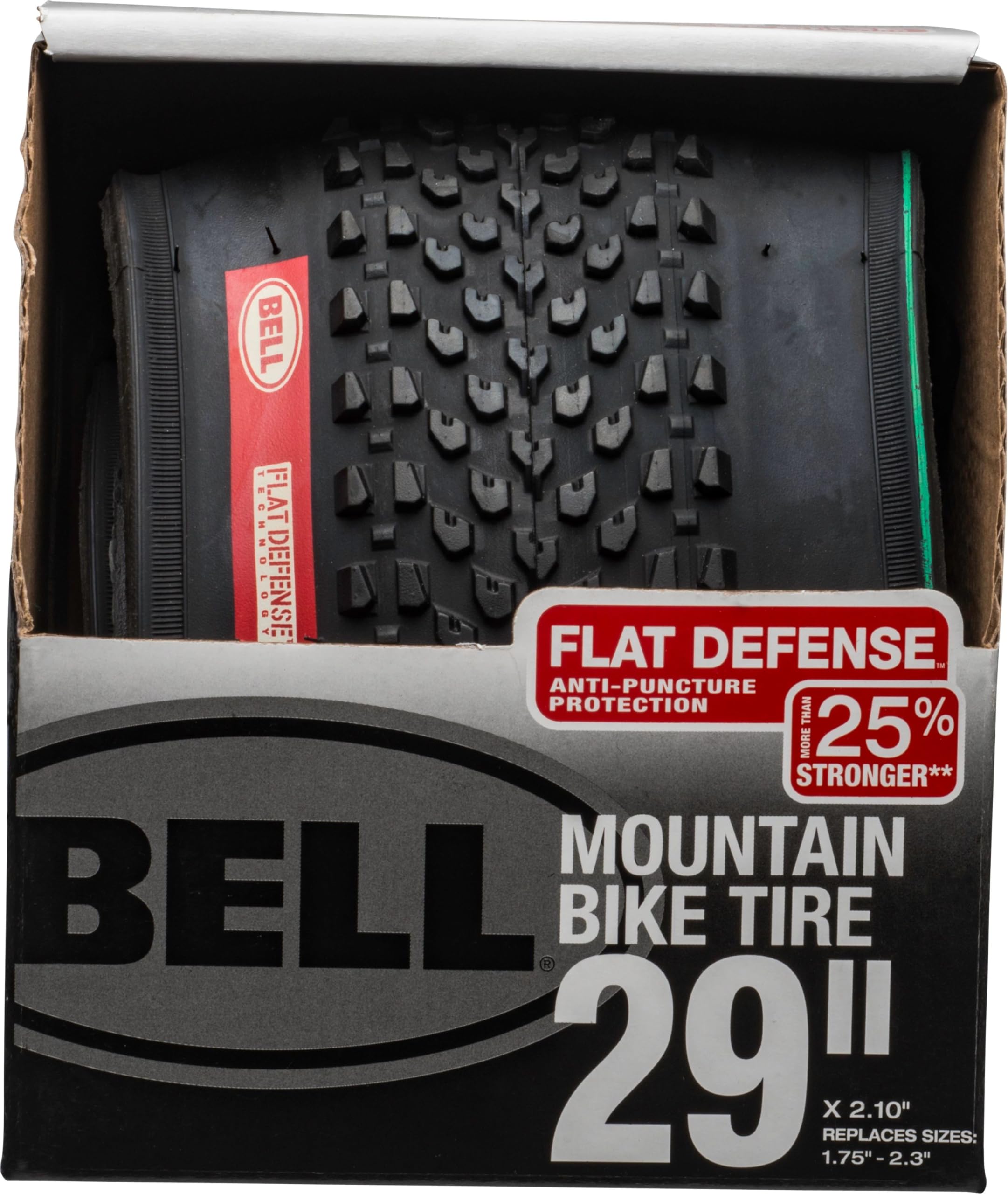
The Bell Flat Defense is a heavy-duty trail tire built around puncture resistance. Its namesake Flat Defense Technology is an internal protective layer that adds 25% more strength versus a standard tire, making it a strong choice for rocky trails, thorny paths, and commutes through glass-littered bike lanes. The tall, knobby tread pattern provides superior traction on everything from smooth singletrack to technical root sections.
The carbon steel bead allows the tire to be folded for storage without damage, though it remains stiffer than Kevlar alternatives. The 29 x 2.25 size is a versatile trail width that fits most mountain bikes. The 35-65 PSI range gives you plenty of adjustment: lower pressures for off-road grip, higher pressures for pavement efficiency. Riders report that the tread pattern is a good all-around compromise for both bike path and trail.
At 2.09 pounds, this is one of the heavier tires on the list, but the trade-off is exceptional durability and flat protection. Users who have broken tire levers during installation describe the tire as tough to mount, but once seated, it holds up ride after ride. The price point makes it an accessible upgrade for older mountain bikes or budget builds.
Why it’s great
- Flat Defense layer provides substantial puncture resistance
- Tall knobby tread offers reliable grip on trail and loose terrain
- Carbon steel bead allows folding for compact storage
Good to know
- Heavy weight compared to Kevlar-bead or semi-slick alternatives
- Stiff bead makes mounting difficult — may require tire levers and patience
FAQ
Will a 29 x 2.25 tire fit my frame and fork?
Can I use a 29-inch MTB tire on 700c rims?
How often should I replace my 29-inch bicycle tires?
What tire pressure should I run for 29-inch tires?
Final Thoughts: The Verdict
For most riders, the 29 inch bicycle tires winner is the Fincci Maori 29×2.25 because it delivers Kevlar folding bead construction, 60 TPI casing, and integrated puncture protection at a price that undercuts most premium singles. If you want the absolute best cornering and braking traction for aggressive trail riding, grab the Maxxis Minion DHR II. And for pure pavement commuting where speed and silence matter most, nothing beats the WTB Slick 29 x 2.2.