
Our readers keep the lights on and my morning glass full of iced black tea. As an Amazon Associate, I earn from qualifying purchases.
Specs are compiled from manufacturer listings and verified buyer reviews and can change over time — please confirm the key details on the product page before buying.
Switching from lead-acid to a 12V LiFePO4 battery is the single biggest upgrade you can make for your RV, solar rig, or boat — but you cannot just grab any one off the shelf and expect it to work.
I’m Min — the founder and writer behind Gadgets Feed. This guide is built by comparing the manufacturers’ published specifications and the patterns across verified customer reviews, so you get each pick’s real strengths and trade-offs instead of marketing spin.
Four specific power stations that cover real-world needs from a weekend camping run to a full off-grid house bank are lined up here, so you can shop for a 12v lifepo4 battery with total confidence in what you are actually buying.
Quick Picks
- ECO-WORTHY 3584Wh 12V 280Ah LiFePO4 RV Battery — Top Performer
- Litime 12V 100Ah Group 31 LiFePO4 Battery — Premium Balanced
- Dumfume 12V 150Ah LiFePO4 Deep Cycle Battery — Best Value
- Redodo 12V 100Ah LiFePO4 Battery — Compact Entry
How To Choose The Best 12V LiFePO4 Battery
Not all 12V lithium batteries are built the same way. The single biggest mistake buyers make is looking only at amp-hours without checking what the battery management system (BMS) can actually deliver.
Match the BMS to Your Load
The BMS (the electronic brain inside the battery that prevents overcharge, over-discharge, and short circuits) has a current rating measured in amps. A 100A BMS is sufficient for most RVs and small inverters, but a high-power setup like a large inverter or a motor with high surge demand needs a 200A BMS to avoid tripping into protection mode mid-use.
Capacity vs Real Energy
A 100Ah battery running at 12.8V holds 1,280 watt-hours (Wh) of usable energy. Multiply amp-hours by voltage to get the real number; a 150Ah battery yields 1,920Wh, and a 280Ah unit delivers 3,584Wh. That number tells you how long your fridge, lights, and devices actually run.
Low-Temperature Charging Protection
If you plan to charge in freezing weather, you need a battery with low-temperature cutoff. Without it, charging below 32°F causes permanent cell damage. Units with this feature simply pause charging until the battery warms up.
Quick Comparison
| Model | Best For | Capacity | BMS Rating | Weight | Amazon |
|---|---|---|---|---|---|
| ECO-WORTHY 280Ah | Large off-grid banks | 280Ah | 200A | 61.7 lbs | $439.99Amazon |
| Litime 100Ah | Premium balanced pick | 100Ah | 100A | 24.25 lbs | $309.99Amazon |
| Dumfume 150Ah | Value-per-amp-hour | 150Ah | 100A | 24.25 lbs | $182.55$192.96Amazon |
| Redodo 100Ah | Compact entry-level | 100Ah | 100A | 22.04 lbs | $249.88Amazon |
In‑Depth Reviews
1. ECO-WORTHY 3584Wh 12V 280Ah LiFePO4 RV Battery
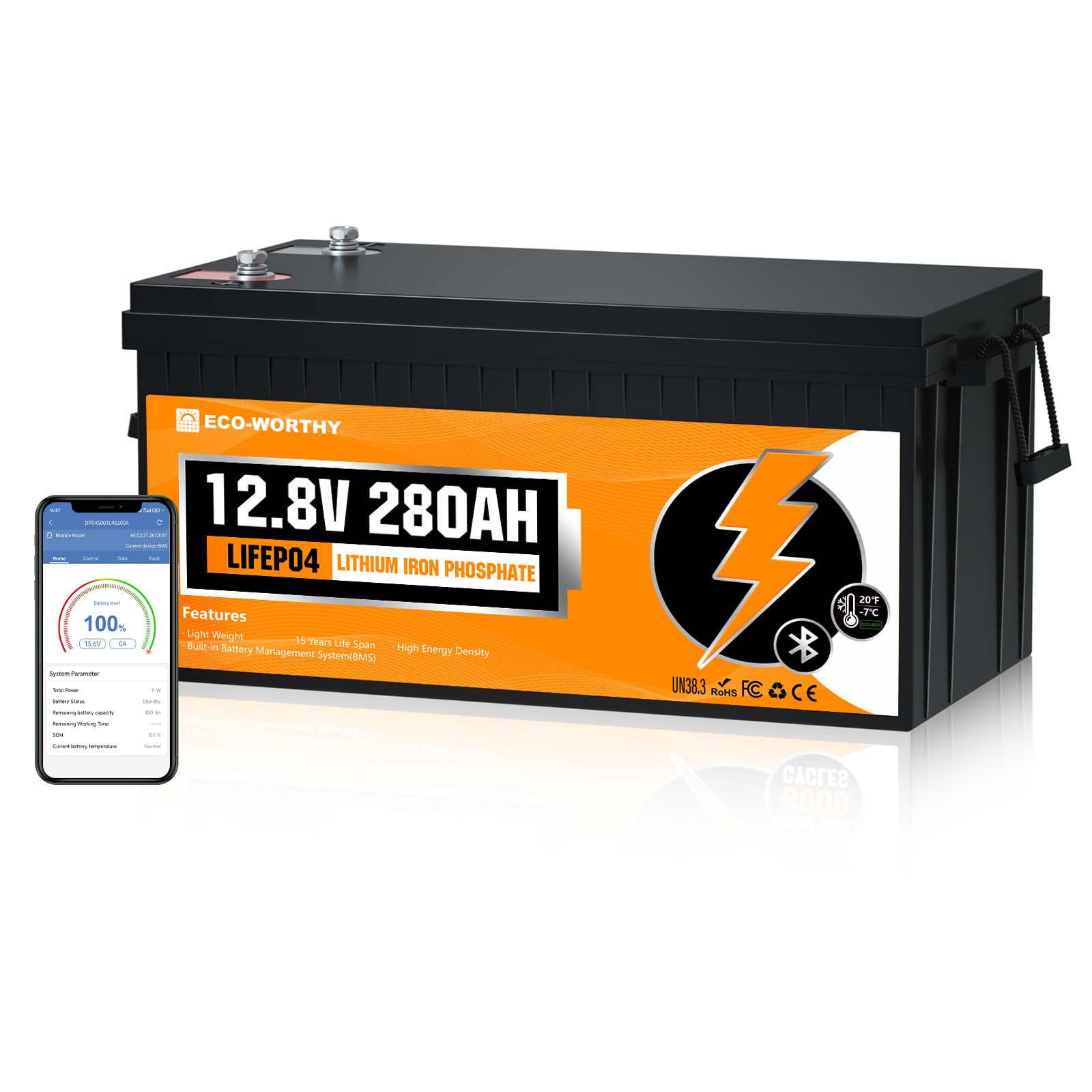
Biggest single-cell capacity you can drop in a bay without wiring multiple boxes together.
This battery delivers 3,584Wh of usable energy — enough to run a fridge for days without recharging — and it achieves that with a single 280Ah cell that measures 17.83 x 9.37 x 8.7 inches. You get a built-in 200A BMS, versus 100A on the Dumfume 150Ah and Litime 100Ah, so it can handle large inverter loads without tripping. The Bluetooth app gives you real-time voltage, current, and remaining capacity right on your phone, as long as you stay within 15 meters of the battery.
ECO-WORTHY added a high-strength metal compression frame inside to prevent the prismatic cells (the flat, rectangular cells inside) from swelling over time, plus low-temperature protection that stops charging below -7°C (19.4°F) and resumes at 0°C (32°F). You can stack up to four in parallel for 1,120Ah at 12V, or put them in series to build a 48V solar bank. At 61.7 pounds versus 22.04 pounds for the Redodo 100Ah and 24.25 pounds for the Litime 100Ah, plan your mounting location carefully — this is not something you move around often.
Buyers report that the Bluetooth connection makes checking state-of-charge feel easy, and the 200A BMS does not nuisance-trip even when running a microwave through an inverter. If you need a true one-battery house bank that runs for days without recharging, this is the pick.
Monster capacity for a single unit: Holds 280Ah versus 100Ah for a standard 100Ah battery, with a 200A BMS that handles serious loads.
Heavier and harder to place: At 61.7 pounds, permanent mounting is the only practical route; you will not toss this in a bin.
Reach for this if: you are building a primary off-grid or RV house bank and want to wire as few batteries as possible — one unit delivers 3,584Wh.
Look elsewhere if: your space is tight or you need a portable battery you move between vehicles. (The Redodo 100Ah weighs just 22.04 pounds if portability is your main priority.)
2. Litime 12V 100Ah Group 31 LiFePO4 Battery
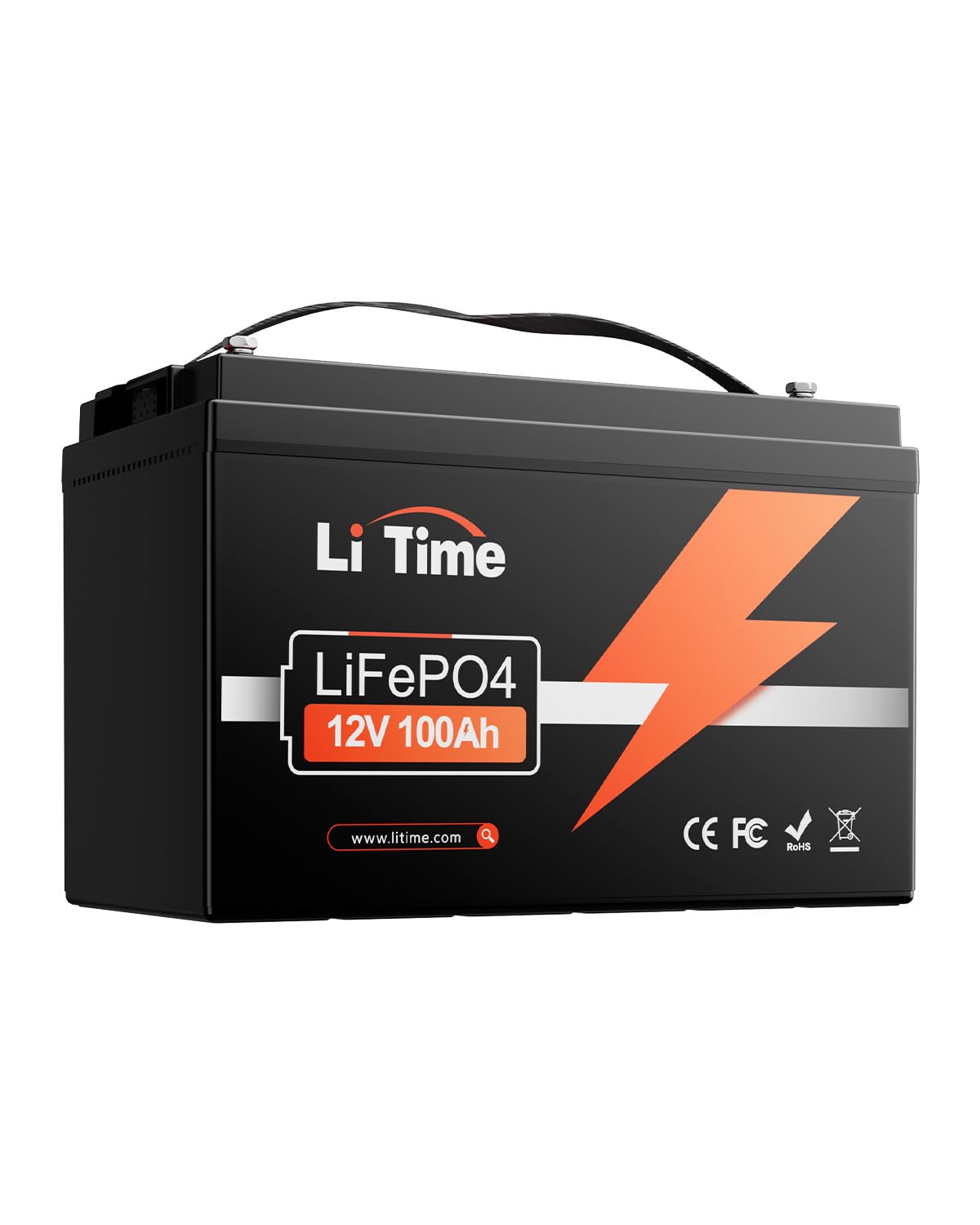
Automotive-grade cells with ETL certification in a Group 31 box you can actually pick up.
The Litime uses A+ automotive-grade prismatic cells that carry ETL certification (a safety mark from a recognized testing lab), and the battery measures 12.95 x 6.77 x 8.43 inches, versus 17.83 x 9.37 x 8.7 inches for the ECO-WORTHY 280Ah unit. It lands at 24.25 pounds and is easy to slide into a standard Group 31 tray.
You get a 100A BMS with over 20 protection settings covering overcharge, over-discharge, short circuit, and temperature extremes. Cycle life is rated at 4,000+ cycles at full 100% depth of discharge (DOD — how much you drain the battery before recharging), 6,000 cycles at 80% DOD, and up to 15,000 cycles at 60% DOD. The battery also carries AIG product liability insurance, which is an extra layer of confidence rarely seen at this level.
Litime supports expansion up to 4P4S — you can run four in parallel for a 400Ah bank at 12V or wire them in series for a 51.2V system delivering 20.48kWh total. Unlike the ECO-WORTHY, this one fits most RV battery compartments without modifying the tray, and the UL and FCC certifications add confidence for insurance and inspection purposes.
What stands out
- ETL-certified A+ automotive-grade cells for stable power output
- Weighs 24.25 lbs and fits a standard Group 31 tray easily
- Cycles up to 15,000 times at 60% DOD with a 10-year rated life
A trade-off to note
- No Bluetooth monitoring — you need an external shunt or meter to check charge state
- 100A BMS limits it to moderate loads; not ideal for large inverters over 1,200W
Ideal for: the RV or campervan owner who wants a certified, lightweight drop-in replacement and plans to stay at moderate power draw.
skip it if: you need Bluetooth app monitoring or plan to run a 2,000W+ inverter regularly — consider the ECO-WORTHY 280Ah with its 200A BMS instead.
3. Dumfume 12V 150Ah LiFePO4 Deep Cycle Battery
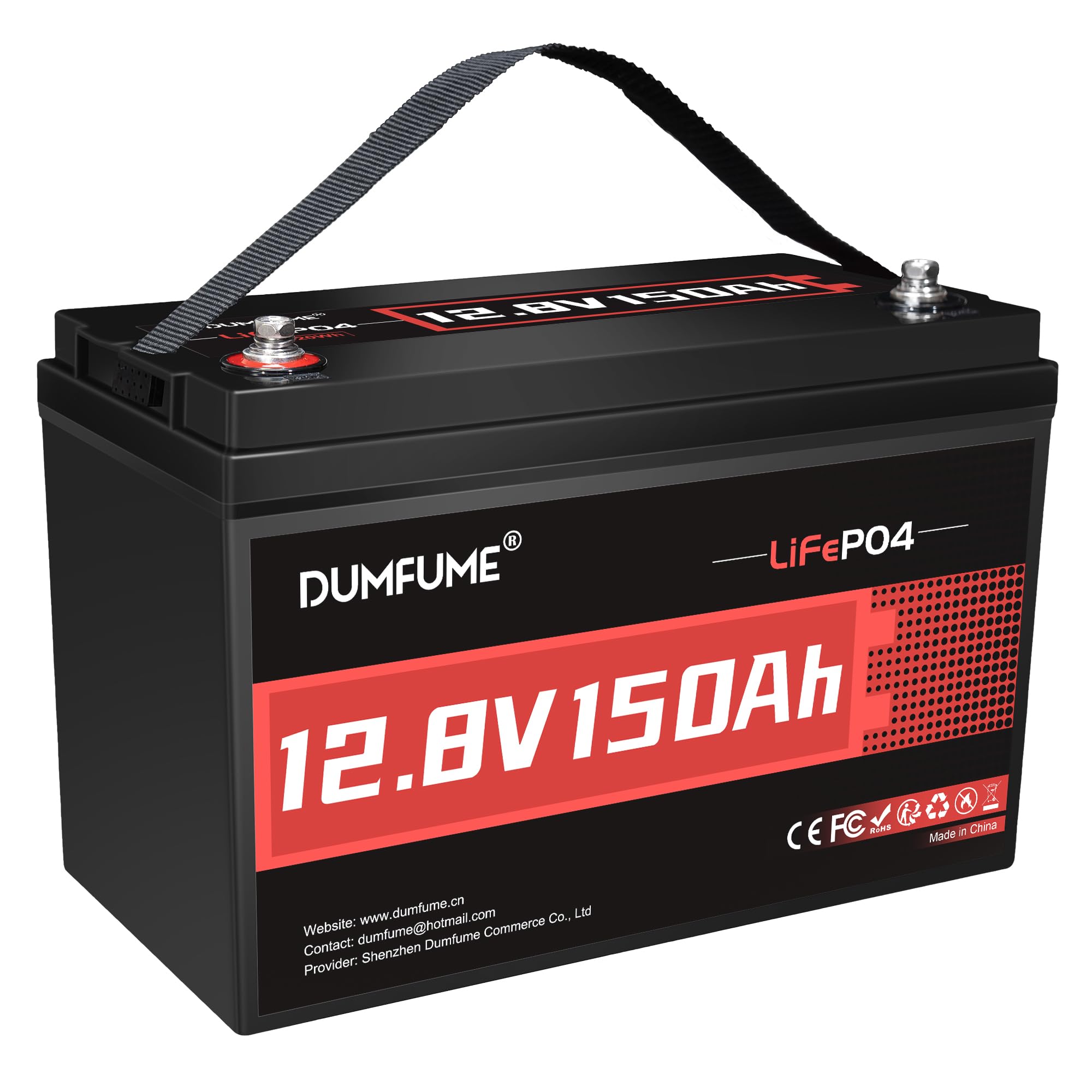
1,920Wh from a 150Ah battery in a package that stays relatively easy to handle.
At 150Ah and 1,920Wh, the Dumfume splits the difference between the common 100Ah packs and the massive 280Ah ECO-WORTHY. It weighs 11 kilograms, while the Litime 100Ah is listed at 24.25 pounds, and it supports series and parallel connections up to 4S4P for flexible voltage or capacity scaling. The 100A BMS provides standard overcharge, over-discharge, short circuit, and high-temperature protection — enough for most RVs, solar storage, and marine setups.
A very honest real-world detail here: owners mention that four 150Ah units all exceeded rated capacity by about 7Ah each, so you are actually getting more than 150 amp-hours from the start. The same owners noted the battery weighs only 24.5 pounds, making it easy to carry into a compartment. The low-temperature protection is present, but the manual specifies that charging should only happen at 5°C (41°F) or higher, and return shipping for cold-charging damage is not covered, so keep that in mind if you live in a freezing climate.
The Dumfume does not include Bluetooth, which keeps the cost down but means you need a separate battery monitor or voltmeter to track your state of charge. The 5-year warranty is a solid safety net, though one reviewer noted that the warranty only applies to direct purchases — not Amazon orders — so read the fine print before buying.
Best amp-hours per dollar in the list: 150Ah at a very accessible price point, and buyers confirm it actually holds a bit more than rated.
No Bluetooth and a strict cold-charge policy: You manage charge level blind, and charging below 5°C voids warranty coverage for damage.
Grab this if: you want the most capacity without jumping to a heavy 280Ah unit, and you do not mind monitoring charge level with an external meter.
pass on it if: you need Bluetooth tracking or want to charge reliably below 5°C in a cold garage or winter camper — the ECO-WORTHY 280Ah handles freezing conditions better.
4. Redodo 12V 100Ah LiFePO4 Battery
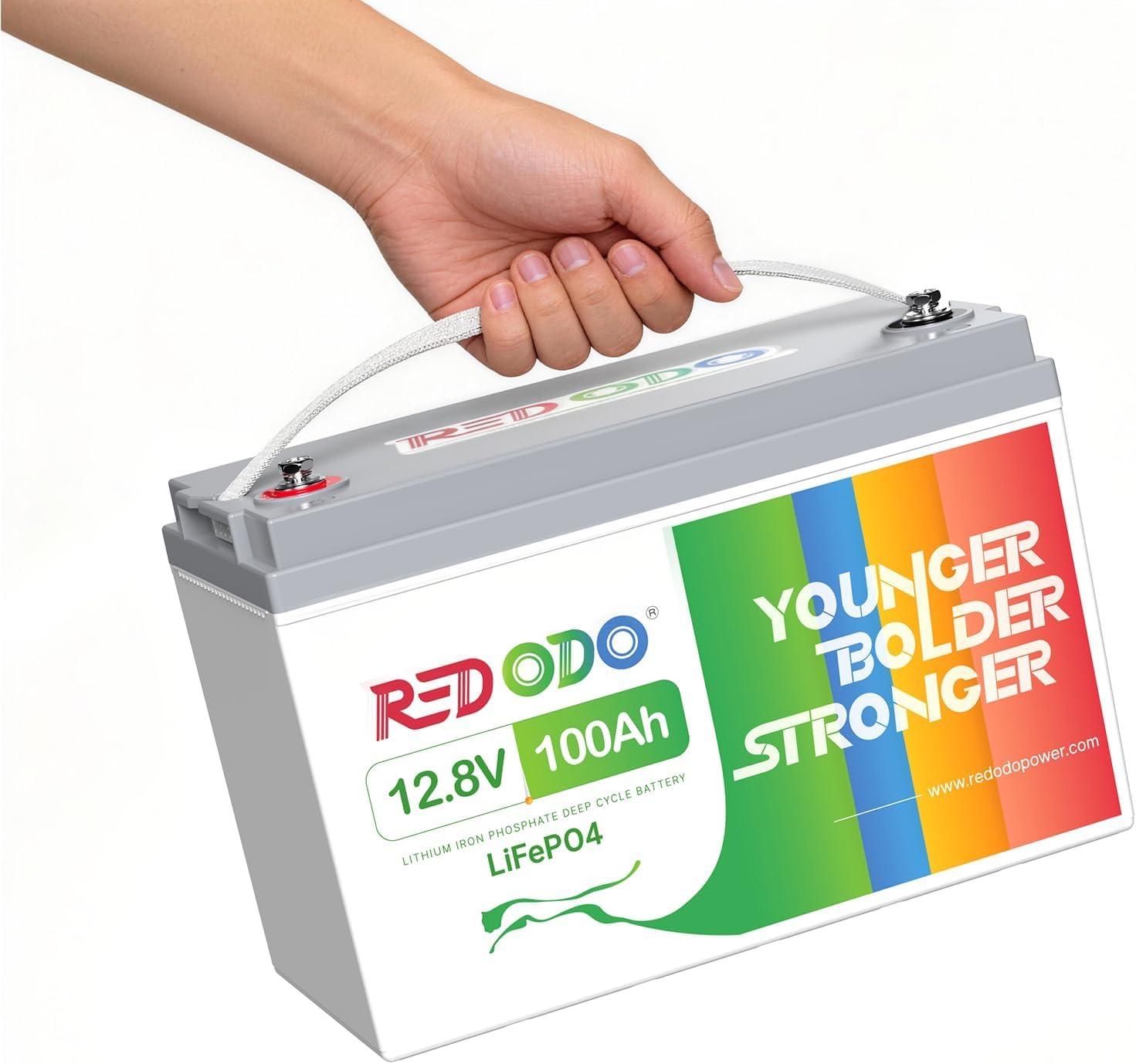
The lightest 100Ah pack in the roundup — 22.04 pounds — and built to fit a BCI Group 31 tray perfectly.
At 22.04 pounds versus 61.7 pounds for the ECO-WORTHY 280Ah unit, the Redodo is the easiest to lift into a tight battery compartment. It measures 12.99 x 6.82 x 8.46 inches, which slides right into a standard BCI Group 31 box. The 100A BMS covers the usual safety protections, and Redodo rates this for 4,000 cycles at full depth of discharge, with a 10-year lifetime.
One spec that sets the Redodo apart is the self-discharge rate of only 3% per month compared to 15–30% for lead-acid, so you can store it for the off-season and come back to a nearly full battery. It supports parallel and series connections up to 4S or 4P, giving you a max of 400Ah at 12V or 48V (51.2V nominal). Redodo suggests using it with a 30 to 70-pound thrust trolling motor, though the company cautions this battery is not suitable for engine starting or golf cart use.
Unlike the Litime and Dumfume, the Redodo does not include Bluetooth or any built-in monitoring, so you will need to add a separate meter to see your charge level. It has no low-temperature protection in the BMS, so if you charge in freezing conditions, you risk damaging the cells — winter storage in a heated space is advised.
Why it is easy to live with
- Lightest at 22.04 pounds — genuinely one-hand portable
- Self-discharge is just 3% per month, so seasonal storage is no problem
- Slots into Group 31 trays without modification
Shortcomings you should know
- No low-temperature charging protection — risk of cell damage below freezing
- No Bluetooth or built-in gauge requires an external monitor
Perfect for: a small RV, kayak, or trolling motor setup where every pound matters and storage is indoors.
Not for you if: you plan to charge in an unheated garage in winter or want screen-free monitoring straight from the battery.
Understanding the Specs
Battery Management System (BMS)
The BMS is the small circuit board inside the battery that monitors voltage, current, and temperature. A 100A BMS is common for 100Ah batteries and can safely run devices up to about 1,200W. If you power a 2,000W inverter or a large motor, a 200A BMS like the one in the ECO-WORTHY 280Ah gives you a wider safety margin and prevents the battery from shutting down mid-use.
Depth of Discharge (DOD) and Cycle Life
Depth of discharge (DOD) means how much of the battery’s rated capacity you use before recharging. A LiFePO4 battery rated for 4,000 cycles at 100% DOD means it can be fully drained and fully recharged 4,000 times before capacity fades. Running at a shallower DOD (say 60%) extends the cycle count — some units reach up to 15,000 cycles — which directly translates to many more years of service in a solar or RV system.
FAQ
Can I use a 12V LiFePO4 battery to start my engine?
How many 100Ah batteries do I need to run a 2,000W inverter?
What is the real difference between 100Ah, 150Ah, and 280Ah in daily use?
Will a LiFePO4 battery fit in my existing Group 24 or Group 31 tray?
Can I charge a LiFePO4 battery with my existing lead-acid charger?
What does low-temperature protection do and why does it matter?
How long does a 12V 100Ah LiFePO4 battery last?
Do I need Bluetooth monitoring on my battery?
Can I connect different brands or different capacities of LiFePO4 batteries together?
How should I store a LiFePO4 battery long-term?
Final Thoughts: The Verdict
Across the board, the 12v lifepo4 battery that covers the widest range of needs is the Litime 100Ah because it brings ETL-certified automotive-grade cells, a 100A BMS, and a 10-year rated life in a lightweight Group 31 footprint. If you want the absolute highest single-unit capacity for a serious off-grid house bank, grab the ECO-WORTHY 280Ah. And for the best value-per-amp-hour without Bluetooth extras, the Dumfume 150Ah gives you 1,920Wh at a budget-friendly price point that is tough to top.
How We Picked
We do not accept paid placement. Every pick is matched to a real buyer and a real use-case; we do not hands-on test units.
Sources & Methodology
Specifications: manufacturer listings and product documentation. Review insights: verified customer reviews, as of July 2026. Pricing: not shown on this page (it changes often); check the current price via the retailer link.
As an Amazon Associate, Gadgets Feed earns from qualifying purchases. This does not affect which products we feature.
Product prices and availability are accurate as of the date/time indicated and are subject to change. Any price and availability information displayed on Amazon at the time of purchase will apply to the purchase of this product. As an Amazon Associate I earn from qualifying purchases.
CERTAIN CONTENT THAT APPEARS ON THIS SITE COMES FROM AMAZON. THIS CONTENT IS PROVIDED "AS IS" AND IS SUBJECT TO CHANGE OR REMOVAL AT ANY TIME.
Amazon and the Amazon logo are trademarks of Amazon.com, Inc. or its affiliates.