
Our readers keep the lights on and my morning glass full of iced black tea. As an Amazon Associate, I earn from qualifying purchases.
Specs are compiled from manufacturer listings and verified buyer reviews and can change over time — please confirm the key details on the product page before buying.
A 5000-watt inverter (a device that turns battery power into the household AC power your appliances use) can turn a blackout into a mild inconvenience or run a job site without the noise and fumes of a generator. But not all 5000-watt inverters are built the same. Some run on 12 volts (standard car or RV battery voltage), others on 48 volts (higher voltage for bigger solar systems, meaning thinner wires). That one choice — 12V vs. 48V — decides everything about your battery bank, your cable size, and whether the thing can actually start your air conditioner. This guide compares each top contender’s real-world strengths and trade-offs so you match the right one to your setup.
I’m Min — the founder and writer behind Gadgets Feed. This guide is built by comparing the manufacturers’ published specifications and the patterns across verified customer reviews, so you get each pick’s real strengths and trade-offs instead of marketing spin.
Understanding the real difference between a 12-volt and a 48-volt setup is the single most important decision you make. This guide to the 5000 watt inverter category helps you sort that out before you spend a dollar.
Quick Picks
- SUNGOLDPOWER UL1741 5000W Hybrid Solar Inverter — Best Overall
- AIMS 5000W 12V Industrial Pure Sine Inverter GFCI 120V — Industrial Workhorse
- Ampinvt Solar Inverter 5000 Watt 48V to 120V, inbuilt 100A MPPT — Solar-Friendly Value
- VEVOR Pure Sine Wave Inverter, 5000 Watt, DC 12V to AC 120V — Compact Budget Pick
How To Choose The Best 5000 Watt Inverter
Picking a 5000-watt inverter is really about matching the voltage to your existing battery bank and knowing what loads you need to start. Surge power (the momentary extra burst of power to start electric motors, like a well pump or AC compressor) is often more important than the continuous rating for anyone running that kind of equipment.
12V vs 48V Input — The Big Split
A 12-volt inverter is simpler if you already have a big 12V battery bank in a truck or RV. But moving 5000 watts at 12 volts means pulling over 400 amps — that is thick, expensive copper cable. A 48-volt inverter draws only about 100 amps for the same power, so your wiring is thinner, cheaper, and safer. The trade-off is that you need four 12V batteries in series (wired one after another to double the voltage), or a dedicated 48V battery.
Pure Sine Wave vs Modified Sine Wave
Every pick here outputs pure sine wave (the shape of the power that matches what comes out of your home wall outlet). This matters for sensitive electronics — laptops, variable-speed pumps, modern refrigerator controllers — because they can buzz, run hot, or even break on the rougher modified sine wave signal.
Quick Comparison
| Model | Best For | Input Voltage | Surge Power | Weight | Amazon |
|---|---|---|---|---|---|
| SUNGOLDPOWER 5000W Hybrid | Off-grid solar with MPPT | 48V DC | 10,000W | 28 Pounds | Amazon |
| AIMS 5000W Industrial | Heavy continuous loads | 12V DC | 10,000W | 25.7 Pounds | Amazon |
| Ampinvt 5000W Solar Inverter | Parallel expandable solar | 48V DC | 10,000W | — | Amazon |
| VEVOR 5000W Pure Sine Wave | Budget RV/Truck backup | 12V DC | 10,000W | 21 Pounds | Amazon |
In‑Depth Reviews
1. SUNGOLDPOWER UL1741 5000W Hybrid Solar Inverter
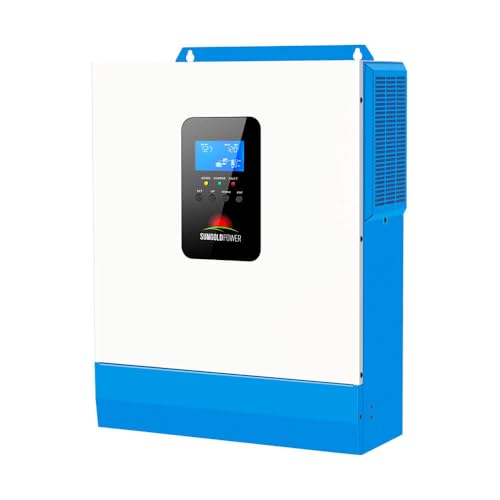
This 48V unit packs an 80A MPPT solar charge controller and a 40A AC battery charger into one box — saving you from buying extra gear.
The SUNGOLDPOWER is the best pick for anyone building a serious off-grid solar system. It combines a 5000-watt pure sine wave inverter with a built-in 80A MPPT solar charge controller (a device that squeezes maximum power from solar panels, up to 80 amps of charging current) and a 40A AC battery charger, all in a single 28-pound unit that measures 17.3″ x 13.8″ x 5.1″. Because it runs on 48V DC (direct current from batteries), your battery wiring stays manageable — at 5000 watts you are pulling around 100 amps, not the 400-plus amps a 12V inverter would need. The unit is UL1741 listed by ETL, a safety certification that matters if you connect to grid-tied equipment or need inspector approval. One buyer reports it “works for 6 sections on 115 well pump” without issues.
Compared to the AIMS below, the SUNGOLDPOWER operates at 60 Hz (cycles per second), which is the standard North American household frequency, while the AIMS is set to 50 Hz by default. It has four charging modes (Solar Priority, AC Priority, Only Solar, and Hybrid) so you can prioritize solar power when the sun is out and fall back to battery or grid when it is not. The UPS-like transfer time (the brief moment it takes to switch from grid to battery power) is under 10 milliseconds, keeping your electronics on if the grid blinks.
Why It Leads
- Built-in 80A MPPT solar charger reduces external equipment cost
- Runs on 48V for thinner, safer wiring than the 12V VEVOR or AIMS
- Multiple charging and output modes for solar-first off-grid
The One Catch
- Does not support parallel operation — you cannot daisy-chain units for more power
- Some buyers mention older units needed a soft start for big motors
Reach for it if: you are building a 48V off-grid solar system and want an inverter, solar charger, and battery charger in one unit.
Look elsewhere if: you need the ability to connect multiple inverters in parallel for higher total output — that is the Ampinvt’s specialty.
2. AIMS 5000W 12V Industrial Pure Sine Inverter GFCI 120V

A 12V inverter that runs job-site saws, mini-splits, and well pumps — but needs a massive 12V battery bank to feed it.
If you already have a large 12V battery bank in your RV, truck, or workshop, the AIMS delivers full 5000 watts continuously and 10000 watts of surge power to start motors. It operates at an efficiency of 91% (meaning 91% of the DC power becomes usable AC power, which keeps battery drain lower and produces less waste heat). It features two GFCI 20-amp outlets (the same shock-protected outlets required in bathrooms and kitchens) plus a direct-connect AC terminal block for hardwiring. The unit is 25.59″ long by 8.86″ wide by 6.22″ tall and weighs 25.7 pounds — noticeably heavier and longer than the 21-pound VEVOR, which reflects its industrial build. One buyer notes that it “powers heavy loads (shop vac, saw, 1/2 HP well pump)” without complaint.
The catch with a 12V inverter at this wattage is the current: at full load, you are pulling over 400 amps from your batteries, so you need thick 4/0 AWG cable (a cable about as thick as your thumb) and a sturdy battery bank. The AIMS runs at 50 Hz (50 cycles per second) by default, while the SUNGOLDPOWER runs at 60 Hz. That matches some international equipment but may not be ideal for North American clocks or motors expecting 60 Hz. It does include a 60Hz/50Hz switch, so you can select the frequency your gear needs.
Strengths
- 91% efficiency keeps battery drain lower at high loads
- GFCI-protected outlets and AC terminal block for flexible hookups
- Proven by buyers to run shop tools and well pumps day after day
Limitation
- Requires massive battery bank — low voltage triggers shutdown around 11.2V
- At 25.7 pounds and 25.59″ long, it takes up real space and is not portable like the 21-pound VEVOR
Reach for it if: you have a strong 12V battery bank and need a rugged inverter for continuous heavy tools or appliances.
Not your pick if: you want a lightweight portable unit or a 48V solar-integrated system. That is the SUNGOLDPOWER’s territory.
3. Ampinvt Solar Inverter 5000 Watt 48V to 120V, inbuilt 100A MPPT
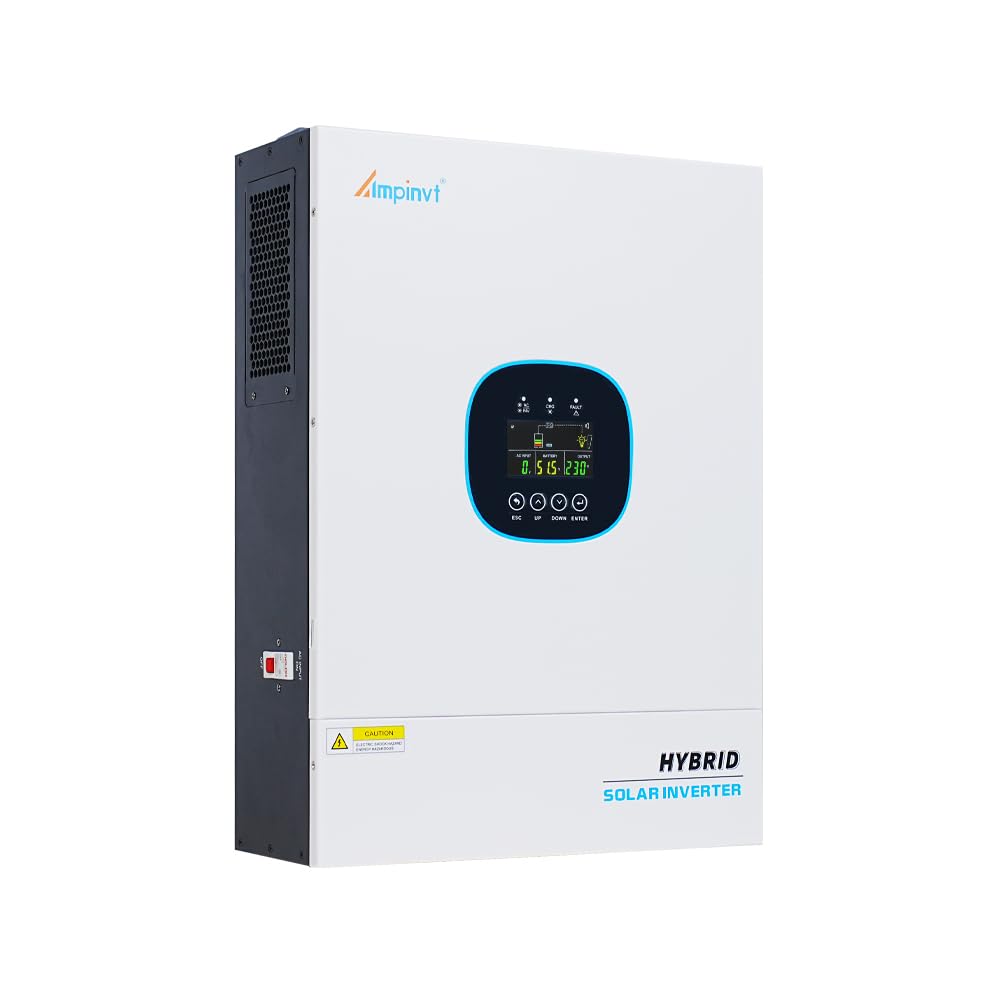
A 48V solar inverter with a 100A MPPT that lets you connect up to six units in parallel — scaling from 5,000 watts to 30,000 watts as your needs grow.
Where the SUNGOLDPOWER stops at one unit, the Ampinvt lets you parallel up to six inverters (wiring them together to share the load). This means you can start with 5000 watts and expand to 30,000 watts total as your energy needs grow. It has a built-in 100A MPPT solar charge controller (a smarter, higher-capacity solar charger that tracks the maximum power point from solar panels with up to 98% tracking efficiency), supports a maximum PV input of 5500 watts at 500V DC, and works with both lead-acid and lithium (LiFePO4) batteries. The unit measures 13.4″ x 5.6″ x 19.7″, a slim profile that stacks easily if you do go the parallel route. One reviewer noted it has been “working well for 2 months powering 120V outlets” and noted that “lights flicker occasionally,” which buyers in this price tier often report.
It also has a dry contact function (a simple on/off switch port) that can automatically start a diesel generator when battery voltage gets low — a smart feature for off-grid cabins. The downside is the user interface: buyers report the menu and UI are “poor, typical for cheap inverters,” and the unit uses a CH340T driver (a specific computer chip for PC software connection) that is not plug-and-play for everyone. At 48V, the wiring is far more manageable than the 12V VEVOR or AIMS, making it a strong candidate for anyone running solar.
Highlights
- Parallel support means you can grow from 5kW to 30kW
- 100A MPPT with 98% tracking efficiency is excellent for this price
- Dry contact control for auto generator start
Compromise
- Owners mention occasional light flickering
- Software setup is not user-friendly for beginners
Grab it for: a 48V solar system that you want to start small and scale up later.
skip it if: you insist on a polished, glitch-free user interface from the start — the SUNGOLDPOWER is more refined in that regard.
4. VEVOR Pure Sine Wave Inverter, 5000 Watt, DC 12V to AC 120V
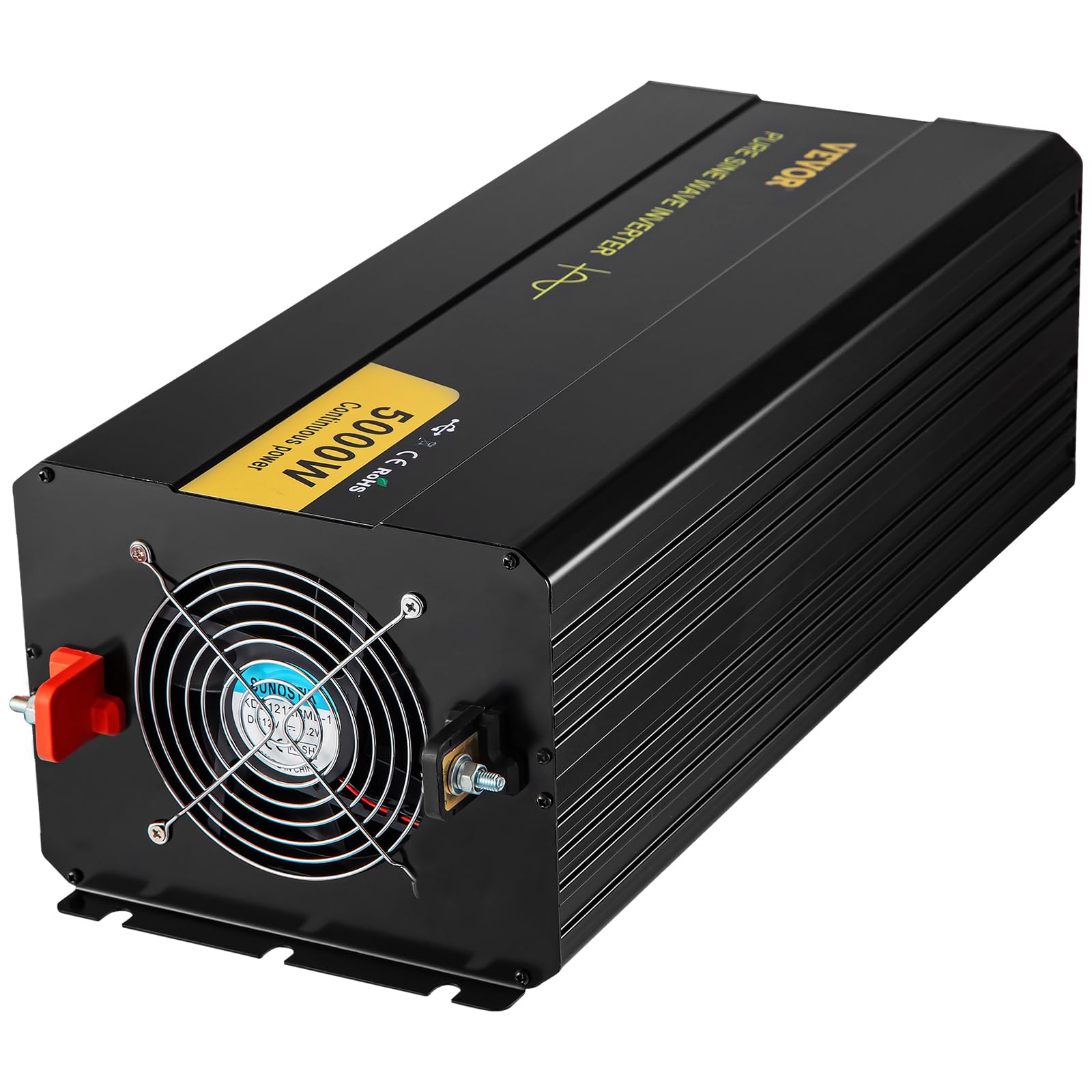
At 21 pounds, this is the lightest 5000-watt inverter here, versus the 28-pound SUNGOLDPOWER, and a proven starter for a 13.5k BTU air conditioner.
The VEVOR’s compact footprint makes it a natural fit for RVs, trucks, and travel setups where every inch and pound counts. It delivers 5000 watts continuous and 10000 watts surge from a 12V DC input, with four AC outlets and one USB port. The LCD display shows input voltage, frequency, output voltage, and battery level so you can see what is happening at a glance, and the included remote controller with a 9.8-foot cable lets you turn the inverter on and off from the driver’s seat. One buyer says it “perfectly starts 13.5k BTU A/C smoothly every time,” and another noted it “survived extreme heat in enclosed area without issues.”
It comes with safety certifications — CE, FCC, RoHS, PSE — and the temperature-controlled cooling fan kicks on at 113°F to keep things cool while generating a quiet 20-40 dB. The unit uses 12 x 40A fuses and includes 4 battery cables, so you have everything to get started except the batteries. The main trade-off is that at 12V, you need extremely heavy cabling for full loads (like the AIMS), and the inverter’s surge capability is best proven on air conditioners rather than continuous industrial tools. It also lacks any built-in solar charging — it is pure inverter only, unlike the SUNGOLDPOWER and Ampinvt.
What Stands Out
- Only 21 pounds — easy to mount in an RV or truck
- Proven to start large air conditioner loads
- Includes remote, LCD display, and full fuse kit
Consider This
- 12V input requires massive battery cables for full 5000W draw
- No built-in solar charging — pure inverter only
Best for: RV owners and truck campers who need A/C power on the road without a heavy unit.
Pass on it if: you need a solar-integrated system — that is the SUNGOLDPOWER or Ampinvt — or plan to run heavy continuous loads like a workshop, which the AIMS handles better.
Understanding the Specs
Input Voltage (12V vs 48V)
This is the most practical decision you make. A 12V inverter works with standard car, RV, and truck batteries, but at 5000 watts it pulls over 400 amps — you need 4/0 AWG cable (as thick as your thumb) and serious battery capacity. A 48V inverter pulls about 100 amps for the same power, so your cables are thinner, cheaper, and the system is safer. The catch is you need four 12V batteries in series (wired one after another) to reach 48V, or a dedicated 48V battery pack.
Surge Power vs Continuous Power
Surge power is the extra momentary burst an inverter delivers for a second or two to start electric motors — think air conditioner compressors, well pumps, and refrigerators. Every pick here offers 10,000 watts of surge ability alongside a 5,000W continuous rating. If your gear has a motor, the surge number matters more than the continuous number for sizing your inverter.
FAQ
What can I run on a 5000 watt inverter?
Is a 48V inverter better than a 12V inverter?
Do I really need pure sine wave?
Can I connect two 5000W inverters together for 10000W?
What size battery bank do I need for a 5000 watt inverter?
How hot does a 5000W inverter get?
Can I use a 5000W inverter in my car or truck?
How long will a 5000W inverter last?
Does an inverter waste power when nothing is plugged in?
What is the difference between GFCI and a standard outlet?
Final Thoughts: The Verdict
For most people, the 5000 watt inverter winner is the SUNGOLDPOWER UL1741 Hybrid because it combines a pure sine wave inverter, an 80A MPPT solar charge controller, and 48V efficiency in one UL-listed unit. If you need a rugged 12V workhorse for a workshop or big RV bank, grab the AIMS 5000W Industrial. And for a lightweight, portable 12V option proven to start a 13.5k BTU air conditioner, the VEVOR 5000W delivers huge value.
How We Picked
We do not accept paid placement. Every pick is matched to a real buyer and a real use-case; we do not hands-on test units.
Sources & Methodology
Specifications: manufacturer listings and product documentation. Review insights: verified customer reviews, as of July 2026. Pricing: not shown on this page (it changes often); check the current price via the retailer link.
As an Amazon Associate, Gadgets Feed earns from qualifying purchases. This does not affect which products we feature.
Product prices and availability are accurate as of the date/time indicated and are subject to change. Any price and availability information displayed on Amazon at the time of purchase will apply to the purchase of this product. As an Amazon Associate I earn from qualifying purchases.
CERTAIN CONTENT THAT APPEARS ON THIS SITE COMES FROM AMAZON. THIS CONTENT IS PROVIDED "AS IS" AND IS SUBJECT TO CHANGE OR REMOVAL AT ANY TIME.
Amazon and the Amazon logo are trademarks of Amazon.com, Inc. or its affiliates.