
Film photography from the 1990s balances mechanical reliability with the dawn of accessible autofocus. For those seeking a tangible creative process, a 1990s camera offers a distinct feel — from the tactile satisfaction of winding a film lever to the quiet certainty of a shutter drop. The right model delivers sharp optics, durable construction, and a shooting pace that rewards patience.
I’m Min — the co-founder and writer behind Gadgets Feed. Every camera here was evaluated through hours of comparing optical systems, autofocus accuracy, build materials, and the real feedback from active film shooters who depend on these cameras today.
This guide helps you find the best 1990s film camera for your skill level and shooting style by examining lens quality, metering reliability, and mechanical durability.
How To Choose The Best 1990s Film Camera
Photography in the 90s transitioned from manual to electronic. Most cameras from this decade offer a mix of automatic exposure and manual controls. The choice depends on how much control you want over focus, aperture, and shutter speed.
Autofocus vs. Manual Focus
1990s cameras often feature multi-point autofocus systems. Cameras like the Canon Rebel 2000 offer 7-point autofocus for quick subject acquisition. Manual focus bodies like the Pentax K1000 require you to adjust the lens ring yourself. If you shoot fast-moving subjects, autofocus models are more practical. For deliberate portrait or landscape work, manual focus delivers precision.
Metering and Exposure Modes
Through-the-lens (TTL) metering became standard in the 90s. Look for cameras with aperture-priority and shutter-priority modes — these let you set one variable while the camera adjusts the other. Manual mode is essential for full creative control. A reliable light meter, like the one in the Canon AE-1, ensures accurate exposures across lighting conditions.
Lens Compatibility
Interchangeable lens mounts define your future options. Canon EF mount cameras from the 90s work with a vast range of modern and vintage lenses. Pentax K mount bodies like the K1000 offer access to decades of compatible glass. Fixed-lens point-and-shoot models limit flexibility but offer compact portability.
Quick Comparison
On smaller screens, swipe sideways to see the full table.
| Model | Category | Best For | Key Spec | Amazon |
|---|---|---|---|---|
| Canon AE-1 | SLR | Manual exposure control | Shutter speed 1/1000 to 2s, bulb mode | Amazon |
| Pentax K1000 | SLR | Fully manual operation | Pentax K mount, 50mm f/2 lens | Amazon |
| Canon Rebel 2000 | SLR | Autofocus with versatility | 7-point autofocus, 28-80mm lens | Amazon |
| Canon New EOS Kiss | SLR | Intuitive interface | Max shutter 30s, ISO 100-3200 | Amazon |
| Pentax 17 | Half-frame | 72 shots per roll | 25mm f/3.5 lens, magnesium alloy body | Amazon |
| KODAK EKTAR H35N | Half-frame | Entry-level budget pick | Bulb mode, built-in star filter | Amazon |
| Halina Tegra AF290 | Point & shoot | Vintage aesthetic | 28mm wide-angle, F2.8-F5.6 aperture | Amazon |
| FUJIFILM X Half | Digital hybrid | Simulated film experience | 16MP sensor, 26 film simulations | Amazon |
| Sony FX30 | Cinema camera | Professional video | Super 35 sensor, 14+ stops DR | Amazon |
In‑Depth Reviews
1. Vintage Canon AE-1 35mm SLR Camera with 50mm 1:1.8 Lens (Renewed)

The Canon AE-1 remains a benchmark for 35mm SLRs, offering shutter-priority auto exposure alongside full manual control. Its metal body feels substantial in the hand, and the 50mm f/1.8 FD lens delivers consistent sharpness across apertures. The TTL metering system is accurate in most lighting conditions, making it reliable for both indoor and outdoor shoots.
Shutter speeds range from 1/1000 second down to 2 seconds, with a Bulb mode for long exposures. The camera accepts Canon FD lenses, giving access to a broad ecosystem of glass. The chrome finish and classic aesthetic make it a visually appealing piece of equipment that performs as well as it looks.
Buyers should inspect the light seals and mirror foam on renewed units, as these degrade over decades. The AE-1 requires a 4LR44 battery for the meter, which remains available. For photographers wanting a balance of automatic convenience and manual discipline, this camera delivers.
Why it’s great
- Durable metal construction with reliable shutter mechanism
- FD lens mount offers wide compatibility with vintage glass
Good to know
- Requires battery for light meter operation
- Light seals may need replacement on older units
2. Pentax K1000 Manual Focus SLR Film Camera with Pentax 50mm Lens (Renewed)

The Pentax K1000 is famous for its simplicity — no autofocus, no automatic modes, just pure manual control. The included 50mm f/2 prime lens offers a natural field of view and a bright aperture for low-light shooting. Its all-mechanical design means it can operate without batteries, except for the built-in light meter which requires a single LR44 cell.
The Pentax K mount opens up decades of lens options, from wide-angle to telephoto. The camera body is compact and lightweight, making it easy to carry on long walks. The match-needle metering system is straightforward: align the needle and shoot. This camera teaches you the fundamentals of exposure.
Renewed units vary in condition — check the light meter functionality and mirror condition upon arrival. The K1000 is a workhorse that, if well-maintained, can last for many more rolls of film. It is an excellent choice for anyone wanting to learn film photography from the ground up.
Why it’s great
- Fully mechanical operation with no battery needed for shutter
- Pentax K mount has extensive lens compatibility
Good to know
- No autofocus or auto exposure modes
- Light meter may be inaccurate on older units
3. Canon Rebel 2000 SLR Film Camera with Canon 28-80mm EF Auto Focus Lens (Renewed)
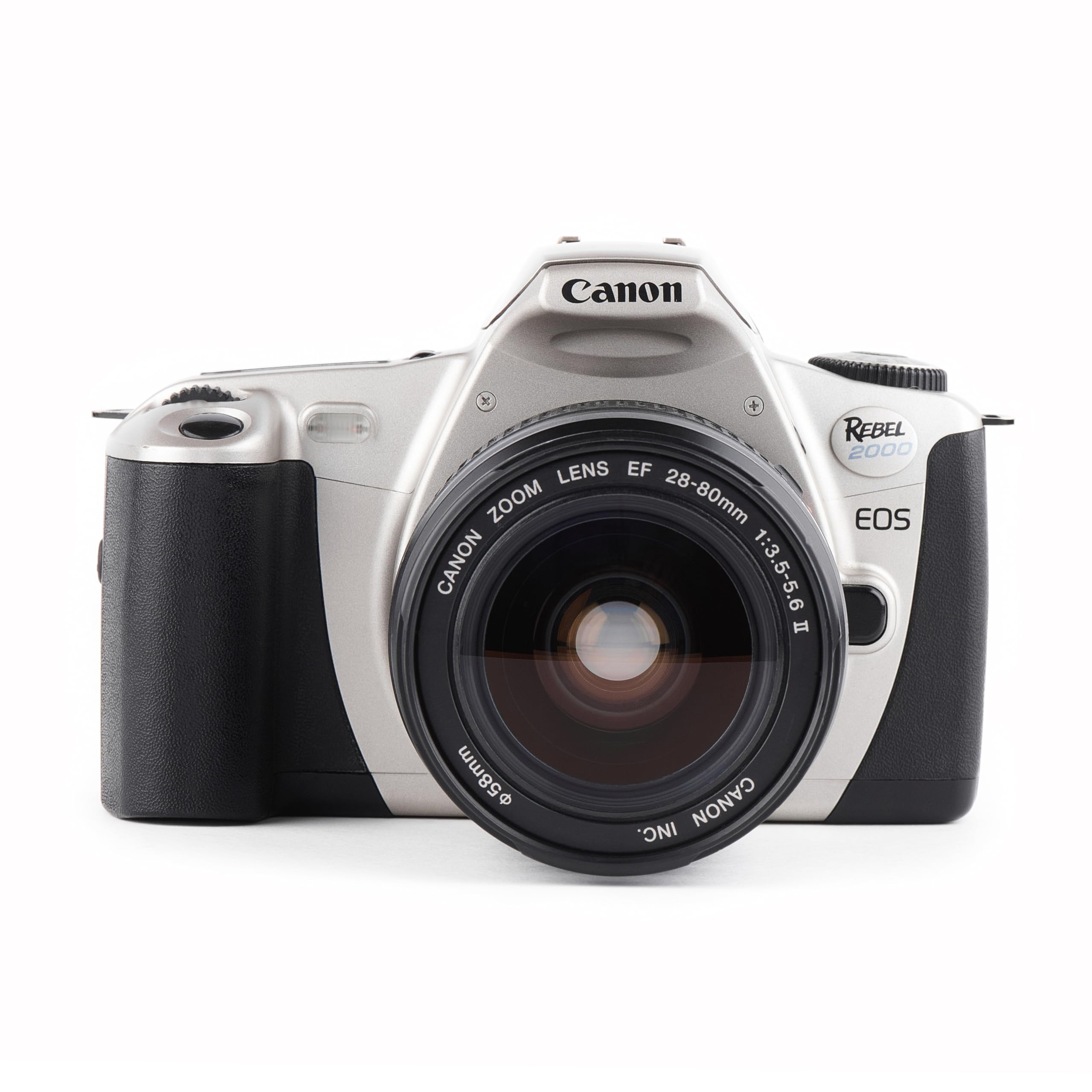
The Canon Rebel 2000 brings modern autofocus convenience to 35mm film photography. Its 7-point autofocus system locks onto subjects quickly, making it suitable for capturing candid moments or moving targets. The camera features automatic film loading, advancing, and rewinding — simplifying the entire workflow for beginners and casual users.
Exposure modes include Program AE, Aperture Priority, Shutter Priority, and full Manual, giving you the flexibility to grow your skills. The built-in pop-up flash handles low-light scenarios, though it produces standard on-camera flash results. The 28-80mm zoom lens covers a useful range from wide-angle to portrait length.
Some renewed units may arrive with cosmetic wear, but the functional components — autofocus, metering, and film transport — generally hold up well. The EF mount is a major advantage: you can use Canon’s extensive line of autofocus lenses, including modern options. This camera is a solid entry point into film photography at a reasonable cost.
Why it’s great
- Quick 7-point autofocus for action shots
- EF mount compatible with a huge range of lenses
Good to know
- Plastic body feels less robust than metal SLRs
- Some units may have cosmetic wear
4. Pentax 17 35mm Film Camera (Half Frame, Dark Silver)

The Pentax 17 is a modern half-frame camera that captures up to 72 images on a standard 36-exposure roll. Its 25mm f/3.5 lens, treated with HD coating, produces sharp images with vintage character. The top and bottom covers are made from lightweight magnesium alloy, giving it a premium feel while keeping the weight manageable.
Zone-focus system divides distances into six zones, allowing quick focusing without a rangefinder. Manual film winding with a traditional advance lever recreates the tactile experience of older cameras. The camera is semi-automatic, handling exposure while you manage focus and composition. It is ideal for street photography and everyday carry.
The asking price is higher than many vintage film cameras, but the Pentax 17 offers new production reliability, warranty support, and consistent performance. Some users note the zone-focus system has a learning curve. If you shoot frequently and want to stretch each roll of film, this camera is a compelling choice.
Why it’s great
- 72 shots per roll reduces film costs
- HD-coated lens delivers excellent image quality
Good to know
- Zone-focus system requires practice
- Lens is fixed, not interchangeable
5. Canon New EOS Kiss (Rebel G) SLR AF Film Camera With 35-80mm EF Lens (Renewed)

The Canon New EOS Kiss, known as the Rebel G in North America, is a compact autofocus SLR from the late 1990s. It features a wide-area autofocus point that covers much of the frame, making composition easier. The included 35-80mm EF zoom lens provides a versatile focal range suitable for portraits, landscapes, and everyday scenes.
The camera offers Program AE, Aperture Priority, Shutter Priority, and full Manual modes. The clear LCD display makes it easy to adjust settings on the fly. The built-in flash provides adequate fill light, though it is not powerful enough for large indoor spaces. The ISO range spans 100 to 3200, covering most film types.
Battery life is excellent — a single CR123A lasts for many rolls. The body is lightweight and easy to hold for extended periods. Renewed units generally arrive in good working order, with the autofocus and metering functioning reliably. This camera is a strong choice for hobbyists and students looking for a dependable film SLR.
Why it’s great
- Wide-area autofocus simplifies composition
- Long battery life with CR123A cell
Good to know
- Plastic construction feels less premium
- Viewfinder is small compared to pro SLRs
6. KODAK EKTAR H35N Half Frame Film Camera (Striped Black, Premium Kit)

The Kodak Ektar H35N is a half-frame point-and-shoot that doubles your shots per roll. Its coated glass lens has been improved over the earlier H35 model, offering sharper results. The built-in star filter adds a creative touch — it turns light sources into four-beam flares for a distinct retro look.
The camera includes a Bulb function for long exposures, useful for night photography when mounted on a tripod. The focus-free operation means everything from about 1 meter to infinity stays in focus, removing the guesswork. The kit includes a carrying case and strap, making it ready for outings right away.
It takes AAA batteries for the flash, which are not included. The plastic construction is lightweight but less durable than metal-bodied cameras. Beginners will appreciate the simplicity — just load film, point, and shoot. It is an affordable way to get into half-frame photography without committing to a pricier model.
Why it’s great
- Half-frame design gives 72 shots per 36-exposure roll
- Built-in star filter adds creative effects
Good to know
- Plastic build feels less premium
- Requires AAA battery for flash
7. Halina Tegra AF290 35mm Film Camera Compact Point & Shoot

The Halina Tegra AF290 is a compact point-and-shoot with a 28mm wide-angle lens, capturing wider scenes than standard 35mm compacts. Its autofocus system and built-in flash make it simple to use in most conditions. The camera runs on two AA batteries, which are widely available and inexpensive.
The aperture range of F2.8 to F5.6 gives decent performance in low light for a compact. The 28mm focal length is ideal for group photos, architecture, and street photography. It includes a manual and strap, though the build quality is average for a budget camera of its era.
Some units have quality control issues, with reports of jammed dials or film transport problems. The plastic construction is functional but not robust. For the price, it offers a vintage look and wide-angle capability that is harder to find in modern compacts. Check the camera thoroughly upon arrival if buying renewed.
Why it’s great
- 28mm wide-angle lens captures more of the scene
- Uses standard AA batteries
Good to know
- Quality control can be inconsistent
- Plastic construction is less durable
8. FUJIFILM X Half Premium Compact Camera – Black

The Fujifilm X Half is a digital compact that simulates the film shooting experience. It offers 26 analog-inspired film simulations, including classic Fujichrome and Acros looks. The 2-in-1 mode captures a still image and a short video in one shutter press, blending photography and motion creatively.
The camera is compact and pocketable, with a retro design featuring physical dials for exposure control. It can print directly to compatible instax printers or share via the dedicated app. The 18MP sensor captures good detail in well-lit conditions, though image quality declines at higher ISO values.
The viewfinder is slightly off-center, which takes adjusting. The thumb lever advance feels less tactile than mechanical cameras. This is not a replacement for a true film camera, but it offers the visual character and shooting ritual of film with modern convenience. It is best for enthusiasts who want film aesthetics without processing costs.
Why it’s great
- 26 film simulations for diverse looks
- Pocketable with retro dial-based controls
Good to know
- JPEG only, no RAW output
- Autofocus can be slow in low light
9. Sony Cinema Line FX30 Super 35 Camera, Grey (Renewed)

The Sony FX30 is a dedicated cinema camera with a Super 35 format sensor. It offers 20.1MP resolution and S-Cinetone color science, delivering cinematic footage straight out of camera. The dual base ISO system and 14+ stop dynamic range provide flexibility in changing light conditions.
The camera supports Flexible ISO, Cine EI Quick, and Cine EI Log modes, giving videographers precise exposure control. User LUTs can be applied to the LCD, HDMI output, and embedded in clips. The E-mount system works with a vast library of Sony and third-party lenses, from wide-angle to telephoto.
This camera is overkill for casual film photography, but its Super 35 sensor size directly relates to the 35mm film frame that 1990s cameras use. For video creators who want to emulate a filmic look with modern reliability and autofocus, the FX30 delivers. Renewed units offer significant savings over new retail pricing.
Why it’s great
- S-Cinetone produces cinematic colors without grading
- Dual base ISO for clean low-light footage
Good to know
- Designed for video, not still photography
- Requires compatible E-mount lenses
FAQ
What 35mm film is best for a 1990s SLR?
Do 1990s film cameras need batteries to operate?
How do I check if a renewed 1990s camera is working properly?
What is the advantage of a half-frame camera over full-frame?
Can I use modern lenses on a 1990s film camera?
Final Thoughts: The Verdict
For most users, the best 1990s film camera winner is the Canon AE-1 because it offers an ideal balance of manual control, reliable TTL metering, and a robust metal body. If you want a fully mechanical experience that teaches you exposure fundamentals, grab the Pentax K1000. And for autofocus convenience with EF lens compatibility, nothing beats the Canon Rebel 2000.