
Our readers keep the lights on and my morning glass full of iced black tea. As an Amazon Associate, I earn from qualifying purchases.
Choosing the right audio upgrade for your living room shouldn’t feel like a compromise between clear dialogue and deep bass. A 2.1 soundbar solves this by combining a central soundbar for crisp mids and highs with a dedicated subwoofer for low-frequency punch, delivering a cinematic experience without the complexity of a full surround system.
I’m Min — the co-founder and writer behind Gadgets Feed. I’ve spent hundreds of hours analyzing audio specifications, frequency response curves, and real-user listening experiences across dozens of soundbar models to identify exactly what separates a mediocre 2.1 setup from one that genuinely transforms your viewing experience.
Whether you’re upgrading from built-in TV speakers or seeking a cleaner alternative to a bulky home theater, finding the right solution means understanding what matters most. This guide cuts through the marketing noise to help you pick the best 2.1 soundbar for your space, budget, and listening habits.
How To Choose The Best 2.1 Soundbar
A 2.1 soundbar consists of a main soundbar unit (handling left and right channels) and a separate subwoofer for the “.1” low-frequency effects. This configuration offers a significant step up from standard TV speakers without the wiring complexity of a 5.1 system. Here’s what to prioritize when comparing models.
Total Power and Driver Configuration
Total RMS power typically ranges from 150W to over 400W in premium models. Higher wattage generally means louder, cleaner sound at higher volumes, but driver quality and cabinet design also matter. Look for systems with dedicated tweeters for high frequencies and larger woofers (3 inches or more) for fuller mids. A 2.1 soundbar with a 5.25-inch subwoofer driver will deliver noticeably deeper bass than one with a 4-inch driver.
Dialogue Clarity and Sound Modes
Not all dialogue is created equal. Mid-range models often include a dedicated center channel or virtual surround technology to separate speech from background effects. Some systems offer presets like “News,” “Movie,” or “Music” that adjust EQ curves for different content. Voice enhancement features, often listed as “Voice Mode” or “Dialogue Enhancer,” are critical for TV shows with complex sound mixing.
Connectivity and Room Fit
HDMI eARC (enhanced Audio Return Channel) is the gold standard for lossless audio pass-through, especially for Dolby Atmos content. Optical and Bluetooth are common fallbacks, but both have bandwidth limitations. Also consider the physical size: a soundbar that’s too wide will overhang a 43-inch TV, while a 32-inch model fits neatly under a 55-inch display. Subwoofer placement flexibility matters too — wired subs require proximity to the soundbar, while wireless subs offer placement freedom across the room.
Quick Comparison
On smaller screens, swipe sideways to see the full table.
| Model | Category | Best For | Key Spec | Amazon |
|---|---|---|---|---|
| ULTIMEA Poseidon M60 | Premium | Immersive audio with app control | 300W, Dolby Atmos, 5.1ch virtualization | Amazon |
| TCL S55H | Premium | Room calibration and Dolby Atmos | 220W, AI Sonic Auto Calibration | Amazon |
| Hisense AX3120Q | Premium | Upward-firing Atmos and EQ presets | 3.1.2ch, 6.5″ subwoofer | Amazon |
| Samsung HW-Q600F | Premium | Q-Symphony with Samsung TVs | 380W, 3.1.2ch, Adaptive Sound | Amazon |
| Amazon Fire TV Soundbar Plus | Mid-Range | Seamless Fire TV integration | 3.1ch, Dolby Atmos, dedicated center channel | Amazon |
| Klipsch Flexus CORE 200 | Premium | High-fidelity music and cinema | 185W, built-in dual 4″ subs, horn-loaded tweeter | Amazon |
| Hiwill-Audio N512 | Mid-Range | Wired surround with solid wood cabinets | 11 drivers, 5.25″ down-firing sub | Amazon |
| TCL Q85H | Premium | Full 7.1.4 surround performance | 860W, 7.1.4ch, AI Sonic calibration | Amazon |
| Sony HTS100F | Budget | Compact upgrade for small rooms | 2.0ch, Bass Reflex, S-Force Pro Surround | Amazon |
In‑Depth Reviews
1. ULTIMEA Poseidon M60

The ULTIMEA Poseidon M60 redefines what’s possible at this price point by packing a true 5.1-channel Dolby Atmos virtualization into a simplified 2.1 hardware footprint. The system uses five built-in drivers — including two side-firing units — to create a wide, enveloping soundstage without requiring rear speakers. The 18mm high-excursion driver in the wired wooden subwoofer, combined with BassMX technology, delivers tight, articulate bass that reaches down to 45 Hz.
VoiceMX technology uses real-time DSP to isolate and enhance vocal frequencies, ensuring dialogue remains crisp even during chaotic action sequences. The Ultimea app provides deep customization with a 10-band graphic EQ, 121 sound presets, and 13 adjustable surround levels. Bluetooth 5.4 ensures stable, low-latency streaming, while HDMI eARC unlocks full lossless Dolby Atmos 5.1-channel audio with up to 37 Mbps bandwidth.
The wood-enclosure subwoofer adds a tactile quality to bass response that plastic cabinets often lack, giving the system a premium feel that belies its mid-range positioning.
Why it’s great
- Impressive 5.1ch Dolby Atmos virtualization from a compact 2.1 system
- Deep, tight bass (45 Hz) from the wooden, high-excursion subwoofer
- Comprehensive app control with 121 sound presets and 10-band EQ
- Bluetooth 5.4 for stable, low-latency wireless streaming
Good to know
- Subwoofer is wired, limiting placement freedom
- Some units have reported Optical port issues
- Virtual surround can’t replace true physical rear speakers
2. TCL S55H 2.1 Sound Bar

The TCL S55H delivers a compelling mix of Dolby Atmos, DTS Virtual:X, and AI-powered room calibration at a price that undercuts most competitors. Its 220W total power output is split between a low-profile soundbar (31.89 inches wide) and a wireless subwoofer that adds deep, punchy bass. The AI Sonic technology built into the TCL app automatically adjusts audio to your room layout and seating position after a one-time calibration.
Dialogue clarity is a standout feature here — the system separates vocals from background effects effectively, making it an excellent choice for TV shows and news. The wireless subwoofer paired without any pairing button press, and the HDMI eARC/ARC connection allows for single-remote control with your TV. Users report that the soundbar reduces volume by about 10 clicks compared to TV speakers while delivering clearer speech, which is a huge win for dialogue-sensitive viewers.
The included wall-mount kit and metal-and-plastic enclosure give it a premium feel. While the subwoofer isn’t going to shake your walls, it provides enough low-end extension (60 Hz) to make action movies and music feel substantial. The TCL app’s EQ settings let you dial in exactly the profile you want, though some users find the subwoofer too subtle for large rooms.
Why it’s great
- AI Sonic auto-room calibration optimizes sound for your specific space
- Dolby Atmos and DTS Virtual:X support at an entry-level price
- Clear, hearing-aid-compatible dialogue without extra processing
- Wireless subwoofer pairs automatically and adds depth without boominess
Good to know
- Subwoofer output is mild; won’t satisfy bass heads
- App calibration is a one-time process, not adaptive
- Best suited for small to medium rooms
3. Hisense AX3120Q 3.1.2ch Soundbar
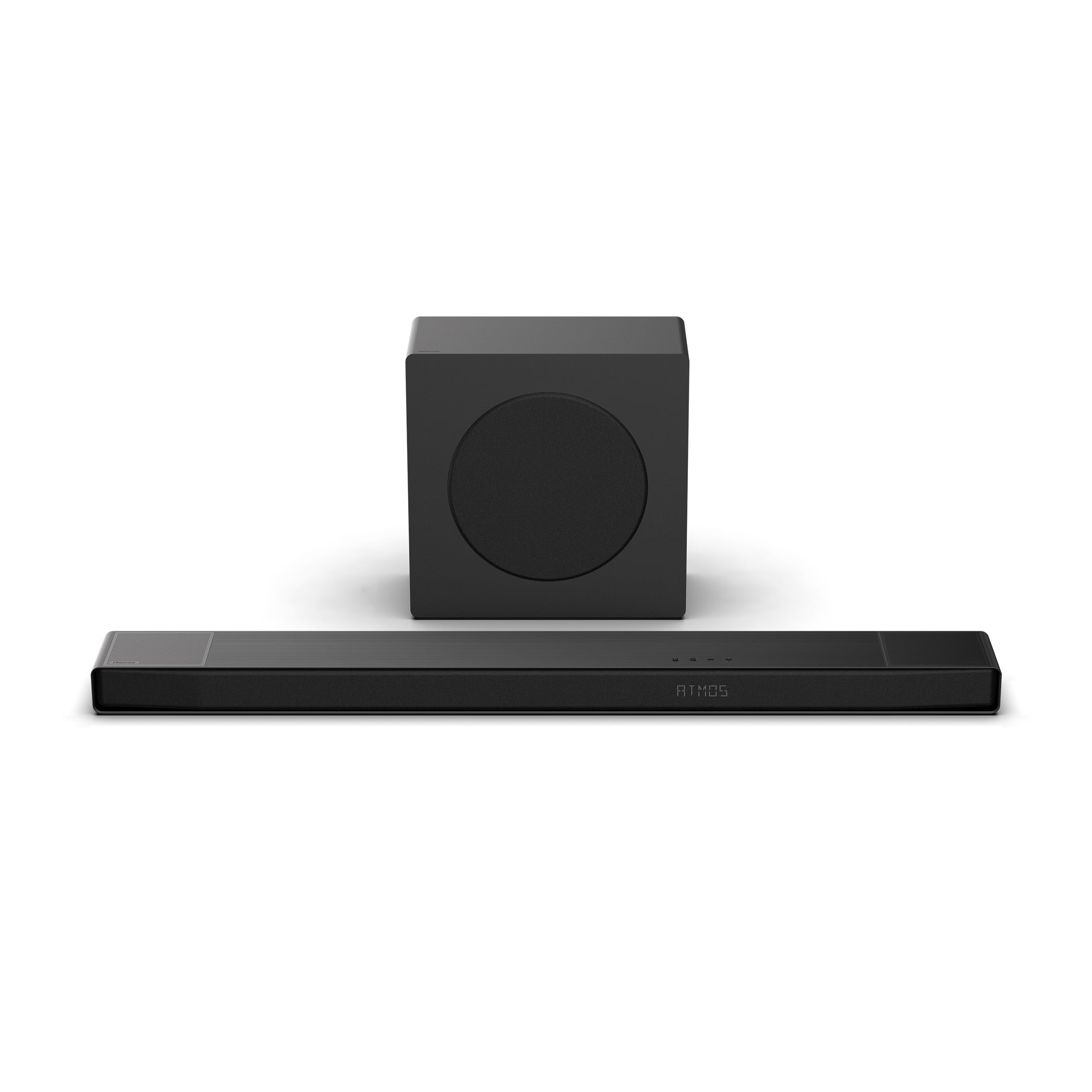
The Hisense AX3120Q steps up to a 3.1.2-channel configuration, adding two upward-firing speakers and a dedicated center channel to the traditional 2.1 layout. This allows it to produce genuine height effects from Dolby Atmos content, bouncing sound off your ceiling for overhead immersion. The bundled 6.5-inch wireless subwoofer is larger than most competitors, delivering deeper, more room-filling bass without overpowering the mids.
The seven Quick Touch EQ modes — including presets for music, movies, news, and AI-optimized listening — make it easy to match audio to content without diving into menus. Bluetooth 5.3 ensures stable streaming, and the HDMI eARC connection supports 4K HDR pass-through at 60Hz, so you don’t lose video quality when routing through the soundbar. Users consistently praise the clarity of dialogue and the noticeable, though not overpowering, height channel effects.
Roku TV compatibility adds seamless integration for those with Roku-powered displays, allowing unified control via a single remote. The 40-inch wide soundbar is designed to pair with 55-inch and larger TVs, but its low 2.24-inch profile means it won’t block your TV’s IR sensor or bottom edge. The Hisense app provides additional customization beyond the remote, though some users note occasional Bluetooth audio garbling when streaming from iPhones.
Why it’s great
- True upward-firing Atmos drivers for height effects without ceiling speakers
- Powerful 6.5-inch subwoofer delivers deep, punchy bass
- Seven EQ presets plus app-based customization
- 4K HDR pass-through at 60Hz maintains video quality
Good to know
- Height effects are subtle, not as dramatic as premium systems
- Occasional Bluetooth glitching with iOS devices reported
- Rear speakers (sold separately) required for true surround
4. Samsung HW-Q600F Q-Series Soundbar
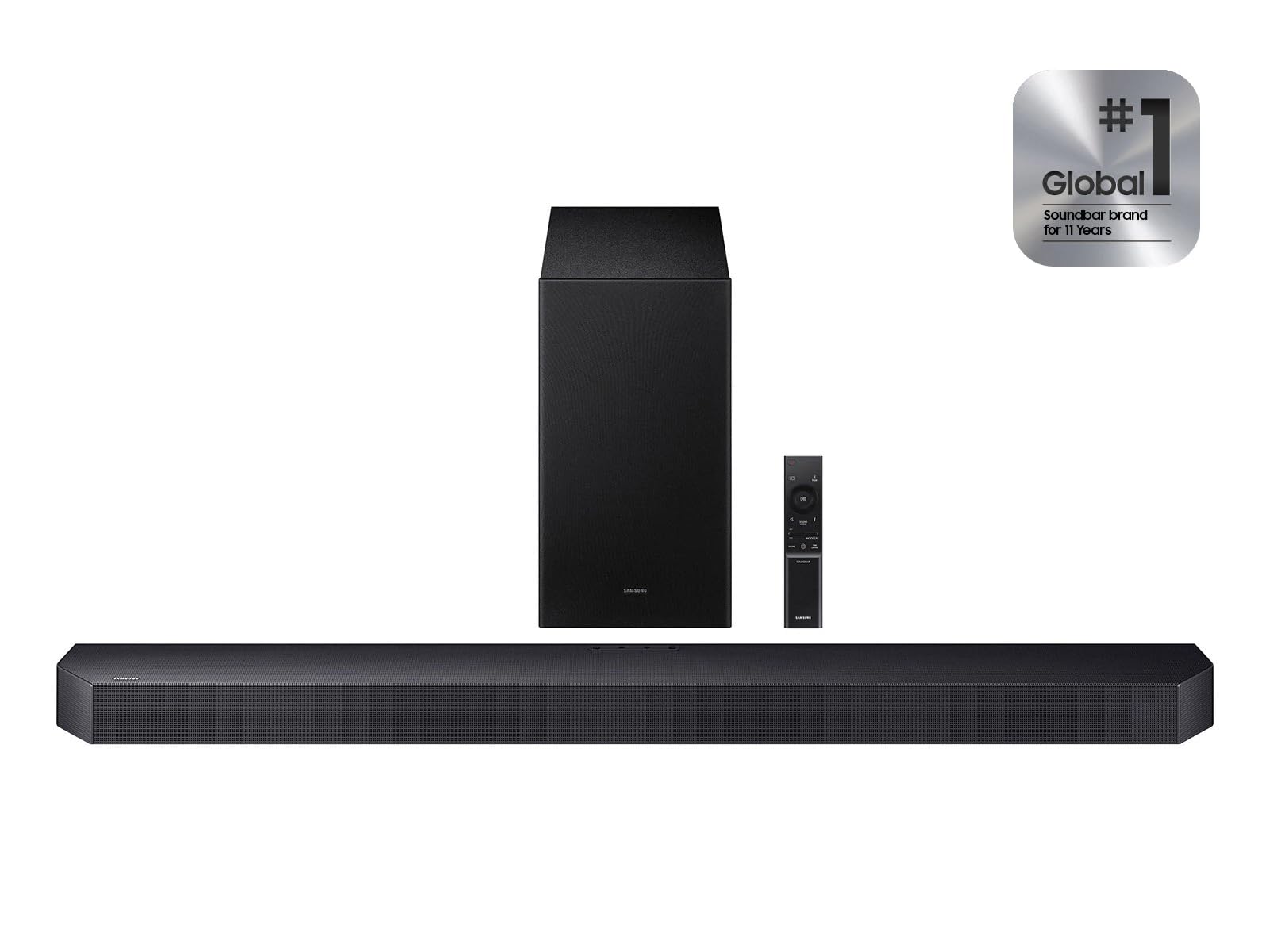
The Samsung HW-Q600F is a 3.1.2-channel system designed to pair perfectly with Samsung TVs through Q-Symphony technology, which synchronizes the soundbar with your TV’s built-in speakers for a broader, more room-filling soundstage. With 380W of total power, it’s one of the most powerful options in this tier, capable of filling large living rooms with dynamic, distortion-free audio. The dedicated center channel and upward-firing drivers provide clear dialogue and convincing Atmos height effects.
Adaptive Sound is a key differentiator here — it analyzes incoming audio in real time and optimizes EQ and channel levels scene by scene. This means quiet dialogue in a drama is enhanced without making explosions sound anemic. DTS Virtual:X adds another layer of dimensional audio without requiring extra speakers. The wireless subwoofer pairs automatically and stays connected reliably, with adjustable bass boost for those who want extra low-end thump.
Set up is genuinely plug-and-play when connected via HDMI ARC to a compatible Samsung TV. The soundbar supports Bluetooth streaming for music, and its compact 3.1.2 chassis fits neatly under most TVs. Some users report needing minor adjustments to lip-sync latency depending on the source, but the overall audio quality far exceeds what most TV speakers can produce. The Samsung Audio Remote app offers basic EQ controls but lacks the depth of competitors like Ultimea.
Why it’s great
- Q-Symphony integrates with Samsung TVs for expanded soundstage
- 380W power delivers room-filling, dynamic audio
- Adaptive Sound optimizes EQ scene-by-scene
- Auto-pairing wireless subwoofer with adjustable bass boost
Good to know
- Requires Samsung TV for full Q-Symphony benefits
- Lip-sync adjustment may be needed depending on source
- App offers limited EQ control compared to some competitors
5. Amazon Fire TV Soundbar Plus with Subwoofer
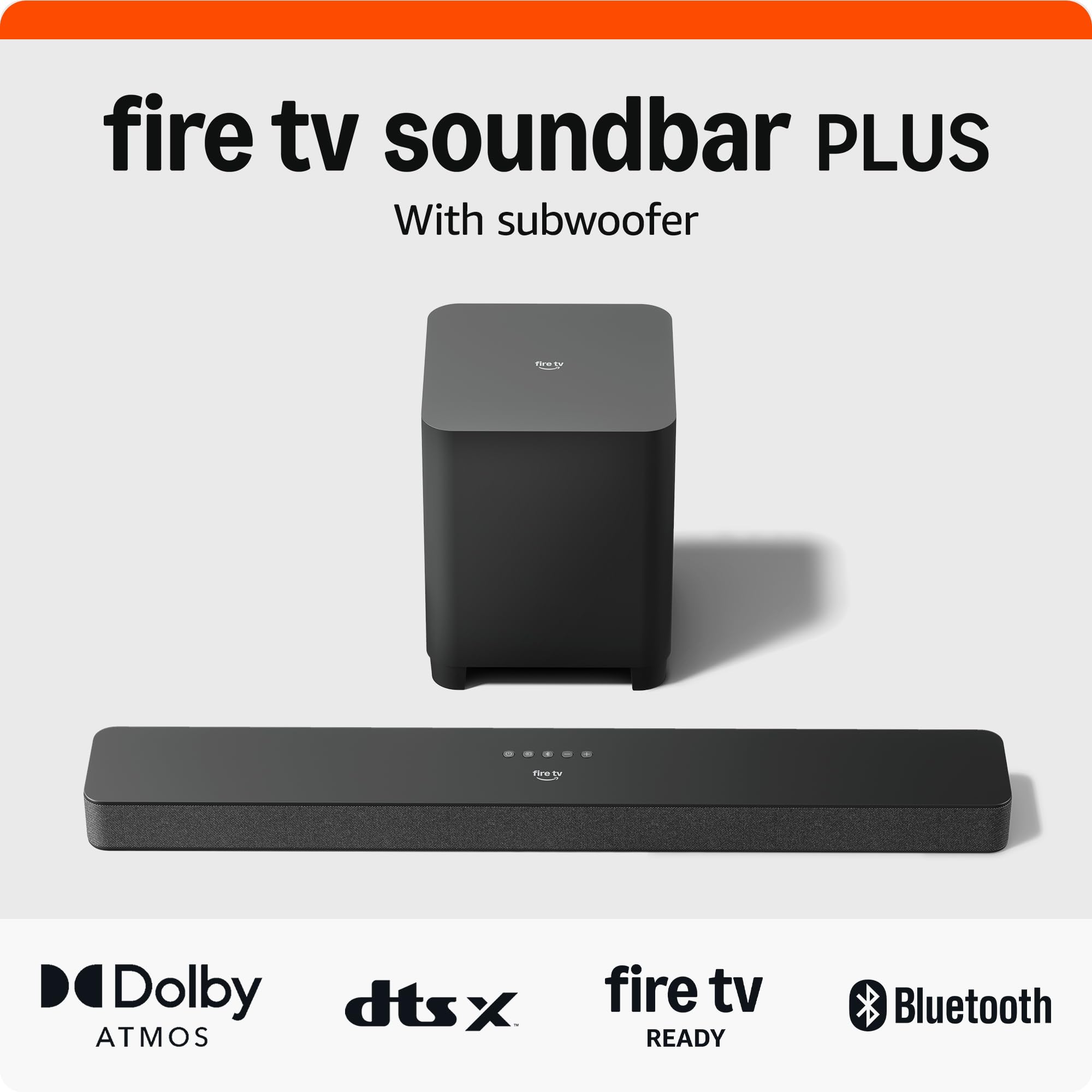
The Amazon Fire TV Soundbar Plus is a 3.1-channel system that prioritizes seamless integration with the Fire TV ecosystem. The dedicated center dialogue channel sharpens conversations, and combined with the wireless subwoofer, it delivers bass that puts you in the middle of the action. Dolby Atmos and DTS:X support bring multi-dimensional audio that moves around you, creating a convincingly immersive soundstage without needing rear speakers.
Setup is genuinely one-cable: plug the subwoofer into power, connect the soundbar to your TV via HDMI eARC, and you’re done. The Fire TV audio settings let you customize the sound profile directly from your TV’s interface, and the soundbar and sub pair automatically. Users consistently note that the system gets impressively loud — filling a 25×25-foot room — while maintaining clear, detailed audio that doesn’t distort at high volumes.
The rear-firing surround drivers add a sense of space without being distracting, and they can be toggled off for late-night viewing. Movie, Music, Sports, and Night modes optimize the audio profile for different content types. The main limitation is the lack of deep subwoofer fine-tuning; the bass is balanced rather than overpowering, which suits most listeners but may disappoint those seeking chest-pounding low end.
Why it’s great
- Seamless one-remote integration with Fire TV devices
- Clear, dedicated center channel for dialogue
- Gets very loud without distortion; fills large rooms
- Rear-firing surround drivers add spatial depth
Good to know
- Limited subwoofer fine-tuning options
- Best performance limited to Fire TV ecosystem
- Bass is balanced rather than room-shaking
6. Klipsch Flexus CORE 200 3.1.2 Sound Bar
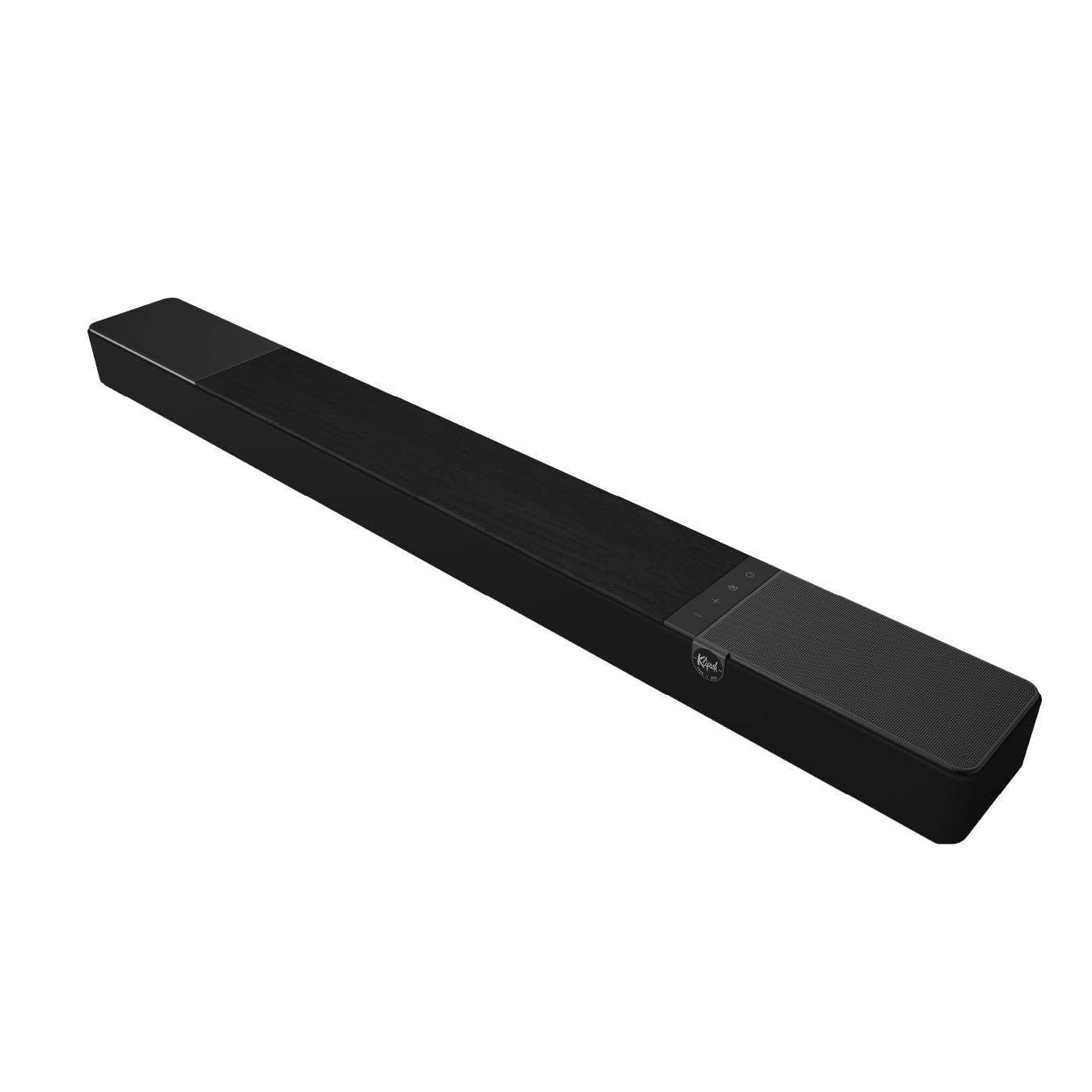
The Klipsch Flexus CORE 200 is a 3.1.2-channel soundbar powered by Onkyo electronics, combining Klipsch’s legendary horn-loaded tweeter technology with Onkyo’s manufacturing precision. The horn-loaded center channel delivers vocal clarity that outperforms most competitors, ensuring dialogue is crisp and intelligible even in complex movie mixes. Four 2.25-inch ceramic drivers and dual built-in 4-inch subwoofers provide best-in-class bass without requiring an external subwoofer, though the system includes an RCA output for adding one later.
Dolby Atmos support with two built-in elevation speakers creates convincing overhead effects, making action sequences and cinematic soundtracks feel more immersive. The soundbar is built with a solid wood and metal enclosure, giving it a premium heft that plastic alternatives lack. The 44-inch width is designed to pair with 65-inch and larger TVs, and its low profile ensures it won’t block screens. Dirac Live room calibration (basic version included) further optimizes sound for your specific listening environment.
Users praise the soundbar’s ability to reproduce both music and cinema with equal fidelity. The clamp-like audio presentation means clean, articulate sound at any volume, while the dual built-in subs deliver bass that extends down to approximately 50-55 Hz. The Klipsch Connect app provides straightforward controls, though some users find it basic compared to competitors. The main trade-off is the premium price, which positions it as an investment for those who prioritize sonic accuracy over raw power.
Why it’s great
- Horn-loaded tweeter delivers exceptional dialogue clarity
- Solid wood and metal construction for premium feel and acoustics
- Built-in dual 4-inch subwoofers provide deep bass without external unit
- RCA subwoofer output for future expandability
Good to know
- Does not include a separate wireless subwoofer in the box
- Premium price positions it above most competitors
- App control is functional but not feature-rich
7. Hiwill-Audio N512 5.1.2 Surround Sound System
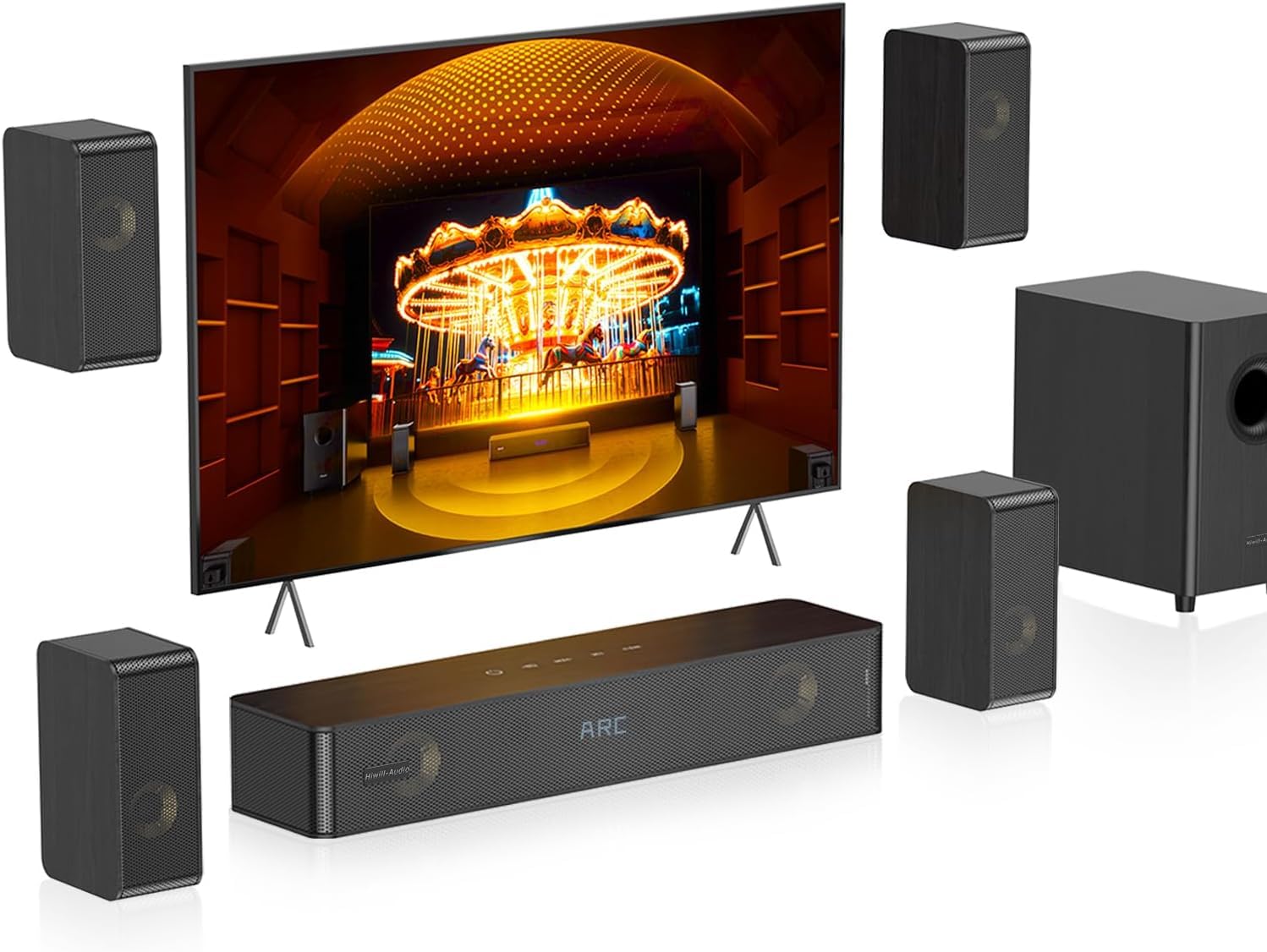
The Hiwill-Audio N512 is a 5.1.2-channel system that uses 11 premium aluminum-magnesium alloy drivers housed in solid wood cabinets, delivering a tactile, high-fidelity sound that plastic systems can’t match. While it’s technically a 5.1.2 layout, it functions as a robust 2.1 system for everyday use, with the four surround speakers (two front, two rear) expanding the soundstage dramatically when needed. The 5.25-inch down-firing subwoofer provides deep, room-filling bass with adjustable control from -6 to +6.
The proprietary Discrete Spatial Expansion Technology creates immersive surround effects without requiring Dolby Atmos or DTS decoding, making it suitable for all content — not just Atmos-encoded movies. The wired connection between the rear speakers and main unit ensures loss-free signal stability, eliminating the pairing issues and dropouts common with fully wireless systems. Connectivity options include ARC, Optical, AUX, USB, and Bluetooth 5.3, along with preset EQ modes for Movie, Music, News, and Game.
Setup involves running a single cable between the rear speakers, which some may find less convenient than fully wireless alternatives. However, the trade-off is rock-solid performance with no dropouts. Users consistently praise the clarity of the sound, the depth of the bass, and the exceptional customer support from the manufacturer. The system’s Night Mode and adjustable rear surround volume add versatility for different listening environments.
Why it’s great
- Solid wood cabinets and aluminum-magnesium alloy drivers for premium acoustics
- Wired rear speaker connection ensures zero signal dropout
- Powerful 5.25-inch down-firing subwoofer with adjustable bass
- Discrete Spatial Expansion Technology works with all content
Good to know
- Wired rear speakers require running a cable between them
- Does not support Dolby Atmos or DTS decoding
- Some users report occasional popping from rear speakers
8. TCL Q85H 7.1.4 Surround Sound Bar

The TCL Q85H is a full 7.1.4-channel system that delivers genuine, room-shaking surround sound with 860W of total power. This is not a virtualized system — it includes upgraded rear speakers with both front-firing and up-firing drivers, creating precise surround placement and convincing overhead effects. The 6.5-inch subwoofer provides deep, distortion-free bass that makes action scenes feel visceral, while the AI Sonic calibration optimizes the sound to your room and seating position.
Dolby Atmos and DTS:X support ensure compatibility with the latest cinematic audio formats, placing effects exactly where they happen for a lifelike, theater-quality experience. The system is designed to handle everything from small bedrooms to large living rooms, maintaining clarity and dynamic range even at high volumes. Users report that it rivals dedicated 7.1 speaker systems in immersion, particularly with games like Forza and action-heavy movies.
The setup is straightforward — HDMI eARC handles single-cable audio return, and the rear speakers pair automatically after connecting to power. However, the system requires power outlets for each surround speaker, which may complicate placement in rooms without nearby sockets. Some users note that the center channel can be too quiet relative to the surrounds, and there’s no individual volume adjustment for the center. The lack of 4K/120Hz passthrough is a limitation for next-gen console gamers.
Why it’s great
- True 7.1.4-channel configuration with dedicated rear and up-firing drivers
- 860W power delivers intense, room-filling sound
- AI Sonic calibration optimizes audio for any room layout
- Deep, distortion-free bass from 6.5-inch subwoofer
Good to know
- Rear speakers require nearby power outlets
- No 4K/120Hz passthrough for gaming
- Center channel lacks individual volume adjustment
9. Sony HTS100F 2.0ch Soundbar

The Sony HTS100F is a compact 2.0-channel soundbar that prioritizes simple setup and clear dialogue over deep bass or surround effects. Its Bass Reflex speaker system pushes more air than a sealed enclosure of the same size, producing surprisingly full sound for a budget-friendly unit. The Voice Enhancement feature is particularly useful for TV shows and conference calls, boosting vocal frequencies without making other audio sound hollow.
S-Force Pro Front Surround processing creates a wider soundstage than the physical driver array would suggest, though it can’t match the immersion of a dedicated surround system. Connectivity includes HDMI ARC for single-cable TV integration, optical input, and Bluetooth for wireless music streaming. The included remote controls all functions, and the soundbar’s slim design (just over 2 inches tall) fits easily under most TVs without blocking screens or IR receivers.
Users consistently praise the build quality and ease of setup — it’s genuinely plug-and-play for most TVs. The main trade-off is the lack of a dedicated subwoofer, which means bass is limited to what the soundbar’s built-in drivers can produce. This is perfect for small rooms, secondary TVs, or viewers who prioritize dialogue clarity above all else. Some users report occasional HDMI-CEC handshake issues that require a brief unplug to resolve.
Why it’s great
- Ultra-compact design fits under any TV without blocking the screen
- Voice Enhancement mode significantly improves dialogue clarity
- Bass Reflex system delivers full sound from a small cabinet
- Simple HDMI ARC setup with included optical cable
Good to know
- No dedicated subwoofer; bass is limited
- S-Force Pro Surround is virtualized, not true surround
- Occasional HDMI-CEC handshake issues requiring power cycle
FAQ
Do I need HDMI eARC for Dolby Atmos on a 2.1 soundbar?
Can a 2.1 soundbar produce real surround sound?
What is the difference between a 2.0 and 2.1 soundbar?
How do I connect a 2.1 soundbar to my TV?
Does a 2.1 soundbar need to match my TV brand?
Final Thoughts: The Verdict
For most users, the best 2.1 soundbar winner is the ULTIMEA Poseidon M60 because it combines exceptional Dolby Atmos virtualization, deep bass from a wooden subwoofer, and comprehensive app control at a price that undercuts most competitors. If you want room-calibrated sound with wireless simplicity, grab the TCL S55H. And for premium audiophile-grade dialogue clarity and build quality, nothing beats the Klipsch Flexus CORE 200.