
Our readers keep the lights on and my morning glass full of iced black tea. As an Amazon Associate, I earn from qualifying purchases.
A loose headliner flapping in the breeze or a torn leather seat that pulls apart every time you get in—these are the kinds of daily frustrations that make car interior upkeep feel hopeless. The right adhesive turns a failed bond into a permanent fix, but choosing the wrong one means your repair falls apart in a month or leaves a ghostly white haze on the fabric.
I’m Min — the co-founder and writer behind Gadgets Feed. I’ve spent hundreds of hours combing through automotive adhesive specifications, testing spray patterns on foam and vinyl, and cross-referencing temperature ratings and cure times to isolate the formulas that actually hold up to a car’s extreme interior conditions.
The first step to a lasting repair is choosing the best car upholstery glue for your specific material, whether that’s leather seats, vinyl door panels, or that sagging headliner fabric.
How To Choose The Best Car Upholstery Glue
Car upholstery glue is not all-purpose craft glue. The heat inside a sealed vehicle on a summer day can exceed 160°F, and the constant vibration from driving flexes the bond thousands of times. You need an adhesive engineered specifically for automotive interior conditions.
Spray vs. Liquid vs. Tape
Spray contact adhesives dominate headliner and large-area repairs because they lay down an even mist across foam and fabric without soaking through. Liquid cyanoacrylates excel at small trim pieces, clips, and leather seam repairs where precision matters. High-bond double-sided tapes work for attaching trim and moldings but fail on curved fabric or porous foam.
Temperature and Solvent Resistance
Look for glue rated to at least 200°F continuous service. Lower-rated adhesives soften and creep under summer heat, causing the headliner to sag again. Solvent resistance matters if the bond site is near door seals or windows where cleaning chemicals or rain runoff can seep in.
Open Time and Workability
Open time is the window you have to position fabric after spraying. Standard contact cement gives 1-3 minutes, which is tight for large headliner boards. Premium adhesives offer longer open times up to 60 minutes, allowing you to reposition fabric without tearing the foam backing.
Quick Comparison
On smaller screens, swipe sideways to see the full table.
| Model | Category | Best For | Key Spec | Amazon |
|---|---|---|---|---|
| 3M Hi-Strength 94 ET | Spray | Headliners & large surfaces | 60-minute open time | Amazon |
| DAP Weldwood Landau Top & Trim | Spray | Vinyl & foam headliners | 1-3 min quick bond | Amazon |
| WEICON Adhesive Spray Extra Strong | Spray | Upholstery & sound panels | 4 m² coverage per can | Amazon |
| Permatex 82019 All Purpose Spray | Spray | Fabric & carpet bonding | Repositionable bond | Amazon |
| KRAFTPROTZ Thin Cyanoacrylate | Liquid | Trim cracks & plastic clips | 1.76 oz XXL bottle | Amazon |
| Cerca de Leather Glue | Gel | Leather seat & purse repair | Washable, waterproof bond | Amazon |
| HitLights Double Sided Tape | Tape | Trim & molding attachment | 1 lb per inch strength | Amazon |
In‑Depth Reviews
1. 3M Hi-Strength 94 ET Spray Adhesive
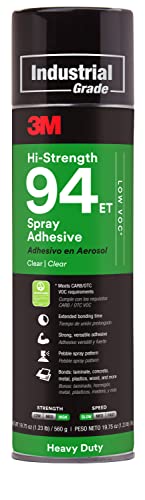
The 3M Hi-Strength 94 ET is the benchmark against which all other spray upholstery adhesives should be measured. Its 60-minute bonding range gives you an absurdly long window to position headliner fabric, carpet, or foam without the panic of a flash-off timer ticking down. The aggressive tack grabs immediately on contact, yet remains repositionable long enough to smooth out wrinkles on curved roof panels.
This is a low-VOC formula that carries GREENGUARD certification and contributes to LEED credits, which matters if you’re working in an enclosed garage. The 19.75 oz can delivers generous coverage for large surface laminations, and the bond holds firm across wood, metal, rubber, carpet, and foam without bleeding through or staining.
Users report successful full headliner replacements in trucks and vans with zero sagging after months of summer heat. The trade-off is the strong solvent odor during application—this is not a bathroom-project glue. You’ll want a respirator and open garage doors, but the result is a professional-grade bond that outperforms every cheaper alternative in this list.
Why it’s great
- Industry-leading 60-minute open time for precise fabric positioning
- Low-VOC and GREENGUARD certified for safer indoor use
- Bonds wood, metal, rubber, carpet, foam, and fabric without bleed-through
Good to know
- Strong solvent smell requires ventilation and a mask
- Premium price tier compared to basic spray adhesives
2. DAP Weldwood Landau Top & Trim HHR Spray
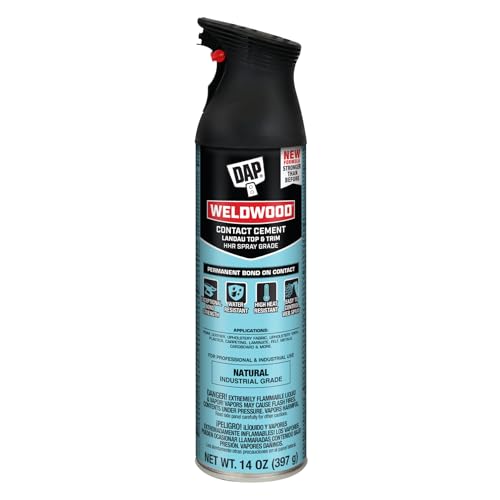
DAP Weldwood is the default recommendation for vinyl headliner repairs and landau top restoration because its synthetic rubber contact cement formula handles extreme interior heat without delaminating. The web-pattern spray lays down a consistent film that bonds on contact within 1-3 minutes, making it ideal for fast-paced upholstery work where you need the fabric to stay put the second it touches.
This 14 oz can covers up to 79 square feet per can at a 1g/sq ft application rate, which is enough for a full car headliner with some left over for door panels. After full cure (roughly 24 hours), the adhesive is both high-heat and water resistant, so it won’t soften and sag during summer parking or dribble when condensation forms on the roof.
Customer feedback highlights its strong performance on PE foam installations and laminate work. The main complaint is inconsistent spray quality from the nozzle—some cans sputter rather than mist. Wiping the tip between uses mitigates this. For vinyl-to-foam headliner jobs, this glue is a proven workhorse that won’t let you down.
Why it’s great
- Contact cement chemistry bonds instantly on foam and vinyl
- High heat and water resistant after full cure
- Covers up to 79 sq ft per can for full headliner jobs
Good to know
- Spray nozzle can clog or sputter between uses
- A few customers report bond failure on headliners after a week when not applied correctly
3. WEICON Adhesive Spray Extra Strong 500 ml

WEICON’s extra strong spray brings German industrial quality to car upholstery repairs at a price that undercuts most premium competitors. The synthetic rubber formula delivers a transparent bond on foam, leather, textile, and metal with a 5-10 minute flash-off time and up to 45 minutes of open time—far more workable than the 1-3 minute squeeze of typical contact cement.
With a yield of 4 m² per 500 ml can, this is one of the most efficient sprays for large-area repairs like sound deadening panels or full headliner replacements. The dosing spray head delivers a wide vertical fan pattern that covers evenly without clogging, a common frustration with cheaper spray cans. Temperature resistance spans -20°C to +80°C, covering the full interior range of a parked car from winter to summer.
Users report excellent results on 1990s truck headliner repairs and foam sound panel installations on ceilings. The adhesive holds best when both surfaces are sprayed and the bond is made while still wet. A few users found it peeled from rubber-backed carpet after 24 hours, but for pure foam-to-fabric or foam-to-metal bonds, this is a top-tier performer at a mid-range price point.
Why it’s great
- 45-minute open time for careful fabric positioning on large surfaces
- 4 m² coverage per can for efficient full-headliner use
- Nozzle resists clogging with consistent vertical spray pattern
Good to know
- Not recommended for rubber-backed carpeting; bond may peel
- Requires wet-on-wet application for best results
4. Permatex 82019 All Purpose Spray Adhesive

Permatex 82019 stands out because it offers both permanent and repositionable bonding in a single can. You can position upholstery fabric, let it set partially, and still shift it slightly before full cure—a lifesaver when working with slippery headliner material that refuses to stay put on the first try. The formula dries clear and won’t bleed through, leaving no residue on the surface.
It excels at attaching upholstery cloth, carpeting, floor mats, and kick pads to metal or KB board. The water and humidity resistance means it won’t shrink or yellow over time in a humid car interior. At 10.5 oz, it’s a smaller can than the competition, but for door panel jobs or seat side repairs, the coverage is adequate and the versatility more than compensates.
Reviews split between upholstery professionals who use it daily and home mechanics who struggled with headliner failures. One user reported the headliner sagged again after a week, while another used two cans successfully on door panels. The key difference is surface prep and application temperature. For carpet and fabric bonding, this glue is reliable, but it may not have the extreme heat tolerance needed for roof liners in hot climates.
Why it’s great
- Offers both permanent and repositionable bonding for easier installation
- Dries crystal clear with no bleed-through on light fabrics
- Resists humidity and won’t shrink over time
Good to know
- Smaller 10.5 oz can requires more frequent replacement for large jobs
- Mixed results on headliners in extreme heat conditions
5. KRAFTPROTZ Automotive Super Glue Liquid 1.76 oz
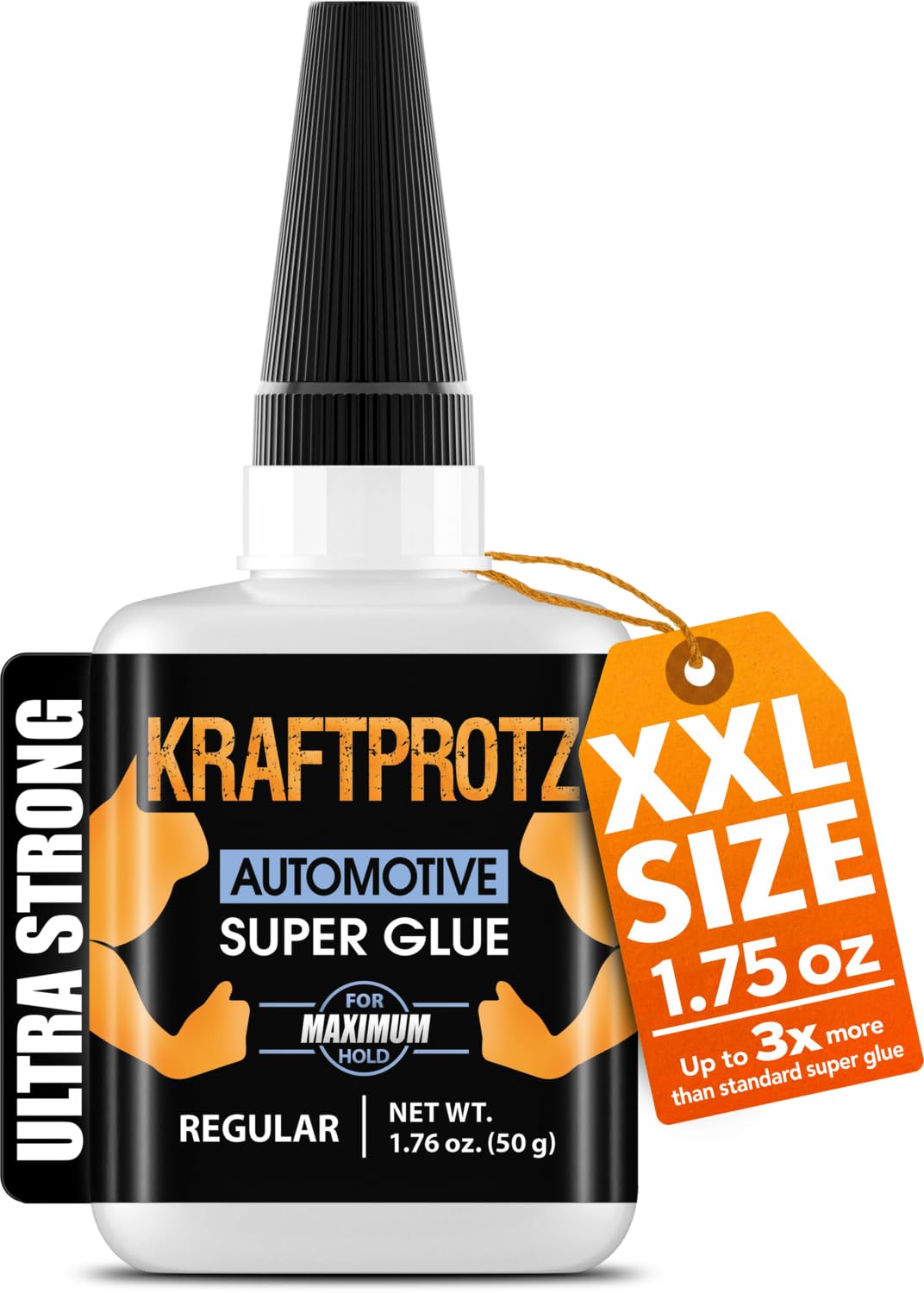
When you need to fill microcracks in trim panels, reattach broken plastic clips, or seal a gap in a headlight housing, the thin cyanoacrylate formula of KRAFTPROTZ flows into spaces no spray can reach. Its capillary action wicks into hairline fractures in dashboard components and hard-to-access clips, creating invisible bonds that hold up to oil, vibration, and temperature swings from -40°F to 230°F.
The 1.76 oz XXL bottle is a workshop-ready format that outperforms the tiny tubes found in auto parts stores. The precision dropper tip delivers controlled flow without overspill, and the anti-clog cap prevents the nozzle from crusting shut between uses. While this is not a large-area adhesive for headliners, it is the best option for fixing broken visor clips, mirror housings, and trim fasteners.
Users report successful repairs on Golf R front bumpers, car mirrors cracked against garbage cans, and RV molding that held through rain and heat. The setup time is slower than standard superglue at 2-3 minutes, which actually helps avoid rushed work. The chemical smell is noticeable, but for point repairs on hard plastics and rubber, this glue is nearly unbeatable.
Why it’s great
- Thin liquid formula penetrates microcracks and tight gaps that gel can’t reach
- Withstands -40°F to 230°F, oil, and constant vibration
- XXL 1.76 oz bottle with anti-clog dropper tip
Good to know
- 2-3 minute clamp time is slower than instant glues
- Not suitable for porous fabric or foam—designed for hard surfaces
6. Cerca de Leather Glue 2 oz
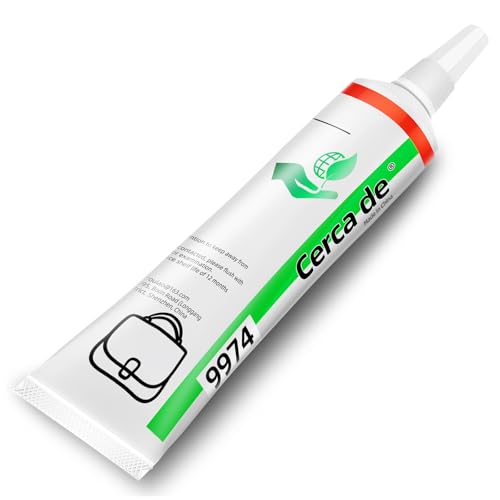
Leather seat repairs demand a flexible bond that stretches without snapping, and Cerca de’s leather glue delivers exactly that. The epoxy-resin gel formula dries clear and remains pliable enough to move with the leather as you sit and shift, preventing the repair from cracking or peeling away after a few weeks. It bonds cowhide, deerskin, suede, neoprene, and even rubber with equal tenacity.
The hose container with a tiny metal outlet gives you pinpoint control over glue placement, which is essential when you’re working on a small tear or seam separation. The kit includes brushes, disposable gloves, and sanding sticks—everything needed for a clean repair out of the box. Waterproof after full cure, this glue can handle multiple cleaning cycles without loosening the bond.
Customers have used it to repair large tears on leather jacket shoulders caused by seat belts, and the result was seamless when touched up with furniture paint. The 24-hour full cure time is longer than spray adhesives, but for leather-to-leather or leather-to-fabric bonds, the strength and flexibility are worth the wait. It’s a niche product, but within that niche, it performs flawlessly.
Why it’s great
- Flexible bond stretches with leather without cracking or breaking
- Contains brushes, gloves, and sanding sticks for complete repair
- Waterproof and washable after full 24-hour cure
Good to know
- Full cure takes 24 hours—plan for overnight setting
- Only 2 oz tube, best suited for point repairs rather than large panels
7. HitLights Double Sided Tape Heavy Duty
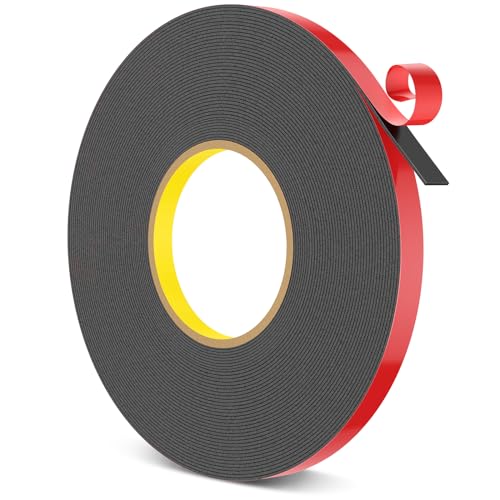
For attaching trim pieces, body side moldings, and door edge guards, a liquid or spray adhesive is often overkill. HitLights heavy duty double-sided tape uses an acrylic foam core that provides 1 lb of holding strength per inch of tape, making it sufficient for most non-structural automotive trim attachments. The 0.04-inch thickness is low-profile enough to be invisible after application.
The temperature range of -40°F to 150°F covers the extremes of any car interior, and the acrylic composition resists moisture once the adhesive has fully cured. Unlike glue, there is no drying time, no overspray, and no chemical smell—just peel, stick, and press. The 50-foot roll at half-inch width gives you plenty of material for multiple projects, from attaching LED light strips to securing ABS rocker panels.
User reports highlight its effectiveness for adhering sound deadening strips in Teslas, where the factory adhesive failed. The tape held for months in that demanding environment. The trade-off is that it doesn’t bond well to porous surfaces like fabric or foam, and some users note a gradual loss of stickiness over time on vibrating panels. For smooth surface-to-smooth surface attachments, it’s a clean, affordable solution.
Why it’s great
- No glue, no mess, no drying time—peel-and-stick convenience
- Holds 1 lb per inch on smooth surfaces like metal and glass
- 50 ft roll offers massive value for trim and molding projects
Good to know
- Bond weakens over time on vibrating automotive panels
- Not suitable for porous upholstery fabric or foam repairs
FAQ
Can I use regular superglue for car upholstery repairs?
How do I remove old headliner glue before applying new adhesive?
What’s the difference between contact cement and spray adhesive for upholstery?
Final Thoughts: The Verdict
For most users, the best car upholstery glue winner is the 3M Hi-Strength 94 ET because its 60-minute open time makes even a first-time headliner replacement forgiving enough to get professional results. If you want instant grab and heat resistance for vinyl roof liners, grab the DAP Weldwood Landau Top & Trim. And for precise leather seat repairs where flexibility matters, nothing beats the Cerca de Leather Glue.