
Cutting a precise 2-3/4″ hole in a stainless steel pan, a porcelain tile, or a thick wooden cabinet door can feel like a gamble if the wrong saw wanders or burns the material. A quality hole saw in this specific diameter is the difference between a clean, finished cut and a ruined workpiece that costs time and money.
I’m Min — the co-founder and writer behind Gadgets Feed. I spend my time deep in market research, analyzing technical specifications like tooth geometry, carbide grit density, and cutting depth across dozens of models to separate genuine performance from marketing noise. (And Homer 🐱 supervised every spec sheet from his perch on the drill press).
Whether you are a professional electrician running conduit or a DIYer adding a drain hole to a stock tank, this guide breaks down the best options available. After comparing seven distinct models for material compatibility, tooth durability, pilot bit design, and overall value, you will have everything you need to confidently select the best 2-3/4″ hole saw for your next project.
How To Choose The Best 2-3/4″ Hole Saw
Selecting the right hole saw means matching the cutting material to the saw’s construction. A diamond-grit saw designed for tile will fail on steel, while a bi-metal saw will overheat and dull quickly on porcelain. Focus on three core factors.
Match the Tooth Material to Your Workpiece
For wood, plastic, and soft metal, a standard bi-metal saw with variable tooth pitch offers fast, smooth cuts. For hard metals like stainless steel or cast iron, choose a tungsten carbide tipped (TCT) model with a higher tooth count for precision and longevity. For tile, glass, or stone, only diamond-grit electroplated saws will cut effectively without shattering the material.
Check Cutting Depth and Arbor Compatibility
The cutting depth — typically 1 inch for TCT metal saws and up to 2-3/8 inches for general-purpose bi-metal or carbide saws — determines how thick a material you can cut in one pass. Ensure the arbor shank (commonly 3/8 inch) is compatible with your drill’s chuck. Some premium models use a proprietary snap-lock system for quick mandrel changes, which can save significant time on multi-hole jobs.
Evaluate Pilot Bit Quality and Retention
The pilot drill bit is your saw’s guide. A poor pilot bit that dulls early or flexes during entry causes the saw to walk and produce an oversized or oval hole. Look for models with hardened steel or titanium-plated pilot bits. Split-point tips reduce walk on curved surfaces, and a hex-wrench or spring-loaded retention system prevents the bit from slipping inside the arbor during high-torque cuts.
Quick Comparison
On smaller screens, swipe sideways to see the full table.
| Model | Category | Best For | Key Spec | Amazon |
|---|---|---|---|---|
| Diablo DHS2750CT | Carbide | Deep wood & metal cuts | 2-3/8″ cutting depth | Amazon |
| Morse MHSA44C | Bi-Metal | Fast slug removal | 12-teeth, .050 wall | Amazon |
| Milwaukee 49-56-0163 | Bi-Metal | General wood & metal | Ice-hardened, 6 teeth | Amazon |
| DKIBBITH DKVIP-240053 | TCT | Stainless steel & conduit | 25 mm cutting depth | Amazon |
| AOKAIMIAR B0CB4784CY | TCT | Hard metals on a budget | Titanium-plated pilot bit | Amazon |
| CENYB CHS170 | TCT | Aluminum & thin steel | 15 teeth, 3-blade design | Amazon |
| Mollom DHS01070 | Diamond | Porcelain tile & stone | 2 pilot bits included | Amazon |
In‑Depth Reviews
1. Diablo Carbide Teeth Hole Saw DHS2750CT
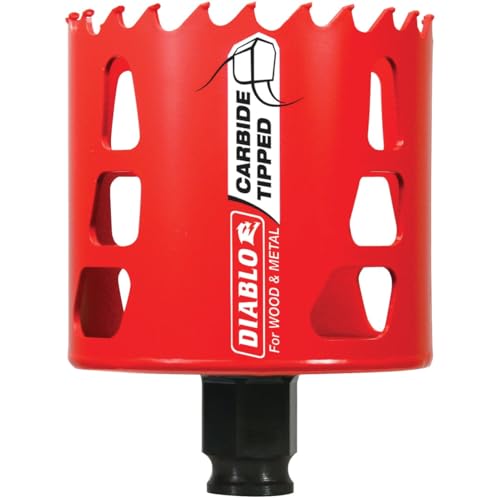
The Diablo DHS2750CT stands apart with a 2-3/8 inch cutting depth — 40 percent deeper than typical metal-rated hole saws — which lets you bore through thick lumber or multi-layer assemblies in a single pass. Its Snap-Lock Plus mandrel system allows tool-free changeovers, a major productivity boost for pros who switch sizes frequently on a job site. The carbide teeth deliver up to 50 times longer life than standard bi-metal designs, making this a serious long-term investment for high-volume work.
This saw handles wood, plastic, and metal effortlessly, but it truly shines on materials that destroy lesser bits. The tool-free plug ejection is a welcome feature that keeps the cutting edge clear of debris, preventing overheating and binding during extended use. Customers consistently praise the clean, burn-free holes it produces in pine and the confidence it brings when cutting through tougher hardwoods like oak.
The only recurring concern is the arbor pilot bit, which some users find prone to snapping if the saw wanders during entry. Using a lower initial speed and a steady hand mitigates this. For anyone who needs a single saw to dominate both wood and metal without swapping tools, this Diablo is the definitive choice.
Why it’s great
- Deepest cutting depth of any 2-3/4″ saw tested
- Snap-Lock Plus mandrel saves serious time on multi-size jobs
- Carbide teeth last dramatically longer than bi-metal alternatives
Good to know
- Pilot bit can snap if the saw grabs on entry
- Premium price compared to mid-range options
2. Morse MHSA44C Bimetal Hole Saw

The Morse MHSA44C brings a refined tooth geometry — 12 teeth with a patent-pending set design — that clears material aggressively, making it a favorite for cutting through thick plywood, Advantech subflooring, and metal stock tanks. The side slot increases leverage for faster slug removal, a detail that matters when you are making dozens of repetitive cuts. Its heavy-duty 0.050-inch side wall adds stability that resists the wobble common in thinner budget cups.
The attached arbor and pilot drill are included, so there is no separate purchase required to get started. Users report that this saw cuts through 14-gauge steel stock tanks “like butter” when paired with a strong corded drill and cutting oil. The red exterior coating reduces friction, keeping the saw running cooler and cleaner on longer passes through metal.
Some users note that cutting aged cedar or hardwood requires significant feed pressure, causing the drill to slow down noticeably. The saw also generates considerable heat on dense materials, which can scorch wood if you push the feed rate too slow. For the price, this Morse saw delivers professional-grade performance that outperforms most big-box store bi-metal competitors.
Why it’s great
- Aggressive 12-tooth design for fast material removal
- Included arbor and pilot bit — no extra cost
- Excellent for cutting metal stock tanks and thin steel
Good to know
- Requires strong drill and muscle for dense hardwoods
- Can overheat and smoke wood if feed rate is too slow
3. DKIBBITH DKVIP-240053 TCT Hole Saw
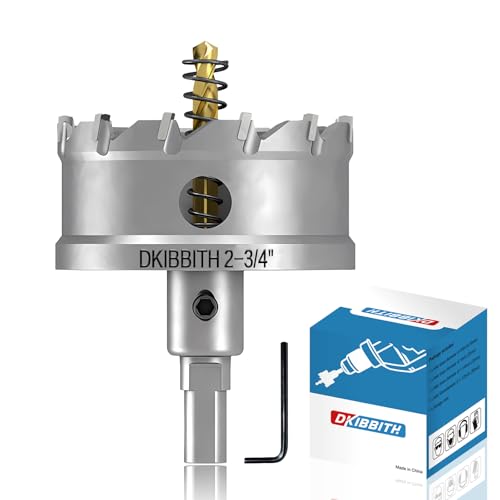
The DKIBBITH DKVIP-240053 is a dedicated TCT (Tungsten Carbide Tipped) saw built specifically for cutting stainless steel, mild steel, copper, aluminum, and brass up to 1 inch thick. Its high-grade cemented carbide teeth stay sharp much longer than bi-metal options on hard metals, and the split-point pilot drill bit provides excellent centering to prevent walk. The included ejection spring makes slug removal a single-press operation, which adds efficiency when drilling multiple holes.
Users have used this saw to cut door deadbolt holes in metal, bore through stainless food-grade carts, and drill electrical conduit openings in steel enclosures. The saw produces clean, burr-free edges that require minimal cleanup. It works with handheld cordless drills, drill presses, magnetic drills, and CNC machinery, offering broad flexibility across different shop setups.
The main complaint is that the included pilot drill bit — while good for centering — snagged on one user and broke during a cut, something that can happen if the bit encounters a hardened weld or if too much lateral force is applied. Using cutting fluid and a slower spindle speed for hardened materials is essential. If your primary material is thin-gauge stainless or mild steel, this is the most cost-effective TCT option in this roundup.
Why it’s great
- Twice the tooth life on stainless compared to bi-metal saws
- Ejection spring speeds up repetitive slug removal
- Cuts burr-free holes in metal without oversizing
Good to know
- Pilot drill bit can break if snagged at high torque
- Not suitable for wood or drywall due to carbide tooth geometry
4. Milwaukee 49-56-0163 Hole Dozer
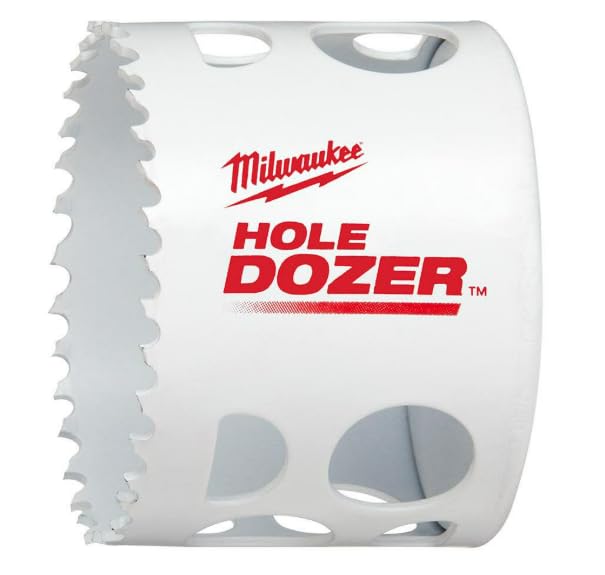
The Milwaukee Hole Dozer 49-56-0163 is a bi-metal classic known for its Matrix II bi-metal teeth and ice-hardening process that increases cutting life by up to 50 percent compared to standard competition. The positive rake angle pulls the saw aggressively into the cut, reducing the pressure you need to apply, while the radiused tooth back reduces stress points that typically cause tooth failure. The functional slot geometry makes plug ejection straightforward without prying.
This saw is most at home in wood — 2x4s, plywood, and stock tank lumber — where its sharpness leaves smooth, clean edges. Users report it cuts through framing lumber quickly with minimal splintering on the exit side. The 6-tooth configuration is optimized for speed in softer materials, and the bi-metal construction allows occasional use on thin aluminum or mild steel.
Some users found that the saw broke teeth when used aggressively on 1/8-inch steel plate, indicating its limits in harder metals. The lack of an included arbor or pilot bit (sold separately) means an additional purchase if you don’t already own a Milwaukee arbor. For carpenters and woodworkers who need a reliable, fast-cutting hole saw for wood and light metal, this Hole Dozer delivers the proven Milwaukee quality that professionals trust.
Why it’s great
- Ice-hardened teeth last significantly longer than non-hardened bi-metal saws
- Positive rake angle cuts through wood with minimal effort
- Manufactured in the United States
Good to know
- Not designed for hard metals like stainless or thick steel
- Arbor and pilot bit sold separately
5. AOKAIMIAR B0CB4784CY TCT Hole Saw
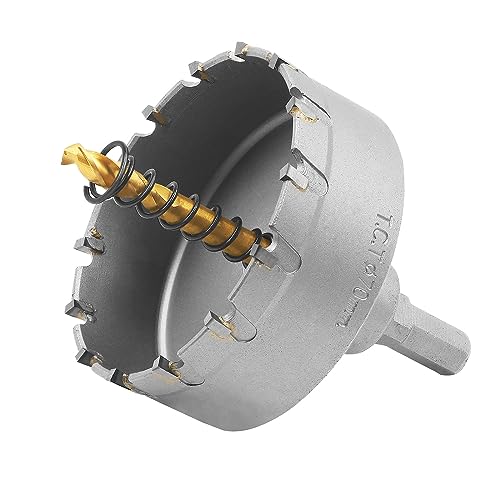
The AOKAIMIAR B0CB4784CY is a heavy-duty TCT saw built to withstand tough materials like stainless steel plate, iron, and alloy steel. Its tungsten carbide tip offers exceptional hardness that resists wear even when drilling into 1/4-inch thick steel plate — a material that would quickly dull a standard bi-metal tooth. The single carbide tooth design might seem unusual, but it concentrates all the cutting force into one hardened point, creating a clean, controlled cut.
Users are impressed with how smoothly this saw cuts through commercial kitchen stainless food carts and thick steel plate, noting that it leaves a surprisingly clean finish. The titanium-plated pilot drill bit adds an extra layer of durability for the centering task, though some users reported the pilot bit breaking before the main cutter dulled — a common compromise in this price tier. Using a lubricating spray like WD-40 during the cut helps extend both the pilot and main tooth life significantly.
The main cutting edge stays sharp through multiple holes in hard metal, which is remarkable for a mid-range priced saw. It is not designed for wood, drywall, or tile; its purpose is metal, and it excels there. If you are regularly drilling through stainless sinks, steel brackets, or heavy-gauge plate, this AOKAIMIAR saw delivers impressive longevity and precision without the premium price tag.
Why it’s great
- Single carbide tooth withstands thick steel plate without dulling
- Titanium-plated pilot bit resists corrosion and wear
- Excellent value for occasional hard-metal drilling
Good to know
- Pilot bit may break before main cutter dulls
- Not intended for wood, tile, or stone
6. CENYB CHS170 TCT Hole Saw
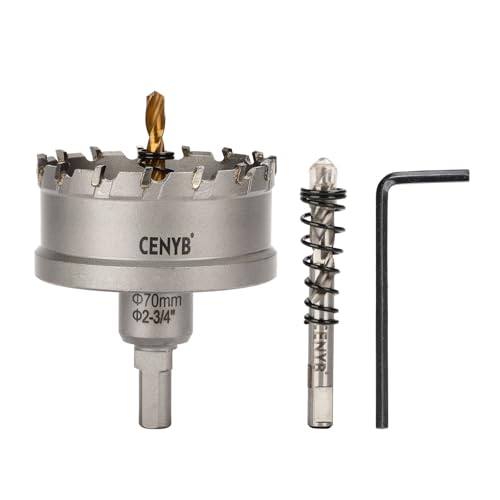
The CENYB CHS170 offers a unique three-blade design with 15 teeth arranged in outer, middle, and inner layers that progressively cut through material for sharper, more efficient results. This multi-blade geometry reduces the load on any single tooth, lowering the risk of breakage when cutting through hard metals like stainless steel, iron, and aluminum alloy. The 10mm (3/8 inch) shank diameter ensures compatibility with standard drill chucks and magnetic drill bases.
This saw is particularly effective on aluminum extrusion, mild steel square tubes, and thin-gauge stainless. Customers report clean, true holes in aluminum with minimal burr. The package includes two titanium-plated pilot drill bits and a hex wrench for secure pilot bit retention, all packed in a plastic storage box. At its price point, the combination of tooth count, material compatibility, and included accessories is hard to beat.
Some users noted that the plastic storage box is flimsy and difficult to use — one user discarded it entirely and stored the saw in a spice jar instead. The included pilot drill bits are serviceable but not premium; one user recommended removing the set screw before inserting the central drill bit to avoid losing it. For budget-conscious buyers who need a reliable carbide saw for light-to-moderate metal work, the CENYB delivers function without breaking the bank.
Why it’s great
- 15-tooth, 3-blade design reduces stress and extends tooth life
- Includes two pilot drill bits and hex wrench
- Excellent performance on aluminum and mild steel
Good to know
- Storage case is cheap and poorly designed
- Pilot bits are not as durable as the main saw body
7. Mollom DHS01070 Diamond Hole Saw
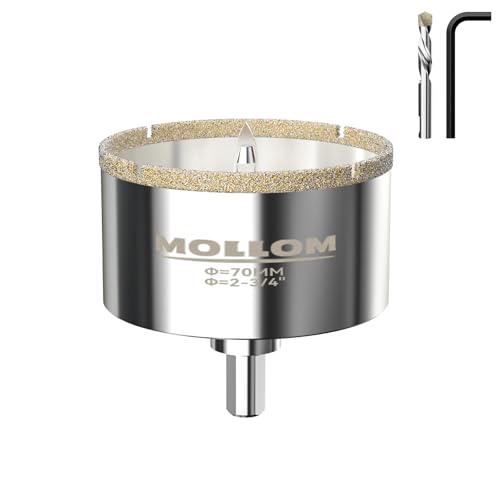
The Mollom DHS01070 is a diamond-grit hole saw designed exclusively for hard, brittle materials — porcelain tiles, glass, ceramic, marble, granite, fiberglass, and light stone. Its 70mm (2-3/4 inch) diameter cuts a precise hole in tile without chipping or cracking, provided water coolant is used during operation. The diamond grain is evenly distributed across the rim and brazed onto the steel body, ensuring long service life even when drilling through quartz countertops or onyx light boxes.
This saw includes two removable pilot bits: a diamond-tipped pilot for initial penetration into the tile surface and a center pilot bit for guiding the cut. The two-bit system allows you to start with the diamond pilot for scoring, then remove it to finish with the center bit, reducing the risk of walk-out on glazed surfaces. Users report effortless cutting through quartz countertops and onyx with very little pressure, producing smooth interior hole edges.
This saw cannot be used on metal, wood, or plastic; it is a niche tool for masonry and tile. Users emphasize the importance of clearing debris from the inner cavity after each cut — if two pieces of dust stack up, they can clog the saw and make removal impossible. For electricians running cables through tile backsplashes or fabricators drilling stone, this Mollom diamond saw is the most reliable option in the 2-3/4 inch size category.
Why it’s great
- Diamond grit cuts quartz, onyx, and porcelain effortlessly
- Includes two pilot bits for secure starting on slick tile surfaces
- Produces chip-free, smooth holes
Good to know
- Requires water cooling during use to prevent overheating
- Not suitable for metal, wood, or plastic
FAQ
Can I use a diamond-grit hole saw on stainless steel?
How do I prevent a hole saw from wandering on a curved surface?
Final Thoughts: The Verdict
For most users, the best 2-3/4″ hole saw is the Diablo DHS2750CT because it combines the deepest cutting depth with carbide tooth longevity and a tool-free Snap-Lock Plus mandrel that saves time on every job. If you need a dedicated metal saw for stainless steel or conduit, the DKIBBITH DKVIP-240053 offers unbeatable TCT performance at a competitive price. And for tile, glass, or stone work, nothing beats the Mollom DHS01070 diamond-grit saw for chip-free, precise holes.