
Nothing ruins a smooth job site flow like a hole saw that wanders off your mark, binds in the cut, or sheds teeth the moment you hit something tougher than pine. A precise 2-inch bore is the difference between a clean conduit pass-through and a ragged, oversized hole you have to patch. The right saw makes quick work of metal studs, electrical boxes, and cabinet hardware installations without wearing out your drill battery or your patience.
I’m Min — the co-founder and writer behind Gadgets Feed. My research for this guide involved cross-referencing tooth geometry, gullet design, and carbide grades across dozens of models to determine which 2-inch hole saw actually delivers clean cuts in the materials most tradespeople and DIYers encounter daily.
Whether you are installing new door hardware, mounting conduit through steel studs, or cutting precise openings in stainless steel panels, choosing the right tool matters. This guide breaks down the specifications and real-world performance of the best 2″ hole saw options available today.
How To Choose The Best 2″ Hole Saw
A 2-inch hole saw looks simple, but the construction method and tooth design directly control how fast you cut and how long the saw lasts. Matching the saw to your primary material is the first and most important decision.
Material Type: Bi-Metal vs. Carbide Tipped
Bi-metal hole saws use a high-speed steel tooth edge welded to a flexible steel body. They handle wood, drywall, plastic, and thin metal well and resist cracking under side load. Carbide-tipped models weld a carbide grain layer to each tooth, giving dramatically longer life in abrasive materials like cement board, stainless steel, and cast iron. If you cut mostly wood and occasional metal, a quality bi-metal saw like the Milwaukee Ice Hardened series provides excellent value. For heavy production work on metal or masonry, the premium carbide options pay off quickly through reduced downtime for replacement.
Cutting Depth and Body Height
Standard hole saws cut about 1-5/8 inches deep, which handles most 2×4 framing and single-layer sheathing. Deep-cut models, like the Diablo Carbide with its 2-3/8-inch cutting depth, let you drill through thicker assemblies in one pass. This matters when cutting through double-stud walls or thick countertop materials where stopping and repositioning wastes time and risks misalignment.
Plug Ejection System
Removing a stuck plug from a hole saw mid-job is frustrating. Side slots let you knock the plug out with a screwdriver, while stair-step “Speed Slot” designs on Lenox models provide multiple leverage points for faster ejection. Snap-lock mandrel systems, like Diablo’s Snap-Lock Plus, allow tool-free plug removal without reaching for a separate wrench. If you cut dozens of holes in a day, a good plug ejection system saves minutes per hole.
Arbor Compatibility and Pilot Bit Quality
Most 2-inch hole saws use a standard 1/4-inch hex or 3/8-inch round shank arbor. Some premium systems use proprietary quick-change arbors that reduce wobble but limit cross-brand compatibility. The pilot bit must be sharp and centered — a wandering pilot creates an oval hole and stresses the saw teeth. Models with split-point pilot bits, like the Klein Tools hole cutter, bite immediately without skating across the work surface.
Quick Comparison
On smaller screens, swipe sideways to see the full table.
| Model | Category | Best For | Key Spec | Amazon |
|---|---|---|---|---|
| Diablo DHS2000CT | Carbide | Deep cutting in wood & metal | 2-3/8″ cutting depth | Amazon |
| Lenox LXAH32 | Carbide | Abrasive materials & stainless | 50X life vs bi-metal | Amazon |
| Lenox 1772951 | Bi-Metal | Wood & thin metal precision | Speed Slot plug ejection | Amazon |
| Milwaukee 49-56-0117 | Bi-Metal | General wood cutting | Ice Hardened teeth | Amazon |
| Milwaukee 49-56-0132 | Bi-Metal | Metal cutting durability | 2-1/4″ diameter | Amazon |
| Klein Tools 31868 | Carbide | Sheet metal & conduit work | Split point pilot bit | Amazon |
| Greenlee 645-2 | Carbide | Stainless steel production | Quick-change arbor | Amazon |
In‑Depth Reviews
1. Diablo Carbide Teeth Hole Saw DHS2000CT
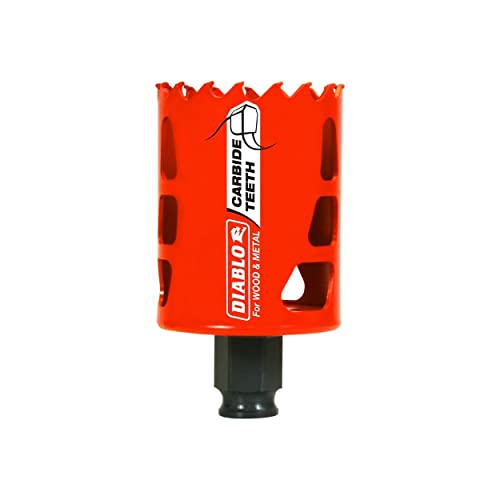
The Diablo DHS2000CT stands out immediately with its 2-3/8-inch cutting depth — nearly 40 percent deeper than standard 2-inch hole saws. This means you can drill through a 2×4 stud in a single pass instead of flipping the workpiece or switching to a longer arbor. The carbide-tipped teeth hold their edge far longer than bi-metal alternatives, rated by the manufacturer for up to 50 times the cutting life in wood and metal applications.
The Snap-Lock Plus mandrel system is a genuine time-saver on the job. Changing between hole saw diameters from 5/8 inch up to 6 inches requires no tools — just a quarter-turn to lock or release. The plug ejection mechanism works without needing a screwdriver or pliers, which speeds up repetitive cuts on door hardware or electrical rough-in work. The included pilot bit is sharp from the factory but some users report it can snap under heavy side load, so using cutting oil on metal and reducing drill speed on dense materials is recommended.
In practice, this saw excels in softwood like pine, producing clean, circular holes with minimal tear-out. On harder materials such as oak or metal studs, the carbide teeth resist heat buildup, but you must step down your drill speed to prevent burn marks. The extra cutting depth combined with the quick-change arbor makes this the most versatile single saw in the lineup for mixed-material job sites.
Why it’s great
- Exceptional 2-3/8″ cutting depth reduces passes needed
- Carbide teeth deliver outstanding longevity in wood and metal
- Tool-free Snap-Lock Plus arbor change and plug ejection
Good to know
- Pilot bit is brittle under heavy side load
- Requires reduced RPM on hard materials to avoid burn marks
- Requires compatible Snap-Lock mandrel (sold separately if not owned)
2. Lenox Carbide Tipped Hole Saw LXAH32
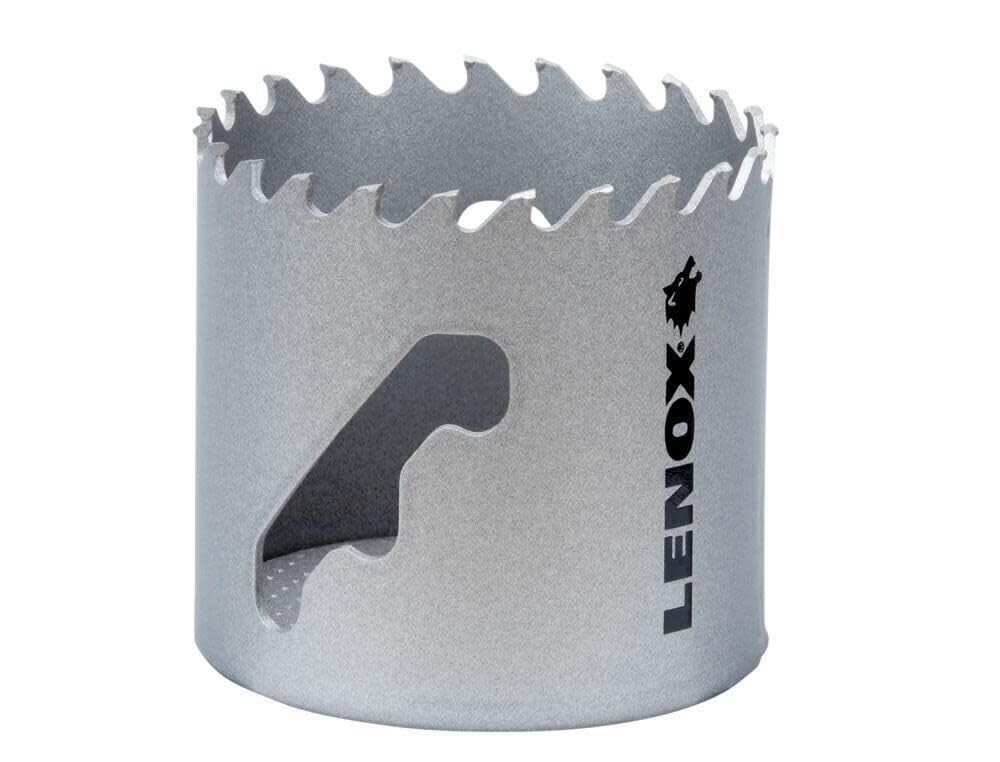
The Lenox LXAH32 is built specifically for the toughest materials a 2-inch hole saw can face. The carbide teeth are welded to the cutting edge rather than simply coated, which prevents delamination and tooth loss when cutting through cast iron, stainless steel, or cement board. Lenox claims up to 50 times the life of their own bi-metal saws in cast iron, and field reports from electricians cutting HardiePlank siding confirm the carbide edge holds up well over many holes.
The patented Speed Slot staircase design is cleverly engineered for plug removal. Instead of a single side slot, the staircase provides multiple leverage points, so you can pop out a stuck plug from almost any angle with a screwdriver. The tall body design also allows the saw to drill through 2-inch dimensional lumber in one pass, matching the Diablo in depth capability. The aggressive tooth geometry chews through wood, steel, and fiber cement without bogging down, but the teeth are sharp enough that the saw can grab and jerk your wrist on entry — clamping the work and using both hands on the drill is advised.
Users report excellent results notching chromoly tubing and drilling through 304 stainless steel, with the carbide staying sharp long after bi-metal saws would have been discarded. The 4.5-ounce weight keeps the saw light enough to use with a cordless drill without excessive battery drain. The main trade-off is the higher upfront cost compared to bi-metal options, but for pros cutting abrasive materials regularly, the per-hole cost is significantly lower over the saw’s lifespan.
Why it’s great
- Carbide-welded teeth resist chipping in cast iron and stainless steel
- Speed Slot staircase design for fast, multi-angle plug removal
- Tall body cuts through 2x lumber in a single pass
Good to know
- Higher initial investment than bi-metal saws
- Aggressive tooth grab can cause wrist jerk on entry
- Requires compatible arbor with 1/4″ pilot bit shank
3. Lenox Bi-Metal Speed Slot Hole Saw 1772951

The Lenox 1772951 is a 2-1/8-inch bi-metal hole saw that delivers excellent cut quality in wood and thin metal without the premium cost of carbide. The increased wall thickness compared to previous Lenox generations provides noticeable resistance to tooth loss when the saw breaks through the back side of a cut. Users consistently report clean, chip-free holes in interior doors for new knob installations and precise openings in metal cabinets.
The Speed Slot staircase design is present here as well, making plug removal straightforward even when cutting wet or resinous wood that tends to bind. The teeth feature a wave pattern set with a sharp rake angle that penetrates metal aggressively — in practice, the saw ripped through a steel door without hesitation, though the user must brace for the sudden grab. The arbored design means the saw comes with the shank installed, so it is ready to chuck into your drill immediately. The arbor uses a non-locking design with an 11/32-inch shaft and a 1/4-inch pilot bit, which is standard for most drill chucks.
Cut depth measures approximately 1.89 inches, slightly shallower than the deep-cut models but sufficient for most door and cabinet work. The saw stacks neatly for storage, and the multi-color body makes size identification quick. Some users note the aggressive tooth action can cause wrist fatigue during repeated cuts, so using a drill with a speed control trigger and letting the saw do the work rather than forcing it will extend the life of both the saw and the user.
Why it’s great
- Increased wall thickness improves durability during breakthrough
- Speed Slot design for fast plug ejection
- Arbored design — ready to use out of the package
Good to know
- Aggressive tooth action can cause sudden grab on entry
- Cut depth of 1.89″ may not suit thick assemblies
- Non-locking arbor can loosen during heavy use
4. Milwaukee Electric Tool 49-56-0117 Bi-Metal Hole Saw
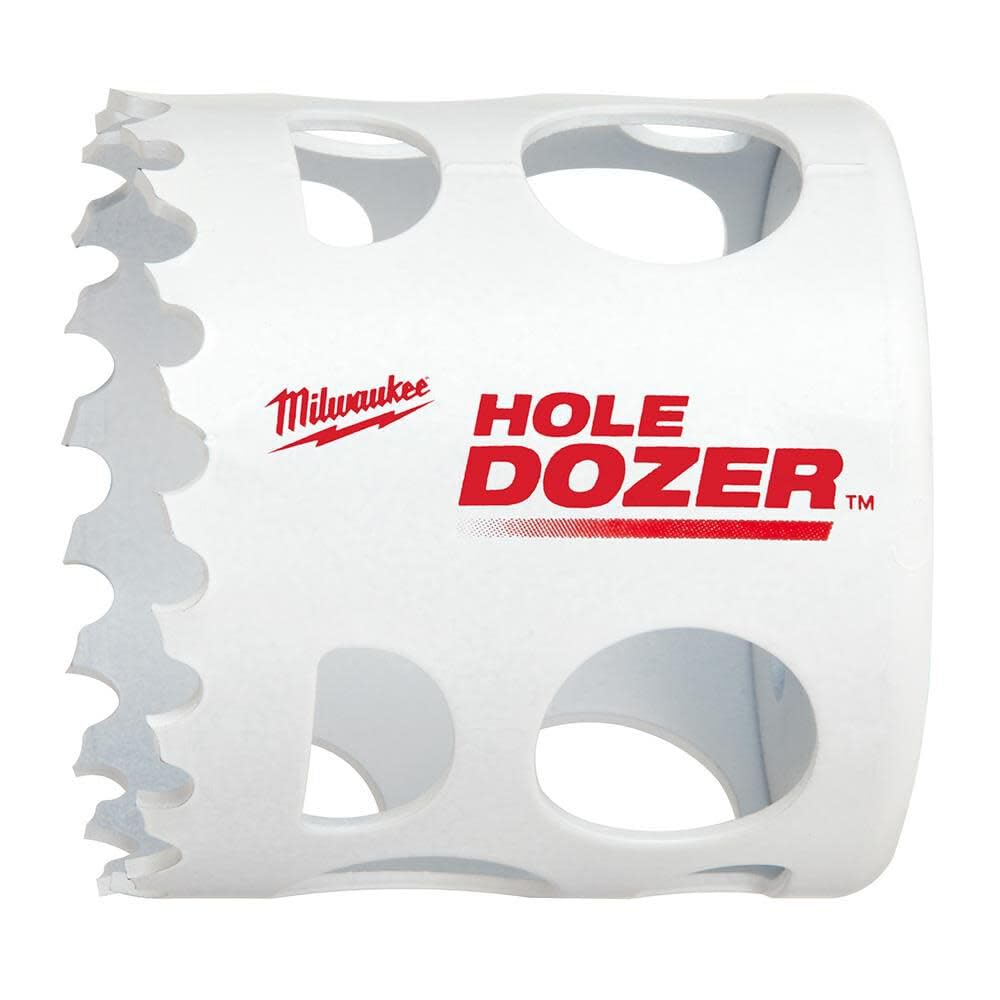
The Milwaukee 49-56-0117 is a 2-inch bi-metal hole saw optimized for wood cutting with its Ice Hardened tooth treatment that extends edge life by up to 50 percent compared to untreated competition. The Matrix II bi-metal teeth use a positive rake angle that cuts aggressively through old-growth lumber and dense plywood without the saw bogging down. Users routinely describe it as going “like a hot knife through butter” even in challenging softwood with tight grain patterns.
The side slot geometry is functional rather than decorative — multiple large openings around the saw body provide excellent visibility of the cutting line and make plug extraction simple by giving screwdriver access from nearly any angle. The 0.25-pound weight keeps the saw light, reducing fatigue during overhead drilling or extended use with a cordless drill. The plug jack feature built into the design allows for multidirectional access to post-cut plugs, which is particularly helpful when the plug swells in damp wood and becomes difficult to dislodge.
As a replacement saw, the 49-56-0117 threads onto standard Milwaukee arbor shafts, making it simple to swap out worn units from an existing set. Users note that the saw matches perfectly with existing Milwaukee quick-change arbors. The main limitation is that this saw is intended for wood and softer materials — pushing it through metal will dull the teeth quickly. For dedicated woodworkers and electricians cutting through framing, this is the most cost-effective high-performance bi-metal choice.
Why it’s great
- Ice Hardened teeth last 50% longer in wood applications
- Large side openings provide excellent cut line visibility
- Lightweight at 0.25 lbs reduces arm fatigue
Good to know
- Not designed for extended use in metal
- Requires separate arbor purchase
- Teeth can dull quickly if hitting embedded nails
5. Milwaukee 49-56-0132 2-1/4-Inch Ice Hardened Hole Saw
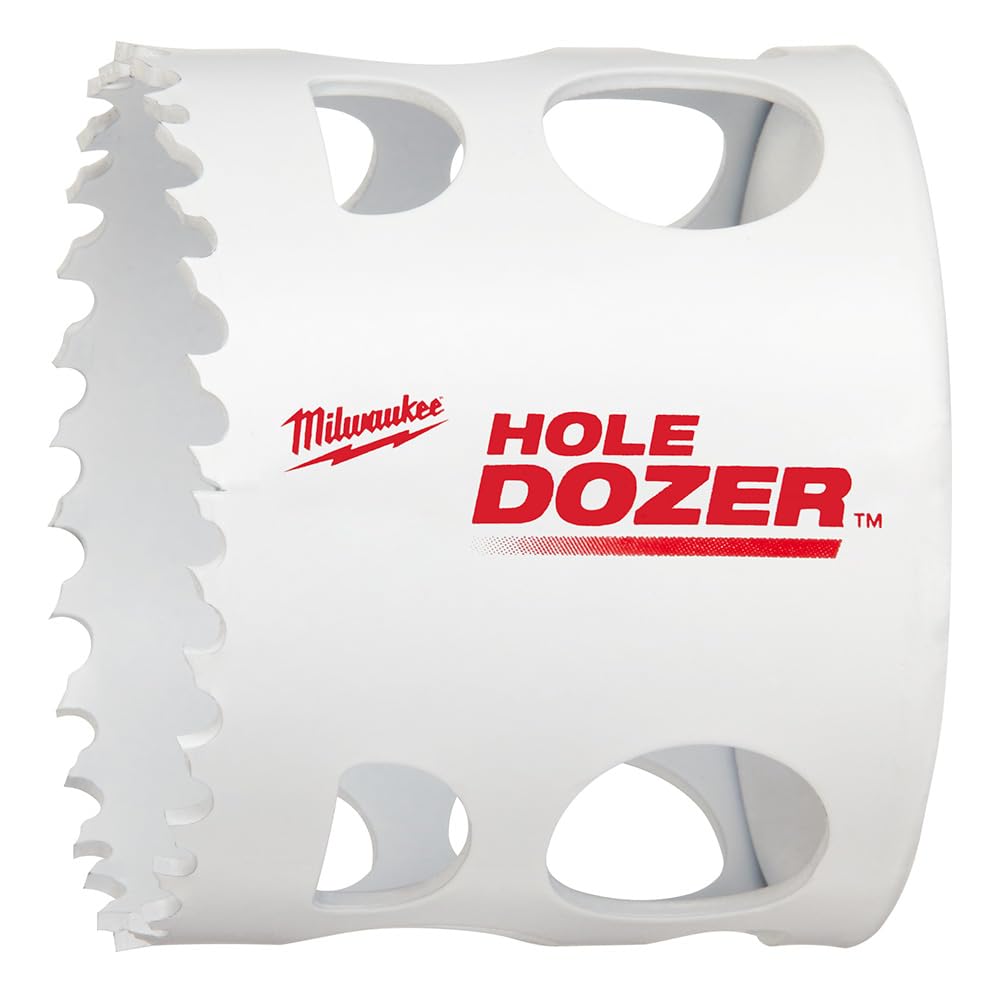
The Milwaukee 49-56-0132 is nearly identical in construction to the 49-56-0117 but comes in a 2-1/4-inch diameter and is purpose-built for metal cutting. The Ice Hardening process and Matrix II bi-metal teeth provide the same 50 percent longer life claims, but the tooth geometry is tuned for ferrous materials. Users report excellent results cutting through steel studs, mild steel plates, and even some stainless applications when run with appropriate cutting fluid and reduced RPM.
The industrial-style body is manufactured in the United States and features the same deep gullets and functional slot geometry for chip removal and plug extraction. The radiused tooth back design reduces stress concentration at the tooth root, which is critical when cutting metal where impact loading can snap teeth. Users emphasize that speed control is essential for long life — running the saw at the correct RPM for the material thickness prevents overheating and premature dulling. Using cutting oil on every metal cut noticeably extends the usable life of the teeth.
At 2-1/4 inches, this saw cuts holes for larger conduit fittings and pipe runs. The extra diameter means the saw requires slightly more torque from the drill, but users report that even mid-range cordless drills handle it well. The plastic storage case keeps the saw organized. The trade-off is that the 2-1/4-inch size is non-standard for many applications — if you specifically need a 2-inch hole, the 49-56-0117 is the correct diameter, but for conduit and plumbing work requiring the extra quarter-inch, this saw justifies its place.
Why it’s great
- Ice Hardened teeth optimized for metal cutting longevity
- Radiused tooth back reduces stress and prevents breakage
- Made in the USA with industrial-grade construction
Good to know
- 2-1/4″ diameter, not a true 2″ hole saw
- Requires cutting fluid and correct RPM for metal
- Heavier than standard 2″ saws, requires more drill torque
6. Klein Tools 31868 Heavy Duty Hole Cutter

The Klein Tools 31868 is not a traditional hole saw — it is a heavy-duty carbide hole cutter designed specifically for thin sheet metal and conduit work. The carbide construction is exceptionally durable, and the split-point pilot bit prevents the wandering that plagues standard pilot bits on curved metal surfaces. The built-in flange stops over-drilling, preventing the cutter from plunging through the back side of the material and damaging wiring or equipment behind the panel.
This cutter is rated for stainless steel, mild steel, iron, copper, and brass sheets up to 3/16-inch thick. Users report drilling through 1/2-inch carbon steel plate with cutting oil and maintaining cutting efficiency through eight consecutive holes — a task that would destroy a standard bi-metal hole saw. The design is ideal for installing 1-1/2-inch conduit and pipe, as the 2-inch diameter corresponds exactly to that trade size. The cutter is heavier than a typical hole saw, at 0.5 pounds, but the weight helps stabilize the cut when drilling overhead on electrical panels.
The replacement pilot bit (Cat. No. 31874) is readily available, so the tool is not disposable. The main consideration is thickness limitation — this cutter is not designed for cutting through framing lumber or thick structural steel. It excels in its intended application of cutting clean, accurate holes in metal enclosures and sheet stock. For electricians and maintenance technicians who regularly cut into panels, the Klein 31868 is a professional-grade tool that pays for itself in reduced pilot bit wandering and extended cutter life.
Why it’s great
- Split-point pilot bit prevents wandering on curved metal surfaces
- Built-in over-drilling stop protects equipment behind the panel
- Carbide cutter handles thick steel plate with cutting oil
Good to know
- Limited to sheet metal up to 3/16″ thick
- Not suitable for wood or drywall cutting
- Requires cutting oil for steel applications
7. Greenlee 645-2 Carbide Hole Saw
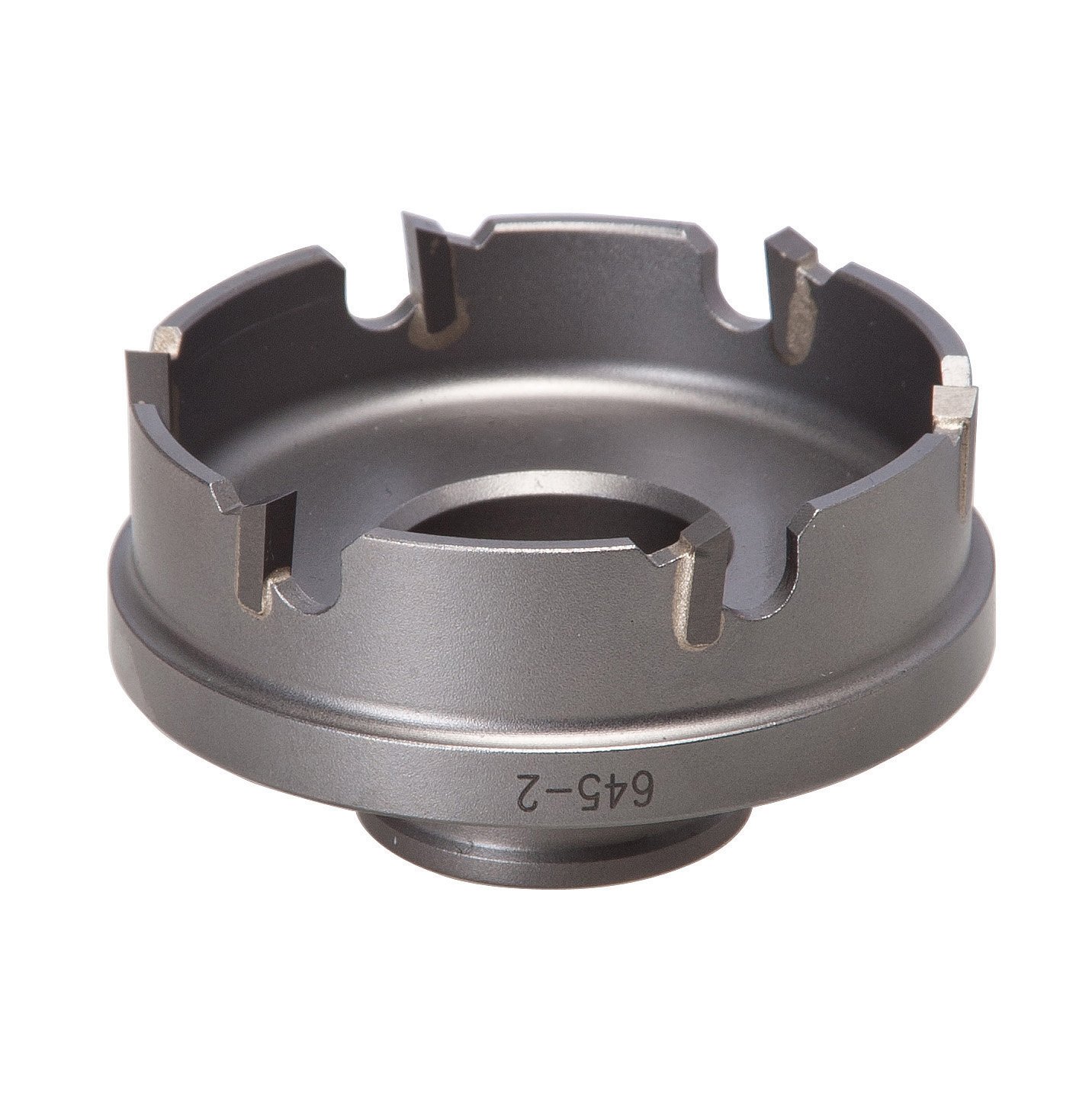
The Greenlee 645-2 is a carbide-tipped hole saw designed for high-volume stainless steel cutting, featuring a quick-change arbor system that swaps between diameters without tools. The carbide teeth are brazed onto the steel body, providing a durable cutting edge that handles 304 stainless with surprising ease. Users report drilling oval holes by overlapping two cuts, with the saw maintaining its edge throughout — a testament to the carbide quality.
At 2.4 ounces, this is one of the lightest carbide hole saws in its category, which reduces strain on the drill chuck and makes it usable with compact cordless drills. The quick-change design uses a standard Greenlee arbor interface, so it integrates with existing Greenlee knockout punch and hole saw systems. The included instruction guide provides recommended RPM ranges for different materials, which is critical for carbide saws — running too fast generates heat that can crack the carbide brazing.
Some users note that the carbide teeth can be brittle — if the saw catches on the edge of a cut, the teeth may snap off rather than bending like bi-metal teeth would. Using the saw with the drill clutch set to a low setting and drilling a pilot hole before engaging the outer saw reduces this risk significantly. For tradespeople who already own Greenlee knockout tools and need a reliable carbide hole saw for occasional stainless work, the 645-2 is a competent choice. For one-off home use, a bi-metal saw may offer a better value proposition.
Why it’s great
- Carbide teeth handle 304 stainless steel well
- Very lightweight at 2.4 ounces for reduced drill strain
- Quick-change arbor compatible with Greenlee systems
Good to know
- Carbide teeth are brittle and can snap if caught
- Requires pilot hole to reduce stress on outer teeth
- Not ideal for wood or drywall applications
FAQ
Can a 2-inch hole saw cut through stainless steel?
How do I remove a stuck plug from a 2-inch hole saw?
Final Thoughts: The Verdict
For most users, the best 2″ hole saw winner is the Diablo DHS2000CT because its carbide-tipped teeth and 2-3/8-inch cutting depth handle wood, metal, and everything between with exceptional longevity. If you want the fastest plug ejection and best all-around bi-metal value for general woodworking, grab the Lenox 1772951. And for electricians cutting thick steel plate or stainless panels every day, nothing beats the Klein Tools 31868 for precision and durability in metal.