
A jacket with a 20K waterproof rating is the final line of defense against sustained downpours, not just a light drizzle. It must hold back a 20,000mm column of water without leaking, which demands taped seams, quality membranes, and a durable water-repellent finish that doesn’t quit after a few washes. This standard separates serious foul-weather gear from mere windbreakers.
I’m Min — the co-founder and writer behind Gadgets Feed. I’ve combed through hundreds of spec sheets, user reviews, and manufacturer claims about hydrostatic head ratings to find the 20K waterproof jackets that actually deliver on their promise of breathability and dry comfort.
After evaluating nine models for real-world waterproofing, breathability, and durability, this guide breaks down every detail you need to confidently choose the best 20k waterproof jacket for your specific outdoor needs.
How To Choose The Best 20K Waterproof Jacket
A 20K rating means the fabric can withstand 20,000mm of water pressure before leaking, but that number alone doesn’t tell you how breathable the jacket is or how well it vents body heat. Look for a balance between hydrostatic head and moisture vapor transmission rate (MVTR) for active use, and pay close attention to seam construction, zipper quality, and face fabric durability.
Membrane Technology
The membrane is the core waterproof layer. GORE-TEX is the benchmark, offering consistent waterproofing and breathability, but proprietary options like Pertex Shield or Helly Tech can match it at lower weights. Two-layer membranes need a separate liner, while 2.5-layer and 3-layer constructions integrate the protective layer to reduce weight and bulk.
Breathability and Ventilation
An MVTR of 10,000 g/m²/24hr or higher is good for high-output hiking. Underarm pit zips provide an auxiliary venting path that dramatically reduces internal condensation when the membrane alone can’t keep up. Without pit zips, even the most breathable membrane can feel clammy during uphill slogs in warm rain.
Fit and Layering
A 20K jacket is often used as a hard shell over mid-layers. Look for articulated arms, a helmet-compatible hood, and enough chest and shoulder room for a synthetic or down insulating layer. Adjustable hems and cuffs fine-tune the seal against wind and rain entry points.
Quick Comparison
On smaller screens, swipe sideways to see the full table.
| Model | Category | Best For | Key Spec | Amazon |
|---|---|---|---|---|
| Fjällräven Keb Eco-Shell | Premium | Versatile outdoor adventurers | ePE Membrane, 3-Layer | Amazon |
| SITKA Dew Point Hooded Jacket | Premium | Hunters and hikers | GORE C-KNIT, 20D Nylon | Amazon |
| Marmot Minimalist GORE-TEX (Women’s) | Premium | Versatile rain & wind protection | GORE-TEX Paclite, 2.5L | Amazon |
| Rab Downpour Mountain Jacket | Mid-Range | Trekking and alpine climbs | Pertex Shield 2.5L, 20K/20K | Amazon |
| Outdoor Research Stratoburst Stretch | Mid-Range | Climbing and hiking | Ventia 2.5L, Mechanical Stretch | Amazon |
| Helly Hansen Crew Jacket 2.0 | Mid-Range | Sailing and urban use | HELLY TECH Protection | Amazon |
| Grundéns Full Share Jacket | Mid-Range | Fishing and marine work | Stain-Resistant Shell | Amazon |
| FROGG TOGGS Pilot 2 Guide | Mid-Range | Versatile outdoor adventures | DriPore Gen2, 3-Layer | Amazon |
| Helly Hansen Moss Rain Coat | Budget | Everyday downpour defense | Helox+ Fabric Technology | Amazon |
In‑Depth Reviews
1. Fjällräven Keb Eco-Shell Jacket
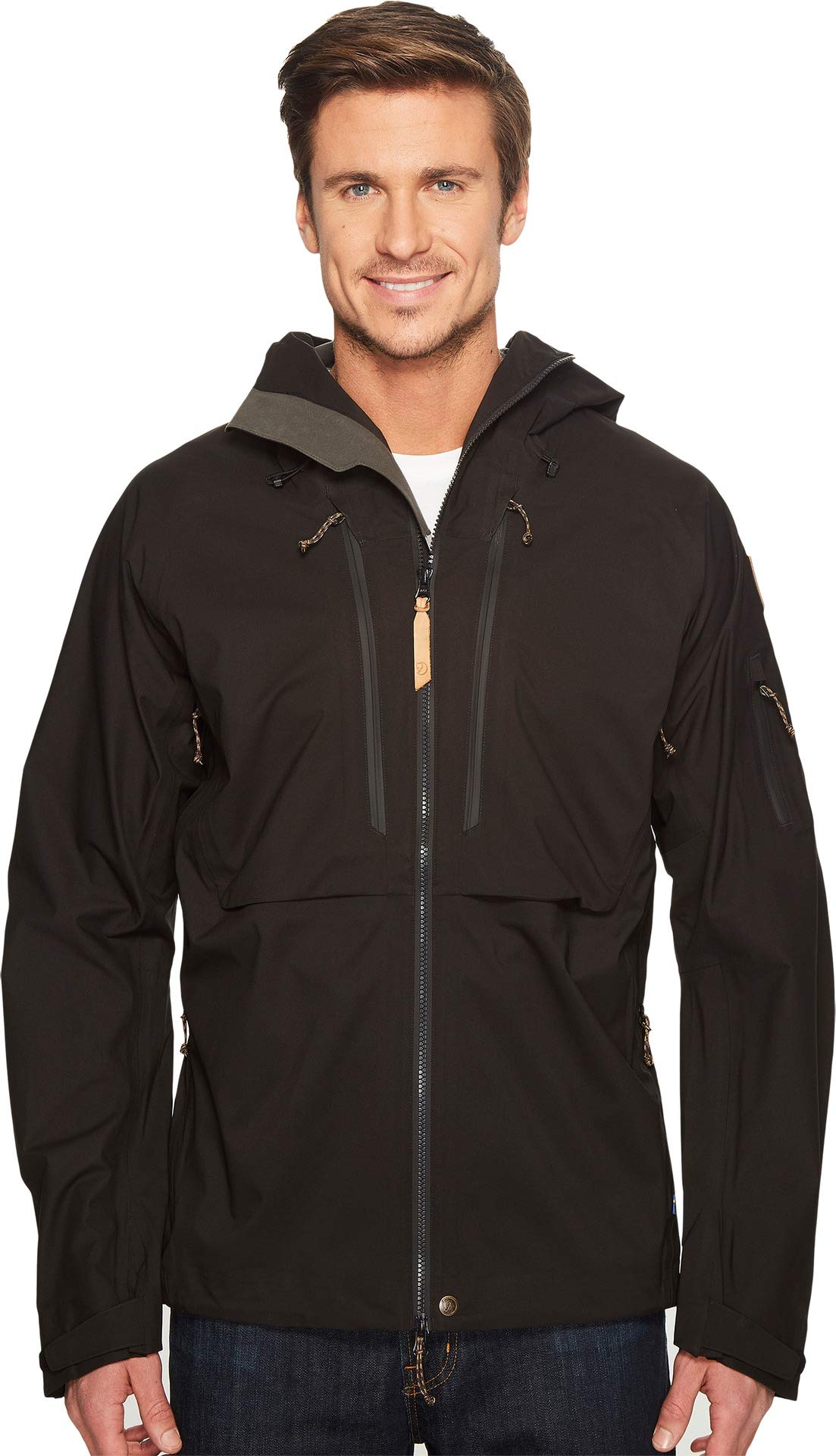
The Keb Eco-Shell uses a fluorocarbon-free ePE membrane that is both waterproof and more environmentally conscious than traditional C8 DWR treatments. The 3-layer construction is tough enough for alpine boulder fields and dense brush, yet the jacket remains supple enough for casual wear. The articulated hood adjusts easily over a climbing helmet, and the large chest pockets sit high enough to clear a pack hipbelt.
Reviewers consistently praise the fit and versatility for hiking, hunting, and everyday use, noting that going up one size from normal allows for comfortable mid-layer stacking. The Eco-Shell membrane has proven reliable in heavy European rain and during multi-day treks where wet-out would be catastrophic.
One caveat: some buyers reported the factory DWR coating was lacking at initial purchase, requiring a DIY application of a wash-in or spray-on treatment to maintain optimal water beading. The length of the jacket also divides opinions — tall users appreciate the extended drop hem, while shorter hikers find it restricts leg movement when worn with a backpack.
Why it’s great
- Fluorocarbon-free ePE membrane offers strong waterproofing with lower environmental impact
- Articulated hood fits over climbing helmets and adjusts with one hand
- Durable 3-layer face fabric withstands bushwhacking and granite abrasion
Good to know
- DWR coating may need reinforcement straight from the factory
- Fit runs small; sizing up one full size is often required for layering
- Longer cut may feel restrictive for shorter or more active users
2. SITKA Dew Point Hooded Jacket

Built around a 20D nylon ripstop face and GORE C-KNIT backer technology, the Dew Point is purpose-designed for hunters and backcountry hikers who need ultralight waterproofing that doesn’t rustle. The 3-layer GORE-TEX laminate keeps weight low while delivering 100% waterproof performance, and the micro-taped seams reduce failure points and bulk. Pit zips with YKK zippers dump heat during uphill slogs, and the drop-away hood integrates cleanly when not needed.
Users in the Pacific Northwest report staying bone dry through hours of heavy “horizontal” rain, and the jacket compresses small enough to stow inside a pack lid or hipbelt pocket. The chest pocket is positioned to work with a Mountain Optics Harness, making it a favorite among serious hunters who need binocular access without unzipping.
The 20D face fabric is light, which helps with packability but raises a durability concern for frequent contact with brush or rock. A few reviewers noted that the jacket is noisier than expected — fine for rifle hunting but possibly too loud for bow hunting. The premium price reflects the GORE-TEX brand and SITKA’s targeted feature set.
Why it’s great
- GORE C-KNIT backer provides excellent breathability and reduces overall jacket weight
- Pit zips and chest pocket designed for use with optics and pack belts
- Packs down tiny for its level of waterproof protection
Good to know
- Light 20D face fabric may not withstand repeated abrasion from rough terrain
- Some users find the fabric too noisy for still-hunting or bow hunting
- Premium price point that reflects GORE-TEX branding and specialized design
3. Marmot Minimalist GORE-TEX (Women’s)
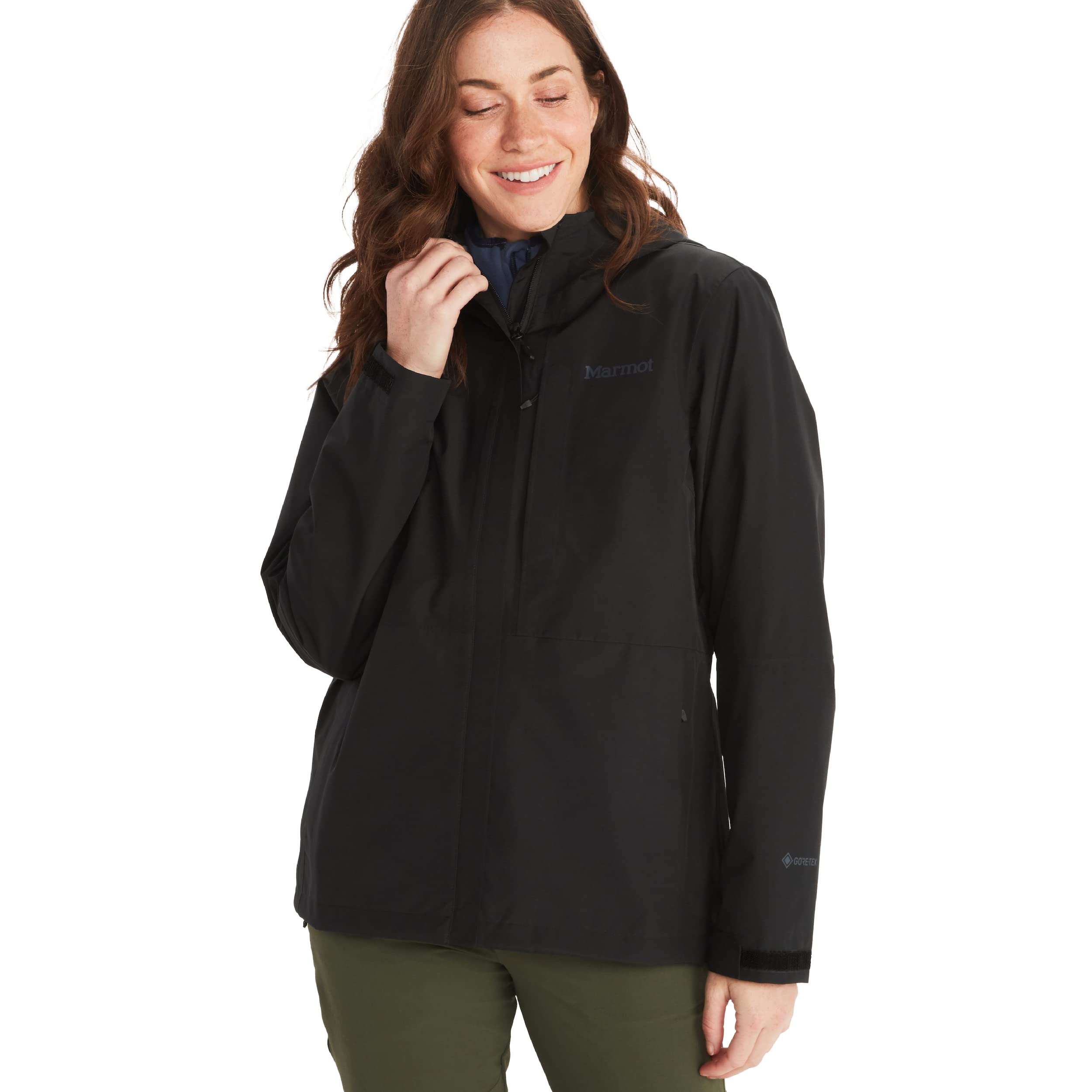
The Marmot Minimalist leverages GORE-TEX Paclite technology to deliver proven waterproofing in a package that compresses to the size of a small notebook. The 2.5-layer construction sheds unnecessary weight and bulk while maintaining full seam taping and a watertight front zipper. Underarm pit zips and an adjustable hood provide ventilation and fit customization that rival heavier 3-layer shells.
Reviews from Ireland and Scotland — two of the wettest testing grounds — confirm the jacket holds up to hours of rain without wetting out, and the longer back hem prevents water from soaking through pants when bending over. The vivid color options draw positive comments, and the zippered pockets are positioned high enough to remain accessible when wearing a backpack hipbelt.
Some users found the size medium works well with a light down mid-layer but looks puffy when layered heavily. The black color in particular can appear too casual for some buyers seeking a more technical aesthetic. The Paclite material is less durable than a 3-layer face fabric, so it’s best suited for hiking, travel, and urban commuting rather than repeated bush contact.
Why it’s great
- GORE-TEX Paclite offers excellent waterproofing with minimal pack weight
- Long tail hem adds rain protection for the lower back and seat area
- Pit zips and adjustable hood provide effective active ventilation
Good to know
- 2.5-layer face fabric is less durable than 3-layer shells for abrasive conditions
- Fit can feel puffy when layering a thick mid-layer underneath
- Black color option may not appeal to those wanting a more technical look
4. Rab Downpour Mountain Jacket
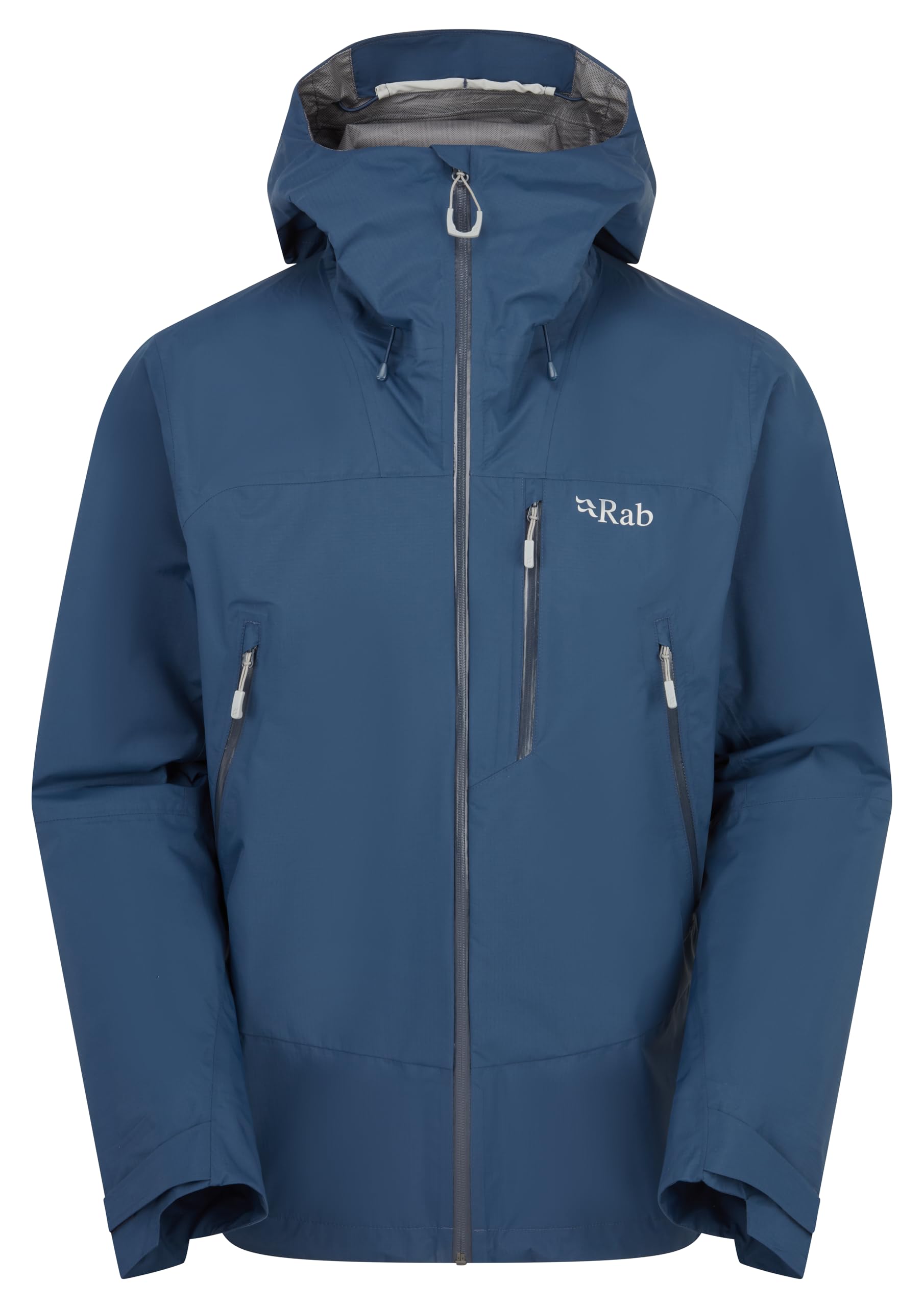
Rab’s Downpour Mountain Jacket uses Pertex Shield 2.5-layer fabric with an official 20,000mm hydrostatic head and 20,000 g/m²/24hr MVTR rating, delivering the same spec as premium GORE-TEX shells at a lower cost. The 100% recycled face material keeps weight low and packability high, while YKK Aquaguard zippers on all external openings seal out moisture. Underarm ventilation zips provide manual climate control during high-exertion climbs.
Florida-based users working in hot, humid conditions report the jacket manages internal condensation far better than PVC-based alternatives, staying comfortable even when worn for full work shifts. The regular cut permits easy layering over a baselayer and midlayer without feeling restrictive, and the articulated sleeves allow full overhead reach for rock climbing and bushwhacking.
Fit is a frequent discussion point — the jacket runs slightly small in the chest and shoulders for Rab’s usual sizing, so buyers with broad shoulders may need to size up. A few users noted the DWR finish could be more aggressive out of the box, requiring a reactivation wash to restore optimal beading after several wear cycles.
Why it’s great
- True 20K/20K rating matches high-end membranes at a mid-range price
- Very lightweight and packs into its own pocket for easy storage
- Articulated sleeves and regular cut allow full range of motion for climbing
Good to know
- Runs small in the chest and shoulders; sizing up is often necessary
- DWR coating may need reactivation after several wash cycles
- Limited color options compared to more mainstream outdoor brands
5. Outdoor Research Stratoburst Stretch Rain Jacket
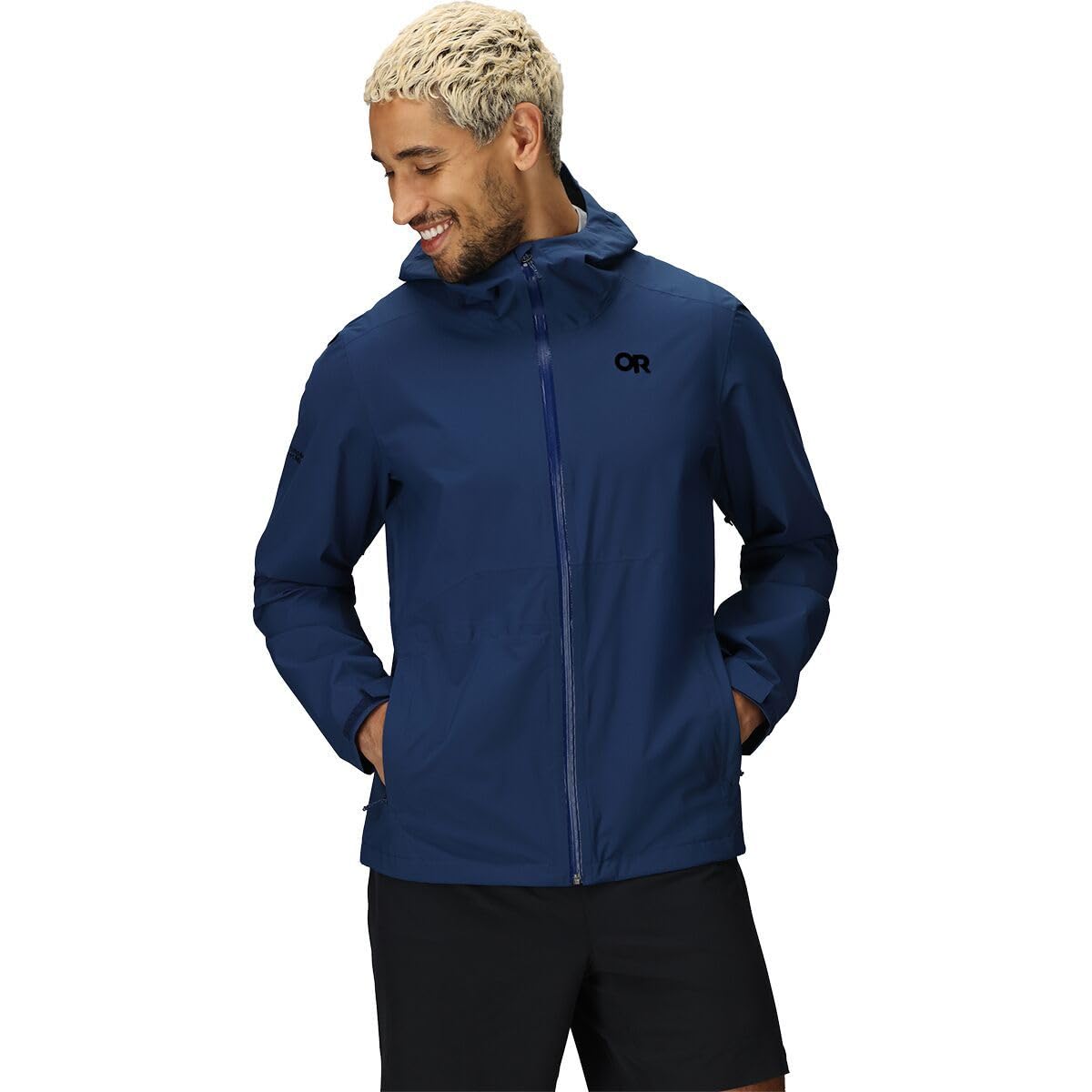
The Stratoburst Stretch uses Outdoor Research’s proprietary Ventia 2.5-layer fabric that incorporates mechanical stretch, allowing the jacket to move with the body during dynamic climbing and trail running motions. The 100% recycled face fabric and bluesign approval make this a strong choice for eco-conscious users. Fully taped seams and a YKK Aquaguard front zipper maintain waterproof integrity, while the chest pocket doubles as a built-in stuff sack.
Reviewers who wore the jacket on the wet, cold walks of the Scottish Highlands and during manual labor in the woods praise its combination of lightweight packability and effective blocking against both wind and rain. The pit zips are particularly effective at venting heat during steep ascents, though some users wish an additional back vent was included for warm-weather use.
The mechanical stretch, while present, is less dramatic than some stretch-woven softshells — it provides mobility rather than true fabric give. The DWR treatment holds up well after multiple washes according to long-term user reports.
Why it’s great
- Mechanical stretch fabric allows excellent freedom of movement for climbing
- Packs into its own chest pocket, reducing pack weight and bulk
- Bluesign-approved recycled materials appeal to environmentally aware buyers
Good to know
- Stretch is limited compared to softshells; not a true 4-way stretch fabric
- Snug fit across chest when layering with bulky midlayers
- Lacks a rear vent for additional hot-weather air circulation
6. Helly Hansen Crew Jacket 2.0
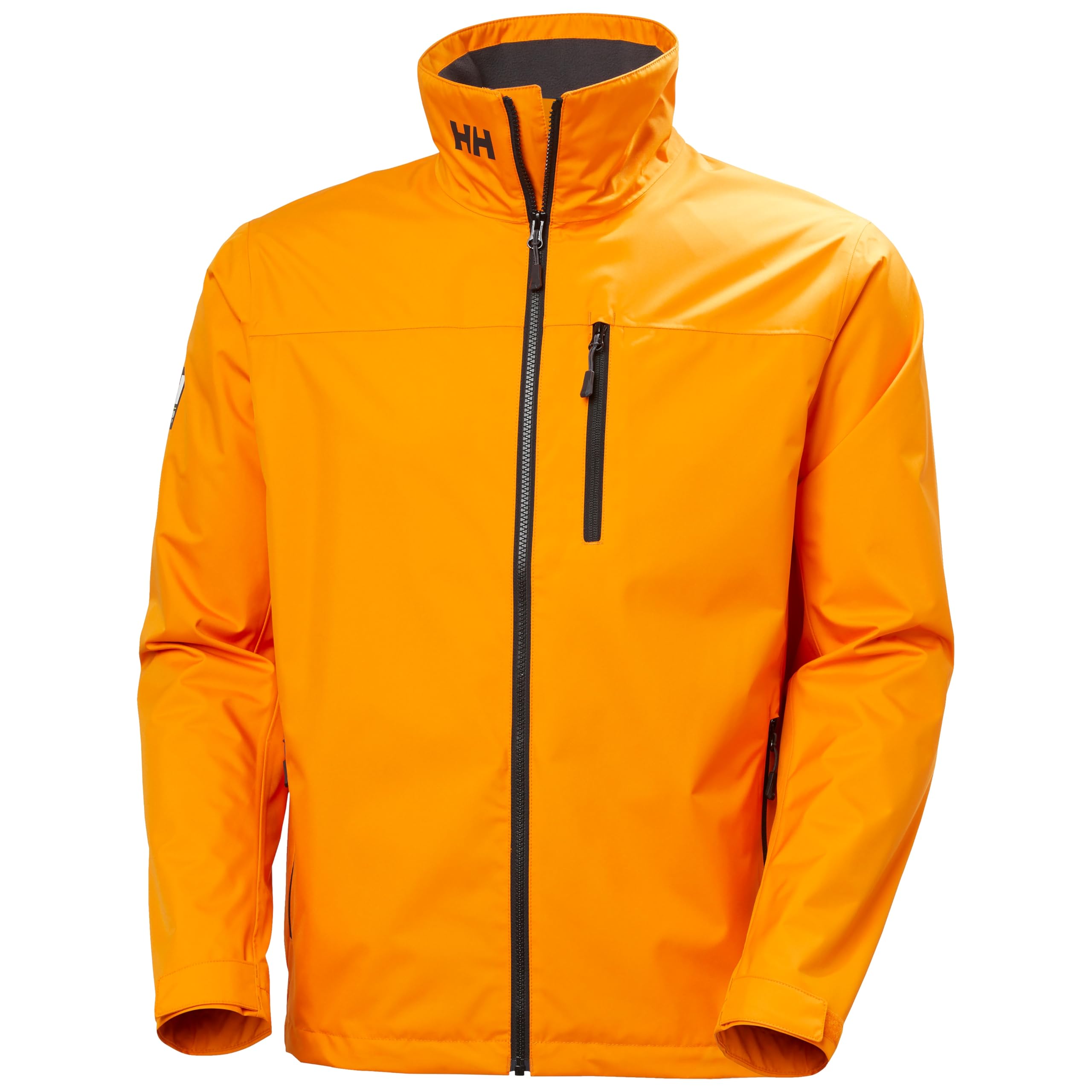
The Crew Jacket 2.0 is built around Helly Tech Protection fabric, a proprietary 2.5-layer laminate that offers reliable waterproof and windproof performance with moderate breathability. The fleece-lined collar provides warmth against the neck, and the articulated shoulders and elbows allow unrestricted movement for trimming sails or handling lines. The jacket’s cut is slightly longer than a standard rain shell, covering the lower back when bending over on deck.
Multiple buyers report purchasing a second jacket after being impressed with the fit and durability of the first. The jacket transitions well from coastal sailing to city commuting, with the clean design attracting positive comments in both settings. The hand pockets are lined with fleece for added warmth, though they lack waterproof zipper protection.
The breathability is lower than some dedicated hiking shells, so active users may feel clammy during vigorous uphill efforts. A few users noted the jacket runs slightly large in the body, which can feel baggy if worn without a midlayer. The adjustable cuffs and hem help fine-tune the fit, but the trade-off for the marine-oriented design is less emphasis on high-MVTR breathability.
Why it’s great
- Fleece-lined collar adds comfort and warmth in cold, wet marine conditions
- Articulated shoulders enable full range of motion for sailing and active use
- Versatile design works well on the water and in everyday urban settings
Good to know
- Breathability is lower than hiking-specific shells; can feel clammy during exertion
- Fit runs slightly large; may look baggy without a midlayer underneath
- Hand pockets lack waterproof zipper protection
7. Grundéns Full Share Jacket
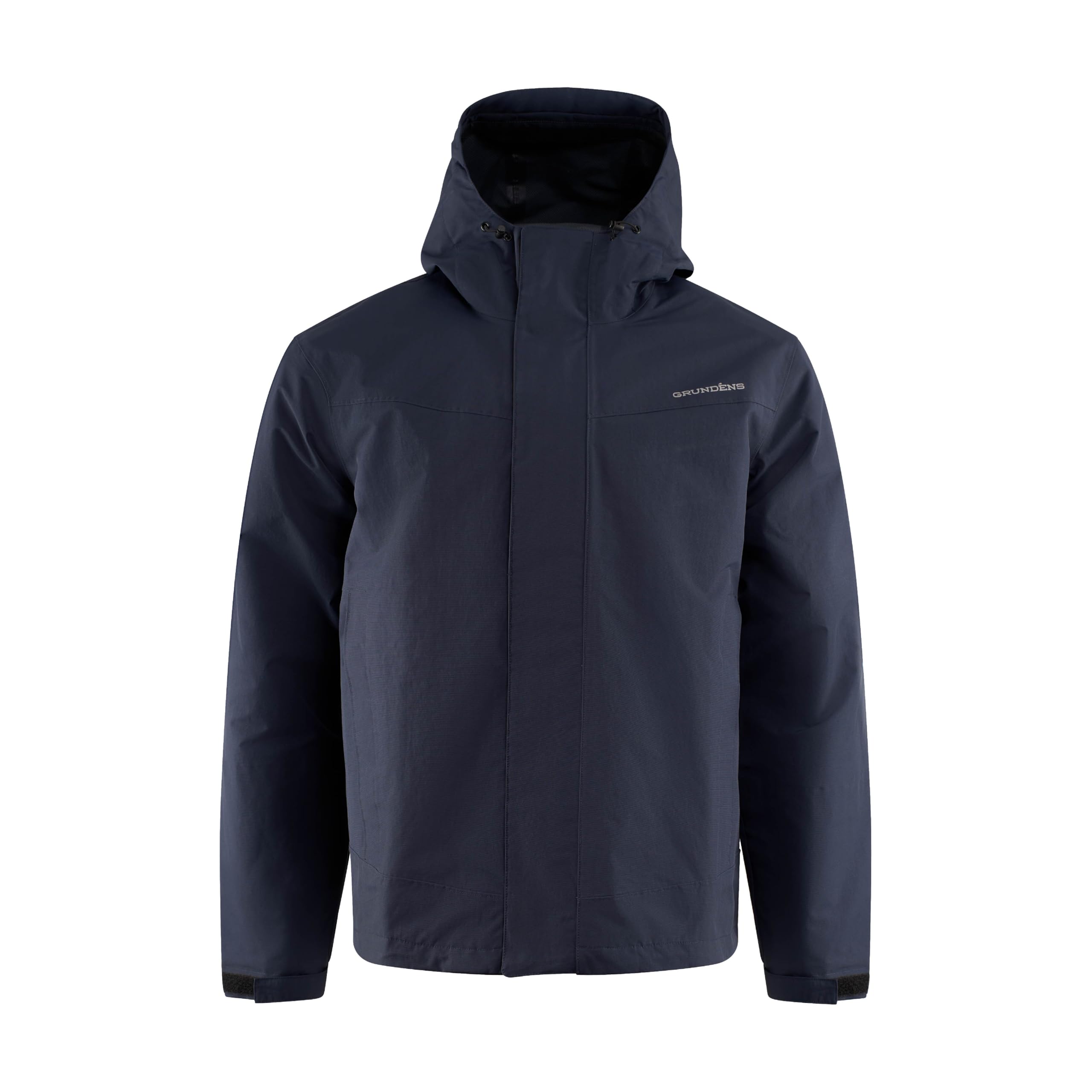
Designed for commercial fishermen and serious anglers, the Full Share Jacket pairs a rugged exterior fabric with an interior membrane resistant to common marine contaminants like fish slime, blood, and fuel. The moisture-wicking liner improves next-to-skin comfort during long days on the water, and the adjustable hood and cuffs seal out spray even in rough seas. The jacket is also ANSI-rated for high-visibility safety in marine work environments.
Alaska-based users who fished in heavy rain and rough seas report staying completely dry, and the jacket’s ability to resist staining keeps it looking professional after repeated exposure to the elements. The XXL size is noted to be very roomy for layering thermal undergarments and waterproof bibs, making it a top choice for cold-water sport fishing and charter deck work.
The jacket’s weight is higher than ultralight hiking shells, as the durable face fabric and stain-resistant treatment add bulk. The breathability is decent for stationary and moderate activity but not ideal for high-output hiking. The price point is competitive for the marine-oriented feature set, though some recreational anglers may prefer a lighter option for occasional use.
Why it’s great
- Stain-resistant shell withstands fish slime, blood, and fuel on the deck
- Moisture-wicking liner keeps skin dry during long shifts in wet conditions
- ANSI-rated high-visibility for safety in commercial marine environments
Good to know
- Heavier and less packable than hiking-focused rain shells
- Breathability is adequate for moderate activity but not high-output hiking
- Marine-specific design may have more features than casual users need
8. FROGG TOGGS Pilot 2 Guide Rain Jacket

The Pilot 2 Guide uses FROGG TOGGS’ DriPore Gen2 3-layer fabric to deliver reliable waterproofing with enhanced breathability compared to older generations. The jacket features a removable, adjustable hood with cord locks, splash-resistant zippers, and an internal storm flap that balances air circulation with water protection. An internal zip system allows the addition of the Co-Pilot liner for cold-weather warmth, making this a modular rain system.
Alaskan fishermen and Kenai Fjords adventurers confirm the jacket keeps them dry in the vicious wet-windy weather unique to that region, and the hand-warmer pockets and side pouches provide ample storage for tools and gear. The jacket stows compactly for its durability level, and the adjustable waist with barrel locks ensures a secure fit over bulky layers. Multiple users mention the excellent value compared to more expensive shells.
The removable hood restricts peripheral vision when fully cinched, and some users noted the sleeves run slightly short when reaching forward. The hood detaches easily but lacks a storage pocket or collar clip when not in use. The internal storm flap and non-waterproof main zipper mean it’s not fully submersible, but for everyday rain and active outdoor use, it performs admirably at a mid-range price.
Why it’s great
- Removable hood and modular liner system adapt to varying weather conditions
- DriPore Gen2 3-layer fabric improves breathability over earlier generations
- Adjustable waist and cuffs provide a secure, customizable fit over layers
Good to know
- Removable hood can restrict peripheral vision when fully adjusted
- Sleeve length may be short for taller users or those with long arms
- Main zipper is not fully waterproof; relies on internal storm flap
9. Helly Hansen Moss Rain Coat

The Moss Rain Coat draws inspiration from the legendary 1950s Helly Hansen fisherman’s coat, upgraded with modern Helox+ waterproof fabric technology that keeps you dry in sustained downpours. The jacket is bluesign certified, meaning the textile manufacturing process meets strict environmental and safety standards. The ventilation system — flap-over chest vents — provides airflow without compromising waterproofing, addressing the common complaint of sweaty rain shells.
USPS mail carriers working 8–10 hour outdoor shifts in heavy rain report staying completely dry and not overheating, making it a cost-effective alternative to specialized postal rain gear costing multiple times more. The cut accommodates larger builds well, with XL fitting a 6’2″, 250 lb frame with room for a sweater underneath. The heritage styling draws compliments, and the jacket holds up well to daily wear.
Breathability is the one clear weak point: several users confirm the jacket is waterproof but not especially breathable, so it can feel clammy during high-exertion activities in warm weather. The ventilation flaps help, but this is a rain coat designed for standing or moderate movement rather than trail running. The sleeve length runs slightly long for shorter builds, though the adjustable cuffs mitigate this somewhat.
Why it’s great
- Heritage-inspired design with modern Helox+ waterproof fabric technology
- Flap-over chest vents improve airflow without sacrificing waterproofing
- Roomy cut accommodates larger builds and mid-layer sweaters easily
Good to know
- Breathability is limited; can feel clammy during moderate to high exertion
- Sleeves may run long for shorter users despite adjustable cuffs
- Not the most packable option for lightweight backpacking or travel
FAQ
Is a 20K waterproof rating necessary for hiking and backpacking?
How does a 20K waterproof rating compare to GORE-TEX performance?
Can I wash a 20K waterproof jacket without damaging the membrane?
Final Thoughts: The Verdict
For most users, the best 20k waterproof jacket winner is the Fjällräven Keb Eco-Shell because its fluorocarbon-free ePE membrane delivers reliable 20K waterproofing in a durable 3-layer package with excellent articulation and pocket placement. If you want ultralight packability with proven GORE-TEX performance, grab the Marmot Minimalist GORE-TEX. And for budget-conscious buyers who need reliable downpour defense without breaking the bank, nothing beats the Helly Hansen Moss Rain Coat.