
A single device that watches for fast-moving fires, invisible carbon monoxide, and combustible natural gas or propane is the simplest path to comprehensive home safety. Combining three sensing technologies into one unit eliminates the clutter of separate detectors and guarantees no corner of your home goes unprotected.
I’m Min — the co-founder and writer behind Gadgets Feed. I’ve spent countless hours comparing the electrochemical sensors, photoelectric smoke chambers, and gas-sensing elements inside these multi-hazard alarms to separate genuinely reliable devices from those prone to nuisance trips.
After analyzing dozens of models across multiple price tiers, I’ve identified the seven most trustworthy contenders for any home. This guide walks through every detail you need to confidently choose the best 3-in-1 smoke carbon monoxide and natural gas alarm for your kitchen, basement, and sleeping areas.
How To Choose The Best 3-in-1 Smoke Carbon Monoxide And Natural Gas Alarm
A multi-gas alarm is only as good as the individual sensors inside it. Understanding how each sensing technology works, how the alarm gets its power, and what certifications validate its performance will prevent costly false alarms and ensure real protection when you need it.
Sensor Technology: Electrochemical vs. Photoelectric vs. Catalytic
Carbon monoxide detection relies on an electrochemical cell that generates a current proportional to CO concentration. Smoke detection uses a photoelectric chamber that scatters light when smoke particles enter — this design excels at sensing smoldering fires before flames erupt. Natural gas and propane detection typically uses a catalytic bead or semiconductor sensor that reacts to combustible gases. A true 3-in-1 alarm integrates all three technologies in a single housing, which means the device must manage cross-sensitivity without false triggers from cooking steam or aerosol sprays.
Power Source: Plug-In vs. Sealed Battery
Plug-in alarms with a 9V battery backup offer the best uptime because the primary circuitry runs on household current while the battery covers power outages. Sealed 10-year lithium battery models eliminate low-battery chirps and are ideal for locations without accessible outlets, but they must be replaced entirely when the battery depletes. For homes with natural gas appliances, a plug-in unit with digital display gives you real-time gas and CO readings — a feature rarely found in battery-only units.
Certifications That Matter
UL 2034 governs carbon monoxide alarm performance, specifying response thresholds and alarm patterns. UL 217 covers smoke alarms, including sensitivity to both flaming and smoldering fires. For combustible gas detection, look for compliance with UL 1484, which tests natural gas and propane sensor accuracy. Alarms that carry these marks have passed independent lab testing, whereas uncertified devices may fail to alarm at dangerous gas concentrations or trigger false alerts from household chemicals.
Quick Comparison
On smaller screens, swipe sideways to see the full table.
| Model | Category | Best For | Key Spec | Amazon |
|---|---|---|---|---|
| Kidde KN-COEG-3 | Plug-in Combo | Natural gas & CO with real-time display | Digital display + 9V battery backup | Amazon |
| X-Sense SC01-W 3-Pack | Wireless Interconnect | Whole-home linked protection | 10-year sealed lithium battery | Amazon |
| First Alert SMCO500V | Voice Alerts | Clear hazard location announcements | Wireless interconnect + voice alerts | Amazon |
| Kidde 900-CUDR-V | Voice Alarm | Battery-operated with self-test | 85 dB voice alarm + 24/7 self-test | Amazon |
| First Alert SMCO100 | Battery Operated | Simple 2-in-1 with Precision Detection | AA battery powered | Amazon |
| First Alert SMICO110 | 10-Year Battery | No-battery-chirp convenience | 10-year sealed battery | Amazon |
| Kidde COPD | Plug-in CO Only | CO monitoring with travel-friendly design | Digital display + AA battery backup | Amazon |
In‑Depth Reviews
1. Kidde KN-COEG-3

The Kidde KN-COEG-3 is the only alarm in this roundup that simultaneously monitors carbon monoxide and explosive gases (natural gas and propane) while delivering a full digital readout of current levels. Its electrochemical CO sensor and catalytic gas sensor operate independently, so you see exact PPM for CO and a “GAS” alert when combustible gas hits the threshold.
Plugging into a 120V outlet with a 9V battery backup means the device stays active during power failures — critical when a gas leak occurs during a blackout. The 85 dB siren is loud enough to wake sleepers, and the Peak Level Memory records the highest CO reading since the last reset, helping you prove a leak to a utility technician. Users report reliable performance over two-plus years with propane heaters, and the rotating plug fits both vertical and horizontal outlets.
This unit does not include smoke detection, so you must pair it with a separate smoke alarm for complete hazard coverage. The 3rd Edition design is UL 2034 and UL 1484 certified, and the end-of-life indicator flashes “END” after roughly seven years of service. If your home uses natural gas for heating or cooking, this is the most informative and practical single-device solution available.
Why it’s great
- Digital display shows real-time CO and gas readings
- Plug-in with 9V backup for power-outage protection
- Peak Level Memory records maximum CO exposure
Good to know
- Does not detect smoke — requires a separate smoke alarm
- Service life limited to approximately seven years
2. X-Sense SC01-W 3-Pack
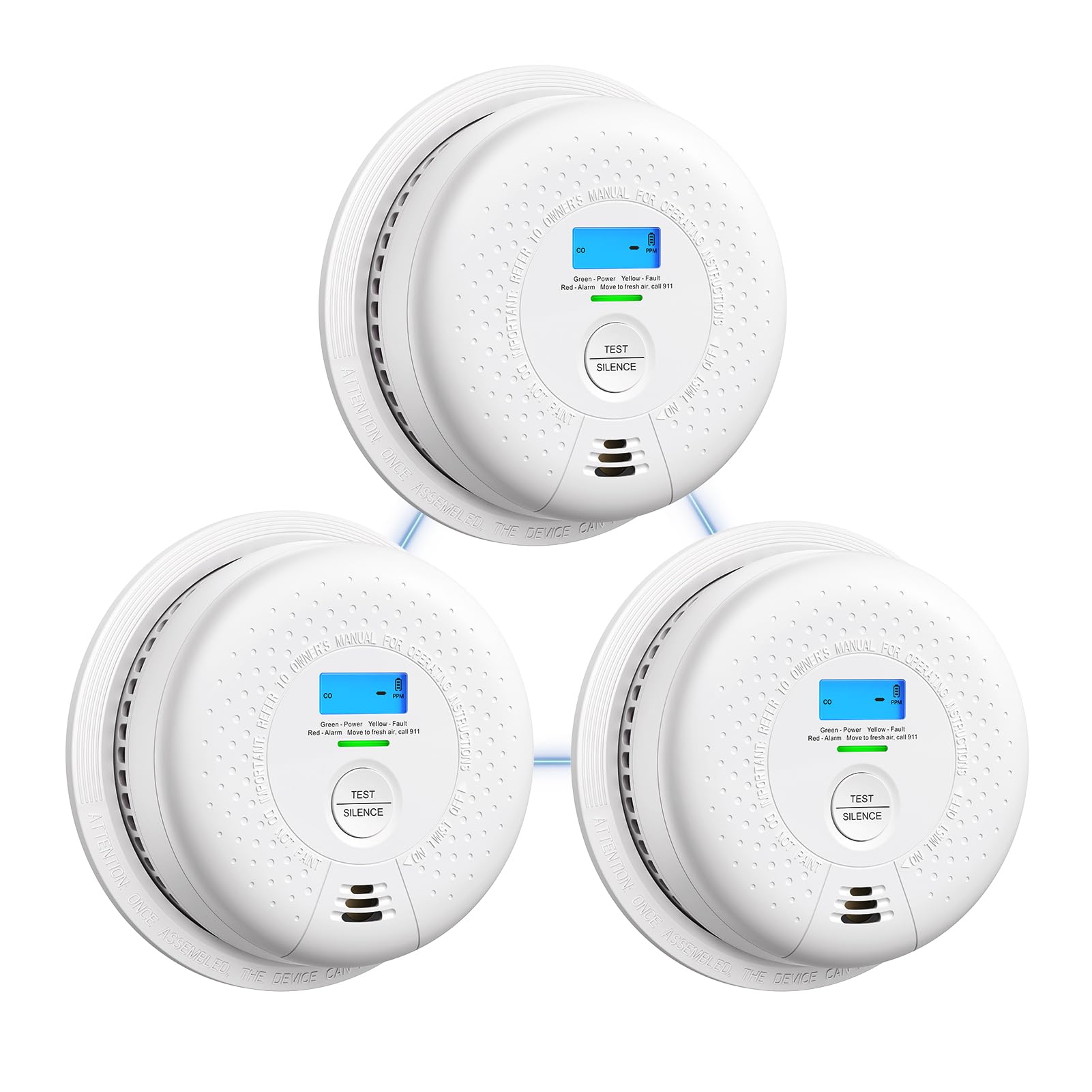
The X-Sense SC01-W brings wireless interconnection to a battery-powered 2-in-1 smoke and CO alarm, letting you link up to 18 units so that when one detects a hazard, every alarm in the house sounds. This three-pack covers a typical floor plan without any wiring, and the sealed 10-year lithium battery eliminates the annual chore of changing batteries and the nuisance of low-battery chirps.
Each unit uses a photoelectric smoke sensor and an electrochemical CO sensor, both certified to UL 217 and UL 2034. The 85 dB alarm pattern is distinct for smoke versus CO, and the heat-resistant PC enclosure holds up in warmer areas near kitchens. Users consistently praise the straightforward sync process and the ability to test the entire network with a single remote (sold separately).
The SC01-W does not detect natural gas or propane — it is strictly smoke and CO. The mounting plate may not fit older round electrical boxes without a small adapter plate. For homes that want whole-home smoke and CO coverage without hardwiring, this three-pack delivers exceptional value at a price that undercuts buying individual units.
Why it’s great
- Wireless interconnect links up to 18 alarms
- 10-year sealed lithium battery needs zero maintenance
- Comes as a three-pack for whole-home coverage
Good to know
- No natural gas or propane detection
- Mounting plate may require adapter for old boxes
3. First Alert SMCO500V

First Alert’s SMCO500V combines smoke and CO detection with a voice alert that names the specific danger and its location — “Fire, basement” or “Warning, carbon monoxide, kitchen” — eliminating the confusion of a generic siren during an emergency. The Precision Detection technology complies with the latest UL standards to reduce nuisance alarms from cooking steam, a common pain point with older combo detectors.
This battery-operated alarm supports wireless interconnect with other compatible First Alert units, so a threat detected upstairs triggers alarms throughout the home. The voice guidance is loud enough to be heard through noise-cancelling earbuds, and the end-of-life chirp signals when the 10-year sensor has expired. Users highlight the simple pairing process and the clear, location-specific voice prompts as major advantages over standard beepers.
Some units have shown random false alarms or error codes after extended use, and multiple users report failures within two years in a small percentage of units. The SMCO500V excels at reducing confusion during a real event, but you should test the interconnect function monthly and keep the purchase receipt handy for warranty claims.
Why it’s great
- Voice alerts identify the hazard type and location
- Wireless interconnect with other First Alert units
- Precision Detection reduces false alarms from cooking
Good to know
- Some units exhibit random false alarms or errors
- No natural gas detection — covers smoke and CO only
4. Kidde 900-CUDR-V

The Kidde 900-CUDR-V uses a voice alarm that clearly announces “Fire!” for smoke and “Warning, Carbon Monoxide” for CO, so you know the exact threat without hunting for a flashing LED. A 24/7 self-test circuit continuously checks the sensors and electronics, alerting you with an amber LED and chirp if the unit is not working properly — a feature that compensates for the human tendency to forget monthly manual tests.
The photoelectric smoke sensor excels at detecting slow, smoldering fires, while the electrochemical CO sensor catches poisonous gas from faulty furnaces or water heaters. Two included AA batteries power the unit, and the mounting bracket allows four installation orientations for hallway or ceiling placement. The 85 dB alarm and bright red LED meet the minimum requirements for UL 2034 and UL 217 certification.
Several users report the alarm failing within a year due to false non-stop chirping or complete fault errors, and Kidde’s customer service has been inconsistent with replacements. The 10-year warranty covers the alarm hardware but not battery life, so a dead unit after 12 months requires going through the warranty process. When it works, the voice guidance and self-test logic are best-in-class for the price, but reliability concerns make it a cautious recommendation.
Why it’s great
- Voice announces “Fire” or “Warning Carbon Monoxide”
- 24/7 self-test checks sensors continuously
- AA battery operation simplifies placement anywhere
Good to know
- Some units fail prematurely within the first year
- No natural gas or propane detection
5. First Alert SMCO100

The First Alert SMCO100 strips away extras like voice alerts and interconnect to deliver a reliable 2-in-1 smoke and CO alarm at the lowest entry cost. Its Precision Detection technology is designed to reduce false alarms from cooking — a welcome improvement for anyone tired of waving a towel at a screeching detector every time they fry bacon. The test/silence button lets you hush a known false trigger for several minutes while the sensors reset.
Powered by two AA batteries (included), the SMCO100 installs in seconds with the included mounting bracket and works with existing First Alert wall plates for easy replacement. The end-of-life chirp signals when the entire unit needs replacement after about 10 years. Weight is just 8.24 ounces, making it barely noticeable on the ceiling.
This alarm does not detect natural gas or propane, and it lacks the battery-sealed design that eliminates chirps — you will need to replace AAs annually. Several users note that the unit can still false-alarm during heavy frying, though far less than older models. For a straightforward, no-nonsense smoke and CO detector that fits any room, the SMCO100 delivers dependable protection without premium extras you may never use.
Why it’s great
- Precision Detection limits nuisance alarms from cooking
- Lowest upfront cost for reliable smoke and CO coverage
- Lightweight and easy to install on any ceiling
Good to know
- No natural gas detection
- Requires annual AA battery changes
6. First Alert SMICO110

The First Alert SMICO110 is the set-it-and-forget-it option for homeowners who want smoke and CO protection without ever buying replacement batteries. Its sealed 10-year lithium battery powers the unit for its entire service life and eliminates the low-battery chirp that usually prompts mid-night removal of a chirping detector. When the 10-year countdown ends, the alarm issues an end-of-life warning beep so you know it is time to replace the whole device.
The Precision Detection sensor array meets current UL standards and reduces false alarms from steam and cooking vapors. The unit fits the same mounting bracket as older First Alert models, so you can swap expired units without drilling new holes. The test/silence button is non-functional before mounting — the alarm only activates once twisted onto the plate — a detail buried in the instructions that surprises some users.
Several customers report the 10-year battery claim falling short, with the alarm chirping or failing as early as two years after installation. This suggests possible QA inconsistencies in certain batches. The SMICO110 also lacks natural gas detection and cannot interconnect with other alarms. For a dedicated smoke and CO solution that demands zero annual battery swaps, it offers unmatched convenience — assuming the sealed battery lives up to its decade-long promise.
Why it’s great
- Sealed 10-year battery eliminates all chirps and swaps
- Fits existing First Alert mounting plates
- Precision Detection reduces nuisance alarms
Good to know
- Battery life inconsistent — some fail before 10 years
- No natural gas detection and no interconnect
7. Kidde COPD
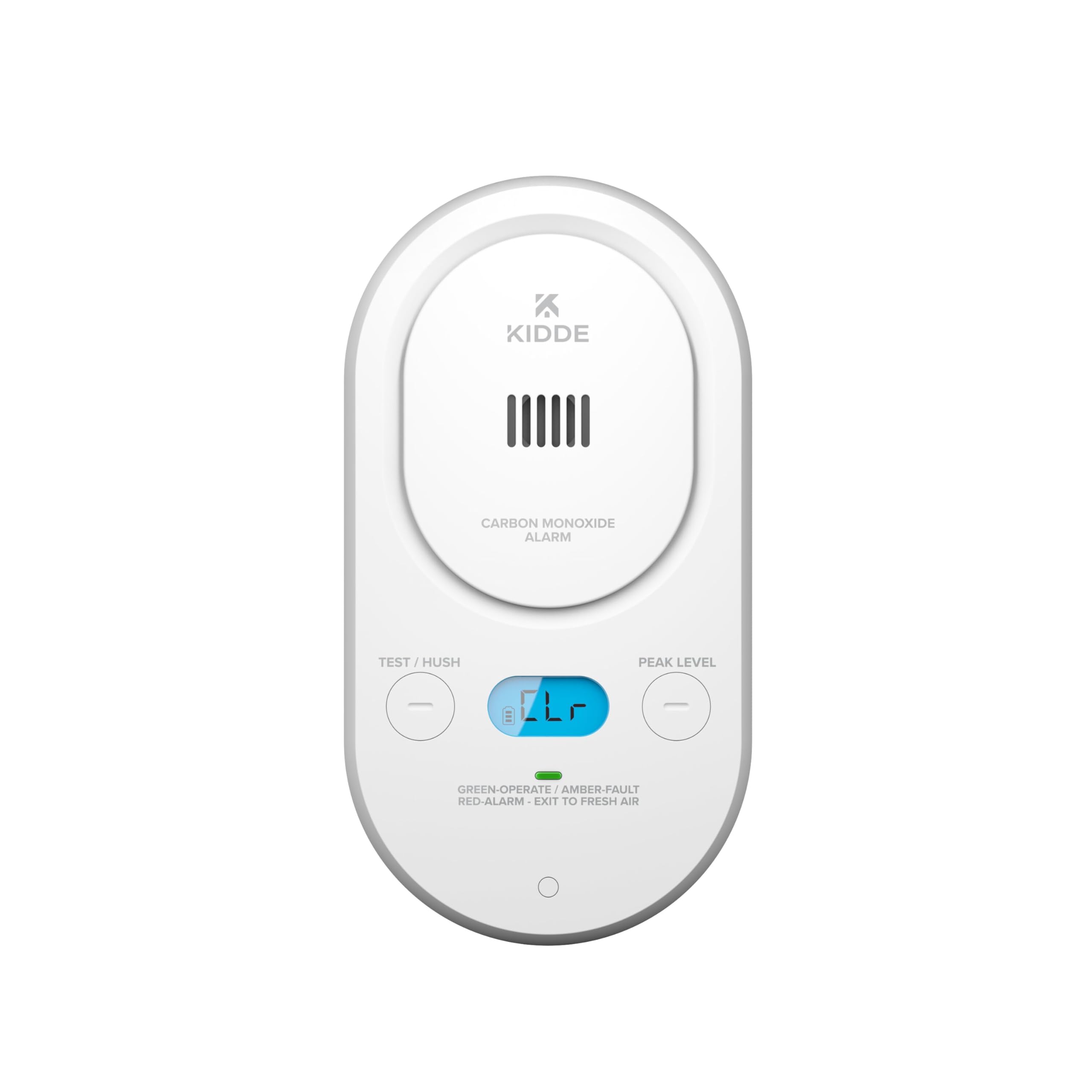
The Kidde COPD is a carbon monoxide detector that also functions as a travel companion — its compact, lightweight design slips into a suitcase for use in hotel rooms or vacation rentals where CO hazards from gas appliances or attached garages may exist. The digital backlit display shows current CO levels in parts per million, and the 85 dB alarm sounds when levels become dangerous. A rotating plug accommodates both vertical and horizontal wall outlets.
Power comes from plugging into a 120V outlet with two AA backup batteries for protection during outages. The Test/Hush button lets you quickly verify operation or silence a known low-battery chirp. The Peak Level Memory records the highest CO concentration since the last reset, providing useful data for assessing a leak. UL 2034 5th Edition certification ensures the sensor meets current accuracy standards.
This detector is a CO-only unit — it does not sense smoke or natural gas. The service life is limited to roughly seven years, after which the unit displays “END” and must be replaced. Some users report false alarms after several years, but the majority describe years of silent, dependable operation. For anyone who travels frequently or wants a dedicated CO monitor with live readouts, the COPD is a versatile buy that doubles as a home detector.
Why it’s great
- Compact and lightweight for travel use
- Digital backlit display shows real-time CO levels
- Peak Level Memory tracks highest CO exposure
Good to know
- No smoke or natural gas detection
- Service life limited to approximately seven years
FAQ
Does a 3-in-1 alarm really detect natural gas and propane the same way?
How often should I test a 3-in-1 smoke, CO, and gas alarm?
Can I install a 3-in-1 alarm in the kitchen without constant false alarms?
Why does my gas alarm go off when I use hairspray or cleaning products?
Final Thoughts: The Verdict
For most users, the best 3-in-1 smoke carbon monoxide and natural gas alarm winner is the Kidde KN-COEG-3 because it pairs real-time digital gas readings with a plug-in design that never leaves you unprotected during a power outage. If you want whole-home smoke and CO coverage without hardwiring, grab the X-Sense SC01-W 3-Pack for its wireless interconnect and sealed 10-year battery. And for a budget-friendly smoke and CO alarm that cuts false triggers, nothing beats the First Alert SMCO100.