
The search for a capable 26-inch full suspension mountain bike often feels like a compromise between affordability and actual trail performance. Many entry-level options skimp on shock absorption or drivetrain reliability, leaving riders with a harsh, rattling experience on anything rougher than a paved path. A true dual-suspension setup changes everything—it keeps the rear tire planted, reduces rider fatigue, and allows you to tackle roots, rocks, and drops with far more control.
I’m Min — the co-founder and writer behind Gadgets Feed. For this guide, I’ve spent dozens of hours digging through technical specifications, cross-referencing customer feedback, and analyzing build quality across nine distinct models in the 26-inch full-suspension category to separate genuine value from marketing fluff.
Whether you’re a weekend warrior looking to upgrade from a rigid hardtail or a budget-conscious commuter wanting plushness without breaking the bank, this deep dive into the best 26 full suspension mountain bike options will help you match the right frame material, drivetrain, and suspension design to your specific terrain and riding style.
How To Choose The Best 26 Full Suspension Mountain Bike
Selecting the right 26-inch full-suspension bike requires understanding how frame material, suspension design, and drivetrain quality interact for your specific riding weight and terrain. A bike that feels plush on a smooth gravel path can bottom out or wallow on steep, rocky descents if the shock isn’t matched to the rider.
Steel vs. Aluminum Frame: Weight vs. Compliance
High-carbon steel frames (common in budget-tier models) offer excellent durability and inherent vibration damping, but they typically add six to ten pounds compared to an aluminum frame. An aluminum frame reduces total bike weight significantly—often dropping below 35 pounds—which makes climbing and lifting onto a rack much easier. However, aluminum transmits more trail chatter through the rear triangle unless the suspension is tuned aggressively. For riders under 200 pounds who prioritize weight savings, aluminum is the smarter choice. For heavier riders or those on a tighter budget, high-carbon steel provides a more compliant ride without sacrificing structural integrity.
Suspension Type: Coil vs. Spring and Real Travel
Most bikes in this price range use a coil-over rear shock or a simple elastomer/spring unit. “Full suspension” on a sub- bike usually means a rear swingarm with a coil spring that offers 40mm to 60mm of travel—enough to absorb small roots and bumps, but not designed for jump lines or aggressive downhill runs. Front suspension forks often have 60mm to 80mm of travel and are typically non-adjustable. The real indicator of capability is whether the rear suspension uses a true linkage system (like a four-bar or single-pivot) versus a simple U-bracket that compresses a spring directly. Linkage-based designs provide progressive damping, meaning the shock stiffens as it compresses, preventing bottom-out on larger hits.
Drivetrain Reliability: The Derailleur Matters More Than Gear Count
A 21-speed drivetrain sounds capable on paper, but the actual shifting performance depends entirely on the derailleur and shifter brand. Bikes equipped with a Shimano Tourney or Altus rear derailleur offer crisp indexing and better chain retention under load than unbranded “Outboard” derailleurs common on ultra-budget builds. Trigger shifters provide more positive gear engagement than twist-grip shifters, which can accidentally slip when gripping the handlebar tightly on rough descents. If you plan to ride technical singletrack regularly, prioritize a model with a branded derailleur—even entry-level Shimano is far more reliable than a generic alternative.
Braking Performance: Mechanical Disc vs. V-Brake
Mechanical disc brakes have become standard on most 26-inch full-suspension bikes in the – range, and they offer a significant improvement over rim brakes in wet or muddy conditions. However, not all mechanical discs are equal: the caliper design determines how easily you can adjust pad alignment without rubbing. Single-piston calipers are simpler to tune but provide less stopping force than dual-piston designs. On the Mongoose Dolomite and Argus, the disc rotors are 160mm front and rear, which provides adequate stopping power for a 250-pound rider on moderate slopes. If you’re heavier or riding steeper terrain, look for models with at least 180mm rotors for better heat dissipation and fade resistance.
Quick Comparison
On smaller screens, swipe sideways to see the full table.
| Model | Category | Best For | Key Spec | Amazon |
|---|---|---|---|---|
| Mongoose Dolomite | Fat Tire | Sand & snow riding | 4″ knobby tires, 7-speed | Amazon |
| Mongoose Argus Trail | Fat Tire | All-season trail grip | 16-speed, Shimano drivetrain | Amazon |
| VEVOR 26″ | Aluminum Frame | Lightweight trail riding | Aluminum frame, 21-speed | Amazon |
| WEIZE 26″ | Aluminum Frame | Beginner singletrack | Aluminum frame, dual disc brakes | Amazon |
| Ecarpat Gray-Green | Steel Frame | Budget trail use | Full dual suspension, 21-speed | Amazon |
| Huffy Stone Mountain | Steel Frame | Recreational commuting | Shimano derailleur, 21-speed | Amazon |
| Ktaxon 26″ | Steel Frame | Teenagers & light trails | Dual disc brakes, 21-speed | Amazon |
| Outroad Folding MTB | Folding | Storage-limited riders | Folding frame, 21-speed | Amazon |
| Ecarpat Black Blue | Steel Frame | Entry-level value | 21-speed, dual disc brakes | Amazon |
In‑Depth Reviews
1. Mongoose Dolomite Fat Tire Mountain Bike

The Mongoose Dolomite stands apart from every other bike in this lineup because of its 4-inch-wide knobby tires—the widest in the entire review set. Those fat tires provide an air volume cushion that effectively functions as secondary suspension, allowing the steel-framed bike to roll over loose sand, snow, and potholed streets with remarkable stability. The 1×7 drivetrain keeps things simple: one front chainring and a seven-speed freewheel, which reduces chain drops and simplifies maintenance for riders who don’t want to manage a front derailleur.
At 38 pounds, the Dolomite is noticeably heavy, but the weight sits low in the frame, giving it a planted feel at speed. The mechanical disc brakes—160mm rotors front and rear—provide consistent stopping power even when the tires are aired down to 8 PSI for soft terrain. Riders between 5’4″ and 6’0″ will find the standover height accommodating, though the stock saddle is universally reported as painful beyond 10 miles and should be budgeted as a first upgrade. The alloy rims keep unsprung weight manageable, and the threadless headset improves steering precision compared to cheaper threaded designs.
While the Dolomite is not a true full-suspension bike in the conventional sense (the rear end is rigid), the combination of 4-inch tires at low pressure and a compliant steel frame absorbs trail chatter that would rattle a hardtail with standard tires. This makes it the most versatile option for riders who split time between pavement, sand, and light snow. The 80% pre-assembly is straightforward—front wheel, bars, saddle, and pedals—and the twist-grip shifter is intuitive for beginners despite its tendency to shift accidentally if bumped.
Why it’s great
- Massive 4-inch tires provide unmatched flotation on sand and snow
- Simple 1×7 drivetrain reduces maintenance and chain drops
- Steel frame absorbs vibration well without needing travel
Good to know
- Stock saddle is uncomfortable beyond a few miles
- No rear suspension—relies entirely on tire volume for cushion
- Twist-grip shifter can shift unintentionally when bumped
2. Mongoose Argus Trail Fat Tire Mountain Bike

The Mongoose Argus Trail takes everything the Dolomite offers and adds a proper 2×8 Shimano drivetrain, giving riders a much wider gear range for climbing steep inclines without spinning out on descents. The 4-inch knobby tires are identical in width to the Dolomite, but the Argus uses a Tectonic T2 aluminum frame that shaves roughly five pounds off the total weight compared to the steel Dolomite. This weight reduction makes a noticeable difference when lifting the bike onto a tailgate rack or accelerating out of corners on loose gravel.
The rigid aluminum fork keeps the front end stiff and responsive, but it transmits more trail vibration to the handlebars than a steel fork would. Riders with wrist sensitivity may want to add thicker grips or a suspension stem. The mechanical disc brakes on the Argus are identical in spec to the Dolomite, but the lighter overall bike mass means they stop more effectively at similar speeds. The 17-inch frame fits riders from 5’7″ to 5’10” comfortably, and the trigger shifters provide positive gear engagement without the accidental shifts common to twist-grip designs.
Where the Argus really shines is in its upgradeability: the aluminum frame has standard dropouts and a threaded bottom bracket, making it straightforward to swap in a shorter stem, wider handlebars, or a dropper post down the line. The stock tires have relatively shallow tread depth—some riders report slipping on groomed snow—but the platform is solid enough to justify spending on better rubber. Assembly is more involved than budget models because of the front derailleur, but the included tools and clear labeling make it manageable for someone with basic mechanical comfort.
Why it’s great
- Lightweight aluminum frame improves climbing and acceleration
- Shimano 2×8 drivetrain offers genuine gear range for hills
- Standard frame specs make aftermarket upgrades easy
Good to know
- Rigid aluminum fork transmits more vibration to hands
- Stock tires have shallow tread that struggles on packed snow
- Heavier out-of-box weight than competitors in its class
3. VEVOR 26″ Mountain Bike
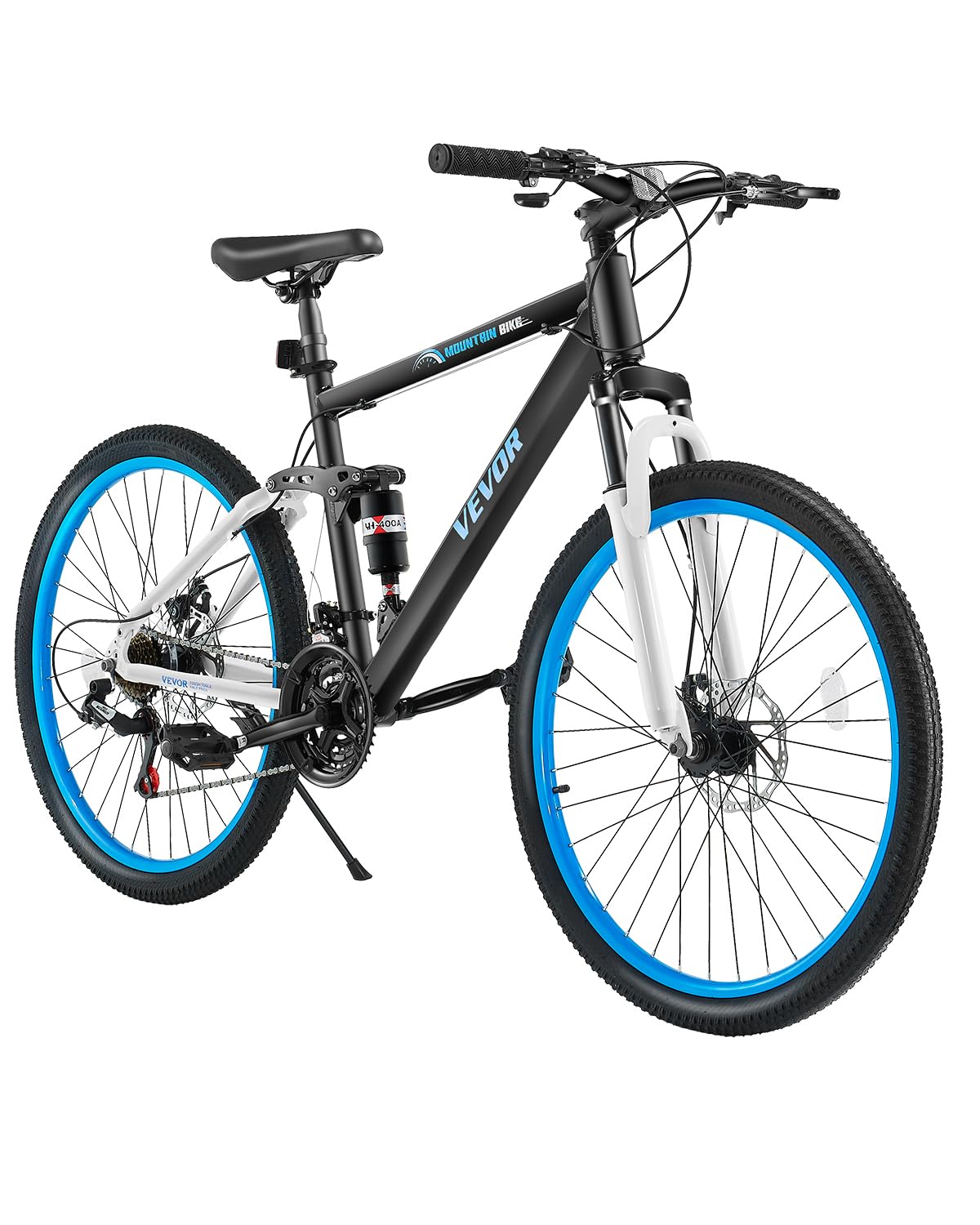
The VEVOR 26-inch full-suspension bike delivers an aluminum frame at a price point where most competitors still use high-carbon steel. This weight advantage—approximately 35 pounds fully assembled—makes it one of the lightest dual-suspension bikes in this roundup, which directly translates to easier climbing and less fatigue on longer rides. The front suspension fork provides 60mm of travel with a preload adjuster, allowing riders to fine-tune the spring rate for their weight, though the rear shock is a simple coil-over with no adjustment.
The 21-speed drivetrain uses twist-grip shifters and a rear derailleur that performs adequately on flat to moderate terrain, but several customer reports note that the derailleur hanger can bend under heavy shifting loads, leading to ghost shifting on steep climbs. The dual disc brakes are cable-actuated and provide reliable stopping power in dry conditions, but the 160mm rotors can fade on extended descents if you’re a heavier rider. The included padded seat is a noticeable upgrade over the rock-hard saddles found on most budget bikes, though it’s still firm enough that a gel cover helps on rides over an hour.
Assembly is rated at 85% pre-assembled, and the bike ships with a basic tool kit plus gloves—a thoughtful touch for first-time builders. The biggest point of failure reported by dozens of buyers is the rear gear assembly: the freewheel can twist off the hub body under hard pedaling, leaving the bike without any drive. This appears to be a manufacturing variance rather than a design flaw, but it’s worth inspecting the rear wheel’s cassette tightness during assembly. If you get a properly torqued unit, the VEVOR offers excellent value for a sub-35-pound full-suspension bike.
Why it’s great
- Aluminum frame keeps weight lower than steel competitors
- Front fork has preload adjustment for rider weight tuning
- Tool kit and gloves included for easy assembly
Good to know
- Rear freewheel can twist off hub under hard pedaling
- Twist-grip shifters are prone to accidental shifts on rough terrain
- Plastic pedals should be replaced with metal platforms
4. WEIZE 26″ Mountain Bike
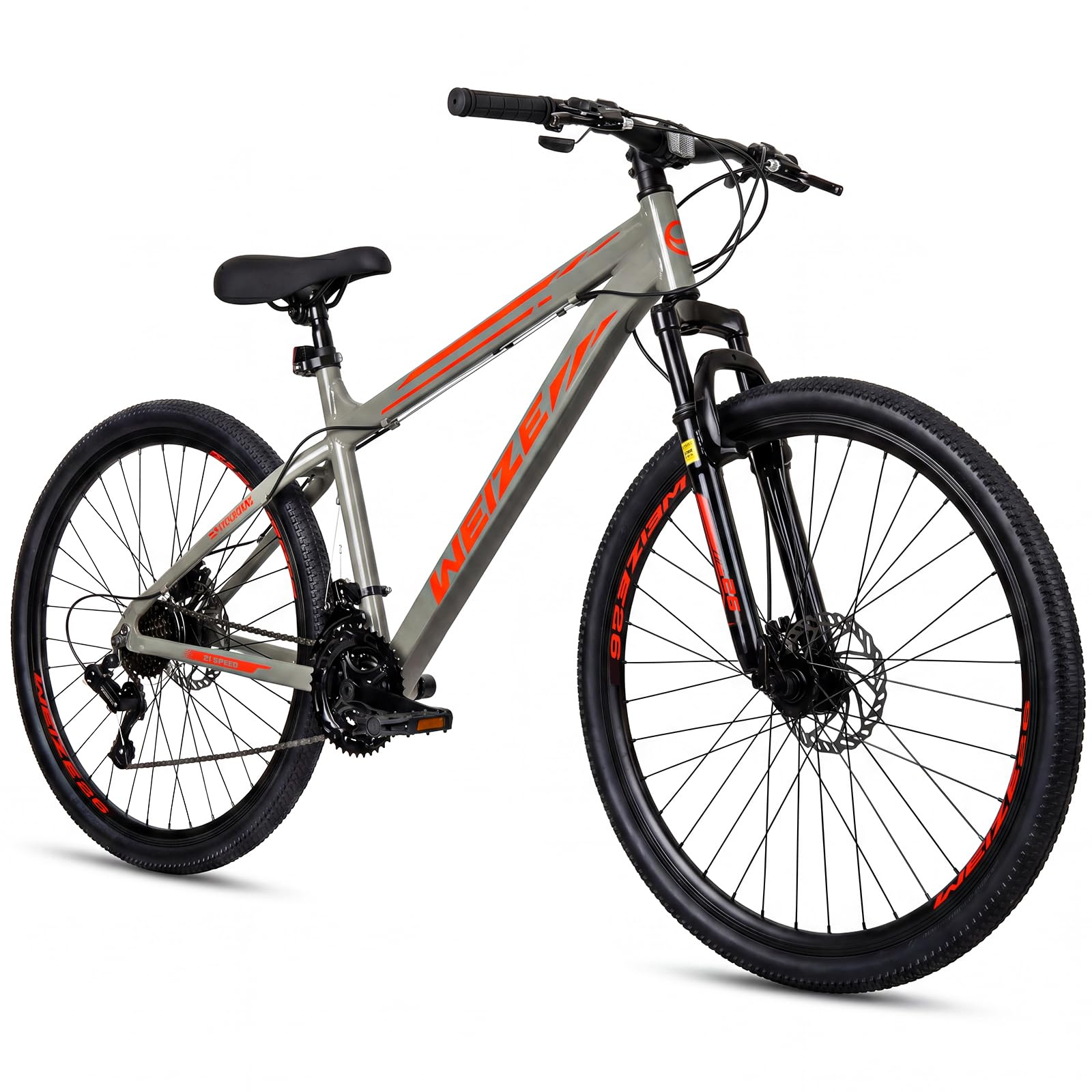
The 21-speed drivetrain features a trigger shifter on the right side, which provides more precise gear selection than twist-grip designs, especially when your hands are sweaty or gloved. The front suspension fork offers 60mm of travel with a lockout feature, letting you stiffen the fork for pavement climbs and restore compliance for trail descents.
Dual mechanical disc brakes with 160mm rotors provide adequate stopping power, but several buyers reported that the front wheel arrived with a slight wobble that required truing before the brake pads stopped rubbing. The aluminum frame’s stiffness amplifies trail feedback through the saddle, so the rear coil shock is essential for preventing back pain on rocky sections. The bike fits riders from 5’3″ to 5’10” comfortably, and the included kickstand is a welcome addition for commuters who make frequent stops.
One of the biggest differentiators here is the one-year warranty that covers frame defects and drive-train components—something almost no other bike in this price bracket offers. The assembly process is straightforward: 85% pre-assembled, requiring only the front wheel, handlebar, saddle, and pedals to be mounted. The plastic pedals are functional but slippery in wet conditions, so plan to swap them for alloy platforms if you ride in rain. Overall, the WEIZE balances weight savings with a reliable drivetrain and a suspension fork that actually has a lockout—features typically found on bikes costing significantly more.
Why it’s great
- Lightweight 6061 aluminum frame eases lifting and climbing
- Front suspension fork has a lockout feature for pavement riding
- One-year warranty covers frame and drivetrain components
Good to know
- Front wheel may need truing out of the box for brake clearance
- Plastic pedals lack grip in wet conditions
- Stock saddle is firm for rides over 90 minutes
5. Ecarpat Gray-Green 26″ Full Suspension Bike
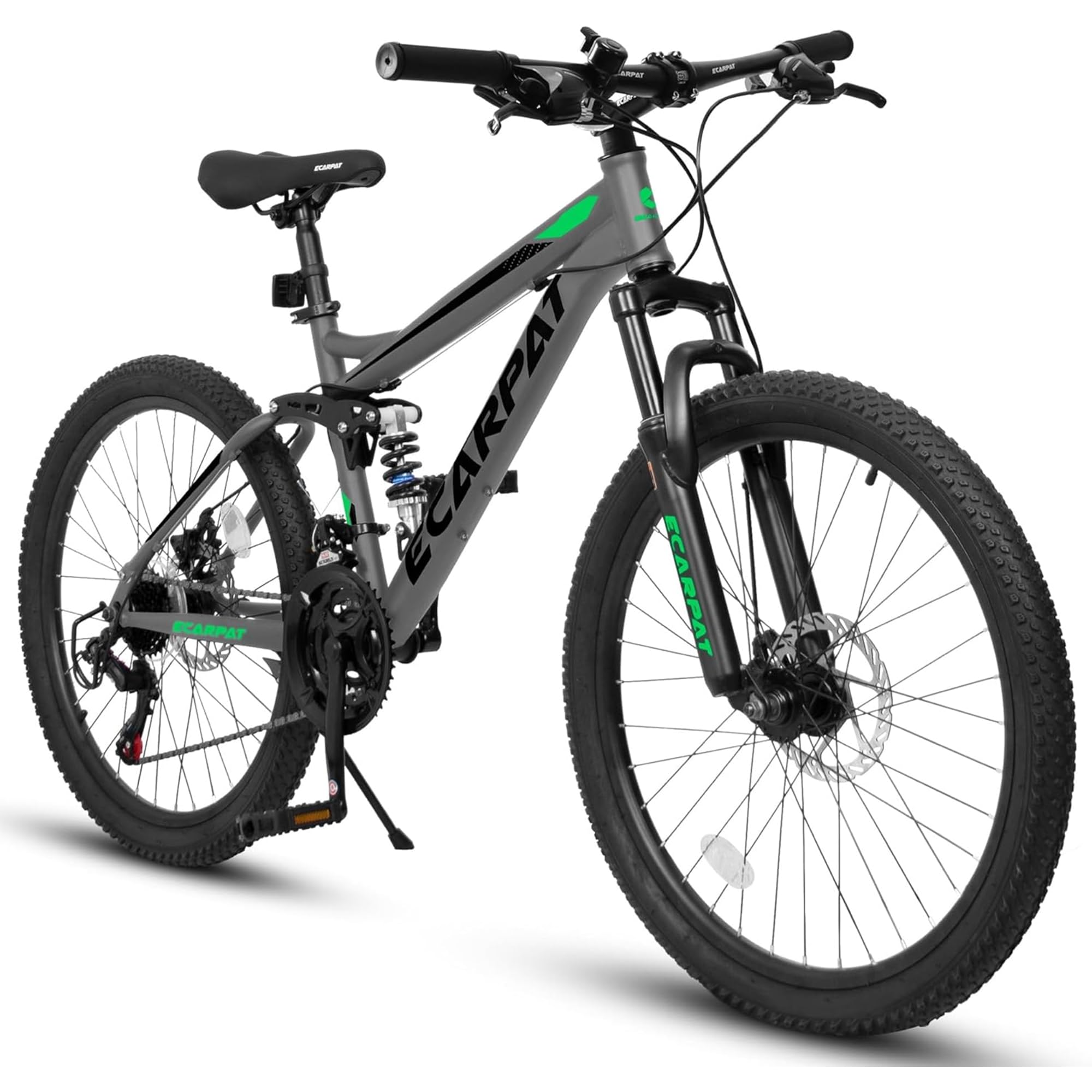
The Ecarpat Gray-Green model is one of the few bikes in this review that actually uses a true dual-linkage rear suspension system rather than a simple U-bracket compressing a coil spring. The 100mm thickened rear shock absorbs impacts from roots and rocks without the harsh bottom-out sensation common on cheaper full-suspension designs. The 21-speed trigger shifters connect to a rear derailleur that shifts reliably under load, though the included cable housing is entry-level and may fray after extended use in wet environments.
The high-carbon steel frame is heavy—around 40 pounds fully built—but the weight contributes to a planted, stable feel on descents, and the steel’s natural compliance smooths out high-frequency trail chatter that would rattle an aluminum bike. The mechanical disc brakes use 160mm rotors and are relatively easy to center during assembly, though the front caliper may require a slight pad adjustment to eliminate rub. The included kickstand, reflectors, and bell are thoughtful additions for riders who use the bike for neighborhood rides as well as trail duty.
The most common complaint among owners involves the front disc brake rubbing after a few rides, usually caused by the quick-release skewer not being fully seated in the dropout. Once you torque the skewer properly and adjust the caliper, the brake stays quiet. The stock saddle is firm but not punishing, and the 2.125-inch all-terrain tires provide good grip on dirt and gravel while rolling smoothly on pavement. For riders looking for actual rear suspension travel at a price that doesn’t break the bank, the Ecarpat Gray-Green delivers a genuinely more comfortable ride than hardtail alternatives.
Why it’s great
- True dual-linkage rear suspension absorbs bigger hits
- Trigger shifters provide positive gear engagement
- Includes kickstand, reflectors, and bell for practicality
Good to know
- Steel frame adds significant weight (around 40 lbs)
- Front disc brake may need occasional re-centering
- Cable housing is basic and may fray over time
6. Huffy Stone Mountain 26″ Bike
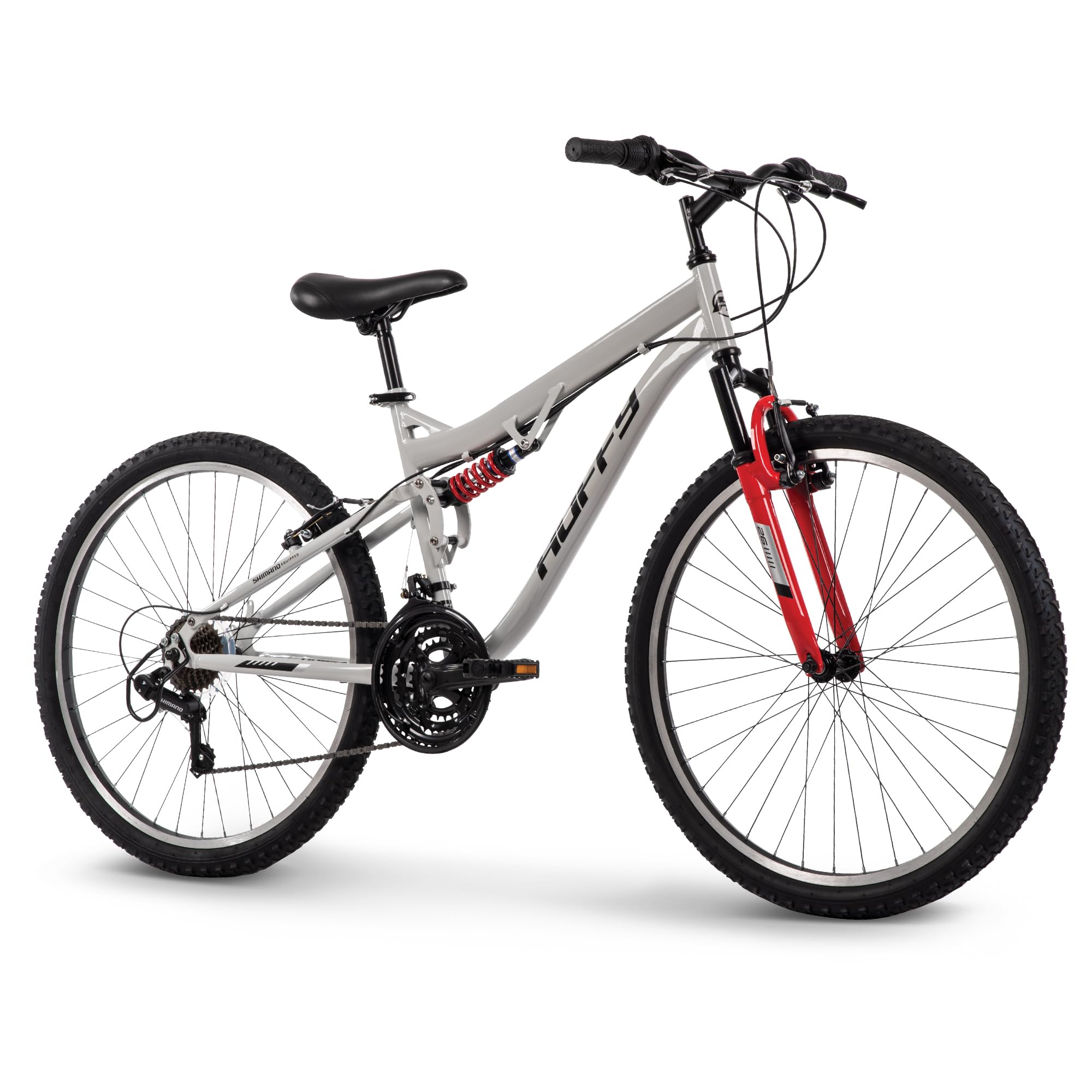
The Huffy Stone Mountain is the only bike in this comparison that uses linear-pull brakes instead of mechanical disc brakes, which is a step backward in wet-weather performance but a step forward in simplicity of adjustment. The Shimano Tourney rear derailleur is a genuine branded component—not a generic clone—and it provides smooth, reliable shifting across the 21-speed range even under moderate pedaling load. The dual suspension consists of a front fork and a rear spring, both non-adjustable, but they do enough to soften potholes and gravel paths for daily commuting.
The alloy steel frame is heavy at around 37 pounds, but Huffy has engineered the geometry to be stable at low speeds, making it a good choice for newer riders who aren’t yet comfortable with aggressive trail handling. The 26-inch knobby tires offer decent traction on loose dirt, though they wear flat in the center after a few hundred miles of pavement riding. The twist-grip shifter takes some getting used to, but once you learn the detents, you can shift through the range quickly without looking down. The seat is surprisingly comfortable for a stock unit, and the adjustable height accommodates riders from 5’0″ and taller.
The biggest issue reported by long-term owners is handlebar loosening during rides—the stem bolts can back out if not torqued with threadlocker during assembly. This is an easy fix with a dab of blue Loctite on the bolts. The V-brakes require more finger force than disc brakes to bring the bike to a stop from 20 mph, but they are easier to center and adjust without specialized tools. For riders who primarily stick to paved paths, bike lanes, and well-groomed gravel, the Huffy Stone Mountain offers a reliable Shimano drivetrain at a price that undercuts many competitors.
Why it’s great
- Genuine Shimano Tourney derailleur for smooth shifting
- Linear-pull brakes are easier to adjust than disc brakes
- Stable low-speed geometry suits new riders well
Good to know
- V-brakes have less stopping power than discs in wet conditions
- Handlebar stem bolts can loosen; use threadlocker
- Knobby tires wear quickly on pavement
7. Ktaxon 26″ Mountain Bike

The Ktaxon 26-inch mountain bike places its emphasis on the braking system: fully mechanical dual disc brakes with 160mm rotors that provide confident stopping power even on wet gravel, outbraking the V-brake-equipped Huffy Stone Mountain by a wide margin. The high-carbon steel frame uses a 17-inch top tube that fits riders from approximately 5’2″ to 5’9″, and the suspension fork offers 60mm of travel with a lockout switch for climbing efficiency. The 21-speed trigger shifters offer positive engagement, though the rear derailleur is an unbranded unit that may require more frequent indexing adjustments than a Shimano component.
The Ktaxon’s wheels are aluminum alloy with quick-release skewers, making tire changes faster than on bikes with bolt-on axles. The 2.125-inch tires roll reasonably well on pavement while providing adequate bite on loose dirt and rocky paths. The included kickstand is sturdy enough to hold the bike steady on uneven ground, and the assembly video helps first-time builders avoid common mistakes like installing the pedals on the wrong sides. Most owners report assembly times of 20 to 30 minutes, significantly faster than the Mongoose models that require front derailleur setup.
The most frequent quality complaint is paint chipping during shipping—the steel frame’s powder coat can get scratched in transit if the packaging takes a hard impact. This is cosmetic and does not affect structural integrity. A few customers reported that the rear disc brake rotor arrived slightly bent, causing a rubbing sound that required truing with an adjustable wrench. For the price, the Ktaxon delivers a set of features—dual disc brakes, suspension lockout, and quick-release wheels—that are typically reserved for bikes in a higher pricing tier.
Why it’s great
- Dual mechanical disc brakes outperform V-brakes in wet conditions
- Suspension fork has a lockout for efficient climbing
- Quick-release wheels make tire changes simple
Good to know
- Powder coat may chip during shipping
- Unbranded rear derailleur needs frequent indexing
- Rear disc rotor can arrive slightly bent
8. Outroad Folding 26″ Mountain Bike
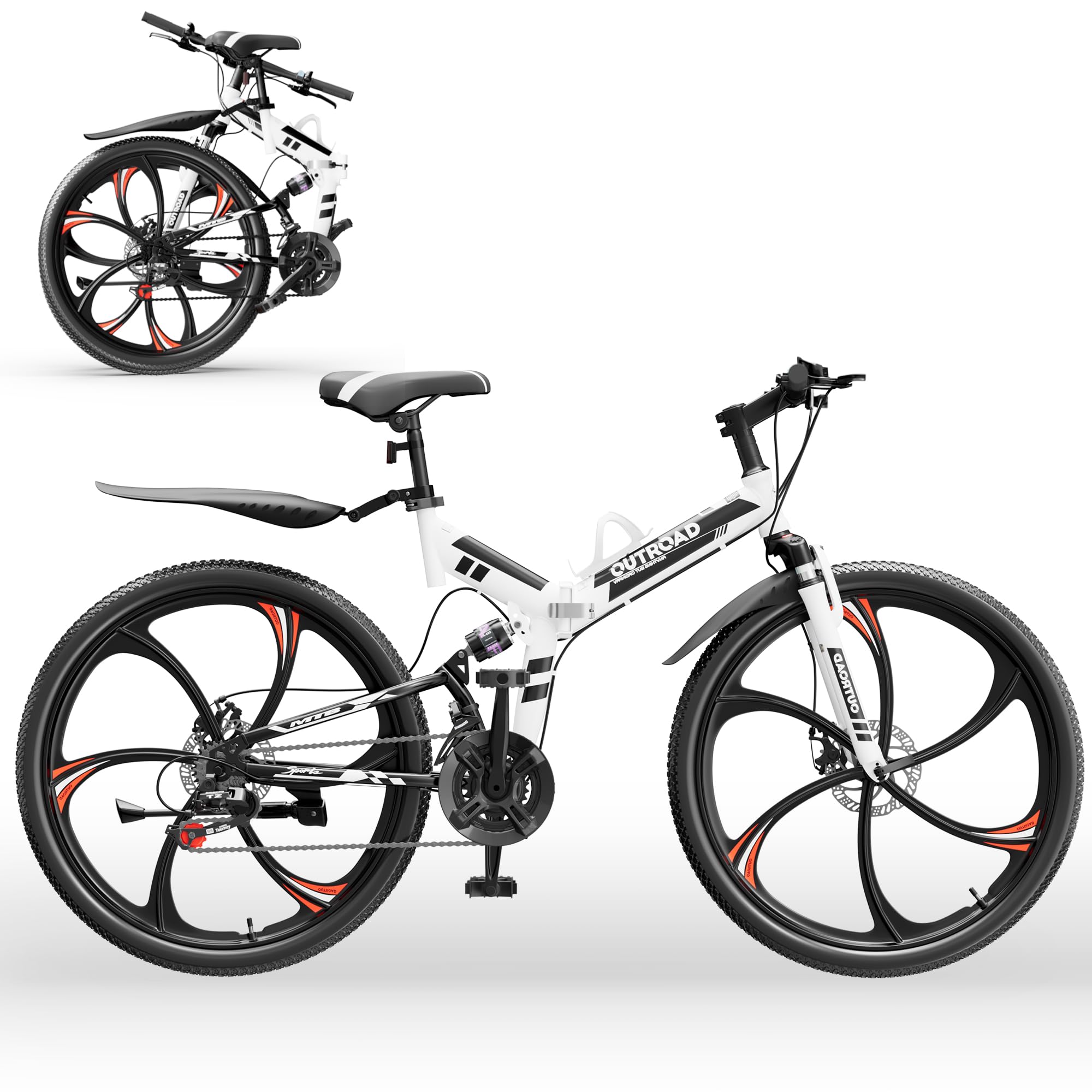
The Outroad Folding Mountain Bike is the only model in this review that collapses down for storage, using a hinge mechanism at the down tube that reduces the bike’s overall length by roughly 40% when folded. This makes it a compelling choice for apartment dwellers, RV owners, or anyone who needs to stash a bike in a car trunk without using a roof rack. The high-carbon steel frame is heavy at 39 pounds, but the folding mechanism feels solid, with a locking collar that requires deliberate force to disengage, preventing accidental fold while riding.
The 21-speed trigger shifters connect to a rear derailleur that initially has an Outboard branding, which some buyers misinterpreted as Shimano. Shifting performance is adequate for casual trail riding, though the derailleur’s spring tension is lower than a Shimano unit, leading to occasional chain slap on bumpy descents. The mechanical disc brakes stop the bike reliably, and the included mudguards help keep spray off your back on wet trails. The 6-spoke rims are visually distinct but add rotational mass compared to standard spoked wheels, making acceleration feel slightly sluggish.
One of the most critical assembly steps is identifying the left and right pedal markings—the threads are different directions, and installing them backward can damage the crank arm. Many owners recommend using grease on the seatpost and pedal threads during assembly to prevent seizing. The handlebar height is fixed, which may be a limitation for taller riders who prefer a more upright position. Despite these quirks, the Outroad delivers genuine foldability in a 26-inch wheel size, which is rare at this price point, and the compact storage footprint is a game-changer for space-constrained riders.
Why it’s great
- Genuine folding frame reduces storage footprint drastically
- Locking collar prevents accidental fold during riding
- Includes mudguards for wet trail conditions
Good to know
- Heavy construction at 39 pounds
- Derailleur is not Shimano as some packaging implies
- 6-spoke rims add rotational weight affecting acceleration
9. Ecarpat Black Blue 26″ Full Suspension Bike

The Ecarpat Black Blue 26-inch bike uses a high-carbon steel frame with a 17-inch standover that fits riders from 5’2″ to 5’9″, and it features a dual-suspension system with a front fork and rear coil shock that together absorb around 60mm of travel. The 21-speed thumb shifters—rather than twist-grip or trigger—provide a tactile click with each gear change, which some riders prefer for the positive haptic feedback. The mechanical dual disc brakes use 160mm rotors and are cable-actuated, offering reliable stopping power that is a clear upgrade over rim brakes found on similar bikes.
The 2.125-inch all-terrain tires provide solid grip on gravel and dirt paths, and the rubber compound resists punctures from thorns and small rocks better than the cheap tires found on some budget bikes. At 30 pounds, this is one of the lighter steel-framed bikes in the review, and the weight savings come from using a basic rear derailleur and shorter travel fork rather than skimping on frame thickness. Assembly is rated at 85% pre-built, and most owners report completing the build in under an hour without specialized tools.
The biggest risk with this model is the derailleur adjustment: several customers reported that the gears started skipping and the chain popped off after just a week of use, suggesting that the limit screws and cable tension were not properly set at the factory. If you’re comfortable with basic derailleur tuning (adjusting the high/low limit screws and barrel adjuster), this is a fixable issue that takes about 15 minutes. If you’re not mechanically inclined, you may want to budget for a local shop setup. When properly tuned, the Ecarpat Black Blue offers a smooth, comfortable ride that punches above its price class.
Why it’s great
- Lightweight steel frame at 30 pounds for its class
- Thumb shifters provide tactile feedback for gear changes
- Dual disc brakes outperform rim brakes in all conditions
Good to know
- Derailleur may need factory adjustment for reliable shifting
- Front rim reported with small dent in some units
- Stock saddle is uncomfortable for rides over an hour
FAQ
Can a 26-inch full suspension bike handle technical singletrack?
How much does a typical sub- full suspension bike weigh?
What size rider fits a 26-inch wheel full suspension bike?
Final Thoughts: The Verdict
For most users, the best 26 full suspension mountain bike winner is the VEVOR 26″ because it combines a lightweight aluminum frame with genuine front suspension adjustability and a price that undercuts steel-frame competitors. If you want a fat-tire platform that floats over sand and snow, grab the Mongoose Dolomite. And for a true dual-suspension setup with linkage-based rear travel at an entry-level price, nothing beats the Ecarpat Gray-Green.