
Your spine compresses during the day from the pack weight, and at night your shelter needs to let it recover. The best 3 season backpacking tent does more than keep rain off — it manages condensation, packs small enough to avoid external lashing, and provides enough real floor area so your sleeping pad doesn’t touch the walls and wick moisture onto your bag. Every gram and every inch of floor geometry matters when you’re five miles from the trailhead.
I’m Min — the co-founder and writer behind Gadgets Feed. I’ve spent hundreds of hours analyzing the trade-offs between fly fabrics, pole architectures, and packed volumes across dozens of models to find which tents actually deliver on their weight claims without sacrificing livability.
This guide breaks down nine of the most capable shelters available right now, matching your priorities — from budget-friendly entry points to premium performance — to help you find the right 3 season backpacking tent for your next trip.
How To Choose The Best 3 Season Backpacking Tent
The right 3-season tent balances packed weight, interior volume, and weather protection. A tent that’s too heavy stays home; one that’s too small ruins sleep; one that’s poorly vented leaves you soaked from condensation. Here’s what to evaluate before buying.
Packed Weight vs. Trail Weight
Manufacturers often quote a “minimum trail weight” that excludes the stuff sack, stakes, guylines, and footprint — sometimes cutting over a pound from the real carry weight. A true backpacking tent should have a packed weight under 6 lbs for a 2-person and under 7.5 lbs for a 3-person. For solo fast-and-light trips, aim for under 4 lbs total.
Floor Fabric & Waterproofing
Floor denier (D) determines puncture resistance. 20D nylon is ultralight but fragile on rocky ground; 40D-75D polyester or nylon handles granite and gravel better. Hydrostatic head (HH) ratings of 1500mm to 3000mm on the floor and fly are standard for 3-season use. Seam-taped or factory-sealed seams prevent water from wicking through stitching holes.
Ventilation & Condensation Control
Double-wall designs with a mesh inner and separate rainfly allow moisture vapor to escape before it condenses. Large roof vents, dual doors with mesh panels, and adjustable fly height are critical for humid summer nights. A tent without adequate airflow will wet out the inside of the fly and drip onto the sleeping bag.
Quick Comparison
On smaller screens, swipe sideways to see the full table.
| Model | Category | Best For | Key Spec | Amazon |
|---|---|---|---|---|
| Big Agnes Copper Spur HV UL2 | Premium | Ultralight backpacking | 29 sq ft, 3 lbs packed | Amazon |
| NEMO Equipment Dagger OSMO 2P | Premium | Spacious livability | OSMO fabric, 44″ peak height | Amazon |
| MSR Tents Elixir 2 | Mid-Range | Durability & warranty | 5 lbs 2 oz, 84″ length | Amazon |
| ALPS Mountaineering Zephyr 3P | Mid-Range | Ventilation & headroom | 40 sq ft, 7000-series poles | Amazon |
| Naturehike Mongar Upgraded 2P | Mid-Range | Compact ultralight budget | 4.19 lbs, 15D fly | Amazon |
| OneTigris COSMITTO 2P | Mid-Range | Features per dollar | 30.96 sq ft, dual doors | Amazon |
| Kelty Late Start 2P | Mid-Range | Quick setup | 3-min setup, 43″ peak | Amazon |
| Naturehike Cloud Up 3P | Budget | Entry-level 3-person value | 42.6 sq ft, includes footprint | Amazon |
| Kelty Discovery Trail 2P | Budget | Solid beginner tent | 4 lbs 5 oz, 33 sq ft | Amazon |
In‑Depth Reviews
1. Big Agnes Copper Spur HighVolume Ultralight 2 Person Tent

The Copper Spur HV UL2 hits the sweet spot where ultralight weight meets real livability. At just over 3 lbs packed, this fully freestanding dome uses high-volume pole architecture to create steeper walls and a remarkably roomy 29 sq ft interior. The steep sidewalls mean a tall sleeper can sit upright without their head brushing the fly — a luxury most sub-4 lb tents sacrifice.
Big Agnes designed this tent with two large doors and two vestibules, so each occupant has independent access and gear storage. The two-tone mesh provides privacy while still allowing stargazing. The quick-stash door system makes re-entry fast. In real-world testing on the Colorado Trail, the tent survived sustained 60+ mph winds with proper guying, keeping occupants dry and sand out of the interior.
The trade-off is the thin 20D floor fabric — it demands a footprint or careful site selection on rocky ground. The rainfly material is also lightweight, so long-term durability is a concern for hardcore scramblers. But for backpackers who count every ounce, this tent delivers the strongest performance-to-weight ratio in the list.
Why it’s great
- Exceptional interior volume for its sub-4 lb weight
- Fully freestanding, so it sets up easily on tent platforms or dirt
- Dual side entry vestibules with storm flaps on zippers
Good to know
- Thin floor fabric needs a footprint for protection
- Requires 12 stakes for full wind stability but only includes 8
- Premium price point is a barrier for casual backpackers
2. NEMO Equipment Dagger OSMO Lightweight Backpacking Tent
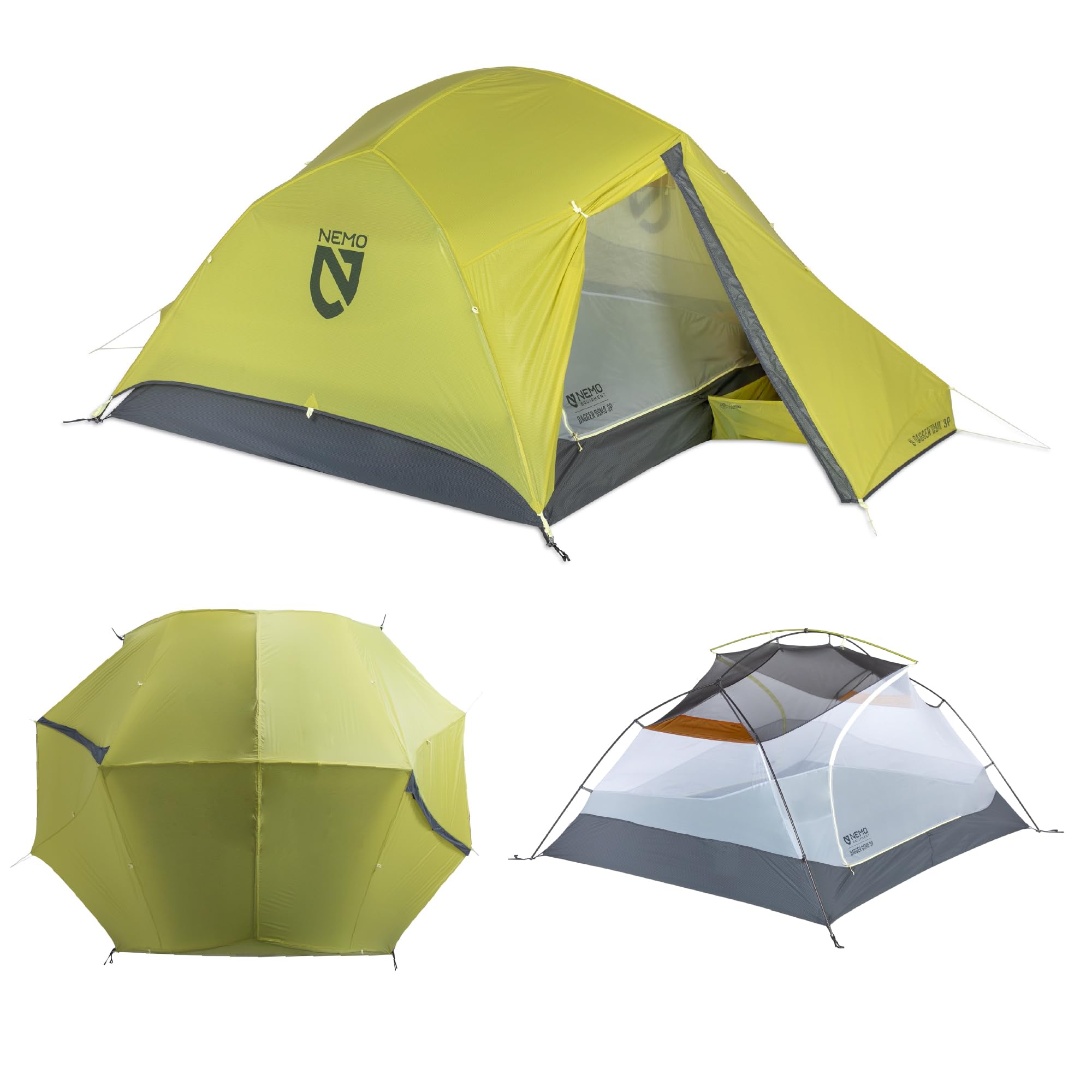
The Dagger OSMO redefines what comfortable backpacking looks like. The 44-inch peak height and near-vertical sidewalls create a 30 sq ft interior that feels palatial for two. NEMO’s proprietary OSMO fabric, a 100% recycled poly-nylon ripstop, resists water absorption 4x longer than standard nylon and stretches 3x less when wet — meaning your fly stays taut through a night of rain without sagging onto the inner mesh.
The Volumizing Stash strut increases vestibule space by 22% compared to the previous generation, giving each door enough room for a 50L pack and muddy boots. The Axial corner anchor allows one-handed setup and tensioning, and the Divvy Cube stuff sack splits the tent, fly, and poles so two hikers can share the carry weight evenly. Tested in sustained 30-50 mph winds with 6 inches of snow load, the Dagger OSMO shed precipitation and stayed dry inside — though it’s not designed for true 4-season winter camping.
The trade-off is price: the Dagger OSMO sits at the top of the cost range. The included stakes are heavy three-blade models best replaced with titanium shepherd hooks to shave ounces. The fly-only setup option is handy for fast outings, but the footprint is sold separately. For backpackers who prioritize interior space without jumping to a 3-person tent, this is the benchmark.
Why it’s great
- Best-in-class interior volume with steep walls and full headroom
- OSMO fabric resists sagging and holds waterproofing longer than standard nylon
- Divvy Cube stuff sack allows weight sharing between two hikers
Good to know
- Premium price limits it to dedicated backpackers
- Footprint sold separately for floor protection
- Heavy included stakes are best swapped for ultralight alternatives
3. MSR Tents Elixir 2
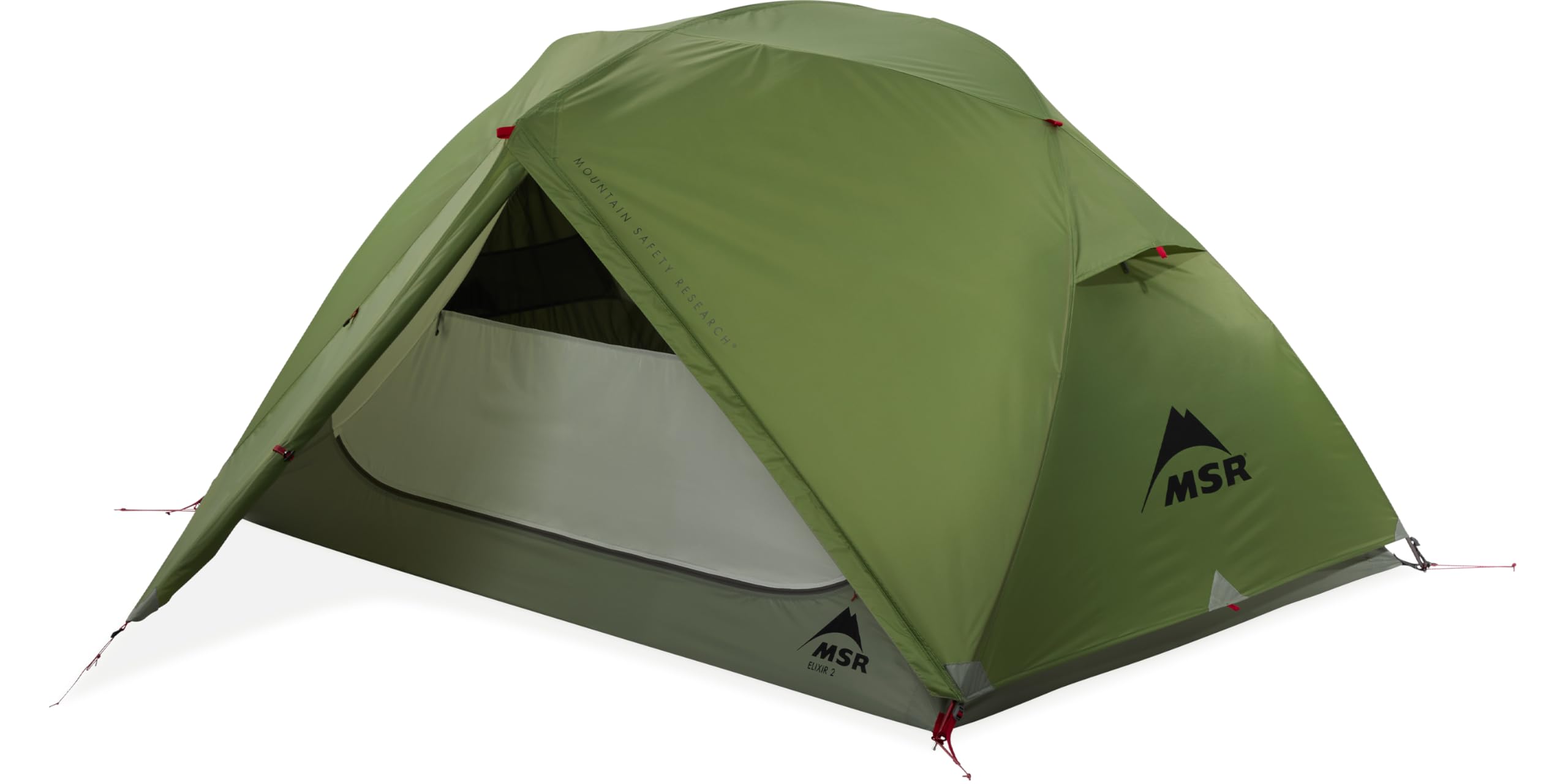
The MSR Elixir 2 is built for backpackers who prioritize durability over ultralight weight. The true rectangular floorplan (52 x 84 inches) fits wide, thick sleeping pads — including 25-inch wide models — without the taper that forces pads into the walls. Nearly vertical walls add meaningful shoulder room, and the 41-inch peak height allows a 6-foot sleeper to sit up and dress without hunching over.
MSR updated the Elixir with PFAS-free waterproofing and all-metal corner hardware that won’t crack in cold weather. Straight-pull zippers are easier to find and operate in the dark than curved alternatives. The strategic mesh placement balances ventilation for condensation control with fabric panels that retain warmth on cooler shoulder-season nights. A gear loft and end pockets with cable ports keep essentials organized and accessible.
At 5 lbs 2 oz packed, the Elixir 2 is heavier than dedicated ultralight options. The included footprint is a nice bonus, but the round stakes are less effective in loose soil than more aggressive Y-beam stakes. For backpackers who expect a tent to survive 15 years of regular use — as many MSR owners report — the Elixir 2 justifies its weight with material resilience.
Why it’s great
- Rectangular floor fits wide sleeping pad sizes without taper issues
- All-metal corner hardware and straight-pull zippers improve durability
- PFAS-free waterproofing with upgraded fabric durability
Good to know
- At 5+ lbs, it’s on the heavy side for ultralight trips
- Round stakes should be replaced for reliable holding power in loose ground
- Setup requires some strength to snap poles into corners
4. ALPS Mountaineering Zephyr 3-Person Tent

The Zephyr 3P is a standout for backpackers who camp in hot, humid conditions. The full mesh inner walls allow maximum airflow through the tent body, which dramatically reduces condensation even when the fly is fully deployed. The pre-bent 7000-series aluminum poles create steeper walls and a more vertical shape than standard domes, yielding 40 sq ft of floor space and generous headroom for three occupants.
Twin doors and two spacious vestibules provide independent entry and gear storage for each occupant. The 75D 185T polyester rainfly resists UV degradation and stays taut in the sun. Factory-sealed fly and floor seams provide reliable weather protection — the Zephyr survived 40-knot winds and freezing rain during Florida summer tests without leaking or excessive flapping. The included 7075 aluminum stakes are among the best stock stakes in this price bracket.
The main consideration is weight: at just under 6 lbs for the 3-person model, the Zephyr is best suited for trips where pack weight is less critical — longer basecamps, shorter carries, or canoe-assisted access. The included guy lines are long but low-visibility, making them a tripping hazard at night. The gear loft is a nice touch but the clip attachment points can feel flimsy over time.
Why it’s great
- Full mesh walls provide best-in-class ventilation for condensation control
- Pre-bent poles create steep walls and generous headroom
- Dual doors and vestibules with high-quality stock stakes
Good to know
- At 6 lbs, it’s heavy for traditional backpacking
- Low-visibility guy lines are a night-time tripping hazard
- Some owners report pinhole openings in floor corners that need seam sealing
5. Naturehike Mongar Upgraded 2 Person Backpacking Tent
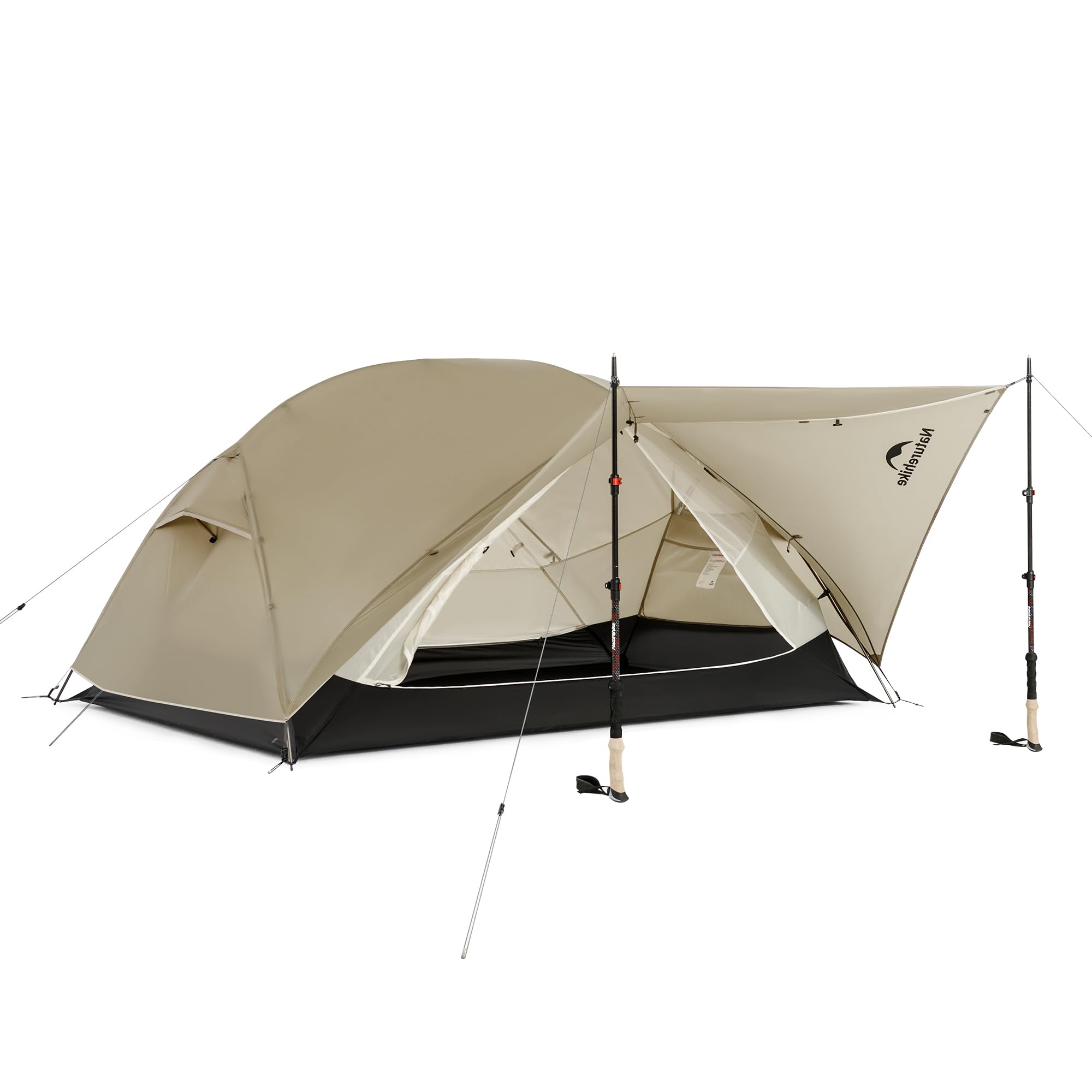
The Mongar Upgraded 2P is the ultralight budget champion. Weighing just 4.19 lbs packed, this freestanding tent uses a 15D nylon fly with silicone coating (PU1500mm) and a 20D nylon floor with PU3000mm rating. The packed size of 16 x 6.3 x 6.3 inches fits easily inside a 40L pack alongside other gear. The 8.5mm aluminum alloy poles are eco-friendly and provide reliable structure in moderate winds.
Naturehike included an innovative expandable awning that can be propped up with trekking poles, creating a shaded vestibule area for cooking or gear storage during rain breaks. Dual doors with mesh windows provide excellent cross-ventilation, and the adjustable vestibule height helps manage airflow in humid conditions. A clothesline and light clip inside the tent add thoughtful convenience. In real testing, the Mongar withstood 20-30 mph thunderstorms without leaking or developing condensation.
The non-elastic stakeout cords are one upgrade away from perfection — replacing them with shock-cord tensioners improves setup speed and tautness. The floor is thin and needs a footprint (included) on rocky terrain. At 29.4 sq ft, it’s snug for two full-size adults with gear, but perfectly spacious for a solo hiker who wants room to spread out.
Why it’s great
- Ultralight pack weight and compact packed size for its price
- Expandable awning feature is unique and functional
- Dual doors with mesh windows provide excellent ventilation
Good to know
- Thin 20D floor requires the included footprint for protection
- Non-elastic stakeout cords benefit from aftermarket upgrade
- Snug for two adults with full gear on longer trips
6. OneTigris COSMITTO 2 Person Backpacking Tent

The COSMITTO packs an impressive feature set into its mid-range price bracket. The 20D plaid ripstop polyester fly with 1500mm waterproof coating and 75D nylon floor provides solid weather protection. The hexagon-shaped outer tent offers better wind resistance than standard domes, and the protective tent corners are designed to block side winds from disturbing sleepers. Setup takes under 5 minutes even for first-time users.
Two zippered entrances, two large gear organizer pockets, and a full mesh inner with 360-degree views make the COSMITTO feel more spacious than its 30.96 sq ft footprint suggests. The rainfly features one-hand attachment clips, Line Loc 3-style tensioners, and dual vents with rain flaps — features normally found on tents costing twice as much. The 7075 aluminum alloy stakes are among the best included stakes at this price.
The downsides are weight and airflow. At over 5 lbs, the COSMITTO is more appropriate for short carries or canoe trips than ultralight missions. The fly limits airflow when fully closed, leading to condensation on humid nights. The single-door design on some variants makes middle-of-the-night exits awkward for two people. Look for the dual-door upgrade variant if you camp with a partner.
Why it’s great
- Premium feature set — Line Loc tensioners, dual vents, one-hand fly clips — at a mid-range price
- Hexagon shape provides excellent wind stability for the weight
- Full mesh inner with great visibility and two large gear pockets
Good to know
- At 5+ lbs, it’s too heavy for ultralight pursuits
- Single-door version is cramped for two users; seek the dual-door upgrade
- Limited airflow with fly fully closed leads to condensation in humidity
7. Kelty Late Start Backpacking Tent 2 Person

The Late Start lives up to its name with a 3-minute setup time that’s genuinely achievable solo. Kelty’s Quick Corner pole sleeves and color-coded buckle attachment points eliminate the confusion of traditional pole-to-grommet systems. The two-pole freestanding design means you can stake it down only when the weather demands it — perfect for quick lunch breaks or late arrivals at camp.
The 68D polyester canopy and fly have a 1200mm coating, and the bathtub-style floor offers decent protection at a moderate weight. With a 43-inch peak height and 30.6 sq ft of floor space, the Late Start feels roomy for two. The single-door design is manageable for couples who coordinate their sleep schedule. The shark mouth stuff sack is wide enough to swallow the tent without fighting the drawstring, a small but appreciated detail when packing up in the rain.
The single vestibule and door are the main compromises — each person can’t enter without disturbing the other. The included featherlight stakes are adequate for gentle weather but bend easily in firm soil or when hammered near rocks. The Late Start is best for fair-weather weekend trips where quick setup and takedown matter most.
Why it’s great
- Truly fast 3-minute solo setup with Quick Corner system
- Freestanding design requires minimal staking in calm conditions
- Shark mouth stuff sack is easy to pack even when wet
Good to know
- Single door and single vestibule limit convenience for two people
- Included stakes are too flimsy for hard-packed or rocky ground
- Not designed for cold weather below the 40s F
8. Naturehike Cloud Up 3 Person Backpacking Tent
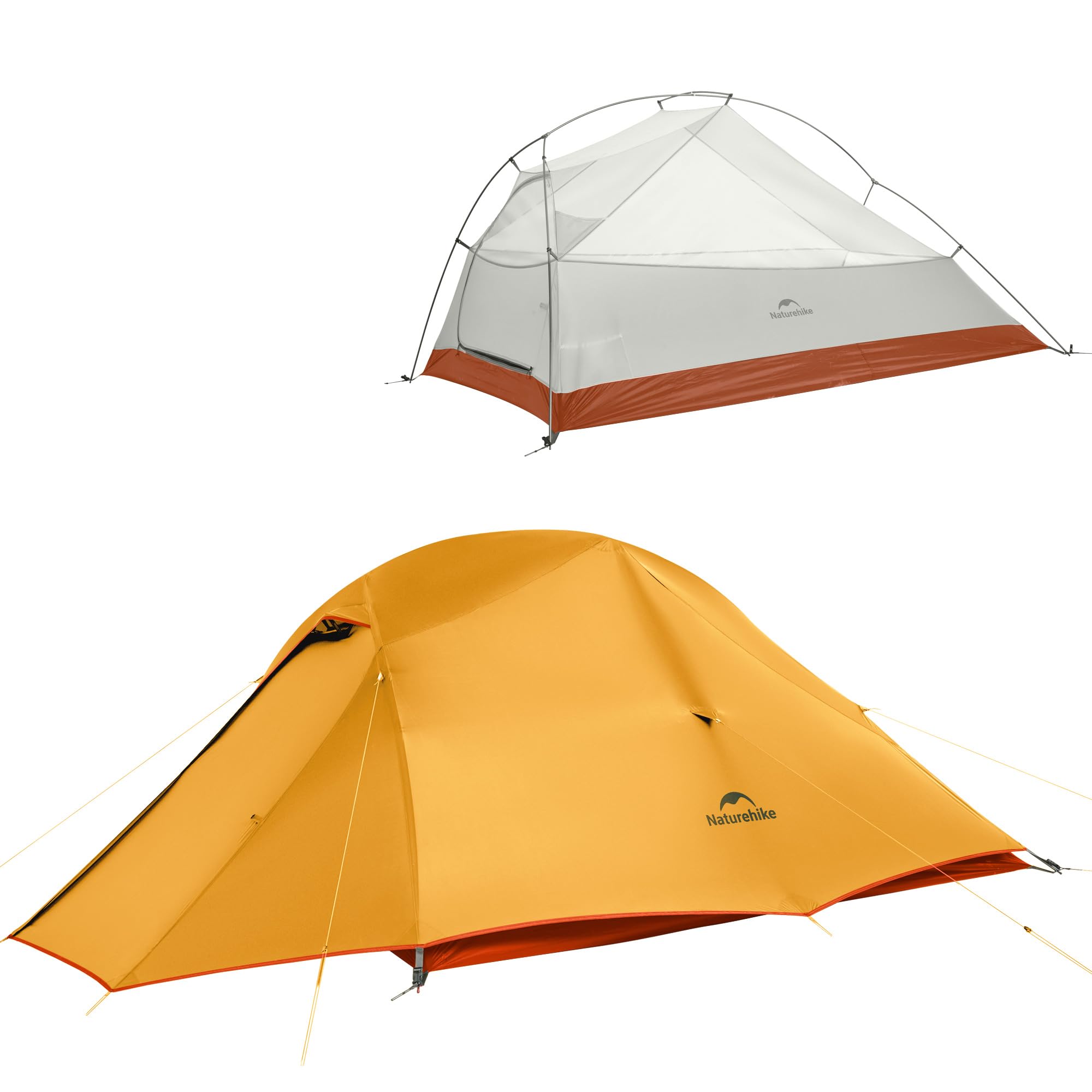
The Cloud Up 3P delivers 42.6 sq ft of floor space and a packed size of just 16.9 x 6.7 inches at under 6.3 lbs. The upgraded dual-Y aluminum pole structure makes it freestanding and quick to set up. The included footprint, 210T ripstop polyester floor with PU3000mm, and 7075 aluminum stakes provide a complete package right out of the stuff sack — no additional purchases needed for a first trip.
The double-wall design uses a B3 mesh inner for ventilation and a full-coverage fly with PU3000mm coating for serious weather protection. The wing design increases the gap between the inner and outer tent, which significantly reduces condensation compared to earlier Cloud Up models. In rainy Pacific Northwest conditions, the Cloud Up kept three occupants dry through sustained downpours without interior drips. The large front door is high enough for easy entry and gear stashing.
The main gripes are the single-door layout (problematic for three people) and the mesh layout that puts solid fabric high on three sides, limiting ventilation on calm nights. The top pole seats tightly against the rainfly and may eventually wear a hole through the fabric — a small preventative patch solves it. For the price, the Cloud Up is the most affordable true 3-person backpacking tent on the list.
Why it’s great
- Excellent 42.6 sq ft interior for a true 3-person sleep arrangement
- Includes everything: footprint, good stakes, and carrying bag
- Upgraded wing design improves ventilation and condensation control
Good to know
- Single-door design makes middle exits tough with three occupants
- Mesh layout restricts airflow on three sides in still conditions
- Pole-rainfly contact point may need preventative reinforcement
9. Kelty Discovery Trail Backpacking Tent 2 Person

The Discovery Trail 2P is the entry-level workhorse of the list. At 4 lbs 5 oz with 33 sq ft of floor space and a 42-inch peak height, it offers a compelling combination of price and performance for first-time backpackers. The polyester fabric with taped seams and a waterproof fly provides reliable protection in moderate weather. The Quick Corner system with two pressfit aluminum poles makes setup straightforward even in the dark.
Kelty includes pre-attached guylines — a rare inclusion at this price — and the shark mouth stuff sack packs easily. The fly vent helps control condensation, though the single-door design limits ventilation options. In field tests, the Discovery Trail survived 50 mph gusts without structural failure, though the walls blow inward with the fly fully closed in high winds. Owners reported staying dry and comfortable in temperatures down to 30-35°F with proper gear.
The included aluminum stakes are notoriously flimsy — plan to replace them with Y-beam stakes for reliable holding power. The mesh is the weakest point in the overall construction but adequate for typical 3-season use. At a packed weight that’s competitive for the category, the Discovery Trail is the sensible starting point for backpackers building their kit without breaking the bank.
Why it’s great
- Lightweight for the price at 4 lbs 5 oz with 33 sq ft of space
- Quick Corner system with pre-attached guylines simplifies setup
- Survives strong winds when properly staked; reliable in moderate conditions
Good to know
- Included stakes are weak and should be replaced before first trip
- Single-door and limited ventilation; gets warm in direct sun
- Mesh is the weakest component; fine for normal use but not abuse
FAQ
Can I use a 3-season tent in light snow?
What packed weight should I aim for in a 2-person tent?
Do I need a separate footprint for my tent?
Final Thoughts: The Verdict
For most users, the best 3 season backpacking tent winner is the Big Agnes Copper Spur HV UL2 because it delivers the best balance of ultralight weight, livable interior space, and weather protection for the widest range of trips. If you want maximum interior room without jumping to a 3-person tent, grab the NEMO Dagger OSMO. And for budget-conscious hikers who still want solid performance, nothing beats the Naturehike Mongar Upgraded 2P.