
A backpacking pack that was designed for a male torso will shift your load to your shoulders, bruise your hips, and turn a three-day hike into a miserable slog. Every pack on this list was built with a women-specific fit, meaning the torso length, strap shape, and belt position match the female skeletal structure rather than simply shrinking a unisex design.
I’m Min — the co-founder and writer behind Gadgets Feed. I’ve spent hundreds of hours analyzing the technical specifications, customer feedback, and real-world durability data across this entire category to separate genuine women-specific engineering from marketing labels.
Whether you carry an ultralight 38-liter or a full expedition 68-liter, this guide cuts through the noise to identify the backpacking backpacks for women that actually fit, breathe, and balance heavy loads.
How To Choose The Best Backpacking Backpacks For Women
A women-specific backpack is not a smaller version of a men’s pack — it uses a shorter torso length, narrower shoulder straps that curve away from the neck, and a hip belt that angles to fit the female iliac crest. Ignore volume first and focus on torso fit, suspension design, and carrying capacity.
Women-Specific Torso Length and Hip Belt
The torso measurement (from the C7 vertebra to the iliac crest) determines whether the hip belt sits on your bones or your waist. A pack too long forces the belt below the hips, dumping weight onto your shoulders. Look for adjustable systems like Osprey’s AirSpeed or Kelty’s FIT-Pro that let you fine-tune 15-19 inches. A fixed belt that matches your exact torso size is just as effective if you know your measurement.
Suspension and Ventilation
Internal frame packs use either a tensioned mesh panel (AirSpeed) that keeps the pack off your back for airflow, or a foam panel (AirScape) that sits closer for stability on technical terrain. Perimeter frames like the Kelty Redwing use a single aluminum stay for lighter weight but less load transfer. For humid summer hikes, mesh suspension prevents drenching; for off-trail scrambling, a close-to-body panel prevents sway.
Volume vs. Trip Duration
38-45 liters suits fast-and-light overnighters and ultralight weekend trips. 50-58 liters handles 3-5 days of gear including a bear canister. 65-68 liters supports week-long expeditions or winter trips with a bulky sleeping bag and extra layers. More volume adds weight — a 68-liter pack typically weighs 1-1.5 pounds more than a 48-liter version from the same line due to heavier fabric and longer frame stays.
Quick Comparison
On smaller screens, swipe sideways to see the full table.
| Model | Category | Best For | Key Spec | Amazon |
|---|---|---|---|---|
| Osprey Kyte 58L | Premium | Multi-day expeditions | 4.59 lb, AirScape panel | Amazon |
| Osprey Kyte 48L | Premium | Technical 3-day treks | 4.08 lb, AirScape panel | Amazon |
| Osprey Kyte 68L | Premium | Week-long winter treks | 4.74 lb, Fit-on-the-Fly hipbelt | Amazon |
| Thule Landmark 60L | Premium | International travel | 4.05 lb, detachable 20L daypack | Amazon |
| The North Face Terra 55 | Mid-Range | Thru-hiking value | 4.0 lb, removable frame sheet | Amazon |
| Osprey Renn 50L | Mid-Range | Summer weekend trips | 3.5 lb, AirSpeed suspension | Amazon |
| Osprey Renn 65L | Mid-Range | Longer trips on a budget | 3.6 lb, AirSpeed suspension | Amazon |
| Kelty Redwing 50 Women’s | Value | Budget travel and day hikes | 3.06 lb, FIT-Pro adjustment | Amazon |
| Osprey Kyte 38L | Premium | Ultralight overnighters | 3.88 lb, fixed hipbelt | Amazon |
In‑Depth Reviews
1. Osprey Kyte 58L Women’s Backpacking Backpack
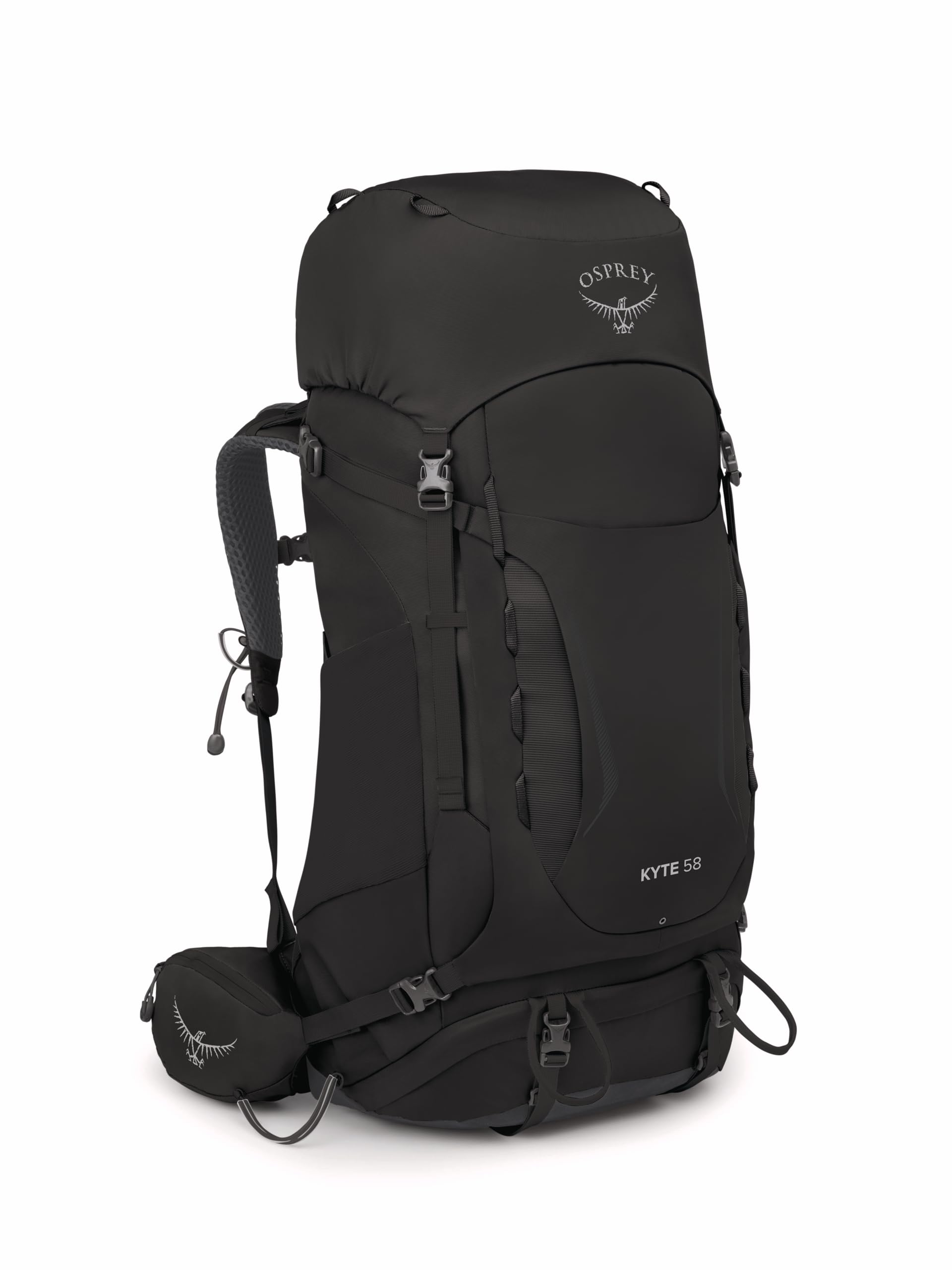
The Kyte 58L hits the sweet spot of capacity and weight for multi-day backpackers. Its injection-molded AirScape backpanel adjusts torso length in precise increments, and the Fit-on-the-Fly hipbelt lets you fine-tune the angle without tools — critical for women whose hip shape changes with load and layering. At 4.59 pounds, it’s not ultralight, but the frame transfers weight efficiently enough that a 25-pound load feels stable on 10-mile days.
The top lid includes a large zippered pocket and under-lid mesh pocket with a key clip. Trekking pole attachment loops and side compression straps keep gear organized on the outside. An integrated raincover stows in its own pocket, so you don’t lose it mid-trip. The 58-liter volume fits a bear canister horizontally plus a 15-degree sleeping bag in the dedicated bottom compartment.
Real-world feedback from users who carried this through Patagonia for 15 days reports zero frame issues and consistent comfort even for smaller frames at 1m50. The AirScape panel breathes better than solid foam, though hot-weather hikers may still prefer the full-mesh AirSpeed design found on Osprey’s Renn line. For a do-everything pack from weekenders to week-long treks, this is the one to beat.
Why it’s great
- Adjustable torso and Fit-on-the-Fly hipbelt accommodate a wide range of women’s body types
- Integrated raincover and trekking pole attachments included
- 58-liter capacity handles week-long gear without exceeding carry-on size limits
Good to know
- Side pockets lack zippered security for small items
- Heavier than ultralight alternatives by about a pound
2. Osprey Kyte 48L Women’s Backpacking Backpack
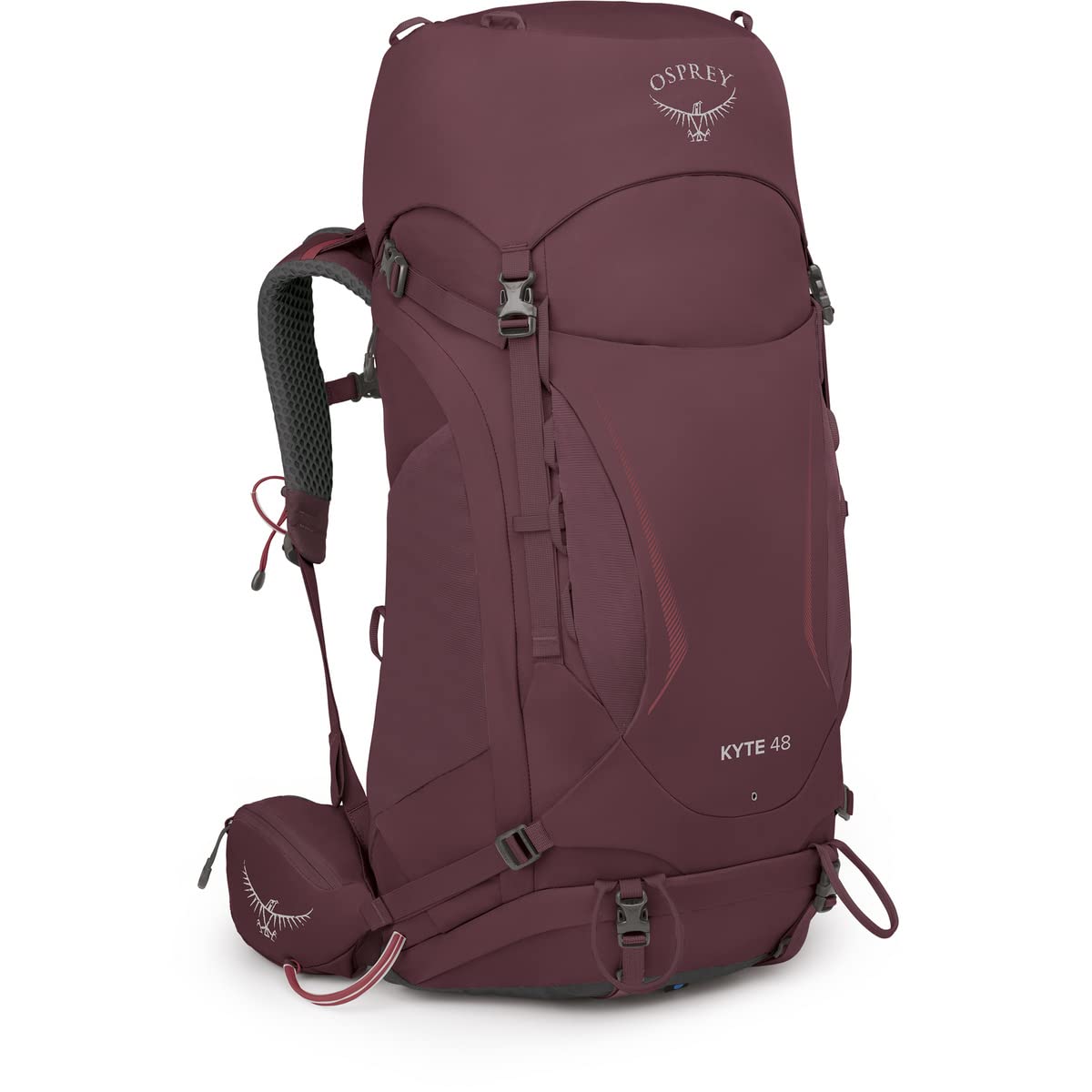
The 48L Kyte is the trimmed-down sibling of the 58L, dropping capacity while keeping the same AirScape backpanel and women-specific chassis. At 4.08 pounds, it shaves half a pound compared to the larger version — enough to notice on a steep ascent. The fixed hipbelt is less adjustable than the Fit-on-the-Fly system, so accurate sizing at purchase is more important. Available in WXS/S and WM/L, it pairs best with torsos from 15 to 18 inches.
Belt pockets are large enough for a modern smartphone and a wallet, with zippered closures that keep contents secure on scrambling sections. The top lid’s under-lid mesh pocket holds a map or headlamp, and the floating divider separates a sleeping bag or dirty gear in the lower compartment. Users report consistent comfort carrying 9 kilograms over 30-kilometer days, though the 48-liter capacity maxes out around three to four days unless you pack ultralight.
The 60cm length may exceed some budget airline carry-on restrictions, but for backpacking, the internal frame and load lifters make it far more capable than a travel pack. The Elderberry Purple colorway is distinctive on the trail without being loud. If your trips rarely exceed four days, this volume saves weight without sacrificing the Kyte’s suspension quality.
Why it’s great
- Lighter than the 58L Kyte while sharing the same suspension design
- Belt pockets fit large phones and zipper securely
- Integrated raincover means one less item to pack
Good to know
- Fixed hipbelt requires precise torso measurement before buying
- Water bottle pockets are tight to reach while wearing the pack
3. Osprey Kyte 68L Women’s Backpacking Backpack
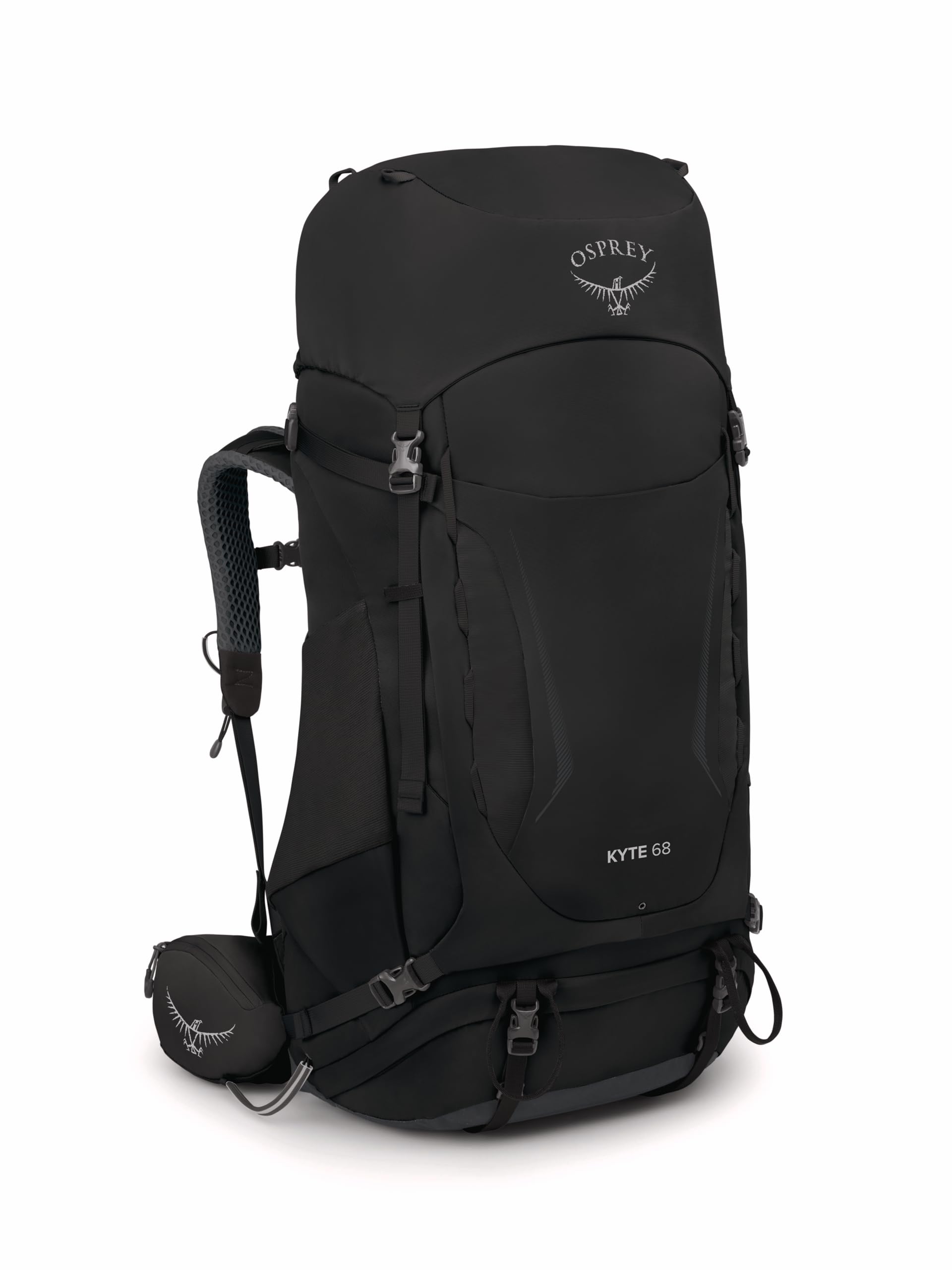
When you need a full expedition pack that still fits a women’s frame, the Kyte 68L delivers 4.74 pounds of carrying capacity with a Fit-on-the-Fly hipbelt and AirScape backpanel. The extra 10 liters over the 58L version come from a taller main compartment and deeper extension collar — not a longer frame stay, so the torso adjustment range stays the same. This is critical because many large-volume packs scale the frame proportionally, making them too long for shorter torsos.
The internal layout includes a zippered sleeping bag compartment, a floating divider, and a top lid with both a zippered pocket and under-lid mesh storage. Side compression straps can cinch the load down when the pack is half-full, preventing sway on day trips. Users with smaller frames (reported 5’2″, 125 lbs) found the 68L manageable because the hipbelt and load lifters transfer weight correctly — a poorly fitted 68L would be unbearable.
For winter trips with a bulky 0-degree bag, extra puffy layers, and a four-season tent, the 68-liter volume is non-negotiable. The trade-off is weight: 4.74 pounds empty means every ounce of gear must earn its place. Thru-hikers aiming for sub-10-pound base weights should look elsewhere, but for weekend warriors and week-long trekkers, this is the most comfortable large-volume option available.
Why it’s great
- Large capacity without increasing torso length for women’s fit
- Fit-on-the-Fly hipbelt adapts to body changes during long trips
- Integrated raincover and trekking pole loops add trail convenience
Good to know
- Nearly 5 pounds empty — too heavy for ultralight packing
- Compression straps are the only way to stabilize a half-full load
4. Thule Landmark Backpack 60L Women’s
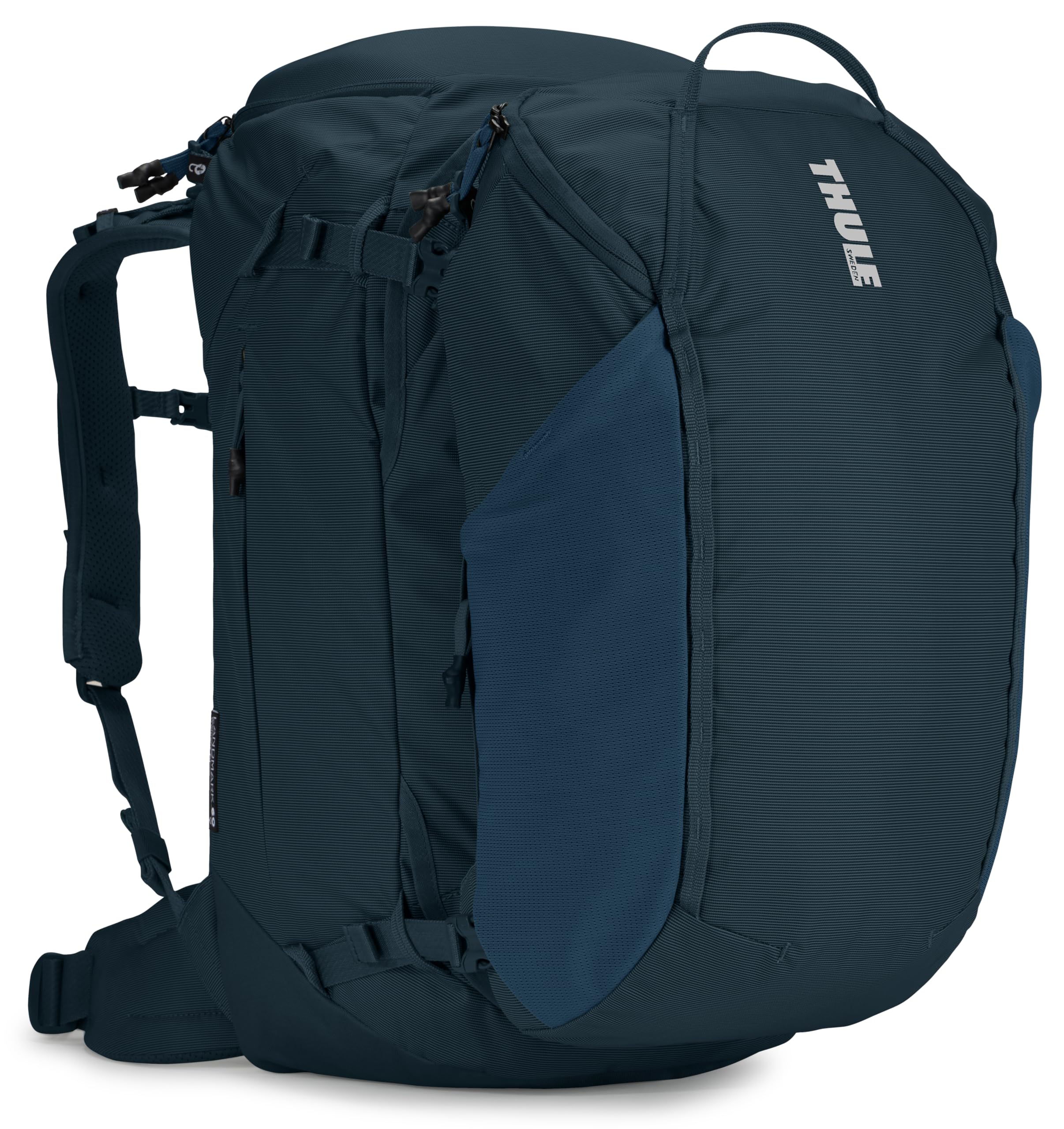
The Thule Landmark 60L is designed less for rugged alpine trails and more for multi-month international travel with hostel stays and train transfers. The women-specific fit includes a curved hipbelt and narrower shoulder straps, but the suspension is optimized for airport smoothness rather than rocky switchbacks. The headline feature is the detachable 20L daypack that clips on as a front pack or separates as a personal item — a setup that avoids checked baggage entirely.
The main 40L compartment includes a hidden CashStash pocket behind the SafeZone panel, LoopLocks on the zipper pulls to deter theft, and a laptop sleeve that fits up to 16 inches. The 20L daypack mirrors the same pocket layout with its own CashStash pocket. At 4.05 pounds for the combined system, it’s competitive with dedicated travel packs, though the fabric is mid-weight polyester that may show wear after several years of hard use.
Users with torsos longer than 19.5 inches report the waist belt riding too high, so this pack suits shorter-to-average torsos best. The lack of a full water-resistant coating means you’ll want a pack liner for rainy regions. For a backpacker who splits time between hostels and trails, the Landmark’s convertible design and anti-theft features justify the weight premium over a pure hiking pack.
Why it’s great
- Detachable 20L daypack functions as carry-on personal item
- Hidden CashStash and LoopLock zippers deter theft in transit
- Women-specific hipbelt and straps fit shorter torsos well
Good to know
- Not fully waterproof — zippers and fabric need a rain cover in downpours
- Lacks an exterior quick-access pocket for documents or snacks
5. The North Face Women’s Terra 55 Backpack
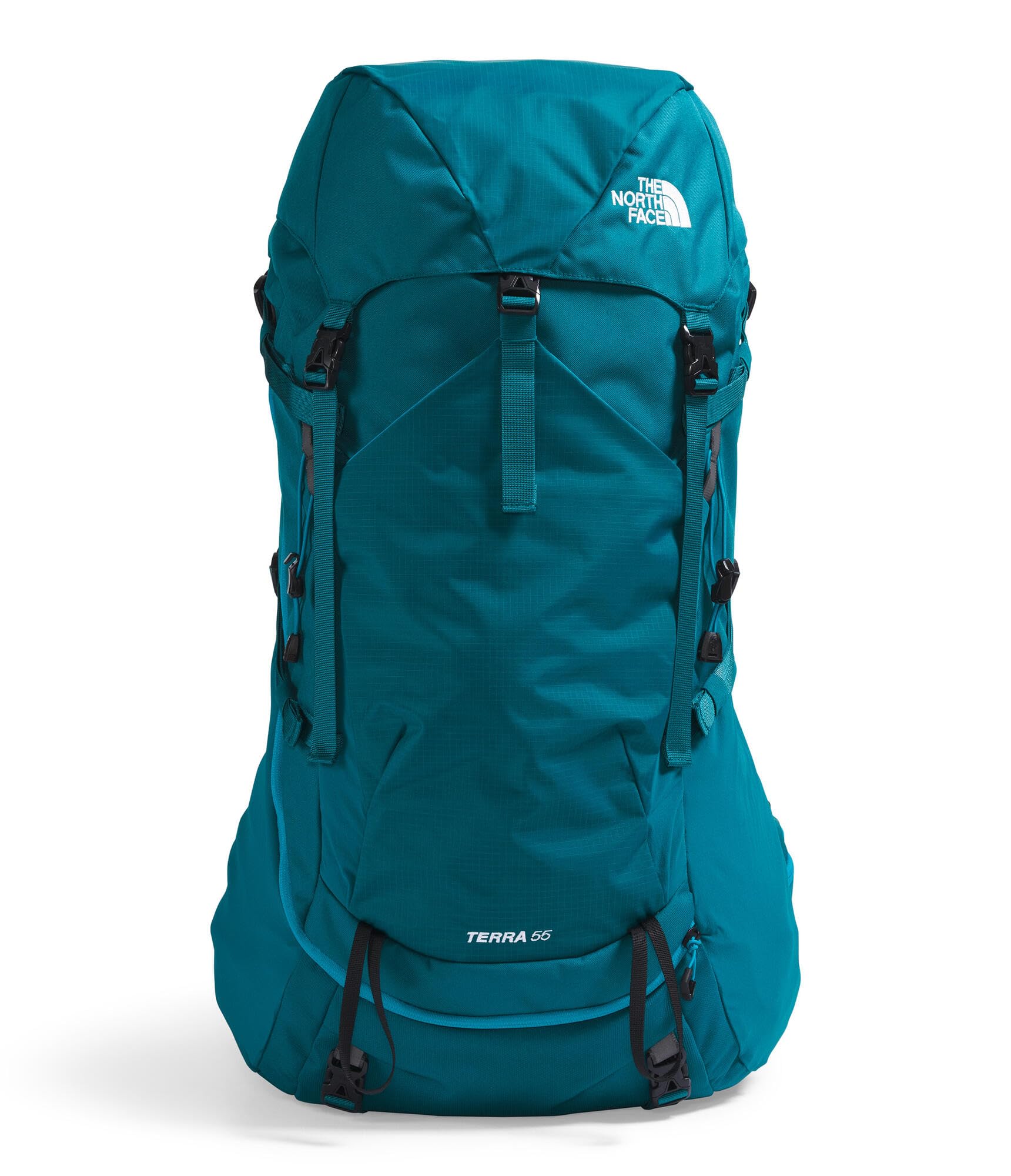
The Terra 55 offers a straightforward, well-built design at a mid-range price that undercuts many Osprey equivalents. The women-specific fit uses a padded back panel and shoulder straps optimized for female anatomy, plus a removable frame sheet that lets you reduce weight when carrying lighter loads. A full-length two-way U-zipper provides fast access to the entire main compartment without unpacking from the top — a huge advantage when digging for a rain jacket mid-day.
The cinch-top closure with a removable lid includes an internal zip pocket and key hook. External stuff-it pocket uses an S/R buckle to secure loose items like a puffy jacket or wet tarp. Trekking pole and ice axe attachments, zippered hipbelt pockets, and an internal hydration sleeve round out the feature set. Users report the pack is spacious enough for a teenager’s first overnight trip with comfortable carry when the hipbelt is properly positioned.
The main drawback is limited torso adjustability — the frame sheet provides some customization, but not the fine-grained tuning of Osprey’s adjustable backpanels. Women with very short or very long torsos may need to test the fit in person. The Terra 55 is a solid choice for a first backpacking pack where you want proven durability without the premium price of a fully adjustable suspension.
Why it’s great
- Removable frame sheet saves weight for lighter trips
- Full-length U-zipper grants fast access to gear at the bottom
- Includes ice axe and trekking pole attachments for alpine use
Good to know
- Limited torso adjustment range compared to adjustable-frame packs
- At 4 pounds, it’s heavier than some 55-liter competitors
6. Osprey Renn 50L Women’s Backpacking Backpack

Osprey’s Renn line strips away some of the Kyte’s premium features while retaining the same adjustable AirSpeed suspension — a tensioned mesh backpanel that keeps the pack off your spine for serious airflow. At 3.5 pounds, it’s half a pound lighter than the Kyte 48L, making it an excellent choice for summer hikers who prioritize ventilation over pocket count. The LightWire frame transfers load to the hipbelt efficiently, and the adjustable torso covers 15 to 18 inches.
The 50-liter main compartment includes a zippered sleeping bag divider, and the integrated raincover stows in its own pocket. Side stretch pockets hold water bottles, and the top lid provides sealed storage for small items. Users between 5’2″ and 5’4″ report excellent fit quality, with comfortable padding and intuitive strap adjustments. The simpler design means fewer things to break on long trails.
The trade-off for the lighter weight and ventilation is a less structured carry than the Kyte — the backpanel is softer, so very heavy loads (over 30 pounds) may feel less stable. The hipbelt is fixed once adjusted, lacking the Fit-on-the-Fly micro-adjustment of the Kyte line. For weekend trips where you’re carrying 20-25 pounds, the Renn 50 is arguably the best value in Osprey’s women’s lineup.
Why it’s great
- AirSpeed mesh backpanel provides outstanding ventilation on hot days
- Lightest framed pack in this review at 3.5 pounds
- Integrated raincover and sleeping bag divider included
Good to know
- Soft suspension struggles with loads above 30 pounds
- Fixed hipbelt lacks on-trail micro-adjustment
7. Osprey Renn 65L Women’s Backpacking Backpack

The Renn 65L extends the lightweight AirSpeed platform to a larger volume, offering 65 liters at just 3.6 pounds — an exceptional weight-to-capacity ratio. The same mesh backpanel and wire frame as the 50L version mean you get the same ventilation and adjustable torso range, just with a taller main compartment. This is the pack to grab if you need to carry a bear canister, a bulky tent, and four days of food without jumping to a 5-pound expedition pack.
The zippered sleeping bag compartment with a floating divider allows you to separate wet or smelly gear. Side compression straps control the load when the pack isn’t full, preventing the contents from shifting. Users from 5’2″ to 5’4″ found the women-specific fit comfortable even at 200 pounds, noting that the hipbelt padding effectively distributed weight. The integrated raincover provides peace of mind for unpredictable weather.
The main compromise is the same as the Renn 50: the suspension is optimized for lighter loads than a premium expedition pack. With a fully loaded 65-liter pack (potentially 35-40 pounds), the mesh backpanel can sag, reducing load transfer efficiency. Users who regularly carry heavy loads should consider the Kyte 58L or 68L instead. For lightweight backpackers who want a spacious but ventilated pack, this is the best large-volume value.
Why it’s great
- Only 3.6 pounds for a 65-liter framed pack
- AirSpeed mesh panel keeps back cool in summer heat
- Integrated raincover and sleeping bag compartment included
Good to know
- Mesh suspension is less stable with very heavy loads
- Hipbelt lacks on-trail micro-adjustment found on Kyte packs
8. Kelty Redwing 50 Women’s Internal Frame Backpack

Kelty’s Redwing 50 delivers an impressive combination of fit adjustability and organization at a price that undercuts most competitors by a wide margin. The FIT-Pro system uses a ladder-style adjustment to customize torso length in seconds, and the AMP-Flow ventilated back panel provides airflow similar to Osprey’s mesh designs. At 3.06 pounds, it’s lighter than both the Kyte and Renn at similar volumes — a meaningful difference when every ounce counts.
The pack is loaded with pockets: signature wing pockets on the sides, two front zippered pockets, side water bottle pockets, and daisy chains for lashing extra gear. The hybrid U-zipper top-loading access allows reaching the main compartment without fully unpacking. Users report carrying 25+ pounds without shoulder pain, crediting the women-specific shoulder strap curve and padded hipbelt. The external aluminum stay provides a stable ride even on uneven terrain.
The internal frame adds some stiffness that makes the pack less compressible for travel storage, and a few users noted the pack is heavy for its size during 7-8 hour mountain hikes — though at 3.06 pounds, it’s actually among the lightest here. The fabric is durable polyester that resists abrasion on rocky trails. If you’re looking for your first proper backpacking pack or need a reliable spare, the Redwing 50 is the smartest entry point.
Why it’s great
- Excellent pocket organization with wing pockets and front zippered compartments
- FIT-Pro system allows quick torso length adjustment without tools
- Lightweight at 3.06 pounds with a ventilated back panel
Good to know
- Internal frame adds stiffness that limits compressibility
- Not ideal for carrying over 30 pounds regularly
9. Osprey Kyte 38L Women’s Backpacking Backpack

The 38L Kyte is the smallest volume in Osprey’s women-specific Kyte series, designed for fast-and-light overnighters, ultralight weekend trips, or as a versatile daypack for long approaches. Despite the compact size, it retains the full AirScape backpanel and women-specific suspension, so you still get adjustable torso length and a stable close-to-body carry. The fixed hipbelt is snug and supportive, though it requires accurate sizing before purchase.
The top lid features a large zippered pocket and an under-lid mesh pocket with a key clip. Trekking pole attachment loops and an integrated raincover are standard. At 3.88 pounds, it’s heavier than dedicated ultralight frameless packs (which can be under 1.5 pounds), but the frame provides structure for carrying up to 25 pounds comfortably. Users report it fits as a carry-on and under airline seats, making it a hybrid travel pack for minimalist trips.
One reviewer noted the main compartment access is tight when the pack is fully stuffed — the 38-liter volume fills quickly with a small tent, sleeping bag, and stove. This pack shines for hikers who have their base weight under 15 pounds and want a framed, women-specific suspension in a small package. If your trips rarely exceed two nights and you value organization over volume, the Kyte 38L is a top-tier choice.
Why it’s great
- Women-specific AirScape suspension in a compact 38-liter package
- Integrated raincover and trekking pole loops for trail readiness
- Fits as a carry-on for travel flexibility
Good to know
- Heavier than ultralight frameless packs by over 2 pounds
- Fixed hipbelt needs accurate sizing — no on-trail adjustment
FAQ
What is the difference between a women-specific pack and a unisex pack?
How do I measure my torso length for a backpacking pack?
Can I use a men’s pack if I’m a woman?
What volume do I need for a 3-day backpacking trip?
Is a framed pack always better than a frameless pack?
Final Thoughts: The Verdict
For most users, the backpacking backpacks for women winner is the Osprey Kyte 58L because it combines a fully adjustable torso and hipbelt, a durable AirScape suspension, and 58 liters of capacity that fits everything from weekend trips to week-long expeditions. If you want a lighter, more ventilated pack for summer trips, grab the Osprey Renn 50L with its AirSpeed mesh backpanel. And for budget-conscious hikers seeking exceptional pocket organization, nothing beats the Kelty Redwing 50.