
Our readers keep the lights on and my morning glass full of iced black tea. As an Amazon Associate, I earn from qualifying purchases.
The worst part of cutting the cord isn’t the missing channels — it’s the ladder dance. You twist a massive Yagi antenna one degree east, lose three stations, scramble back down, adjust, climb again, and repeat until your arms ache and your patience evaporates. A true 360° outdoor TV antenna ends that ritual entirely, pulling in signals from every direction simultaneously so you mount it once and forget it exists.
I’m Min — the co-founder and writer behind Gadgets Feed. I’ve spent countless hours cross-referencing signal-range claims, amplifier architectures, and real-world owner reports to separate the omni-directional antennas that actually deliver full-circle reception from those that merely claim it on the box.
This guide cuts through the marketing noise to highlight only the models that offer true 360° coverage, durable weatherproofing, and reliable channel counts for cord-cutters who want a permanent install. Let’s find the best 360° outdoor tv antenna for your specific setup.
How To Choose The Best 360° Outdoor TV Antenna
Picking the right omni-directional antenna is less about raw range numbers and more about matching the design to your specific tower landscape, building materials, and weather exposure. A 100-mile claim means nothing if the amplifier overloads in a dense metro area or the housing cracks under UV exposure after one summer.
True 360° vs. Motorized Rotation
A genuine omni-directional antenna picks up signals from every point on the compass simultaneously through its physical element design — no moving parts, no aiming required. Some models labeled “360°” actually use a motorized rotor to spin a directional element, which is not the same thing. For this guide, we’ve filtered out those pseudo-omni units. Look for antennas that advertise “omni-directional reception” or “720° dual-omni” with static elements.
Amplifier Type and Signal Overload
All omni-directional antennas in this class include a built-in pre-amplifier, but not all amplifiers are created equal. The critical distinction is whether the amplifier has a Smart Pass or intelligent gain-switching feature. In areas close to broadcast towers (under 15 miles), a fixed high-gain amp can overload, causing pixelation or signal dropouts. Models like the ANTOP UFO 720° include a toggle switch to balance short- and long-range reception, which is essential for avoiding that frustration.
Weatherproofing and Build Longevity
An outdoor antenna lives through rain, snow, heat, and UV bombardment. The cheapest plastic shells crack within a year, and water ingress into the pre-amplifier is the single most common failure point reported in customer reviews. Look for UV-coated ABS housings, moisture-proof gaskets, and gold-plated or weather-sealed F-connectors. Several reviewers noted that even mid-range antennas like the 1byone failed after two years outdoors due to water corrosion, whereas the Antop and Channel Master designs hold up significantly longer.
Quick Comparison
On smaller screens, swipe sideways to see the full table.
| Model | Category | Best For | Key Spec | Amazon |
|---|---|---|---|---|
| Antop UFO 720° Dual-Omni | Premium | Dense metro & fringe mixed areas | 720° dual-omni + Smartpass amp | $85.99Amazon |
| Channel Master Omni+ 50 | Premium | VHF-Low & UHF scatter | Separate UHF/VHF dipoles | $69.00Amazon |
| Antop PL-414BG Omni | Mid-Range | Suburban 30-mile zones | 15-inch diameter omni element | $84.00Amazon |
| PBD Motorized 360° | Mid-Range | Cabin & long-range hunting | Remote-controlled motor rotor | $58.00Amazon |
| 1byone Omni 100+ Mile | Mid-Range | Budget-friendly starter install | Smart pass amplifier + 32ft coax | $59.99$79.99Amazon |
| Winegard Air 360 A3-2000 | Premium | RV & mobile replacement | Low-profile omni-dome design | $110.99Amazon |
| Winegard Air 360+ V2.S | Premium | Full RV with satellite & WiFi | WiFi/cell/sat prep + FM radio | $159.00Amazon |
In‑Depth Reviews
1. Antop UFO 720° Dual-Omni (B07HMTJ3LM)

The Antop UFO 720° uses a proprietary dual-omni element arrangement — two overlapping omni-directional radiators — that effectively creates a 720-degree field with no signal blind zone. That extra coverage matters in suburban and fringe areas where towers sit at awkward angles behind foliage or terrain. The Smartpass amplifier includes a switchable gain mode that prevents overloading within 15 miles of a tower cluster, a problem several Antop PL-414BG owners reported as frustrating.
Build quality is above average for this price tier: the UV-coated ABS housing sheds rain well, and the built-in 4G LTE filter blocks cellular interference that can knock out UHF channels 14 through 51. The 33-foot RG6 coaxial cable is standard-grade but adequate for most eve or attic mounts. Real-world reviewers consistently report 40 to 60 channels in mixed suburban environments, with several noting regained stations that their older Yagi could never hold consistently.
The known concern is pre-amplifier longevity — a minority of owners report signal drop after six months to a year, pointing to possible moisture ingress at the coax junction. Sealing the connection with self-amalgamating tape is cheap insurance. For the price, this is the most technically refined omni-directional antenna on the market right now, especially if your towers are scattered across different bearings.
Why it’s great
- Dual-omni radiators eliminate blind spots behind the mast
- Switchable Smartpass amp prevents overload in close-range metro areas
- Full 4G LTE filter keeps UHF channels clear from cell tower interference
Good to know
- Coax-to-antenna junction should be weather-sealed to prevent long-term moisture damage
- A small number of units have shown amp failure after 6-12 months outdoors
2. Channel Master Omni+ 50 (B07T25NFHK)

Channel Master has a reputation for engineering antennas that prioritize signal integrity over flashy marketing, and the Omni+ 50 continues that tradition. The standout feature here is the physically separate VHF dipole that rotates independently of the UHF element — a rare design choice among omni-directional antennas that typically compromise VHF-Low reception (channels 2 through 6) to maintain a compact form factor.
Real-world performance in metro and close-suburban areas is excellent. Owners 20 to 30 miles from towers report signal strength improvements from 60 percent to 95 percent after swapping from basic flat-panel or Yagi designs. The antenna handles 4K and 1080i without breaking a sweat, and the included mounting bracket works on walls, masts, or existing satellite dish mounts — no extra hardware needed for most installs.
The trade-off is range: Channel Master rates it at 50 miles, and that’s honest. If your nearest broadcast towers are 60-plus miles away and obstructed, this antenna will struggle without a separate pre-amplifier add-on. It’s also bulkier than the Antop UFO — the VHF dipole extends the total length to nearly 29 inches. But for anyone who needs reliable VHF-Low reception without rotating anything, this is the cleanest solution available.
Why it’s great
- Dedicated VHF dipole rotates independently for precise VHF-Low tuning
- Signal strength jumps of 60% to 95% reported by owners upgrading from basic antennas
- Compact enough to mount on an existing satellite dish bracket with no extra mast
Good to know
- Rated for 50 miles — distant fringe areas will need an add-on preamplifier
- VHF dipole makes the unit longer than most omni-dome competitors
3. Antop PL-414BG Omni 65 Mile (B078SLDJLW)

The Antop PL-414BG is the most trusted mid-range omni-directional antenna in this lineup for one simple reason: it has been on the market long enough that thousands of owners have verified its real-world behavior. The 15-inch ring diameter provides a larger capture area than most competing omni designs, which translates to better signal stability in moderate signal-strength zones — reviewers consistently report 46 to 105 channels in the San Francisco Bay area and suburban Detroit.
The UV-coated grey housing holds up well against sun degradation, and the waterproof design handles direct rain exposure without the connector corrosion issues seen on cheaper models. The included amplifier is effective for stations within 30 miles, but the key firmware detail is that Antop’s own tech support advises trying the antenna without the amplifier if you’re within 20 miles of towers — the fixed gain can actually degrade reception on strong local signals.
Installation is genuinely tool-less: the snap-on mast mount and pre-terminated coax get you up in under 10 minutes. The 65-mile range rating is optimistic for signal penetration through dense tree lines or hills, but for open suburban sightlines it delivers consistent 4K picture quality. If you want a set-and-forget antenna at a reasonable price point without the premium of the UFO 720°, this is the one.
Why it’s great
- Large 15-inch omni-ring provides strong signal stability at moderate distances
- Proven track record with thousands of verified reviews across different terrains
- Genuinely tool-less installation with snap-on mast mount in under 10 minutes
Good to know
- Fixed amplifier can overload within 20 miles of towers — try without amp first
- 65-mile range is realistic only with clear line-of-sight and minimal obstruction
4. PBD Motorized 360° 150 Mile (B07HF2MKFZ)

The PBD 150 Mile Motorized antenna sits in a unique position: it is technically a 360-degree system, but the omni-directional behavior comes from a built-in motor rotor rather than static elements. That means it is directional at any single moment but can be steered wirelessly to find the strongest signal from any bearing. For cabin owners or RV users who camp in different locations where towers may be concentrated in one direction, this flexibility is a genuine advantage over fixed-omni designs.
Real-world results confirm the approach works. Owners report jumping from 5 to 19 channels at a wooded cabin and pulling in stations from two different cities by rotating the antenna with the included remote. The snap-on elements require no tools, and the 40-foot RG6 cable gives plenty of slack for tall mast mounts. The wireless remote works reliably up to about 50 feet through walls, which is sufficient for most setups.
The compromise is mechanical complexity — the motor rotor adds a failure point that static omni antennas avoid. Several reviewers noted that initial kits had motor alignment issues, though the brand’s customer service replaced units promptly. This antenna is not ideal for permanent suburban installs where static omni is simpler and more reliable, but for anyone who needs to hunt down signals in variable terrain, the PBD’s motorized 360-degree capability is a legitimate edge.
Why it’s great
- Wireless remote rotor lets you aim from the couch without climbing a ladder
- 40-foot RG6 coax provides long reach for tall masts or second-story mounts
- Snap-on element assembly requires zero tools and installs in minutes
Good to know
- Motorized design is mechanically more failure-prone than static omni antennas
- Mounting pole is not included — you’ll need to order one separately
5. 1byone Omni 100+ Mile (B089LMG6L4)

The 1byone Omni 100+ Mile is the most affordable true omni-directional antenna in this comparison, and its performance per dollar is genuinely impressive for entry-level cord-cutters. The Smartpass amplifier technology adjusts gain dynamically to balance close-range and distance reception, and the built-in 4G LTE filter prevents the channel loss that plagues older unshielded designs. Owners in Manhattan reported pulling 60 channels including CBS, NBC, FOX, and PBS with a south-facing window mount — remarkable for a dense urban environment with heavy interference.
At just over 11 inches wide and 8.8 inches tall, the white housing is compact enough to tuck under an eve or sit on an attic truss without dominating the roofline. The 32-foot RG6 coaxial cable is pre-attached, and the weather-resistant shell carries a moisture-proof and flame-retardant rating. For the price, this antenna delivers 80 percent of the performance of units costing twice as much, provided your towers are within 35 miles with reasonable line of sight.
The durability trade-off is the main concern: multiple reviewers noted that the antenna failed after 18 to 24 months of outdoor exposure due to water ingress in the pre-amplifier housing and corrosion at the RF connector. Sealing the coax connection with silicone or butyl tape significantly extends its lifespan. This antenna is best suited for users who want a low-cost entry into OTA television and can accept a 2-3 year service life before replacement.
Why it’s great
- Smartpass amplifier adjusts gain dynamically to prevent overload in close-range areas
- Compact 11-inch footprint fits under eaves or in tight attic spaces easily
- Real urban use cases show 60+ channels in Manhattan with minimal install effort
Good to know
- Water ingress into preamp is a known failure mode after 18-24 months outdoors
- Coax connector is not gold-plated — weather-sealing is strongly recommended
6. Winegard Air 360 A3-2000 (B07NBWDRT6)
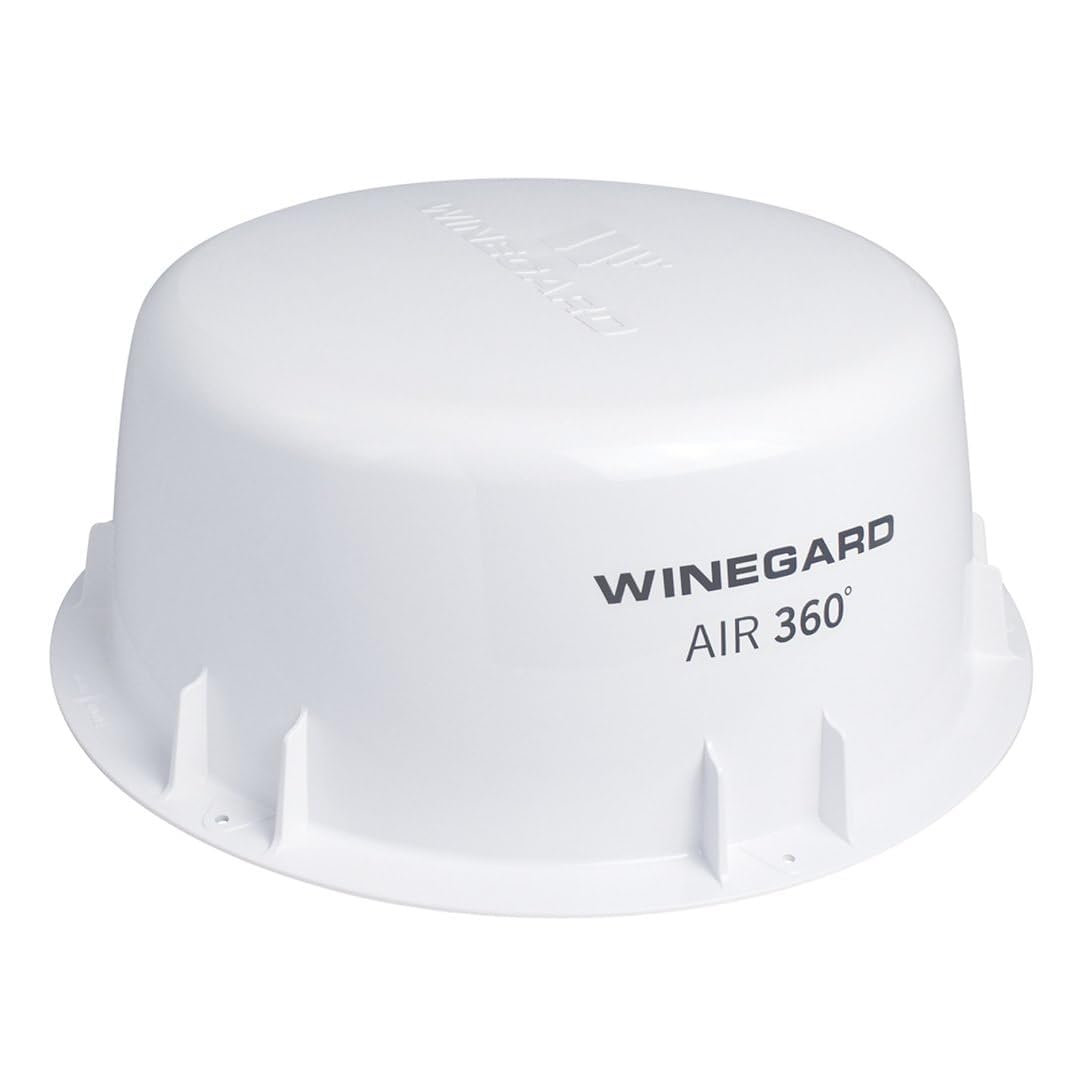
Winegard is the most recognized name in RV antennas, and the Air 360 A3-2000 is the company’s dedicated omni-directional replacement for the classic crank-up batwing antennas found on most older RVs. The low-profile dome sits just 3 inches above the roof line, making it branch-proof during travel — no more worrying about snapping a Yagi off at the first low-hanging oak. The built-in amplifier is powered through the existing wall plate system most RVs already have, simplifying the swap significantly.
Real-world reception results are strong: reviewers replacing their batwings averaged 63 to 89 channels versus the previous 22 to 77, with the omni-dome pulling in stations from multiple directions without any adjustment. The antenna also includes an integrated FM radio receiver, a nice bonus for road-trippers who want local radio without a separate unit. Installation requires cleaning old sealant and applying fresh butyl tape, which most RV owners are already familiar with.
The limitation is that this model does not include satellite, Wi-Fi, or cellular pass-through ports — it is purely an OTA TV and FM antenna. If your RV setup includes a rooftop satellite dish or you want cellular antenna integration, you will need the more expensive Air 360+ V2.S. But for the vast majority of motorhome and travel-trailer owners who just want better OTA TV reception without climbing on the roof to crank a batwing, this is the perfect drop-in replacement.
Why it’s great
- Low-profile dome is branch-proof and stays mounted during travel — no removal needed
- Direct replacement for old crank-up batwing antennas with existing power plate compatibility
- Integrated FM radio reception adds local music and news without extra hardware
Good to know
- No satellite, Wi-Fi, or cellular pass-through — pure OTA TV and FM only
- Requires butyl tape and sealant for proper waterproof install; not included
7. Winegard Air 360+ V2.S AR2-V2S (B097TZBX7N)
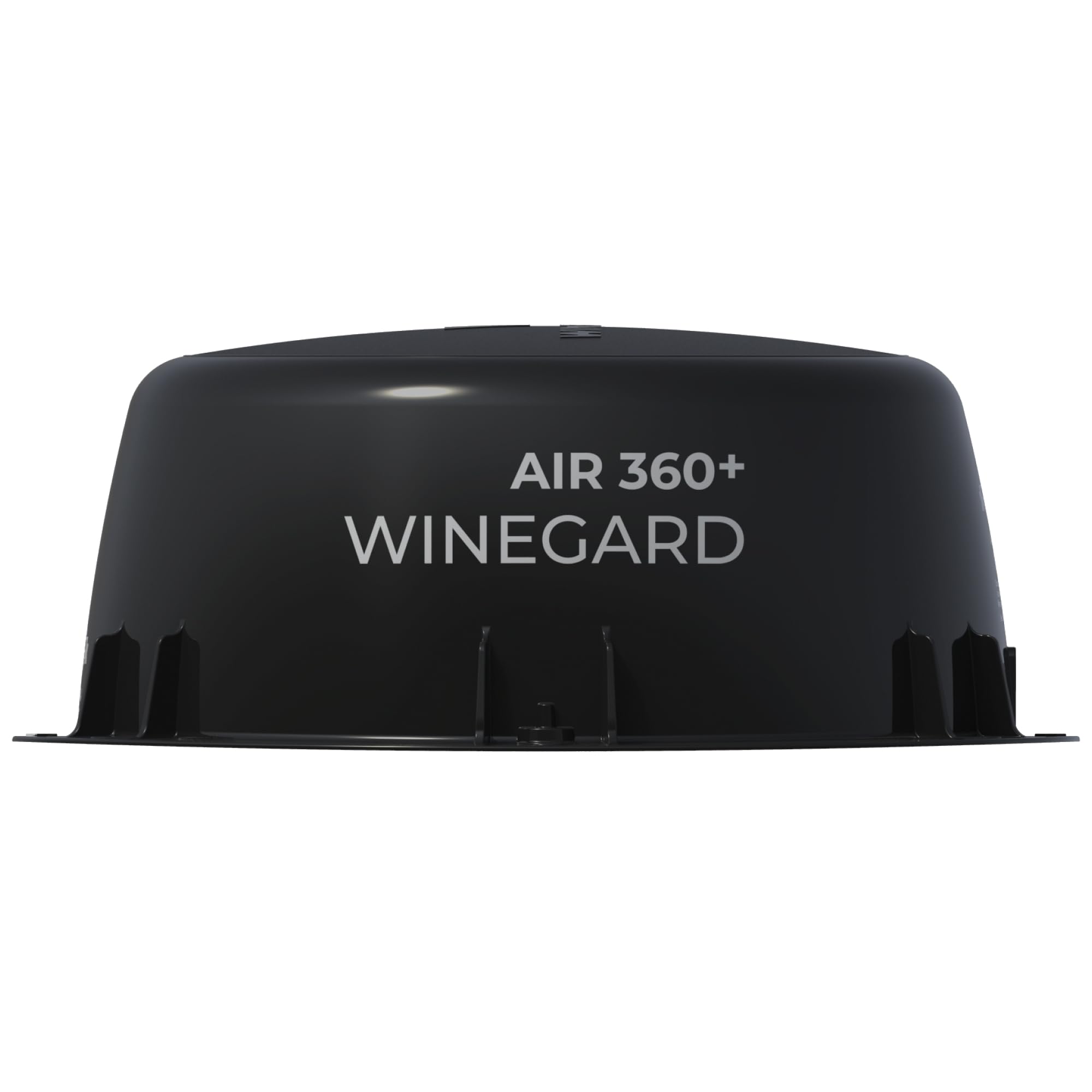
The Winegard Air 360+ V2.S is the fully loaded version of the base A3-2000, and it is designed for RV owners who want a single rooftop unit that handles OTA television, FM radio, satellite TV connectivity, and pre-installed antennas for Wi-Fi and 4G LTE cellular networking. The low-profile black dome houses all of that in a weather-resistant package rated for 55 miles of OTA reception — no external masts, no separate cellular antennas, no drilling additional holes in your roof.
Owner feedback confirms the OTA performance matches the base model: 63 to 89 channels reported after replacing old batwings, with the omni-directional design eliminating the need to manually rotate the antenna at each campsite. The satellite port is a pass-through that works with most standard rooftop dishes, and when paired with a Winegard Gateway 4G router, the built-in Wi-Fi and cellular antennas create a unified entertainment and internet system that avoids the complication of multiple separate devices on the roof.
The catch is price — this is the most expensive antenna in the lineup by a significant margin, and the Wi-Fi/cellular functionality requires the separate Gateway router to activate. If you do not need satellite integration or cellular networking, the standard A3-2000 delivers the same OTA performance for substantially less. But for full-timers and serious RV travelers who want a clean, single-hole-install solution that covers all connectivity bases, the AR2-V2S is the engineering benchmark.
Why it’s great
- Single-dome integration for OTA TV, FM, satellite pass-through, WiFi and 4G LTE antennas
- 55-mile omni-directional range with no manual aiming required at any campsite
- Eliminates need for multiple rooftop devices and extra holes in the RV roof
Good to know
- WiFi and cellular functionality require a separate Winegard Gateway 4G router to activate
- Price premium is substantial — only worth it if you actually need the multi-tech integration
FAQ
Do I need a 4G LTE filter on my outdoor TV antenna?
Can I use a 360° outdoor antenna in my attic instead of on the roof?
What does 720° dual-omni reception actually mean compared to standard 360°?
Final Thoughts: The Verdict
For most users, the 360° outdoor tv antenna winner is the Antop UFO 720° Dual-Omni because its dual-radiator design and Smartpass amplifier deliver the widest coverage pattern with the fewest compromises in both urban and suburban environments. If you need reliable VHF-Low reception without signal sacrifice, grab the Channel Master Omni+ 50. And for RV owners who want a single dome that handles OTA TV, satellite pass-through, and cellular prep, nothing beats the Winegard Air 360+ V2.S.
Product prices and availability are accurate as of the date/time indicated and are subject to change. Any price and availability information displayed on Amazon at the time of purchase will apply to the purchase of this product. As an Amazon Associate I earn from qualifying purchases.
CERTAIN CONTENT THAT APPEARS ON THIS SITE COMES FROM AMAZON. THIS CONTENT IS PROVIDED "AS IS" AND IS SUBJECT TO CHANGE OR REMOVAL AT ANY TIME.
Amazon and the Amazon logo are trademarks of Amazon.com, Inc. or its affiliates.