
Printing with Nylon (PA) is a different beast compared to PLA or PETG. This material demands an all-metal hotend capable of sustained 270–300°C, a heated bed that reaches 80–100°C, and ideally a heated enclosure to manage layer adhesion and prevent warping from ambient drafts. The wrong printer leads to clogs, failed prints, and wasted spools of expensive filament.
I’m Min — the co-founder and writer behind Gadgets Feed. I’ve spent weeks digging through technical specifications, customer reports, and material compatibility sheets to find the machines that genuinely handle Nylon’s thermal and mechanical requirements without compromise.
If you demand industrial-grade strength, chemical resistance, and durability from your prints, you need a machine engineered for high-temp engineering materials. This guide cuts through the marketing to deliver the definitive list of 3d printers for nylon that actually work.
How To Choose The Best 3D Printers For Nylon
Nylon is hygroscopic and shrinks noticeably as it cools. Choosing the wrong printer means battling extrusion jams, poor bed adhesion, and delaminated layers. The selection criteria below focus on the four non-negotiable specs a printer must have to handle Nylon consistently.
All-Metal Hotend and Nozzle Temperature
Nylon requires nozzle temperatures between 250°C and 300°C depending on the specific blend (PA6, PA12, PA-CF). A PTFE-lined hotend degrades above 260°C, releasing toxic fumes and causing jams. Look for a full metal heat break and a hardened steel nozzle — brass nozzles wear out within a single kg spool of carbon-fiber-reinforced Nylon.
Heated Chamber or Enclosure
Without a stable ambient temperature above 45°C, Nylon parts warp and lose interlayer strength. An enclosure traps heat from the bed, while active heated chambers (capable of 60–70°C) are even better. Open-frame printers can struggle unless you add a DIY enclosure or print exclusively in low-draft, warm environments.
Direct Drive Extruder
Nylon is less stiff than PLA and prone to stringing. A direct-drive extruder places the motor right above the nozzle, giving precise retraction control and faster response to filament pressure changes. Bowden setups introduce too much friction and distance, often leading to blobs and inconsistent extrusion with flexible or semi-flexible Nylon grades.
Quick Comparison
On smaller screens, swipe sideways to see the full table.
| Model | Category | Best For | Key Spec | Amazon |
|---|---|---|---|---|
| QIDI Max4 Combo | Premium | Large engineering parts in Nylon | 65°C Active Heated Chamber | Amazon |
| Snapmaker Artisan | Premium | Dual-extrusion Nylon with supports | 400mm³ Enclosed Build Volume | Amazon |
| Prusa XL 2-Toolhead | Premium | Multi-material Nylon prototypes | Segmented Heated Bed (360W) | Amazon |
| Prusa MK4S | Premium | Reliable Nylon with enclosure add-on | All-Metal Hotend 300°C | Amazon |
| Sovol SV08 MAX | Mid-Range | Large Nylon parts at high speed | 500mm³ Build Volume | Amazon |
| ELEGOO Jupiter 2 | Mid-Range | Large resin parts (not Nylon FDM) | 302.4 x 162 x 300 mm Build | Amazon |
| Creality K2 Combo | Mid-Range | Multi-color Nylon with CFS | Next-Gen Direct Drive Extruder | Amazon |
| Flashforge AD5X | Mid-Range | Entry-level Nylon with enclosure | 300°C Direct Drive Extruder | Amazon |
| Creality Halot-X1 | Budget | Resin printing (not Nylon FDM) | 10.1″ 16K Mono LCD | Amazon |
In‑Depth Reviews
1. QIDI Max4 Combo
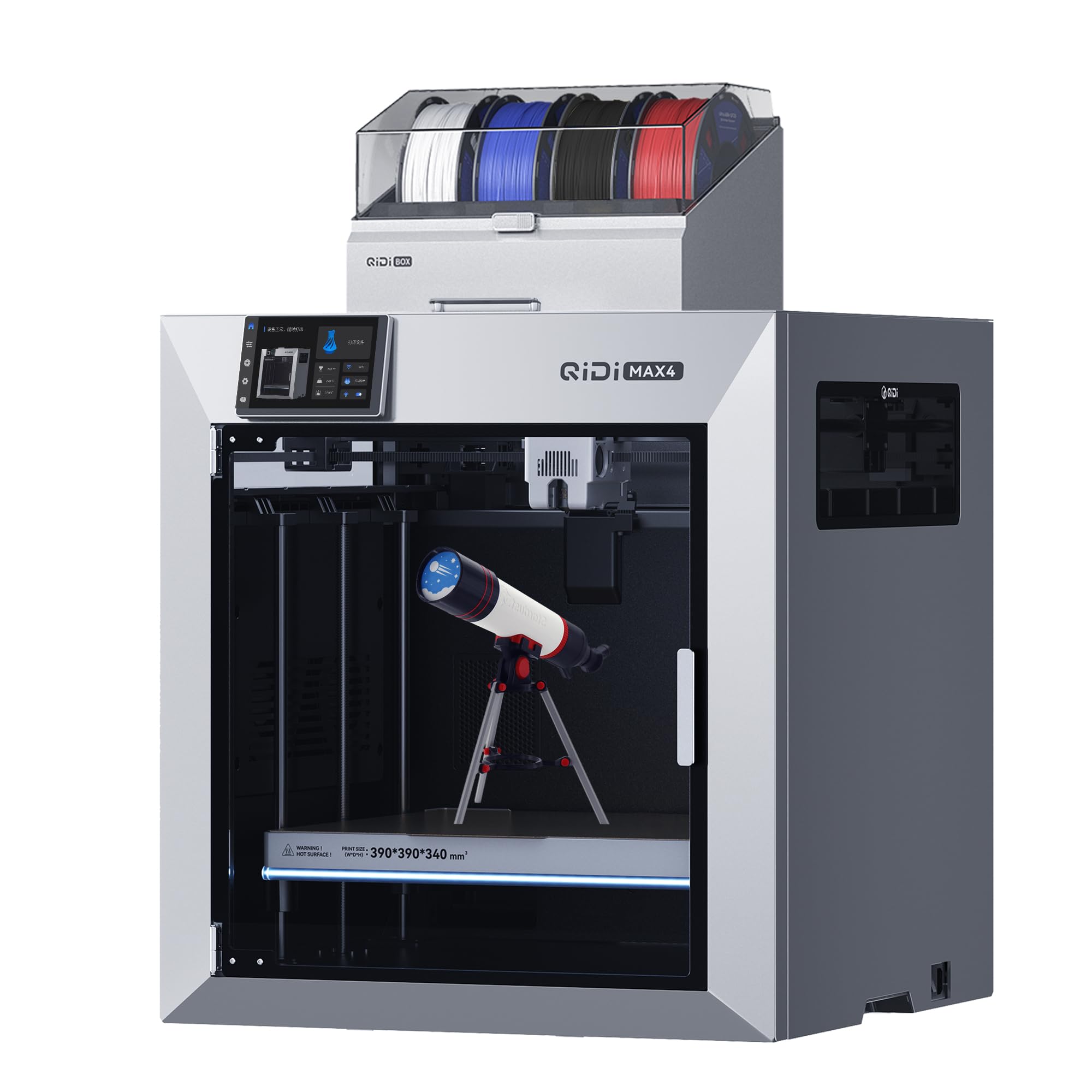
The QIDI Max4 Combo stands as the most complete out-of-the-box solution for printing Nylon at scale. Its 65°C active heated chamber is the highest in this roundup, paired with a 40mm³/s high-flow hotend that handles carbon-fiber-reinforced Nylon without hesitation. The 390×390×340mm build volume means large industrial brackets, drone frames, or custom molds print in one piece without splitting.
The closed-loop motors on X/Y axes provide precise motion control, achieving 800mm/s print speed and 30,000mm/s² acceleration while maintaining clean layer lines. Users report excellent results with PPA-CF and ABS-CF for functional parts, though the pre-print heat-soak time is longer than smaller machines. The QIDI BOX expansion supports 16-color multi-material printing, but purge waste can add up.
The self-developed Polar Cooler system (sold separately) improves part cooling for overhangs, but the base configuration already includes a full-surface silicone heated bed and an AI camera that pauses on print failures. Optimizing first-layer Z-offset is straightforward via the large touchscreen. For anyone printing Nylon as a primary material, the Max4 Combo delivers the highest reliability per dollar.
Why it’s great
- True 65°C active heated chamber eliminates Nylon warping
- Hardened steel nozzle and high-flow hotend for abrasive Nylon blends
- Fully enclosed structure with integrated AI failure detection
Good to know
- Long heat-soak time before each Nylon print cycle
- MMU requires careful filament path maintenance
- Polar Cooler upgrade must be purchased separately
2. Snapmaker Artisan

The Snapmaker Artisan is a dual-extrusion workhorse that directly addresses a common Nylon printing challenge: soluble supports. With a dedicated dual extruder, you can print Nylon as the main material and dissolve PVA or similar supports in water, leaving no scarring on complex geometries. The 400×400×400mm build volume is among the largest available for a desktop machine.
The dual extrusion module uses a 7.5:1 planetary gear ratio, providing consistent extrusion pressure even with high-viscosity Nylon blends. Users report reliable dual-nozzle alignment after auto-calibration, though the software interface has a steeper learning curve than dedicated FDM slicers. The all-metal frame includes an enclosure that traps bed heat, reaching 45–50°C passively.
The quick-swap platform also supports laser engraving and CNC carving modules, but those are optional purchases. For pure Nylon FDM printing, the Artisan excels when you need overhangs, internal channels, or moving parts that require support removal. The default 0.4mm hardened nozzle handles PA-CF without wear, and the 7-inch touchscreen provides live dual-temperature monitoring during long prints.
Why it’s great
- Dual extrusion enables Nylon with water-soluble support material
- Giant 400mm³ build volume for large Nylon assemblies
- All-metal construction and industrial-grade linear rails
Good to know
- Slicer software has a steep learning curve
- Passive enclosure may need auxiliary heating for very cold rooms
- Assembly instructions are sparse for first-time users
3. Original Prusa XL 2-Toolhead
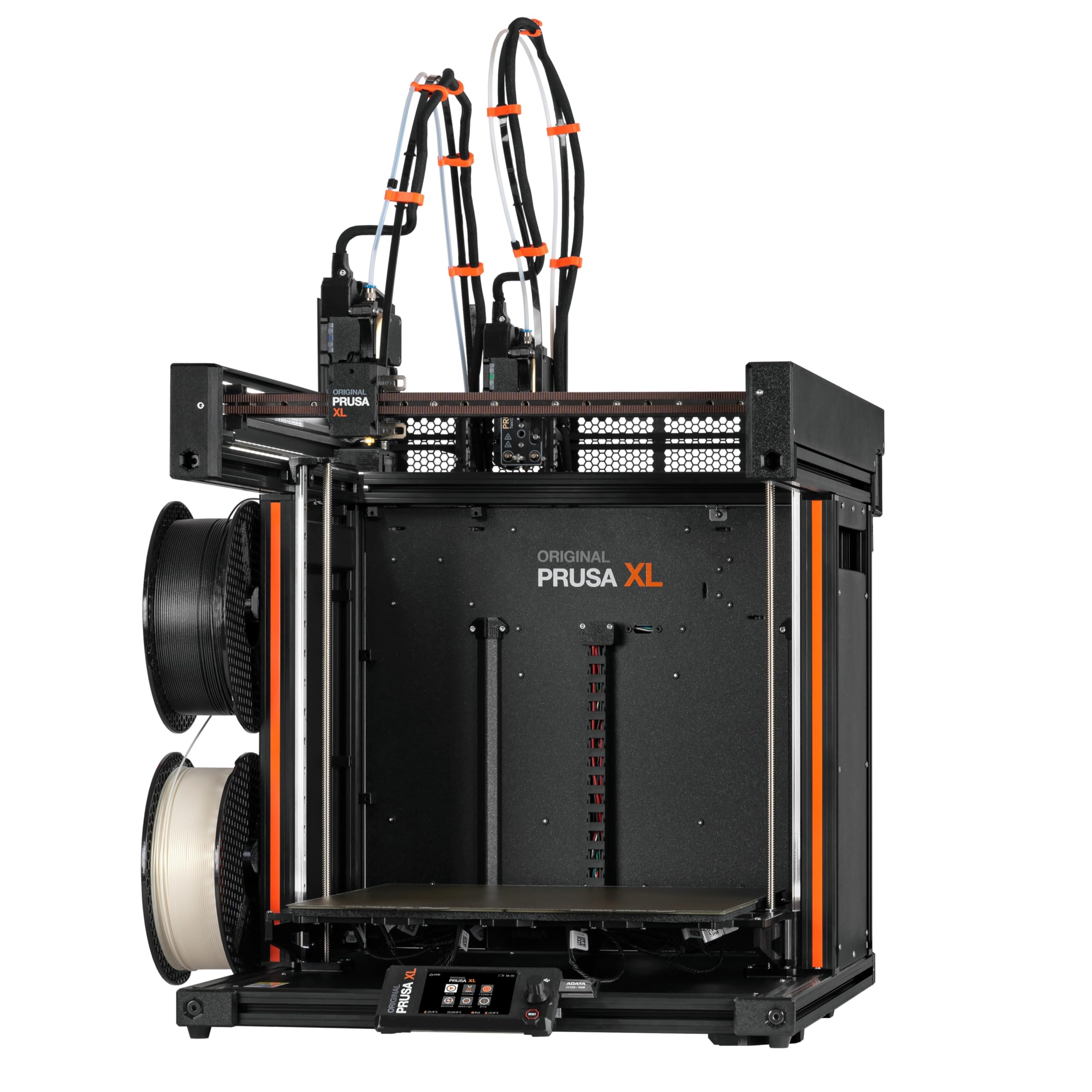
The Prusa XL is a CoreXY system built for demanding engineering environments where repeatability matters more than raw speed. Its segmented heated bed divides the 360mm² surface into independently-controlled zones, heating only the area under the print to reduce energy consumption and thermal mass — a direct advantage when printing large Nylon parts that need slow, uniform cooling.
The dual-tool system allows seamless switching between Nylon and a soluble support material, with intelligent tool parking that minimizes purge waste. Users note that print quality out of the box surpasses most competitors in terms of dimensional accuracy and surface finish, especially at the 0.05mm layer height required for interlocking Nylon components. The full Prusa ecosystem integration with PrusaSlicer means Nylon profiles are pre-optimized.
The assembled version still requires attaching the extruder, LCD, and spool holder — about a half-day of careful work. Some units arrive with broken plastic parts during shipping, but Prusa’s support is responsive. The XL is not for beginners; advanced troubleshooting is expected. However, for production-grade Nylon parts, this machine holds tolerances that cheaper printers cannot match.
Why it’s great
- Segmented heated bed reduces Nylon warping on large parts
- CoreXY motion system delivers sub-0.1mm repeatability
- Open ecosystem with no forced cloud dependencies
Good to know
- Partially disassembled for shipping — requires up to half a day to build
- Premium investment places it beyond hobbyist budgets
- Ethernet and software bugs reported in early firmware versions
4. Original Prusa MK4S
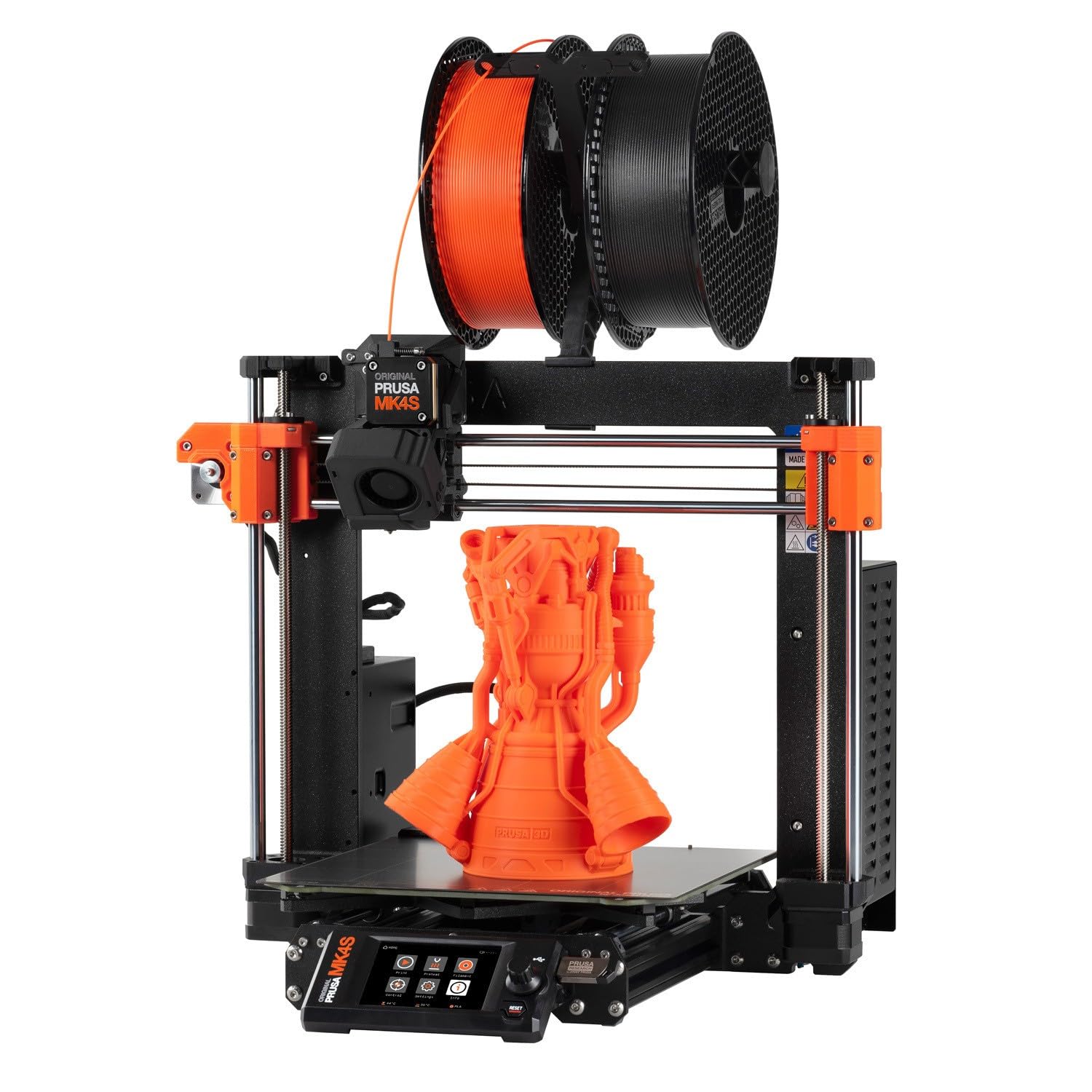
The Prusa MK4S is the definitive open-frame printer for Nylon — provided you add an enclosure. Its all-metal hotend reaches 300°C, and the direct-drive extruder gives precise retraction control needed to minimize Nylon stringing. The input shaping algorithm reduces ringing artifacts at higher speeds, keeping surface quality consistent even when printing PA6 at 120mm/s.
Users consistently report that the MK4S prints Nylon without clogs straight out of the box, using PrusaSlicer’s built-in profiles for Prusament PA. The machine is quiet during operation, and the self-cleaning printhead prevents most nozzle buildup. The kit version takes about three days to assemble, but the interactive instructions make the process educational for those new to high-temp materials.
The main limitation is the 250×210×220mm build volume — too small for large engineering parts. Nylon warping becomes problematic in cooler rooms without a Prusa enclosure (sold separately). For small functional parts and prototyping, however, the MK4S offers the strongest community support and long-term upgrade path of any printer in this price bracket.
Why it’s great
- Proven all-metal hotend and direct-drive extrusion for Nylon
- Input shaping for high-speed Nylon prints without ringing
- Excellent community profiles and PrusaSlicer integration
Good to know
- Requires external enclosure for reliable Nylon printing
- Limited build volume restricts large single-piece Nylon parts
- Kit assembly takes multiple days for first-time builders
5. Sovol SV08 MAX
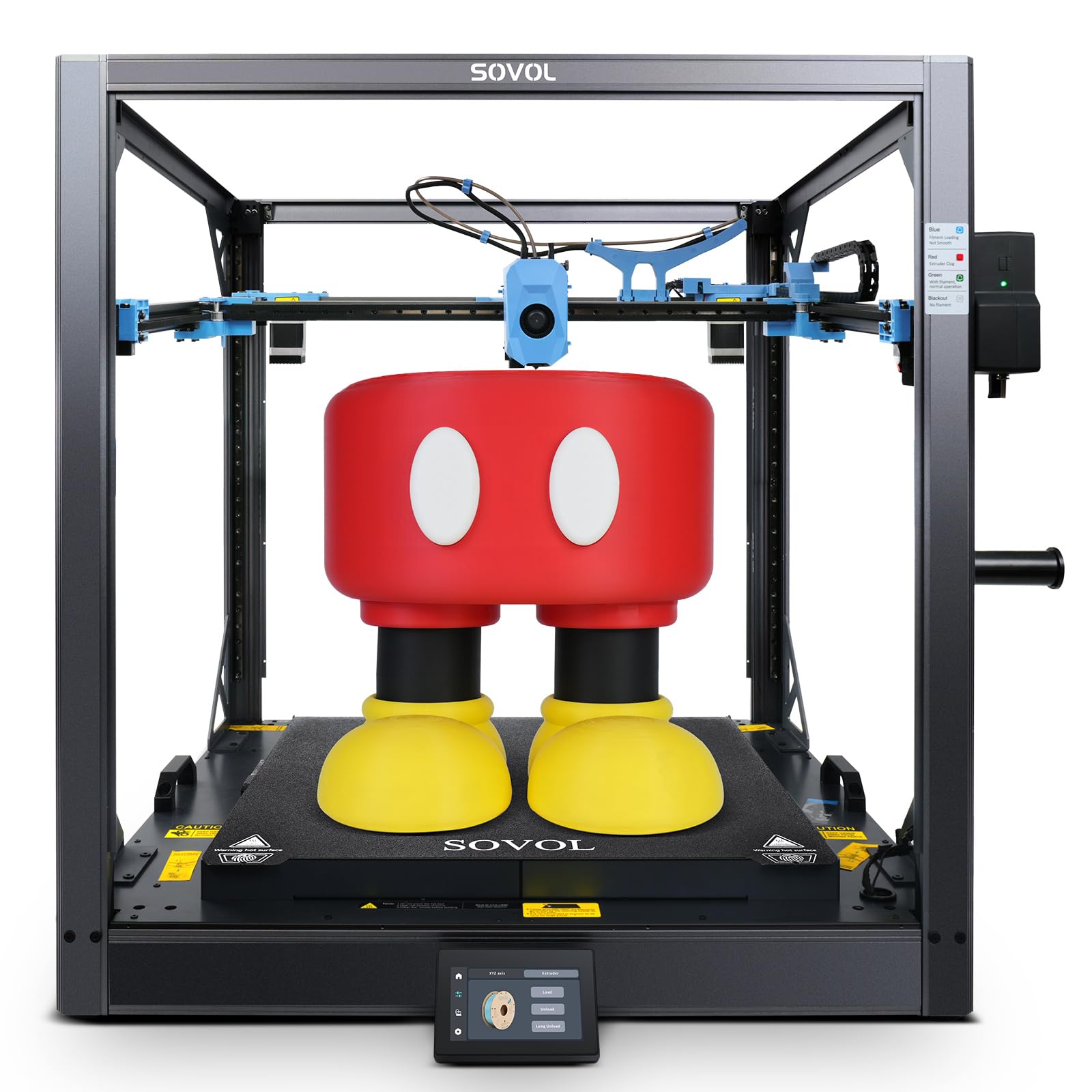
The Sovol SV08 MAX breaks the size barrier with a 500×500×500mm build volume — large enough to print Nylon parts like full-scale drone frames or furniture connectors in a single job. It achieves up to 700mm/s print speed with 40,000mm/s² acceleration, powered by CoreXY kinematics that reduce moving mass for better precision at speed. The 300°C hotend handles PA, PA-CF, and PA-GF without issues.
The Eddy Current sensor performs contactless bed leveling, automatically calibrating for surface deviations before every print. Users report that the first-layer adhesion consistency is excellent after initial dial-in. The smart auxiliary feeder system detects tangles and clogs in real-time, pausing the print to prevent failed Nylon parts — a critical feature given the cost of large-format Nylon spools.
The machine is open-source, running a Klipper-based fork, and ready for mods like a heated chamber upgrade (available separately). However, some units arrive with loose belt tension or wiring issues. The 86-pound frame provides rigidity, but the printer is loud — expect to replace the mainboard fan with a quieter Noctua unit. Not for plug-and-play beginners, but the bang-for-buck in large Nylon printing is unmatched.
Why it’s great
- Massive 500mm³ build volume for oversized Nylon parts
- Eddy current levelling ensures perfect first layer on large beds
- Open-source Klipper ecosystem with active modding community
Good to know
- No heated chamber included — enclosure upgrade sold separately
- Loud mainboard fan and stepper motors out of the box
- Requires moderate tinkering and assembly adjustments
6. ELEGOO Jupiter 2
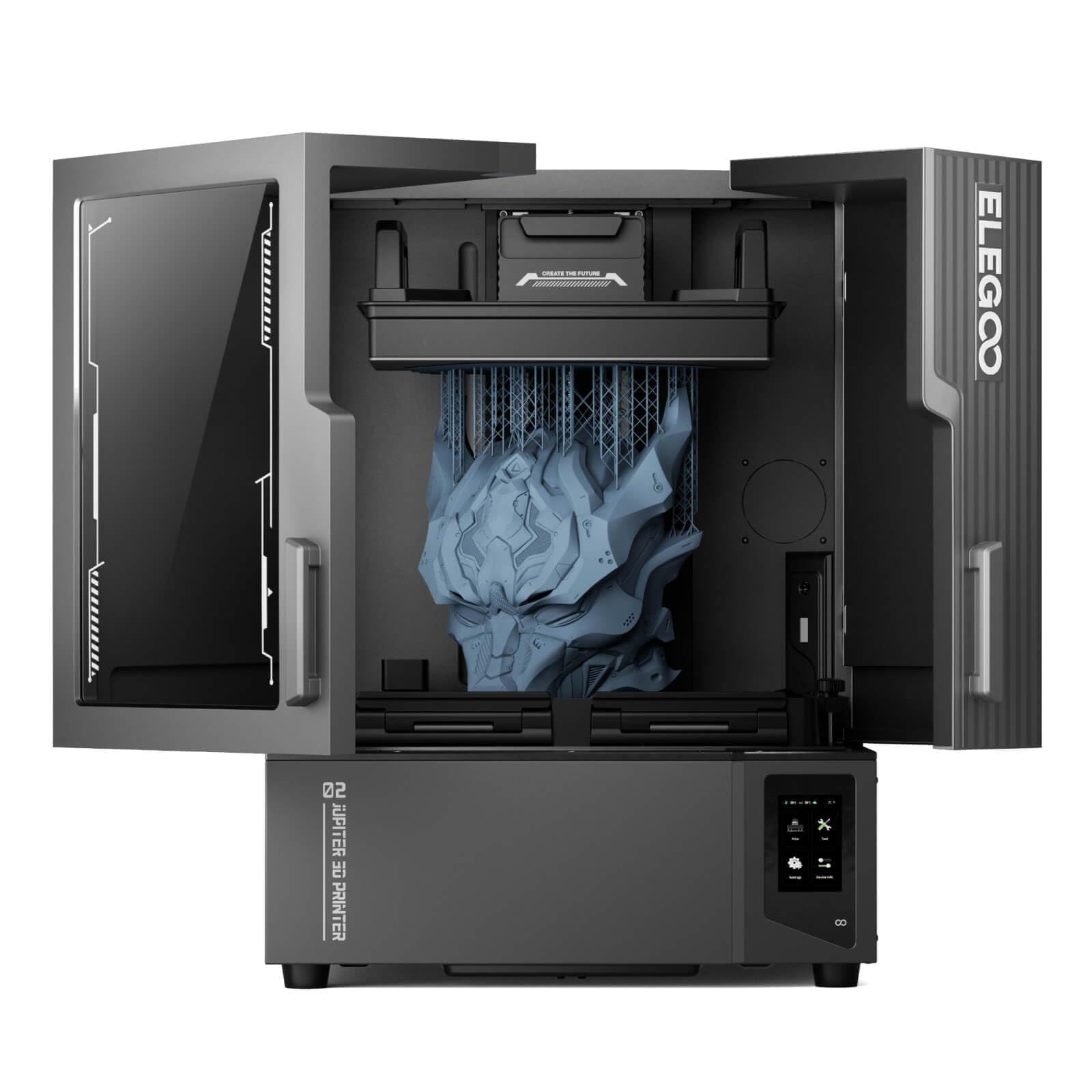
The ELEGOO Jupiter 2 is included for readers who may be evaluating whether resin printing offers a different path to Nylon-like strength. This large-format MSLA machine uses a 16K LCD screen with 20×26μm XY resolution, delivering the detail that FDM printers cannot match for tiny features. The 302×162×300mm build volume is 2.5x larger than the Saturn 4.
Resin printed with high-toughness formulations (like Siraya Tech Tenacious or Phrozen TR250) can approach some mechanical properties of Nylon, though not its thermal resistance or fatigue life. The Jupiter 2 includes smart tank heating, auto resin feeding, and a mechanical sensor for shortage detection. However, the material cost per part is higher, and post-processing requires washing and curing.
Users praise the consistent exposure across the build area thanks to the COB light source with 92 independent zones. The machine is large and ungainly — only specific wash/cure stations fit its build plate with a print attached. Not a direct Nylon FDM replacement, but a complementary tool for intricate masters or masters for molding in Nylon-compatible resins.
Why it’s great
- Extreme 16K resolution for intricate, detailed parts
- Smart resin management with heating and auto-fill
- Large build volume for a desktop resin printer
Good to know
- Resin material properties differ from FDM Nylon
- Requires dedicated washing and curing post-processing
- Large physical footprint and heavy base cabinet
7. Creality K2 Combo
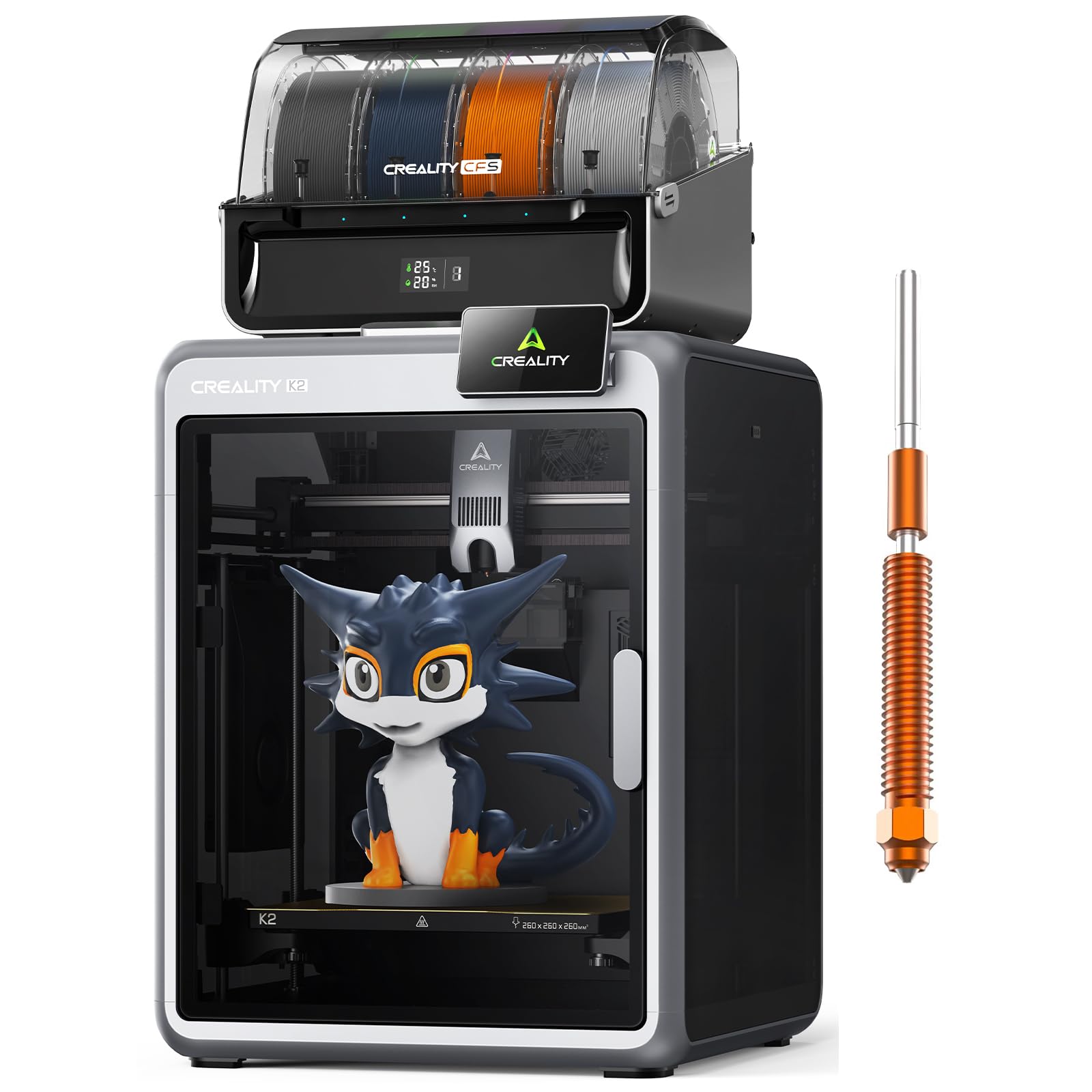
The Creality K2 Combo pushes Nylon printing into the multi-color realm through its CFS (Creality Filament System). The CFS manages up to four spools (expandable to 16 with multiple units), automatically loading, drying, and switching filaments mid-print. The next-gen direct drive extruder and step-servo motors provide the torque needed to push Nylon consistently through the hotend at 600mm/s.
The 260×260×260mm build volume covers most functional part sizes. Users report excellent print quality with PLA-CF and PET-CF profiles, and the enclosed frame helps maintain a stable environment for Nylon. The AI camera monitors for spaghetti failures and pauses prints automatically. The silent mode using step-servo motors keeps noise levels similar to a typing laptop.
Notable caveats: the CFS requires specific spool adapter sizes, and some users report filament jams at the feeder sensor when using brittle Nylon. The power cord and Wi-Fi compatibility (no 5GHz) have been improvement points in early batches. For those wanting color-coded Nylon functional parts without painting, this is the most accessible door into multi-material printing.
Why it’s great
- Multi-color Nylon printing via CFS system up to 16 colors
- Step-servo motors for high-torque Nylon extrusion
- Full enclosure and auto-leveling for reliable first layers
Good to know
- CFS may not accept standard spools without printed adapters
- Defective power cords and extruder clogs reported in early units
- No 5GHz Wi-Fi support limits remote monitoring options
8. Flashforge AD5X
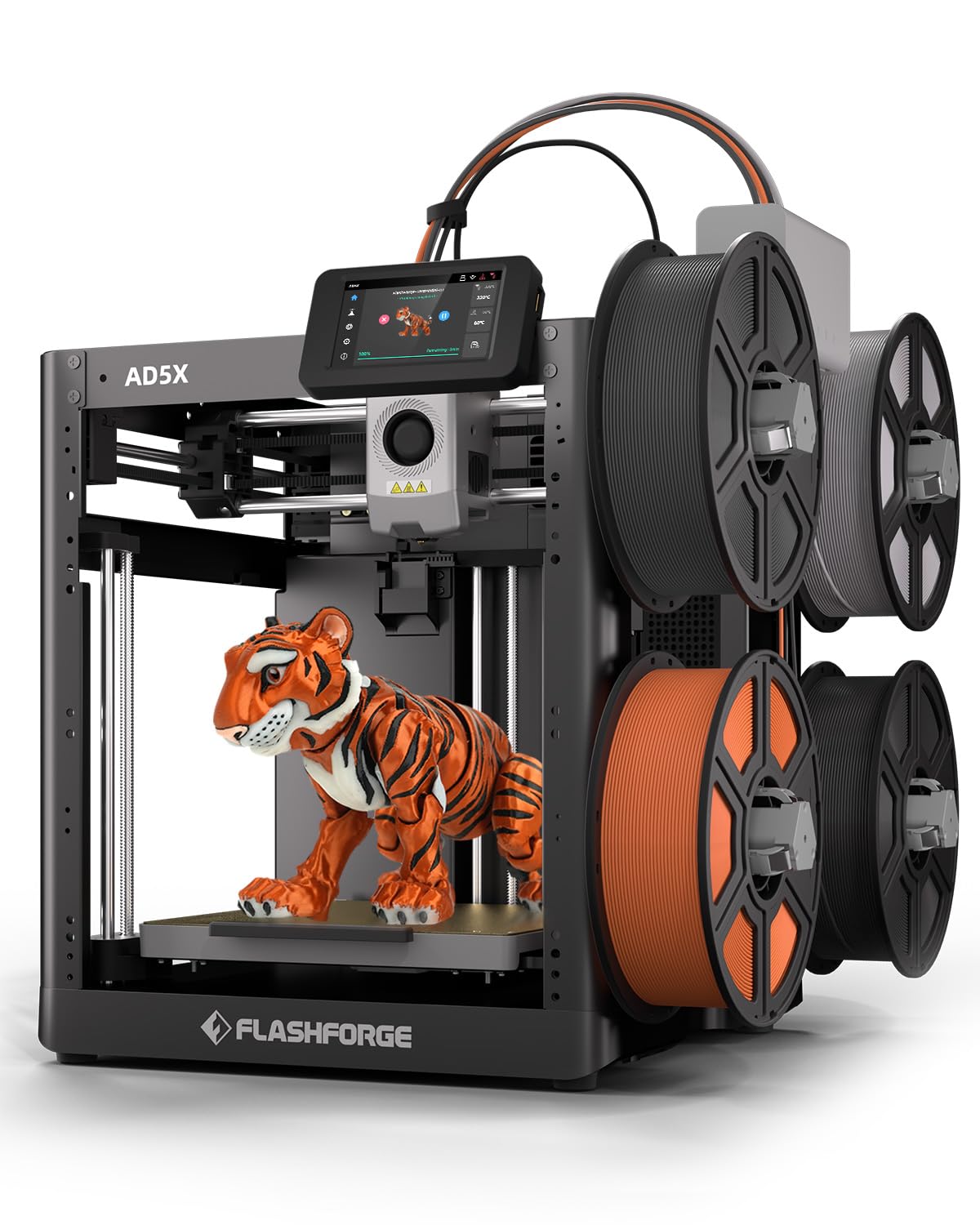
The Flashforge AD5X offers the lowest barrier of entry for enclosed Nylon printing with a 300°C direct drive extruder. The CoreXY structure supports 600mm/s print speed and 20,000mm/s² acceleration, while the vibration compensation system maintains surface quality. The enclosed frame keeps ambient temperature stable enough for small to medium Nylon parts without additional insulation.
The multi-color filament system supports up to four simultaneous colors, though purge waste during color changes is significant. Users note that the PEI plate provides strong first-layer adhesion for Nylon, and auto-bed leveling takes guesswork out of calibration. The touchscreen interface and Flash Maker mobile app enable remote monitoring and control, though the phone app is less polished than the PC software.
Reliability reports are mixed — some users experience filament jams at the 4-in-1 connector or first-layer inconsistencies. The build plate is thin and Z-axis movements can be loud. The learning curve for the software stack (OrcaSlicer vs. proprietary slicer) confuses some beginners. For the price, it’s a capable entry point for experimenting with Nylon, but professionals may find consistency lacking for production work.
Why it’s great
- 300°C direct drive extruder handles Nylon temperatures
- Enclosed CoreXY frame for stable thermal environment
- Multi-color capability without breaking the bank
Good to know
- Intermittent filament jams at the multi-color connector
- Software ecosystem has a steep learning curve
- Noise level is higher than comparable enclosed printers
9. Creality Halot-X1 Combo
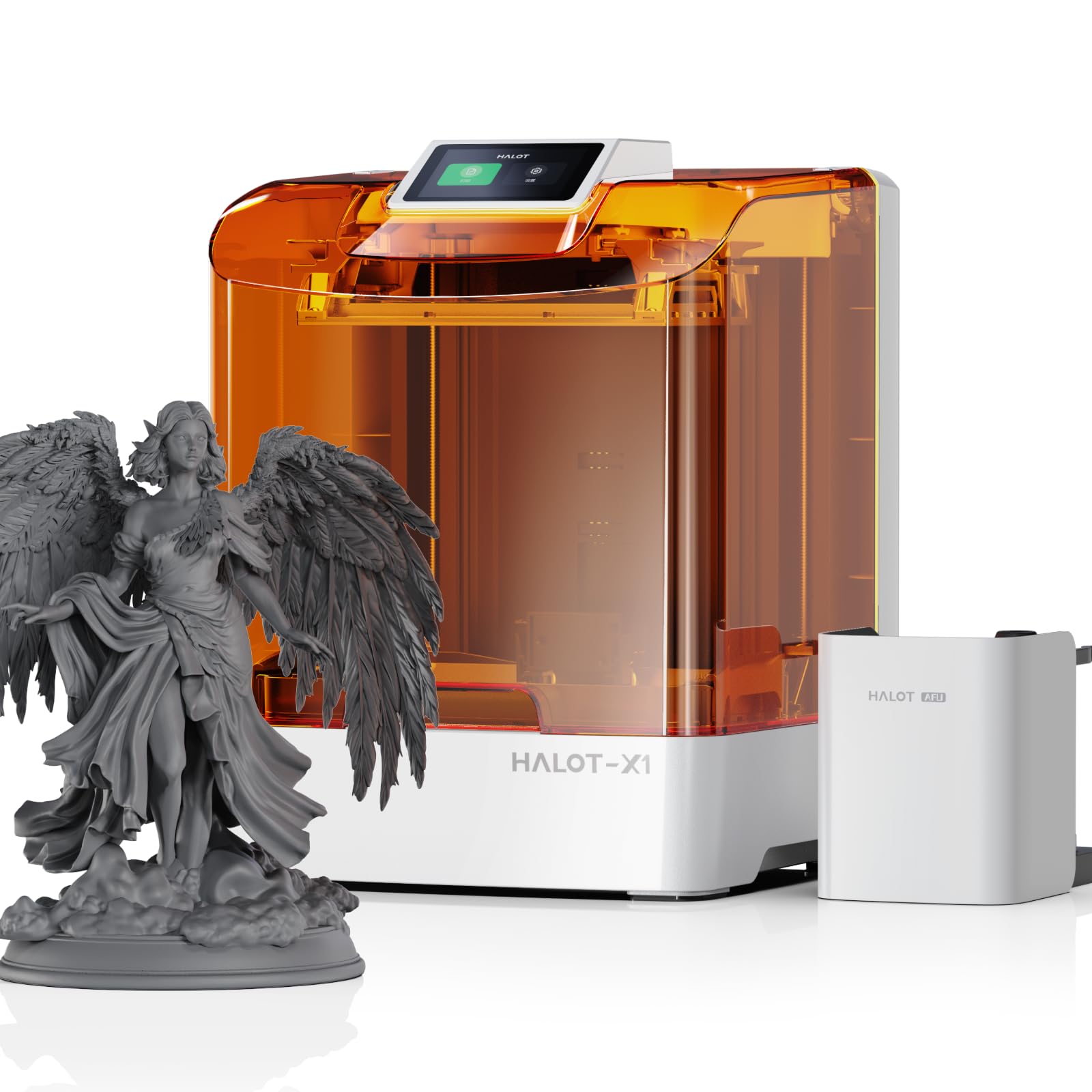
The Creality Halot-X1 Combo is a resin printer, included here for readers considering whether high-toughness resin can serve as a Nylon alternative. The 10.1-inch 16K mono LCD delivers industry-leading detail with 14×19μm pixels, suitable for master patterns in mold-making or jewelry casting. The 170mm/h print speed is 3x faster than earlier Halot models.
The intelligent AFU resin management system heats the resin to 30–45°C in three minutes, reducing viscosity for better detail reproduction. RFID tag recognition auto-loads resin parameters, and real-time weight monitoring ensures enough material. The fixed build plate with twist-to-release design simplifies part removal without scraping the FEP film.
Halot Box software crashes have been reported, making the printer unusable until a fix is applied. The machine’s 37-pound weight and 21-inch height require a dedicated workspace. Resin materials engineered for toughness (like Siraya Tech Blu or Phrozen TR300) can withstand impact better than standard resins but still lack Nylon’s fatigue resistance and heat deflection temperature.
Why it’s great
- Industry-leading 16K resolution for ultra-detailed parts
- Smart resin management with heating and RFID profiles
- 170mm/h speed reduces print time for large resin models
Good to know
- Resin lacks Nylon’s thermal and mechanical properties
- Halot Box software stability needs improvement
- Requires dedicated ventilation and post-processing setup
FAQ
Can I print Nylon on an open-frame printer without an enclosure?
Which Nylon filament type is easiest for beginners to print?
How hot does the bed need to be for Nylon printing?
Final Thoughts: The Verdict
For most users, the 3d printers for nylon winner is the QIDI Max4 Combo because it delivers a true 65°C active heated chamber, high-flow hardened hotend, and the largest build volume among fully-enclosed machines — all at a price that undercuts the competition by hundreds of dollars. If you want the best support community and open-source upgradability, grab the Original Prusa MK4S. And for massive single-print engineering parts without breaking the bank, nothing beats the Sovol SV08 MAX.