
Our readers keep the lights on and my morning glass full of iced black tea. As an Amazon Associate, I earn from qualifying purchases.
Buying a TV that doesn’t support Dolby Vision is like buying a sports car and only driving it in first gear. You leave dynamic metadata, scene-by-scene optimization, and the full HDR color gamut on the table. For gamers watching league highlights, cinephiles revisiting 4K Blu-rays, or families upgrading their living room centerpiece, Dolby Vision transforms every shadow, highlight, and skin tone into something visibly richer than standard HDR10.
I’m Min — the co-founder and writer behind Gadgets Feed. This guide digs into every spec sheet and real-world review to isolate which sets actually deliver on Dolby Vision’s promise rather than just stamping the logo on the box.
Whether you prioritize black-level perfection for dark-room movie nights or need blistering 144Hz gaming motion with Dolby Vision Gaming support, narrowing down the best 4k dolby vision tv demands matching the right panel technology and processor to your room and use case.
How To Choose The Best 4K Dolby Vision TV
Not every set labeled Dolby Vision delivers the same experience. Two critical factors separate a great Dolby Vision TV from one that merely checks the box: the peak brightness ceiling and the precision of local dimming. Dolby Vision is a dynamic metadata format that tells the display exactly how bright or dark each scene should look, frame by frame. If the panel cannot physically hit high nits or its dimming zones are too few, the format’s advantage nearly vanishes.
Peak Brightness and Local Dimming Zones
Dolby Vision content is mastered at up to 10,000 nits. A TV that peaks at 400 nits will compress that range heavily, flattening specular highlights. Look for sets with at least 600 nits sustained brightness and several hundred local dimming zones. Mini-LED backlights at this price tier routinely deliver 1,000+ nits and thousands of zones, producing the kind of punchy highlights Dolby Vision is designed for. OLEDs, by contrast, rely on per-pixel dimming — infinite contrast in dark scenes — but typically top out around 800 nits on recent models.
Dolby Vision Gaming vs Standard Dolby Vision
If you game on a PS5 or Xbox Series X, Dolby Vision Gaming mode is a must. It unlocks low-latency dynamic HDR at 4K 120Hz (or 144Hz on some newer panels). Not all Dolby Vision-capable TVs support this gaming-specific flavor — some revert to a higher-latency movie mode when they detect a Dolby Vision signal from a console. Check for ALLM (Auto Low Latency Mode) and variable refresh rate (VRR) support alongside Dolby Vision Gaming on the spec sheet.
Panel Types: OLED vs Mini-LED vs QLED
OLED delivers true blacks and infinite contrast, making Dolby Vision in a dark room breathtaking. The trade-off is lower peak brightness and potential burn-in risk. Mini-LED QLED sets hit much higher brightness levels — often exceeding 2,000 nits — which makes Dolby Vision pop in bright living rooms. The choice hinges on your ambient light: controlled lighting favors OLED, while sun-drenched rooms benefit from Mini-LED’s brute force.
Quick Comparison
On smaller screens, swipe sideways to see the full table.
| Model | Category | Best For | Key Spec | Amazon |
|---|---|---|---|---|
| Hisense 85U7SG | Mini-LED QLED | Bright-room cinema and gaming | Native 165Hz, 3000 nits peak | Amazon |
| Sony BRAVIA 5 65” | Mini-LED | PS5 gaming and upscaling | XR Processor, Dolby Vision | Amazon |
| Hisense 65U8QG | Mini-LED QLED | High-nit HDR impact | 5000 nits, 5600 dimming zones | Amazon |
| Samsung OLED S95F | OLED | Glare-free bright-room OLED | Glare Free matte, 165Hz VRR | Amazon |
| Sony BRAVIA 3 II 50” | LED | Value-conscious PS5 owner | XR Processor, 120Hz panel | Amazon |
| iFFALCON 65U85 | Mini-LED | Multi-console gaming setup | 4x HDMI 2.1, 144Hz panel | Amazon |
| Sony OLED XR8B 55” | OLED | Dark-room Dolby Vision purity | Per-pixel contrast, XR OLED | Amazon |
| LG OLED C1 77” | OLED | Massive screen premium cinema | 77”, a9 Gen4 processor | Amazon |
| Sony BRAVIA 8 55” | OLED | Reference color accuracy | XR Contrast Booster 15 | Amazon |
| Roku Pro Series 55” | QLED | Roku ecosystem simplicity | Mini-LED, Dolby Vision IQ | Amazon |
| TCL T7 65” | QLED | Entry-level 144Hz gaming | 144Hz, AIPQ Pro processor | Amazon |
In‑Depth Reviews
1. Hisense 85″ U7 Mini-LED ULED 4K UHD Smart Google TV (85U7SG)
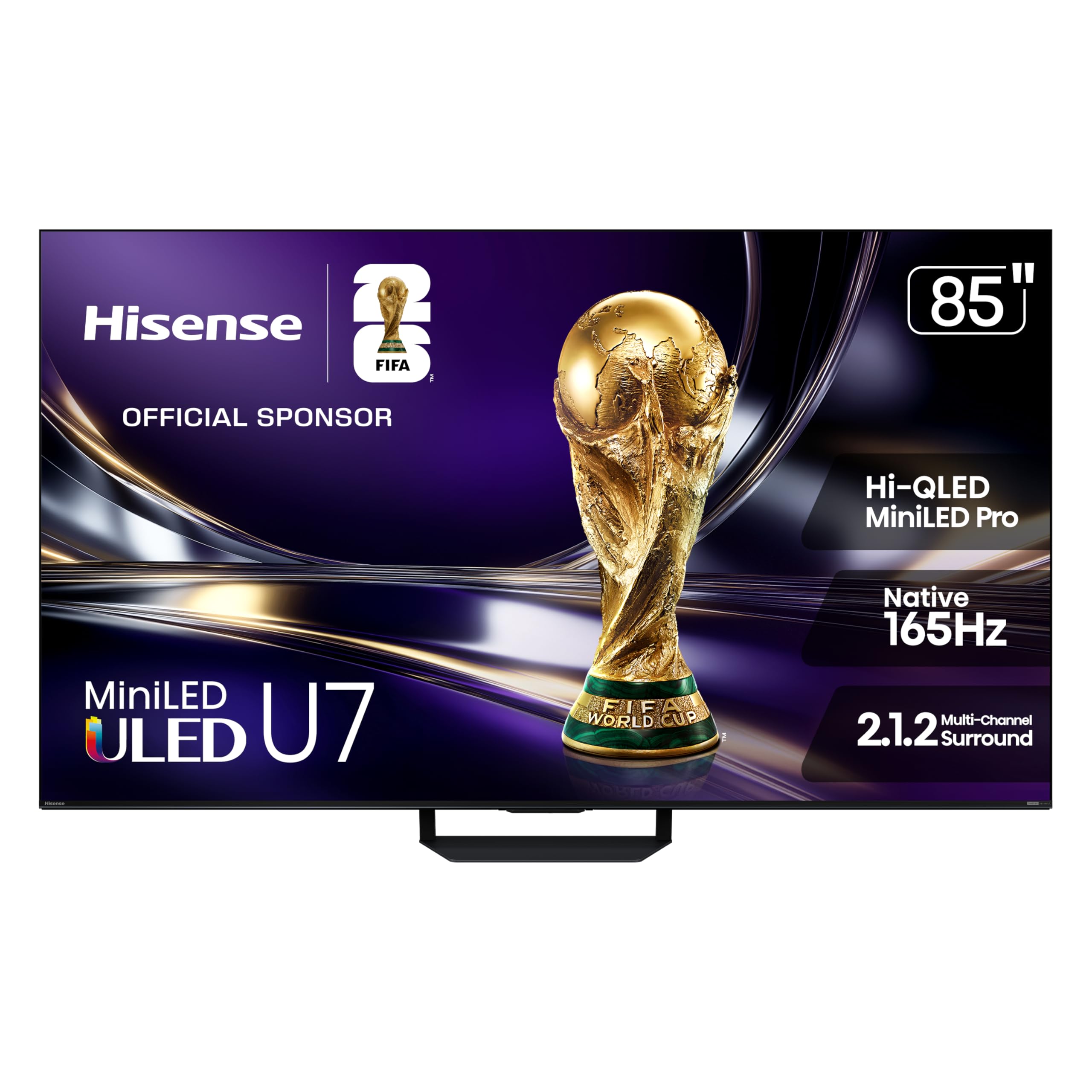
At 85 inches with an anti-reflection layer and up to 3,000 nits peak brightness, this Mini-LED QLED set is a bright-room beast. The 3000+ local dimming zones deliver Dolby Vision highlights with enough intensity to compete with direct sunlight pouring through windows. Hi-QLED color plus Pantone validation ensures skin tones and gradients look natural, not oversaturated.
Gamers get a native 165Hz panel with VRR scaling up to 330Hz, plus Dolby Vision Gaming support at 4K 120Hz. The Hi-View AI Engine Pro handles real-time upscaling of 1080p content to near-4K clarity — crucial for mixed-use households streaming both old sitcoms and new Dolby Vision movies. The 2.1.2-channel audio with Dolby Atmos provides decent positional sound without an external bar, though purists will still want a dedicated system.
Owners consistently praise the glare-free coating for outdoor and sunlit room use, calling it a practical upgrade over last year’s U8 series. The Google TV interface is snappy with Bluetooth 5.4 support for stable wireless audio. For the size and brightness, this set undercuts similarly spec’d Sony and Samsung options by a wide margin, making it the best-balanced pick for most buyers.
Why it’s great
- 3,000 nits peak and 3000+ dimming zones demolish Dolby Vision specular highlights
- Anti-reflection layer works better than any OLED in bright rooms
- Native 165Hz panel with Dolby Vision Gaming and VRR up to 330Hz
Good to know
- Built-in 2.1.2 audio is good but still benefits from a soundbar for full Atmos immersion
- 85-inch size requires two-person setup and a sturdy stand or mount
2. Sony BRAVIA 5 65″ Mini LED TV (K-65XR50)

Sony’s XR Backlight Master Drive takes thousands of Mini-LEDs and controls them with the precision that only Sony’s decades of image processing can deliver. Dolby Vision content on this set looks natural rather than artificially punchy — faces stay lifelike while explosions retain impact. The XR Triluminos Pro unlocks billions of colors from the 4K panel, and the AI processor upscales HD content to near-4K without introducing artifacts.
PS5 owners get exclusive Auto HDR Tone Mapping and Auto Genre Picture Mode; the TV recognizes the console and adjusts Dolby Vision Gaming parameters automatically. The 120Hz panel with VRR and ALLM keeps input lag minimal. Two of the four HDMI ports support 4K 120Hz, enough for a console and a streaming box simultaneously. The Acoustic Surface Audio+ makes the screen itself vibrate to produce sound — surprisingly directional and clear for a built-in solution.
Customer feedback highlights the instant power-on and zero-lag response. Reviewers upgrading from TCL and Hisense models report noticeably better motion handling and fewer artifacts in fast panning shots. The premium price reflects the processing excellence, not just a brand tax.
Why it’s great
- XR Backlight Master Drive delivers Dolby Vision with cinema-grade local dimming precision
- PS5 integration is seamless — Auto HDR and Auto Genre work every time
- AI upscaling breathes new life into 1080p and streaming content
Good to know
- Only 2 of 4 HDMI ports support full 4K 120Hz
- Premium pricing approaches entry-level OLED territory
3. Hisense 65″ U8 Series ULED Mini-LED (65U8QG)
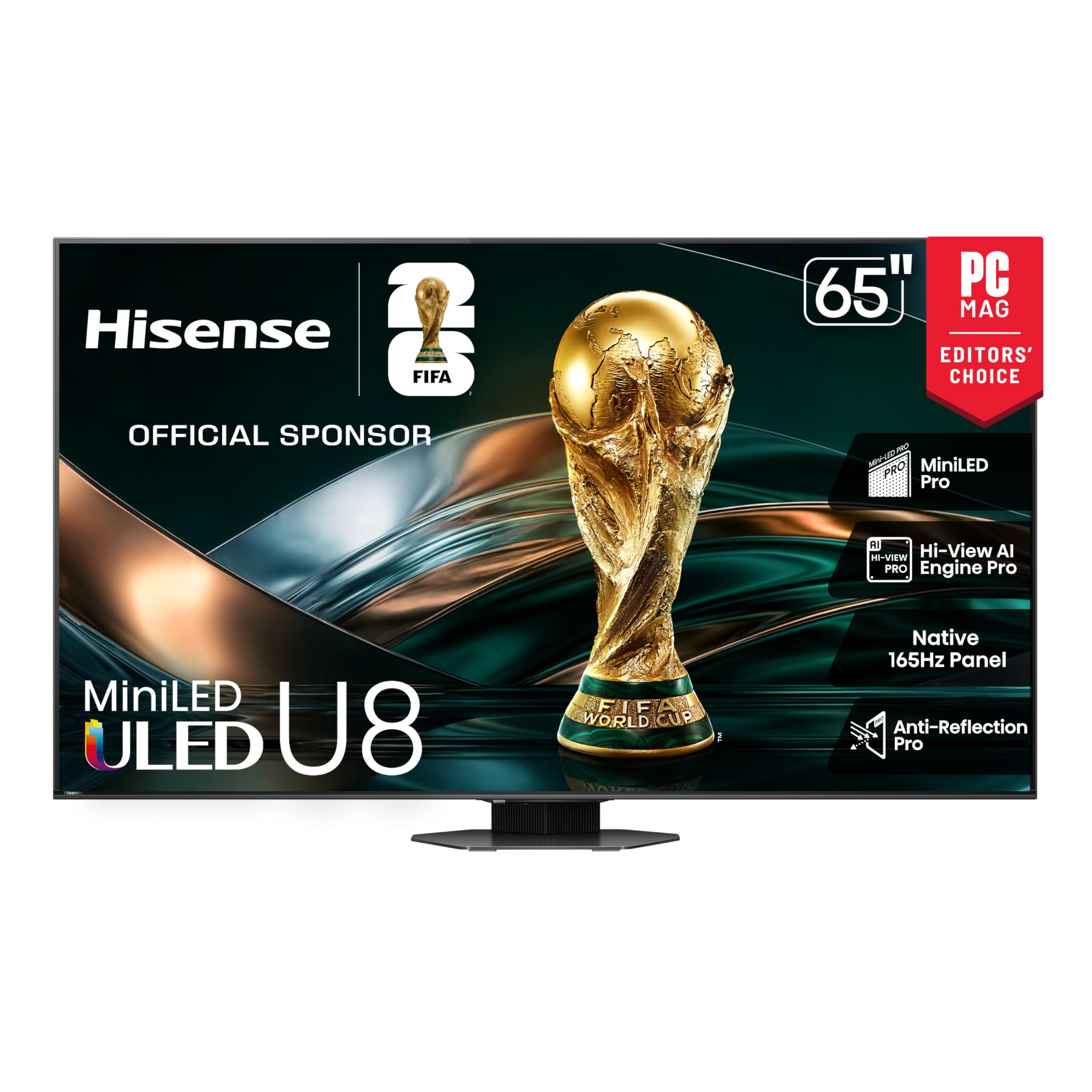
The U8QG is a statement piece: 5,000 nits peak brightness and 5,600 local dimming zones on a 65-inch screen. That’s enough headroom to make Dolby Vision highlights practically glow — specular reflections on a wet street, the sun glinting off a starship — without blowing out nearby dark areas. The Hi-View AI Engine Pro optimizes color and contrast per scene, and the 4.1.2 multi-channel audio with up-firing speakers makes Dolby Atmos sound genuinely immersive out of the box.
Gamers benefit from a native 165Hz panel with FreeSync Premium Pro, VRR up to 288Hz, and the new Game Bar that lets you tweak settings on the fly. The anti-reflection coating handles moderate room light, though not as aggressively as the larger U7SG. The Google TV interface is responsive, and the remote has a pleasingly solid feel that reviewers consistently compliment.
Some users experienced periodic software hiccups requiring a power cycle, though these appear less common with recent firmware updates. For sheer luminous intensity in Dolby Vision, no other TV at this price touches it. The sound system is good enough that many skip a soundbar entirely — a first for this price segment.
Why it’s great
- 5,000 nits peak is the highest Dolby Vision headroom in its class
- Native 165Hz with FreeSync Premium Pro and Game Bar
- 4.1.2-channel Dolby Atmos audio eliminates need for a soundbar
Good to know
- Occasional software hiccups reported, mostly resolved by updates
- Heavier panel than similarly sized QLEDs — check wall-mount rating
4. Samsung 55″ OLED S95F 4K Smart TV (2025 Model)

Samsung’s Glare Free OLED technology is the key differentiator here. It uses a specialized matte coating that diffuses ambient light without washing out blacks — a first for OLED. In bright rooms, this eliminates the mirror-like reflections that plague traditional OLED panels. The NQ4 AI Gen3 processor with 128 neural networks upscales everything to 4K and intelligently converts SDR to HDR-like quality, which pairs well with Dolby Vision’s dynamic metadata.
Motion Xcelerator pushes the panel to 164Hz for VRR gaming, making this one of the fastest OLEDs on the market. Samsung Vision AI optimizes picture settings based on what you’re watching, and the built-in Alexa support rounds out the smart home integration. The anti-glare effect drew immediate praise from owners who placed the TV in rooms with multiple windows — no more fighting daylight to watch a movie.
Software quirks exist: some users report the screen going into screensaver mode during Android casting, and the casting process can be slower than competing platforms. The hardware is phenomenal, but Samsung’s Tizen software has a few rough edges that firmware updates may smooth over.
Why it’s great
- Glare Free OLED coating solves the bright-room reflection problem without compromising blacks
- 164Hz VRR makes it one of the fastest OLEDs for competitive gaming
- NQ4 processor upscales SDR content to HDR-like quality effectively
Good to know
- Casting from Android devices can trigger a screensaver bug
- Tizen interface has fewer apps natively compared to Google TV
5. Sony BRAVIA 3 II 50″ 4K HDR LED TV (K-50XR30M2)
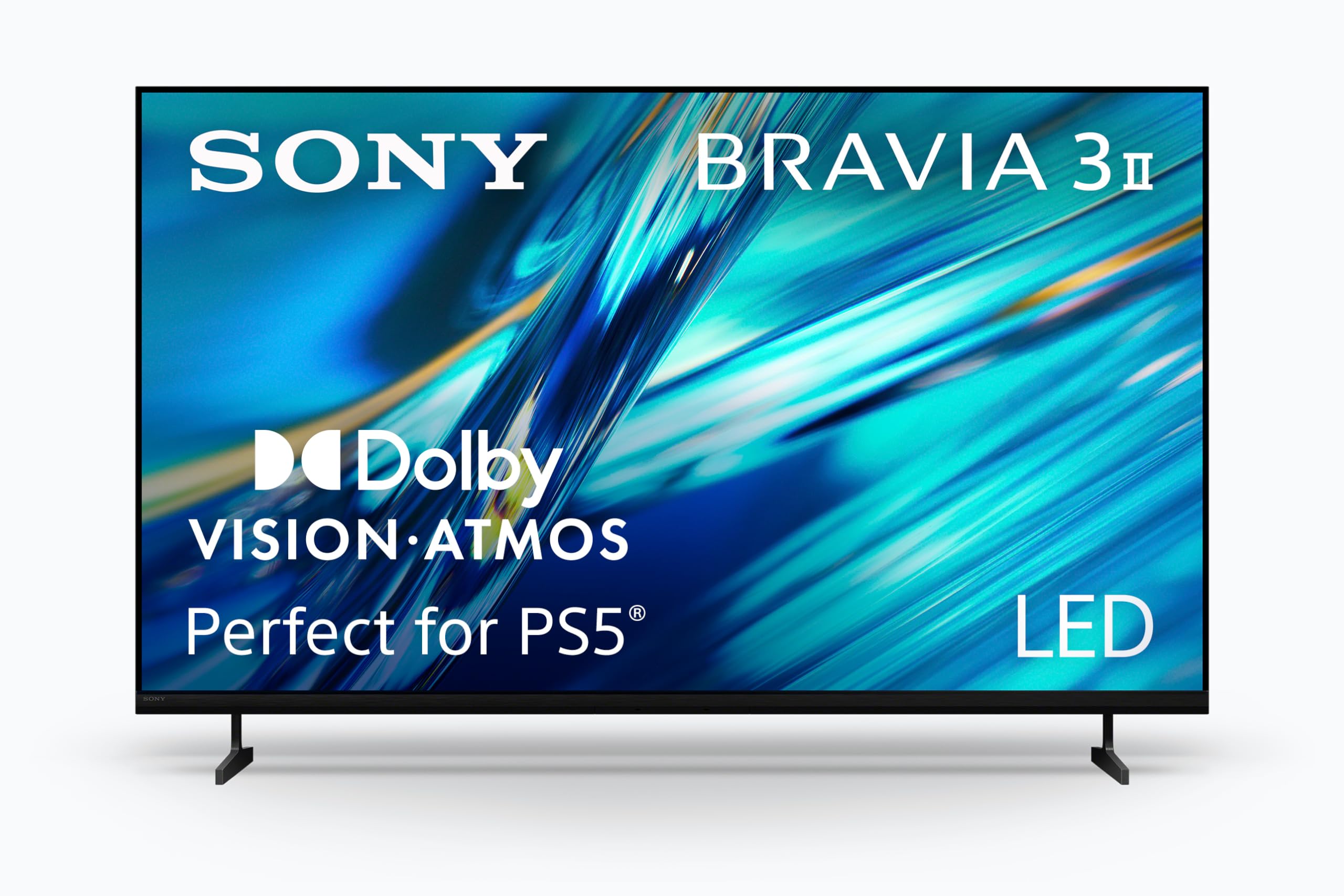
The BRAVIA 3 II brings Sony’s XR Processor with AI scene recognition to a mainstream LED panel at a mid-range price. Dolby Vision and Dolby Atmos are both supported, and the Motionflow XR technology leverages the 120Hz native panel to keep fast-moving content blur-free. The XR Triluminos Pro color engine reproduces over a billion shades, making this one of the most color-accurate LED sets under the premium tier.
PS5 owners get Auto HDR Tone Mapping and Auto Genre Picture Mode — the same exclusive features found on Sony’s flagship models. The flush-surface design with an almost invisible bezel keeps the focus on the picture. Sony includes 5 credits on Sony Pictures Core with Pure Stream, plus a 12-month subscription, adding immediate value for movie buyers.
Customer feedback is overwhelmingly positive on picture quality and ease of setup, though a small subset reports software glitches related to casting and DRM errors. The 50-inch size fits bedroom and small living room use perfectly. For buyers who prioritize processing quality over raw zone count, this is the smartest value play.
Why it’s great
- XR Processor brings Sony’s AI color and clarity tuning to a mid-range price
- PS5 integration with Auto HDR Tone Mapping is seamless
- Flush bezel design looks more premium than the price suggests
Good to know
- LED panel lacks the deep blacks of Mini-LED or OLED
- Software casting issues reported on some early units
6. iFFALCON 65″ 4K MiniLED Smart TV (65U85)
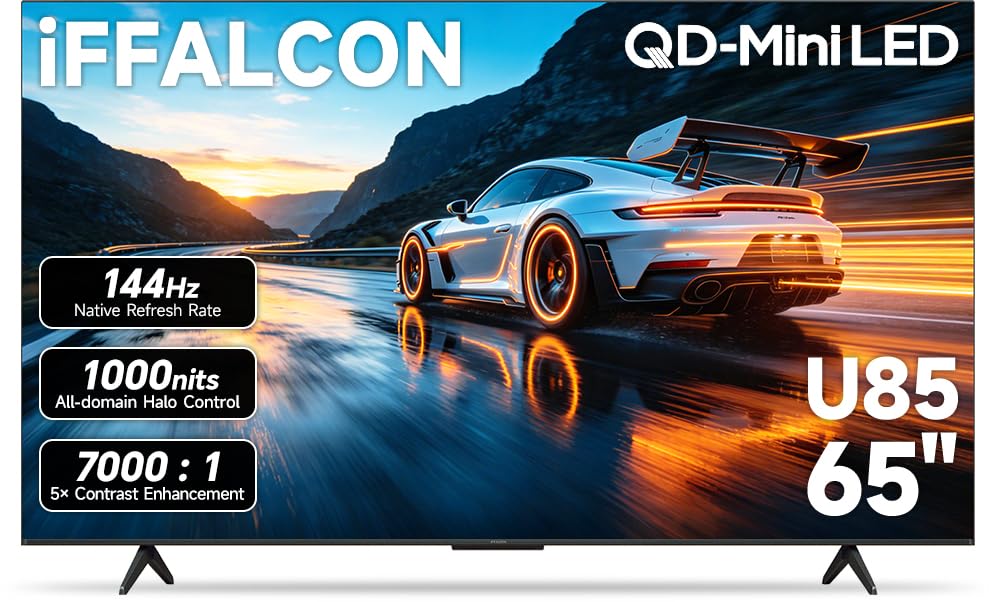
Four HDMI 2.1 ports at this price point is almost unheard of — and iFFALCON (TCL’s sub-brand) delivers exactly that. Two ports run 4K at 144Hz for next-gen consoles and gaming PCs, while the other two handle 4K 60Hz. Dolby Vision Gaming is supported with Auto Low Latency Mode, and the FreeSync Premium Pro certification eliminates screen tearing. The Mini-LED panel hits up to 1,000 nits with a 7,000:1 contrast ratio, giving Dolby Vision content plenty of dynamic range.
The 2.1-channel 50W audio system (with Dolby Atmos and DTS Virtual:X) fills a medium-sized room without a soundbar. A standout feature for commercial use is the built-in hotel mode, IR blaster, and IP control — rare on consumer TVs at this price. Google TV with far-field voice control handles streaming seamlessly.
Reviewers consistently praise the vibrant color reproduction and gaming performance, noting that the UI feels smoother than Samsung or LG equivalents. The set is slightly thicker than ultra-slim premium models, but the connectivity and gaming features justify the profile. For multi-console households, this is the most versatile Dolby Vision gaming TV available.
Why it’s great
- Four HDMI 2.1 ports — connect PS5, Xbox, PC, and soundbar simultaneously
- 144Hz panel with FreeSync Premium Pro and Dolby Vision Gaming
- Hotel mode and IP control for commercial installations
Good to know
- 1,000 nits peak is bright but not class-leading
- Slightly thicker bezel than premium ultra-slim models
7. Sony 55″ OLED 4K BRAVIA XR8B (K-55XR8B)

Over 8 million self-lit pixels produce pure black with zero blooming — the XR8B delivers the definitive Dolby Vision experience for dark-room viewing. The XR Processor intelligently enhances every scene in real-time, boosting color, contrast, and clarity. Sony’s Acoustic Surface Audio+ makes the screen itself vibrate to produce sound, creating directional audio that matches on-screen action surprisingly well.
PS5 owners benefit from Auto HDR Tone Mapping and Auto Genre Picture Mode, and the Game Menu consolidates all gaming-related settings. Four HDMI ports support 4K 120Hz on two of them, with VRR working effectively. The XR OLED Motion technology keeps fast-moving content blur-free without the soap-opera effect that plagues cheaper interpolation systems.
Purchasers describe the picture as the best they’ve ever seen, specifically calling out Cyberpunk 2077 and 4K Blu-ray playback. The main caveat is brightness — at around 800 nits peak, it’s significantly dimmer than the Mini-LED competition, meaning Dolby Vision content won’t have the same punch in a brightly lit room. For committed dark-room cinema, however, the contrast is unmatched.
Why it’s great
- Per-pixel OLED contrast delivers reference-level Dolby Vision blacks
- Acoustic Surface Audio+ creates directional sound without external speakers
- XR OLED Motion keeps fast action clean without artifacts
Good to know
- Peak brightness around 800 nits limits Dolby Vision impact in bright rooms
- Premium price approaches the BRAVIA 8 range
8. LG OLED C1 Series 77” 4K Smart TV (OLED77C1PUB)

At 77 inches, the C1 remains a benchmark for large-format OLED Dolby Vision performance. The a9 Gen4 Intelligent Processor uses AI to analyze content and optimize picture quality frame-by-frame. Dolby Vision content looks phenomenally rich — the infinite contrast ratio makes dark scenes in films like Dune or Blade Runner 2049 truly immersive. The 120Hz panel supports VRR, ALLM, and G-Sync compatibility, making it a capable gaming display despite being a few years old.
LG’s WebOS 6.0 smart platform offers all major streaming apps, though the interface includes some ad placement that some users find intrusive. The magic remote with gyro controls is a love-it-or-hate-it feature. WiSA Ready certification allows wireless connection to compatible speakers for a clean multi-channel setup.
Owners consistently call this the best picture quality they’ve experienced, particularly for 4K UHD physical media. The light weight of the panel makes wall mounting easier than similarly sized LED sets. The C1 is now discontinued but remains widely available at discounted prices — making it a strong value for buyers who prioritize a massive OLED canvas for Dolby Vision.
Why it’s great
- 77-inch OLED panel delivers truly cinematic Dolby Vision immersion
- a9 Gen4 AI processor handles upscaling and motion smoothly
- G-Sync and FreeSync support for PC gaming at 4K 120Hz
Good to know
- WebOS interface includes ads in the home screen
- Not the latest model — lacks newer OLED evo panel improvements
9. Sony 55″ OLED 4K BRAVIA 8 (K-55XR80)

The BRAVIA 8 sits one step above the XR8B, adding XR Contrast Booster 15 for noticeably brighter OLED highlights. Sony claims this technology delivers “deep, detailed blacks and dazzling highlights,” and early adopters confirm that Dolby Vision specular highlights — like candle flames or city lights — have more pop than previous Sony OLED generations. Studio-calibrated modes for Netflix, Prime Video, and Sony Pictures Core ensure color accuracy out of the box.
Acoustic Surface Audio+ again uses the screen as a speaker, and the integration with Dolby Atmos produces convincing vertical sound that tracks on-screen movement. The five-credit Sony Pictures Core package adds immediate value, especially for fans of IMAX Enhanced content. XR OLED Motion keeps fast action clean without interpolation artifacts.
Most feedback highlights the stunning dark-scene performance and overall build quality. Some users report that the Google TV software occasionally requires a restart to resolve sound dropouts. The BRAVIA 8 is ideal for color-critical viewers who want OLED’s infinite contrast but need a bit more highlight punch than the XR8B can provide.
Why it’s great
- XR Contrast Booster 15 adds meaningful highlight punch to OLED blacks
- Studio-calibrated Netflix and Prime Video modes ensure accurate color
- Sony Pictures Core with 5 credits included for movie collectors
Good to know
- Google TV can occasionally require restart for audio sync fixes
- Peak brightness still falls short of premium Mini-LED sets
10. Roku Smart TV – 55-Inch Pro Series 4K QLED (2025 Model)
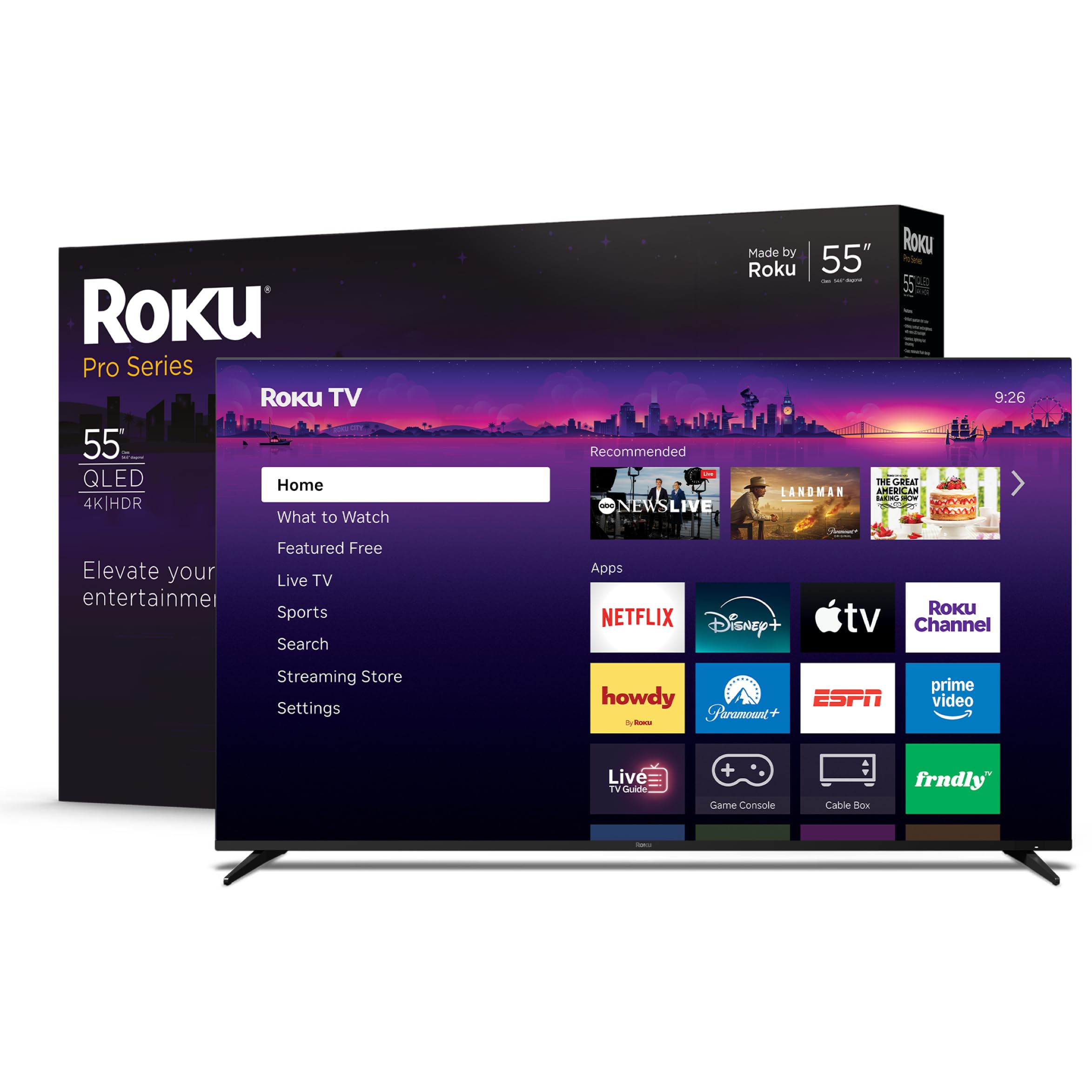
Roku’s Pro Series brings Dolby Vision IQ with a twist: the TV uses its ambient light sensor to automatically adjust Dolby Vision to the room’s lighting conditions. The Mini-LED backlight with thousands of dimming zones produces deep blacks and bright highlights that compete well with mid-range Hisense and TCL sets. The 120Hz panel with FreeSync Premium Pro and ALLM handles console gaming capably, though it lacks the 144Hz ceiling of some competitors.
The rechargeable Roku Voice Remote Pro with backlit buttons is genuinely excellent – well-weighted, responsive, and ready for hands-free control. Roku’s interface remains the least cluttered smart TV OS on the market, with no algorithmic bloat distracting from the apps you actually use. The built-in side-firing speakers deliver Dolby Atmos with wider soundstage than most integrated TV audio systems.
Customer feedback is mixed on reliability — a small number report brown spots developing on the screen after a few weeks, though this appears isolated. Most buyers praise the picture quality relative to Samsung’s The Frame at half the cost. For Roku ecosystem loyalists who want Dolby Vision without learning a new OS, this is the natural choice.
Why it’s great
- Dolby Vision IQ with ambient light sensor adapts picture to room brightness
- Roku OS is clean, fast, and simple — no bloatware
- Rechargeable backlit remote is best-in-class for a bundled controller
Good to know
- Some units have reported screen defects like brown spots after extended use
- Only 120Hz native panel — not ideal for competitive 144Hz PC gaming
11. TCL 65″ Class T7 Series 4K QLED Smart Google TV (65T7, 2025 Model)

The TCL T7 proves you don’t need to spend heavily to get a 144Hz panel with Dolby Vision support. The QLED quantum dot technology covers nearly the entire DCI-P3 color space, producing vibrant colors that punch above the price point. The TCL AIPQ Pro processor handles color, contrast, and clarity optimization, and Motion Rate 480 with MEMC frame insertion keeps motion smooth during sports and action content.
Gamers get 4K 144Hz on PC and 1080p up to 240Hz, plus a Game Mode that significantly reduces input lag. The FullView 360 metal bezel-less design looks more expensive than the TV is. Google TV with built-in Chromecast and Apple AirPlay 2 covers all major casting protocols. Four HDMI inputs including one with eARC provide solid expandability.
Customers upgrading from older 1080p or early 4K sets find the T7’s picture quality “stunning” for the price — bright, colorful, and sharp. The built-in speakers are acceptable but benefit from a soundbar. Some PC users note HDMI-CEC wake issues, requiring a manual input switch occasionally. For budget-conscious buyers who refuse to compromise on refresh rate or Dolby Vision, this is the standout entry-level pick.
Why it’s great
- 144Hz native panel at an entry-level price — best value for PC gamers
- QLED quantum dot color covers nearly full DCI-P3 gamut
- Bezel-less design looks premium despite the budget positioning
Good to know
- Built-in speakers are mediocre — plan for a soundbar
- HDMI-CEC wake from PC can be inconsistent
FAQ
Does Dolby Vision require special HDMI cables?
Can I watch Dolby Vision content on streaming apps or only on Blu-ray?
Is Dolby Vision Gaming the same on Xbox and PS5?
Why does Dolby Vision look dim on some TVs?
Final Thoughts: The Verdict
For most users, the best 4k dolby vision tv winner is the Hisense 85U7SG because it delivers reference-level 3,000-nit brightness, thousands of Mini-LED dimming zones, and a native 165Hz gaming panel at a price that undercuts the competition by hundreds of dollars. If you want pure OLED contrast for a dedicated dark room, grab the Sony OLED XR8B. And for a multi-console gaming setup with four HDMI 2.1 ports, nothing beats the iFFALCON 65U85 at its price point.