
You are staring at an unwatchable reflection of your living room lamp instead of the quarterback’s spiral. The blacks look milky, the colors are washed out, and your friends have stopped asking to come over for game night. This is the reality for anyone who settles on a mediocre panel for a bright living room—and it is precisely the problem a well-chosen 60 inch QLED TV solves with its quantum dot layer and high brightness output.
I’m Min — the co-founder and writer behind Gadgets Feed. I have spent hundreds of hours analyzing mini-LED backlight counts, native refresh rates, local dimming zone maps, and processor upscaling algorithms from the current generation of QLED offerings so you don’t have to.
This guide cuts through the marketing jargon to identify the actual panels that deliver deep contrast, vibrant color volume, and smooth motion for sports and gaming. After meticulous spec-to-spec comparison, we have narrowed the field to the models that define the best 60 inch qled tv decision today.
How To Choose The Best 60 Inch QLED TV
When you start shopping for a QLED TV, the landscape looks confusing because every brand slaps “Quantum Dot” on its box. The real differentiation happens beneath the panel surface — in the backlight architecture, the processor, and the number of dimming zones. These three pillars define whether your QLED experience will be stunning or just adequate.
Backlight Technology: Full Array vs. Mini-LED vs. Edge Lit
Not all QLED TVs share the same backlight. Edge-lit QLEDs are the entry-level trap: a strip of LEDs on the side means uneven brightness and poor contrast. Full array places LEDs behind the entire screen for better uniformity. Mini-LED goes further, packing hundreds or thousands of tiny LEDs behind the panel, which allows precise local dimming zones that turn off behind dark objects. A mini-LED QLED with 500+ zones will produce convincing black levels that rival entry-level OLEDs, without the risk of burn-in.
Dimming Zones and Blooming Control
Local dimming zones are the single most important spec for picture quality on a QLED. A TV with 50 zones will show obvious halos around bright subtitles on a black background. A model with 1000+ zones, like the Hisense U8 series or the TCL QM8K series, virtually eliminates blooming and keeps dark scenes pristine. For a premium experience, look for a minimum of 200 zones on a 65-inch class panel, understanding that larger screens generally carry more zones.
Refresh Rate and Gaming Features
Native 120Hz is the baseline for smooth sports and console gaming. The new generation of QLED panels now pushes to native 144Hz or even 165Hz, which benefits PC gamers who can drive those frame rates. Variable Refresh Rate (VRR) support, ideally via HDMI 2.1, eliminates screen tearing. Look for AMD FreeSync Premium Pro certification if you own an Xbox or PC, and Auto Low Latency Mode (ALLM) for instant response switching.
Processor and AI Upscaling
A QLED panel is only as good as the processor feeding it. Sony’s XR Processor and Samsung’s NQ4 AI Gen3 use neural networks to upscale 1080p and 720p content to near-4K quality. Hisense and TCL have closed the gap considerably with their Hi-View AI Engine and TCL Halo Control System. If you watch a lot of cable TV or older streaming content, a TV with a strong upscaling chip is non-negotiable. Weak processors leave faces looking soft and edges jagged.
Quick Comparison
On smaller screens, swipe sideways to see the full table.
| Model | Category | Best For | Key Spec | Amazon |
|---|---|---|---|---|
| Samsung QN65Q70D | Mid-Range | Dual LED with adaptive contrast | Motion Xcelerator 120Hz | Amazon |
| Hisense 65U7SG | Mid-Range | Hi-QLED MiniLED with anti-glare | Native 165Hz / 3000 zones | Amazon |
| Hisense 65U8QG | Premium | High-end mini-LED with 5000 nits | 5000 nits / 5600 zones | Amazon |
| TCL 65QM8K | Premium | 144Hz gaming with HVA anti-glare panel | 288 VRR / QD-Mini LED | Amazon |
| Samsung The Frame LS03F | Premium | Art Mode with matte anti-glare screen | 144Hz VRR / NQ4 AI Gen2 | Amazon |
| Samsung S90F OLED | Premium | QD-OLED with perfect blacks and colors | 144Hz / NQ4 AI Gen3 | Amazon |
| Sony XR70 Bravia 7 | Premium | Best-in-class upscaling for legacy content | Mini LED / XR Processor | Amazon |
| Hisense 85U8QG | Premium | Giant screen with high brightness | 5000 nits / 165Hz native | Amazon |
| TCL 65QM8L | Premium | Top-tier SQD-Mini LED with 4000+ zones | 6000 nits / 144Hz | Amazon |
| Samsung S95F OLED | Premium | Glare-free QD-OLED for bright rooms | 165Hz / NQ4 AI Gen3 | Amazon |
| Sony XR80M2 Bravia 8 II | Premium | Ultimate cinematic OLED with AI processing | QD-OLED / XR Processor | Amazon |
In‑Depth Reviews
1. Sony BRAVIA 8 II 65 Inch (K-65XR80M2)

The Sony BRAVIA 8 II represents the apex of what a QD-OLED panel can achieve when paired with Sony’s XR processor intelligence. Over eight million self-lit pixels produce pure black levels that no mini-LED can match, while the quantum dot layer pushes color volume into a billion shades. The XR processor applies real-time AI enhancement to color, contrast, and clarity, making every frame look authored rather than rendered.
For PS5 owners, exclusive features like Auto HDR Tone Mapping and Auto Genre Picture Mode remove the guesswork from calibration. The 120Hz native panel supports Dolby Vision and Atmos simultaneously, and the acoustic surface audio technology projects sound forward from behind the screen rather than from a traditional bottom-firing speaker array. Streaming app aggregation via Google TV feels seamless with AirPlay 2 and Google Cast support.
One tradeoff: the ultra-slim design makes the panel physically fragile, and professional installation is strongly recommended. Some early units reported audio processing quirks that required a firmware update. At this price point, you are paying for reference-grade color accuracy and processing that no budget QLED can approximate.
Why it’s great
- Perfect black levels with QD-OLED self-lit pixels
- Best-in-class XR AI upscaling for sub-4K content
- Exclusive PS5 integration features for gaming
Good to know
- Fragile slim chassis requires careful handling
- Premium tier pricing demands a serious budget
- Some users report audio issues on early firmware
2. Samsung OLED S95F 65-Inch

The Samsung S95F tackles the OLED’s classic weakness—room glare—with a proprietary anti-reflection coating that diffuses overhead lights and sunlight into near-invisibility. This is the first OLED I can wholeheartedly recommend for a sun-drenched living room without caveats. The NQ4 AI Gen3 processor deploys 128 neural networks to upscale content and boost brightness, hitting Samsung’s brightest OLED spec to date.
Gamers benefit from a native 165Hz panel with VRR support, making it viable for high-refresh PC gaming. The Motion Xcelerator keeps fast-moving objects in sports tear-free. Dolby Atmos decoding is built in, and the panel’s slim design mounts flush against the wall. The glare-free matte coating is genuinely transformative: a lamp that would wash out a standard QLED leaves the S95F’s image intact.
Software quirks exist. Some users report slow casting initiation and a screensaver that activates during active casting from Android devices. Samsung’s Tizen OS defaults may auto-play promotional content. These are minor annoyances on a screen that delivers reference brightness and contrast in real-world bright environments.
Why it’s great
- Best anti-glare coating on any consumer OLED today
- Native 165Hz panel for PC and console gaming
- Exceptional HDR brightness for a QD-OLED
Good to know
- Tizen OS software can be sluggish to cast
- Slim chassis is physically delicate for wall mounting
- Premium pricing places it out of budget range
3. TCL 65QM8L SQD-Mini LED
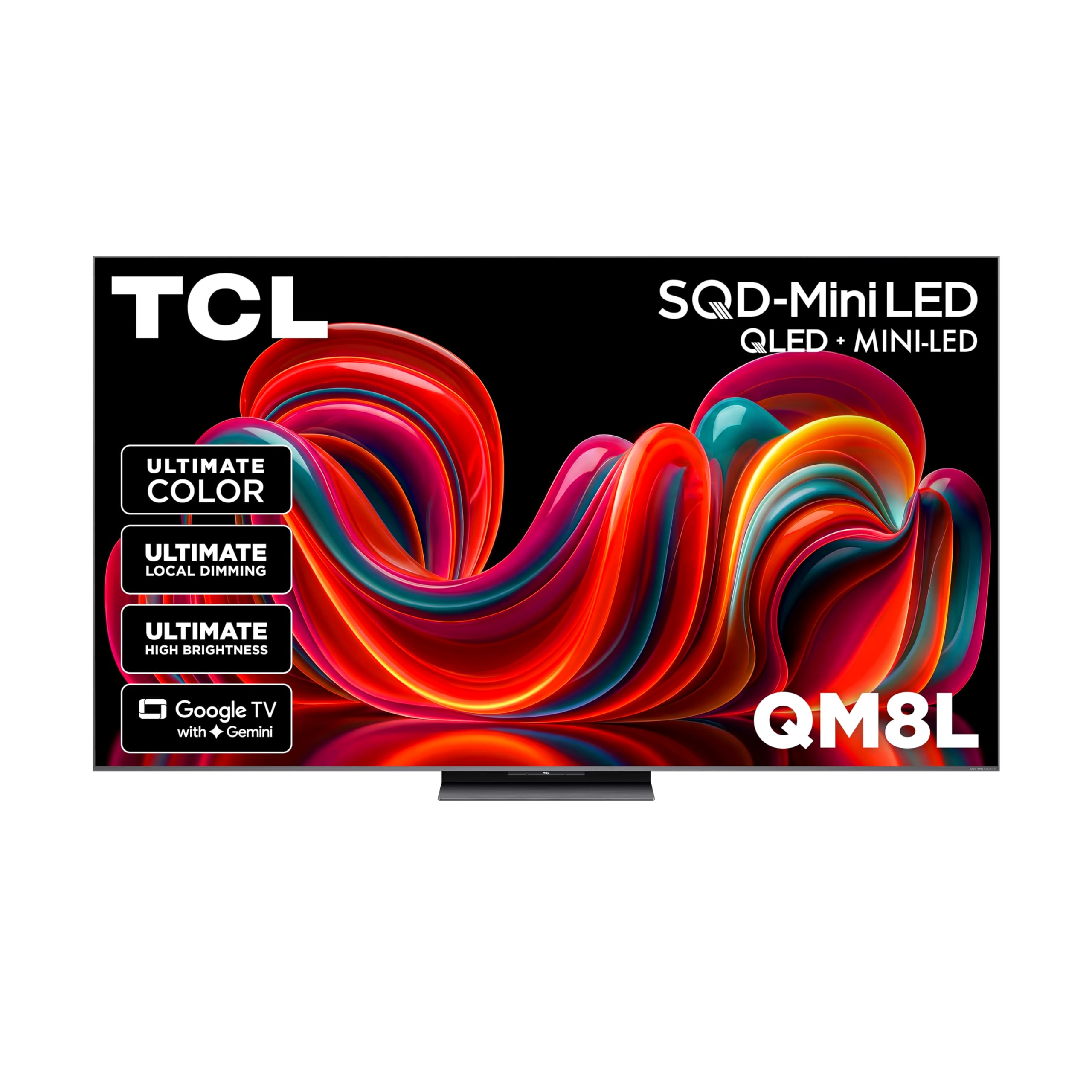
TCL’s QM8L represents the current ceiling of mini-LED backlight engineering. Over 4000 discrete dimming zones combine with a 6000-nit peak brightness capability to produce HDR highlights that physically hurt your eyes in the best way. The 7000:1 native static contrast ratio means SDR content also looks punchy without aggressive backlight boosting. The WHVA 2.0 panel delivers wide viewing angles without the color shift common to VA-type QLED panels.
The TCL Deep Color System uses 5-nanometer quantum dot particles (versus the industry standard 60-nanometer) for tighter wavelength purity, meaning reds and greens are more saturated without clipping. Bang & Olufsen audio tuning ensures the built-in speakers have clarity in the mid-range, though a separate subwoofer is recommended for bass-heavy scenes. The Google Gemini interactive AI allows voice control that actually understands compound commands.
At this spec level, the only compromises are minor: the Google TV interface occasionally stutters when switching between streaming apps, and the backlit remote, while premium-feeling, requires line-of-sight for full functionality. For anyone who wants the most aggressive mini-LED performance without paying Sony or Samsung prices, this is the target.
Why it’s great
- Unmatched 4000+ dimming zones for near-OLED black levels
- 6000-nit peak brightness for extreme HDR impact
- Bang & Olufsen audio tuning with good vocal clarity
Good to know
- Google TV interface can be sluggish during app switching
- Built-in speakers lack bass without optional subwoofer
- Heavy panel requires robust wall mount
4. Hisense 85U8QG ULED Mini-LED
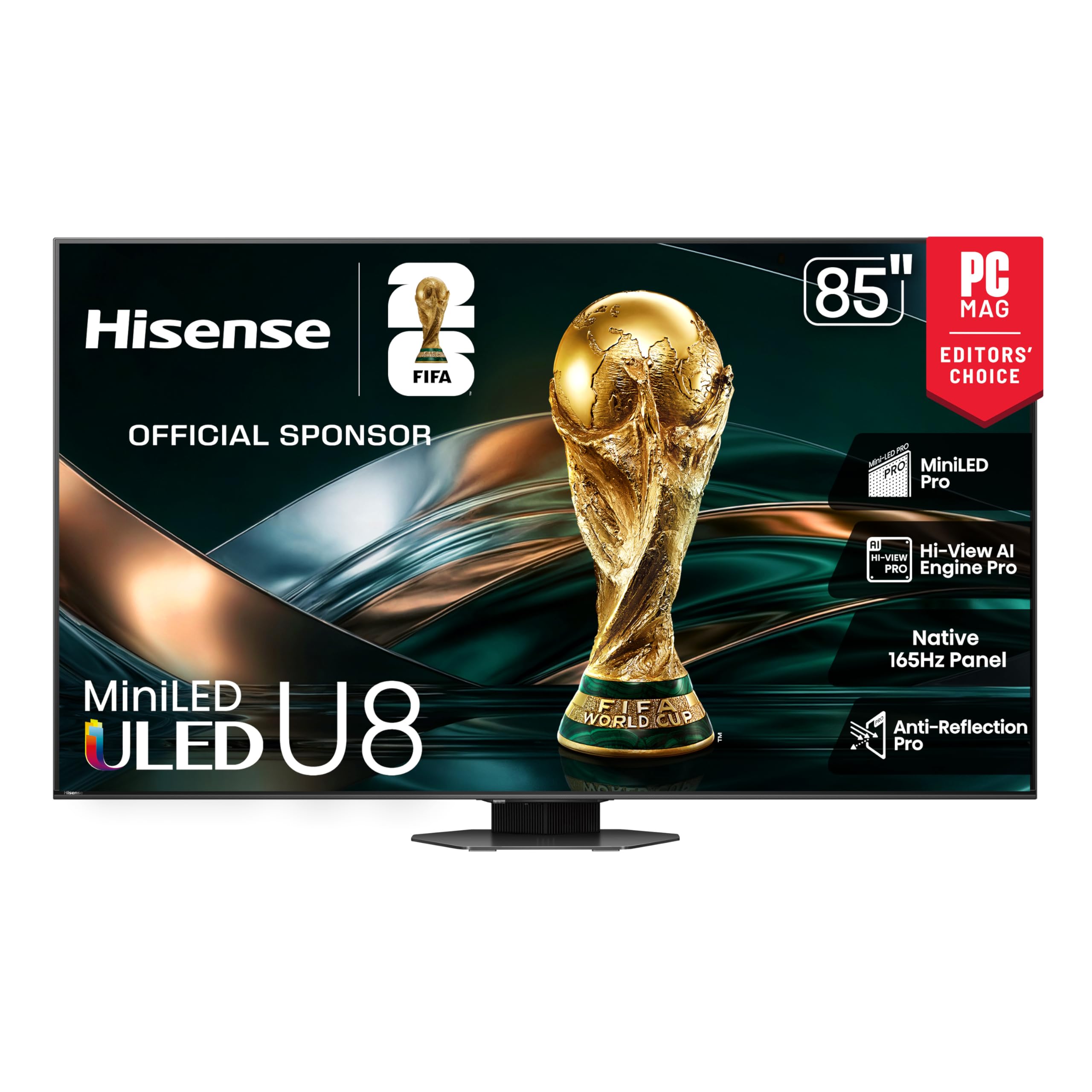
Hisense’s U8 series proves that aggressive mini-LED design is no longer exclusive to Japanese and Korean flagship lines. The 85U8QG packs up to 5600 local dimming zones and a 5000-nit peak brightness that makes Dolby Vision content look like a window rather than a screen. The Hi-View AI Engine Pro analyzes scene content in real time, adjusting color and contrast for each frame. Native 165Hz refresh with VRR 288 support makes this a powerhouse for competitive gaming.
The 4.1.2-channel audio system includes two up-firing speakers that create a convincing Dolby Atmos bubble without external hardware. Filmmaker Mode automatically disables motion smoothing for cinematic content. IMAX Enhanced certification ensures compatibility with the growing library of IMAX-encoded streaming content. The anti-reflection Pro coating handles moderate room lighting without sacrificing perceived black depth.
The catch: Hisense’s software reliability has been inconsistent. Multiple verified reviews report Google TV requiring factory resets after extended idle periods. Customer support for software issues is frequently redirected to Google. At this scale, if you get a unit with stable firmware, the hardware value is staggering — but there is a nontrivial variability in software experience across units.
Why it’s great
- Brilliant 5000-nit peak brightness for HDR highlights
- 5600 dimming zones deliver excellent blooming control
- 4.1.2 built-in Atmos audio with up-firing speakers
Good to know
- Software stability issues reported across multiple batches
- Built-in speakers lack deep bass without soundbar
- Customer support can be slow for software complaints
5. Sony BRAVIA 7 XR70 65-Inch

Sony’s Bravia 7 sits in a unique position: it uses a mini-LED backlight rather than OLED, but its XR Backlight Master Drive controls individual LEDs with a precision that often fools viewers into thinking they are watching an OLED. The XR Processor’s upscaling remains the gold standard in the industry — 720p cable channels look clean and detailed where other TVs would smear them into noise. XR Triluminos Pro extracts the full color volume from the quantum dot layer.
The panel is specifically engineered for PS5 synergy. Auto HDR Tone Mapping and Auto Genre Picture Mode communicate directly with the console to apply optimal settings per game without manual menu diving. The Game Menu overlay provides quick access to VRR status, black equalizer, and crosshair overlays. While the native 120Hz panel doesn’t match the 165Hz of newer competitors, the motion handling with Sony’s XR Motion Clarity remains buttery smooth.
The viewing angle is narrower than QD-OLED competitors — color and contrast degrade noticeably beyond 30 degrees off-center. The screen is also more reflective than the anti-glare treatments found on the Hisense U8 or Samsung S95F. For direct, centered viewing in a controlled-light room, this is one of the finest mini-LED QLEDs ever made.
Why it’s great
- Industry-leading XR AI upscaling for low-resolution content
- Seamless PS5 integration with Auto HDR mapping
- Natural, accurate picture processing out of the box
Good to know
- Narrow optimal viewing angle compared to OLEDs
- Screen surface is more reflective than competition
- Premium pricing with a 120Hz cap for refresh rate
6. Samsung OLED S90F 65-Inch

If you want QD-OLED’s perfect blacks and infinite contrast but need to moderate the sticker shock of the S95F or Sony XR80M2, the S90F is the natural choice. It shares the same core QD-OLED panel technology as its more expensive sibling but omits the glare-free coating to hit a lower price point. The NQ4 AI Gen3 processor with 128 neural networks handles all the same upscaling duties.
The 144Hz VRR support covers both console and PC gaming use cases. Motion Xcelerator ensures that fast-paced scenes in sports and racing games remain artifact-free. Color volume is exceptional: the quantum dot layer produces reds and greens that standard WOLED panels physically cannot render. The sleek, minimalist design with a graphite black finish looks premium in any room.
Two considerations: the anti-reflective coating is standard, meaning direct light sources will create visible reflections. The panel’s thin bezels and top edge are fragile, and some buyers have received units with damaged screens from shipping. Verify the packaging is factory-sealed upon delivery and inspect for cracks immediately.
Why it’s great
- True QD-OLED black levels at a more accessible price
- 144Hz VRR for smooth PC and console gaming
- Excellent color volume and HDR brightness
Good to know
- Standard reflective coating not ideal for bright rooms
- Thin panel edges are susceptible to shipping damage
- No Dolby Vision support (Samsung HDR10+ only)
7. Samsung The Frame LS03F 65-Inch

The Frame LS03F prioritizes aesthetic integration over raw brightness. Its matte, anti-glare screen surface makes artwork look like a canvas print rather than a glowing display. When Art Mode is activated, the TV displays curated paintings, photography, or your own uploaded photos with a convincing paper-like finish that fools guests into thinking it’s a framed print. Customizable bezels snap onto the magnetic frame to match room decor.
Under the art facade lives a competent QLED panel with 4K resolution and the NQ4 AI Gen2 processor for upscaling. The 144Hz VRR capability (a surprisingly high spec for a lifestyle TV) ensures smooth motion for sports and gaming when you choose to watch rather than admire art. The slim-fit wall mount brings the panel flush against the wall, and the single-clear connection box routes all cables invisibly.
The core compromise is brightness: The Frame’s matte screen, while excellent for glare reduction, caps peak HDR output below what dedicated QLEDs deliver. Dark scenes can appear washed out compared to a mini-LED or OLED alternative. The wireless connection box can also introduce video dropouts at long distances or through walls, and some users report audio sync issues with eARC.
Why it’s great
- Matte anti-glare screen makes art look like canvas
- Customizable bezels blend into any room decor
- Flush wall mount with single-cable management
Good to know
- Lower peak brightness than dedicated QLED competitors
- Wireless connection box can cause signal dropouts
- eARC audio sync issues reported by some users
8. TCL 65QM8K Mini LED QLED
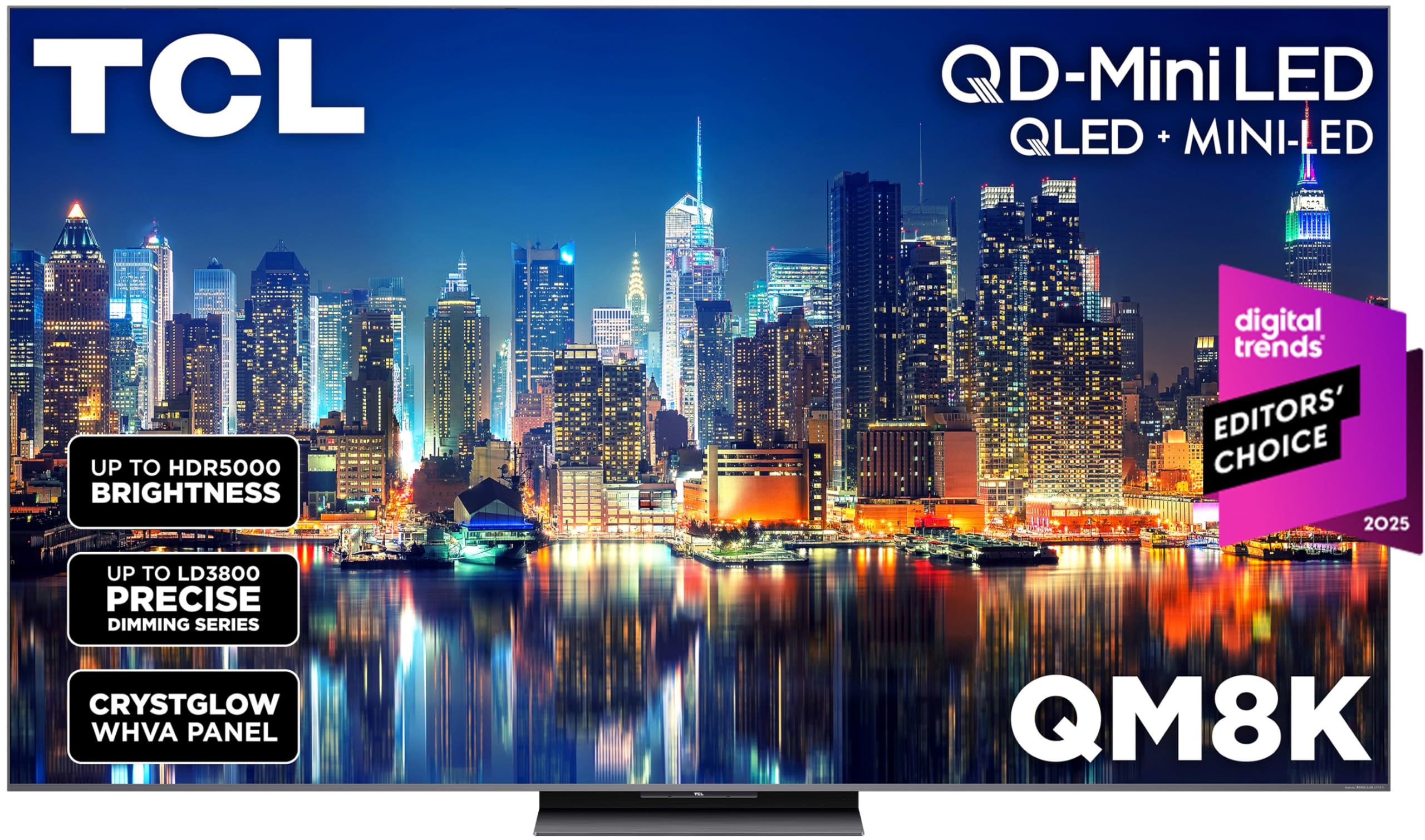
The TCL QM8K series targets the gamer who wants mini-LED precision without paying a premium. The Game Accelerator 288 drives VRR up to 288Hz at lower resolutions, making it viable for competitive PC play. The CrystGlow WHVA panel delivers wide viewing angles with anti-reflective treatment, so the image stays vibrant even when friends gather off-axis for multiplayer sessions.
QD-Mini LED technology with the TCL Halo Control System manages backlight zones with 23-bit bi-directional control, effectively eliminating halo artifacts that plague lower-end mini-LEDs. The ZeroBorder edge-to-edge design maximizes screen real estate. Google TV with hands-free voice control and a premium backlit remote round out the package. At a sub-thousand price point, the hardware specs are aggressive.
Real-world performance confirms the specs: deep blacks for a mini-LED, minimal blooming in test patterns, and color saturation that rivals the Hisense U8 series. The built-in speakers are adequate for dialogue but lack the bass and spatial presence needed for cinematic sound. Some streaming apps, particularly Hulu, have been reported to experience audio sync issues that TCL has not fully resolved.
Why it’s great
- Aggressive 288Hz VRR for competitive gaming
- Excellent mini-LED black levels with minimal blooming
- Wide WHVA viewing angles with anti-reflective coating
Good to know
- App-specific audio sync issues with Hulu reported
- Built-in speakers lack dynamic range for movies
- Limited to 144Hz native refresh rate
9. Hisense 65U8QG ULED Mini-LED
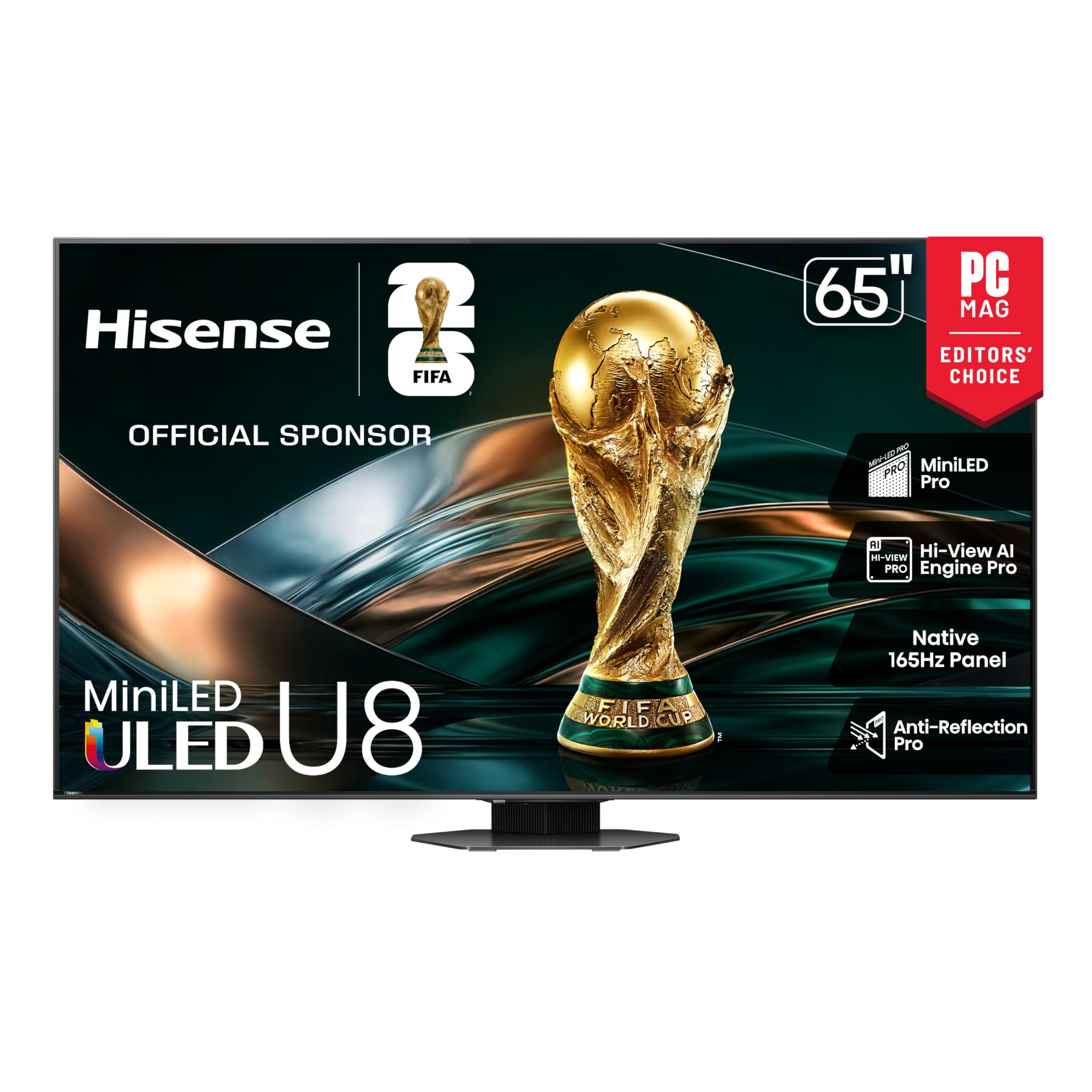
Hisense’s U8QG pushes brightness further than almost any consumer QLED on the market: 5000 nits peak. When a Dolby Vision scene shows a sun flare or an explosion, the effect is visceral. The 5600 local dimming zones provide the granularity needed to keep blacks deep next to those bright highlights. The Hi-View AI Engine Pro chipset handles real-time content analysis and adjustment.
The native 165Hz panel with VRR 288 support and AMD FreeSync Premium Pro certification makes this a legitimate esports display. The Enhanced Game Bar gives on-screen performance monitoring without leaving the game. The 4.1.2-channel audio system with Dolby Atmos includes two up-firing drivers that create a convincing height channel, reducing the immediate need for a soundbar.
However, the software consistency issue that plagues the larger 85U8QG exists here as well. Some buyers experience reliable daily use for months, while others encounter Google TV lockups requiring power cycling. The anti-reflection coating is effective but not as aggressive as TCL’s WHVA panel. For the picture quality per dollar, this is one of the most technically impressive QLEDs available — if you win the software lottery.
Why it’s great
- Extreme 5000-nit peak brightness for HDR content
- 5600 dimming zones for top-tier black level control
- 165Hz native refresh with 288Hz VRR boost
Good to know
- Software stability varies between units
- Anti-reflection coating less effective than TCL WHVA
- Built-in audio lacks deep bass extension
10. Hisense 65U7SG Mini-LED ULED
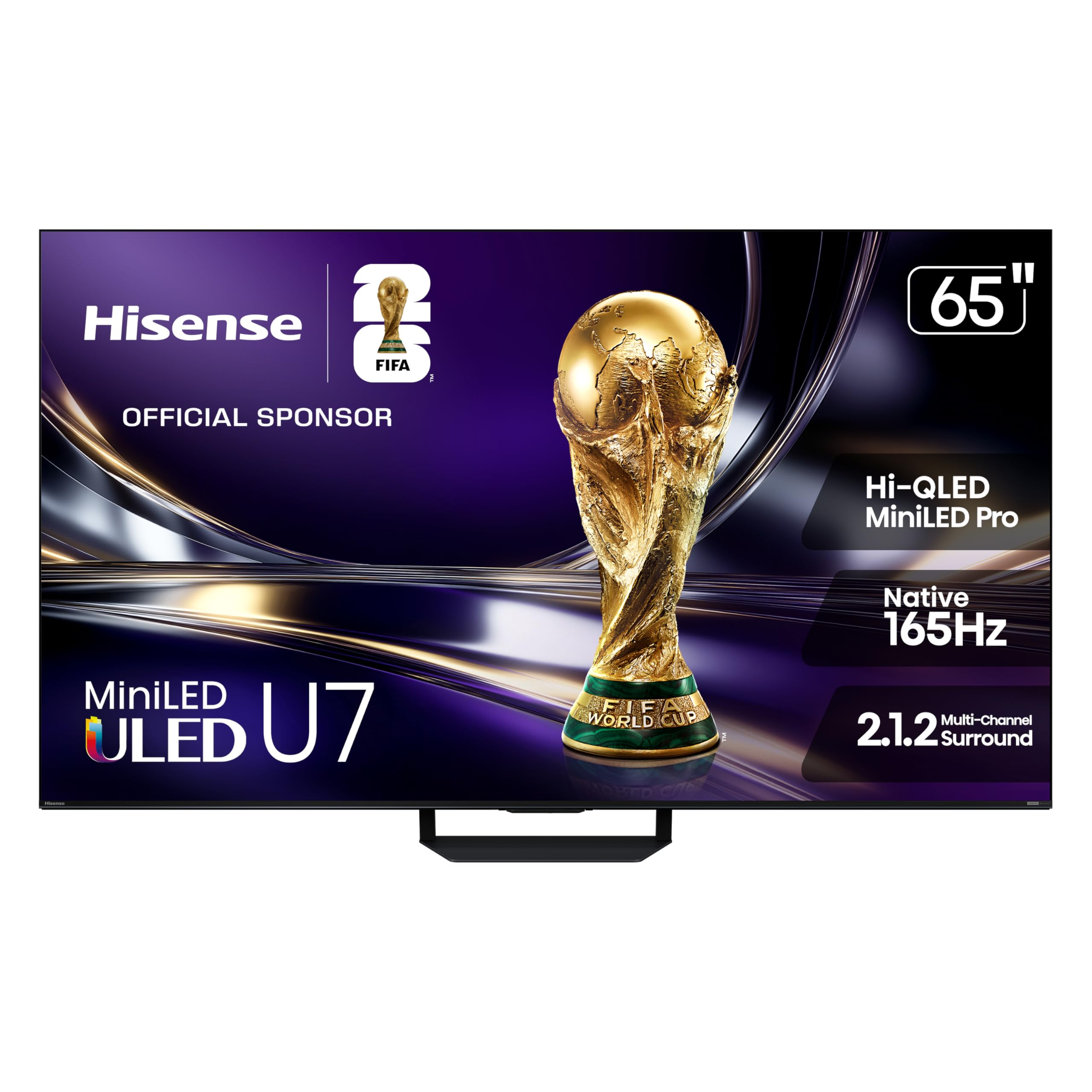
Hisense’s U7SG is the value proposition that makes mini-LED accessible. It delivers up to 3000 local dimming zones — a number that sounded impossible a generation ago at this price tier. The anti-reflection and glare-free coating handles bright rooms effectively, making it a strong choice for daytime viewing. The Hi-QLED MiniLED Pro backlight provides sufficient brightness for a vivid HDR experience without the nuclear-level output of the U8 series.
The native 165Hz refresh rate matches the U8 series, making it equally capable for high-refresh gaming. Google TV integration is smooth, with Bluetooth 5.4 supporting low-latency wireless audio. Pantone validation ensures color accuracy for those who care about calibration out of the box. The build quality feels solid, with a clean, minimal stand design.
The practical tradeoff is peak brightness — the U7SG tops out significantly below the U8 series, so Dolby Vision highlights won’t have the same punch. The local dimming zone count, while impressive for the price, means individual zones are larger, leading to more visible blooming in extreme contrast scenes than the U8 or TCL QM8L. For the buyer who wants mini-LED quality without the premium price, this is the sweet spot.
Why it’s great
- 3000 dimming zones for impressive blooming control
- Effective anti-glare coating for bright room use
- Native 165Hz refresh rate for smooth gaming
Good to know
- Lower peak brightness than premium U8 series
- Blooming more visible than higher-zone QLEDs
- Sound quality benefits from external soundbar
11. Samsung QN65Q70D QLED 4K
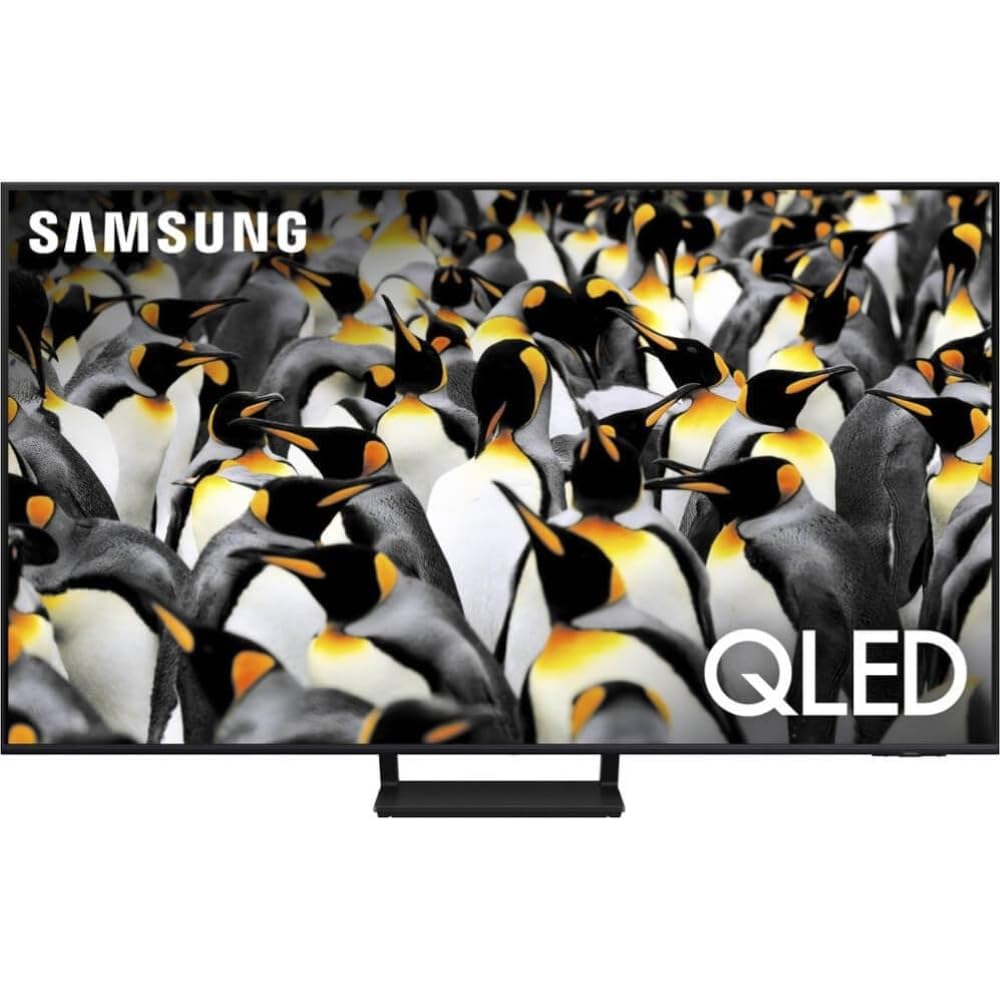
Samsung’s Q70D is the entry-level QLED that gets the basics right: 100% color volume with Quantum Dot, a 120Hz Motion Xcelerator panel, and the Quantum Processor 4K for AI upscaling. The Dual LED backlight technology uses a combination of warm and cool LEDs to adjust color temperature dynamically, producing a more natural-looking picture than single-color backlights. This is a solid choice for general TV viewing, sports, and casual gaming.
Object Tracking Sound Lite creates a convincing sense of directional audio that follows on-screen movement, a feature usually reserved for higher-end Samsung models. Samsung Tizen OS provides access to all major streaming apps with minimal lag. Eye Comfort Mode automatically adjusts blue light output based on the time of day, reducing eye strain during late-night viewing sessions. Pantone validation ensures color accuracy out of the box.
The Q70D lacks the mini-LED backlight and local dimming zones found on the Hisense and TCL competitors. This means black levels are more gray than black, and blooming around bright objects is noticeable in dark scenes. The single-leg stand is functional but wobbly on uneven surfaces. For buyers whose primary content is live TV and streaming in a well-lit room, this delivers reliable QLED performance without the complexity.
Why it’s great
- 100% color volume with Quantum Dot for vibrant shades
- 120Hz Motion Xcelerator smooths sports and action
- Object Tracking Sound Lite adds directional audio
Good to know
- No local dimming leads to gray blacks in dark scenes
- Edge-lit backlight shows blooming in HDR content
- Single-leg stand is less stable than wide feet
FAQ
Is a 60-inch QLED TV better than an OLED for a bright living room?
What is the difference between edge-lit QLED and mini-LED QLED?
How many local dimming zones do I need for good HDR performance?
Does a 60-inch QLED TV support Dolby Vision?
Is a 120Hz refresh rate enough for gaming on a QLED TV?
Final Thoughts: The Verdict
For most users, the best 60 inch qled tv winner is the TCL 65QM8L because it combines over 4000 mini-LED dimming zones, 6000-nit peak brightness, and a 7000:1 static contrast ratio at a price that undercuts the competition. If you prioritize perfect black levels and AI upscaling for older content, grab the Sony BRAVIA 8 II. And for a bright living room where glare is a daily battle, nothing beats the Samsung S95F with its glare-free QD-OLED panel.