
Forget the bulky, gas-guzzling generators of the past. A modern 600W power station is a lithium-powered hub that quietly runs your CPAP all night, keeps the Wi-Fi router alive during an outage, and charges your camera gear at a remote campsite without a single drop of fuel. But not all 600W stations are created equal—the key difference lies in battery chemistry (LiFePO4 vs. older lithium-ion), actual usable watt-hours, and inverter type.
I’m Min — the co-founder and writer behind Gadgets Feed. I spend my time analyzing market trends, poring over technical specifications, and cross-referencing real-world user data across dozens of portable power stations to find the one that genuinely delivers on its wattage promise.
This guide breaks down the crucial specs and real-world performance metrics you need to confidently pick the perfect 600w power station for your specific off-grid or emergency scenario.
How To Choose The Best 600W Power Station
Buying a 600W power station is a multi-year investment in preparedness. The wrong choice means either running out of juice mid-trip or replacing a dead battery within two years. Focus on these specific areas to get it right the first time.
Battery Chemistry: LiFePO4 vs. Standard Lithium-Ion
This is the single most important spec for longevity. Standard lithium-ion batteries (often NMC) degrade after 500 charge cycles. A LiFePO4 (Lithium Iron Phosphate) battery is rated for 3,000 to 4,000 cycles before dropping to 80% capacity. For a unit you plan to use for emergencies over a decade, LiFePO4 is non-negotiable. It also handles higher temperatures more safely, reducing the risk of thermal runaway.
Watt-Hours (Wh) vs. Watts
The 600W rating is the maximum power it can deliver at any moment—enough to run a 600W microwave but not a 1500W hair dryer. The watt-hour (Wh) rating—like 288Wh or 640Wh—dictates total runtime. A 300Wh station runs a 60W CPAP for roughly 4 hours (accounting for inverter loss). Always multiply your device’s average draw by the hours you need, then add a 15-20% buffer for real-world efficiency losses.
Pure Sine Wave Inverter
Budget units sometimes use modified sine wave inverters, which can cause buzzing in audio gear, overheating in motors, or even damage to sensitive medical devices. Every 600W station we recommend uses a pure sine wave inverter, delivering cleaner power than your home’s grid. Always verify this spec if you plan to power CPAP machines, laptops, or any electronics with a switching power supply.
Quick Comparison
On smaller screens, swipe sideways to see the full table.
| Model | Category | Best For | Key Spec | Amazon |
|---|---|---|---|---|
| Jackery Explorer 1000 v2 | Premium | High-power home backup & camping | 1070Wh LiFePO4 | Amazon |
| EF ECOFLOW DELTA 3 Classic | Premium | Ultra-fast charging & UPS | 1024Wh / 10ms UPS | Amazon |
| OUPES Exodus 2400 | Premium | High-capacity for large devices | 2160Wh / 2400W AC | Amazon |
| GROWATT INFINITY 2000 Pro | Premium | RVers & EV-ready expansion | 2048Wh / TT-30 port | Amazon |
| DaranEner Cubus600L | Mid-Range | Included 100W solar panel value | 576Wh / 3000 cycles | Amazon |
| LIBRIDS C600 | Mid-Range | Best battery longevity (4000+ cycles) | 640Wh / LiFePO4 | Amazon |
| PECRON E300LFP | Mid-Range | Compact with dedicated solar panel | 288Wh / 100W panel | Amazon |
| DARAN NEOK2 | Budget-Friendly | Lightweight for short trips | 288Wh / 8.7 lbs | Amazon |
| SinKeu G600 | Budget-Friendly | Entry-level starter kit with panel | 296Wh / 60W solar panel | Amazon |
In‑Depth Reviews
1. Jackery Explorer 1000 v2

The Jackery Explorer 1000 v2 is a serious upgrade from the previous generation, swapping to a 1070Wh LiFePO4 battery rated for over 4,000 cycles. Its 1500W AC inverter (with a 3000W surge peak) can handle surprisingly heavy loads—one user reported powering a microwave drawing 1370W with only a 12% battery drop over 5 minutes. The unit weighs 23.8 lbs and includes a foldable handle, making it far more portable than its capacity would suggest.
Charging speed is a standout feature: it hits 100% in one hour when you activate emergency charging mode via the Jackery App, or defaults to a battery-friendly 1.7-hour charge. Users consistently praise the quiet operation and the ability to run a kitchen refrigerator for 8 hours on a single charge. The PD 100W USB-C port is fast enough to power a modern laptop without a brick.
The app provides granular control over charge speed, overnight quiet mode (30 dB), and a battery health optimization schedule. If you value longevity, fast recharging, and the ability to power small appliances, this is the most versatile 600W-class station on the market.
Why it’s great
- True 1-hour fast charging (0-100%)
- 10-year lifespan with 4000+ cycles LiFePO4
- Lightweight build at 23.8 lbs for 1070Wh capacity
Good to know
- Solar panel not included
- App required for emergency fast-charge mode
2. EF ECOFLOW DELTA 3 Classic
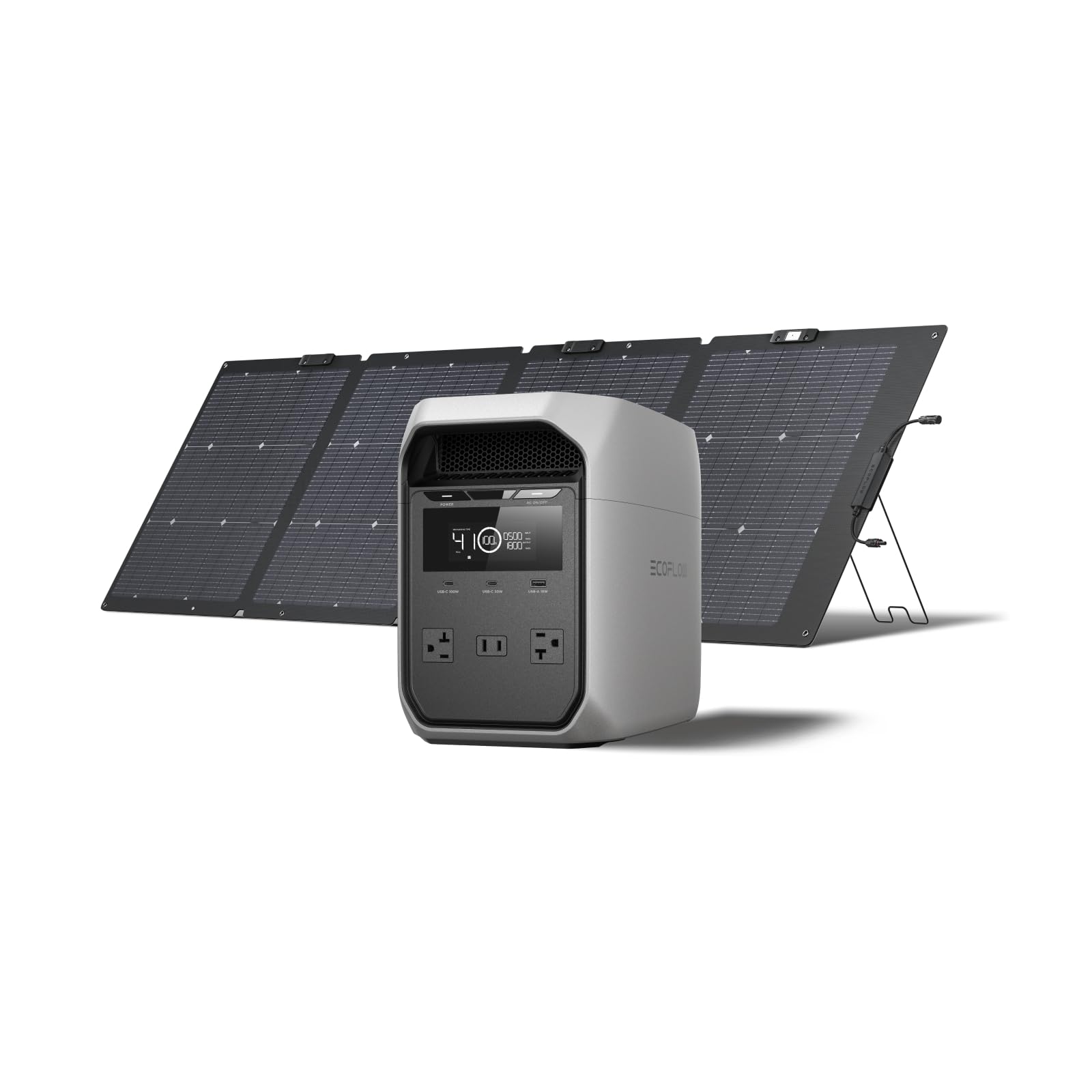
The EcoFlow DELTA 3 Classic pushes the boundaries of recharging speed with X-Stream AC technology, hitting 0-80% in just 45 minutes. With a 1024Wh LiFePO4 battery and a 1800W AC inverter (3600W surge), it can handle refrigerators, microwaves, and power tools with ease. The sub-10ms UPS function is a lifesaver for sensitive computer equipment—preventing data loss during flickering grid failures.
It supports up to 500W of solar input via the XT60 connector, and the included 220W bifacial solar panel (with up to 25% efficiency using N-type cells) can also scavenge energy from its rear side in partial shade. Users report real-world outputs of 190-200W from the 220W panel in less-than-ideal conditions. The app controls charge rates, UPS enablement, and remote on/off.
The build quality is premium, with a compact 7.9-inch depth that stows easily. If you need the fastest AC recharge and a near-instantaneous UPS switch for home office or medical equipment, the DELTA 3 Classic is the clear choice.
Why it’s great
- 0-80% AC charge in 45 minutes
- Sub-10ms UPS for sensitive electronics
- Bifacial 220W solar panel with 25% efficiency
Good to know
- Solar panel and station ship separately
- No built-in carry handle on the panel
3. OUPES Exodus 2400
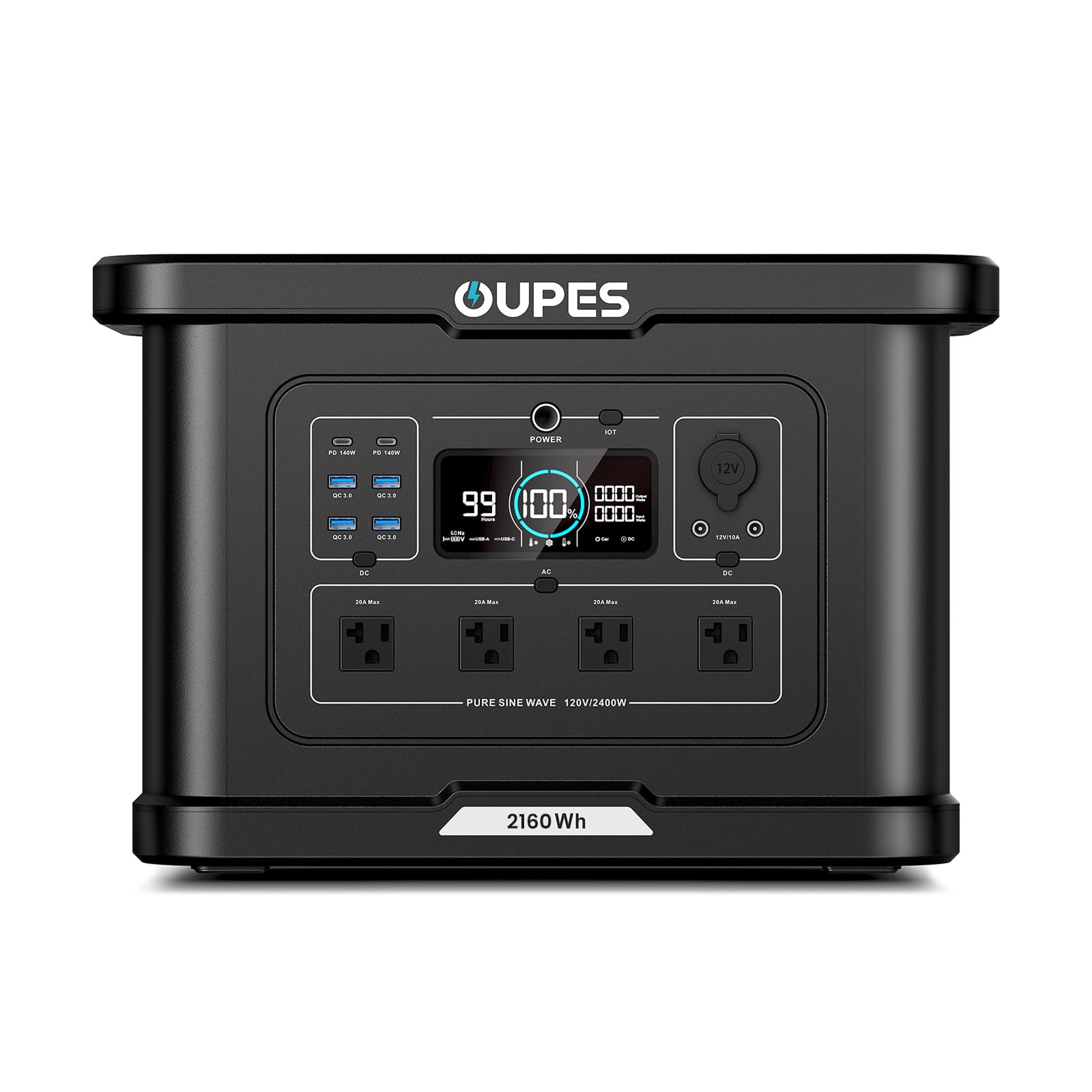
The OUPES Exodus 2400 offers a massive 2160Wh LiFePO4 battery—more than double the capacity of typical 600W stations—while still keeping a 2400W AC inverter (boostable to 2600W, with a 4500W surge). In a 16-hour power outage, one user powered a refrigerator, phone, and Keurig using only 12% of the battery. It recharges from 0-80% in just 1.2 hours via 1400W AC input.
The 13-output port configuration includes two 140W USB-C PD ports and four 18W USB-A QC3.0 ports, plus four 120V AC outlets. The smart UPS function switches in under 20ms—fast enough for a home server setup. The app enables remote monitoring, charge scheduling, and solar input tracking via WiFi or Bluetooth.
At 45.2 lbs, it’s heavier than some competitors, but the ergonomic handles make it manageable for rolling into a garage or campsite. For users who need serious capacity for a refrigerator-plus-lifestyle setup during extended outages, this unit delivers the most watt-hours per dollar in the premium tier.
Why it’s great
- 2160Wh capacity for extended runtime
- Two 140W USB-C PD ports for fast laptop charging
- 0-80% recharge in 1.2 hours
Good to know
- Heavy at 45.2 lbs
- Fan noise noticeable during high-wattage charging
4. GROWATT INFINITY 2000 Pro
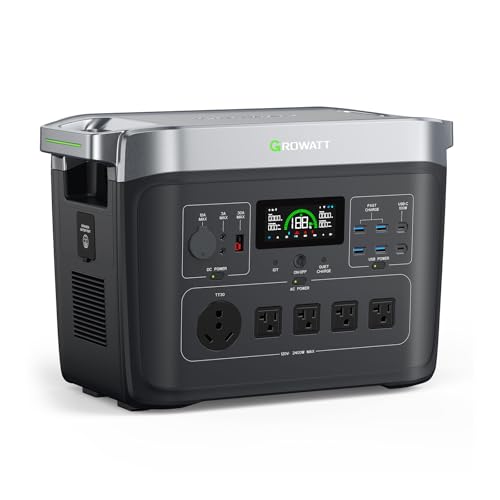
The GROWATT INFINITY 2000 Pro stands out with its TT-30 RV outlet and Anderson port, making it the only unit on this list designed specifically for RVs and overlanders. Its 2048Wh LiFePO4 battery supports expansion up to 6144Wh with two additional batteries. The 2400W AC inverter (4000W surge) can handle a rooftop AC unit or a Tesla Mobile Connector (with a neutral-ground bonding plug).
Cold Start technology lets it operate down to -22°F, a feature unique among these premium stations. The 15ms EPS switchover keeps computers and security systems online during grid drops. Users report successful EV charging sessions that added 3-4 miles of range in an emergency—enough to reach a charging station.
The app shows individual USB port draw and expansion battery levels. While a few users reported QC issues with early units, the 5-year warranty and responsive customer service mitigate the risk. For RV owners who need TT-30 compatibility and extreme-weather reliability, this station is specialized and effective.
Why it’s great
- TT-30 RV outlet and Anderson port
- Cold Start tech works down to -22°F
- Expandable to 6144Wh
Good to know
- Some reports of early unit reliability issues
- Heavier than non-expandable competitors at 26 lbs
5. DaranEner Cubus600L
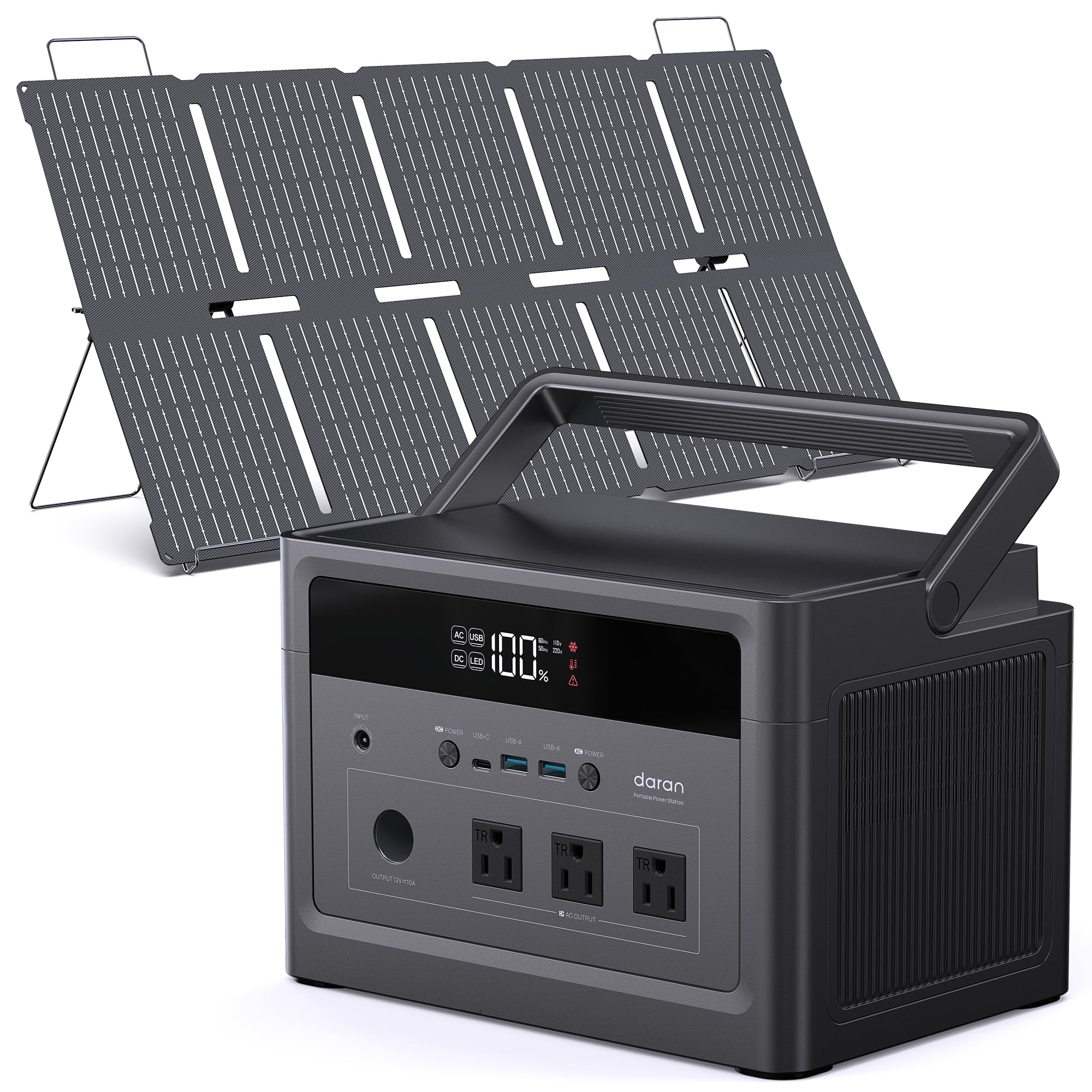
The DaranEner Cubus600L comes with a 100W solar panel included, making it a true plug-and-play solar generator kit. Its 576Wh LiFePO4 battery is rated for over 3,000 cycles, and the 600W pure sine wave inverter (1200W peak) powers small appliances and CPAP machines. The 100W USB-C PD port is a welcome addition for laptop charging.
Users praise the lightweight design (13.67 lbs) and ergonomic handle for easy transport. AC charging reaches 0-70% in 3.3 hours, while solar charging via the included panel keeps you off-grid indefinitely. The smart BMS provides overcharge, over-discharge, and temperature protection, with fire resistance rated up to 700°C for the cells.
The only caveat is that the 100W solar panel is sufficient for daytime top-offs but won’t fully recharge a depleted 576Wh battery in a single day without perfect sun. For weekend car campers and emergency kits, the included panel is a major convenience that saves an extra purchase.
Why it’s great
- Complete kit with 100W solar panel
- Lightweight at 13.67 lbs for 576Wh capacity
- LiFePO4 battery rated for 3000+ cycles
Good to know
- 100W panel is slow for full recharge
- Inverter trips on high-wattage appliances
6. LIBRIDS C600
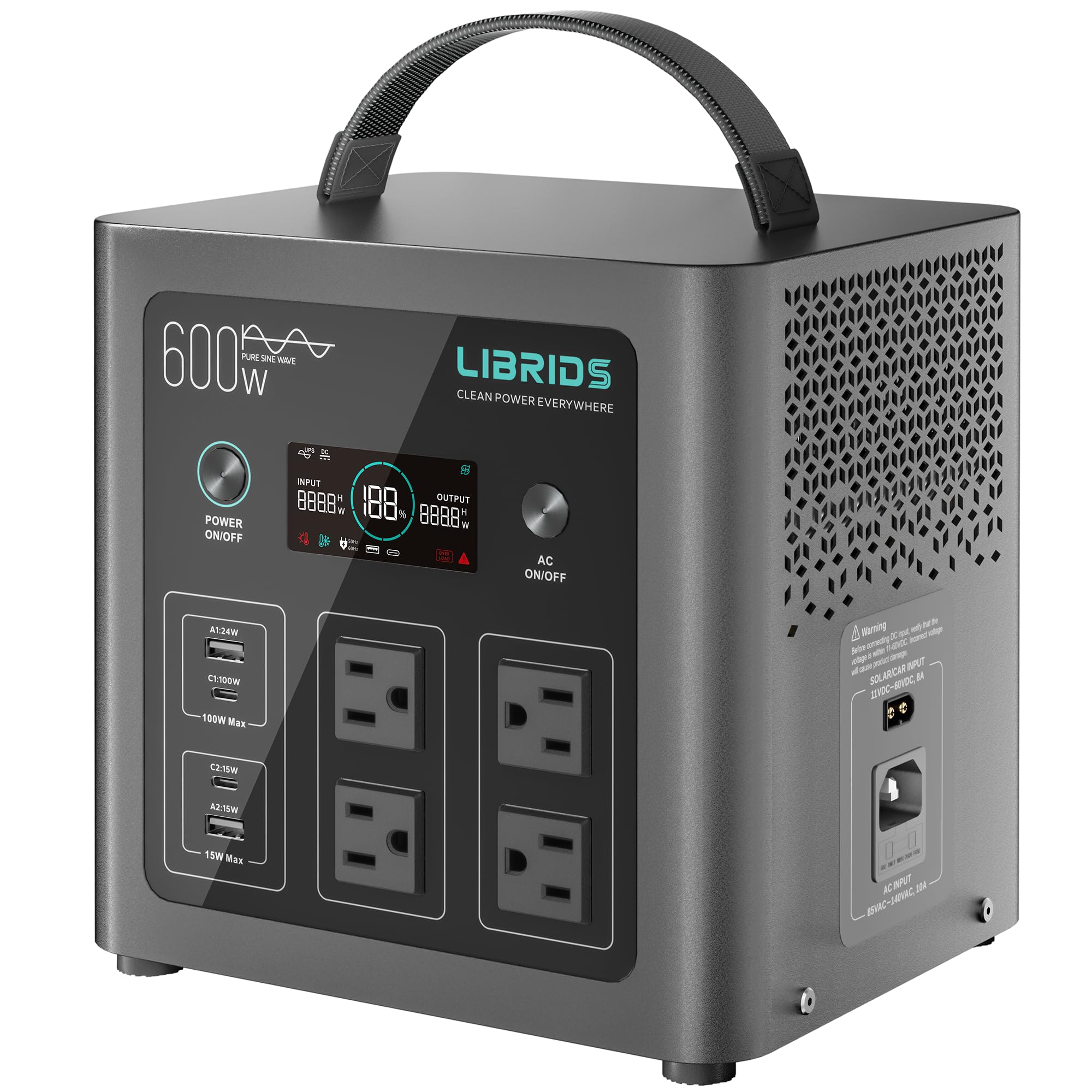
The LIBRIDS C600 uses an automotive-grade LiFePO4 battery rated for an industry-leading 4,000+ charge cycles—meaning it could last over a decade even with daily use. Its 640Wh capacity is above average for a 600W station, and the pure sine wave inverter delivers stable power for sensitive medical gear like CPAP machines. One user ran their Resmed Airsense 11 for 7 hours using only 24% battery.
Ultra-fast AC charging fills the battery completely in just 1.5 hours. The 10ms UPS feature ensures automatic transfer during short grid interruptions. The metal enclosure improves heat dissipation, and the fan remains relatively quiet during operation—users report a low hum that’s barely noticeable.
With four AC outlets and a total of eight ports, you can power multiple devices simultaneously. The smart LCD shows real-time input/output wattage and estimated remaining time. For anyone who wants the absolute longest usable lifespan from their battery—especially home backup users—the C600’s cycle rating is unmatched.
Why it’s great
- 4000+ cycle LiFePO4 battery
- Full recharge in 1.5 hours
- 10ms UPS switch for sensitive electronics
Good to know
- Metal enclosure adds weight (18 lbs)
- Solar panel not included
7. PECRON E300LFP
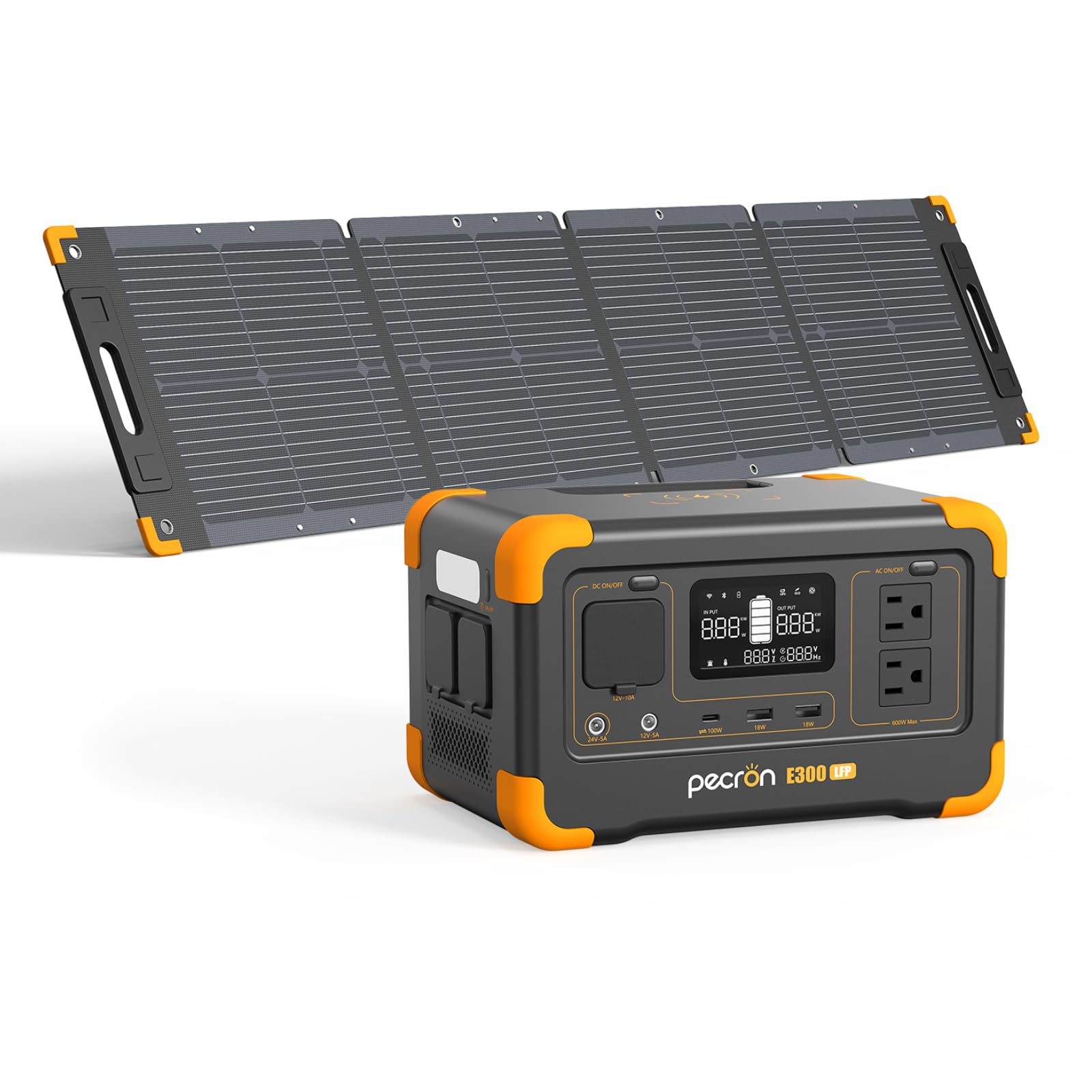
The PECRON E300LFP is the most compact solar kit on our list, pairing a 288Wh LiFePO4 battery with a dedicated 100W foldable solar panel. At 11.6 lbs total for the battery, it’s easy to carry to a picnic table or park bench. The 600W pure sine wave inverter powers a CPAP, laptop, and small fan simultaneously.
Users particularly appreciate the included 100W panel’s portability and performance—one reviewer noted it works better than expected for their camping needs. The battery itself is the size of a thick hardcover book (10 x 6.8 x 6.1 inches) and includes a flashlight with emergency SOS beacon. AC charging is straightforward with the included cable.
Perfect for solo campers, vehicle dwellers, or as a secondary grab-and-go unit for short getaways where every ounce matters.
Why it’s great
- Complete with 100W solar panel
- Ultra-compact at 11.6 lbs for battery
- Built-in flashlight with SOS mode
Good to know
- Capacity limited to 288Wh
- AC inverter maxes out at 600W
8. DARAN NEOK2
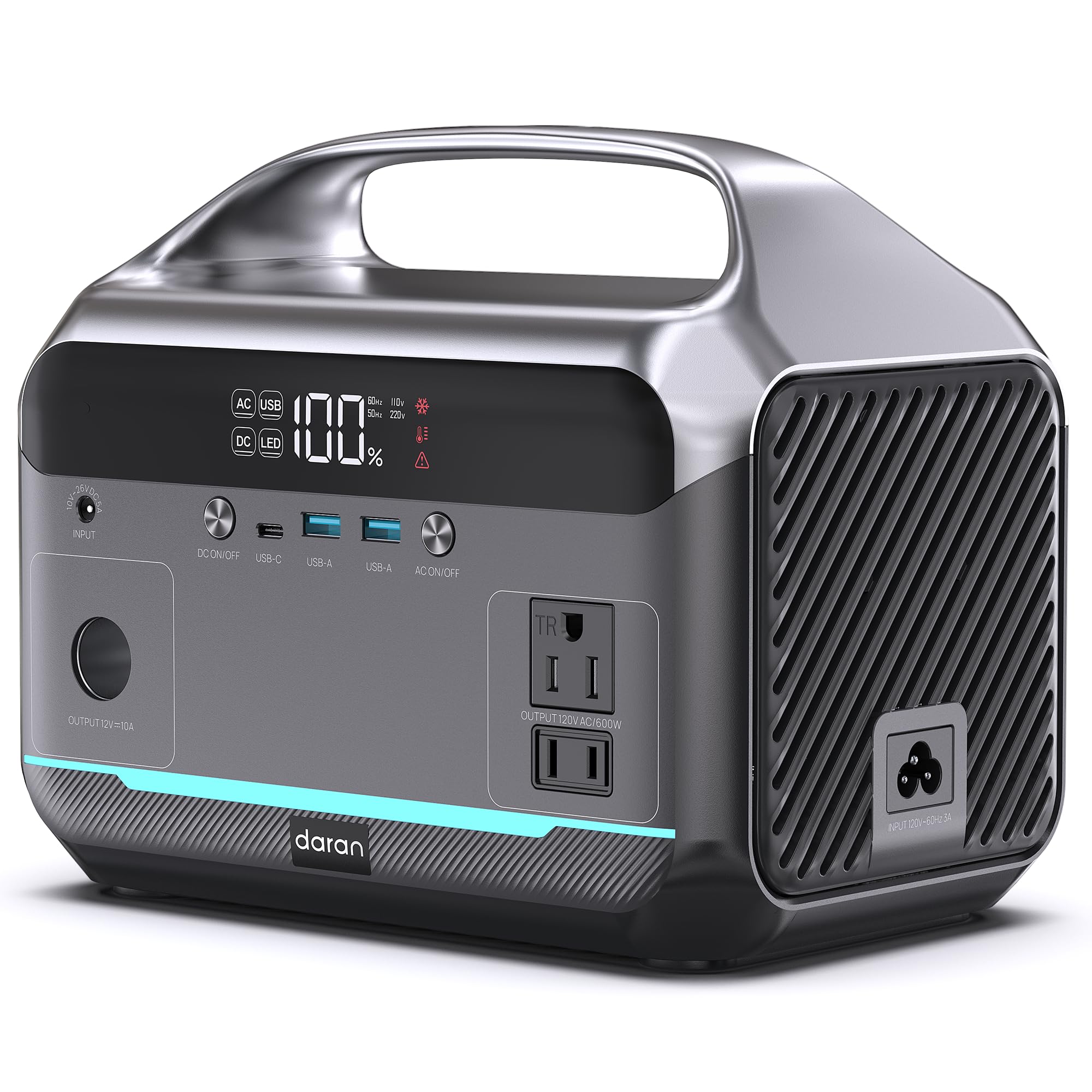
The DARAN NEOK2 is a featherweight entry into LiFePO4 ownership at just 8.7 lbs. Its 288Wh battery and 600W pure sine wave inverter (1200W surge) are ideal for powering a 30W CPAP for roughly 8 hours, or charging a MacBook Air from empty nearly three times over. AC charging reaches 80% in two hours.
The form factor is 35% more compact than previous DARAN models, fitting into a backpack or car trunk with ease. The rear LED light has three modes—steady, strobe, and SOS—useful for campsite setup or emergency signaling. Users report reliable performance for small electronics, LED lights, and mini coolers.
However, the 288Wh capacity means it won’t run anything heavy for long—a 100W stew pot would last only about 2.4 hours. The fan runs constantly during charging, which some users noted as a minor distraction. As a budget-friendly LiFePO4 backup for phones, laptops, and medical devices, it’s a solid entry point.
Why it’s great
- Very lightweight at 8.7 lbs
- Zero-noise operation with smart BMS
- Fast 0-80% charge in 2 hours
Good to know
- Capacity limited to 288Wh
- Fan runs continuously during bulk charging
9. SinKeu G600

The SinKeu G600 is the most affordable LiFePO4-powered starter kit here, bundling a 296Wh power station with a 60W monocrystalline solar panel (22% efficiency). At 9.9 lbs, it’s easy to toss in the trunk. The 600W pure sine wave inverter handles two AC outlets, and the panel includes built-in TIR-C technology for overcharge/overload protection.
Customer reviews highlight its reliability for hurricane outage prep—one user praised its ability to charge devices and power a light during Hurricane Milton. The panel charges via DC (12-18V, 3.3A max) and also has USB-C and USB QC3.0 outputs for direct device charging. The foldable solar panel packs down with a solid handle for easy carry.
The trade-off is the 60W solar panel: it’s sufficient for trickle-charging the battery over a full sunny day but can’t keep up with heavy consumption. The battery chemistry here is standard lithium-ion (not LiFePO4), so expect around 500 cycles. For a first-time buyer on a strict budget who needs a reliable emergency phone-and-light charger, this kit gets the job done.
Why it’s great
- Complete kit with 60W solar panel
- Lightweight at 9.9 lbs
- TIR-C protection for connected devices
Good to know
- Standard lithium-ion, not LiFePO4
- 60W panel charges slowly in partial shade
FAQ
Can a 600W power station run a refrigerator?
How long does a 600W power station last on a single charge?
Is it safe to leave a LiFePO4 power station plugged in all the time?
Can I charge my 600W power station while using it?
What solar panel wattage should I pair with a 600W power station?
Final Thoughts: The Verdict
For most users, the 600w power station winner is the Jackery Explorer 1000 v2 because it combines a massive 1070Wh LiFePO4 battery, genuine 1-hour fast charging, and a 1500W inverter in a lightweight 23.8 lb package. If you want the fastest AC recharge and a sub-10ms UPS for home offices, grab the EF ECOFLOW DELTA 3 Classic. And for maximum capacity on a budget for extended outages, nothing beats the OUPES Exodus 2400 with its 2160Wh battery and 2400W inverter.