
That rumbling bass you feel during an explosion or the precise rustle of leaves behind you — that’s the promise of a true 7.1 surround sound setup. Cutting the speaker wires without cutting performance, however, has been a technical hurdle that only the latest generation of home theater audio has finally cleared.
I’m Min — the co-founder and writer behind Gadgets Feed. I analyze the latest wireless transmission protocols, DSP processing power, and driver configurations to determine which systems deliver genuine 3D spatial audio without the installation headaches.
This guide cuts through the marketing to find the best 7.1 wireless surround sound system for your living room, comparing eleven of the most compelling options on the market right now.
How To Choose The Best 7.1 Wireless Surround Sound System
Choosing a wireless 7.1 system means balancing channel count, wireless stability, and sound quality. Not all “wireless” systems are created equal — some use wires for the rear speakers while only the subwoofer is wireless. Focus on the architecture that matches your room and willingness to run cables.
Channel Configuration & Height Effects
A true 7.1 setup has seven speakers and one subwoofer. Many modern systems add height channels (like 7.1.4) for Dolby Atmos. The extra “.4” means four up-firing or discrete height speakers that bounce sound off your ceiling to create overhead effects. If you want planes to fly over you, prioritize a system with at least two up-firing drivers in the soundbar or dedicated height speakers in the rear units.
Wireless Technology & Latency
Wireless subwoofers and surround speakers typically use a dedicated 2.4GHz or 5GHz radio frequency to avoid Wi-Fi interference. Systems that use dual 5GHz bands or proprietary protocols deliver more stable connections with lower latency. Check for HDMI eARC support, as it passes uncompressed Dolby Atmos from your TV to the soundbar — essential for lip-sync-free audio. Avoid systems that only use Bluetooth for the main connection, as the compression and latency are unacceptable for home theater.
Subwoofer Size & Room Dimensions
The subwoofer driver size directly correlates to bass depth and pressure. An 8-inch sub is adequate for a small to medium room (up to 250 sq ft), while a 10-inch sub handles medium to large rooms. Dual 10-inch or 12-inch subs (like those in premium Nakamichi systems) pressurize large open-concept spaces. The subwoofer enclosure material also matters — wood or MDF cabinets reduce resonance and distortion compared to plastic.
Quick Comparison
On smaller screens, swipe sideways to see the full table.
| Model | Category | Best For | Key Spec | Amazon |
|---|---|---|---|---|
| Nakamichi Dragon 11.4.6 | Premium Flagship | Ultimate Cinema Grade | 11.4.6 ch, 3000W, Dual 8″ Subs | Amazon |
| Sony BRAVIA Theater Quad | Premium | Virtual Spatial Audio | 16 Speakers, 360 Spatial Sound | Amazon |
| Nakamichi Shockwafe 11.2.6 | Premium | Dual Sub Powerhouse | 11.2.6 ch, 2300W, Dual 10″ Subs | Amazon |
| Klipsch Reference Dolby Atmos Bundle | Premium | Traditional AVR Setup | 7.2 ch, 12″ Sub, Yamaha AVR | Amazon |
| JBL Bar 1000MK2 | Mid-Range | Detachable Surrounds | 7.1.4 ch, 480W RMS, 10″ Sub | Amazon |
| LG S90TR | Mid-Range | LG TV Owners | 7.1.3 ch, Wireless Rear, 120Hz Passthrough | Amazon |
| JBL Bar 700MK2 | Mid-Range | Easy Surround Setup | 7.1 ch, 780W, Detachable Speakers | Amazon |
| ULTIMEA Skywave X70 | Mid-Range | Deep Bass Performance | 7.1.4 ch, 980W, 10″ Sub, GaN Amp | Amazon |
| TCL Q85H | Mid-Range | Dolby Atmos & DTS:X | 7.1.4 ch, 860W, Up-firing Rears | Amazon |
| Fluance Elite SX71WHR | Value | Traditional Passive Speakers | 7.1 ch, Passive Towers, Needs AVR | Amazon |
| ULTIMEA Poseidon D80 | Budget | Entry Level 7.1 | 7.1 ch, 460W, 6.5″ Sub | Amazon |
In‑Depth Reviews
1. Nakamichi Dragon 11.4.6-Ch Surround System
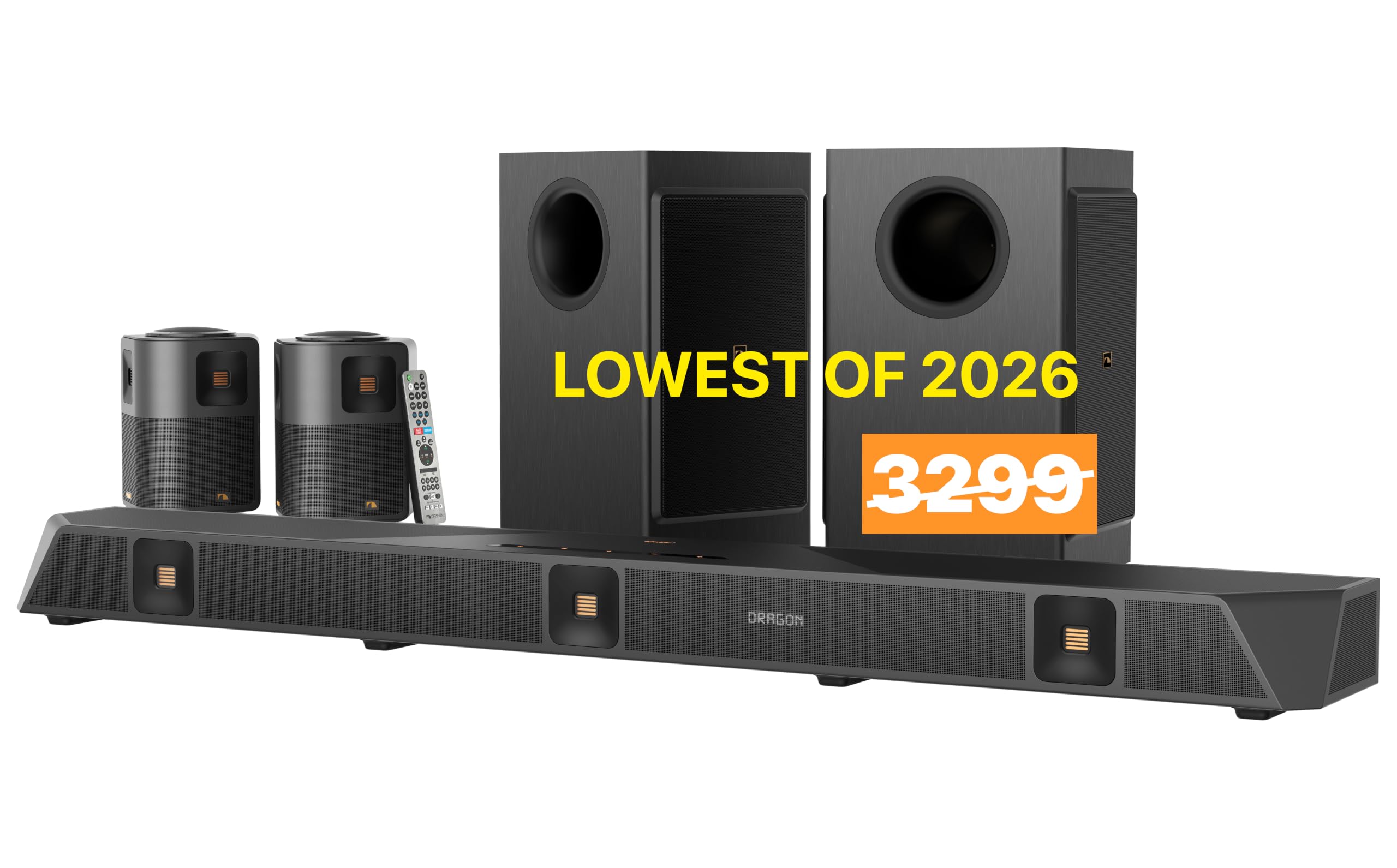
The Nakamichi Dragon is the benchmark for wireless surround sound, offering an 11.4.6-channel architecture that rivals traditional AVR-based systems. Its wide 58-inch chassis houses HiFi Air Motion Tweeters for pristine high frequencies, while bipolar surround speakers with PerfectHeight Mechanism lock overhead effects to the sweet spot. The dual-opposing 8-inch subwoofers deliver deep, room-pressurizing bass down to 20Hz.
The Pro Cinema Engine processes Dolby Atmos (up to 24.1.10) and DTS:X Pro (up to 30.2), operating at flagship AVR processing depth. HDMI eARC features three HDMI 2.1 inputs supporting 4K 120Hz Dolby Vision passthrough, making it ideal for gaming. The system is plug-and-play with wireless subwoofers and surrounds, though the sheer size and weight require a dedicated entertainment center.
Users consistently describe the Dragon as “incomparable” and “bad ass,” noting that its sound quality transforms any space into a theater. The ground-shaking bass remains clean even at reference volume levels. Setup takes about 45 minutes with optional stands, and firmware updates require a USB connection rather than Wi-Fi, but the performance is unmatched for the price tier.
Why it’s great
- Reference-grade 11.4.6 channel processing with Dolby Atmos and DTS:X Pro
- Dual-opposing 8″ subwoofers provide deep, distortion-free bass
- HiFi Air Motion Tweeters deliver crystal-clear highs and dialogue
Good to know
- Large physical footprint requires ample space
- Firmware updates require USB, no Wi-Fi connectivity
- High premium price point
2. Sony BRAVIA Theater Quad 16-Speaker System

The Sony BRAVIA Theater Quad redefines wireless surround with 16 speaker units spread across four compact wireless satellites. Using Sony’s 360 Spatial Sound Mapping, it creates up to 12 phantom speakers that fill the room with accurate overhead and surround effects. The system supports Dolby Atmos, DTS:X, and IMAX Enhanced, with Sound Field Optimization auto-calibrating to your room’s acoustics.
Each speaker can be placed virtually anywhere — on stands or wall-mounted — and the dual-purpose stand offers flexibility. The system connects via HDMI eARC with support for 4K 120Hz, VRR, and ALLM for gaming. An optional wireless subwoofer (SA-SW5 or SA-SW3) is highly recommended as the satellites lack punch below 30Hz. The BRAVIA Connect app provides easy control over sound profiles and settings.
Users praise the Quad for its best-in-class spatial sound imaging, rivaling full discrete systems. The phantom center channel works flawlessly, and dialogue clarity is exceptional. Some users report software bugs with the HDMI CEC handshake, especially with non-Sony TVs, and the subwoofer pairing is limited to one Sony unit. Despite this, its virtual speaker technology delivers stunning immersion.
Why it’s great
- Exceptional 360 Spatial Sound Mapping creates phantom speakers for immersive 3D audio
- Four compact wireless speakers offer flexible placement without rear wires
- Supports 4K 120Hz passthrough for gaming
Good to know
- Needs an optional wireless subwoofer for full-range bass
- Software can be buggy with HDMI CEC on some TVs
- Premium price point with no included subwoofer
3. Nakamichi Shockwafe Wireless 11.2.6 Ch System
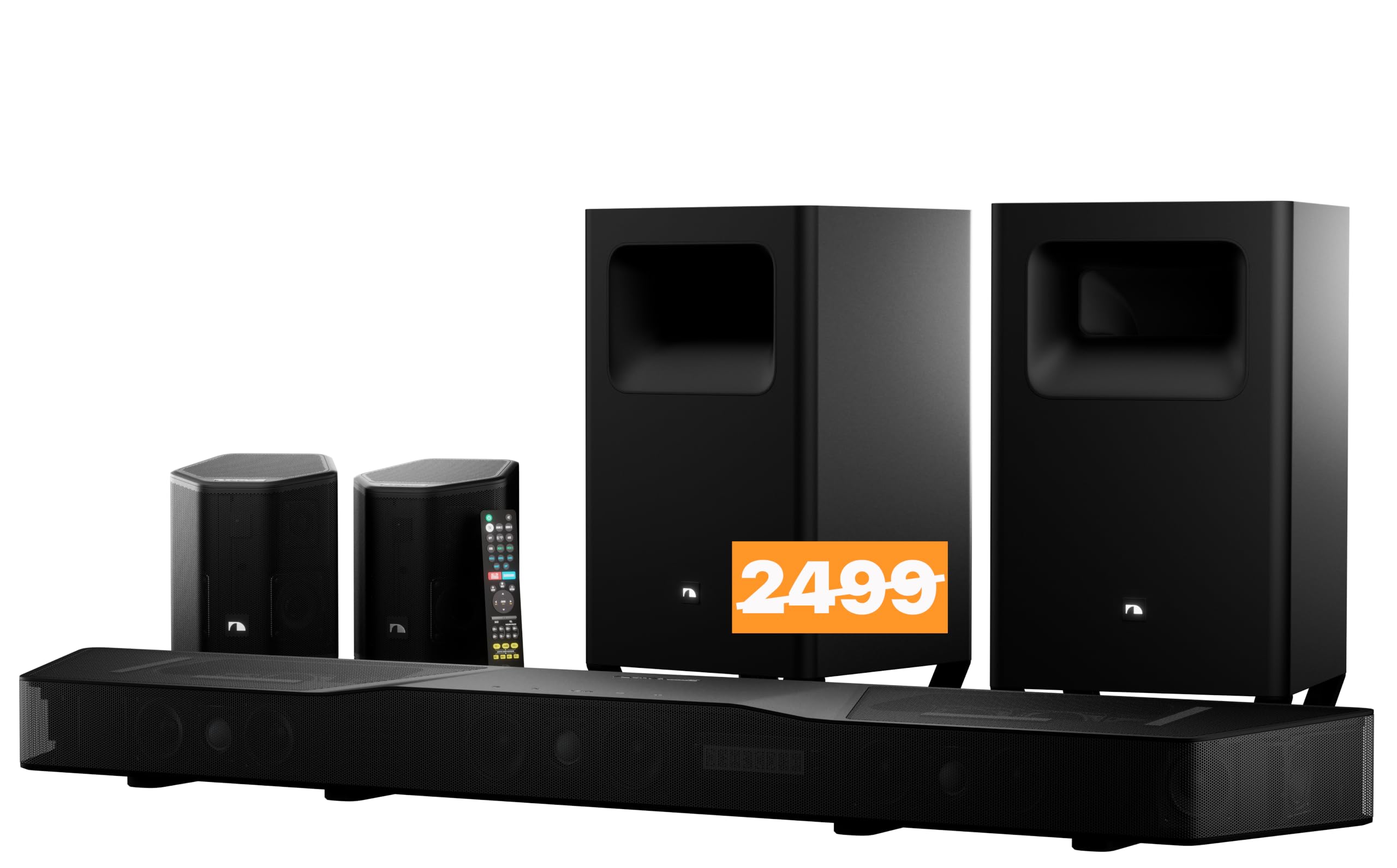
The Nakamichi Shockwafe 11.2.6 delivers a powerhouse 11.2.6-channel architecture with dual 10-inch wireless subwoofers and bipolar surround speakers. The six discrete height channels create hyper-real overhead effects, while the AHD Ultra engine drives the bipolar surrounds to project sound from both sides and above. The 54-inch soundbar houses eight drivers that move serious air for a massive front soundstage.
The dual 10-inch subwoofers feature flared port designs for efficient air movement, producing deep, clean bass with excellent definition. HDMI eARC and two HDMI 2.1 inputs support 4K 120Hz Dolby Vision and HDR10+ passthrough. The system also includes AirPlay 2 and Bluetooth wireless streaming, plus a backlit remote and app control. Setup is plug-and-play with wireless subwoofers and surrounds.
Users call the Shockwafe a “top tier system” that delivers clear dialogue, loud and clean sound, and immersive Atmos surround. The dual subs provide deep, controlled bass that rivals traditional setups. Some users note that a firmware update is critical to unlock the full “bubble” effect and app functionality. Overall, it’s an excellent value for those wanting true theater-scale sound without an AVR.
Why it’s great
- Dual 10″ wireless subwoofers deliver deep, room-filling bass
- Six discrete height channels for exceptional Dolby Atmos overhead effects
- Plug-and-play wireless setup with bipolar surrounds
Good to know
- Large physical size requires significant space
- Firmware update necessary for optimal performance
- App can have connection and calibration save issues
4. Klipsch Reference Dolby Atmos Home Theater Bundle
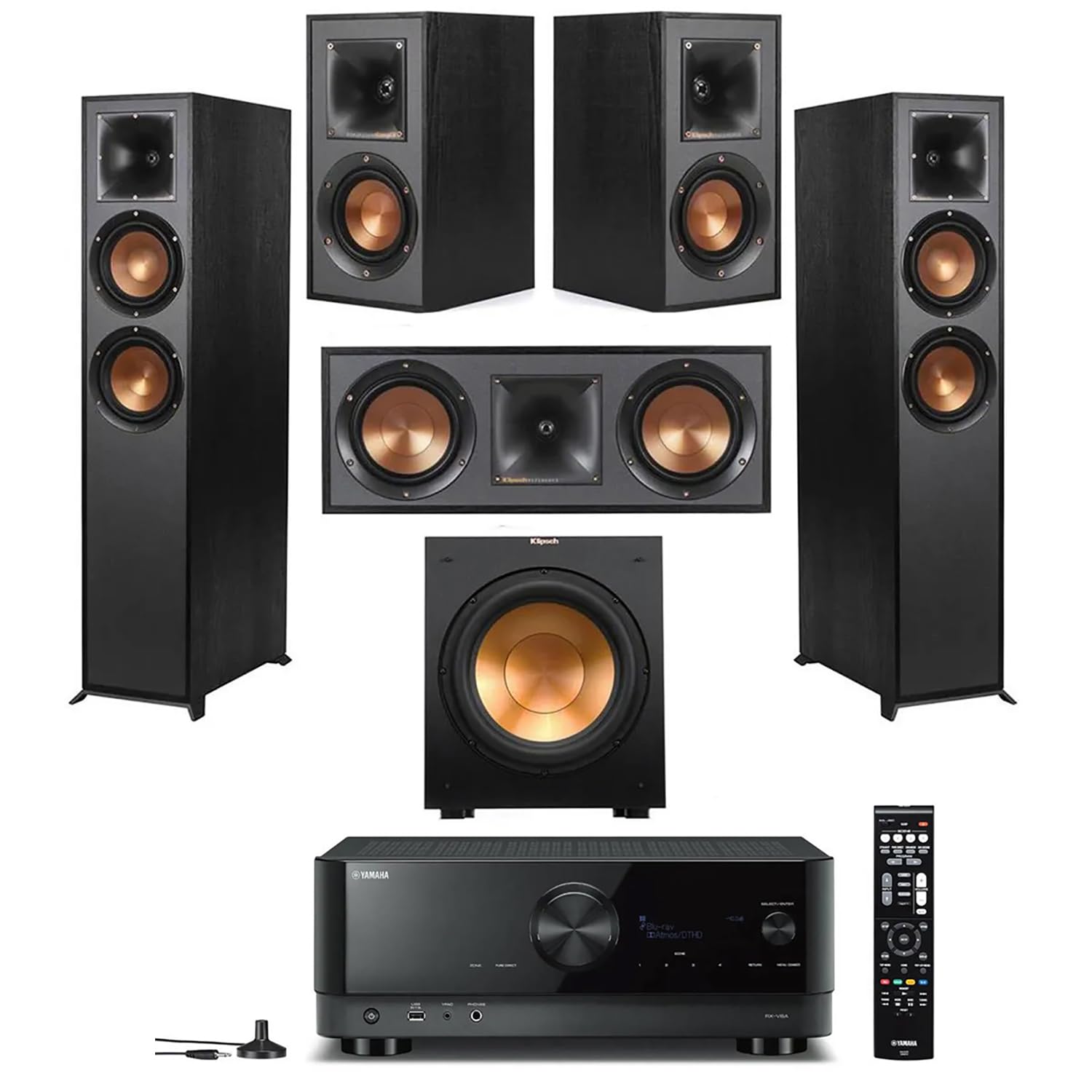
This Klipsch bundle is a complete traditional home theater system, including R-625FA floorstanding towers with built-in up-firing Dolby Atmos drivers, R-52C center channel, R-41M bookshelf surrounds, and a powerful R-12SW 12-inch subwoofer. The included Yamaha RX-V6 AVR (7.2 channels, 75W per channel) provides Dolby Atmos and DTS:X decoding, plus HEOS wireless streaming and voice control support.
The floorstanding towers feature a 1-inch aluminum LTS tweeter mated to a 90×90 Tractrix horn for bright, clear highs, and dual 6.5-inch copper-spun woofers for midrange punch. The 12-inch subwoofer delivers deep, room-shaking bass down to sub-30Hz frequencies. The Yamaha AVR supports 8K video and includes YPAO automatic room calibration. This is a wired system — only the subwoofer and streaming are wireless — but the sound quality is exceptional for the bundle price.
Users praise the Klipsch bundle for its “excellent sound for the money” and “clear dialogue,” noting the bright treble and immersive Atmos effects. The 12-inch subwoofer shakes the room, and the system reveals new details in movies. Some users note the tower feet screws are low quality, and the system is large, requiring adequate space. The wired nature means more setup effort, but the performance is hard to beat.
Why it’s great
- Complete 7.2-channel bundle with floorstanding towers and 12″ sub
- Built-in up-firing Atmos drivers in the towers for overhead effects
- Includes Yamaha AVR with 8K support and room calibration
Good to know
- Fully wired system — not a wireless soundbar solution
- Large footprint requires dedicated space
- Some users report low-quality supplied screws for tower feet
5. JBL Bar 1000MK2 7.1.4 Channel Soundbar

The JBL Bar 1000MK2 features a unique detachable surround speaker design — just lift the two wireless speakers off the soundbar and place them behind you. The system includes four up-firing drivers (two in the bar, two in the rears) for true Dolby Atmos and DTS:X 3D sound. The 10-inch wireless subwoofer delivers 480W RMS of room-filling bass, and the MultiBeam 3.0 technology creates a wide, cinema-like soundstage.
The soundbar supports PureVoice 2.0 for dialogue enhancement and SmartDetails for subtle audio cues. The detachable speakers have a 6600mAh battery for hours of use and can be recharged by placing them back on the soundbar. HDMI eARC with 4K Dolby Vision passthrough ensures seamless video quality. The JBL ONE app offers precise EQ customization and sound calibration.
Users describe the Bar 1000MK2 as “amazing” and “great for the price,” noting the impressive Atmos effects and easy setup. The surround speakers can be calibrated for louder output by placing them close to the soundbar during setup. Some users report that DTS X doesn’t work on Xbox Series X due to TV compatibility, but the overall performance is outstanding for a soundbar-based system.
Why it’s great
- Detachable wireless surround speakers with rechargeable batteries
- Four up-firing drivers for true Dolby Atmos height effects
- MultiBeam 3.0 creates wide, immersive soundstage
Good to know
- Surround speakers need to be placed on soundbar to charge
- DTS X compatibility can be an issue on some gaming consoles
- Requires app for best sound calibration
6. LG S90TR 7.1.3-Channel Soundbar System

The LG S90TR is a 7.1.3-channel system designed to pair perfectly with LG OLED TVs, featuring WOW Orchestra for synchronized audio between the TV and soundbar. Its exclusive center up-firing speaker focuses on dialogue clarity, while Dolby Atmos and DTS:X decoding deliver immersive 3D sound. The wireless rear speakers and subwoofer eliminate visible cables, making setup clean and simple.
Advanced Room Calibration uses the built-in microphone to measure room dimensions and optimize sound accordingly. WOWCAST built-in supports wireless Dolby Atmos transmission without lag or audio loss. The system supports VRR and ALLM with a passthrough refresh rate up to 120Hz, making it gamer-friendly. Multi-platform support includes Google Assistant, Alexa, Chromecast, and AirPlay 2.
Users report that the S90TR “rocks” with awesome surround sound and great bass — some even say it has more bass than their previous 10-inch JBL soundbar. The setup is easy, and the integration with LG TVs via WOW Orchestra enhances the overall experience. Some users note that it works great with older LG TVs too, though the full WOW Orchestra feature requires a compatible LG model.
Why it’s great
- Center up-firing driver excels at dialogue clarity
- WOW Orchestra syncs with LG TVs for enhanced audio
- 120Hz passthrough with VRR/ALLM for gaming
Good to know
- Best performance with LG TVs for WOW Orchestra
- Bass may be overpowering for some rooms
- Limited to 7.1.3 channel configuration
7. JBL Bar 700MK2 7.1 Channel Soundbar

The JBL Bar 700MK2 offers a simpler detachable surround concept than its bigger brother, the 1000MK2, with two wireless speakers that lift off the soundbar for instant surround sound. The system delivers 780W max output power through a 10-inch wireless subwoofer and supports Dolby Atmos for 3D audio. MultiBeam 3.0 creates a wide soundstage, and PureVoice 2.0 enhances dialogue clarity.
The detachable speakers feature long-lasting rechargeable batteries and can be used for Night Listening mode — just place them in front of you and the soundbar and subwoofer mute for private listening. Easy sound calibration uses room reflection analysis to optimize surround effects. The JBL ONE app provides precise EQ adjustment. HDMI eARC support ensures uncompressed audio passthrough.
Users call the 700MK2 a “great alternative surround solution” with excellent sound quality and convenience. The detachable speakers charge quickly and last for days of casual use. Some users find the bass initially unbalanced (too much deep bass, lacking mid bass) but appreciate the adjustable EQ. The surround speakers themselves are described as slightly quiet, but overall immersion is highly rated at around 88/100.
Why it’s great
- Detachable wireless surround speakers for instant rear channel setup
- 780W max output with 10″ subwoofer for powerful bass
- Night Listening mode for private audio without disturbing others
Good to know
- Surround speakers can sound quiet compared to the main bar
- Bass can be overpowering without EQ adjustment
- No detachable speakers for height effects
8. ULTIMEA Skywave X70 7.1.4ch System
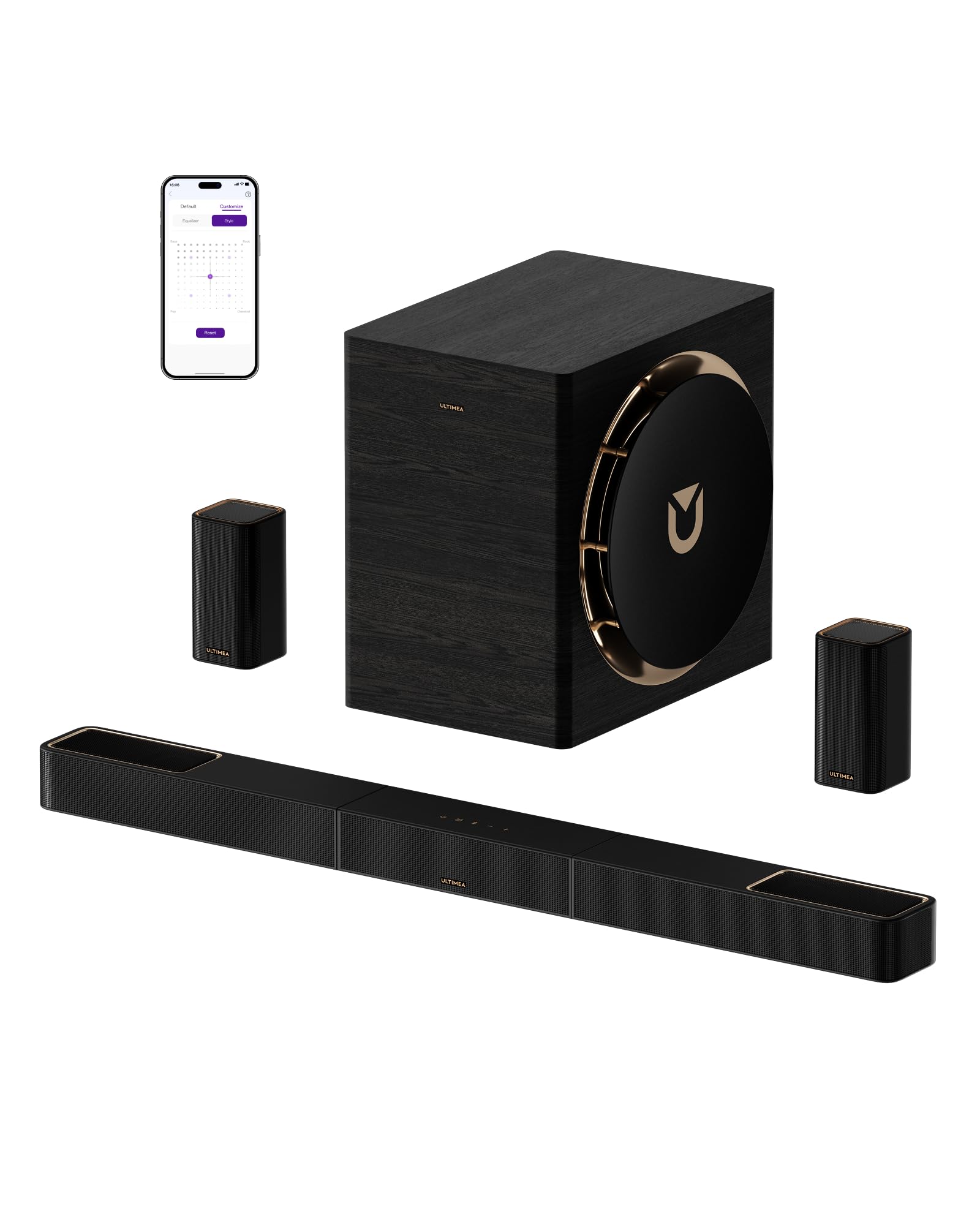
The ULTIMEA Skywave X70 utilizes a next-gen GaN (Gallium Nitride) amplifier for 98% efficiency and 8x faster response than traditional silicon amps. The 7.1.4-channel system includes a 10-inch wireless subwoofer reaching down to 20Hz for deep, tactile bass. The NEURACORE multi-channel audio engine processes 24-bit/192kHz audio with less than 0.5% distortion, driving up to 17 channels for pinpoint spatial imaging.
Dual 5GHz wireless transmission ensures stable connectivity with minimal interference. The soundbar features a three-piece snap-together design with a metal grille and wood-crafted subwoofer for premium aesthetics. The ULTIMEA App supports 121 EQ presets and 10-band adjustment with six sound modes. HDMI eARC, optical, and USB connectivity are included.
Users praise the Skywave X70 for its “good clear sound” and “strong bass,” noting that the 10-inch sub fills large rooms with ease. The Dolby Atmos performance is impressive, and the Surround AI adds rear channel effects to non-Atmos content. Some users note the lack of auto-calibration, requiring manual speaker placement for optimal sound. The subwoofer placement is critical for best bass response.
Why it’s great
- GaN amplifier for high efficiency and low heat
- 10″ subwoofer reaches down to 20Hz for deep bass
- NEURACORE engine with 24-bit/192kHz processing
Good to know
- No auto-calibration requires manual placement
- Stiff speaker cords may be bothersome
- Fire TV remote cannot be programmed to control volume
9. TCL Q85H 7.1.4 Surround Sound Bar

The TCL Q85H offers a full 7.1.4-channel configuration with Dolby Atmos and DTS:X support, backed by 860W of peak power. The upgraded rear speakers feature both front- and up-firing drivers, delivering precise surround placement and overhead effects. AI Sonic optimization tunes the sound to your room and seating position through the TCL app, ensuring balanced immersion regardless of where you sit.
The system includes a 6.5-inch wireless subwoofer and purpose-built drivers that separate dialogue, bass, and effects for clarity. HDMI eARC/ARC, optical, and Bluetooth connectivity ensure compatibility with all smart TVs and music streaming. The metal enclosure and wall installation kit are included. Setup is described as plug-and-play with auto-pairing between components.
Users call the Q85H “phenomenal” and “a punch at a reasonable price point,” noting the immersive 7-speaker quality and distortion-free bass. The system is great for 5.1 and Dolby Atmos movies, but some users report that the center channel is too quiet for non-Atmos content, with no individual channel adjustment available. The system lacks 4K@120Hz passthrough, which is a consideration for gamers.
Why it’s great
- Up-firing drivers in rear speakers for immersive height effects
- AI Sonic optimization tunes sound to your room
- Easy plug-and-play setup with auto-pairing
Good to know
- Does not support 4K@120Hz passthrough
- Center channel volume not individually adjustable
- Non-Atmos content dialogue can be quiet
10. Fluance Elite SX71WHR 7.1 Speaker System

The Fluance Elite SX71WHR is a traditional passive 7.1 speaker system that requires an external AV receiver to power it. It includes two floorstanding towers, a center channel, two bookshelf surrounds, two rear surround speakers, and a DB10 powered subwoofer. The speakers are timbre-matched for seamless panning and feature precision-crafted MDF cabinets with a white woodgrain finish.
The floorstanding towers are 2-way designs with high-frequency tweeters and dynamic midrange drivers. The 10-inch powered subwoofer delivers room-shaking bass for a cinematic experience. The system is fully wired, meaning you need to run speaker wire to every speaker. Fluance offers a full lifetime parts and labor warranty for the speakers and a 2-year warranty for the subwoofer.
Users love the “excellent design” and “great sound” of the Fluance system, noting that the white speakers look fantastic in a home theater setup. The sound quality is described as “nice and true.” However, some users report the bookshelf speakers are large for side surrounds, and the subwoofer is only available in black, not white. A few users had connectivity issues with the subwoofer and receivers, though customer support is praised.
Why it’s great
- Timbre-matched 7.1 speaker system for seamless surround sound
- Lifetime parts and labor warranty on speakers
- Beautiful white woodgrain design
Good to know
- Requires external AV receiver (not included)
- Fully wired system with speaker cables needed
- Subwoofer is black only, not matching white speakers
11. ULTIMEA Poseidon D80 7.1CH Soundbar
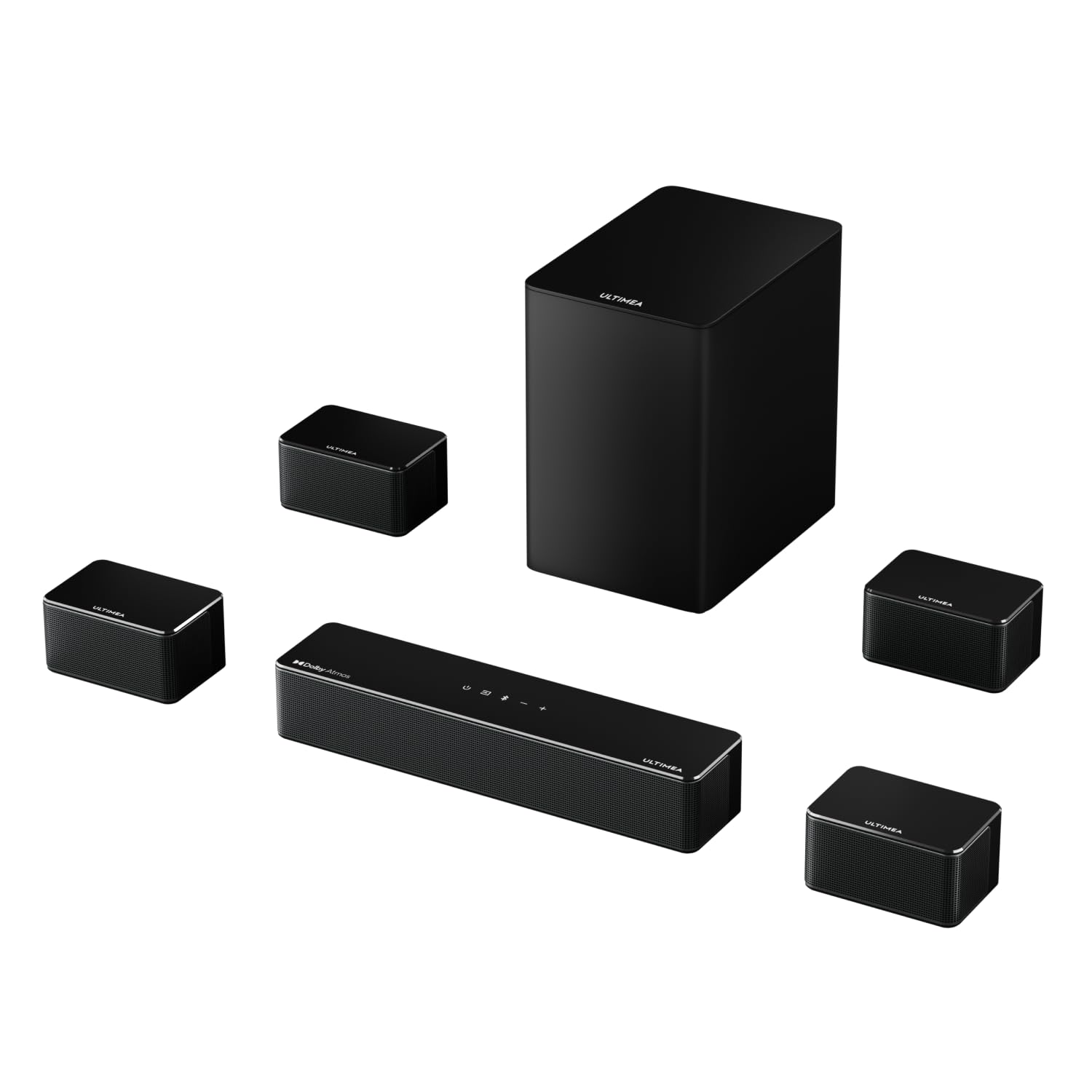
The ULTIMEA Poseidon D80 is an entry-level 7.1-channel system designed to deliver an immersive experience without breaking the bank. It features two front and two rear wired surround speakers, a 6.5-inch wireless subwoofer, and Dolby Atmos compatibility. The system uses SurroundX and 360° Aural Spatial Tech to create wraparound sound from your seating position. Peak power output is 460W.
The soundbar includes 1-in/1-out 4K HDMI with eARC for seamless device switching, plus optical and AUX inputs for legacy compatibility. The ULTIMEA App provides full control, 121 EQ presets, and 10-band adjustment across six sound modes (Movie, Music, Voice, Sport, Game, Night). The subwoofer connects wirelessly, but the four surround speakers require wired connections to each other.
Users describe the D80 as a “solid entry-level system” with punchy bass and great sound that adds depth to any entertainment. One reviewer noted the surround effect was so realistic during a rain scene that they thought actual rain was falling outside. However, some users report the system turns off after 30 minutes of inactivity with no low-power mode, and the subwoofer pairing can be unintuitive. A few experienced subwoofer failures after months of use.
Why it’s great
- Affordable entry point to true 7.1 surround sound
- 121 EQ presets and 10-band adjustment via app
- SurroundX spatial tech creates immersive wraparound audio
Good to know
- Four surround speakers are wired, not wireless
- System turns off after 30 minutes of inactivity
- Some reports of subwoofer reliability issues
FAQ
Do I need an AV receiver for a 7.1 wireless system?
Can I add a second subwoofer to my 7.1 setup?
What is the difference between Dolby Atmos and DTS:X?
Will wireless surround speakers cause audio latency?
How important is room calibration in a 7.1 system?
Final Thoughts: The Verdict
For most users, the 7.1 wireless surround sound system winner is the Nakamichi Dragon 11.4.6 because its reference-grade 11.4.6-channel architecture, dual subwoofers, and HiFi AMT tweeters deliver the closest experience to a professional cinema without a traditional AVR setup. If you want a more compact and flexible wireless solution, grab the Sony BRAVIA Theater Quad for its incredible 360 Spatial Sound Mapping and four satellite design. And for the best entry-level value, nothing beats the ULTIMEA Poseidon D80 for getting true 7.1-channel immersion on a tight budget.