
Floor crunches and planks are fine, but most people plateau hard because they miss the core activation range that only resistance-loaded or full-extension movement provides. Without proper gear that isolates the rectus abdominis and obliques through controlled motion, that stubborn midsection fat stays put and your lower back takes the punishment instead.
I’m Min — the co-founder and writer behind Gadgets Feed. I specialize in dissecting home fitness product specs, from resistance curves to frame gauge thickness, so you can skip the marketing fluff and grab equipment that actually builds core stability.
This guide uses real user experience data, weight capacity benchmarks, and variable resistance technology to pinpoint the best ab exercise equipment for home that delivers measurable results without overwhelming your living space.
How To Choose The Best Ab Exercise Equipment For Home
The right ab equipment matches your current core strength, available floor space, and joint condition. Beginners benefit from guided motion with rebound assist, while advanced athletes need full-range decline or high-resistance rollouts. Prioritize gear with a weight capacity above 300 lbs for durability and a stable base that won’t tip during dynamic movement.
Resistance Type and Adjustability
Hydraulic cylinders, elastic ropes, and spring-loaded mechanisms all deliver resistance differently. Hydraulic systems (like adjustable twister arm trainers) offer smooth tension curves without jarring snaps, which is easier on elbow and shoulder joints. Elastic rebound bands help maintain constant tension during ab rollouts. Look for at least 3–5 discrete resistance levels so you can progress without buying new equipment.
Stability and Footprint
Single-wheel ab rollers require significant balance coordination and often cause lower back arching. Multi-wheel platforms with wide bases (four wheels or triangular frames) keep your body aligned during extensions. Twist boards with dual-pedal designs are safer than single-disk spinners because they prevent ankle rollover. Measure your floor area — foldable units under 20 inches wide fit small apartments without sacrificing function.
Body Support and Comfort
Thick foam padding on handles and knee pads reduces pressure points during high-rep sessions. Ab machines with contoured backrests prevent lumbar hyperextension during crunches. For decline benches, an extra-long backboard (57+ inches) accommodates taller users and allows full leg extension without your head hanging off the edge. Always check foam density — high-density foam retains shape longer under repeated load.
Quick Comparison
On smaller screens, swipe sideways to see the full table.
| Model | Category | Best For | Key Spec | Amazon |
|---|---|---|---|---|
| WONDER CORE Slide Fit | 4-Wheel Roller | Stability-first core strength | 4-wheel platform with safety brake at 5 ft | Amazon |
| Finer Form Adjustable Ab Bench | Decline Bench | Decline sit-ups and reverse crunches | 1,100 lb weight capacity, 57.5” backboard | Amazon |
| ZELUS Ab Crunch Coaster | Dual-Track Trainer | Targeted lower-ab isolation | 4 incline levels, digital display | Amazon |
| MERACH Ab Machine (Sit-Up) | Ab Crunch Machine | Guided sit-ups with back support | 3 resistance levels, auto-rebound, 330 lb cap | Amazon |
| DMoose Ab Roller with Elbow Support | Ab Roller Wheel | Deep core rollouts without wrist strain | Stainless steel frame, padded elbow rests | Amazon |
| MERACH Waist Twister Board | Twist Board | Low-impact oblique carving | 300 lb capacity, noiseless rope rebound | Amazon |
| WAKISA 3-in-1 Twister Arm Trainer | Hydraulic Twister | Multi-purpose core and arm conditioning | 15 resistance levels, 22–440 lbs | Amazon |
In‑Depth Reviews
1. WONDER CORE Slide Fit
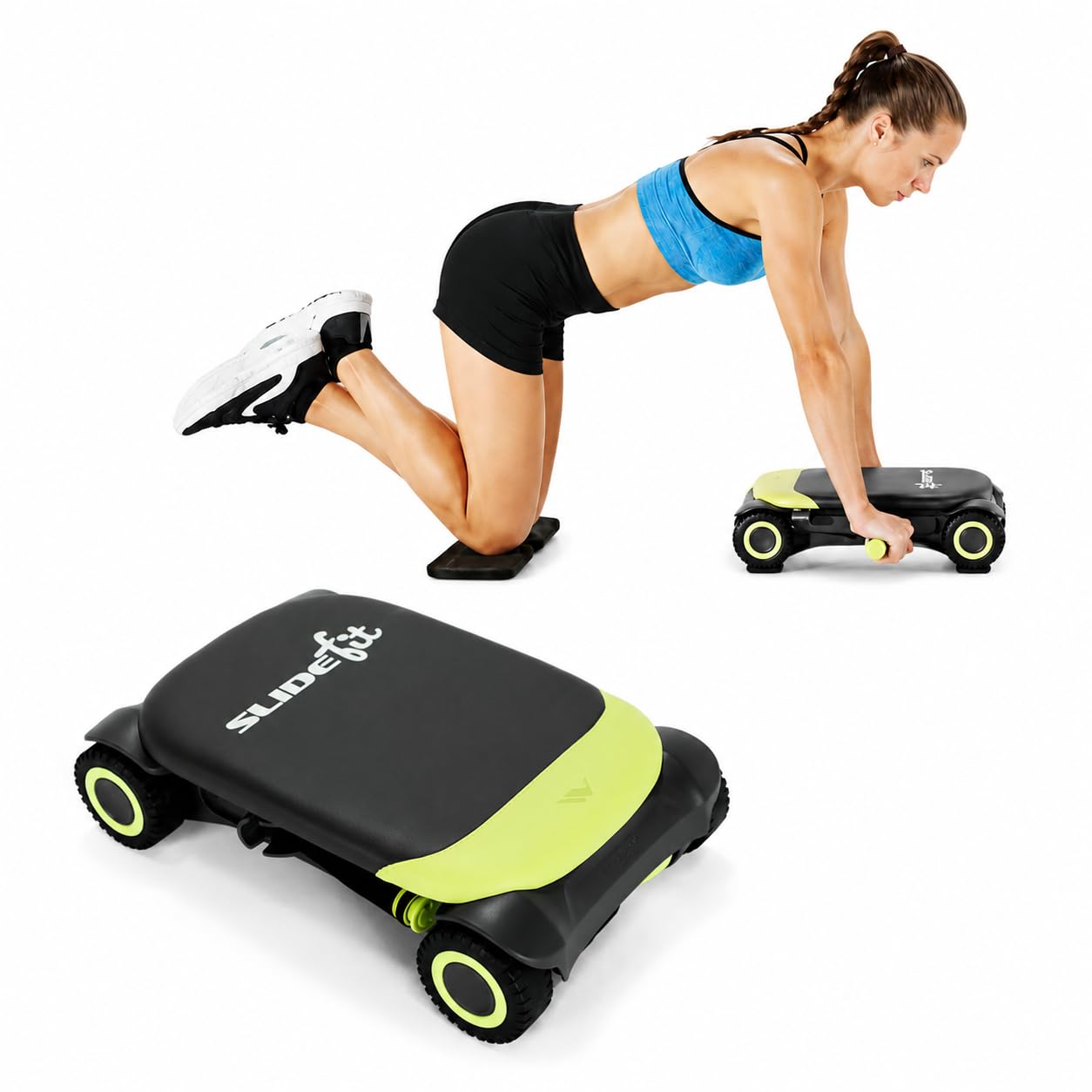
The Slide Fit kills the single-wheel instability problem with a four-wheel rectangular chassis and an integrated safety brake that stops over-extension at five feet. That brake alone makes this the safest ab roller for people with lower back concerns, because you can push to full extension without fear of hyperextending into an arch. The dual-way kinetic resistance system uses mechanical gears rather than elastic bands, which delivers consistent tension on both the rollout and the return stroke — no snap-back surprises.
Three progressive assist levels let you scale from a guided beginner mode (Maximum Assist) all the way to a hardcore Zero Assist setting that forces full eccentric control. Real users note the build quality rivals premium commercial gear, with a heavy-duty metal frame that feels solid on tile and hardwood. The package includes a knee cushion mat and a workout guide, and the compact 19.3-by-17.3-inch footprint stores easily under a bed.
The free Wonder Core app adds video tutorials and workout tracking, though some users find the app interface less intuitive than the hardware itself. The included knee pad is thinner than ideal for prolonged kneeling sessions. Still, for pure core activation without lower back stress, this is the most thoughtfully engineered option available.
Why it’s great
- Anti-tip four-wheel base prevents wobble during full extension
- Mechanical two-way resistance with safety brake protects the lumbar spine
- Gamified app adds long-term engagement for home workouts
Good to know
- Knee mat is thinner than expected; may need additional cushioning
- Best results achieved on hard floors or a firm exercise mat
2. Finer Form Adjustable Ab Bench
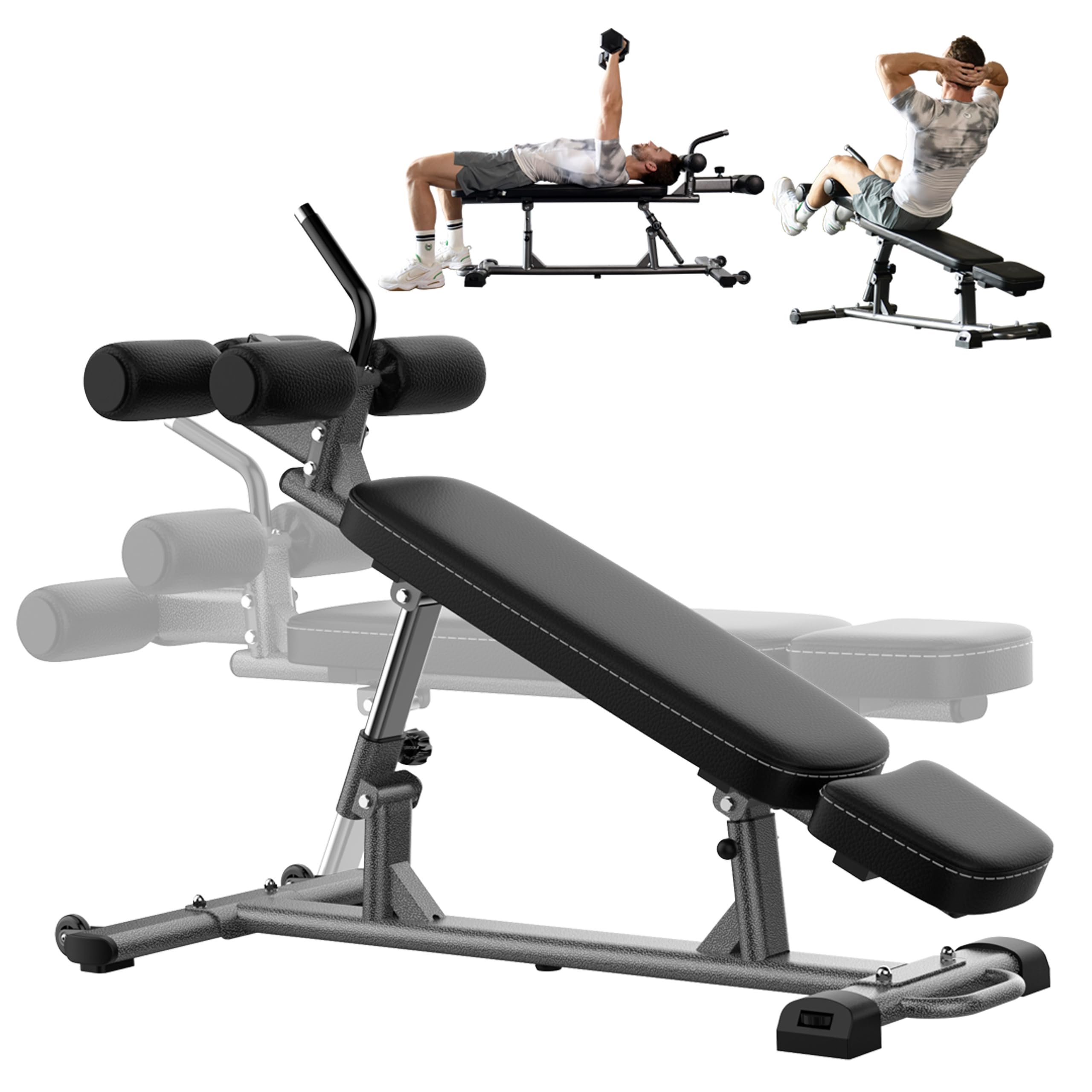
This is the most substantial piece of gear on the list — a semi-commercial decline bench that weighs 44 pounds and supports up to 1,100 pounds. The extra-long 57.5-inch backboard is a key differentiator for taller users (up to 6’3″) who normally hang off standard ab benches. The foot roller adjusts vertically to accommodate different heights, locking your legs securely for decline sit-ups without sliding down during the negative phase.
The steel reverse-crunch handle lets you add leg lifts and knee tucks, activating the lower rectus abdominis more directly than standard decline crunches. Switching between flat bench mode and decline mode takes seconds without tools, so you can use it for dumbbell press on chest days. The wide-base stance and integrated transport wheels make it surprisingly easy to reposition despite the heavy-gauge frame.
Assembly requires reading the manual carefully — some owners report unclear instructions that extend setup time to nearly an hour. A very small number of users note slight wobble at high weights, though the overwhelming feedback emphasizes rock-solid stability. If your home gym has the floor space (57.5 by 25 inches), this bench outperforms cheaper ab-specific machines by allowing progressive weight loading.
Why it’s great
- Extra-long backboard supports taller users without head overhang
- 1100-pound capacity accommodates serious weighted decline work
- Transitions between flat and decline modes without disassembly
Good to know
- Assembly instructions are vague, expect a 45–60 minute build
- Footprint is large; measure your space before purchase
3. ZELUS Ab Crunch Coaster

What makes the ZELUS Coaster unique is its dual-track system that lets each leg move independently during the crunch motion. Standard ab coasters force both legs together, but independent movement better activates the obliques and allows a more natural hip drive. The curved rail guides your knees through a bottom-up arc that mimics the movement pattern of hanging leg raises without requiring grip strength or a pull-up bar.
Four incline lock positions let you adjust difficulty from gentle toning to steep HIIT-style intervals. The integrated digital display tracks time, reps, and estimated calorie burn, which helps maintain consistent pacing during timed circuits. The foam knee pads and ergonomic grips keep you comfortable even during sweaty 20-minute sessions, and the powder-coated steel frame resists rust in humid garage-gym environments.
Assembly takes about 15 minutes, though the instructions are mostly diagram-based and could be clearer. Some taller users over 6 feet find the range of motion slightly short. At 26 pounds, the Coaster folds compactly for storage but is heavy enough to stay planted during aggressive movement. For targeted lower-ab isolation without back strain, this fills a gap that most floor-based ab gear misses.
Why it’s great
Good to know
4. MERACH Ab Machine (Sit-Up)
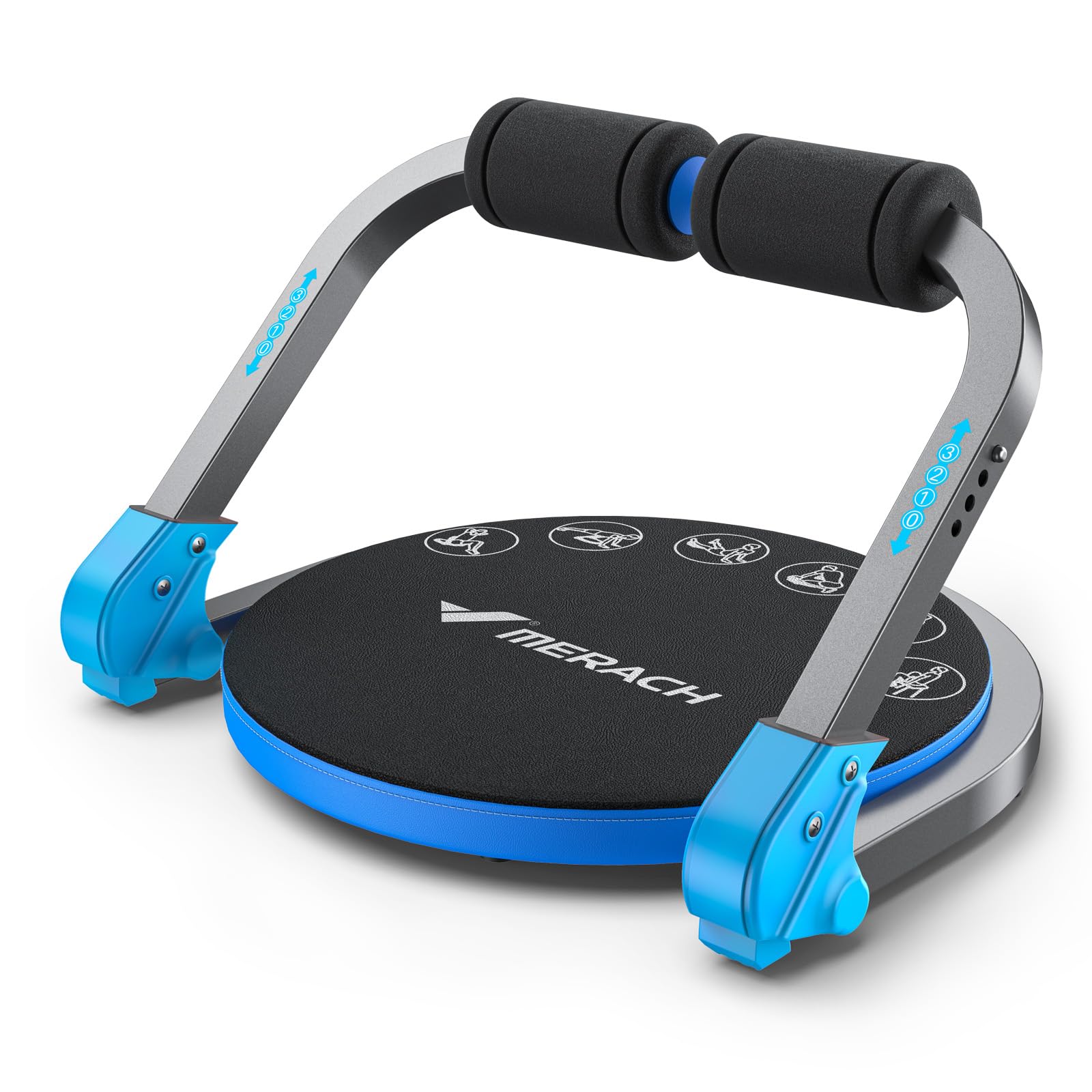
This zero-assembly sit-up machine folds in five seconds and weighs only 12 pounds, making it the most portable option for people who need to stash gear between workouts. The 2-inch thick foam handles and padded seat cushion protect the lower back during high-rep crunches — a critical feature because poor sit-up form on hard floors often leads to tailbone bruising. The auto-rebound mechanism helps return you to the starting position, reducing momentum cheating on the concentric phase.
Three resistance levels are controlled by a simple dial, and the frame supports up to 330 pounds. The exercise illustrations printed directly on the seat eliminate guesswork, and YouTube support videos expand the movement library beyond basic crunches to include push-ups and glute bridges. Users with limited hip mobility find the ergonomic arc especially forgiving because it prevents the lumbar arch that plagues standard floor sit-ups.
The foam handles attract lint from socks and slippers, which requires periodic cleaning. Some users report the arm supports create pressure on the upper back during aggressive crunching. The 20-by-15.7-inch footprint is small enough for a bedroom corner, and the blue color scheme adds a pop of motivation to any space. For someone starting their ab journey who wants immediate use without assembly, this is the fastest path to consistent core work.
Why it’s great
Good to know
5. DMoose Ab Roller with Elbow Support

The DMoose solves the biggest problem with traditional ab wheels: wrist discomfort. By shifting the load from your wrists to your forearms via padded elbow rests, you can perform deeper rollouts without the sharp wrist pain that stops most people after ten reps. The stainless steel frame is heavier than aluminum alternatives, adding lower-center-of-mass stability that keeps the wheel tracking straight during unilateral pushes.
The rubber-coated 360-degree wheel rolls silently on hardwood, tile, and carpet without leaving scuff marks. Two knee pads are included — a thoughtful extra since knee foam degrades faster than the rest of the assembly. The ergonomic handles are angled to reduce supination stress on the forearms, and the 330-pound weight capacity means even larger-framed users can push the full range. Multiple buyers note this is the only ab roller they’ve used that doesn’t feel flimsy after a month of daily use.
Assembly is not required — the unit comes ready to roll straight out of the box. The wide wheel design does make the roller larger to store than a standard single-wheel device. A few users at six feet tall find the elbow rest positions slightly narrow. For core enthusiasts who want to graduate from basic crunches to full-range ab rollouts without sacrificing joint safety, this is the gold standard.
Why it’s great
Good to know
6. MERACH Waist Twister Board
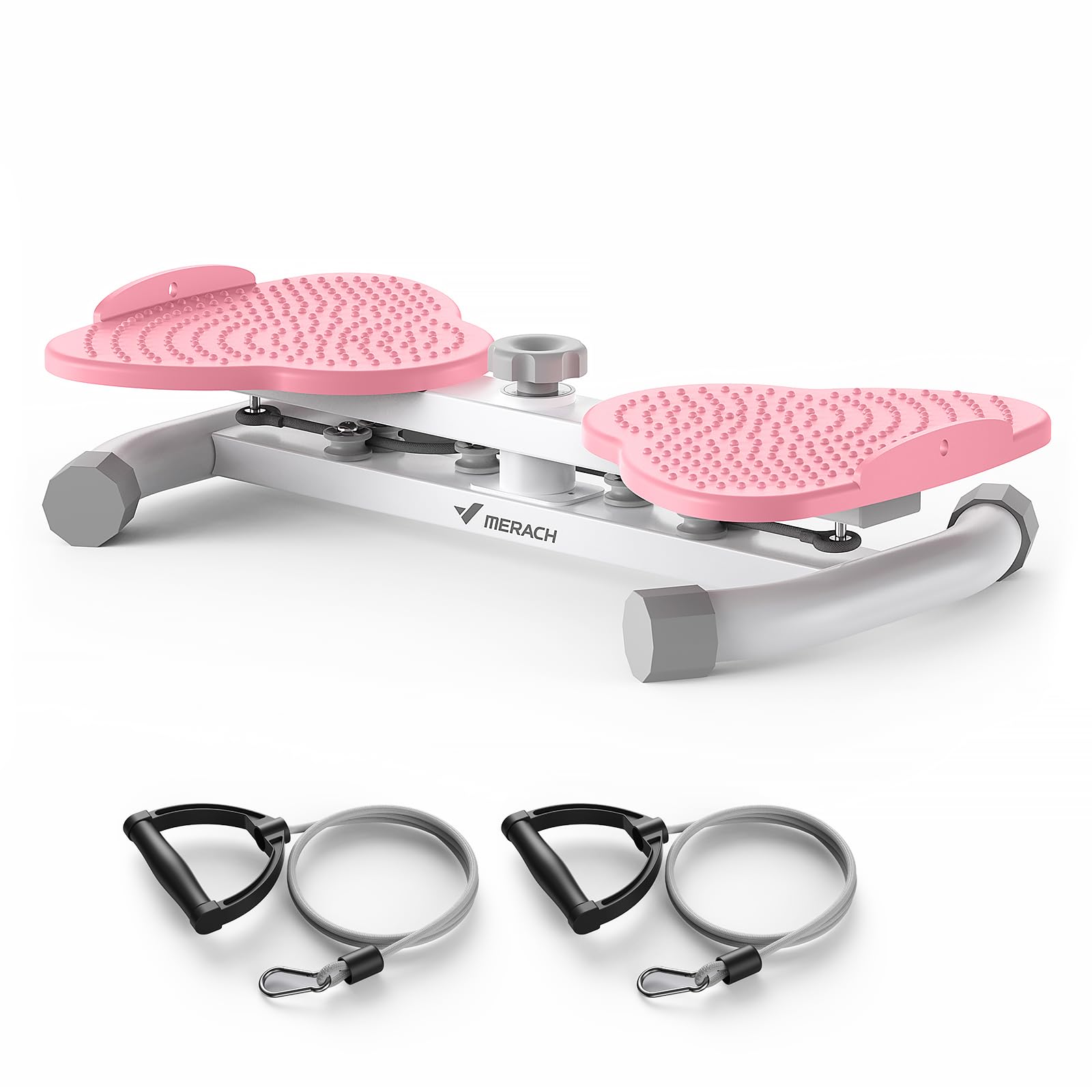
The MERACH Twister Board uses a dual-pedal footprint rather than the single-disk design common among cheaper twist boards. Two separate standing platforms prevent ankle rolling and give you a more stable base during rotation. The rotation mechanism relies on a high-tension elastic rope instead of a metal bearing or spring, which means absolutely zero squeaking or grinding noise — ideal for early-morning or late-night workouts in shared living spaces.
The textured standing surface doubles as a foot massager on bare soles, and the four non-slip rubber feet grip firmly on laminate and tile. Pull cords on both sides add upper-body engagement, turning the board into a mini-twisting treadmill for your arms. The 300-pound weight capacity is adequate for most home users, and the board’s low profile (4.72 inches tall) makes it easy to slide under furniture between sessions.
The resistance bands are non-replaceable and weak — anyone beyond a beginner level will outgrow them quickly and need to hold hand weights for added intensity. Some users must be careful when stepping onto the board because the smooth top can shift slightly before weight is fully planted. For seniors, rehabilitation patients, or anyone with knee replacements seeking low-impact oblique toning, the silent rope mechanism and stable platform are worth prioritizing.
Why it’s great
Good to know
7. WAKISA 3-in-1 Twister Arm Trainer

The WAKISA packs an adjustable hydraulic cylinder that spans 22 to 440 pounds across 15 micro-resistance levels — a range wide enough to serve both rehabilitation patients and experienced athletes. The triangular steel frame uses double-layer tubing and a golden-ratio geometry that prevents flex during heavy pushes, and the micro-rebound hydraulic system delivers smooth motion without the violent snap-back that spring-loaded trainers exhibit.
Its 3-in-1 nature adds real value: detachable wheels convert the unit into an ab roller, and included elastic band hooks let you attach resistance bands for pull-and-row variations. The non-slip handles and storage buckle make it portable enough to take to the office. Buyers consistently report the build quality exceeds expectations for the tier, with hydraulic resistance that feels linear rather than jerky.
Some users note that the resistance at lower dial settings feels easier than the printed numbers suggest, possibly due to hydraulic fluid viscosity variations at different temperatures. The ab wheel attachment extends the arm width significantly, which some users find destabilizing during rollout exercises. For a single device that covers chest pressing, arm curling, ab rolling, and banded rows, the WAKISA delivers surprising versatility without dominating your floor space.
Why it’s great
Good to know
FAQ
Are ab twisters effective for building visible six-pack muscles?
What is the difference between a dual-track ab coaster and a standard ab crunch machine?
How much floor space do I need for a decline ab bench at home?
Final Thoughts: The Verdict
For most users, the best ab exercise equipment for home winner is the WONDER CORE Slide Fit because its four-wheel stability and safety brake system eliminate the lower-back risk that kills consistency with standard ab rollers. If you want a multi-purpose strength bench that doubles for chest press and decline sit-ups, grab the Finer Form Adjustable Ab Bench. And for space-conscious training without assembly, nothing beats the MERACH Ab Machine for instant guided crunches.