
Attaching wood trim, panels, or baseboards to drywall is one of those tasks where the wrong adhesive turns a quick job into a frustrating mess of sagging wood and messy cleanup. The bond must bridge two very different surfaces—porous drywall paper on one side, solid wood grain on the other—while tolerating temperature shifts and the occasional bump from furniture or foot traffic.
I’m Min — the co-founder and writer behind Gadgets Feed. For this guide, I put hours into cross-referencing chemical formulations, open times, shear strength ratings, and real-world user experiences to separate the adhesives that actually hold from the ones that let go after a week.
After sorting through dozens of tubes, cans, and bottles, I narrowed the field down to the seven most reliable options that deliver a genuine, lasting bond between wood and drywall. This is the definitive best adhesive for wood to drywall.
How To Choose The Best Adhesive For Wood To Drywall
Drywall’s paper facing is notoriously thirsty and can delaminate if you use an adhesive that shrinks too aggressively or cures with excessive tension. Wood needs an adhesive that fills small gaps and won’t stain through painted surfaces. Here are the three critical factors that determine whether your wood-to-drywall bond lasts for years or fails within months.
Shear Strength vs. Open Time
For wood-to-drywall joints, you want a formula with enough initial tack to hold the wood in place immediately while still allowing 10 to 30 minutes of repositioning time. Adhesives with sub-30-second grab are great for vertical trim but punishing for long baseboards where alignment takes patience. Look for shear strength ratings above 300 PSI in the cured state, especially if the wood will carry any weight like shelving or cabinets.
Solvent-Free vs. Polyurethane Chemistry
Water-based latex and PVA adhesives are friendlier for indoor air quality and clean up easily, but they can struggle in high-humidity basements or bathrooms. Polyurethane and hybrid polymer adhesives expand slightly as they cure, filling gaps and gripping both porous wood and slick drywall paper more tenaciously. The trade-off is longer cure time and solvent fumes that require ventilation.
Gap Filling and Shrinkage
Even tightly fitted wood panels leave microscopic gaps, and drywall surfaces are rarely perfectly flat. An adhesive that shrinks during curing will pull the wood away from the wall, creating a visible gap or a squeaking joint. High-quality construction adhesives labeled “gap filling” or “non-sag” contain fibers or expandable compounds that maintain contact through the full 24-hour cure cycle.
Quick Comparison
On smaller screens, swipe sideways to see the full table.
| Model | Category | Best For | Key Spec | Amazon |
|---|---|---|---|---|
| PL Premium Multi Purpose | Polyurethane | High-moisture & heavy wood | Polyurethane, paintable | Amazon |
| Gorilla Construction Adhesive | Hybrid | 30-second grab on trim | 7-oz squeeze tube (2-pack) | Amazon |
| Red Devil 077606 | Solvent-free | Eco-friendly indoor projects | 6-pack, 9 oz per tube | Amazon |
| 3M Hi-Strength 94 ET | Spray | Large surface laminations | 19.75 oz, 60-min open time | Amazon |
| Roberts 1407 | Latex | Engineered wood on concrete | 30-oz tub, 20-min open time | Amazon |
| Weldbond Multi-Surface | PVA | Clear-dry craft & trim | 420ml bottle, dries clear | Amazon |
| LSGCQ Self-Adhesive Trim | Peel-and-stick | No-mess vinyl baseboard | 20 ft roll, 4-inch height | Amazon |
In‑Depth Reviews
1. PL Premium Multi Purpose Construction Adhesive

The PL Premium formulation uses polyurethane chemistry that expands slightly during cure to fill gaps between uneven wood and drywall surfaces — a critical advantage when the drywall is less than perfectly flat. Users report that the cured bond often exceeds the strength of the wood itself, meaning the panel splits before the adhesive joint fails. The 25-hour full cure time is standard for polyurethane, but the extended repositioning window lets you slide trim into perfect alignment without the panic of instant grab.
This adhesive cures reliably in cold temperatures down to freezing, making it suitable for garages, basements, and unheated workshops where other water-based formulations would fail. It is also paintable, so any squeeze-out on wood surfaces can be covered with latex or oil-based paint without discoloration. For heavy wood panels, crown molding, or any application where the wood carries weight, this is the most predictable bond you can buy.
The tan color blends reasonably well with wood, though it is not invisible on light trim. The tube design requires cutting the nozzle to the right bead size, and some users found the thick consistency demands a strong caulk gun. For a one-tube solution that bridges moisture, temperature extremes, and gap tolerance, the PL Premium is the clear choice.
Why it’s great
- Expanding polyurethane fills gaps up to 1/2 inch effectively
- Paintable and sands smooth for a finished look on trim
- Cures in freezing conditions, expanding your work season
Good to know
- Requires good ventilation during application
- Thick consistency needs a heavy-duty caulk gun for smooth flow
2. Gorilla Heavy Duty Construction Adhesive
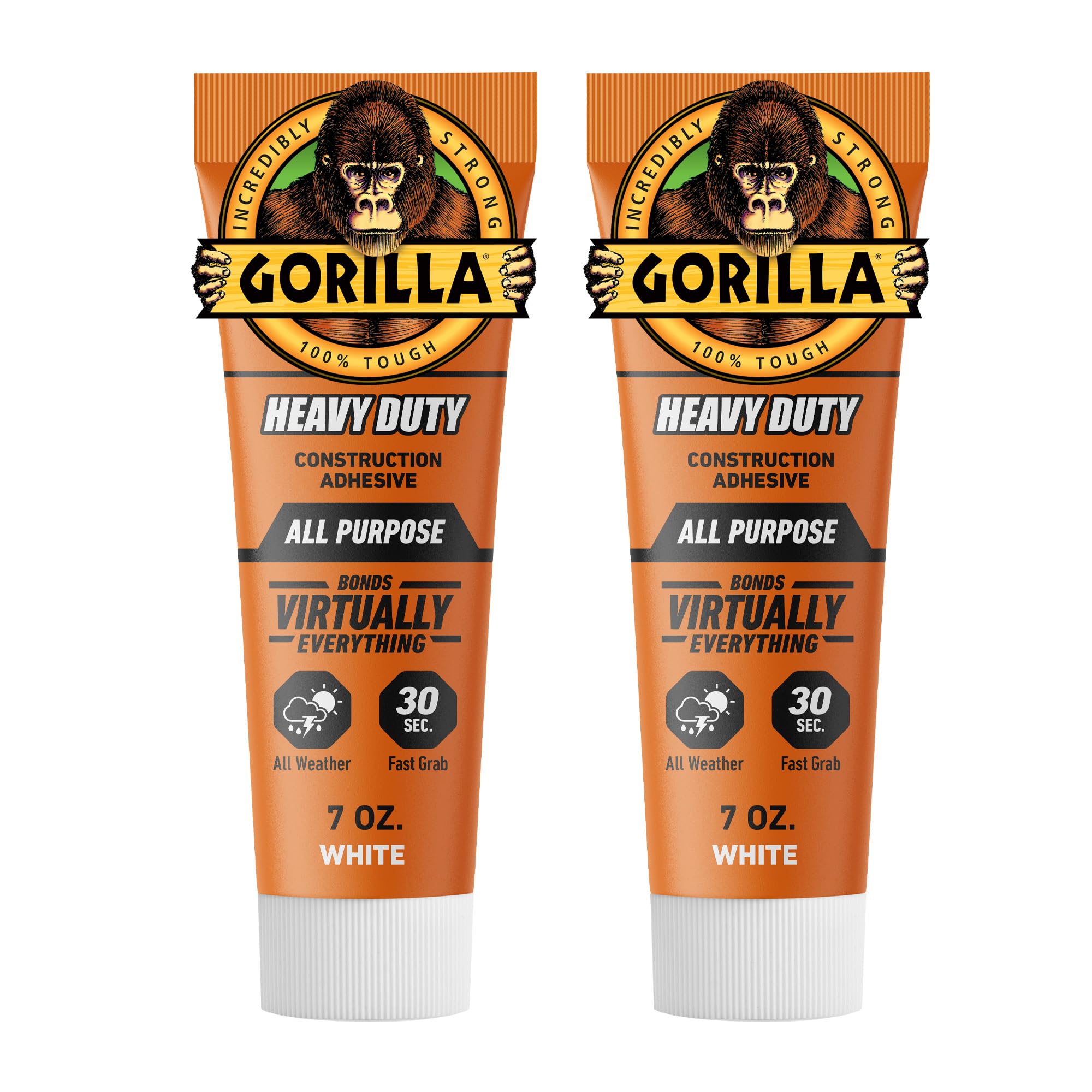
The Gorilla brand’s hybrid adhesive formula grabs in just 30 seconds, which is a game-changer for vertical wood applications like chair rails, wainscoting, and wall paneling. You press the wood into position, and within half a minute the bond is strong enough to hold the piece in place without bracing or temporary nails. The 7-ounce squeeze tube format delivers good control for bead application directly onto the wood or drywall.
As a gap-filling construction adhesive, it bridges small irregularities between the wood back and the drywall face — common in older homes where walls have slight bows. The waterproof rating means it will not degrade in bathrooms, kitchens, or basements where humidity cycles test lesser adhesives. The white color is less obtrusive than tan formulas on light wood and painted drywall.
Some users experienced a less aggressive hold than expected, particularly on very smooth finished wood. The paste-like white consistency can look messy if squeezed out, and the 24-hour full cure means you still need to avoid stressing the joint for a full day. For projects where speed of initial grab is the top priority, this is the fastest option in this lineup.
Why it’s great
- 30-second initial grab eliminates the need for temporary fasteners on most trim
- Gap-filling formula compensates for imperfect wall flatness
- Waterproof and paintable for versatile indoor/outdoor use
Good to know
- Pasty texture can be messy if over-applied
- Bond strength on very smooth finished wood is less predictable
3. Red Devil 077606 General Purpose Construction Adhesive
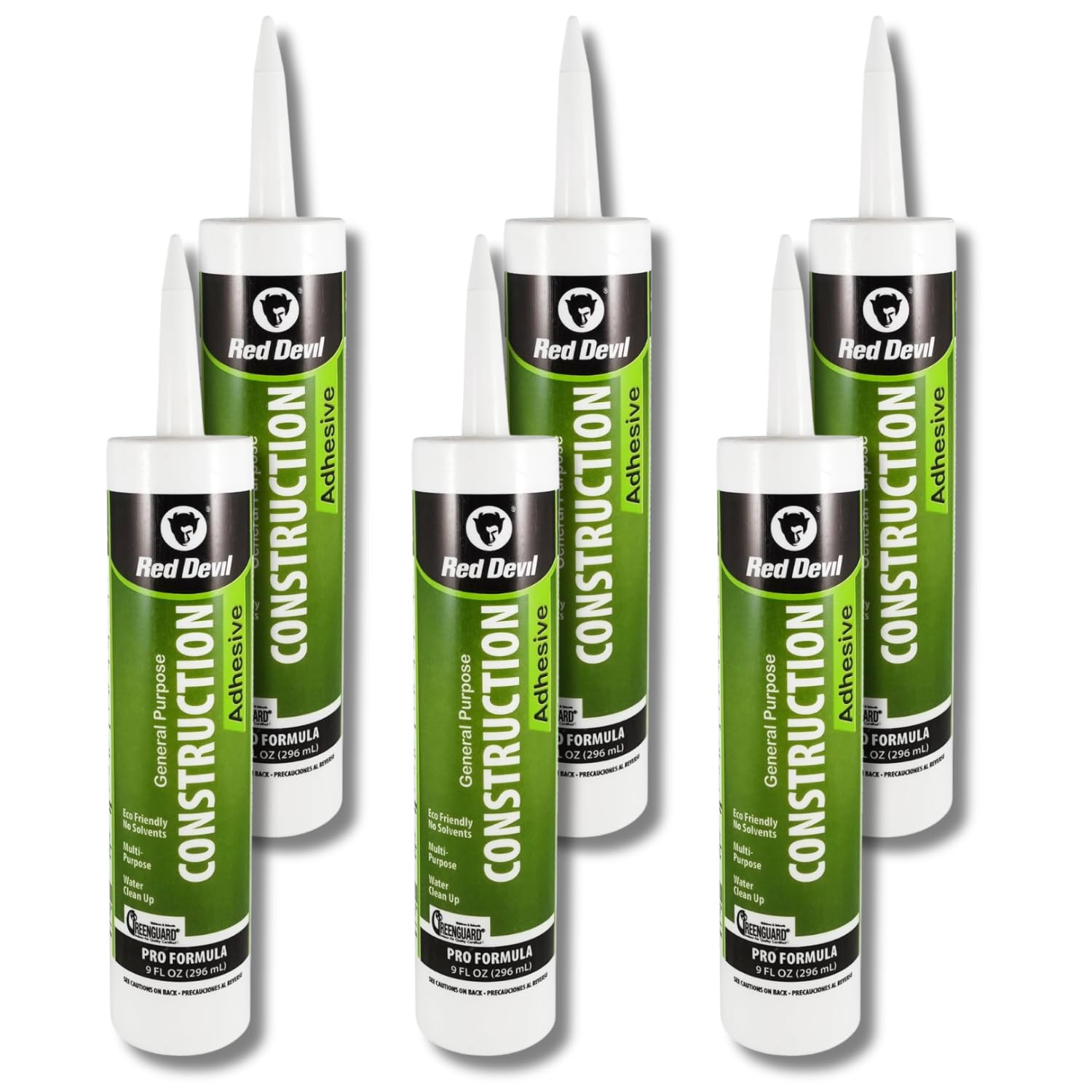
Red Devil’s solvent-free formula meets ASTM C-557 and AFG-02 standards for structural adhesive performance, yet it cleans up with just soap and water — a rare combination in the construction adhesive space. This 6-pack provides enough material for several rooms of trim, baseboards, or paneling without forcing you to buy a single massive tub that dries out before you finish. The white color blends well with painted drywall and light wood.
One important quirk: the adhesive comes out watery compared to typical caulk and has almost no tack during the first few minutes. It does not hold the wood in place immediately — you must brace, nail, or tape the wood until the 7-day full cure period is complete. Once fully cured, however, the bond is strong enough for subflooring, decks, and even masonry applications. This is not a quick-grab formula, but a budget-friendly workhorse for projects where temporary bracing is already part of your process.
Made in the USA and suitable for both interior and exterior use, this adhesive works on wood, drywall, metal, foam board, and concrete. The 9-ounce tubes fit standard caulk guns, and the 6-pack format means you always have a fresh tube for each job. Ideal for the DIYer who needs bulk value and does not mind planning ahead for the long cure.
Why it’s great
- Solvent-free formula with easy water cleanup for indoor use
- 6-pack provides excellent value for multi-room projects
- Meets ASTM C-557 standards for structural reliability
Good to know
- No initial tack — requires bracing or nails during the 7-day cure
- Watery consistency requires careful bead control to avoid drips
4. 3M Hi-Strength 94 ET Spray Adhesive
When you are laminating large wood panels to drywall — think plywood accent walls, large cabinet backs, or full-sheet paneling — spray adhesive offers uniform coverage that a caulk gun bead cannot match. 3M’s Hi-Strength 94 ET provides an aggressive tack with an open time of up to 60 minutes, giving you an hour to position and reposition even oversized panels. The spray pattern lays down a thin, even film that prevents lumps and uneven bonding lines.
This adhesive bonds wood, carpet, rubber, metal, foam, and fabric, making it a versatile tool for mixed-material assemblies where wood touches drywall but also transitions to other substrates. The low-VOC formulation is GREENGUARD Certified and contributes to LEED credits, so it is suitable for occupied spaces and green building projects. Users report the bond is strong enough for foam soundproofing panels in freezing conditions, demonstrating temperature resilience.
The spray format has two downsides: overspray can land on unintended surfaces, requiring careful masking, and the solvent smell, while lower than older formulas, still demands ventilation and a respirator for extended use. One 19.75-ounce can covers roughly 30 to 40 square feet depending on application thickness. For panel-scale adhesion where beads would be uneven, this is the appropriate tool.
Why it’s great
- 60-minute repositioning window is unmatched for large panel alignment
- Uniform spray coverage prevents uneven bond lines on wood surfaces
- GREENGUARD Certified for low emissions in living spaces
Good to know
- Overspray requires masking surrounding surfaces
- Strong solvent odor needs ventilation and a respirator
5. Roberts 1407-30C Wood Adhesive
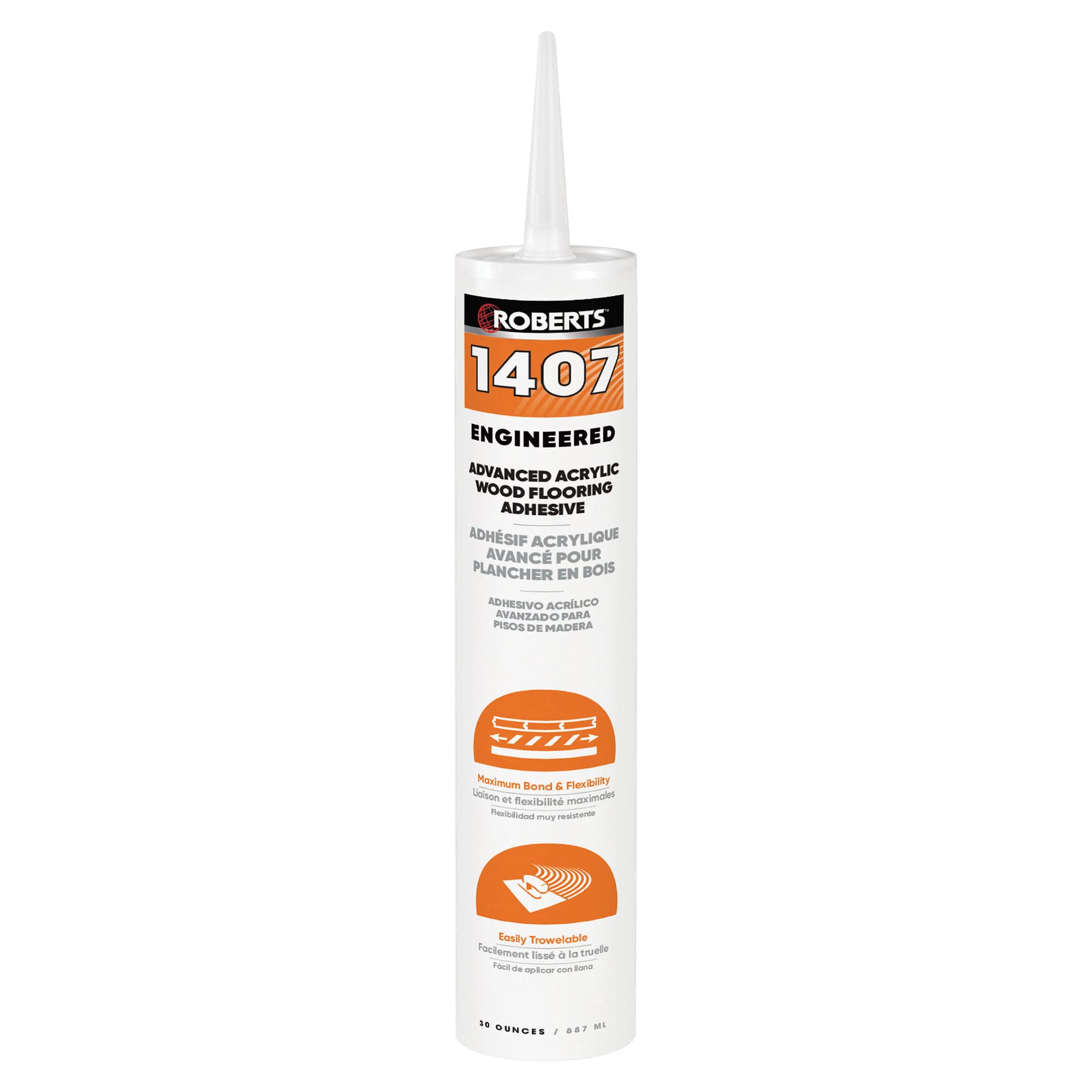
The Roberts 1407 is a water-based latex emulsion adhesive designed specifically for engineered wood flooring bonded to concrete slabs, but its formula works equally well for wood-to-drywall applications where a slower cure is beneficial. The 20-minute open time and 30-minute working window give you genuine room to adjust boards and panels without rushing. Cleanup with warm water is far easier than solvent-based alternatives, making it a favorite for indoor installations where spills on drywall are a concern.
Ideal for heavy residential and moderate commercial use, this adhesive bonds engineered wood, APA-rated plywood, and acoustic cork underlayment to concrete and drywall. The solvent-free formulation means no strong fumes, and the beige color is unobtrusive on most wood and drywall joints. The 30-ounce tub provides enough adhesive for approximately 30 to 40 square feet of flooring or paneling.
Consistency varies between tubs — some arrive smooth and slow-drying while others dry faster, which can catch you off guard on a large job. A few users reported that older tubs flash-cured within 5 to 10 minutes, so always test a dab before committing. For moderate-sized projects where easy cleanup and forgiving working time are priorities, this is a reliable choice.
Why it’s great
- Easy water cleanup saves time and prevents damage to drywall face
- 30-minute working window allows careful board alignment
- Solvent-free and low-odor for indoor use
Good to know
- Batch consistency varies — some tubs dry faster than labeled
- Not intended for heavy load-bearing vertical wood structures
6. Weldbond Multi-Surface Adhesive
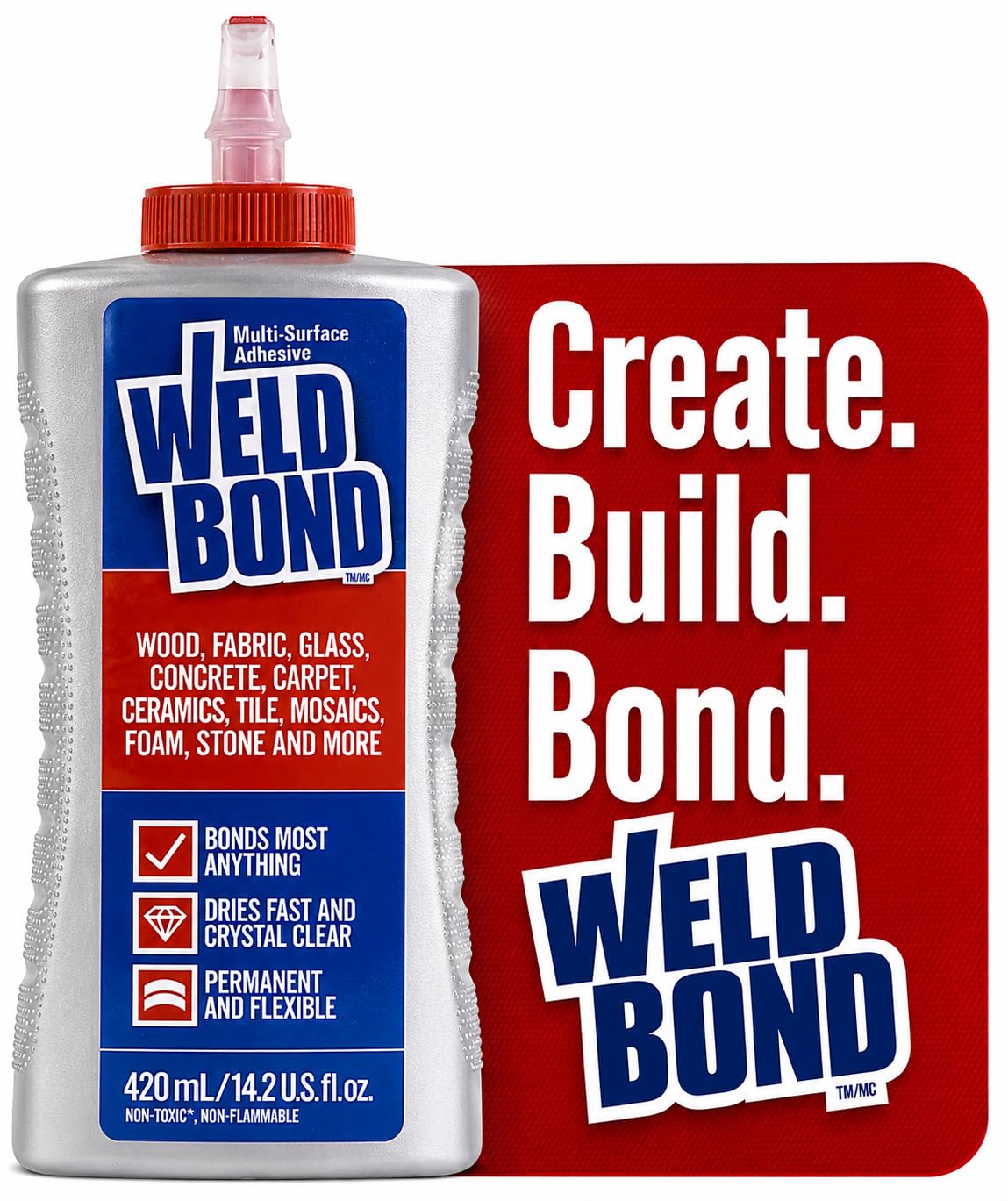
Weldbond’s PVA-based formula dries crystal clear — a major advantage when gluing wood trim that has visible glue joints or when working with light-colored woods where yellow or tan adhesives would stand out. It bonds wood, glass, ceramic, tile, mosaic stone, and fabric, making it one of the most versatile clear-drying adhesives available. The 420ml bottle is a generous size for craft-scale trim projects and small panel repairs.
Users consistently praise its quick grab — pieces stay in place without sliding — and its flexibility after curing, which helps absorb minor movement between wood and drywall as buildings settle. The cure to full strength takes about 20 minutes, significantly faster than most construction adhesives, so you can move on to painting or sanding within the same afternoon. It is odorless, a relief for indoor work without cross-ventilation.
This is not a gap-filling adhesive; it works best when the wood and drywall surfaces are in close contact without significant gaps. For tight-fitting trim, base caps, and decorative moldings where a neat, invisible bond is required, Weldbond excels. If you have gaps larger than 1/8 inch, reach for a construction adhesive instead.
Why it’s great
- Dries completely clear — no visible glue line on light wood
- 20-minute cure time means faster project completion
- Odorless formula for comfortable indoor application
Good to know
- Not suitable for gap filling — requires tight-fitting joints
- Less structural strength than polyurethane for load-bearing wood
7. LSGCQ Flexible Baseboard Molding Trim

This peel-and-stick vinyl baseboard trim sidesteps the adhesive selection entirely by including a factory-applied adhesive strip rated for wood, marble, glass, metal, tile, plastic, and drywall. For homeowners who want a clean baseboard installation without the mess of tubes and caulk guns, this is the simplest path. The flexible vinyl conforms to uneven walls and floors, and the toe design bridges gaps at the floor line to block dust.
The self-adhesive backing requires a perfectly clean, dust-free, and grease-free drywall surface to achieve its maximum hold — sanding residue and drywall dust are common adhesion killers. When properly installed, the bond is strong enough for residential use in bedrooms, living rooms, and hallways, and the material is waterproof and easy to wipe clean. One 20-foot roll at 4 inches tall covers about 6.67 square feet.
Installation is genuinely tool-free: measure, cut with a utility knife, peel the backing, and press onto the wall. The adhesive is repositionable for a short window before locking in. For areas that see significant moisture or physical contact — like a garage baseboard or a high-traffic hallway — this may not match the longevity of a premium construction adhesive, but for a clean, fast, no-mess baseboard solution, it delivers exactly what it promises.
Why it’s great
- Zero tools, glue, or caulk required — peel and stick in minutes
- Flexible vinyl conforms to uneven walls and floor gaps
- Waterproof and easy to clean with a damp rag
Good to know
- Requires absolutely clean drywall — any dust kills adhesion
- Less durable than real wood baseboard with construction adhesive
FAQ
Can I use regular wood glue to attach wood to drywall?
How long should I wait before putting weight on wood glued to drywall?
Does moisture affect the bond between wood and drywall adhesive?
Final Thoughts: The Verdict
For most users, the best adhesive for wood to drywall winner is the PL Premium Multi Purpose Construction Adhesive because its polyurethane expanding formula fills gaps, cures in cold temperatures, and creates a bond stronger than the wood itself. If you want a 30-second grab for vertical trim without bracing, grab the Gorilla Heavy Duty Construction Adhesive. And for large panel laminations where uniform coverage matters, nothing beats the 3M Hi-Strength 94 ET Spray Adhesive.