
An AC compressor and clutch that fails mid-summer isn’t just an inconvenience — it turns a daily driver into a rolling sweatbox. This guide cuts through the fitment confusion and spec-sheet noise to find the units that actually bolt on, pressurize correctly, and keep blowing cold past the first year.
I’m Min — the co-founder and writer behind Gadgets Feed. For this guide, I analyzed hundreds of real-world reviews, cross-referenced OEM part numbers, and dug into the specific compressor types, pulley counts, and oil pre-fill volumes that separate a smooth install from a weekend-wasting headache.
Whether you’re restoring a Honda Civic’s R134a system or refreshing a GMC Sierra’s factory AC, this review of the best ac compressor and clutch assemblies gives you the fitment certainty and performance data you need to order confidently.
How To Choose The Best AC Compressor And Clutch
Buying an AC compressor and clutch as a single assembly simplifies the swap, but the wrong unit will either refuse to bolt on or cycle poorly from day one. Focus on these three decision points before you click purchase.
Compressor Type and Pulley Groove Count
The compressor body — FS10, TRSE07, HS110, or DKS17D — dictates the mounting footprint and manifold port layout. Pair that with the correct pulley groove count (6 or 7 for most passenger cars) to ensure the serpentine belt tracks properly. A mismatch here means the belt either rides too shallow or slips under load.
Oil Type and Pre-Fill Volume
Most new compressors arrive pre-filled with PAG 46 or PAG 100 oil at a set volume like 130 ml or 180 ml. Installing a unit with the wrong oil viscosity or overfilling it can cause clutch slippage or internal seal damage. Check your vehicle’s service spec — if the new compressor holds too much or too little, adjust the system charge accordingly.
OEM Part Number Cross-Reference
The single most reliable compatibility check is matching the OEM part number (e.g., 38810-RNA-A01) from your old compressor to the replacement. Vehicle year and engine size alone are not enough — trim levels and production mid-cycle changes shift part numbers. Use Amazon’s Confirmed Fit as a starting point, but always verify the physical connection photos.
Quick Comparison
On smaller screens, swipe sideways to see the full table.
| Model | Category | Best For | Key Spec | Amazon |
|---|---|---|---|---|
| Denso 471-1630 | Premium | OEM-grade reliability for Honda/Acura | PTFE-coated pistons, snap rings | Amazon |
| ACDelco 15-22310 | Premium | GM OE replacement for Sierra/Silverado | GM-spec, visual/leak tested | Amazon |
| A-Premium (Civic 1.8L) | Mid-Range | Budget-friendly Honda Civic 06-11 | TRSE07, 7-groove, PAG 100 | Amazon |
| ILONPA (Honda Pilot/Odyssey) | Mid-Range | 10S20C for Odyssey/ Pilot/ MDX | PAG 100, 180±10 ml pre-fill | Amazon |
| A-Premium (Nissan Rogue) | Mid-Range | Rogue 2.5L 2008-2015 | DKS17D, 6-groove, PAG 100 | Amazon |
| Aeagle (Honda Odyssey 08-17) | Mid-Range | Odyssey/ Pilot/ Ridgeline AC swap | PAG 100, 6-groove, 135 mm pulley | Amazon |
| ECCPP (Ford Explorer) | Mid-Range | Ford Ranger/ Explorer 4.0L | FS10, 6-groove, PAG 46 | Amazon |
| ECCPP (Acura TSX) | Mid-Range | Acura TSX 2.4L 2004-2008 | HS110, 7-groove, PAG 46 | Amazon |
| YEHERIT (Honda Civic 06-11) | Budget | Entry-level Civic AC replacement | TRSE07, 7-groove, PAG 46 | Amazon |
In‑Depth Reviews
1. Denso 471-1630 New Compressor with Clutch

Denso supplies OEM compressors for Toyota, Honda, and Acura, and the 471-1630 reflects that factory-level fit and finish. The PTFE surface treatment on the pistons reduces friction during high-RPM cycling, while the snap rings are engineered to handle the thermal expansion that cracks lesser aluminum housings. Owners of the 2005-2008 Honda Ridgeline and Odyssey report a direct bolt-on experience with zero bracket modifications needed.
The unit ships with a minimal 2 oz of PAG oil, which means you must add the remaining charge based on your system’s total volume — typically around 6 oz for a Honda V6. This gives you precise control over lubrication rather than trusting a pre-filled value that may not match your evaporator and condenser capacity. The aluminum alloy swash plate keeps rotating mass low, so the clutch engages smoothly without the sudden jolt common on heavier budget compressors.
Where this compressor truly stands apart is its reliability track record. Multiple user reports confirm ice-cold vent temperatures at 44-46°F after a correct evacuation and recharge, with no pulley wobble or clutch chatter after 12+ months. For anyone prioritizing a single-and-done replacement with OE-level materials, this is the benchmark.
Why it’s great
- Factory-grade PTFE-coated pistons reduce wear
- Precise oil — you control final charge volume
- Proven fit for Honda/Acura V6 applications
Good to know
- Requires manual oil addition — not pre-filled for full system
- Premium price bracket narrows the value gap versus OE dealership
2. ACDelco GM Original Equipment 15-22310

If you drive a GM truck or SUV — particularly the 2014 GMC Sierra 5.3L — this ACDelco unit is the exact part that rolled off the factory line. It undergoes 100% visual and leak inspection before leaving the plant, which means zero guessing about manifold gasket integrity or internal seal quality. The clutch assembly is pre-gapped to GM’s spec, so the air gap between the clutch plate and pulley rotor falls within the 0.016-0.031 inch tolerance right out of the box.
The compressor body uses the same high-density aluminum casting as the original, which resists the pitting and corrosion that plague aftermarket units in salt-belt climates. Installation on a 2014 Sierra requires a 5.5 metric socket for the manifold bolts and some patience with the belt routing — rolling the belt onto the compressor pulley first, then the crank pulley, saves significant time. Once charged, users report vent temps below 40°F even in 95-degree ambient conditions.
The primary trade-off is availability: this model is listed as discontinued by the manufacturer, so stock rotates through third-party sellers. When it is in stock, it undercuts the dealership price substantially while delivering identical performance. If you’re restoring a direct GM application, this is the only aftermarket option that guarantees form, fit, and function parity with the original part.
Why it’s great
- Direct GM OE replacement — identical casting and tolerances
- Full leak test eliminates defective units before install
- Clutch air gap pre-set to factory range
Good to know
- Discontinued status means stock can be inconsistent
- Installation requires specific metric tools and belt routing technique
3. A-Premium AC Compressor with Clutch (Honda Civic 1.8L)
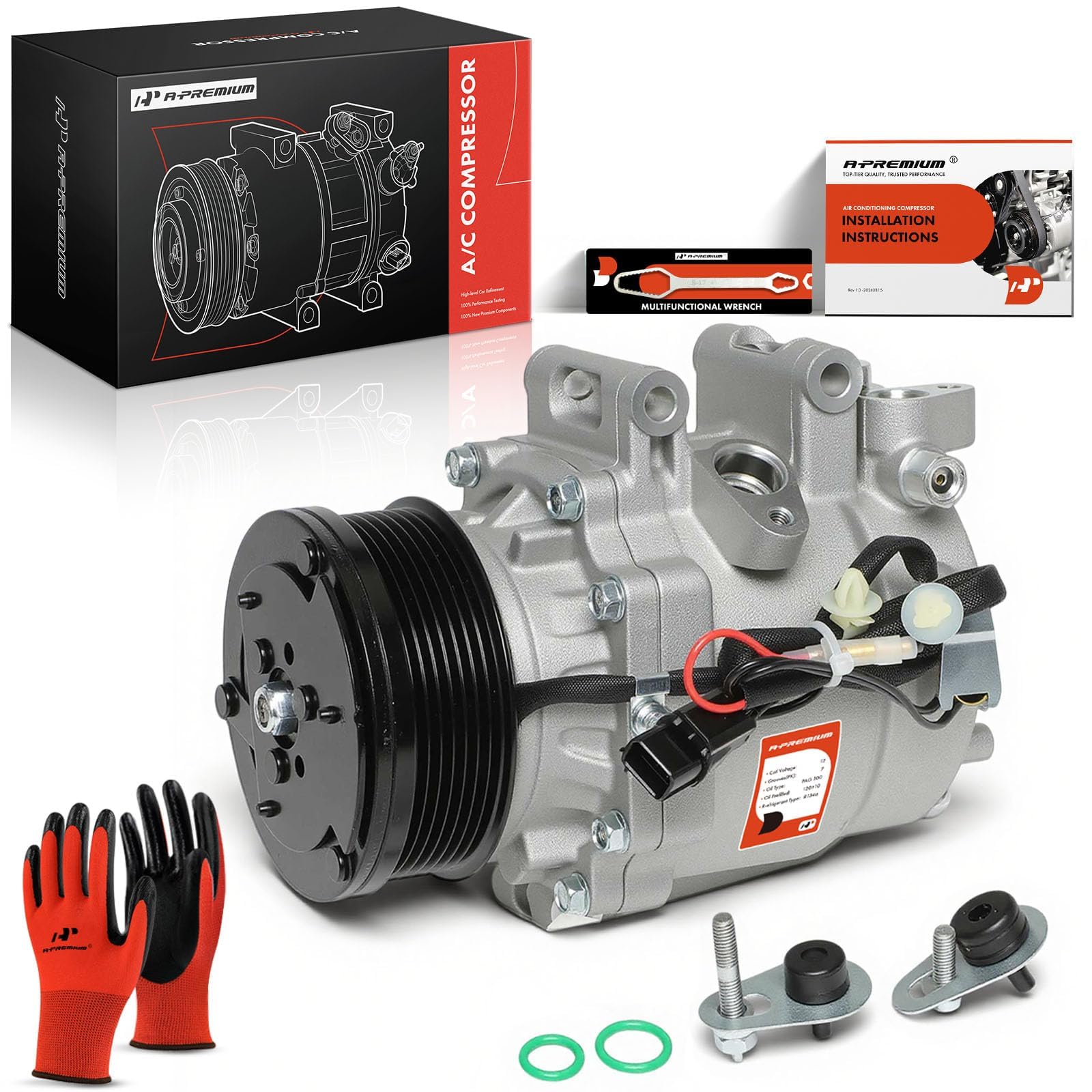
The A-Premium unit for the Honda Civic 1.8L (2006-2011) uses the correct TRSE07 compressor architecture with a 7-groove pulley — the exact configuration needed to match the stock serpentine routing on that chassis. With 120 ml of PAG 100 oil pre-filled, you can skip the oil measurement step entirely as long as your system’s lines and condenser are dry. The aluminum housing includes the same internal coating process used on mid-range aftermarket units to resist corrosion from R134a moisture ingress.
Real-world installation reports from 2009 Civic owners confirm that the rear manifold studs align without forcing, and the electrical plug clicks in with the same orientation as the original 38810-RNA-A01 part. The unit comes with a one-year unlimited-mileage warranty, which provides a solid safety net if any internal bypass valve or clutch coil fails during the first cooling season. Vent temperatures after a proper vacuum pull and 21 oz R134a charge hover around 42-45°F at idle.
The biggest differentiator here is the price-to-performance ratio — this compressor delivers Denso-level cooling performance at roughly half the cost. The trade-off is a slightly higher noise floor reported during aggressive acceleration, but for a daily-driven Civic that spends more time in traffic than on the highway, the value equation tilts strongly in this unit’s favor.
Why it’s great
- TRSE07 and 7-groove pulley match OEM Civic spec exactly
- Pre-filled with PAG 100 — install and go with minimal prep
- One-year warranty covers early failure scenarios
Good to know
- Slightly higher compressor noise during hard acceleration
- Clutch gap may need a feeler-gauge check for optimal engagement
4. ILONPA AC Compressor (Honda Pilot/Odyssey 2005-2008)

The ILONPA 10S20C compressor is built for the Honda Pilot, Odyssey, and Ridgeline, as well as the Acura MDX and TL, covering a wide V6 footprint with a single part number. The 135 mm pulley diameter and 6-groove design match the serpentine belt tension requirements of these vehicles exactly, preventing the belt squeal that occurs when a pulley is undersized. It ships with 180±10 ml of PAG 100 oil, which aligns closely with the factory service manual recommendation for the full system charge.
Multiple owners of 2004-2008 Acura TLs and Honda Odysseys confirm the direct-fit claim — the manifold ports align without spacer washers, and the clutch engages without the high-draw current spike that sometimes indicates a tight air gap. The aluminum alloy housing is reinforced around the rear mount ear, an area that can crack on thinner aftermarket castings when the mounting bolts are torqued to 18 ft-lbs. The low-vibration claim is substantiated by users reporting no noticeable change in cabin NVH after the swap.
The primary reason to choose this over a budget alternative is the oil volume tolerance — at 180 ml, it reduces the risk of under-filling the system if you don’t fully evacuate the old oil from the condenser. For DIY installers who want a forgiving pre-fill that covers most Honda V6 AC systems, this is a smart mid-range pick.
Why it’s great
- Reinforced rear mounting ear prevents cracking under torque
- 180 ml pre-fill matches factory V6 system requirements closely
- Covers multiple Honda/Acura V6 models with one SKU
Good to know
- Not compatible with 2008-2010 Odyssey EX-L / Touring models
- Professional installation recommended for vacuum and charging
5. A-Premium AC Compressor (Nissan Rogue 2.5L 2008-2015)
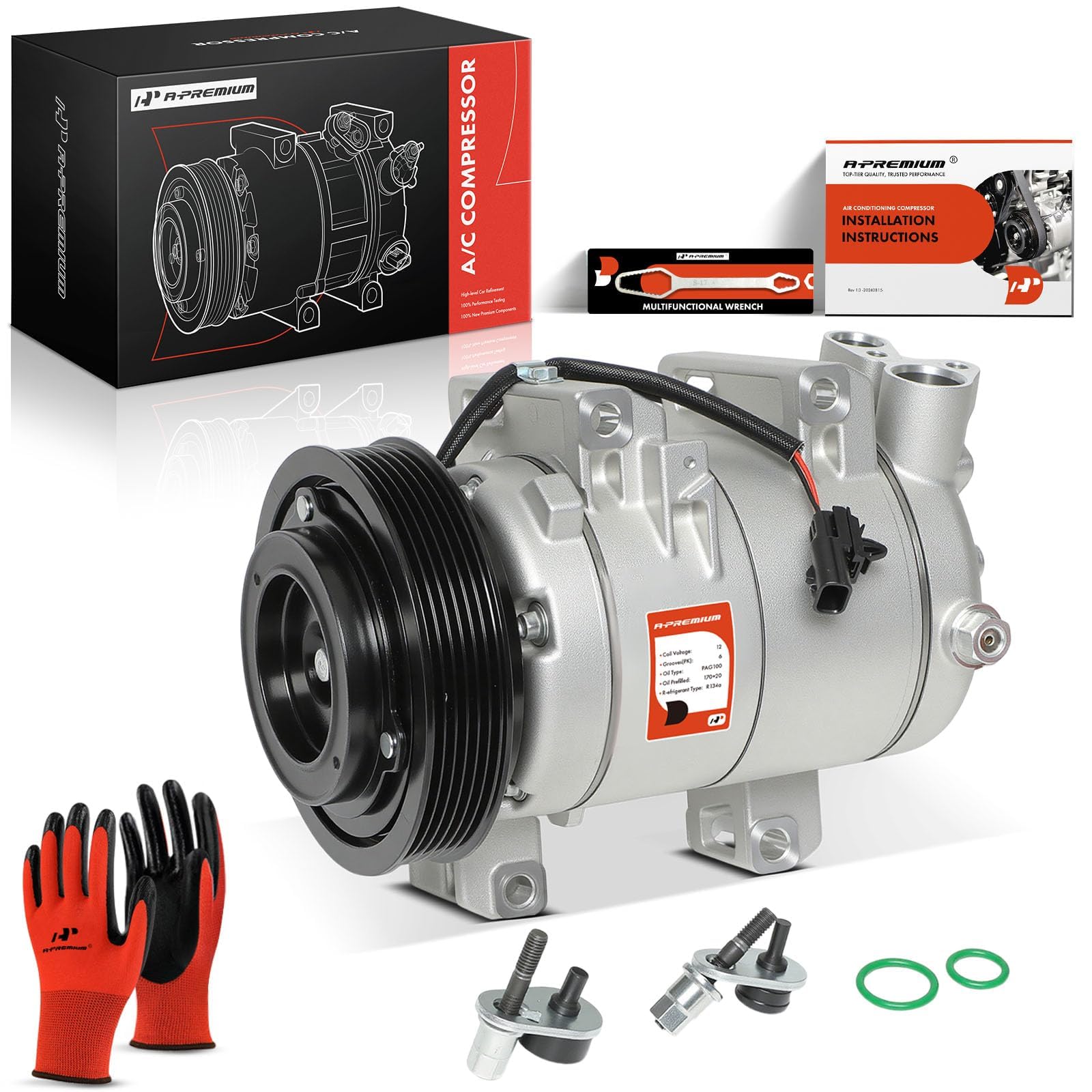
The Nissan Rogue 2.5L (2008-2015) uses the DKS17D or DKS17DS compressor — a compact, high-displacement unit that fits tightly between the engine mount and the lower radiator hose. A-Premium’s version includes a 6-groove pulley and 170 ml of PAG 100 oil, with a 20 ml tolerance that accounts for oil retained in the evaporator. The package also includes replacement O-rings, which should always be replaced during any AC compressor swap to prevent micro-leaks at the manifold seal.
Installation feedback from Rogue owners highlights the perfect bolt alignment on the mounting brackets and the correct orientation of the one-plug electrical connector. After a standard evacuation and 18 oz R134a charge, vent temperatures drop to 44-46°F at idle — well within the factory performance spec. The one-year unlimited-mileage warranty from A-Premium covers the clutch coil and internal reed valves, which are the most common failure points on this compressor generation.
The included gloves and basic tools in the box are a thoughtful touch for driveway installs, but the real value is in the DKS17D-specific casting that avoids the manifold misalignment issues that plague universal-fit compressors on the QR25 engine. If you’re staring down a failed Rogue AC compressor, this unit eliminates the guesswork.
Why it’s great
- DKS17D specific casting — no manifold misalignment
- Includes replacement O-rings for leak-free seal
- One-year warranty covers clutch and internal components
Good to know
- Some users report buzzing noise during acceleration
- 20 ml oil tolerance requires careful system evacuation
6. Aeagle AC Compressor (Honda Odyssey 2008-2017)
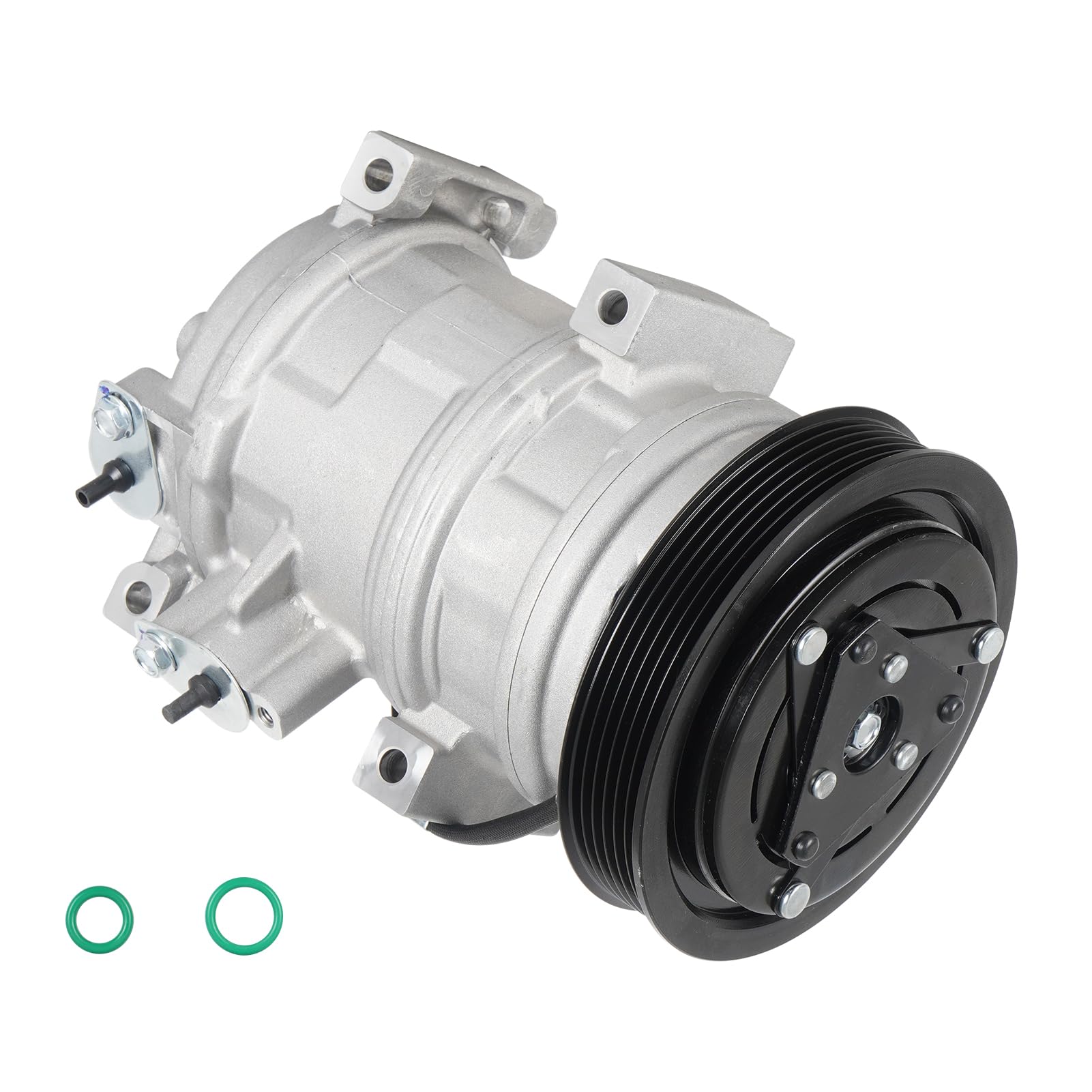
For the Honda Odyssey 3.5L (2008-2017), Pilot (2009-2015), and Ridgeline (2009-2014), this Aeagle compressor covers a broad range of Honda V6 vehicles with one assembly. The 6-groove pulley and 135 mm diameter match the belt tension specs for these applications, and the 180±10 ml PAG 100 pre-fill aligns with the factory service manual. The unit uses the R134a refrigerant port, which means no conversion work or adapter fittings are needed.
Multiple user reports from Ridgeline owners confirm that the compressor resolved intermittent cooling issues — specifically, the AC blowing warm after extended idling in high heat. The unit’s consistent suction pressure prevents the thermal cutoff from cycling the clutch prematurely. Note that you will need a 5.5 mm metric socket to remove the manifold from the old compressor and transfer it to this new unit, as the manifold is not included.
The primary consideration here is the note about model exclusions: the 2008-2010 Odyssey EX-L and Touring trims use a different manifold configuration and require a separate part. Double-check your specific trim level before ordering. For standard Odyssey, Pilot, and Ridgeline trims, this is a reliable mid-range option that delivers consistent cold air output.
Why it’s great
- Broad V6 vehicle coverage with one part number
- 180 ml pre-fill reduces system charging errors
- Resolves intermittent cooling issues on high-mileage Ridgelines
Good to know
- Manifold not included — requires transfer from old unit
- Not compatible with 2008-2010 Odyssey EX-L/Touring trims
7. ECCPP AC Compressor (Ford Explorer 1991-2001)
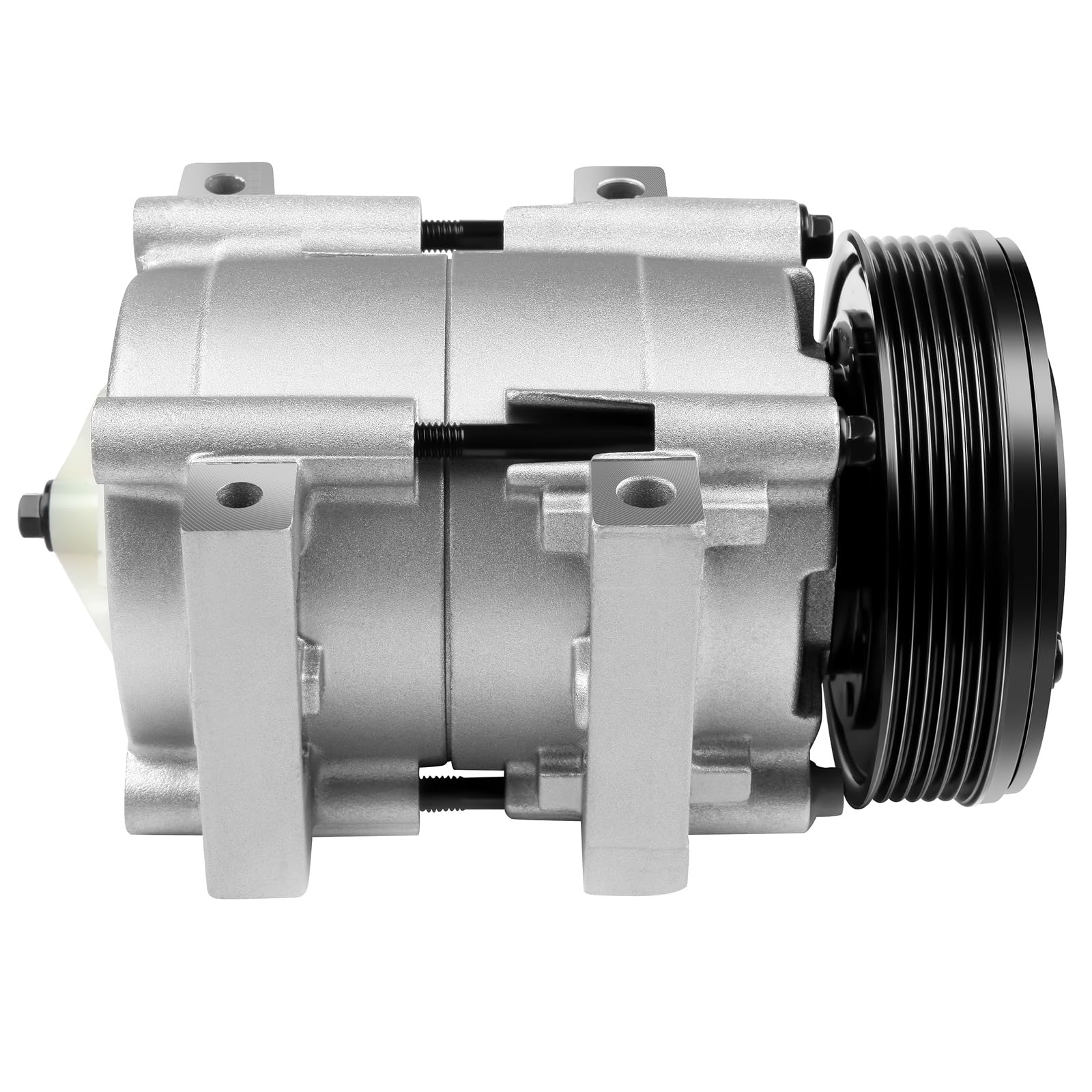
The ECCPP compressor uses the FS10 architecture, which was the standard compressor for Ford Explorer, Ranger, and F-Series trucks from the early 1990s through the early 2000s. The 6-groove pulley and 127 mm diameter are the exact dimensions for the Ford 4.0L Cologne V6 and 3.0L Vulcan engines. It ships with 130 ml of PAG 46 oil, which is the correct viscosity and volume for the FS10’s internal seal design — using PAG 100 here would cause excessive wear within the first season.
Users with 2001 Ford Rangers and 1997 Lexus SC300s confirm the bolt-on fitment, with the rear manifold studs aligning to the factory hard lines without bending. After a proper vacuum and 24 oz R134a charge, the compressor maintains 62°F vent temperatures in 90-degree Texas summers, according to one 12-month follow-up. The noise rating of 72 dB is within the typical range for an FS10 at operating speed.
The only caveat is that some users with 2012 Porsche Panamera units reported fitment issues — this is clearly a Ford/Mazda-focused part, and using it outside that range invites problems.
Why it’s great
- Correct FS10 type and PAG 46 oil for Ford/Mazda engines
- Massive vehicle coverage — Explorer, Ranger, F-Series, B-Series
- Proven reliability with 12-month+ user reports in hot climates
Good to know
- Not suitable for European or Asian vehicles outside the listed fitment
- Pre-filled oil can spill during handling — check before final tightening
8. ECCPP AC Compressor (Acura TSX 2.4L 2004-2008)

The Acura TSX 2.4L (2004-2008) uses the HS110 compressor, a compact axial piston design that fits the K24 engine bay without interfering with the alternator or lower radiator hose. This ECCPP replacement matches the 7-groove pulley configuration and ships with 130 ml of PAG 46 oil. The aluminum housing is pressure-tested with nitrogen at the factory to catch casting porosity that could cause refrigerant leaks — a critical step that some budget brands skip entirely.
Installation feedback from a Volvo S60 owner (who used this compressor on a cross-platform application) noted that the mounting ears aligned solidly and the electrical connector snapped in with a firm click. After system evacuation and charging, the TSX cabin reached 57°F at 1700 RPM — a solid result for a mid-range R134a system. Multiple users on the Acura TSX platform confirm that the compressor operates quietly, with no bearing whine or clutch chattering during cycling.
The downsides are worth flagging: one report of a clutch malfunction that smoked the serpentine belt, and the replacement process was slow enough to cause a week without transport. That failure rate appears low in the review pool, but it’s a reminder that any aftermarket compressor carries some QC risk. For the price, this is a viable option for TSX owners who want to restore cold AC without spending dealership money.
Why it’s great
- HS110 type with 7-groove pulley matches K24 engine bay layout
- Nitrogen pressure test reduces leak risk
- Quiet operation with minimal vibration reported by TSX owners
Good to know
- Small risk of clutch failure — monitor engagement closely
- Warranty replacement process can be slow for defective units
9. YEHERIT AC Compressor (Honda Civic 1.8L 2006-2011)
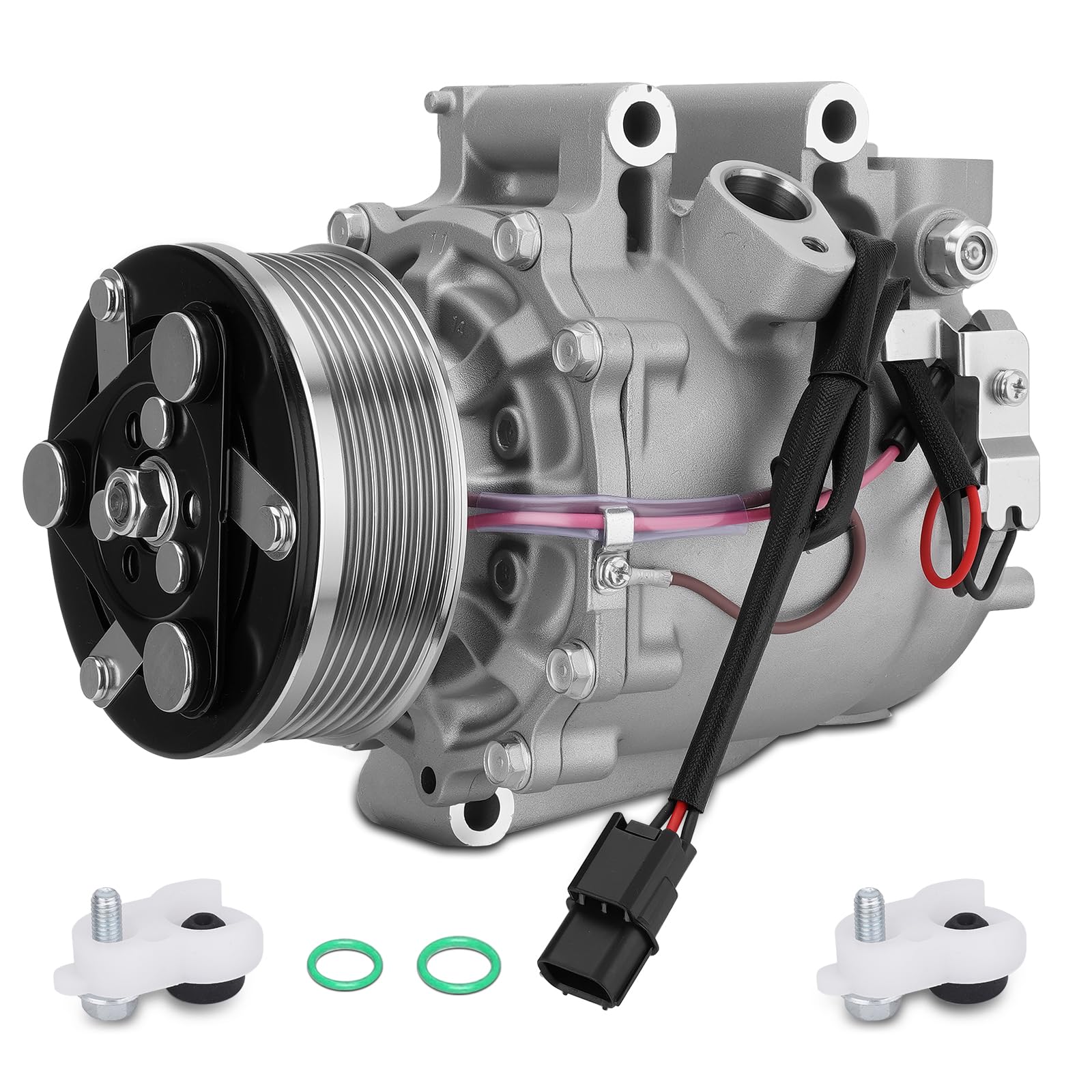
For the Honda Civic 1.8L (2006-2011), the YEHERIT compressor uses the TRSE07 architecture with a 7-groove pulley and 120 ml of PAG 46 oil. This is the exact configuration required for the R18A1 engine, and at this price point, it’s the cheapest way to restore functioning AC on an eighth-generation Civic. The aluminum alloy housing includes an internal coating process intended to resist corrosion from moisture in the refrigerant loop.
User reviews consistently note the well-packed delivery and premium feel of the cast housing — it doesn’t look or feel like a budget component. One detailed review mentioned that the old compressor’s manifold port stud was difficult to remove, but the new unit’s port accepted a standard metric bolt without threading issues. The included 2-year Asurion protection plan (available at checkout) adds peace of mind for the first cooling seasons.
The primary trade-offs are the smaller oil pre-fill (120 ml vs. the A-Premium unit’s PAG 100 volume) and the need to verify the clutch gap with a feeler gauge before final installation. Some users on Spanish-language marketplaces report perfect operation months later, but the overall review count is lower than the established A-Premium compressor. For the absolute lowest entry cost to a working Civic AC system, this unit delivers.
Why it’s great
- Lowest price point for Civic 1.8L TRSE07 replacement
- Well-packed with quality casting for the price
- Works with Asurion extended warranty for added coverage
Good to know
- Smaller oil pre-fill — confirm total system volume before charging
- Clutch gap should be verified with feeler gauge
FAQ
Can I replace just the clutch without replacing the compressor?
How do I know if my compressor has the wrong oil pre-fill?
Do I need to flush the AC system before installing a new compressor?
Why does my new compressor make a buzzing noise when I accelerate?
Final Thoughts: The Verdict
For most users, the best ac compressor and clutch is the Denso 471-1630 because it delivers OEM-grade materials, proven reliability across Honda and Acura V6 applications, and the most consistent long-term performance according to owner reports. If you want a factory-direct match for a GM full-size truck, the ACDelco 15-22310 is the only choice that guarantees fit, form, and function identical to the original part. And for the best balance of price and performance on a Honda Civic 1.8L, the A-Premium TRSE07 unit combines correct compressor architecture with a one-year warranty for a fraction of the premium cost.