
Sleeping in a sweltering tent at 2 a.m. isn’t a badge of honor — it’s a preventable misery that ruins the next day’s hike. A dedicated AC for tent camping changes the equation, turning your canvas or nylon shelter into a climate-controlled haven no matter how brutal the afternoon sun gets. The trick is matching the right BTU output, power source, and form factor to your specific setup, and that’s exactly what this guide delivers.
I’m Min — the co-founder and writer behind Gadgets Feed. I’ve spent hundreds of hours analyzing evaporative coolers, compressor-based units, and hybrid systems, cross-referencing real BTU claims with verified owner reports to separate gear that actually works from marketing fluff that leaves you sweating.
Whether you are glamping with a generator or running off a power station in your van, this guide breaks down the best options on the market so you can buy with confidence the best ac for tent that fits your camping style.
How To Choose The Best AC For Tent
Picking the right tent AC comes down to understanding three interconnected variables: the size of your tent, the power you can bring to it, and how you plan to vent the hot exhaust air. Miss any one of these, and your unit will either fail to cool, drain your battery in an hour, or fill your tent with hot recirculated air.
BTU Output vs Tent Volume
One BTU is the energy needed to raise one pound of water by one degree Fahrenheit, but in tent terms, you can think of it as raw cooling power. A small two-person tent (around 50-70 square feet) can be managed by a 3,500 BTU unit, while a large family tent (150+ square feet) really needs 5,100 BTU or more. Oversizing your BTU output for a tiny tent can cause short-cycling and uneven humidity, while undersizing guarantees you’ll still be sweating by midnight.
Power Source Compatibility
Generator-based campers can run almost any unit, but those relying on portable power stations need to check startup surge carefully. Many compressors draw 1,000 to 1,500 watts for the first few seconds before settling to a running draw of 300-600 watts. A power station rated at 500W continuous output won’t start a unit that needs 1,200W to spin up the compressor. Look for units with inverter compressors that ramp up gradually, or budget for a station with at least 1,000W surge capacity.
Venting and Condensation Management
Every compressor-based tent AC must exhaust hot air somewhere — usually through a window panel, a dedicated tent port, or a flexible duct run outside. Units with dual-hose designs (one intake, one exhaust) are more efficient because they don’t pull cooled air from inside your tent to cool the condenser. Some models feature auto-evaporation that recycles condensate, eliminating the need to drain water every few hours, which is a major convenience for overnight camping.
Quick Comparison
On smaller screens, swipe sideways to see the full table.
| Model | Category | Best For | Key Spec | Amazon |
|---|---|---|---|---|
| BougeRV PC35 | Compressor | App-controlled tent cooling | 3500 BTU, 34.2 lbs | Amazon |
| OUTOHOME 5200BTU | Compressor | Fast cooling for mid-sized tents | 5200 BTU, 31.9 lbs | Amazon |
| WISHILO 3400BTU | Compressor | Panasonic compressor reliability | 3400 BTU, 33 lbs | Amazon |
| OUTOHOME 5100BTU | Compressor | Larger tent cooling (200 sq ft) | 5100 BTU, 35 lbs | Amazon |
| BAYKUL 6800BTU | Compressor | Heating + cooling versatility | 6800 BTU cooling, 7500 BTU heating | Amazon |
| Cybertake S2 Pro | Compressor | Multi-power flexibility (48V DC) | 5100 BTU, 21 lbs | Amazon |
| Outequip 12V 10000BTU | Rooftop | RV and van permanent install | 10000 BTU rooftop, 45 lbs | Amazon |
| EF ECOFLOW WAVE 3 | Battery | Cordless off-grid tent cooling | 6100 BTU, with 1024Wh battery | Amazon |
| Laluztop 3-in-1 Evaporative | Evaporative | Budget-friendly dry climate use | 8L tank, 60W motor | Amazon |
In‑Depth Reviews
1. BougeRV PC35 Portable Air Conditioner 3500BTU
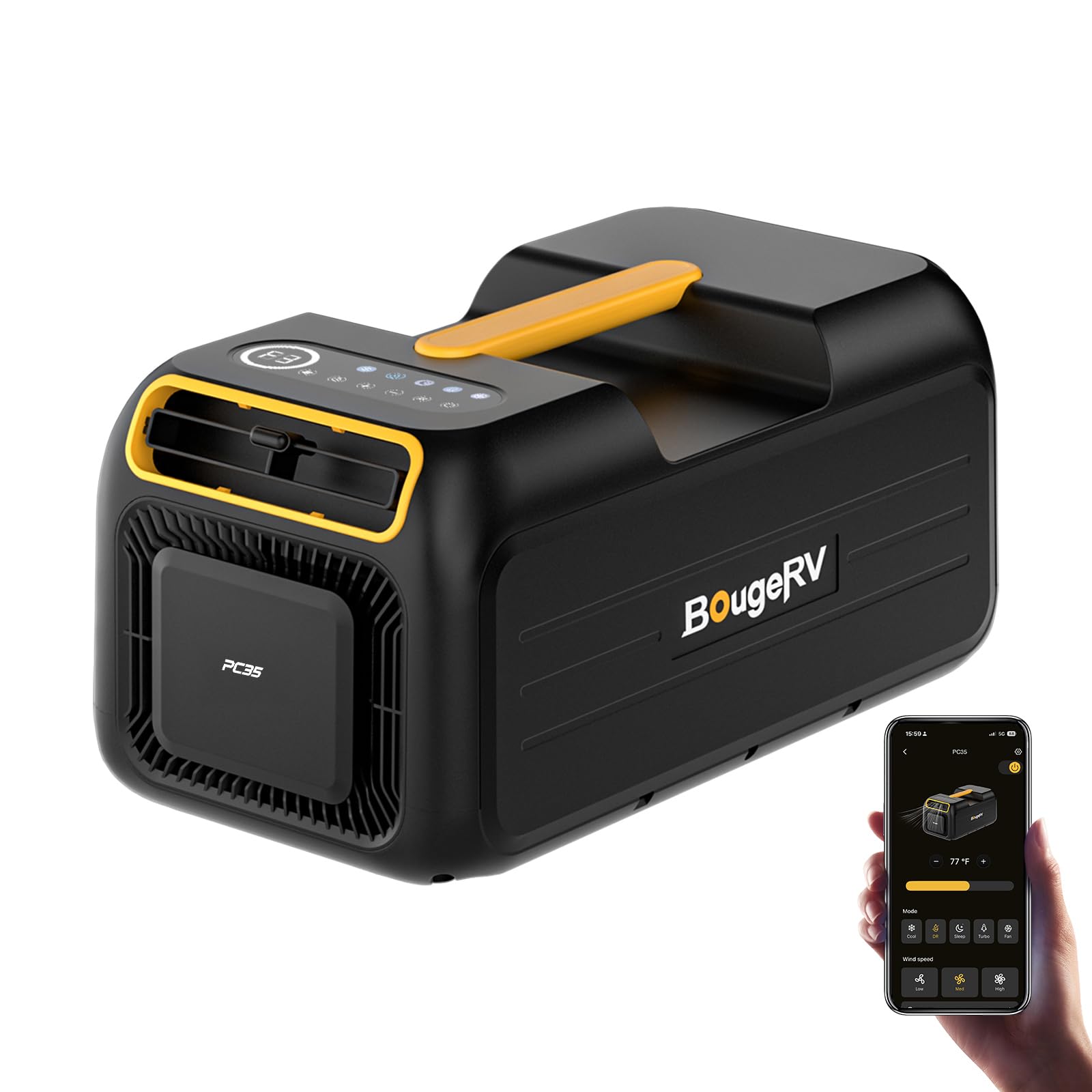
The BougeRV PC35 packs genuine 3500 BTU of compressor-driven cooling into a 34.2-pound package with an ergonomic handle, making it one of the most portable true AC units for tent camping. Its 5-in-1 functionality includes cooling, dehumidifying, fan, high power, and sleep modes, plus a 24-hour timer that lets you schedule pre-cooling before you crawl into the tent. The app control works within a 33-foot range, so you can adjust the temperature from your sleeping bag without fumbling in the dark.
Real-world testing shows a dramatic 18°F temperature drop in 15 minutes on strong mode, which is enough to turn a 95°F tent into a comfortable 77°F space in less time than it takes to set up a cot. The unit covers spaces up to 64.58 square feet, which covers most two-person and small family tents. Customer reviews confirm it pairs reliably with 3,600W solar generators for off-grid use, though some users noted that the 35-pound weight and the need for a power station under make it a pricey but effective glamping tool.
One important caveat from the field: this is not a cheap unit for casual car campers, and the required power source (either shore power or a large battery bank) pushes the total investment higher than the AC alone. The app occasionally bugs during connectivity drops, but a power cycle resolves it quickly. For campers who already own a capable power station, this is the most well-rounded and control-rich tent AC available at this price point.
Why it’s great
- Rapid 18°F drop in 15 minutes on strong mode
- App control with 33-foot range for bedtime adjustments
- 5 modes including dehumidifier and sleep mode
Good to know
- Requires a high-capacity power station to run off-grid
- Fails in extreme ambient heat over 105°F per some reviews
- Venting setup requires a dedicated exhaust port
2. OUTOHOME 5200BTU Portable Tent Air Conditioner
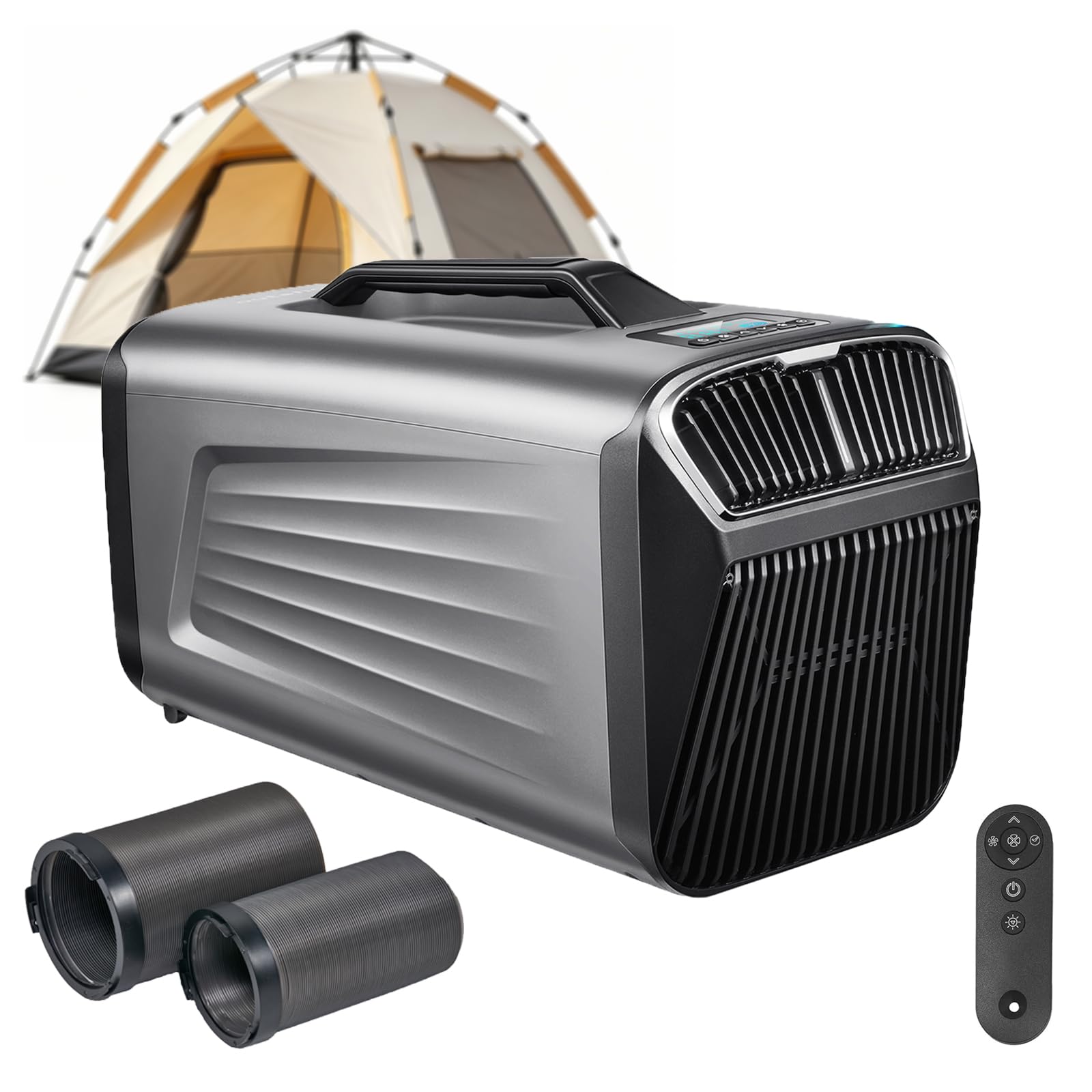
The OUTOHOME 5200BTU unit pushes 5200 British Thermal Units of cooling power with a GMCC high-end compressor, yet consumes under 400 watts per hour — an impressive efficiency ratio that makes it friendly for mid-range power stations. Its compact dimensions (22.4 x 11.2 x 13.8 inches) and 31.9-pound weight make it one of the lighter high-BTU options, and the built-in handle simplifies one-handed carrying between your car and tent. The dark silver metallic finish adds a rugged look that fits outdoor gear aesthetics.
Temperature drop claims of 18°F in just 5 minutes are aggressive, and verified buyers in Georgia summers confirm it makes a serious difference in a tent with proper hot-air exhaust. The 4-in-1 modes (Cool, Dry, Sleep, Fan) cover the essentials, and the sleep mode noise level of 46-50 dB is quiet enough that the fan sound masks typical campground noises without being intrusive. The no-drainage design works in humidity below 70%, which covers most dry-climate camping but may require the included drain pipe in humid coastal areas.
The default Celsius display frustrates some North American buyers, and a small number of units shipped with loose internal components that required returns. Performance is solid when paired with a generator or power station that can handle the 1500W startup surge, but this unit cannot run on small 500W stations without a soft-start modification. For tent campers with at least a 1,000W generator, this AC delivers more cooling per pound than most competitors in its BTU class.
Why it’s great
- 5200 BTU with only 400W running consumption
- Ultra-compact at 31.9 pounds with handle
- No drainage needed in low-humidity conditions
Good to know
- Higher startup surge requires 1500W-capable power source
- Default temperature display in Celsius only
- Some units shipped with internal rattling
3. WISHILO Portable Air Conditioner 3400BTU
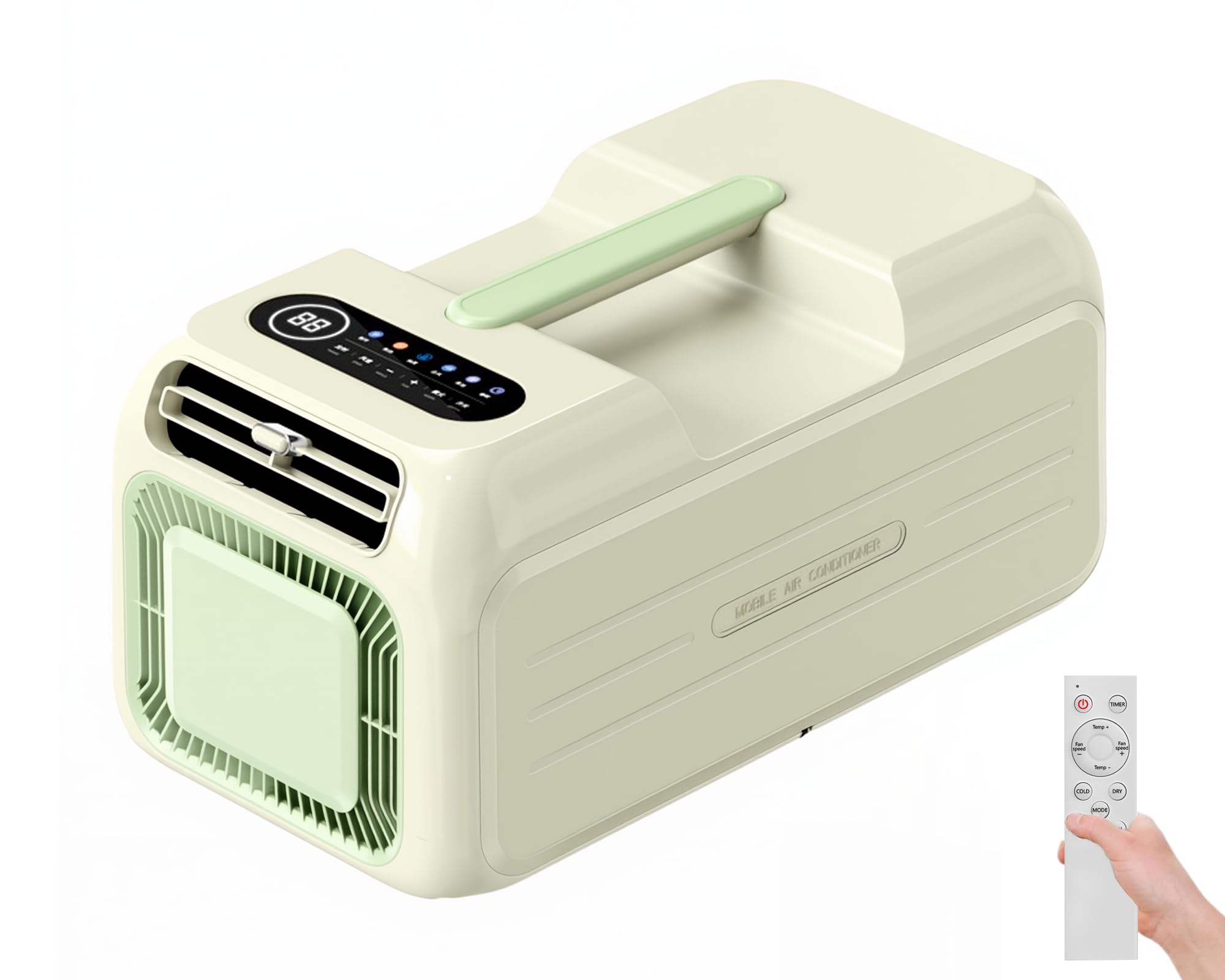
The WISHILO 3400BTU unit stands out for its Panasonic brand compressor and R290 refrigerant, which cuts CO₂ emissions by 4,500 pounds over a decade while cooling effectively. The unit covers 64 to 86 square feet, making it a solid fit for two-person tents and small truck campers. Startup draw hits 1500W for the first few seconds before dropping to a very manageable 400-600W running load, and sleep mode sips only about 400W at 72°F.
The perfusion air duct design pushes cool air up to 10 feet, which is 3-5 times farther than similar mini ACs, ensuring even cooling in rectangular tents where the unit sits at one end. Real owners report it cooled a 100-square-foot room from 80°F to 74°F in under an hour, and a 2-person tent from midday heat to 74°F in about 3 hours. The 45dB sleep mode is genuinely quiet, and the 24-hour timer gives you flexible scheduling for pre-cooling before bedtime.
Some units have developed a faint rattle after extended use, and the hose is rigid, making tight window installations tricky without an aftermarket flexible hose kit. A small number of failures (blowing hot air only) have been reported, though WISHILO’s US-based customer service and 1-year warranty are praised for responsive replacements. For eco-conscious campers who want a reliable Panasonic compressor and low ongoing power draw, this is a compelling mid-range choice.
Why it’s great
- Panasonic compressor with eco-friendly R290 refrigerant
- 10-foot airflow range covers large tents evenly
- Sleep mode at 45dB and 400W draw
Good to know
- Rigid hose may not fit all tent windows without adapters
- Some units developed internal rattle over time
- Maximum 86 sq ft coverage limits use in larger tents
4. OUTOHOME 5100BTU Portable Tent Air Conditioner
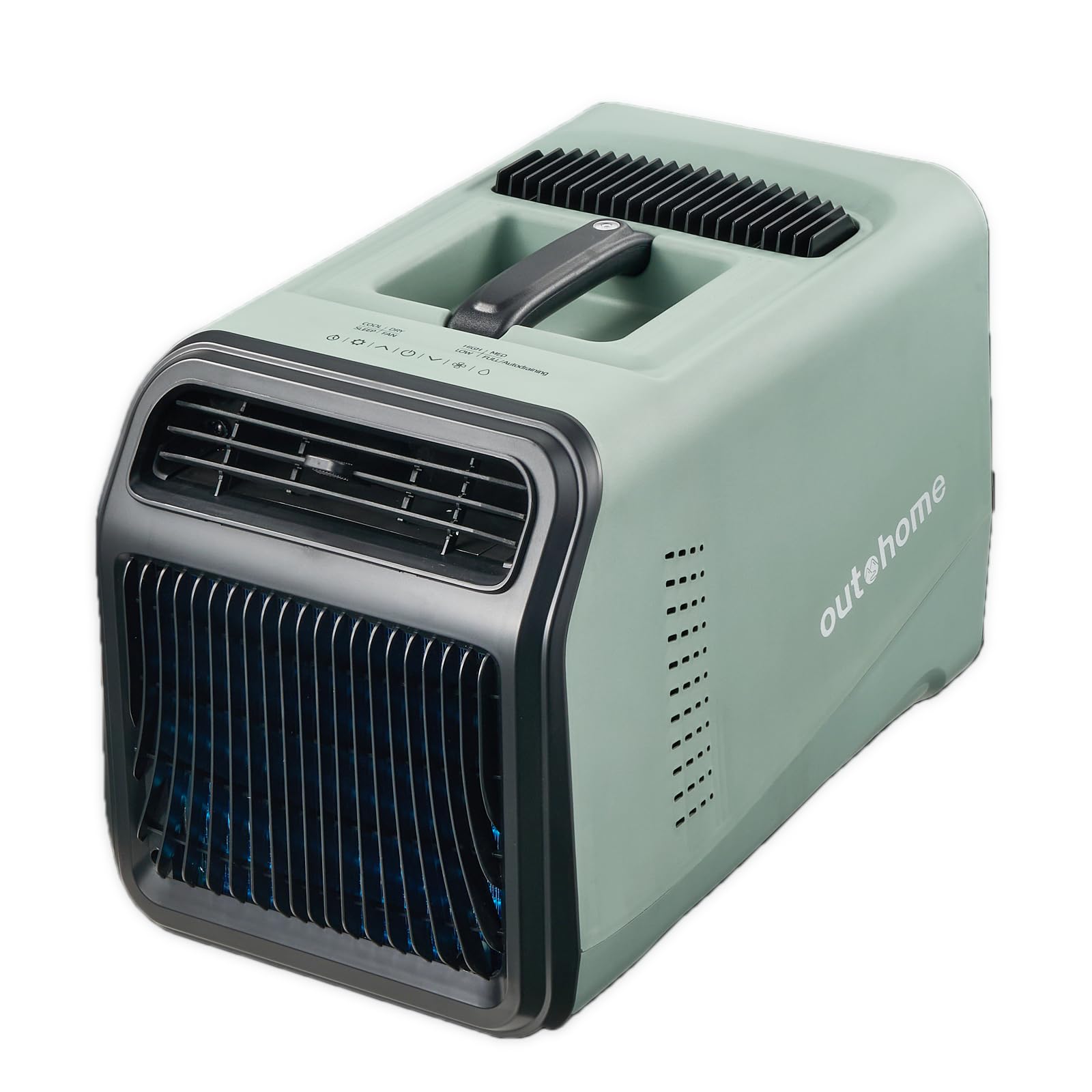
The OUTOHOME 5100BTU variant expands coverage to 200 square feet, making it one of the few portable tent ACs that can handle a large family tent or a small RV bunk area. It boasts a temperature drop of up to 60°F in 1 minute — an aggressive claim that real-world truck campers confirm cools their sleeping area from 80°F to 65°F in under 20 minutes. The unit weighs 35 pounds with a built-in handle, and its dimensions (20.3 x 12.0 x 13.2 inches) fit easily into most car trunks with gear packed around it.
The 4-in-1 functionality covers cooling, dehumidifying, fan, and sleep modes, and the smart auto-evaporation system recycles condensate to boost efficiency, meaning you rarely need to empty a water tank during overnight use. Noise is rated at a very livable 46 dB, and multiple owners confirm it runs quietly enough for undisturbed sleep in a tent or truck cab. The 24-hour programmable timer is genuinely useful for pre-cooling your tent an hour before you plan to turn in.
A significant number of buyers report the handle breaking under normal use, and the unit has a noticeable rattle when running on high fan speed. Power compatibility is also a hurdle — several owners found it would not start on their EcoFlow or 1,800W generators due to a high inrush current, requiring a 2,000W+ generator to get the compressor spinning. For those with adequate power and a tent larger than 100 square feet, this unit delivers unmatched coverage in its price bracket.
Why it’s great
- Covers up to 200 square feet for large tents
- Smart auto-evaporation for drain-free overnight use
- 46dB sleep mode for quiet camping
Good to know
- High inrush current may require 2000W+ generator
- Handle reported to break under normal carrying
- Noticeable rattle on high fan speed
5. BAYKUL Portable Camping Air Conditioner 6800/7500 BTU
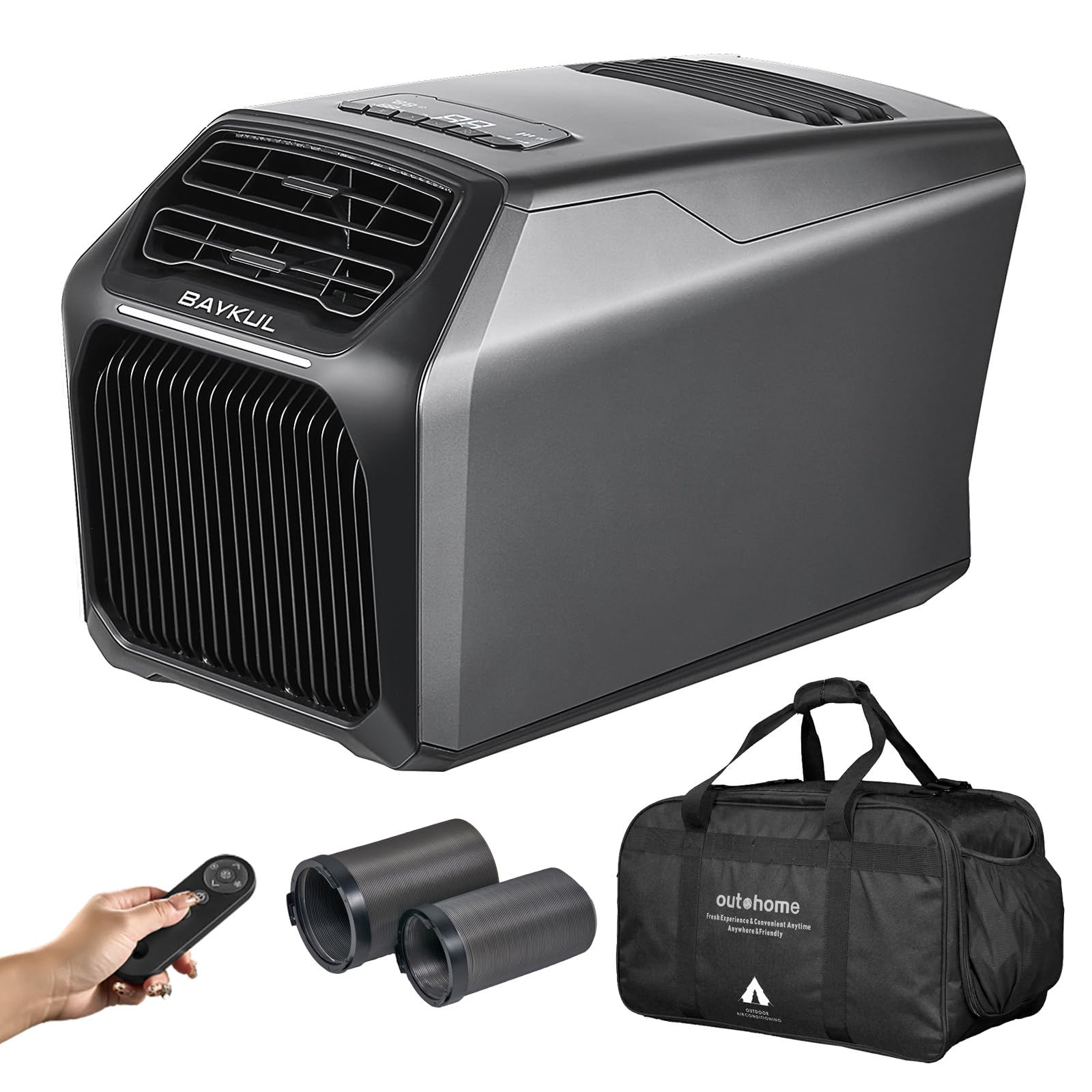
The BAYKUL portable AC is a true year-round solution with 6,800 BTU cooling and 7,500 BTU heating, all in a compact 30-pound package that includes a carry bag for one-handed portability. It uses R-32 refrigerant for better thermodynamic performance in a smaller footprint, and the inverter compressor allows it to run on a 550W generator — a critical advantage for campers with lower-power generators. The 6-in-1 functionality adds heating to the usual cooling/fan/dehumidify/sleep modes, which extends your camping season well into chilly spring and fall nights.
Verified camping owners in Florida confirm it drops the temperature inside a tent by 18°F, bringing a 90°F interior down to a comfortable 72°F within minutes. The RF remote works through walls, so you can keep the AC outside the tent and still control it from your sleeping bag. The included pre-cut window barrier and flexible ducts make setup simpler than many competitors, and the unit’s 46 dB noise level is genuinely quiet enough for light sleepers.
Quality control is a concern — multiple buyers reported loose internal debris that caused loud rattling on startup, and the unit’s display defaults to Celsius with no simple toggle. The included carry bag is functional but not padded heavily enough for rough handling during travel. For campers who need both cooling and heating in one device and already own a 550W+ generator, this unit offers the best BTU-per-dollar value in the dual-function category.
Why it’s great
- 6,800 BTU cooling + 7,500 BTU heating for year-round use
- Runs on a 550W generator via inverter compressor
- RF remote works through walls for external placement
Good to know
- Some units shipped with internal debris causing rattle
- Display defaults to Celsius with no easy toggle
- Carry bag is minimally padded for protection
6. Cybertake S2 Pro Portable Camping Air Conditioner
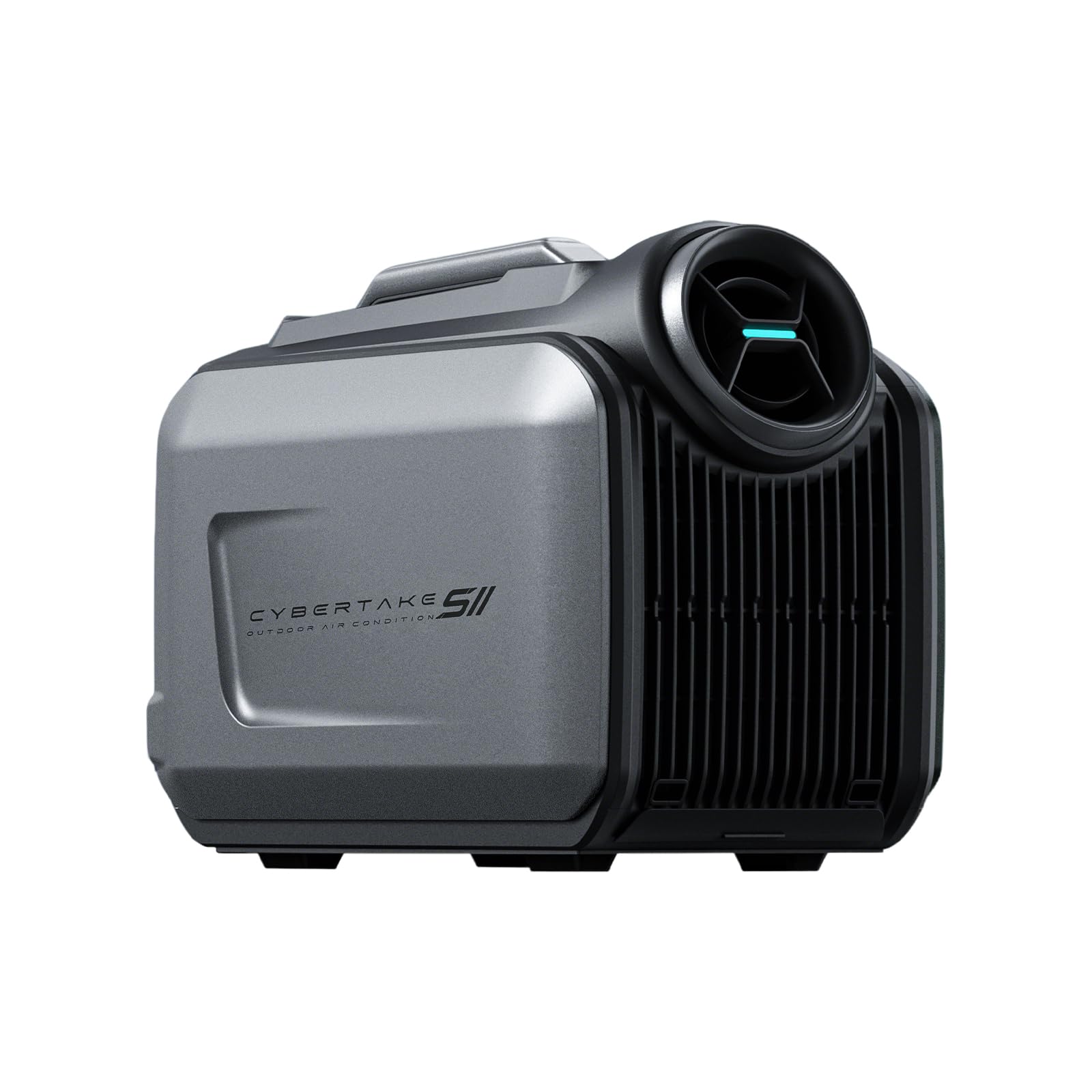
The Cybertake S2 Pro redefines versatility with three-way power input: standard 100-240V AC wall outlet, 12V/24V vehicle system, and direct 48V DC from a portable power station. This flexibility means you can run it off your car’s alternator while driving, switch to a battery bank at camp, or plug into campground shore power without any adapters. At just 21 pounds, it’s significantly lighter than most compressor units, and the IPX4 water-resistant shell handles splashes and rain without worry.
The 5,100 BTU cooling and 6,100 BTU heating cover spaces up to 130 square feet, and the Eco+ mode draws as little as 1 kWh per 8 hours — roughly 125W average, which is extraordinary for a compressor-based unit. Real users confirm it heated a freezing tent in just 15 minutes during cold-weather camping in Sedona, and the 40 dB whisper-quiet operation makes it one of the least intrusive units for sleep. The Bluetooth app control lets you adjust settings from inside your sleeping bag, and the 0-12 hour timer adds precision scheduling.
One important catch: the 12V/24V input requires a separate boost converter that is not included in the box, despite the product description mentioning compatibility. Some buyers found this misleading and had to order extra parts. The optional remote uses AAA batteries and is priced high for what it is. For campers willing to invest in the proper cabling and power ecosystem, this is the lightest and most power-flexible true compressor AC on the market.
Why it’s great
- Three-way power input (AC, 12-24V DC, 48V DC)
- Ultra-light at 21 pounds with IPX4 water resistance
- Eco+ mode uses only 1kWh per 8 hours
Good to know
- 12V/24V input requires a separate boost converter
- Optional remote is expensive and uses AAA batteries
- Dual-duct setup requires careful external placement
7. Outequip RV Air Conditioner 12V 10000 BTU Rooftop
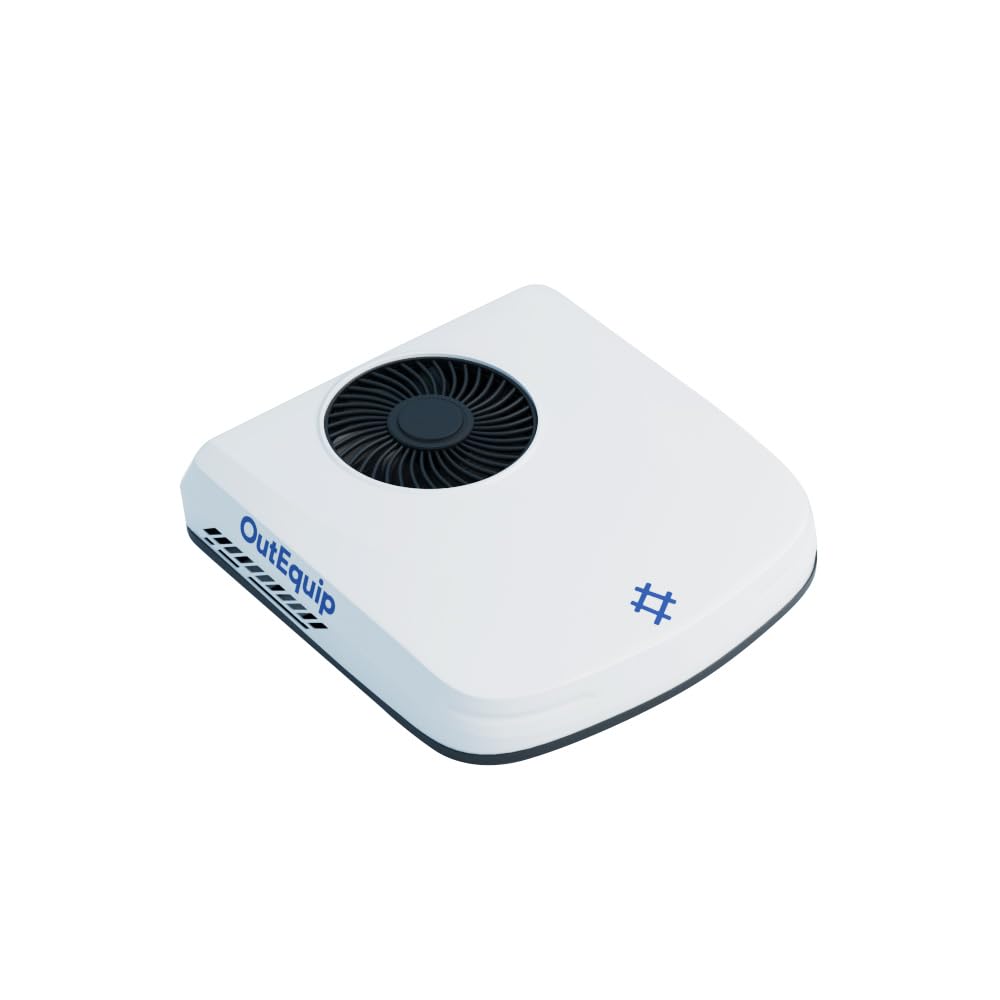
The Outequip 12V rooftop AC delivers a massive 10,000 BTU of cooling power from your vehicle’s existing battery system, eliminating the need for a separate generator or power station. Designed for RVs, vans, campers, and even tractor cabs, it runs off 12V DC with a brushless copper motor that keeps noise low at 54dB while moving serious airflow. The variable-speed inverter compressor draws about 55A on high and drops to 20A on ECO mode, giving you 6-7 hours of runtime on a 360Ah battery bank.
Verified installers in Class B RVs and VW buses confirm it drops temperatures from 89°F to 79°F in about 25 minutes, and in 105°F Phoenix heat, it held 80°F inside using only 21A on the inverter compressor. The included remote control and multiple modes (turbo, eco, sleep) give you fine-grained control, and the UV-stabilized ABS construction with EPDM foam gasket handles harsh weather exposure. At just 45 pounds, it’s significantly lighter than traditional RV rooftop units.
Installation is not plug-and-play — proper sealing against water ingress is critical, and the included gasket and bolt torque instructions could be clearer. The 12V wiring must be sized correctly (at least 4 AWG for longer runs) to avoid voltage drop that trips the compressor. This is a permanent installation choice for van and RV owners, not a drop-in tent solution. For those with a compatible vehicle roof, this unit offers the highest BTU capacity and most efficient off-grid battery operation in this guide.
Why it’s great
- 10,000 BTU of cooling from 12V battery system
- Variable inverter compressor draws only 20A on ECO
- Lightweight 45-pound rooftop design
Good to know
- Permanent installation requires careful sealing against rain
- Wiring must be sized correctly to avoid voltage drop
- Instruction manual lacks clear torque specs for bolts
8. EF ECOFLOW WAVE 3 Portable Air Conditioner

The EF ECOFLOW WAVE 3 is the most premium cordless tent AC available, integrating a 1,024Wh LiFePO₄ battery directly into the unit for up to 8 hours of operation without any external power source. It delivers 6,100 BTU of cooling and 6,800 BTU of heating, with a 1,800W cooling output that drops temperatures by 15°F in just 15 minutes. The 1,000W fast charging fills the battery in 75 minutes via AC, car, or solar input, making it practical for overnight use with daytime recharging.
The compact 20-inch luggage-style form factor with an ergonomic handle makes it the most portable high-output AC in this guide, fitting in SUVs and overlanding rigs without dedicated storage space. The sleep mode at 44dB is genuinely whisper-quiet, and the PetCare feature auto-activates cooling if cabin temperature rises, protecting pets left in vehicles. The app provides real-time power monitoring, temperature control, and water/overheat alerts, giving you complete visibility into runtime and battery status.
At with the add-on battery, this is the most expensive unit here, and some buyers found the battery runtime in real-world hot conditions fell short of the 8-hour claim — closer to 2-4 hours in insulated trailers when running full cooling. The unit is heavy (32 pounds with battery) and the cord wrap design is clunky. For overlanders who already use the EcoFlow ecosystem and prioritize zero-cable tent cooling above all else, the WAVE 3 is unmatched, but it demands a premium budget that not every camper will justify.
Why it’s great
- Integrated 1,024Wh battery for 8 hours cordless operation
- Fast 75-minute recharge time via AC or solar
- 44dB sleep mode and PetCare auto-protection
Good to know
- Real-world battery life in hot conditions is shorter than claimed
- Heavy at 32 pounds despite compact size
- Most expensive option by a wide margin
9. Laluztop 3-in-1 Evaporative Cooling Fan
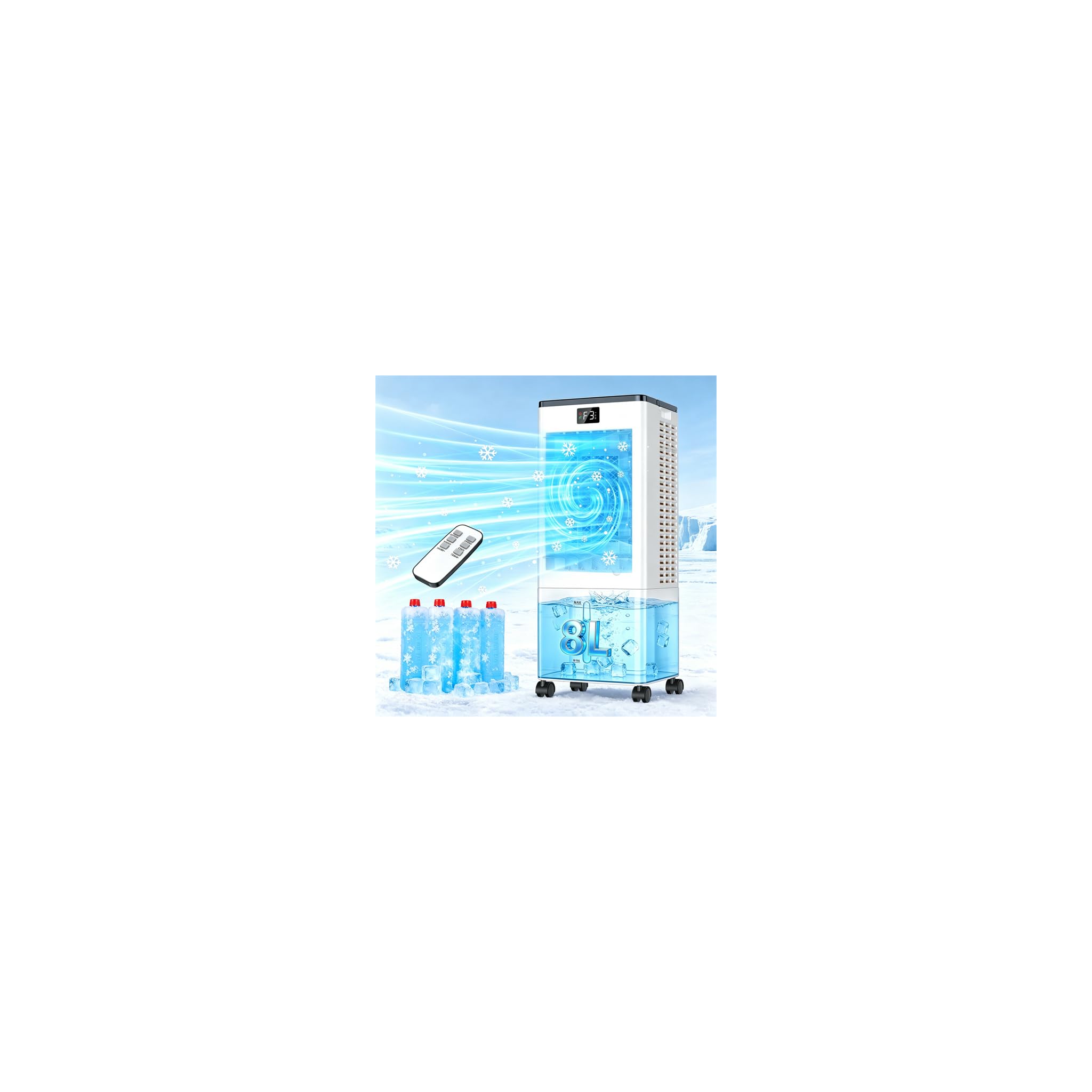
The Laluztop 3-in-1 evaporative cooler is a fundamentally different animal from the compressor-based units above — it uses water evaporation rather than refrigerant to lower temperatures. The 8-liter tank provides up to 16 hours of runtime on low speed, and the 60W motor draws less power than a lightbulb, making it compatible with even the smallest power stations and USB battery packs. The 120° oscillation (60° auto left/right, 120° manual up/down) distributes airflow across the entire tent, and the three fan speeds plus water-cooling mode give you flexibility for different conditions.
This unit works best in dry climates with humidity below 40%, where evaporative cooling can drop ambient temperatures by 10-15°F. Add ice packs to the tank for a noticeable boost in cooling effect, though the humidity increase inside the tent will be noticeable. The top-fill water tank design avoids bending over, and the 360-degree wheels make it easy to roll around a campsite. At 29 inches tall and 15 inches wide, it takes up floor space but offers a commanding airflow column.
Evaporative coolers do not work in humid environments and will actually make the air feel more oppressive if relative humidity is above 60%. The unit is also not a sealed system — water leakage from the top cover has been reported when the tank is full and moved aggressively. For car campers in the arid West who want a cheap, low-power cooling solution that won’t drain their battery, this is a functional choice, but it is not a substitute for a real compressor AC in muggy conditions.
Why it’s great
- Ultra-low 60W power draw works with any power source
- 16-hour runtime on a single 8L water fill
- 120° oscillation covers entire tent space
Good to know
- Ineffective in humid climates above 60% relative humidity
- Water leakage possible from top cover when moved
- Not a true air conditioner — cooling effect is limited
FAQ
What size tent AC do I need for a 4-person tent?
Can I run a tent AC off a Jackery or EcoFlow power station?
What is the difference between evaporative cooling and compressor AC for a tent?
Final Thoughts: The Verdict
For most campers, the best ac for tent winner is the BougeRV PC35 because it combines genuine 3,500 BTU cooling power with app control and a manageable 34-pound weight, all at a mid-range price that balances performance with value. If you need maximum coverage for a large family tent, grab the OUTOHOME 5,100 BTU. And for true cordless freedom without generator noise, nothing beats the EF ECOFLOW WAVE 3.