
Chopping an onion without holding it, spreading butter on toast with one hand, or peeling a carrot without a second hand to brace it—these daily kitchen battles define the core problem adaptive cutting boards solve. Standard boards offer no stability when one hand is unavailable, turning a simple task into a frustrating, and sometimes dangerous, balancing act.
I’m Min — the co-founder and writer behind Gadgets Feed. I’ve spent countless hours analyzing customer feedback, material science data, and real-world user reports on kitchen accessibility tools to separate the genuinely helpful adaptive boards from the ones that miss the mark entirely.
This guide breaks down the features that matter for safe, independent food preparation, helping you identify the best adaptive cutting boards for your specific mobility needs and kitchen habits.
How To Choose The Best Adaptive Cutting Boards
Selecting the right adaptive cutting board hinges on understanding how each board secures food and stabilizes itself. Your choice will come down to three primary design elements: the food-gripping mechanism, the board’s anti-slip system, and the overall footprint that fits your counter space and typical food prep volume.
Food Gripping Mechanisms: Spikes, Jaws, and Fences
The most critical feature is how the board holds your food in place. Stainless steel spikes (ranging from 2 to 10 prongs) allow you to pierce and secure items like potatoes, onions, or apples for one-handed peeling or slicing. Some premium boards use adjustable jaws or clamps that can hold bowls, cans, or graters, offering broader functionality beyond just cutting. A raised rear fence prevents food from sliding backward and also acts as a scooping wall or a carrying handle.
Stability and Non-Slip Design
A board that moves on the counter is not just frustrating—it’s dangerous. Most adaptive boards rely on rubber suction cups on the base to grip smooth surfaces like granite or quartz. Cheap or worn suction cups lose hold over time, so look for boards with multiple feet or high-quality silicone cups. Some models combine suction cups with friction feet for added security on tile or textured countertops.
Material, Weight, and Care
Board material affects knife feel, hygiene, and maintenance. High-density polyethylene (HDPE) plastic boards are lightweight, dishwasher-safe, and gentle on knives. Wooden boards, particularly acacia or bamboo, offer a heavier, premium feel that stays planted but require hand washing and regular oiling to prevent cracking. Consider how much weight you can safely lift and whether the board needs to be dishwasher-friendly for your daily routine.
Quick Comparison
On smaller screens, swipe sideways to see the full table.
| Model | Category | Best For | Key Spec | Amazon |
|---|---|---|---|---|
| Etac Fix Preparation Board | Premium | Versatile one-hand prep with adjustable jaws | 2.2 lbs with adjustable clamp system | Amazon |
| SENDAR Adaptive One Handed Board | Premium | Durable wood with multi-spike security | 3.7 lbs, 10 stainless steel spikes | Amazon |
| San Jamar Saf-T-Grip Cutting Board | Mid-Range | General stability with commercial-grade build | 18″ x 12″ x 0.5″ co-polymer blend | Amazon |
| Fanwer Adaptive One-Handed Board | Mid-Range | Bamboo board with bread stops and grater | 6.2 lbs bamboo with built-in grater | Amazon |
| Sammons Preston Hi-D Paring Board | Premium | Classic paring board with strong suction cups | 11″ square, HDPE, 4 suction feet | Amazon |
| AliMed Single Handed Cutting Board | Premium | Compact board for sandwiches and light prep | 8″ x 8.6″, two spikes with suction base | Amazon |
| Adaptive Cutting Board (Large) | Premium | Large plastic board with food guards | 13″ x 12″, 2.25 lbs, 4 suction feet | Amazon |
In‑Depth Reviews
1. Etac Fix Preparation Board
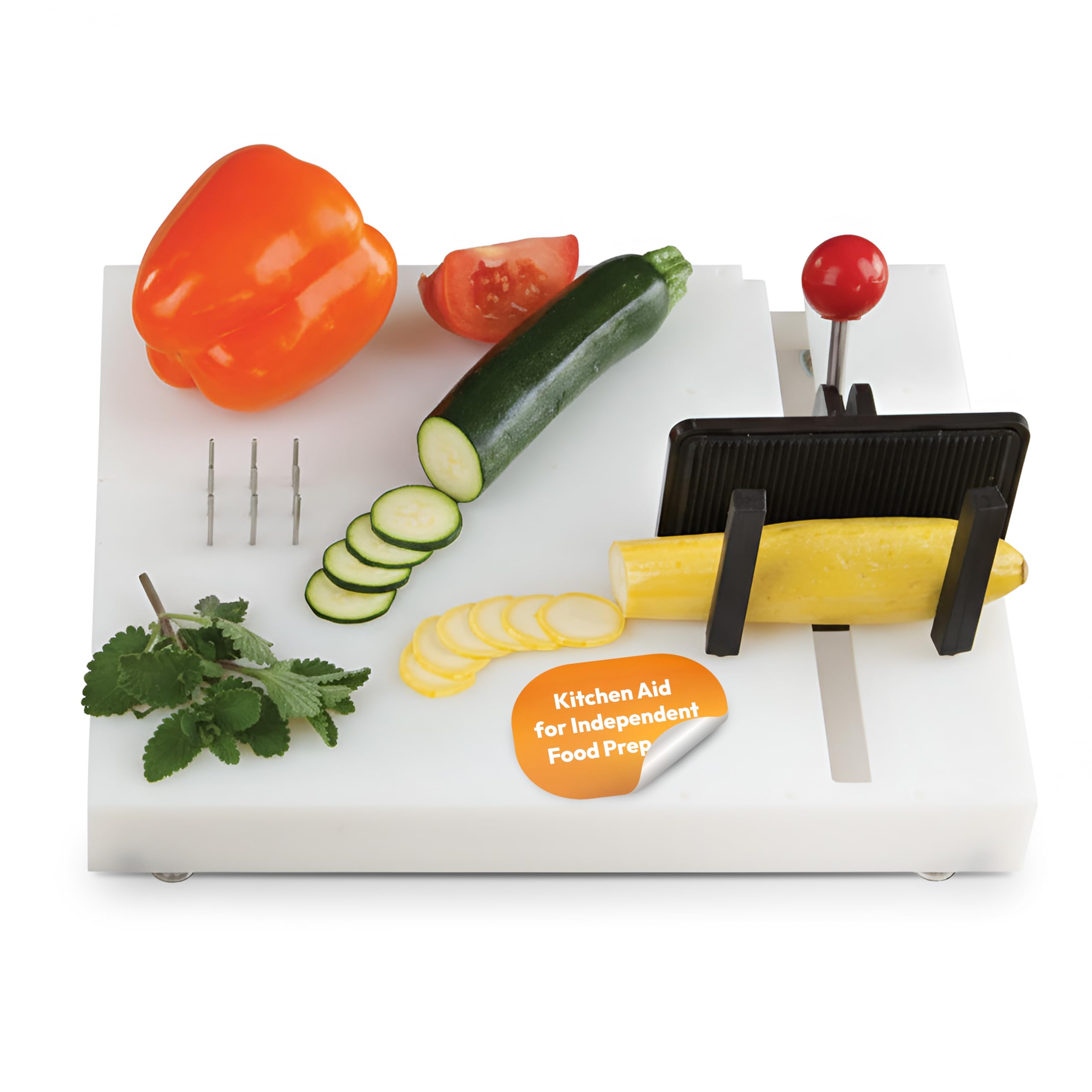
The Etac Fix stands apart from every other board in this list thanks to its adjustable jaws that can clamp onto bowls, cans, jars, and graters, not just hold a single piece of produce. This transforms it from a simple cutting surface into a full one-handed food preparation station. Its stainless steel spikes and adjustable pegs work together to secure oddly shaped items like bagels or bell peppers without slippage.
Weighing only 2.2 pounds, it is light enough to move around the kitchen yet stable due to its strong suction cups and friction feet combination. Users recovering from strokes or living with permanent hand mobility limitations consistently report this board enables tasks they had abandoned, such as opening jars or grating cheese independently. The removable spike plate also provides a flat surface when you don’t need the prongs.
This is a premium-priced board built for durability and broad functionality. While the initial investment is higher than simpler spike-only boards, the ability to clamp mixing bowls and hold graters eliminates the need for multiple accessories. It is dishwasher-safe, though the spike plate and jaws require some practice to assemble initially.
Why it’s great
- Unique adjustable jaw system holds bowls, cans, and graters securely
- Strong suction cups and friction feet prevent slipping on all counter surfaces
- Multifunctional design allows cutting, grating, peeling, and mixing with one hand
Good to know
- Initial setup of the clamp and spike plate has a learning curve
- Premium price point compared to simpler spike-only boards
2. SENDAR Adaptive One Handed Cutting Board With 10 Spikes

SENDAR’s board addresses the primary frustration of wood adaptive boards—instability—by using a heavy 3.7-pound acacia hardwood slab paired with non-slip silicone feet. The weight alone helps it stay planted, but the ten food-grade stainless steel spikes are what truly set it apart, offering the highest spike count in this roundup. This density lets you secure everything from long carrots to small mushrooms without repositioning.
Its raised rear fence doubles as a carry handle and prevents food from spilling off the back during aggressive cutting. The beveled front edge makes it easy to slide chopped ingredients directly into a pan or bowl with one hand. Finger recesses underneath add an extra level of ergonomic thought, making it easy to lift and maneuver for cleaning or storage.
This board requires hand washing and periodic oiling to maintain the wood, which is a consideration if you prefer dishwasher convenience. The acacia wood is dense and will show cut marks over time, but it is significantly gentler on knife edges than plastic alternatives. It is an excellent choice for those who want a natural material that feels substantial and doesn’t slide.
Why it’s great
- Ten stainless steel spikes hold a wide variety of produce securely
- Heavy acacia wood construction provides excellent counter stability
- Beveled edges and rear fence make one-handed food transfer easy
Good to know
- Hand wash only and requires mineral oil seasoning to prevent drying
- Wood surface will show knife cut marks over time
3. Fanwer Adaptive One-Handed Cutting Board

Fanwer integrates a unique set of accessories directly into the board, including bread stops that hold bagels or bread in place for one-handed spreading and a removable grater attachment for shredding cheese or vegetables. At 6.2 pounds, this bamboo board is the heaviest in the lineup, which translates to maximum counter stability but limited portability. The weight ensures it won’t budge even during vigorous one-handed grating.
The board’s design specifically targets peeling and spreading tasks as much as cutting. The raised spikes allow you to anchor a potato or apple while a peeler works down the side without chasing the food around the counter. A rear stop wall keeps ingredients contained, and the large surface area (approximately 16 inches wide) accommodates bigger items like a whole loaf of bread or a large head of lettuce.
Be aware that Fanwer ships the board completely raw bamboo, which requires an initial mineral oil treatment before first use to prevent cracking and staining. The mandolin blade accessory has been noted as difficult to remove for cleaning with one hand. This board is best for users who prioritize a large, stable platform and the included grater attachment over pure cu
Why it’s great
- Heavy 6.2 lb bamboo construction stays firmly in place
- Built-in bread stops and grater add versatility beyond cutting
- Large board surface accommodates bigger food items easily
Good to know
- Requires initial oil seasoning as it ships raw
- Removable grater and blade pieces can be tricky to handle with one hand
4. San Jamar Saf-T-Grip Plastic Cutting Board
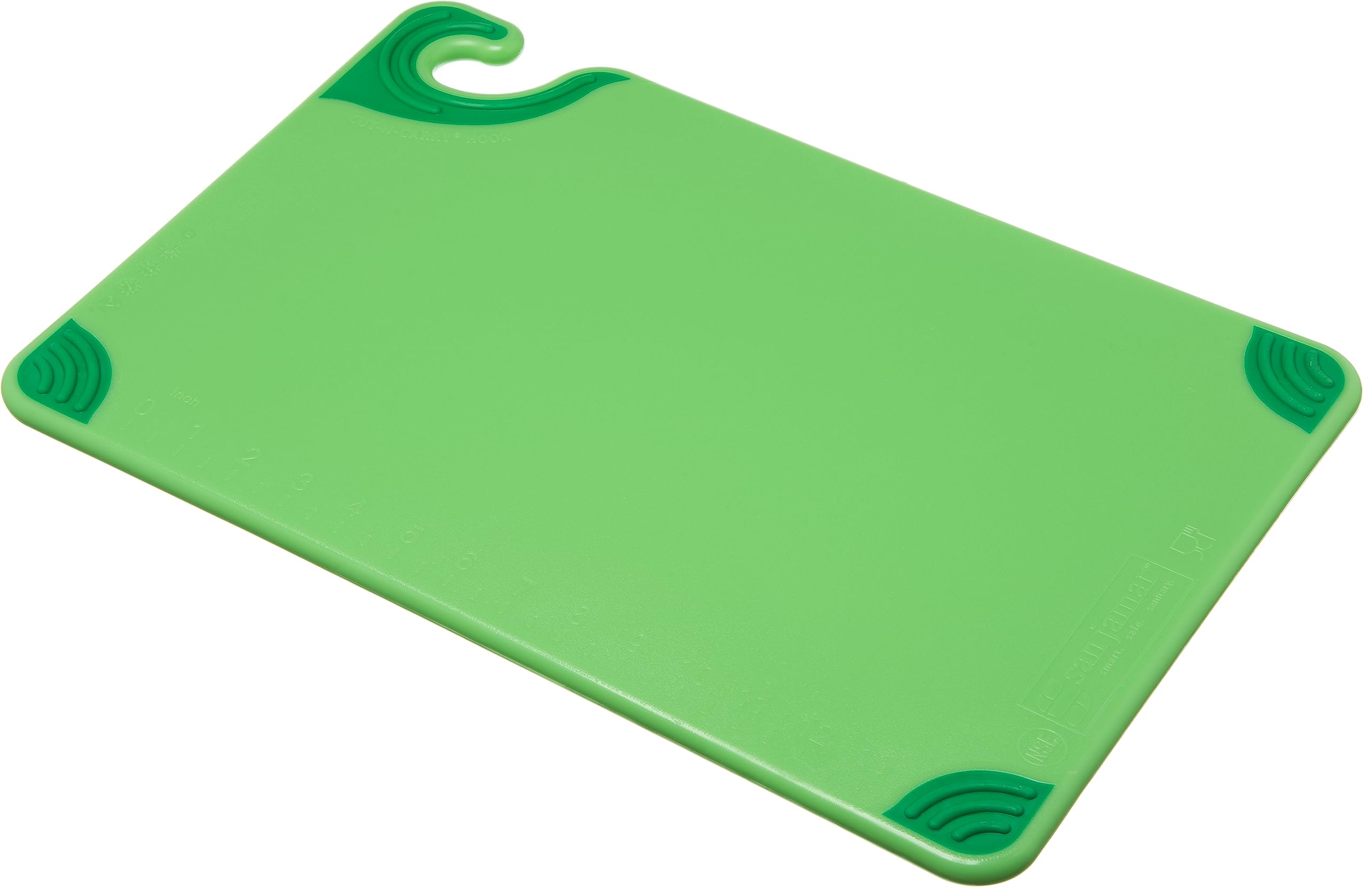
While San Jamar’s board does not feature the specialized spikes or jaws of dedicated adaptive boards, its anti-slip grip corners and substantial 0.5-inch thickness make it one of the most stable plastic cutting boards available for users who need a non-moving surface. The board’s co-polymer blend is engineered to resist warping and minimize knife dulling, which is a real concern with harder plastic boards. At 12 by 18 inches, it offers generous workspace.
The food safety hook allows for hanging storage, keeping it off the counter when not in use, and its dishwasher-safe nature is a practical advantage for hygiene-sensitive users. Customer feedback consistently highlights that the board “doesn’t move” on tile and granite surfaces, addressing the primary pain point of standard boards. The green color also helps with kitchen organization if you use the color-coded system for different food types.
This board lacks the food-holding features that define adaptive boards, so it is best suited for users who need a stable, non-slip surface but can still use two hands or do not require food-piercing prongs. It is a commercial-grade choice for general prep where stability is the only requirement.
Why it’s great
- Excellent anti-slip grip corners keep the board stable on all surfaces
- 0.5-inch thick co-polymer resists warping and is kind to knife edges
- Dishwasher safe for easy, hygienic cleaning
Good to know
- No spikes, jaws, or adaptive features for holding food in place
- Plastic surface will show cut marks over time
5. Sammons Preston Hi-D Paring Board
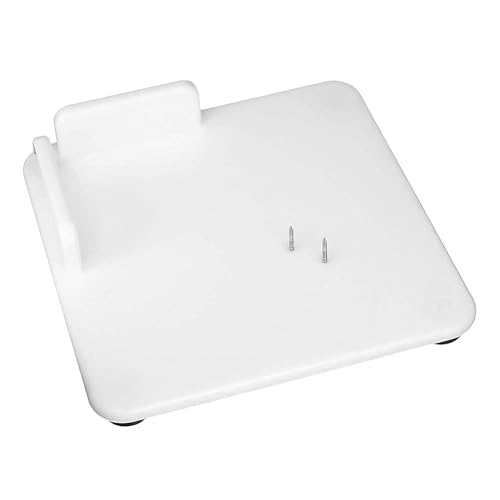
The Sammons Preston Hi-D Paring Board is the classic, long-standing design that many occupational therapists recommend for one-handed cutting. It features four robust suction cups on the bottom that create a strong vacuum seal on smooth countertops, preventing any lateral movement. The aluminum nails pierce and hold food while the corner guards stabilize bread or large items during cutting and spreading.
At 11 inches square, the board is compact enough to fit in small kitchens or to be easily stored in a drawer. The high-density polyethylene material is dishwasher safe and does not absorb food odors or stains. Users recovering from strokes or hand fractures consistently report that this board restored their ability to prepare simple meals independently due to its intuitive, no-fuss design.
The board’s small size can be limiting if you regularly prep large quantities of food—a single onion or potato fits well, but a large squash or whole head of cabbage will be cramped. The sharp aluminum prongs are visible and require careful handling during cleaning. It is a focused, purpose-built tool for paring tasks rather than full meal prep.
Why it’s great
- Four strong suction cups provide exceptional countertop adhesion
- Dishwasher-safe HDPE material is easy to clean and maintain
- Simple, time-tested design trusted by occupational therapists
Good to know
- Compact 11-inch size is limiting for larger food items
- Sharp prongs require caution during cleaning and storage
6. AliMed Single Handed Cutting Board
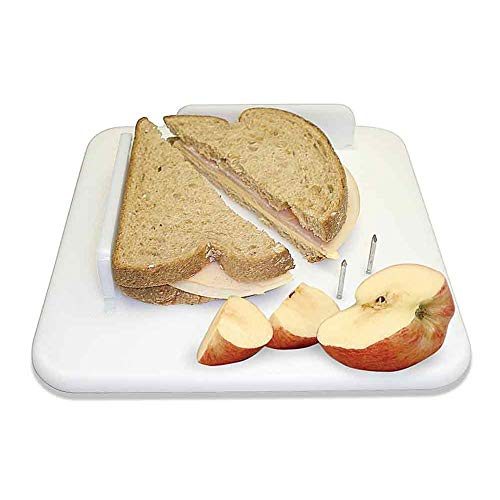
AliMed’s Single Handed Cutting Board was one of the original adaptive kitchen aids and remains a viable option for those who need a very simple, no-frills solution. The board uses two metal spikes to hold food steady and two raised corner pieces that work as bread stops, making it easy to spread toppings on bagels or bread without the item sliding away. The suction cup base holds the board firmly on the counter.
Its small size—8 by 8.6 inches—makes it ideal for quick tasks like making a sandwich, slicing an apple, or peeling a single vegetable. The compact footprint is a benefit for limited counter space or for taking the board to a table or bedside. Users who have used this board for years report that the suction cup can degrade over time (roughly 7 years of use), but the board itself withstands daily abuse.
The size is also its primary limitation. This board is not suitable for chopping large quantities or handling whole heads of lettuce or large butternut squash. Some users find the suction cup base awkward to release after use. It is a good entry-level or travel-sized adaptive board for those with modest kitchen needs.
Why it’s great
- Ultra-compact design fits in small kitchens or for travel
- Raised corner pieces and spikes provide dual food stabilization
- Long-standing, proven design with consistent user satisfaction
Good to know
- Small work area limits prep to single servings or small items
- Suction cup may weaken after several years of use
7. Adaptive Cutting Board (Large)
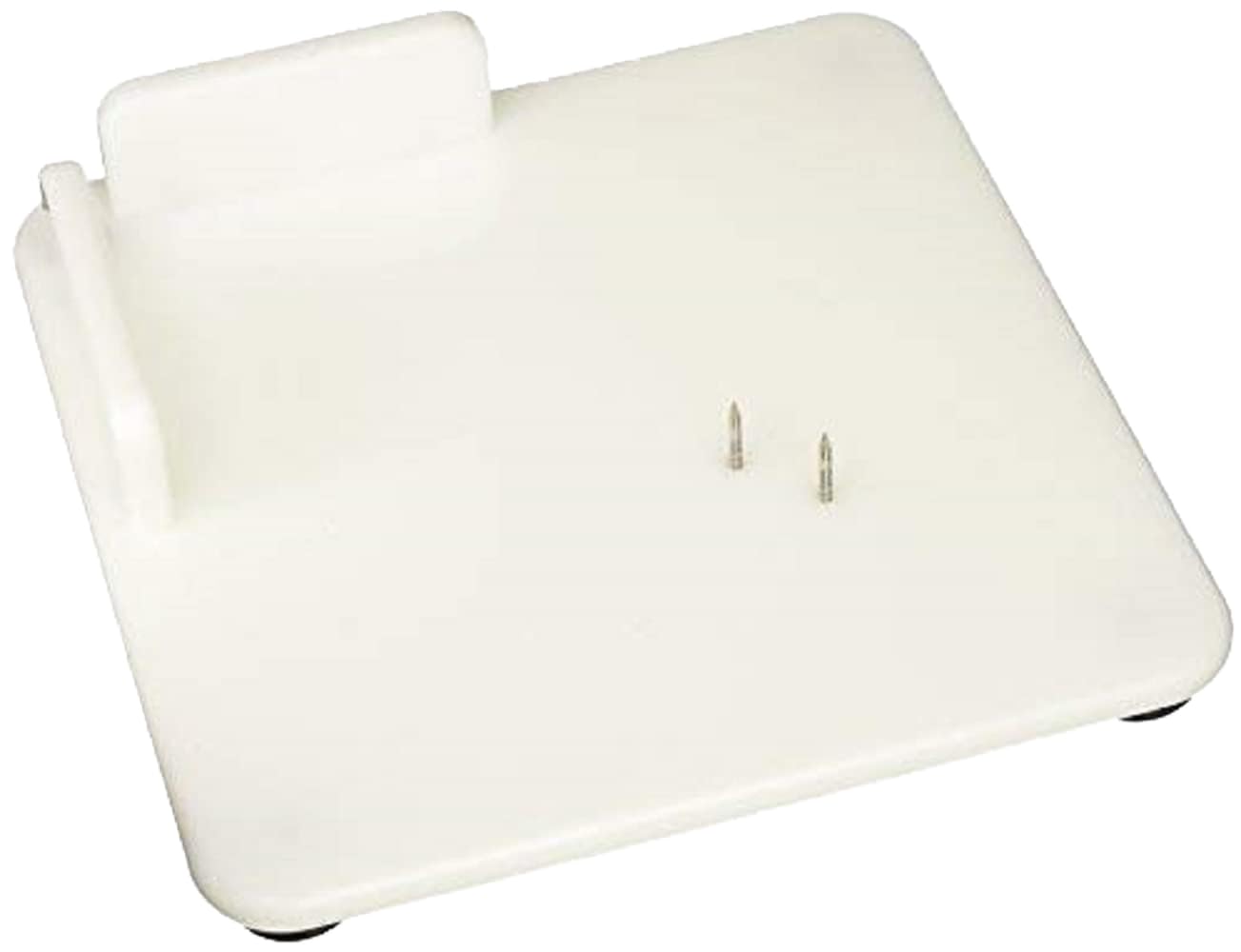
This large adaptive cutting board from an unspecified medical brand focuses on two things: surface area and vacuum stability. At 13 by 12 inches, it is noticeably larger than the Sammons Preston board, providing room for bigger meal prep tasks. The four rubber suction feet anchor the board securely, while the raised food guards at the edges prevent chopped items from rolling off the sides.
The board’s prongs are effective at holding items like potatoes, zucchini, and apples for one-handed cutting. Its lightweight nature (2.25 pounds) makes it easier to lift and reposition than the heavy wood boards, though some users have noted that the suction cups can lose their grip over time and need replacement. The dishwasher-safe plastic is a strong convenience factor for daily hygiene.
Compared to the Etac or Sammons Preston boards, the suction cup quality is slightly less robust, but the larger work surface is a genuine advantage for those who need more space. It is a practical choice for users who want a bigger board than the standard paring model but do not require the advanced jaw system of the Etac.
Why it’s great
- Larger 13 x 12 inch surface provides more workspace than comparable boards
- Four suction feet and food guards offer stability and spill prevention
- Dishwasher-safe plastic is easy to clean after every use
Good to know
- Suction cups may need replacement over time for optimal grip
- Lighter weight means it can shift if suction is lost on slick counters
FAQ
Can I use an adaptive cutting board if I have full use of both hands?
How do I clean bamboo adaptive cutting boards safely?
Are plastic adaptive cutting boards better for knife edges than wood?
Final Thoughts: The Verdict
For most users, the adaptive cutting boards winner is the Etac Fix Preparation Board because its adjustable jaws and combined spike system handle the widest range of kitchen tasks from cutting to grating to mixing bowls securely. If you want the natural feel and weight of wood with excellent spike coverage, grab the SENDAR Adaptive One Handed Cutting Board. And for a simple, time-tested paring board that occupational therapists have trusted for years, nothing beats the Sammons Preston Hi-D Paring Board.