
Our readers keep the lights on and my morning glass full of iced black tea. As an Amazon Associate, I earn from qualifying purchases.
Specs are compiled from manufacturer listings and verified buyer reviews and can change over time — please confirm the key details on the product page before buying.
Choosing the right adult life vest means picking between two totally different worlds: the reliable, foam-filled vest you can toss on in seconds and the sleek, self-inflating jacket that disappears until you hit the water. Each style serves a different kind of day on the water, and picking the wrong one can leave you too hot to enjoy the trip or too exposed if an emergency catches you off guard.
I’m Min — the founder and writer behind Gadgets Feed. This guide is built by comparing the manufacturers’ published specifications and the patterns across verified customer reviews, so you get each pick’s real strengths and trade-offs instead of marketing spin.
if you need a foam vest for maximum visibility during high-speed sports or a low-profile inflatable (a vest that stays flat until it hits water and fills with air) for hours on a kayak, these five picks cover what truly matters when you buy an adult life vest that fits your body and your activity.
Quick Picks
- BLUESTORM Stratus 35 Inflatable Life Jacket PFD for Adults — Best Overall
- O’Brien Men’s Traditional Neoprene USCGA Life Jacket — Premium Pick
- Body Glove PFD Life Vest — Best for Big Sizes
- Connelly Womens Nylon Vest — Best for Women
- Life Jacket Paddle Vest (Hardcore Water Sports) — Budget Champion
How To Choose The Best Adult Life Vest
The right vest balances three things: how much buoyancy (the upward lift force) you need, whether you can stand wearing it for hours, and whether the buckles and straps actually fit your body. Here’s how to break it down.
Foam vs. Inflatable: The Core Trade-Off
Foam vests (Type III, a US Coast Guard rating for active water sports) offer instant, no-fuss flotation — you put it on and you’re protected without any deployment step. They are bulkier by nature and get hot in summer sun. Inflatable vests (Type II or Type III depending on design) are far more compact and breathable but require a CO2 cartridge (a small canister of compressed gas) to be installed and will only inflate on water immersion or a manual ripcord pull (a cord you yank to start inflation). For calm-water paddling and fishing, an inflatable is comfortable. For rapid-water sports or high-impact activities, foam is more reliable.
Fit and Sizing: Ignore the Tag, Measure Your Chest
Most vests use chest circumference as the primary sizing metric. The listed size (like “large”) varies wildly between brands — one reviewer found a “large” vest from O’Brien fit like a medium and needed an exchange to extra-large. Always measure your chest under your arms at the widest point and compare it to the manufacturer’s chart. Look for vests with at least three adjustable straps or belts so you can dial in a snug fit that doesn’t ride up.
Buoyancy: What the Rating Actually Means
A Type III foam vest typically provides 15.5 to 22 pounds of buoyancy, enough to keep most adults afloat with their head above water. A Type III inflatable like the BLUESTORM Stratus 35 provides 35 pounds of buoyancy, versus 15.5 pounds for the Type III minimum referenced here. Higher buoyancy means faster, more assured flotation for larger bodies or rough water, but the inflatable needs to deploy correctly to work.
Quick Comparison
On smaller screens, swipe sideways to see the full table.
| Model | Best For | Type | Weight | Buoyancy | Amazon |
|---|---|---|---|---|---|
| BLUESTORM Stratus 35 | All-day comfort & compact storage | Inflatable Type III | Ultra-lightweight (not individually specified) | 35 lbs | Amazon |
| O’Brien Men’s Traditional Neoprene USCGA | Neoprene durability & enhanced buoyancy | Foam Type III | 1 Pound | Not specified | Amazon |
| Body Glove PFD Life Vest | Large & plus-size fit | Foam Type III | Not specified | Not specified | Amazon |
| Connelly Womens Nylon Vest | Lightweight hot-weather paddling | Foam Type III | Not specified | Not specified | Amazon |
| Hardcore Water Sports Paddle Vest | Budget spare vest for guests | Foam Type III | 0.93 Pounds | Not specified | Amazon |
In‑Depth Reviews
1. BLUESTORM Stratus 35 Inflatable Life Jacket PFD for Adults

The inflatable that feels like a fishing vest but delivers 35 pounds of flotation.
This is the vest you wear all day and barely notice. The BLUESTORM Stratus 35 is a US Coast Guard-approved Type III PFD that uses a replaceable CO2 cylinder (a canister of compressed gas) to automatically inflate upon water immersion, or you can pull the manual ripcord (a cord you yank to start inflation) or blow into the oral inflation tube (a tube you use to add air by mouth). It provides 35 pounds of buoyancy, versus 15.5 pounds for the Type III minimum referenced here, which means it gives your body a strong upward lift even in rough chop without you needing to do anything beyond getting wet.
It weighs almost nothing on your shoulders compared to a foam vest. The shell features an ultra-breathable 3D mesh lining (a three-layer breathable fabric) and a soft polyester collar that wicks moisture away from your neck, so you stay cool during a long kayak or fishing trip. A large zippered front pocket holds sunglasses or fishing pliers, and the dual side adjusters with a 2-inch waist belt and big slider fit chest sizes from 30 to 56 inches. Buyers report the vest is “not bulky” and “really comfortable,” with one reviewer noting the easy CO2 setup and fast inflation during an on-water test.
The catch is that you have to maintain the CO2 cartridge and the inflation system — a foam vest requires zero maintenance. The back strap may touch the back of your head if you have a short neck, as one reviewer noted. But for anyone doing paddleboarding, kayak fishing, sailing, or gentle boating where comfort and a low profile matter, this is the most livable option on the list.
Why It Wins
- 35 lbs buoyancy versus 15.5 pounds for the Type III minimum referenced here
- Ultra-light, breathable design with 3D mesh lining and moisture-wicking collar
- Auto-inflation on water immersion plus manual ripcord backup
- Large front pocket for small gear and universal fit for chest sizes 30″–56″
Trade-Offs
- Requires checking and replacing the CO2 cylinder after deployment
- Not ideal for high-impact sports like tubing or wakeboarding where a foam vest offers instant protection
Best for: Paddlers, kayak anglers, and sailboat skippers who want all-day comfort and don’t mind a minimal maintenance routine on their PFD.
skip it if: You need a vest for high-speed water sports where there is no time to wait for a CO2 charge to deploy.
2. O’Brien Men’s Traditional Neoprene USCGA Life Jacket

A neoprene life jacket that wraps snug like a wetsuit, for active days on the water.
The O’Brien Traditional wraps your torso in thick neoprene (a synthetic rubber that feels like a wetsuit) rather than a woven nylon shell, which gives it a noticeably softer feel against the skin. It is US Coast Guard and Transport Canada approved, so you can use it in both US and Canadian waters without a second thought. The vest weighs 1 pound and is designed for a snug fit with both adjustable straps and buckles plus a zipper closure, so it stays solidly in place during wakeboarding, tubing, or any activity where you are moving around.
O’Brien built the buoyancy using an innovative foam core with constructed panels, which gives it a better range of motion than a boxy standard vest. One buyer mentioned that the fit runs tight and advises buying one size larger than your usual size — they normally wear a large but had to exchange for an extra-large because the large fit like a medium. Another buyer praised it for fitting their 13-year-old, 5’3″ son with room to grow, calling the fabric soft and comfortable for long days on the water.
Unlike the BLUESTORM inflatable, this foam vest gives you instant protection with zero steps — put it on, buckle, and go. The trade-off is that neoprene holds heat and feels heavier than the inflatable. Also, at 1 pound it is slightly heavier than the 0.93-pound Hardcore Water Sports vest below, but the neoprene construction and zipper build quality make it feel more substantial.
Solid Build
- Neoprene material is soft against skin and durable
- Zipper plus buckle closure for a secure, snug fit
- Approved for US and Canadian waters
- Enhanced buoyancy panels for better flotation
Watch Out For
- Runs small — buyers recommend sizing up by one full size
- Neoprene gets hot in direct sun compared to mesh or nylon vests
Reach for this if: You are a skier, wakeboarder, or tubing rider who wants a soft neoprene vest that stays put during active movement.
Look elsewhere if: You paddle in hot weather and need a vest with more airflow to stay cool.
3. Body Glove PFD Life Vest
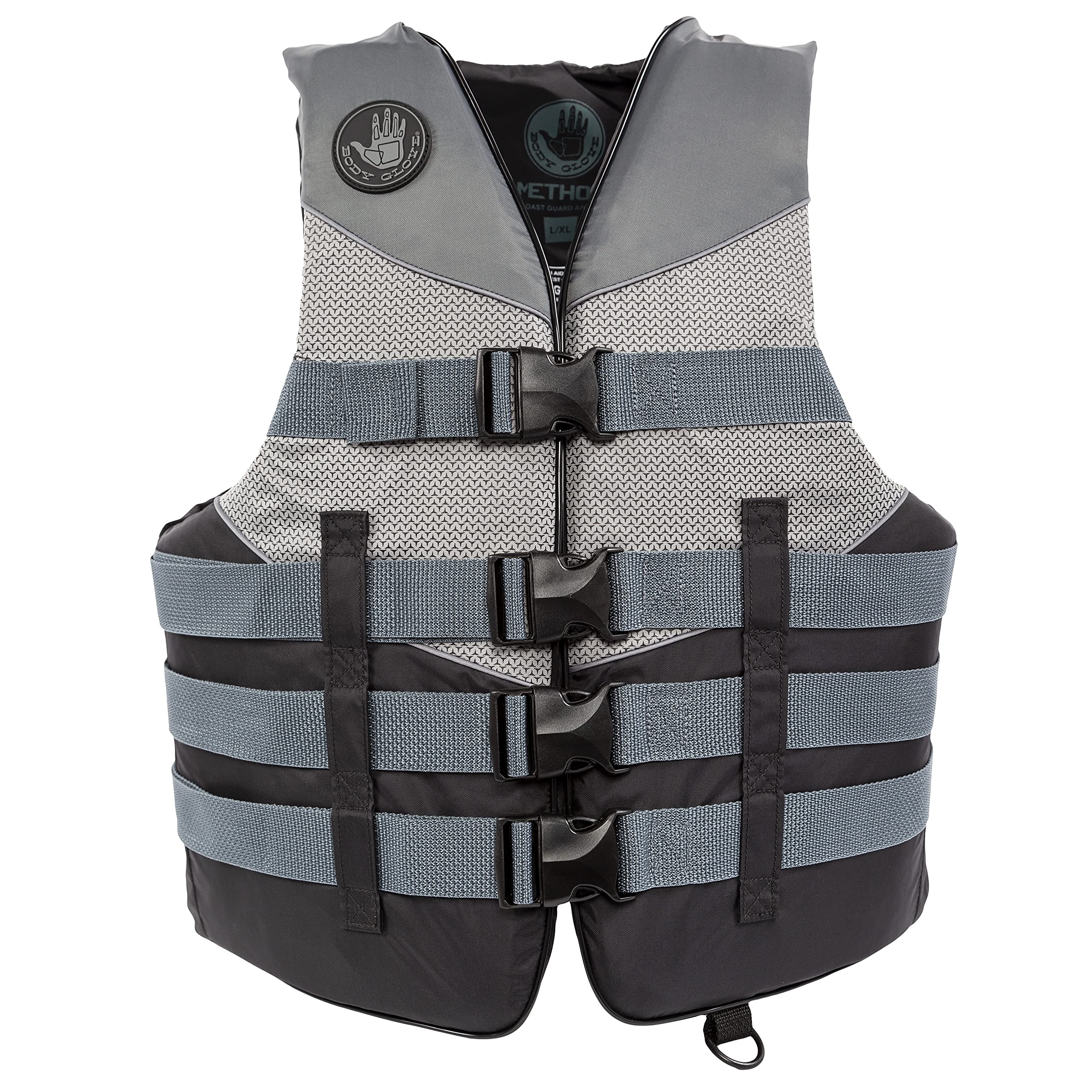
A plus-size PFD built on 70 years of water-sports heritage.
Body Glove has been in the water-sports game since 1953, and this vest shows that experience in practical details. The outer shell is made from a durable woven polymer (a tough, synthetic fabric) that holds up to repeated use, and the inner layer uses lightweight PE foam (polyethylene foam, a type of plastic foam) for flotation. What sets this vest apart from the other foam options on the list is its 4-belt adjustment system — four heavy-duty 1.5-inch straps with quick-release buckles — plus a built-in D-ring (a metal ring shaped like the letter D) for attaching keys or accessories.
Owners mention this vest fits larger body types well, with one reviewer saying it fits a 6’1″, 300-pound person with strap left over. Another buyer called it “good for big guys” and appreciated the quality for the price. The vest also has oversized arm openings for better paddling mobility and quick-drain holes so water doesn’t get trapped and add weight. It is available in a 4XL-6XL size range, making it one of the few adult life vest options that actually serves plus-size body shapes.
The trade-off is that, according to one buyer who weighs 300 pounds, the vest may not be long enough and could expose the belly — something to check if you are at the upper end of the size range.
What It Does Well
- 4-belt adjustment system for a stable, locked-in fit
- Oversized arm openings for better mobility
- Quick-drain holes shed water and reduce drag
- Available in 4XL–6XL for plus-size adults
Note
- May not cover the full torso length for taller or heavier wearers
- Heavier and more rigid than mesh-style vests
Choose this for: Larger-framed boaters or fishermen who need a secure 4-strap vest that won’t shift during active use.
Consider alternatives if: You are under 200 pounds and want a lighter, less bulky vest for paddling.
4. Connelly Womens Nylon Vest

A breathable nylon vest designed to keep women cool and comfortable on hot-water days.
This Connelly vest is built specifically for women, with a chest size range of 28 to 32 inches and three adjustable straps with quick-release buckles. The outer material is nylon, which makes it durable, lightweight, and “extremely breathable” per the manufacturer — great for hot days when you are stand-up paddleboarding or swimming. The webbing straps are tunneled under the fabric so the buckles don’t dig into your skin.
Customers note that the vest is attractive and comfortable, with one reviewer at 5’8″ and 150 pounds saying the medium fits but the large may be a better choice if you prefer a looser feel. Another reviewer loved the color scheme and said it did not interfere with paddling — she accidentally fell off her paddleboard and the vest pulled her to the surface instantly, confirming it does its job. On the flip side, several reviewers point out that it runs small: one said it “runs VERY small” and felt like she “needed 2 sizes larger,” while another mentioned that bustier women should size up because there is no zipper to give extra room.
Compared to the O’Brien neoprene vest, this nylon vest breathes much better in direct sun but is shorter in the torso — some reviewers wished a tall version existed. The lack of a zipper means you rely entirely on strap tension, which can create a front gap if you are at the upper end of the size range.
Good Points
- Lightweight, breathable nylon shell keeps you cool
- Tunneled webbing straps prevent skin chafing
- US Coast Guard approved for reliable flotation
Watch Points
- Runs small — many buyers recommend sizing up
- No zipper closure; strap-only system may leave a front gap on some body shapes
Ideal for: Women who paddle in hot weather and prefer a breathable, low-bulk vest that looks good on the water.
Not the best if: You have a larger bust or prefer a vest with a zipper for a more locked-in fit.
5. Life Jacket Paddle Vest (Hardcore Water Sports)
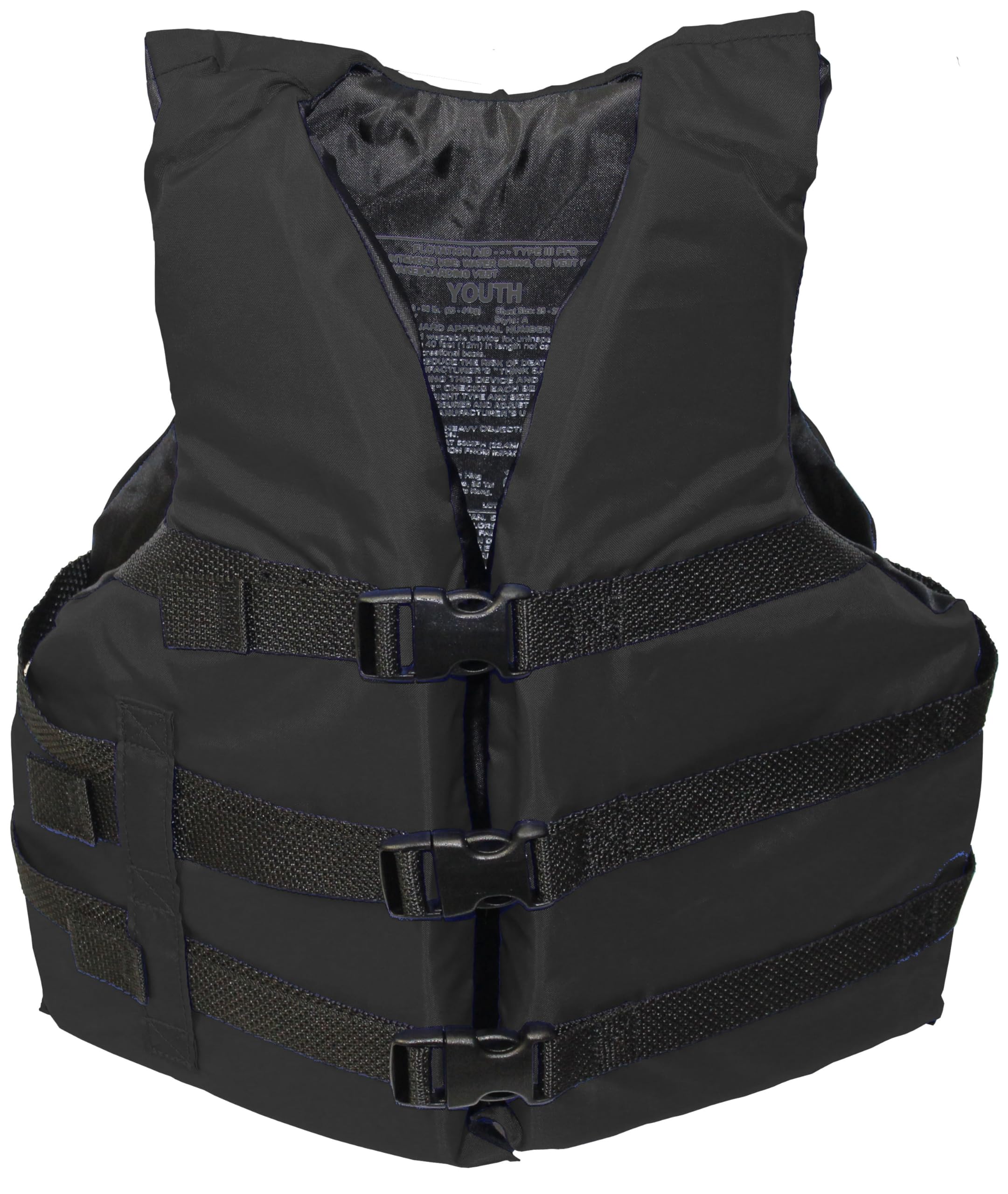
A no-logo, no-frills Type III PFD that works as a spare or starter vest.
This vest from Hardcore Water Sports is the most stripped-down option on the list, and that is exactly its appeal. At 0.93 pounds, it weighs slightly less than the 1-pound O’Brien neoprene vest, making it the lightest foam vest here. It is US Coast Guard approved as a Type III PFD, has adjustable straps for a secure fit, and is completely logo-free — which makes it popular with outfitters and water parks who want a clean look across multiple vests.
Shoppers say that it is “bulkier than the newest kinds” but still “better than the original orange ones we grew up with.” Another buyer, a first-time kayaker who bought it as an inexpensive option, said it was “high-quality and well-built” despite the bulk and noted that it gets hot after long wear. The buckles are strong, but at least one reviewer found them very difficult to undo, requiring a tool to release the clasp. The flotation sections leave the sides free for paddling, making it a decent choice for lake kayaking or as a spare vest on a speedboat.
Compared to the Body Glove vest, this one lacks the oversized arm openings and 4-belt stability system. If you are buying a single vest for yourself and plan to use it regularly, the Body Glove or O’Brien are better long-term investments. This one shines as a budget-friendly spare or for casual use where you do not want to spend much.
What You Get
- 0.93 pounds — the lightest foam vest on this list
- Logo-free shell great for outfitters or group use
- Adjustable straps accommodate a range of sizes
- Flotation panels free up sides for paddle strokes
Limitations
- Bulkier than modern low-profile vests
- Buckle fasteners can be difficult to release
- Gets warm during extended wear in the sun
Best as a: Low-cost spare vest for guests or a starter vest for new kayakers who aren’t ready to invest in a premium PFD.
Upgrade if: You need a vest you can wear all day without overheating, or if you find the buckles too stiff for easy removal.
Understanding the Specs
Buoyancy Rating (Pounds of Flotation)
This is the single most important spec. A Type III foam vest provides roughly 15.5 to 22 pounds of buoyancy. The BLUESTORM inflatable offers 35 pounds, versus 15.5 pounds for the Type III minimum referenced here. Higher buoyancy means the vest will lift a larger or heavier person with more force. If you weigh more than 250 pounds or boat in rough, cold water where hypothermia (dangerously low body temperature) could affect swimming, a vest with a higher buoyancy rating gives you a larger safety margin.
Material and Breathability
Foam vests come in three main shell materials: nylon (light, breathable, dries fast), neoprene (soft against skin, warmer, more durable), and woven polymer (tough, heavy, long-lasting). Inflatables use nylon shells with mesh lining and are significantly more breathable. If you paddle in hot climates, a nylon or mesh vest will keep you cooler. If you water-ski in cooler water, neoprene adds a bit of insulation. The material also affects drying time — nylon dries quickly, neoprene stays wet longer.
FAQ
What is the difference between a Type II and Type III PFD?
How do I know if an inflatable life vest fits correctly?
Can women wear a men’s life vest?
Do I need a zipper closure on my life vest?
How often should I replace a foam life vest?
Will the BLUESTORM inflatable work if I cannot swim?
How do I clean and store my life vest?
Can I wear an inflatable vest for jet skiing or tubing?
Final Thoughts: The Verdict
If you want one dependable pick, the adult life vest winner is the BLUESTORM Stratus 35 Inflatable because it combines 35 pounds of buoyancy with a barely-there fit that you can wear all day without overheating. If you want a foam vest that is soft against the skin and secure enough for active water sports, grab the O’Brien Men’s Traditional Neoprene USCGA Life Jacket. And for a budget-friendly spare that won’t let you down, the Hardcore Water Sports Paddle Vest at 0.93 pounds is your lightest foam option for casual use.
How We Picked
We do not accept paid placement, and we did not hands-on test every unit. Instead, we match each pick to a real buyer and use-case by comparing the manufacturers’ published specifications against the patterns in verified customer reviews — so you get each pick’s real strengths and trade-offs instead of marketing copy.
Sources & Methodology
Specifications: manufacturer listings and product documentation. Review insights: verified customer reviews, as of July 2026. Pricing: not shown on this page (it changes often); check the current price via the retailer link.
As an Amazon Associate, Gadgets Feed earns from qualifying purchases. This does not affect which products we feature.
Product prices and availability are accurate as of the date/time indicated and are subject to change. Any price and availability information displayed on Amazon at the time of purchase will apply to the purchase of this product. As an Amazon Associate I earn from qualifying purchases.
CERTAIN CONTENT THAT APPEARS ON THIS SITE COMES FROM AMAZON. THIS CONTENT IS PROVIDED "AS IS" AND IS SUBJECT TO CHANGE OR REMOVAL AT ANY TIME.
Amazon and the Amazon logo are trademarks of Amazon.com, Inc. or its affiliates.