
An aero road helmet is a direct trade-off compressed into a single polycarbonate shell: how much drag can you shave before your scalp turns into a convection oven. Every ventilation channel, every tail extension, and every internal duct either answers that compromise or fails it. The best designs don’t just look fast — they test faster in a wind tunnel while keeping your core temperature manageable on a 10% gradient under the July sun.
I’m Min — the co-founder and writer behind Gadgets Feed. I’ve spent hundreds of hours dissecting cycling helmet airflow simulations, Virginia Tech impact ratings, and rider feedback across the – range to isolate which shells actually deliver measurable speed gains without turning your ride into a sweat lodge.
The real challenge isn’t finding a helmet that looks aerodynamic — it’s finding the one that pulls its weight at 25 mph without roasting you on the climb back up. That hunt defines the best aero road helmet for any serious road cyclist.
How To Choose The Best Aero Road Helmet
An aero road helmet is not a universal shell — its performance depends entirely on how the aerodynamics, ventilation, and fit system interact with your specific riding position and climate. Three factors define whether a helmet earns a permanent spot on your saddle bag or ends up parked in a closet.
Ventilation vs. Drag — The Real Trade-Off
Every aero road helmet seals off the traditional honeycomb of vents that road helmets use to dump heat. The best designs replace those vents with purpose-shaped exhaust ports and internal channeling that pulls air through the front intake and forces it over your scalp before ejecting it out the rear. Look for helmets that publish their vent count alongside a NACA-type inlet — a design borrowed from aerospace that accelerates incoming air without creating turbulence. A helmet that claims “aerodynamic” but lacks any internal channeling is just a closed box that will leave you drenched 45 minutes into a threshold effort.
Rotational Impact Systems
MIPS (Multi-directional Impact Protection System) uses a low-friction liner that slides 10–15 mm on oblique impact. Koroyd, used by Smith, relies on welded polymer tubes that crush axially to absorb energy. KinetiCore, from Lazer, uses engineered crushable foam zones inside the EPS core without an additional liner. Kask’s WG11 standard is tested against rotational acceleration curves that exceed CPSC norms. None of these systems make a helmet “safer” in a straight vertical drop — they only matter in the angled, glancing impacts that real crashes produce. Look for Virginia Tech 5-star rated models, which test all of these systems under controlled lab conditions.
Retention System and Fit Stability
An aero shell shifts the center of mass rearward compared to a standard road helmet. If your retention system doesn’t lock the occipital bone firmly, the helmet will tilt forward during an aggressive aero tuck and block your peripheral vision. Look for a rubberized micro-dial adjuster that clicks in 1–2 mm increments — plastic dials with coarse steps can’t hold tension under sweat and vibration. Also check whether the strap system uses flutter-free aerodynamic profiles; exposed flat straps create parasitic drag that defeats the purpose of an aero shell.
Quick Comparison
On smaller screens, swipe sideways to see the full table.
| Model | Category | Best For | Key Spec | Amazon |
|---|---|---|---|---|
| ABUS GameChanger 2.0 | Aero Premium | WorldTour-level drag reduction | AirBoost internal channeling + Zoom Ace dial | Amazon |
| MET Manta MIPS | Aero Premium | Triathlon transitions & speed | NACA inlet + Fidlock magnetic strap | Amazon |
| KASK Protone Icon | Premium All-Around | Pro-level aero with thermal comfort | WG11 rotational + Octo micro-dial | Amazon |
| MET Rivale MIPS | Mid-Range Aero | Hot-climate aero riding | Internal air channeling + MIPS C2 | Amazon |
| POC Omne Air MIPS | Mid-Range Commute | Leisure & daily commutes | Unibody polycarbonate shell + 360° fit | Amazon |
| ABUS GameChanger | Aero Budget | Entry-level aero shape | Forced air cooling + Zoom Ace fine-tune | Amazon |
| KASK Mojito3 | Mid-Range Comfort | Road & gravel versatility | WG11 rotational + Octo rubberized dial | Amazon |
| Lazer Strada KinetiCore | Budget Safety | Best price with 5-star rating | KinetiCore crush zones + ScrollSys fit | Amazon |
| Smith Persist MIPS | Budget Protection | Zonal Koroyd + MIPS value | Koroyd tubes + 21 fixed vents | Amazon |
In‑Depth Reviews
1. ABUS GameChanger 2.0 Aero Road Bike Helmet
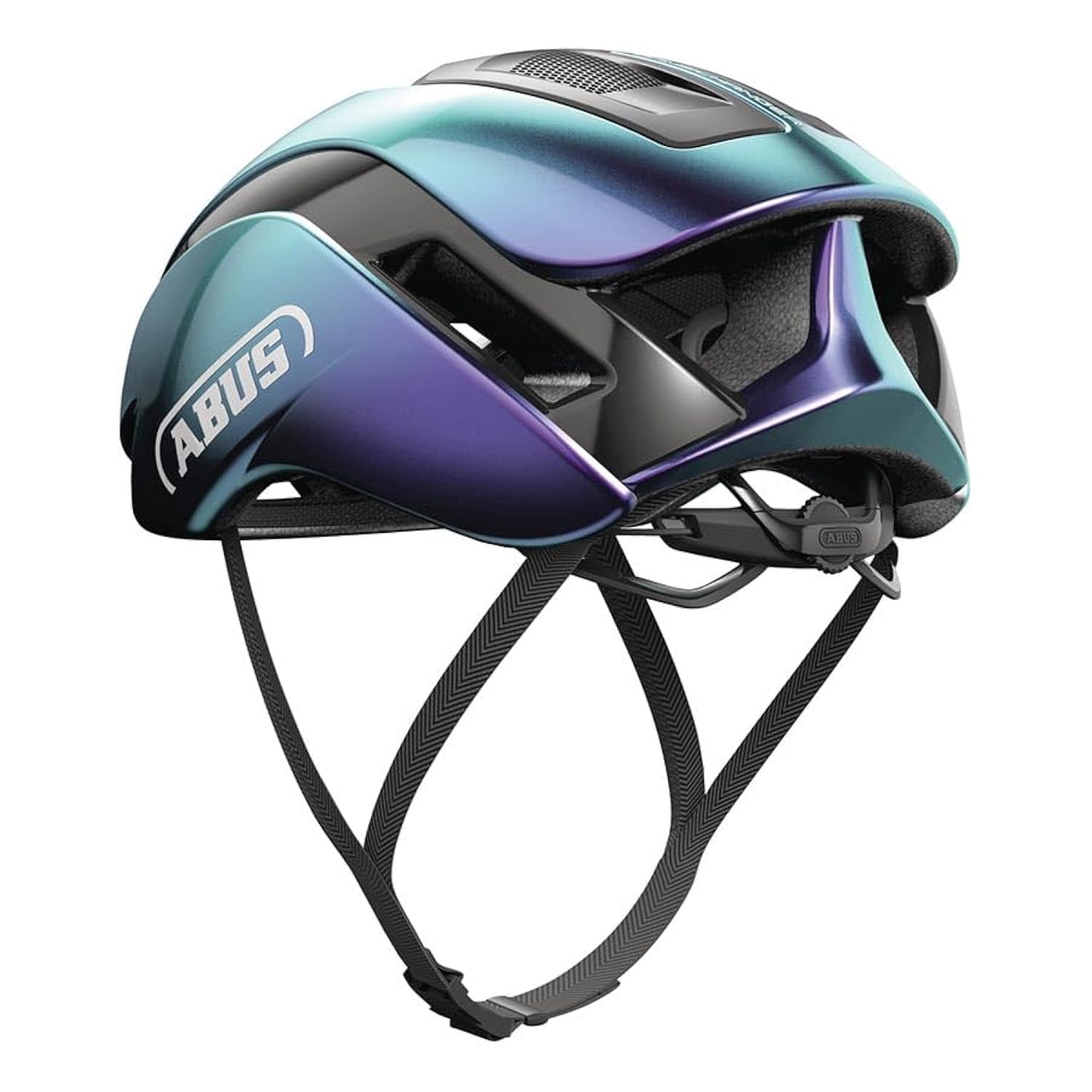
The GameChanger 2.0 represents ABUS’s second-generation aero shell, and the difference is immediately apparent in the vent design. The original GameChanger had 5 small exhaust ports that struggled under sustained efforts. The 2.0 introduces the AirBoost ventilation system — a set of swept front intakes that funnel air through internal channels before ejecting it through enlarged rear exhaust slots. The result is a helmet that maintains its drag coefficient below 0.20 CdA at 40 km/h while staying wearable on hour-long tempo rides.
The Multi Shell In-Mold construction bonds a polycarbonate outer layer directly to the EPS foam liner, preventing delamination on impact. ABUS rates this helmet for CPSC and CE EN 1078 compliance. The Zoom Ace adjustable retention system uses a rubberized dial that adjusts in 1.5 mm increments, locking the occipital cradle firmly without creating hot spots. At 1.8 pounds, it’s not the lightest aero shell on the market, but the weight penalty is concentrated in the rear stabilizer — exactly where it needs to be to counterbalance the forward weight of an aggressive tuck.
Strap comfort is the weak point — some riders with taller skull profiles report that the folded strap design sits awkwardly against the jawline, producing an audible flutter above 30 mph. The Flip Flop Purple color option shifts between violet and magenta depending on the light, which is polarizing. If you prioritize the absolute lowest drag over strap ergonomics, this is the shell to beat.
Why it’s great
- AirBoost system maintains airflow without sacrificing the aero profile
- Zoom Ace dial provides fine occipital adjustment for a locked-in feel
- Trusted by WorldTour teams for race-day performance
Good to know
- Folded strap design can cause flutter for riders with taller head profiles
- No MIPS system — relies on EPS crush zone engineering
- Weight is slightly higher than comparably priced aero shells
2. MET Manta MIPS Aero Road Bike Helmet
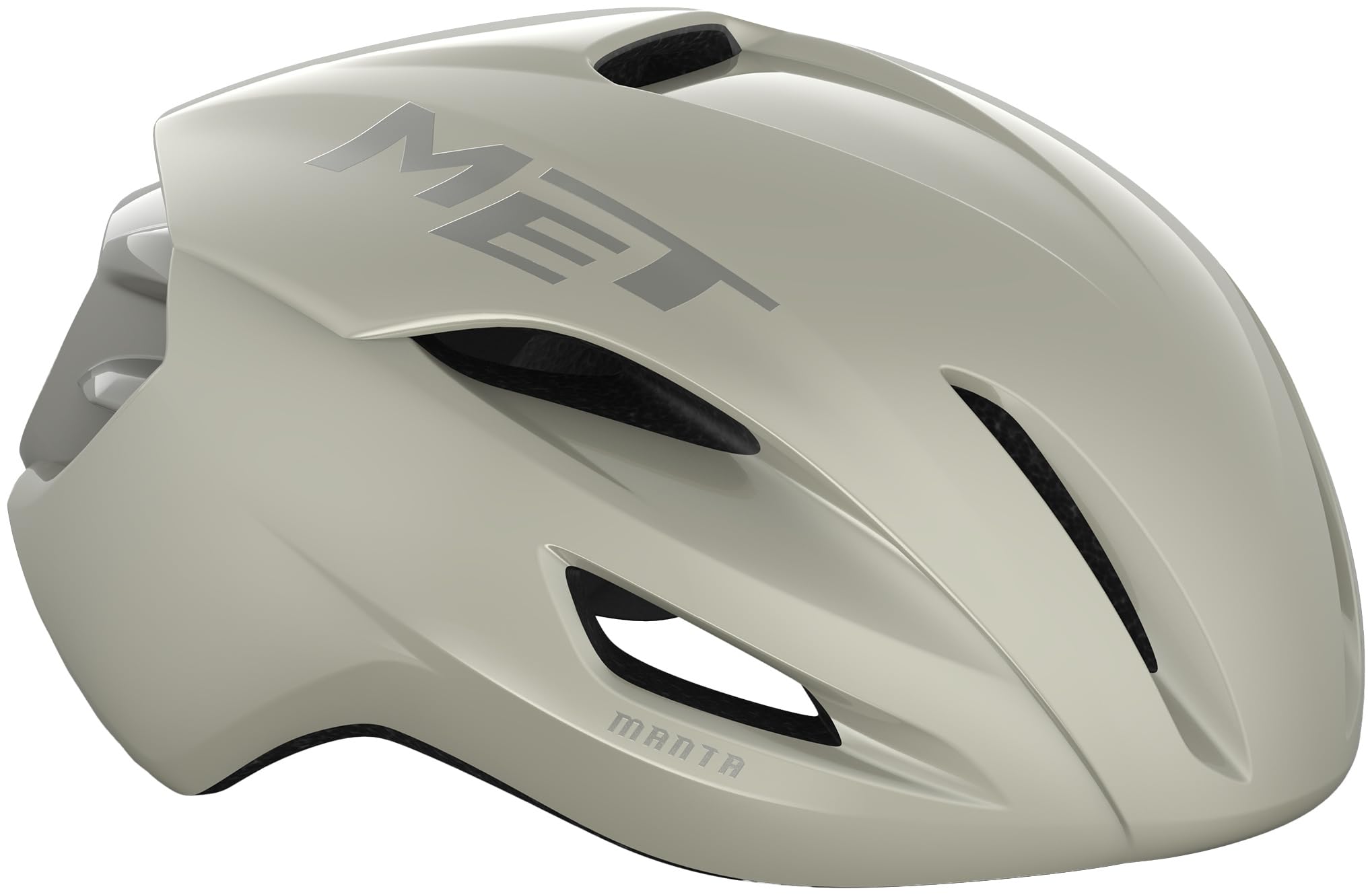
The MET Manta is the only helmet in this comparison that specifically targets triathlon transitions with its Fidlock magnetic chin strap. The magnet engages automatically when you bring the two halves within an inch of each other, which shaves 3–4 seconds off T2 transitions compared to a traditional buckle. But the real engineering is in the NACA inlet — a flush-mount scoop on the front that accelerates incoming air without creating the turbulence that traditional raised vents produce. Internal channeling directs that air over five exhaust ports at the rear, maintaining a steady pressure drop that keeps your scalp dry even at moderate speeds.
The MIPS-C2 rotational management system sits between the EPS liner and the comfort padding, allowing 10–15 mm of rotational slip on oblique impact. At 300 grams in size medium, it’s one of the lightest aero shells available at this price point. The Safe-T Orbital Fit System uses a 360-degree head belt with both vertical and occipital adjustments, which is critical for aero helmets — the Manta’s long tail creates leverage that a standard two-point retention system can’t control. Rubberized grips on the sunglasses port hold your eyewear securely when you’re climbing sections that drop below aero speed.
The Glossy Greige colorway looks sterile in product shots but has a subtle warm tint in direct sunlight. The Manta’s aero advantage is most pronounced between 25–35 mph — below that range, the drag savings are marginal compared to a standard road helmet. Riders who spend most of their time in pacelines at 18–22 mph might not extract the full aerodynamic benefit.
Why it’s great
- NACA inlet provides clean airflow at high speed without turbulence
- Fidlock magnetic strap saves time in transitions
- Weighs only 300 grams for a full aero shell
Good to know
- Aero benefit is modest below 22 mph
- Exhaust vents are smaller than the ABUS GameChanger 2.0
- Color range is limited compared to other premium options
3. KASK Protone Icon Bike Helmet
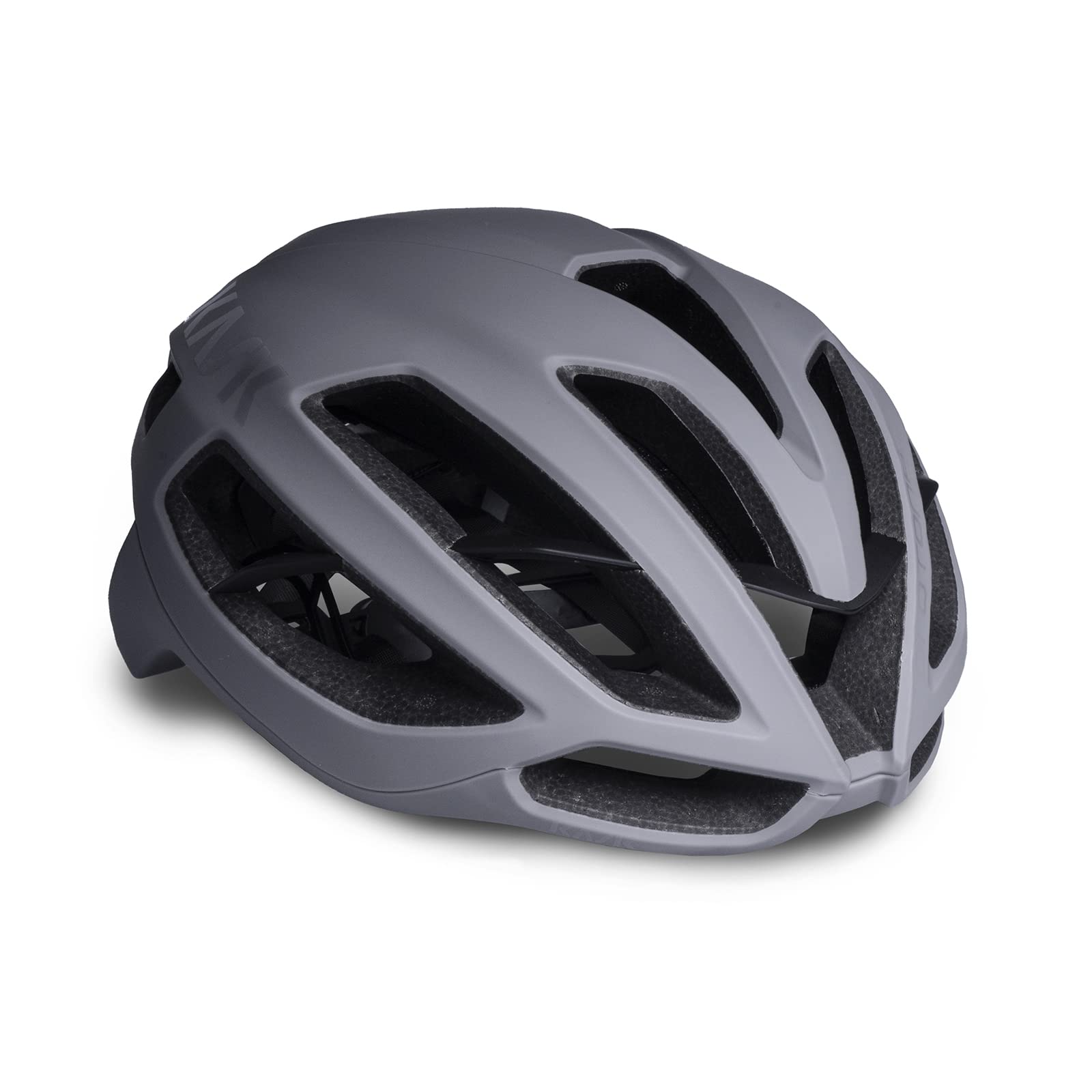
The Protone Icon is KASK’s flagship aero road helmet and the one most frequently seen in the WorldTour peloton. Its defining feature is the WG11 rotational impact certification — an Italian standard that tests helmets against a rotational acceleration curve more demanding than CPSC norms. The system uses a vertical stabilizer molded into the nape of the neck and an internal frame that redistributes rotational forces across the EPS structure rather than relying on a sliding liner. This means no MIPS cradle to add weight or create pressure points, which is why the Protone Icon feels more like a unified shell than a two-layer assembly.
The Octo rubberized micro-dial adjuster is the most tactile retention system in this comparison — each click corresponds to approximately 1.5 mm of circumference adjustment, and the rubberized surface doesn’t slip when your gloves are wet from sweat. The helmet supports oscillate freely through 180 degrees, which allows the cradle to tilt independently of the shell, accommodating a wider range of skull shapes than fixed-position systems. The moisture-wicking inner padding uses fibers that speed up evaporation, which is noticeable on rides that exceed two hours in direct sun.
The Grey Matt finish attracts scuffs more easily than glossy shells, and the padding is not removable without partially disassembling the retention system. At 1.8 pounds, it sits in the middle of the weight range for a premium aero helmet. The aero tail is shorter than the MET Manta or ABUS GameChanger 2.0, which slightly reduces its drag advantage at high speed but improves visibility when you’re looking over your shoulder in a paceline.
Why it’s great
- WG11 certified for rotational impact protection beyond standard norms
- Octo dial provides precise, non-slip fit adjustments
- 180-degree oscillating supports accommodate varied skull shapes
Good to know
- Padding is not easily removable for washing
- Grey Matt finish shows scuffs and wear quickly
- Aero tail is shorter, reducing high-speed drag advantage
4. MET Rivale MIPS Road Bike Helmet

The Rivale sits in a sweet spot between a full aero shell and a lightweight climbing helmet. Unlike the Manta, which commits entirely to drag reduction, the Rivale uses internal air channeling that draws air through the front intakes and routes it around the MIPS C2 liner before exiting through 15 rear vents. The channeling is shallow enough to keep the profile low but wide enough to move a measurable volume of air — reviewers consistently note that it stays wearable in the Texas summer heat, which is a stress test few aero helmets pass.
MET’s Safe-T Upsilon Fit System provides both 360-degree head belt contact and a vertical adjustment range of about 3 cm. This is a crucial feature for aero helmets: if the fit system doesn’t lock the base of your skull, the helmet’s long tail pushes it forward every time you drop into an aero tuck. The MIPS C2 liner sits between the foam and the comfort padding, adding about 40 grams to the overall weight but providing that critical 10–15 mm of rotational slip. The sunglass port has rubberized grips that hold your Oakleys securely during climb sections.
The Rivale does produce a noticeable wind noise above 28 mph — the channeling creates a whistle that some riders find distracting. The size large frame is surprisingly good at avoiding the “mushroom head” look that plagues larger aero shells. If you ride in a climate where summer air temperature exceeds 90°F and you still want aero benefits, the Rivale is the most ventilated compromise you can buy.
Why it’s great
- Internal channeling maintains airflow in high-heat conditions
- Safe-T Upsilon system provides both 360° and vertical adjustment
- Avoids mushroom-head profile even in size large
Good to know
- Audible whistle from channeling above 28 mph
- MIPS C2 adds noticeable weight compared to non-MIPS versions
- Not as drag-optimized as full aero shells like the Manta
5. POC Omne Air MIPS Bicycle Helmet
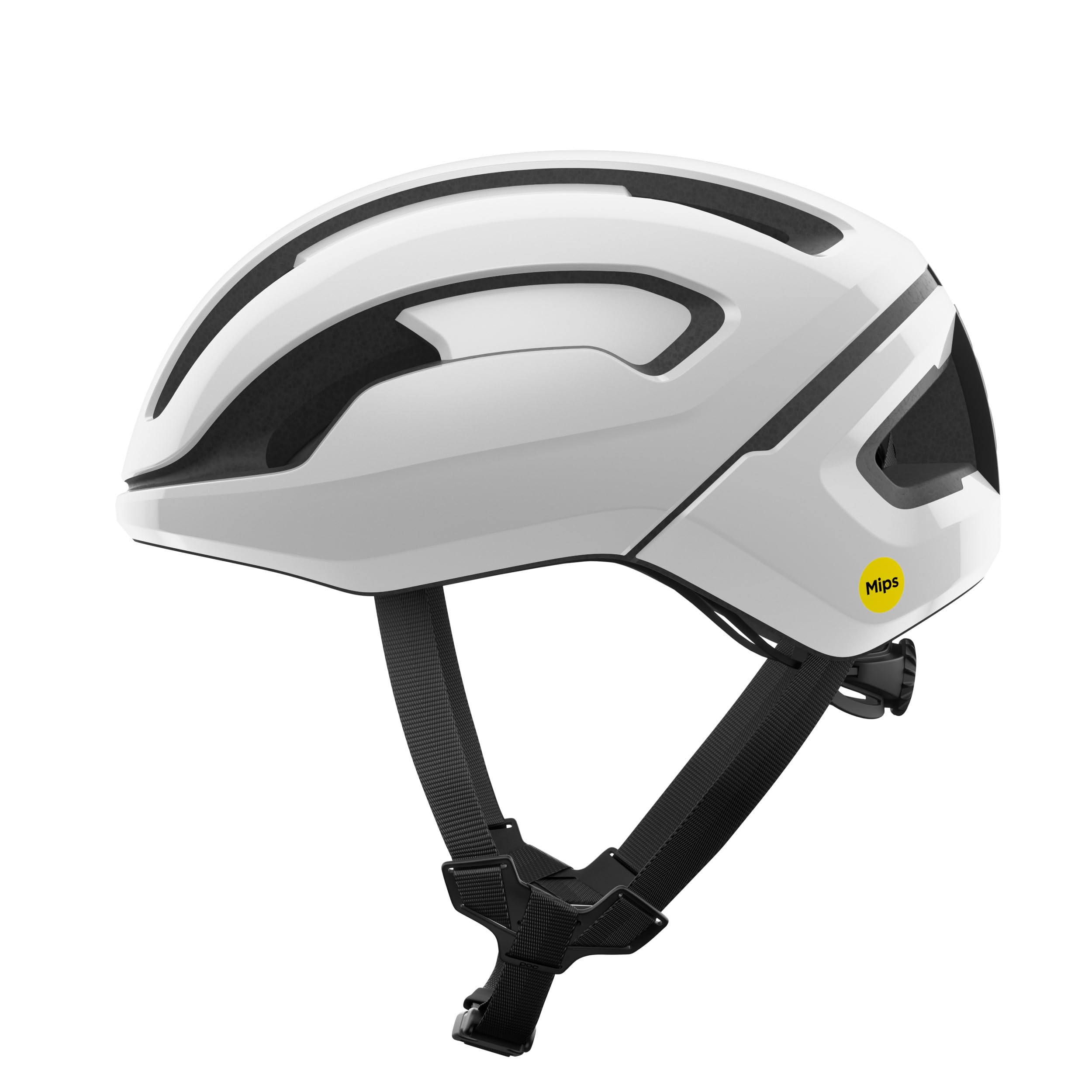
The Omne Air is POC’s all-purpose road helmet that borrows aero shaping from the brand’s higher-end Octal and Ventral lines without the full tail extension. The unibody polycarbonate shell wraps completely around the EPS liner, which prevents the foam from delaminating on a side impact — a failure mode that can occur with partial-wrap shells when the helmet hits a curb edge at speed. The MIPS rotational system is integrated directly into the comfort liner, keeping the weight at 330 grams in size medium, which is competitive for a helmet with full rotational protection at this price point.
The 360° adjustment system uses a one-handed dial that POC rates for 50,000 cycles of adjustment. The precision straps are molded directly into the EPS liner rather than passing through external slots, which reduces the number of plastic parts that can snap in a crash. The ventilation layout consists of 7 front-facing intake ports paired with 4 rear exhaust ports — fewer total vents than the Smith Persist, but each vent is larger and positioned to pull air directly over the crown where heat concentrates during sustained efforts.
The Omne Air is not a pure aero helmet — POC doesn’t publish CdA figures and the rear profile is noticeably rounder than the ABUS GameChanger 2.0 or MET Manta. Riders who average 20+ mph on flat terrain will find that the round tail creates a small low-pressure zone that adds about 10–12 watts of drag compared to a full aero shell. This is a helmet for riders who want MIPS protection and a lightweight shell for commuting and recreational road rides, not for time trial specialists.
Why it’s great
- Unibody shell prevents delamination on side impacts
- Molded strap attachment eliminates plastic failure points
- One-handed dial rated for very high cycle life
Good to know
- Rounded tail creates measurable drag at higher speeds
- Vent count is low compared to other mid-range options
- Not optimized for pure aero performance
6. ABUS GameChanger Road Cycling Helmet
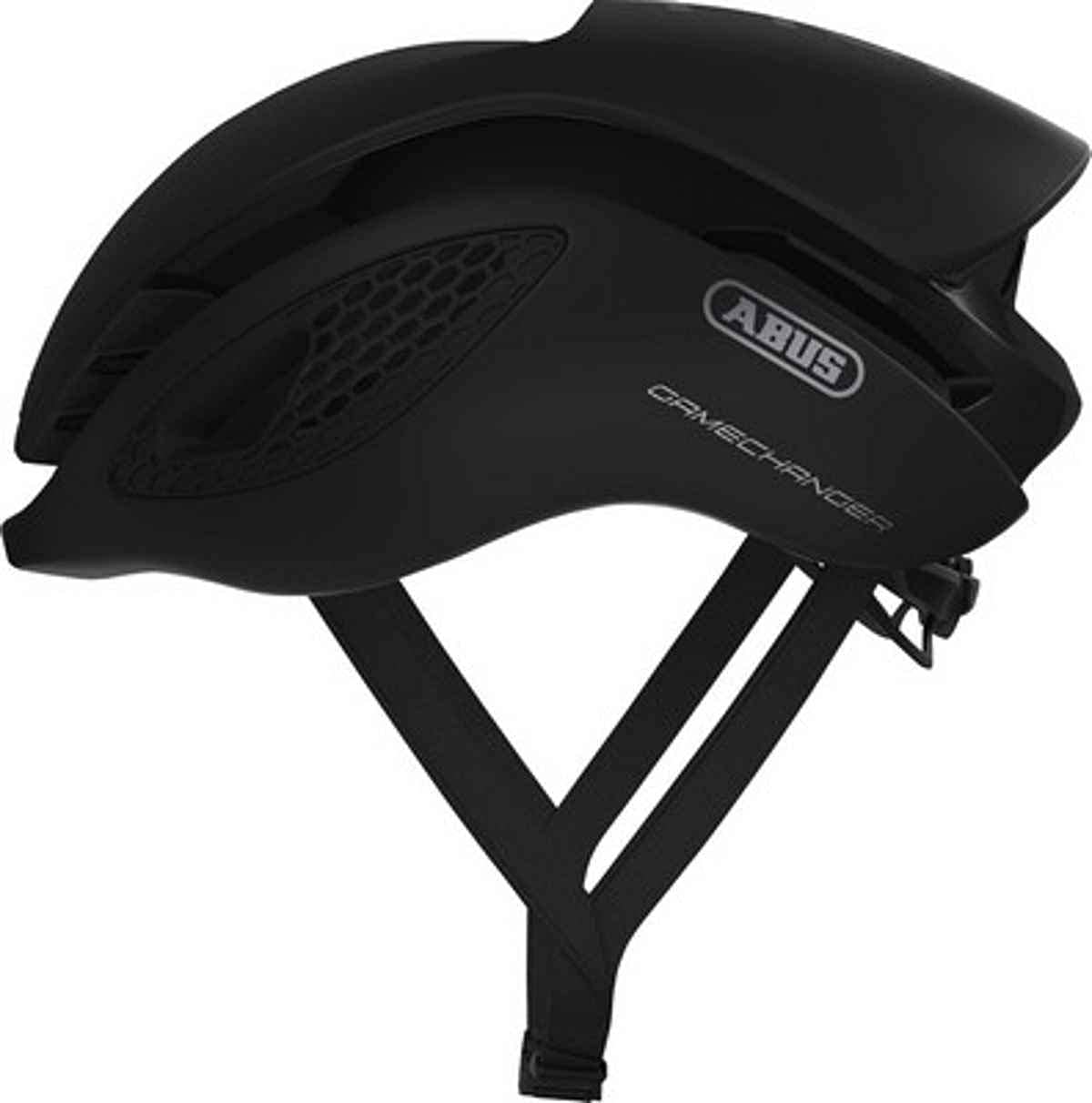
The original GameChanger was ABUS’s first serious entry into the aero road helmet market, and it set the template for the 2.0 that would follow. The forced air cooling technology uses three front intake ports that feed into internal channels before exhausting through five rear slots — a layout that was competitive for its era but now looks constrained next to the 2.0’s AirBoost system. The multi-position design allows the eyewear port to accommodate both standard and oversized frame arms, which is a small but practical detail for riders who swap between prescription glasses and performance sunglasses.
The Zoom Ace fine-tune adjustment system is identical to the one found on the 2.0 — a rubberized micro-dial that adjusts in precise increments. The Multi Shell In-Mold construction bonds the polycarbonate outer shell to the EPS inner liner using a high-pressure mold process that eliminates the glue layer found on cheaper helmets. ABUS rates the GameChanger for CPSC compliance but does not include MIPS or any equivalent rotational system — impact protection relies entirely on the shape and density grading of the EPS foam.
The Velvet Black finish attracts dust and fingerprints noticeably, and the strap routing system is finicky — several reviewers report that achieving a symmetric strap fit requires 10–15 minutes of trial and error. At 1.8 pounds, it weighs the same as the newer 2.0 but offers fewer vents and a less refined aerodynamic profile. If you can find this model on clearance, it’s a cost-effective entry point into aero helmet design without the premium price tag of the current generation.
Why it’s great
- Forced air cooling provides adequate ventilation for most rides
- Zoom Ace dial offers the same precise adjustment as the newer model
- Multi-position eyewear port accommodates various frame sizes
Good to know
- No MIPS or rotational impact system
- Velvet finish shows dust and fingerprints easily
- Strap routing requires time to dial in symmetric fit
7. KASK Mojito3 Helmet

The Mojito3 is KASK’s entry-level offering in the road helmet lineup, but it inherits the same WG11 rotational impact certification as the flagship Protone Icon. This is a significant advantage at this price point — most helmets under rely on CPSC compliance alone. The WG11 test measures rotational acceleration using a headform equipped with a nine-axis sensor, and it imposes a pass threshold that is approximately 30% more stringent than the European EN 1078 standard. KASK achieves this without a sliding liner by engineering the EPS density gradient to crush in a specific pattern during oblique impacts.
The Octo rubberized micro-dial adjuster is the same component found on helmets costing twice as much. The gel pads at the contact points reduce pressure on the temporal bones — a common complaint with aero helmets that have aggressive shell shapes. The ventilation system uses a front intake, a crest vent, and six rear exhaust ports arranged in a V-shape that follows the natural airflow path over a rider in a 40-degree head-down position. The sweat channel is molded directly into the EPS and routes moisture toward the rear exhaust ports rather than dripping onto your sunglasses.
The synthetic leather chin strap is the Mojito3’s most polarizing feature — it feels premium and doesn’t absorb sweat, but the buckle mechanism is asymmetric and some riders find it difficult to operate with one hand while descending. At 550 grams in the medium size, it’s heavier than several options at the same price point, including the Lazer Strada.
Why it’s great
- WG11 rotational certification at a mid-range price point
- Octo dial provides precise, sweat-resistant adjustments
- Gel pads reduce temporal pressure during long rides
Good to know
- Asymmetric buckle can be difficult to operate one-handed
- Heavier than comparable options from Lazer and MET
- Ventilation is adequate but not exceptional for aero designs
8. LAZER Strada KinetiCore Bike Helmet

The Strada KinetiCore holds a Virginia Tech 5-star safety rating — the highest possible score — while retailing at the lowest price in this comparison. That rating is achieved through Lazer’s proprietary KinetiCore system, which integrates crushable foam zones directly into the EPS liner rather than adding a separate sliding layer like MIPS. The crush zones are shaped as hexagonal columns that collapse axially when the helmet hits an angled surface, absorbing rotational energy without adding weight or creating the squeaking noise that MIPS liners sometimes produce. This makes the Strada one of the quietest helmets in this comparison — no clicking, no creaking, just a solid EPS shell.
The ScrollSys fit system uses a ratcheting dial that adjusts in 2 mm increments — slightly coarser than the Octo or Zoom Ace dials, but still precise enough to find a comfortable fit. The ventilation layout is aggressive for a road helmet at this price: 8 front intake ports feed into 6 rear exhaust vents, creating a pressure differential that Lazer claims moves 20% more air volume than the previous generation Strada. At 290 grams in a size small, it’s the lightest helmet in this comparison — a full 110 grams lighter than the KASK Mojito3.
The outer shell is ABS plastic rather than polycarbonate, which is a cost-saving measure that makes the helmet slightly more prone to surface scuffs from normal handling. The strap routing uses a Y-buckle that takes a few rides to dial in — reviewers note that the strap adjustment is the most involved part of the setup process. The White color option is reflective enough to improve nighttime visibility without needing additional stickers. If your primary concerns are safety rating and weight rather than raw aerodynamic drag, the Strada delivers an exceptional value proposition.
Why it’s great
- Virginia Tech 5-star safety rating at the lowest price point
- KinetiCore system eliminates MIPS noise and adds rotational protection
- Very lightweight at 290 grams
Good to know
- ABS outer shell scuffs more easily than polycarbonate
- Strap routing requires several rides to achieve optimal fit
- Not optimized for pure aero performance — rounder profile
9. Smith Persist Cycling Helmet

The Persist is Smith’s entry-level road helmet, but it includes both MIPS and Zonal Koroyd coverage — two protection systems that are usually reserved for helmets costing – more. The Koroyd consists of welded polymer tubes arranged in a honeycomb pattern that covers the crown and temples. When the helmet impacts a surface, the tubes crush axially, absorbing energy before the EPS liner engages. The result is a lower peak acceleration reading in oblique impact tests compared to EPS-only construction. Smith places the Koroyd layer only in the zones most likely to contact the ground first — the front and sides — while the top of the helmet uses standard EPS foam to keep weight down.
The 21 fixed vents are organized into three rows that follow the natural airflow path over a rider in a relaxed road position. The AirEvac system integrates with Smith’s eyewear line, creating a channel that pulls warm air away from your lenses and prevents fogging. At 11 ounces, it’s competitive with mid-range options from POC and LAZER. The adjustable dial on the back provides 3 cm of circumference adjustment and a vertical range that accommodates both round and oval head shapes — a useful feature for riders who fall between standard size increments.
The “mushroom effect” is the Persist’s most common complaint — the shell sits higher on the head than slimmer competitors like the KASK Mojito3 or MET Rivale, creating a bulbous profile that catches wind in cross breezes. This isn’t a problem for recreational riders who prioritize safety and value, but it does create measurable drag at speeds above 25 mph. The sunglass ports are absent, so riders who stow their eyewear on climbs will need to use a separate retention strap. If you want MIPS and Koroyd at a price that leaves room for a jersey and shorts upgrade, this is the helmet to start with.
Why it’s great
- Includes both MIPS and Koroyd protection at a budget-friendly price
- AirEvac system prevents eyewear fogging
- High vent count provides excellent airflow for recreational riding
Good to know
- Bulbous profile creates mushroom-head appearance and extra drag
- No sunglass storage ports
- Not optimized for pure aero performance
FAQ
What is the difference between MIPS, KinetiCore, and WG11 for aero road helmets?
Will an aero road helmet overheat on long climbs in summer?
Final Thoughts: The Verdict
For most riders seeking the best aero road helmet, the winner is the ABUS GameChanger 2.0 because it balances WorldTour-level aerodynamic refinement with a ventilation system that works at realistic road speeds. If you want seamless triathlon transitions and the lightest aero shell available, grab the MET Manta MIPS. And for unmatched comfort and premium build quality, nothing beats the KASK Protone Icon.