
Our readers keep the lights on and my morning glass full of iced black tea. As an Amazon Associate, I earn from qualifying purchases.
If you haul hay bales through muddy fields every winter or crawl over slick rock on the weekends, a regular all-terrain tire just spins its treads while you sit stuck. The difference between getting home under your own power and calling for a tow comes down to how a tire’s tread blocks are shaped, how deep they are, and how tough the rubber compound holds up against sharp gravel and tree roots. This guide walks you through the seven best aggressive mud tires for trucks that actually self-clean, hold their edge, and keep you moving in the stuff that swallows lesser tires.
I’m Min — the co-founder and writer behind Gadgets Feed. This guide is built by comparing the manufacturers’ published specifications and the patterns across verified customer reviews, so you get each pick’s real strengths and trade-offs instead of marketing spin.
Whether you drive a heavy-duty work truck or a lifted weekend rig, the best aggressive mud tires for trucks balance a deep, self-cleaning tread pattern (the wide gaps that fling out mud as the tire spins) with a high ply rating (the number of rubber-coated cord layers in the sidewall) that shrugs off punctures on the trail.
How To Choose The Best Aggressive Mud Tires For Trucks
Picking a mud tire isn’t about which one looks meanest on the showroom floor; it is about how the tread pattern digs in when the trail gets greasy and how many layers of rubber protect your sidewall from a sharp rock edge. The three specs below make the difference between a tire that saves your weekend and one that leaves you walking home.
Ply Rating and Load Range — the sidewall’s spine
A tire’s ply rating tells you how many layers of rubber-coated cord are built into the sidewall. A 6-ply tire (typically a Load Range D) works fine for a daily-driven half-ton that rarely touches a heavy trailer, but a 10-ply tire (Load Range E) gives you a stiffer sidewall that resists flexing and punctures when you are bouncing over rocks at low pressure. For a mud tire that you air down on the trail (let out air for more grip), the extra plies also reduce the chance of a sidewall bulge or tear against a sharp edge of shale.
Tread Void Ratio — the gap that makes mud tires work
Every mud tire has big blocks of rubber separated by wide channels. The ratio of open space (void) to solid rubber is called the void ratio. A higher void ratio — roughly 30 to 40 percent on most aggressive mud tires — means each rotation flings more mud out of the tread so the blocks can bite down on the next patch of ground. Too little void ratio and the tread packs up with wet clay like a snowplow hitting slush, turning your tire into a slick hockey puck.
Load Index and Speed Rating — carry weight, run cool
The load index is a code number that translates to a specific weight capacity in pounds. A 121 load index handles about 3,195 pounds per tire, while a 127 load index carries roughly 3,860 pounds. The speed rating (usually “Q” for mud tires, which means safe up to 99 mph) tells you the maximum sustained speed the tire can handle without heat buildup. If you haul heavy loads or tow a trailer on highways, matching the load index to your truck’s rear axle weight is safety-critical — overload a tire and the internal heat can cause a tread separation at highway speed.
Quick Comparison
On smaller screens, swipe sideways to see the full table.
| Model | Category | Best For | Key Spec | Amazon |
|---|---|---|---|---|
| Cosmo Tires Mud Kicker M/T | Premium | Heavy hauling in mud and snow | 50,000-mile treadwear warranty | Amazon |
| Road One Cavalry M/T RL1195 | Premium | Quiet highway ride with aggressive off-road bite | Load Index 126 (3,750 lbs per tire) | Amazon |
| Road One Cavalry M/T RL1264 | Mid-Range | Daily driver with occasional mud and rock crawling | 14-Ply rating (2.3x more layers than a standard 6-ply) | Amazon |
| Yokohama Geolandar M/T G003 | Premium | Extreme off-road durability and long tread life | 34.8-inch diameter with GEO-SHIELD sidewall armor | Amazon |
| Finalist Terreno-Pro LT285/70R17 | Mid-Range | Large-diameter trucks needing 10-ply toughness | 32.99-inch diameter, 56.84 lbs per tire | Amazon |
| Accelera M/T-01 | Value | Budget-conscious build with solid on-road manners | 34 lbs per tire — 50% lighter than some competitors | Amazon |
| Atlander Roverclaw M/T I | Value | Budget entry for wet red clay and trail riding | Load Range E with 3,086 lbs capacity each | Amazon |
In‑Depth Reviews
1. Cosmo Tires Mud Kicker M/T
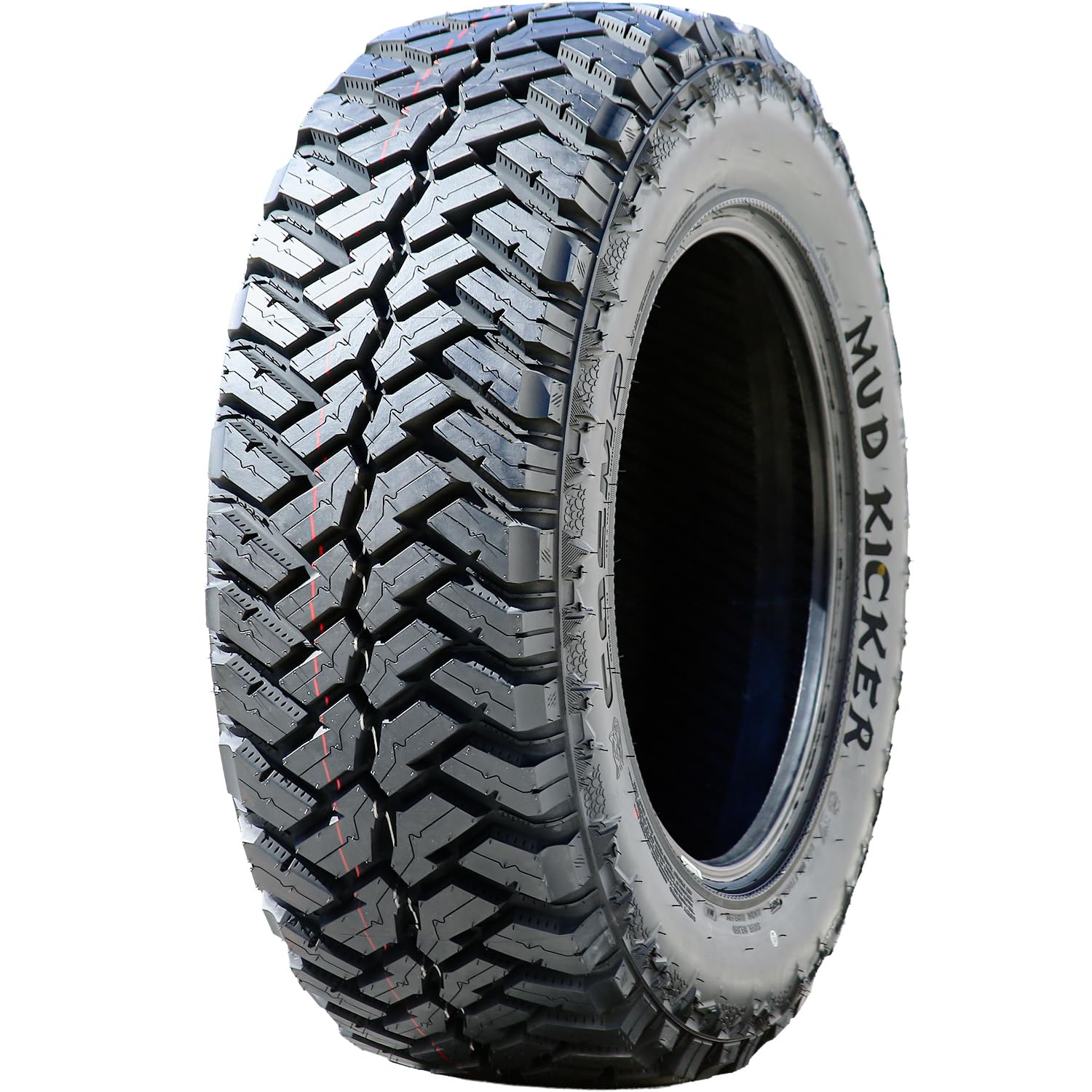
The Cosmo Tires Mud Kicker M/T is the only tire on this list backed by a 50,000-mile limited treadwear warranty, making it the top pick for the truck owner who treats their rig like a tool — plowing snow in January, hauling hay bales in July, and needing a tire that shrugs off both without complaint. At 51 pounds and Load Range E (10-ply), it is a heavy tire built to carry serious weight.
The aggressive tread also handles snow well, with one reviewer noting “great traction in the snow and mud” as a daily observation.
The one honest trade-off is weight: at 51 pounds, it is heavier than many competitors — that extra mass requires slightly more throttle to spin up and can add wear to your suspension bushings over time. For a work truck that already has heavy-duty suspension, this trade is easy to accept. This is the mud tire that earns its keep.
Why it’s great
- 50,000-mile treadwear warranty — best in this price tier
- 1,000 lbs more load capacity per tire than a standard 2,340-lb mud tire
- Proven durability across 4 years of heavy plow and hay-haul use
Good to know
- Heavy at 51 lbs — feel it on acceleration and fuel economy
- Only black sidewall (BSW) option, no raised white letters
2. Road One Cavalry M/T RL1195 LT285/75R16

The Road One Cavalry M/T RL1195 in the 285/75R16 size beats the top-pick Cosmo Mud Kicker on one crucial metric — road noise. Multiple buyers report it is “dead quiet despite aggressive tread” and “rides as smooth and quiet as expensive ATs,” a claim that is rare for any mud tire. Where the Cosmo’s heavy tread block pattern creates a constant drone at highway speeds, the Road One’s directional design (tread vanes that scoop mud out) keeps the cabin conversation-level quiet even at 75 mph, according to one owner of a 2002 Dodge 2500.
This makes the RL1195 a strong choice for a half-ton or three-quarter-ton truck that tows a heavy trailer but also sees daily highway miles. Owners mention it “throws mud well” and that cornering “improved after break-in,” which suggests the tread blocks settle into a stable pattern after a few hundred miles.
Choose the Road One Cavalry RL1195 over the Cosmo Mud Kicker if you want mud-terrain bite without your passengers asking “what’s that noise” every time you hit the highway. The 6-ply construction means it is lighter than 10-ply tires, but if you are not bouncing off boulders every weekend, the ride comfort trade is worth it.
Where it shines
- Exceptional highway quiet for aggressive mud tread
- High load index 126 — carries 3,750 lbs per tire
- Customers note smooth ride at 75 mph after break-in
Worth noting
- 6-ply sidewall is thinner than the 10-ply or 14-ply alternatives
- Requires about 7 oz of balancing weight per tire — slightly more than some competitors
3. Road One Cavalry M/T RL1264 31×10.50-15

If you drive a classic off-road rig or a Jeep with 15-inch rims and your primary concern is surviving sharp rocks without a sidewall puncture, the Road One Cavalry RL1264 is the tire built for you. Its 14-ply rating is dramatically thicker than the standard 6-ply found on many mud tires — a 2.3x increase in sidewall reinforcement that means it can take a direct hit against a jagged edge of granite without blowing out at low trail pressure.
Reviewers point out that “after nearly a year, no chunking, cracks, or flats; tread looks new” — a statement that suggests the rubber compound holds together well even after sustained off-road abuse. The directional tread pattern (meaning the tire must be mounted to spin in one specific direction) is designed to self-clean by flinging mud out of the channels, and owners confirm it provides “excellent mud traction and water dispersion” plus good rock-crawling capability. One reviewer noted an unexpected bonus: “smooth and quiet on highway,” which is unusual for a 14-ply tire with that deep of a void ratio (the open space between tread blocks).
The standout callout here is the 14-ply construction at a very accessible price point. Most off-road tires with similar ply counts cost significantly more, making the RL1264 a unique value for anyone who runs 15-inch wheels and values impact resistance above all else.
What stands out
- 14-ply sidewall — strongest in this price range by a wide margin
- Directional tread self-cleans mud effectively for traction
- Shoppers say no flats or tread damage after a year of use
The trade-offs
- Only available in 15-inch rim sizes — not compatible with modern 16+ inch wheels
- Load capacity of 2,340 lbs is lower than the 10-ply or 14-ply tires in larger sizes
4. Yokohama Geolandar M/T G003 LT315/75R16

The single number that matters most in this category is sidewall durability, and the Yokohama Geolandar M/T G003 leads the entire field with a substantial 68.8 pounds — that mass means thick rubber everywhere you look.
The catch you accept for that level of protection is the highest price in this comparison. The G003 is roughly double the cost of the entry-level tires in this guide, so you only reach for it if mud-crawling or rock-running is a serious hobby or part of your job. Buyers who are loggers and hunters in Idaho report “3 years of extreme daily use on rough forest roads” and that they “ran them completely bald and still functional” — a durability claim no budget tire in this list can match. The tire also carries a 127 load index (3,860 pounds per tire), which is the highest load capacity in this roundup.
For the price-conscious buyer, the Yokohama makes sense only if your driving reality includes regular sharp impacts that would destroy a cheaper tire in a single trip — but if you are trusting a tire with your life on a remote mountain trail, the G003 earns its premium.
The upsides
- GEO-SHIELD sidewall armor — class-leading impact protection
- 3,860 lbs per tire load capacity — highest in this guide
- Proven durability in extreme logging and hunting use over 3+ years
Keep in mind
- Highest price in the comparison — budget constraint for many buyers
- Heavy at 68.8 lbs — noticeable impact on unsprung weight and fuel economy
5. Finalist Terreno-Pro LT285/70R17
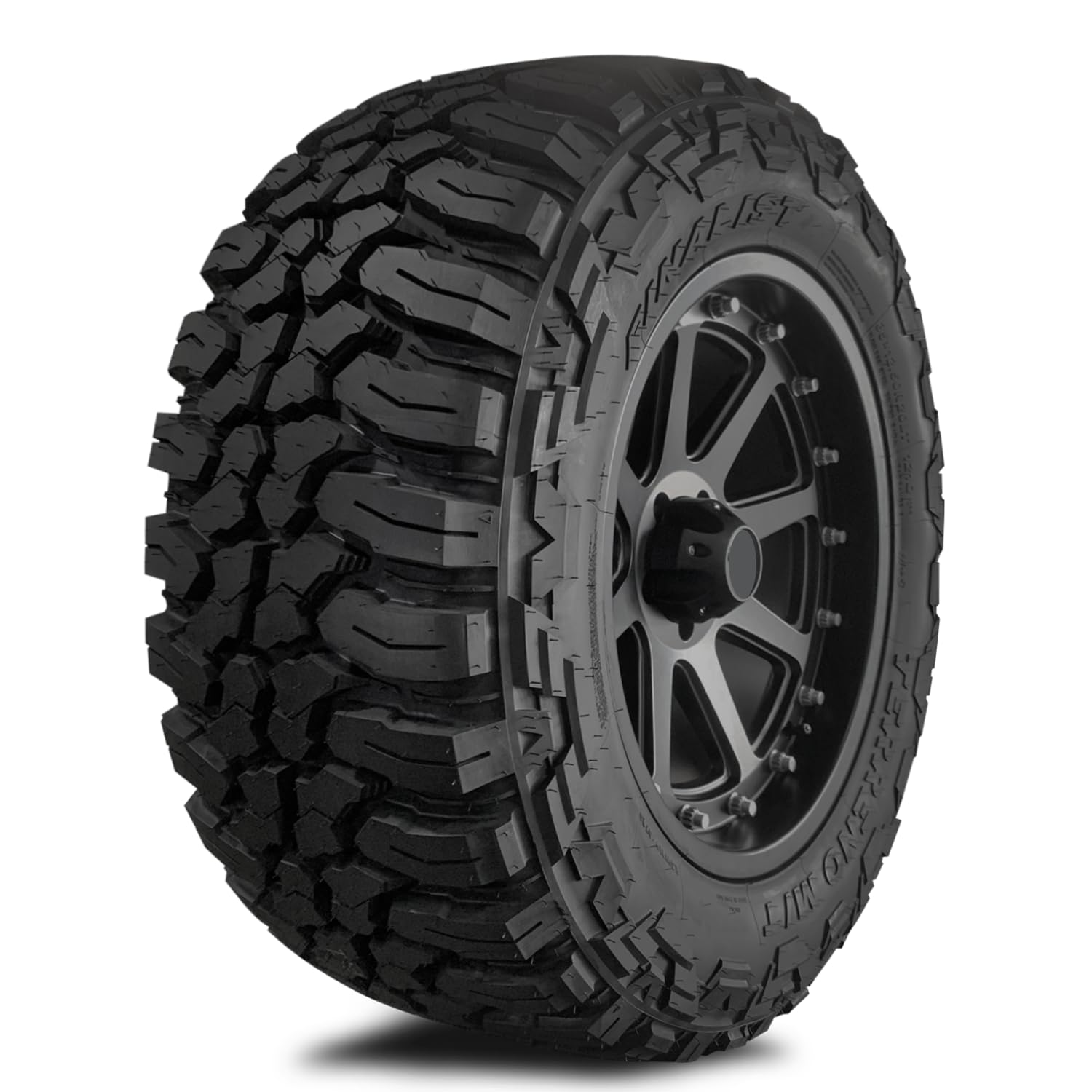
The Finalist Terreno-Pro competes directly with the Cosmo Mud Kicker and Road One Cavalry on price but brings a larger diameter to the table: 32.99 inches, which is designed for modern 17-inch rims. For owners of modern trucks with 17-inch wheels who want a 10-ply mud tire without stepping up to the premium price of the Yokohama, this is the natural middle ground.
Buyers report that after 2,500 miles the tire offers a “great ride and not as loud” as expected for a mud terrain, which suggests the tread pitch has been designed to minimize harmonic drone at highway speed. At 56.84 pounds, it is lighter than the Yokohama but heavier than the Accelera, so it won’t cause excessive wear on your front-end components. One owner of a Gladiator noted it has “excellent grip in all weather” but that there is a “slight wobble above 60 mph” — a balanced tire install is critical here.
The spec that makes this tire stand out is the 80 psi maximum pressure rating, which is paired with a Load Range E (10-ply) construction. At the maximum load of 3,195 pounds per tire, it can handle a heavy truck with a camper shell or a loaded tool bed without squatting the sidewalls — a real advantage over the smaller Accelera and Atlander options. This is the exact budget buyer it is perfect for.
Why we’d pick it
- Large 32.99-inch diameter fits many modern truck builds
- 10-ply Load Range E with 80 psi max pressure
- Owners mention surprisingly quiet ride for a mud tire
A few caveats
- Some customers note a wobble above 60 mph requiring careful balancing
- No mileage warranty — unlike the Cosmo Mud Kicker’s 50k-mile coverage
6. Accelera M/T-01 LT235/85R16
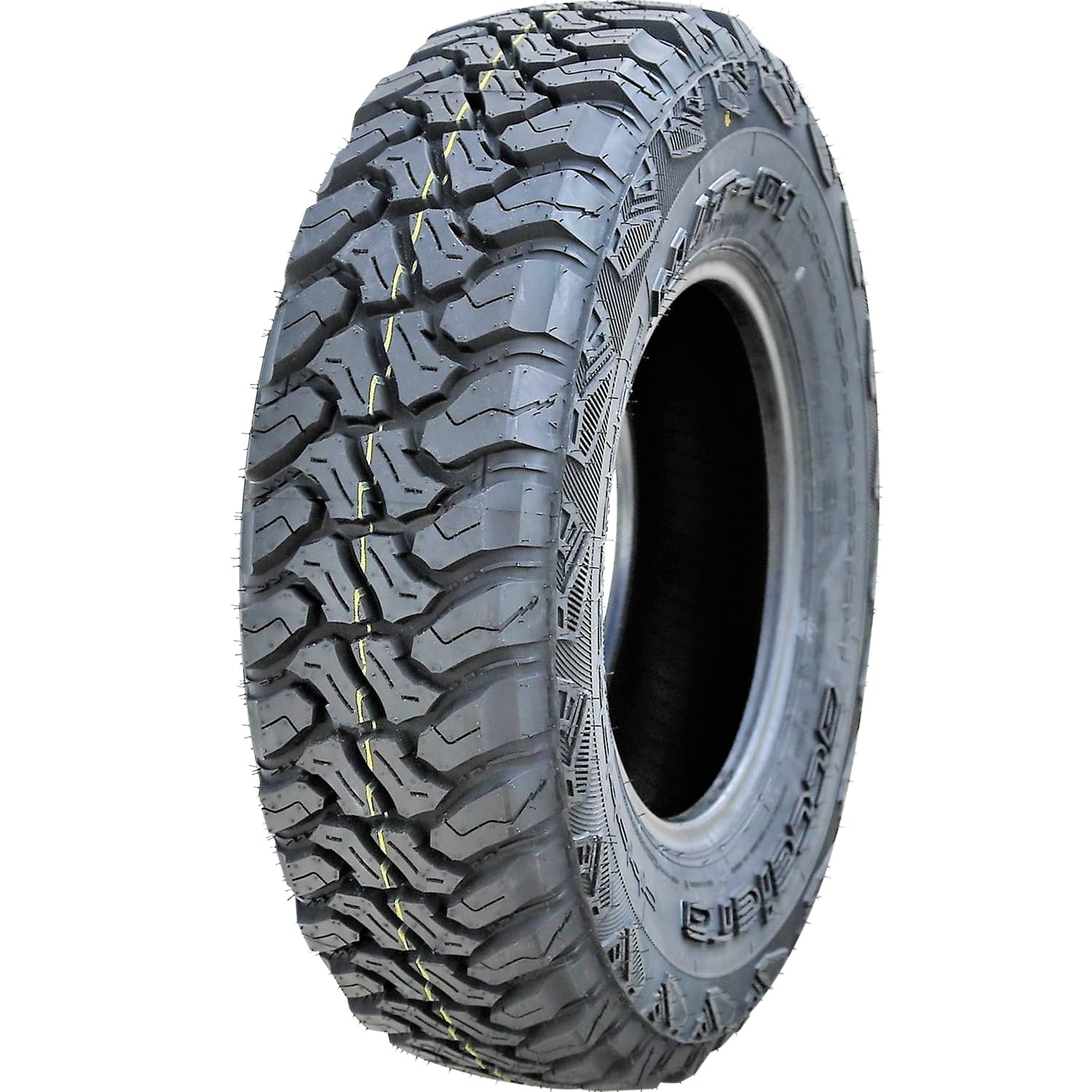
This tire is perfect for the budget-conscious truck owner who drives mostly on pavement but wants aggressive mud tread for the occasional trail without spending premium-tier money.
That lightness translates directly into easier mounting, less wear on your brake rotors and wheel bearings, and a noticeable improvement in acceleration and fuel economy compared to heavy 10-ply tires. For a daily-driven truck that sees mud on weekends, that weight savings is a genuine comfort benefit. What you give up with the lighter weight is sidewall protection. A 10-ply rating (Load Range E) still gives it decent puncture resistance for gravel roads, but buyers acknowledge it is “a little rumbly at lower speeds” — a typical mud tire noise that you accept for the off-road grip. One buyer mentioned “balanced 2oz and under per wheel,” which means these tires come reasonably balanced from the factory, saving you hassle at the mounting shop. The 3,086-pound load capacity per tire (load index 120) is solid for a half-ton truck but falls short of the heavy-duty loads the Cosmo or Yokohama can handle.
The downside is clear: less off-road durability for more on-road comfort and a lighter wallet.
Strong points
- Lightest mud tire at 34 lbs — easier on suspension and fuel
- Good on-road ride quality for a mud terrain tire
- Reviewers point out excellent off-road traction and value
Before you buy
- Thinner sidewall than the 14-ply Road One or the GEO-SHIELD Yokohama
- No mileage warranty — limited long-term value guarantee
7. Atlander Roverclaw M/T I LT235/85R16
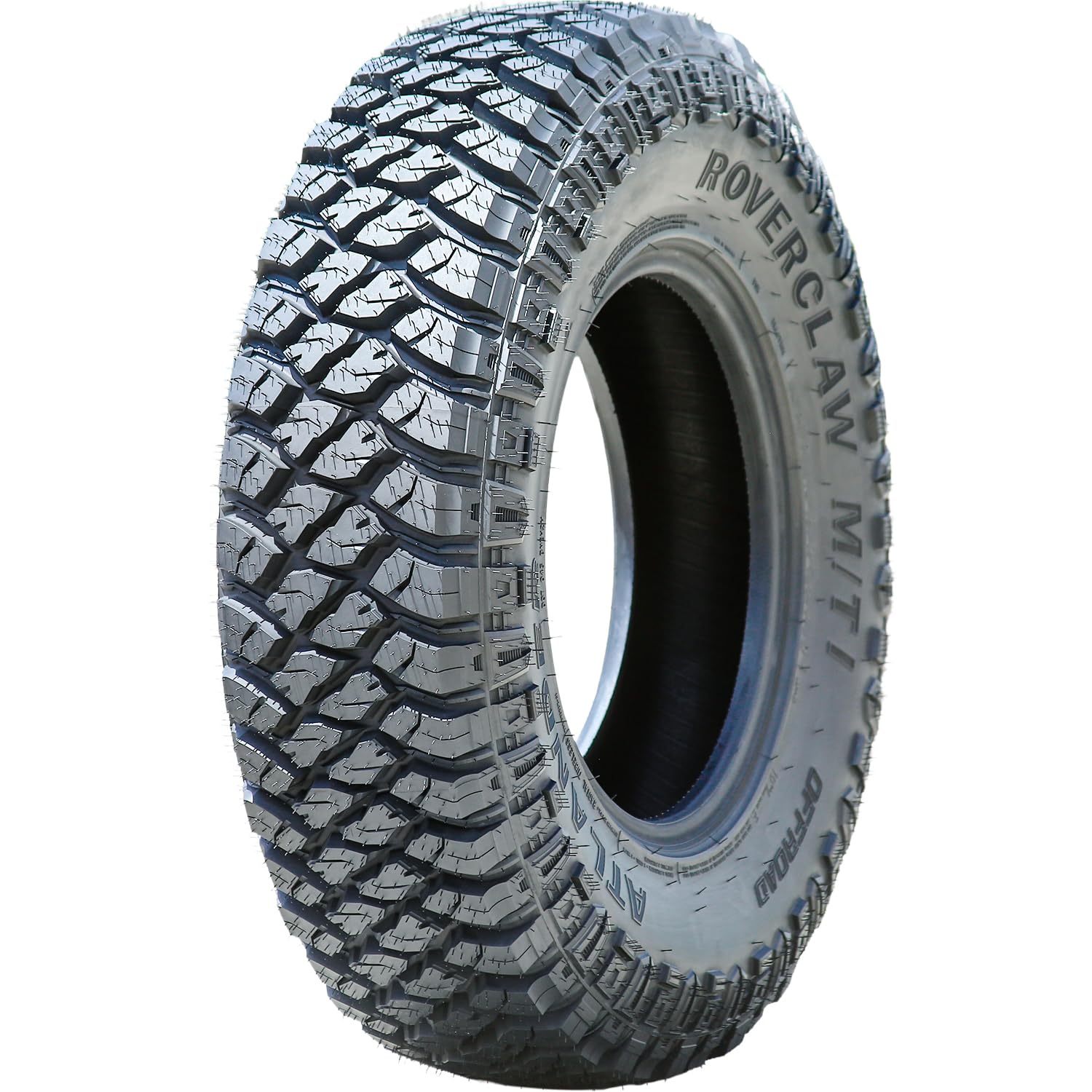
The Atlander Roverclaw M/T I enters this guide at the most accessible price point, but unlike some budget tires that cut corners on rubber quality, shoppers say it performs well in the real-world conditions that matter. One owner put 3,500 miles on a Land Rover Discovery through red clay mud, wet roads, and gravel, noting it “balanced well” and had “excellent wet road traction, no hydroplaning” — a strong showing for a tire at this entry-level cost.
What you give up for that low entry price is the higher load capacity and heavier sidewall protection of the Cosmo or Yokohama options. At 3,086 pounds per tire (load index 120) and a 10-ply rating, it matches the Accelera on paper, but the raised black letter (RBL) styling gives it a tougher visual statement than the black sidewall (BSW) of the Accelera. Some buyers report a “typical MT hum” that settles in after the first 500 miles, which is standard for aggressive tread. One owner reported they “put 1000 miles on them so far and they still look new” — suggesting the rubber compound doesn’t wear down prematurely.
This tire is a smart value play for the budget buyer who wants a real mud terrain without spending for a premium brand and who understands that a lighter-duty mud tire requires gentler treatment on sharp rocks than a heavy 14-ply tire. For a daily-driven truck that occasionally pulls a trailer through a muddy construction site or trail, it is a cost-effective choice that will get the job done.
What we like
- Low entry price for a fully Load Range E 10-ply mud tire
- Raised black letters give a custom look without extra cost
- Buyers confirm excellent wet road and clay mud traction
The downsides
- Sidewall is less durable than 14-ply or premium tires
- No mileage warranty — long-term value is uncertain
Understanding the Specs
Ply Rating vs Load Range — not the same thing
Ply rating (like 6-ply, 10-ply, or 14-ply) is an old system that originally referred to the number of cotton cord layers in the tire. Modern tires use single-ply steel or polyester belts that are tougher than multiple cotton layers, so the ply rating is now a rough equivalency system — a “10-ply” tire is expected to be about as tough as a 10-cotton-layer tire from the 1950s. Load Range (D, E, F, etc.) is the modern way to denote the tire’s maximum safe inflation pressure and load capacity. Every Load Range E tire has a maximum pressure of 80 psi, while a Load Range D has 65 psi. The higher the Load Range letter, the more air it can hold and the more weight it can carry without overheating.
Void Ratio — the real mud-flinging secret
Void ratio is simply the percentage of the tread surface that is open space (the grooves and channels) versus solid rubber (the lugs). Aggressive mud tires typically aim for a void ratio between 30% and 40%. A higher void ratio means the tire can pack in and then fling out more mud per revolution, which keeps the tread biting instead of glazing over. The trade-off is that higher void ratio tires are noisier on pavement because each tread block hits the road at a slightly different angle, creating a drone. That is why the Road One Cavalry RL1264 with its directional tread pattern tends to be quieter than open-lug designs — the directional vane channels noise away from the cabin.
FAQ
Can I put a 10-ply mud tire on a half-ton truck that normally takes passenger tires?
Is a directional mud tire like the Road One Cavalry harder to rotate?
How long do budget mud tires like the Accelera M/T-01 actually last?
Final Thoughts: The Verdict
For most truck owners who need a serious mud tire that doubles as a work tire, the best aggressive mud tires for trucks overall is the Cosmo Tires Mud Kicker M/T because it pairs a 50,000-mile treadwear warranty with a proven track record in heavy plow and hay-haul use. If you want highway-quiet performance that still bites hard in the mud, grab the Road One Cavalry M/T RL1195. And for the budget-conscious builder who still wants genuine mud-terrain capability, the Atlander Roverclaw M/T I delivers real-world performance that buyers confirm holds up in wet red clay and trail conditions while staying affordable.