
Air conduction headphones solve a fundamental conflict: how to enjoy high-fidelity audio without isolating yourself from the world. Unlike traditional earbuds that plug the ear canal or bone conduction models that vibrate through the cheekbone, air conduction speakers sit just outside the ear and project sound directly inward—preserving situational awareness for runners, cyclists, office workers, and anyone who needs to stay connected to their surroundings.
I’m Min — the co-founder and writer behind Gadgets Feed. I’ve spent hundreds of hours researching open-ear audio designs, comparing driver architectures, battery claims, and real-world sound leakage data to separate marketing hype from genuinely useful engineering.
Whether you need all-day comfort for conference calls, a secure fit for sprints, or deep bass without canal occlusion, this guide to the best air conduction headphones breaks down the seven most compelling models on the market today.
How To Choose The Best Air Conduction Headphones
Air conduction headphones share a common goal—leaving the ear canal open—but differ dramatically in driver size, earhook geometry, battery endurance, and water resistance. Understanding these variables prevents the common mistake of buying a model that either lacks bass or doesn’t stay put during movement.
Driver Size and Positioning
The speaker driver’s diameter directly influences how much air it can move. Larger drivers (16mm to 18mm) produce fuller bass and higher volume ceilings, but only if positioned correctly. A driver that sits too far from the ear canal reduces perceived loudness and bass depth regardless of size. Look for models that angle the driver toward the ear opening—the Nothing Ear (open) uses a 50-degree tilt, while the Cleer ARC 4 Plus places the driver closer to the canal than typical open-ear designs.
Battery Life and Charging Speed
Open-ear headphones typically consume more power to produce equivalent perceived loudness than in-ear models, making battery capacity a critical spec. Total playback with the charging case should exceed 30 hours for all-day-plus-weekend coverage. Fast charging is equally important: a 10-minute charge should provide at least two hours of playback. Models like the SHOKZ OpenFit 2+ and JBL Endurance Zone offer this, while the Yistao Gen 2’s 5-minute quick-charge feature is rare at its price tier.
Water and Dust Resistance
IP ratings matter more for open-ear headphones than many buyers realize—sweat, rain, and dust are inevitable during outdoor use. IP54 (dust-protected, splash-resistant) covers light workouts, while IPX7 (immersion up to 1 meter) suits heavy rain and gym sessions. The JBL Endurance Zone’s IP68 rating is exceptional, guaranteeing protection against sand, salt water, and high-pressure spray. For occasional jogging or commuting, IP55 is sufficient; for trail running or coastal activities, prioritize IPX7 or higher.
Sound Leakage and Privacy
Because air conduction headphones don’t seal the ear, some sound inevitably escapes. Directional driver designs and tuning holes reduce leakage to the point where someone sitting one meter away hears only faint audio at moderate volumes. The SHOKZ OpenFit 2+ with DirectPitch 2.0 technology and the Cleer ARC 4 Plus with its closer driver placement both score well here. If you take calls in open offices or listen to podcasts on public transit, prioritize a model with published leakage figures or user consensus on privacy.
Quick Comparison
On smaller screens, swipe sideways to see the full table.
| Model | Category | Best For | Key Spec | Amazon |
|---|---|---|---|---|
| SHOKZ OpenFit 2+ | Premium | All-day wear + Dolby Audio | 48H total playtime | Amazon |
| Cleer ARC 4 Plus | Premium | Spatial audio + IPX7 | Dolby Atmos + head tracking | Amazon |
| JBL Endurance Zone | Mid-Range | Extreme durability + calls | IP68 + 4 mics | Amazon |
| Nothing Ear (open) | Mid-Range | Ultra-light design + USB-C | 30H total playtime | Amazon |
| Raycon Essential Open Ear | Mid-Range | Everyday comfort + long battery | 36H total playtime | Amazon |
| SHOKZ OpenFit Air | Mid-Range | Budget-friendly SHOKZ experience | 28H total playtime | Amazon |
| Yistao Gen 2 | Budget | Long battery on a budget | 60H total playtime | Amazon |
In‑Depth Reviews
1. SHOKZ OpenFit 2+

The SHOKZ OpenFit 2+ sets a new benchmark for all-day open-ear listening with a 17.3mm low-frequency driver that delivers genuinely noticeable bass—rare for a design that leaves the ear canal completely unblocked. A separate independent tweeter handles treble detail, and the Shokz DualBoost architecture combined with OpenBass 2.0 gives tracks a fullness that most open-ear competitors lack. Dolby Audio support adds another layer of spatial dimension when enabled through the companion app.
At 9.4 grams per earbud, the OpenFit 2+ is lighter than many wired in-ear monitors, making extended wear essentially forgettable. The nickel-titanium earhooks use Shokz Ultra-Soft Silicone 2.0 at contact points, so the fit remains secure during lateral head movement or jogging. Physical multifunction buttons offer reliable tactile feedback—a welcome alternative to finicky touch controls when your hands are sweaty or gloved.
Battery endurance is class-leading: 11 hours per charge plus 37 hours in the wireless charging case yields a total of 48 hours. The four AI-enhanced microphones filter wind and background noise effectively during calls, and Bluetooth 5.4 with multipoint pairing lets you switch between a laptop and phone without re-pairing. IP55 water resistance is adequate for rain and sweat, and the wireless charging case adds daily convenience.
Why it’s great
- Best bass depth among open-ear models
- 48-hour total battery with wireless charging
- Physical buttons work with gloves
Good to know
- EQ only offers 5 bands in the app
- Durability beyond 12 months not yet confirmed
2. Cleer ARC 4 Plus
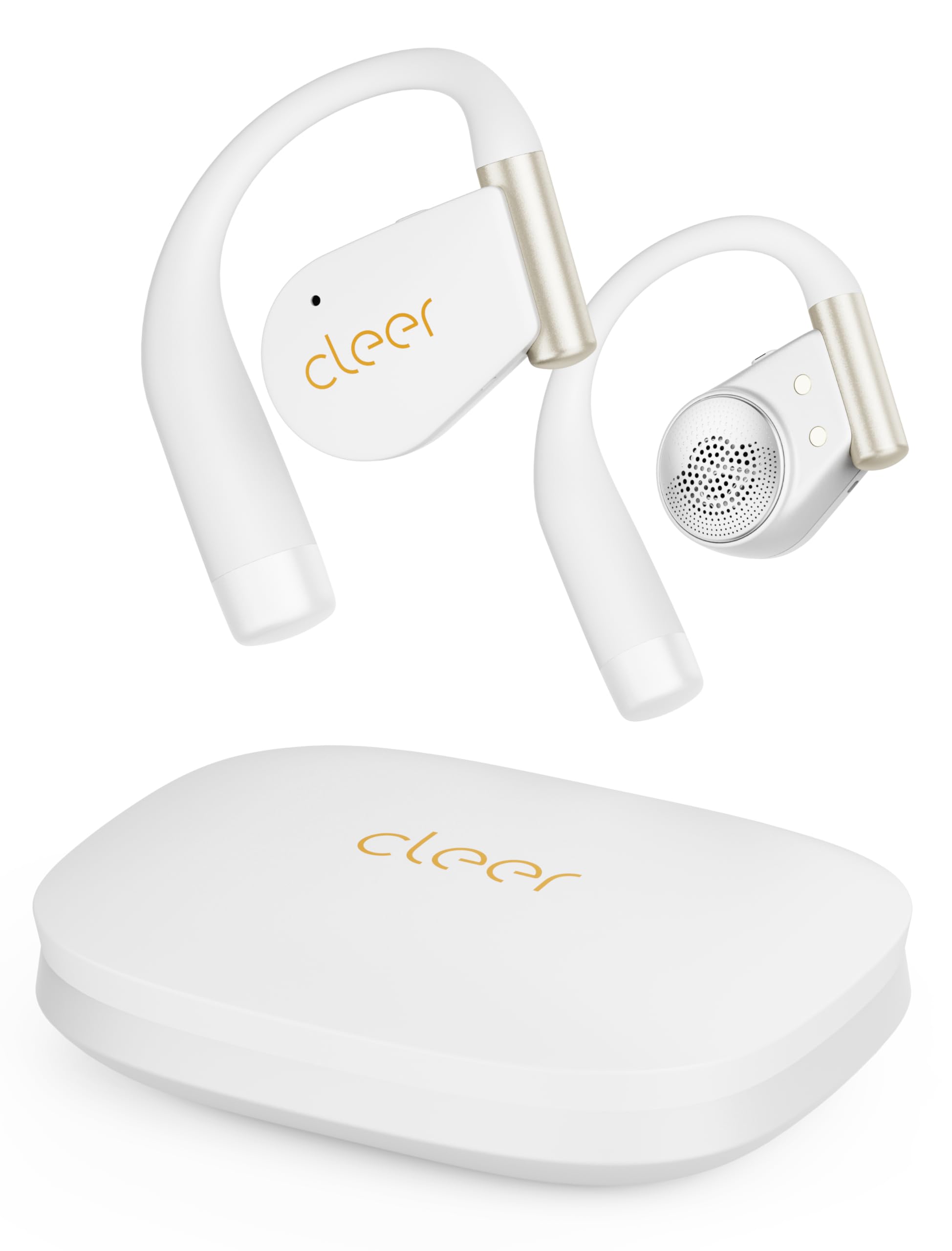
The Cleer ARC 4 Plus elevates open-ear audio to a cinematic experience with Dolby Atmos, THX certification, and Snapdragon Sound—a combination rarely seen outside premium over-ears. The 16.2mm dynamic drivers sit closer to the ear canal than most open-ear competitors, which dramatically reduces sound leakage and improves perceived loudness. Users consistently report fuller bass and cleaner highs than any other model in its price bracket.
Head-tracking spatial audio creates a genuinely immersive soundstage for movies and games, with the soundfield remaining anchored to the device rather than your head rotation. The IPX7 rating means these earbuds can survive immersion in up to one meter of water—ideal for heavy rain, extreme sweat, or accidental spills. Adaptive volume control automatically adjusts playback based on ambient noise levels, and the Cleer+ app offers custom EQ tuning.
Battery life reaches 9 hours per charge and 34 hours total with the charging case. Bluetooth 5.4 ensures stable, low-latency connections. The case is compact and pocketable, though some users note the lid magnets are weaker than ideal. Double-tap touch controls can occasionally be unresponsive during intense workouts.
Why it’s great
- Best-in-class spatial audio with head tracking
- IPX7 waterproof for extreme conditions
- Minimal sound leakage for a private experience
Good to know
- Earhooks have zero adjustability
- App interface can be laggy
3. JBL Endurance Zone
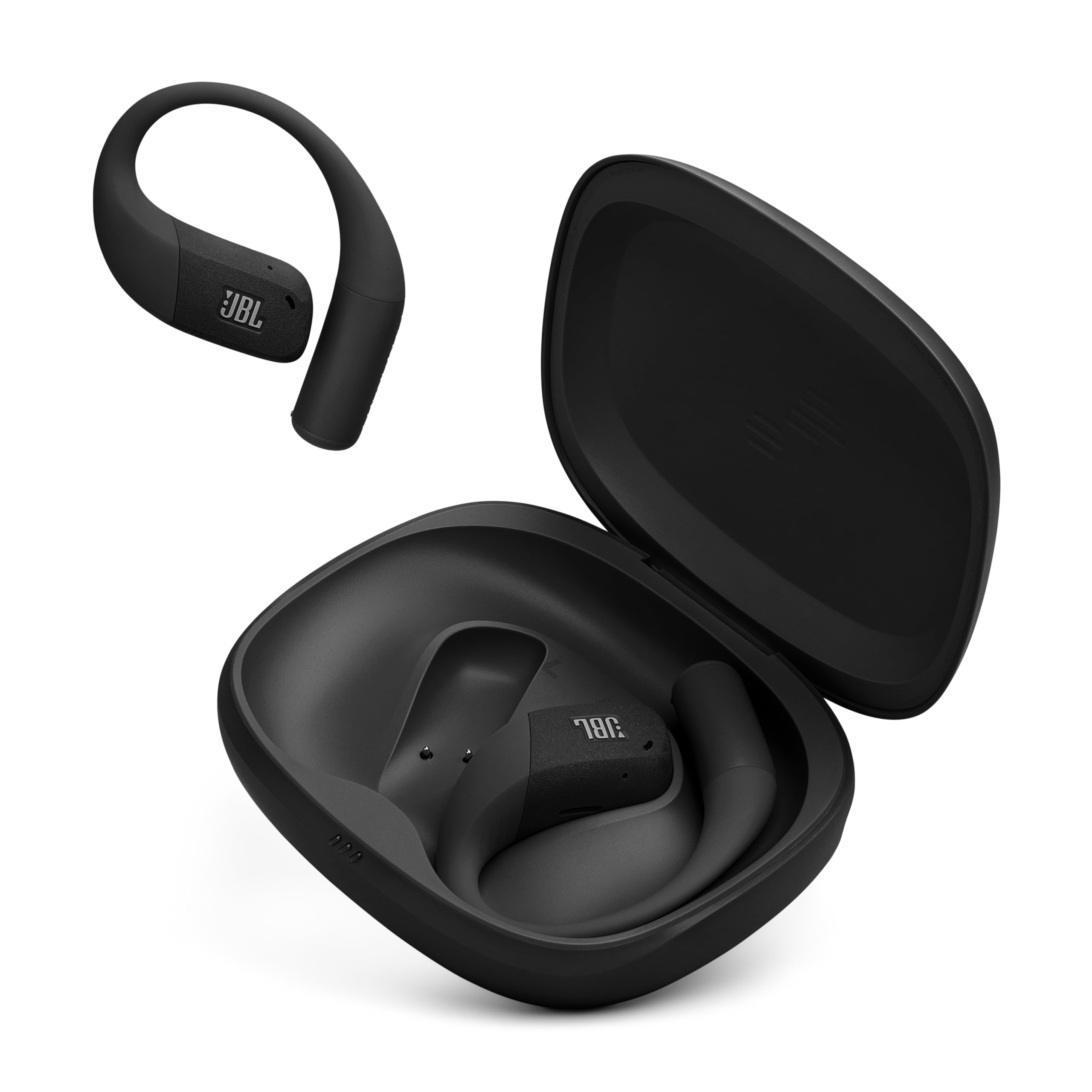
The JBL Endurance Zone is built for the harshest environments: an IP68 rating means complete protection against dust, sand, sweat, rain, and even temporary submersion in salt water. The rugged charging case also carries a scratch-resistant finish and a lanyard hole for bag attachment. Adaptive bass boost keeps the 18x11mm dynamic driver delivering punchy low-end even at lower volumes—ideal for maintaining rhythm during outdoor runs without maxing out the volume.
Four beamforming microphones—two per earbud—use an algorithmic noise-suppression system that excels at isolating your voice from wind and ambient chatter. JBL’s hydrodynamic windproof design reduces air friction distortion, making calls crystal-clear even during breezy jogs. Google Fast Pair and Google Finder integration add everyday convenience, and the 10-band EQ in the JBL Headphones app allows granular sound tuning.
Playtime is 8 hours per charge with an additional 24 hours from the case, totaling 32 hours. A 10-minute quick charge yields 3 hours of playback. The secure-fit earhooks use liquid silicone with adaptable memory wire, though some users with smaller ears report the fit can be loose during high-impact activities. Touch controls are sensitive and may require practice to avoid accidental triggers.
Why it’s great
- IP68 protection is unmatched open-ear
- Best call quality with 4-mic beamforming
- Adaptive bass boost adds punch
Good to know
- May not fit smaller ears securely
- Touch controls can be overly sensitive
4. Nothing Ear (open)
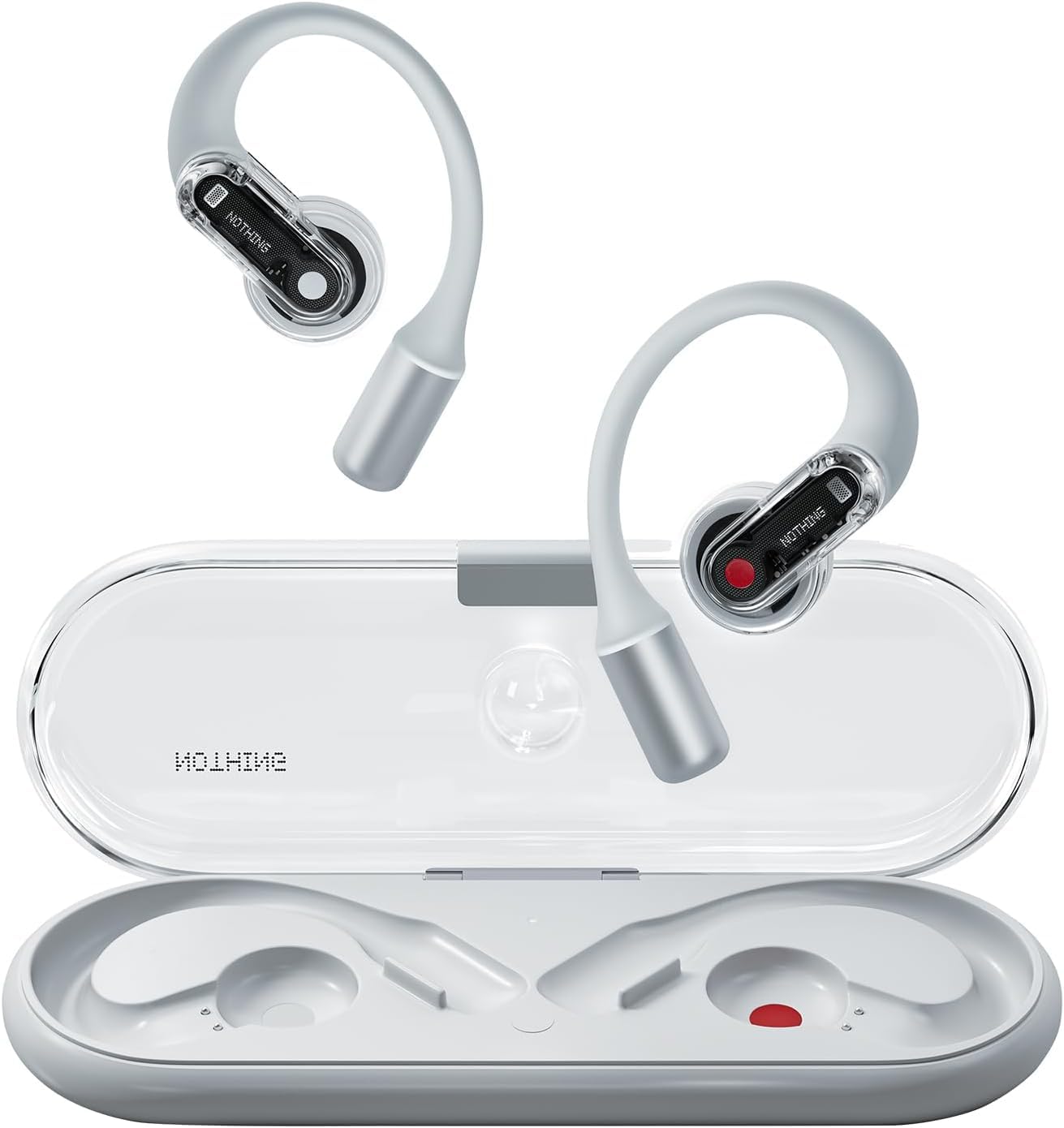
The Nothing Ear (open) carves a distinct niche with a 50-degree tilt angle that optimizes driver placement relative to the ear canal. This ergonomic decision, combined with a three-point balance system, makes these earbuds feel nearly weightless—many users report forgetting they’re wearing them after just minutes. The skin-friendly silicone earhooks provide secure adhesion without clamping pressure, making them suitable for extended desk sessions or active commutes.
Sound quality is driven by a stepped-diaphragm driver with a titanium alloy coating. The result is a balanced presentation with clear treble and controlled midrange, though bass extension is moderate compared to larger-driver models. The Nothing X app offers EQ customization and low-latency gaming mode. Dual microphones with AI noise reduction, trained on 28 million samples, deliver clear call quality even in moderately noisy environments.
Battery life is rated at 8 hours from the earbuds and 22 additional hours from the transparent fast-charging case, totaling 30 hours. Bluetooth 5.3 with multipoint pairing supports seamless switching between devices. The case itself is notably thin and pocket-friendly. IP54 protection handles splashes and dust, but not heavy rain or immersion. Some users note that the plastic cylinder on the earhook adds minimal weight and doesn’t improve stability.
Why it’s great
- Extremely lightweight and forgettable fit
- App integration with EQ and low-latency gaming
- Transparent case is compact and fast-charging
Good to know
- Bass is modest compared to larger drivers
- Case lid doesn’t open fully for easy access
5. Raycon Essential Open Ear Earbuds
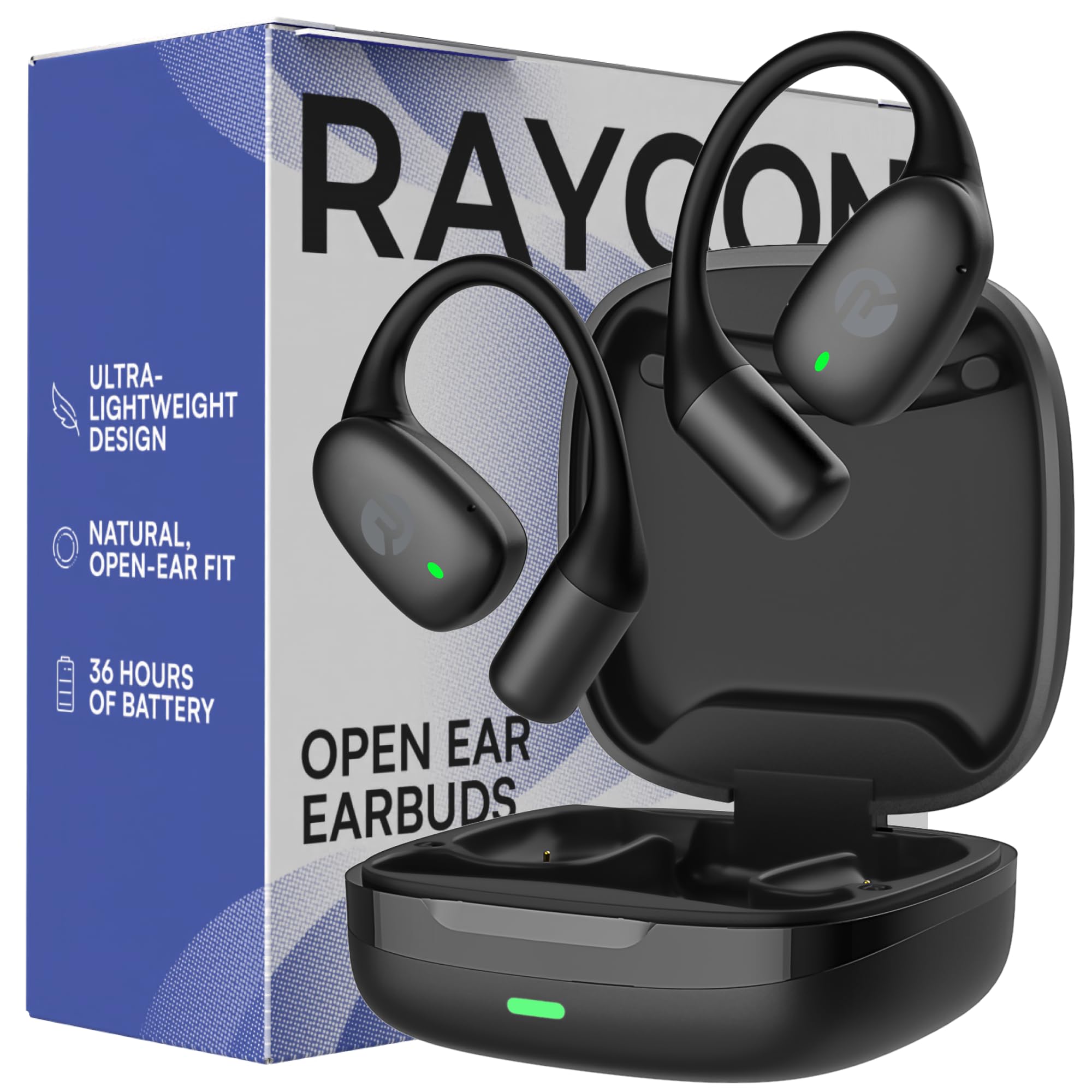
Raycon’s Essential Open Ear Earbuds land as a strong mid-range contender, balancing 36 hours of total battery life with a featherlight, ear-hugging design that stays put during vigorous motion. The open-ear housing projects sound without blocking ambient noise, making these a safe choice for runners and cyclists who need to hear traffic or announcements. Bluetooth 6.0 provides faster pairing and stable connections up to 33 feet.
Sound quality leans toward clarity for spoken-word content like podcasts, audiobooks, and calls. The three sound modes let you tailor the frequency response, but audiophiles should temper expectations—bass isn’t as punchy as the SHOKZ OpenFit 2+ or Cleer ARC 4 Plus. Volume drops noticeably when you push past 75 percent to extend battery life, and some users report that the touch controls can accidentally hang up calls when adjusting the fit.
The IPX4 sweat-resistance rating is sufficient for gym sessions and light rain but won’t survive immersion. The charging case is compact and pocketable. At normal listening levels, battery life approaches the advertised 36 hours, but at loud volumes that can drop to around 4–5 hours per charge. The hooks fit comfortably under earmuffs or hats, making these versatile for cold-weather commuting.
Why it’s great
- Excellent for spoken-word content
- Secure fit for active movement
- Bluetooth 6.0 for fast, stable pairing
Good to know
- Bass is not as strong as premium competitors
- Touch controls can interfere with calls
6. SHOKZ OpenFit Air

The SHOKZ OpenFit Air brings the brand’s trusted open-ear DNA to a more accessible price point without sacrificing core comfort. At just 0.3 ounces per earbud, the adaptable earhook design wears invisibly—even under glasses—and stays locked during runs, yoga, or cycling. DirectPitch technology with tuning holes delivers precise, natural audio with minimal leakage, so your podcast doesn’t bleed across the subway car.
Sound quality is characterized by a balanced, mid-centric tuning with decent treble articulation. Bass is present but not powerful—this is a deliberate trade-off to preserve the open, airy soundstage and situational awareness. The four smart microphones handle multipoint pairing across two devices and deliver clear call quality. The Shokz App adds customizable EQ modes and button function personalization, though the control scheme (only four touch zones) can feel limited.
Battery life reaches 6 hours per charge with an additional 22 hours from the case, totaling 28 hours. A 10-minute quick charge provides 2 hours of playback—handy for unexpected calls. IP54 water resistance covers sweat and light rain but not submersion. The charging case’s magnetic alignment makes single-ear use and re-casing intuitive. Some users note that the lack of a manual power-off option is an inconvenience.
Why it’s great
- Proven SHOKZ comfort and durability
- Works well with glasses
- DirectPitch minimizes sound leakage
Good to know
- Bass is modest compared to larger drivers
- No manual power-off feature
7. Yistao Gen 2 Open Ear Headphones
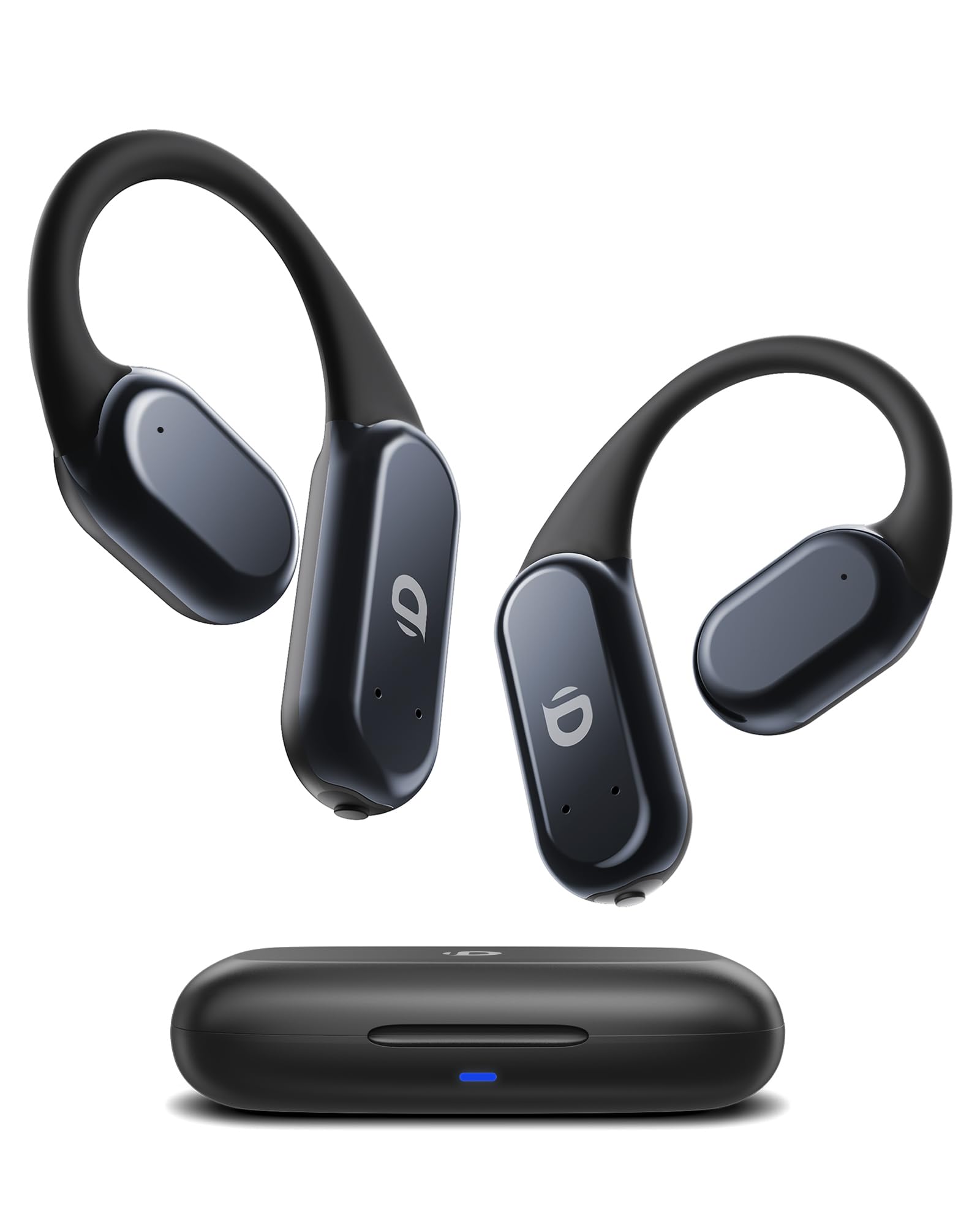
The Yistao Gen 2 Open Ear Headphones double down on endurance: 15 hours per charge plus four additional charges from the wireless case equal a total of 60 hours—the highest in this comparison. The ToneTerra system and SonicBoost 2.0 deliver a 30 percent volume increase over the previous generation, making these suitable for outdoor environments where ambient noise is high. IP68 protection means these are immune to dust, sweat, and full submersion, rivaling the JBL Endurance Zone’s ruggedness.
Sound clarity is adequate for podcasts, audiobooks, and casual music listening, though bass is on the lighter side—consistent with the bone-conduction heritage of this design. Dual EQ modes let you switch between music and reading profiles: Music Mode emphasizes bass and treble, while Reading Mode focuses on vocal clarity to reduce ear fatigue during long sessions. Bluetooth 6.0 provides instant pairing from the case and a stable range exceeding 25 feet.
The upgraded liquid silicone ear-contact surface improves comfort and reduces slipping compared to previous hard-plastic models. However, some users report that the fit can loosen during vigorous activity, especially when wearing glasses. Battery degradation has been noted in some units after extended use, with the left earbud draining faster than the right. The case is functional but feels less premium than competitors.
Why it’s great
- Highest total battery life at 60 hours
- IP68 protection equals premium durability
- Dual EQ modes for music and reading
Good to know
- Bass presence is subdued
- Fit may loosen with glasses during activity
FAQ
Are air conduction headphones the same as bone conduction headphones?
How much sound leakage is normal from open-ear headphones?
Final Thoughts: The Verdict
For most users, the best air conduction headphones winner is the SHOKZ OpenFit 2+ because it combines the deepest bass available in an open-ear design with 48 hours of battery life, wireless charging, and a comfortable, secure fit for all-day wear. If you prioritize immersive spatial audio and extreme water resistance, grab the Cleer ARC 4 Plus. And for rugged call quality and IP68-rated protection during the harshest workouts, nothing beats the JBL Endurance Zone.