
The air in your bedroom carries dust, pet dander, pollen, and VOCs that trigger congestion, sneezing, and restless nights. An air filter for room use captures these particles before they reach your lungs, creating a cleaner sleep environment. The challenge is finding a unit with the right CADR rating for your square footage without overspending on features you do not need.
I’m Min — the co-founder and writer behind Gadgets Feed. I analyze product specifications, filter technologies, and real-world performance data to separate marketing claims from measurable air quality improvements.
After researching the latest HEPA filtration technologies, room coverage specifications, and user feedback across multiple price tiers, I built this guide to help you select the best air filter for room use that matches your space and budget.
How To Choose The Best Air Filter For Room
Selecting the right room air filter requires balancing square footage coverage, filtration efficiency, noise output, and long-term maintenance. A unit that filters a 500 sq ft space will not help a 150 sq ft bedroom if you run it on low speed to keep noise down. The following criteria will help you match a filter to your actual living space.
Match CADR to Your Room Size
Clean Air Delivery Rate (CADR) tells you how quickly the filter removes smoke, dust, and pollen from a given space. A useful rule of thumb: multiply your room’s square footage by 1.5 to find the minimum CADR you need for smoke. A 200 sq ft bedroom requires a CADR of at least 300 for smoke to achieve four air changes per hour.
Filtration Stage Quality
True HEPA captures 99.97% of particles at 0.3 microns, while UltraHEPA traps particles down to 0.003 microns — 100 times smaller. For most bedrooms, True HEPA suffices. If you have severe allergies or live in an area with wildfire smoke, a unit with UltraHEPA or HEPA-Advanced filtration provides noticeably cleaner air.
Noise Levels at Operating Speeds
A filter running on high speed cleans faster but produces noise between 50–60 dB, which can disrupt sleep. Look for sleep mode ratings at or below 25 dB — about the level of a whisper. Units with 360-degree intake and outlet designs tend to move air more efficiently at lower fan speeds, reducing the need for high-speed operation.
Filter Replacement Frequency and Cost
HEPA filters typically need replacement every six to twelve months. Some premium units offer washable pre-filters that extend the main filter’s life. Calculate the total cost of ownership over five years by multiplying expected filter replacements by their price — a budget-friendly unit with expensive proprietary filters may cost more than a premium unit with longer-lasting filtration.
Quick Comparison
On smaller screens, swipe sideways to see the full table.
| Model | Category | Best For | Key Spec | Amazon |
|---|---|---|---|---|
| FreAire VisionAir HAP606 | Mid-Range | Real-time AQI monitoring | 360° intake, 20dB sleep mode | Amazon |
| GermGuardian AC4825E | Mid-Range | Budget-friendly reliability | 153 sq ft CADR, UV-C light | Amazon |
| Shark BreatheClear MAX HP362 | Premium | Zero filter changes for 6 years | HEPA-exceeding 99.98% capture | Amazon |
| AIRDOCTOR AD1000 | Premium | Small spaces, high efficiency | UltraHEPA 0.003 micron capture | Amazon |
| AIRDOCTOR AD3500 | Premium | Large room coverage | UltraHEPA, 2,520 sq ft max | Amazon |
In‑Depth Reviews
1. FreAire HEPA Air Purifier VisionAir HAP606
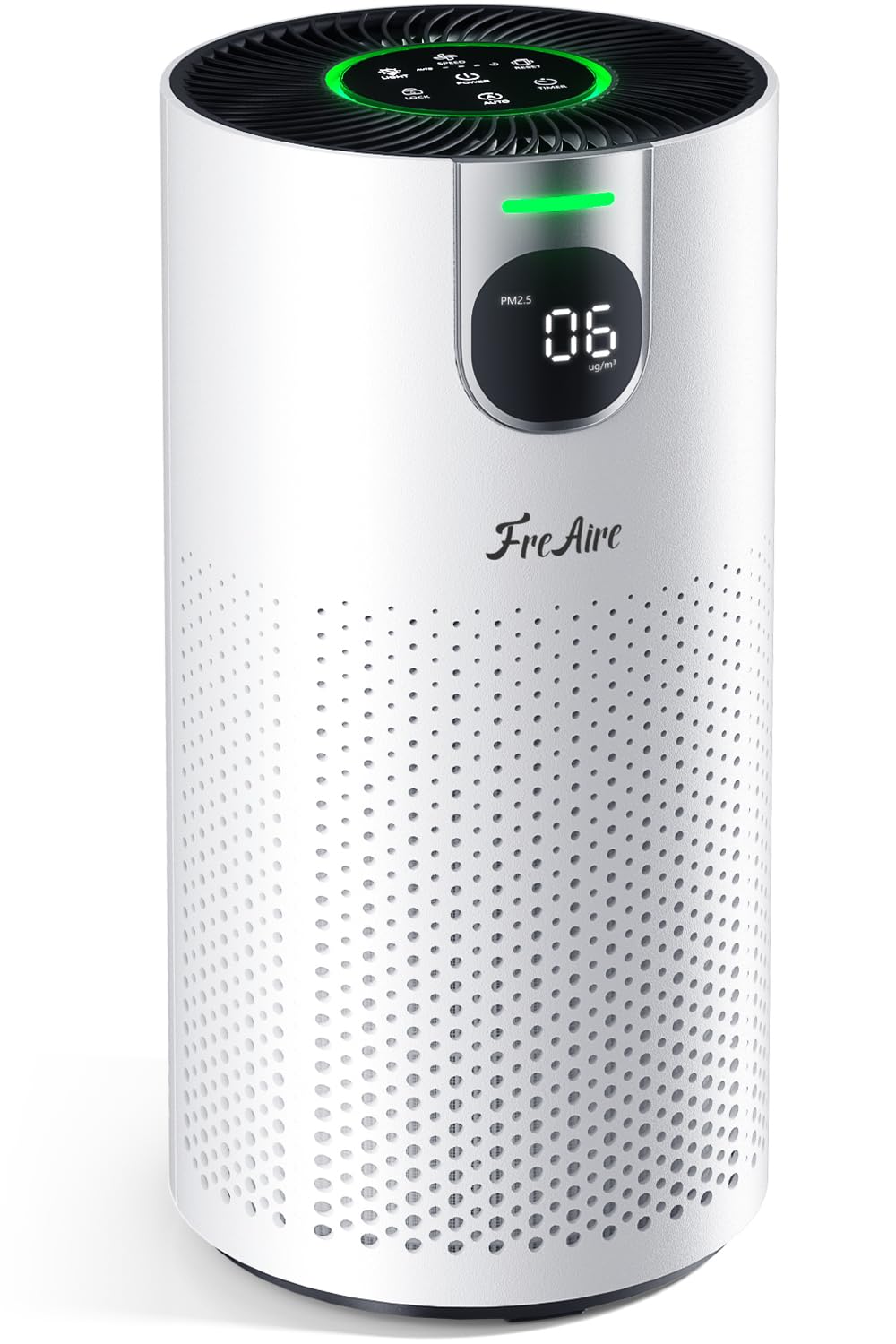
The FreAire VisionAir HAP606 delivers a rare combination of advanced monitoring and whisper-quiet operation. Its 360-degree air intake and outlet design refreshes rooms up to 1,800 sq ft every 15 minutes, making it suitable for large bedrooms or open-concept living areas. The real-time PM2.5 and AQI display shows you exactly when cooking smoke or dust triggers a purification cycle — no guesswork involved.
The three-layer H13 HEPA filtration captures 99.97% of particles down to 0.3 microns, and the sleep mode operates at just 20 dB — quieter than a library. In auto mode, the unit adjusts fan speed based on detected air quality, ramping up when you cook or dust and settling to near-silence when the air clears. The child lock and timer functions add practicality for family use.
At just 3.79 pounds and measuring 7.2 inches wide, this unit fits easily on a nightstand or desk without dominating the room. The lifetime tech support and 2-year warranty provide peace of mind. For users who want visible proof their room air filter is working, the FreAire’s real-time display delivers clarity that most competitors at this level lack.
Why it’s great
- Real-time PM2.5 and AQI display for instant feedback
- 20dB sleep mode is genuinely silent during use
- 360-degree intake maximizes coverage in large rooms
Good to know
- Display brightness may be distracting in a completely dark bedroom
- Replacement filters are proprietary to FreAire
2. GermGuardian HEPA Air Purifier AC4825E

The GermGuardian AC4825E has been a staple in the room air filter category since 2011, and for good reason. Its True HEPA PURE filter captures 99.97% of allergens as small as 0.1 microns, while the optional UV-C light provides an additional layer of defense against airborne bacteria. At 22 inches tall, the tower design fits into corners without taking up floor space.
Three speeds include a quiet sleep mode that users report is inaudible on low settings, though high speed produces noticeable white noise — tolerable in a living room but potentially disruptive in a nursery. The activated carbon filter reduces cooking and pet odors effectively, as confirmed by multiple long-term owners who report reduced asthma symptoms and less dust accumulation after six months of use.
Filter replacements are widely available and reasonably priced, with users reporting 6 to 8 months of effective filtration before the indicator light prompts a change. The washable pre-filter extends the main HEPA filter’s life by trapping larger particles first. For anyone seeking a proven, no-fuss air filter for room use without sacrificing performance, the GermGuardian remains a solid choice.
Why it’s great
- True HEPA captures particles as small as 0.1 microns
- UV-C light adds extra bacterial reduction capability
- Washable pre-filter reduces long-term maintenance costs
Good to know
- High speed produces noticeable noise near bedtime
- UV light stays on and may be bright in a dark room
3. Shark BreatheClear MAX HP362
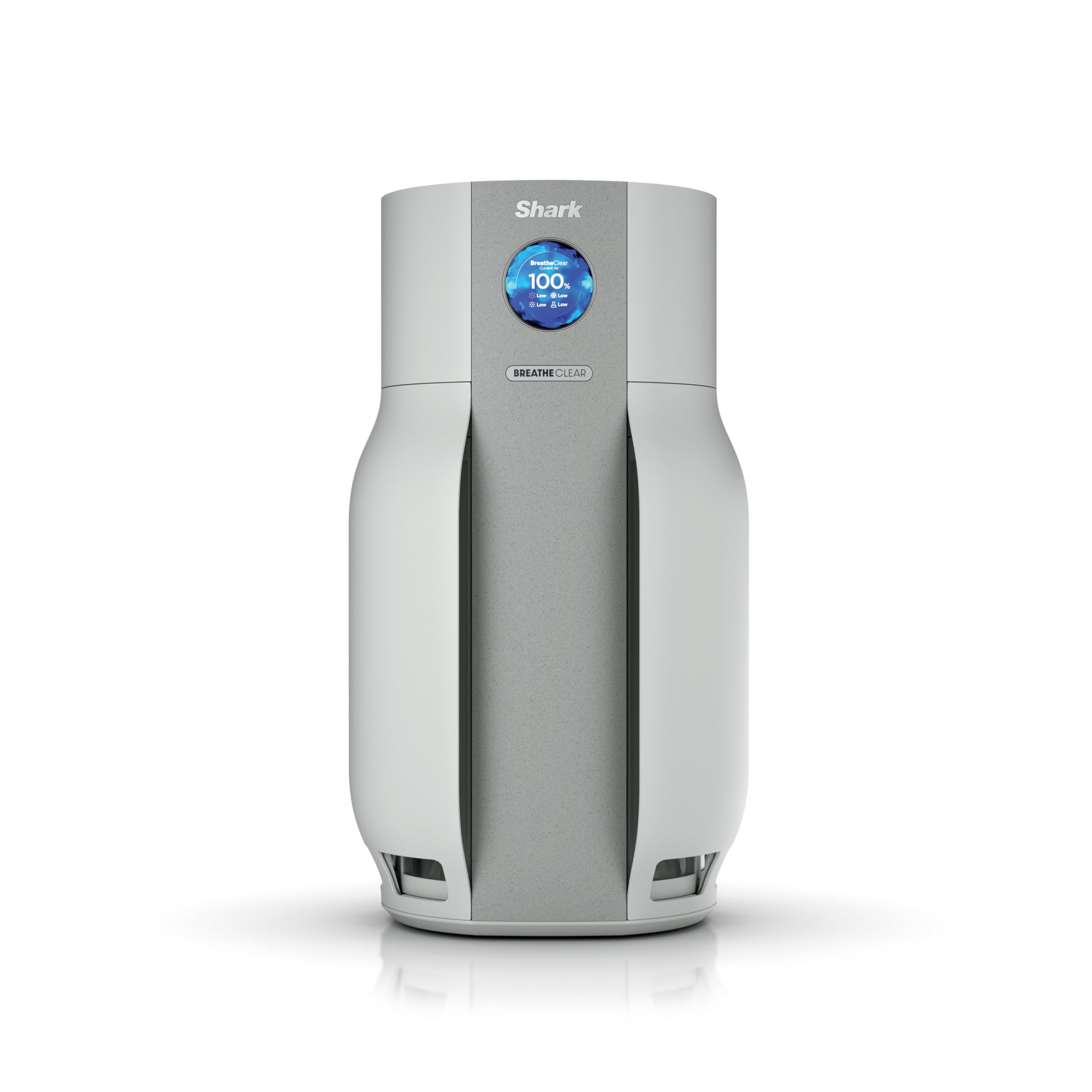
The Shark BreatheClear MAX HP362 redefines the ownership experience with its NeverChange filtration system — zero filter replacements for up to six years. The HEPA-Advanced multi-layer filtration captures 99.98% of particles at every speed, exceeding standard HEPA requirements. The unit scans air 3,600 times per hour using advanced sensors that detect particles, odors, and VOCs simultaneously.
A high-resolution LCD screen displays real-time air quality readings, live particle counts, and odor levels. Users report their apartment air quality improved from 53% to 98% after continuous use. The smart motion and light detection adjusts fan speed automatically — boosting purification when you enter the room and dimming the display in low light for uninterrupted sleep.
Covering up to 1,650 sq ft, this unit suits large bedrooms, open-concept homes, and basements. At 13.56 pounds and 23.38 inches tall, it is larger than most room filters, so measure your floor space before purchasing. The washable Debris Defense filter protects the main HEPA layer, and the whole-home coverage makes this a single-device solution for many households.
Why it’s great
- Zero filter changes for up to 6 years reduces long-term costs
- HEPA-exceeding 99.98% particle capture at all speeds
- Real-time LCD display with odor and VOC detection
Good to know
- Larger footprint requires dedicated floor space
- Premium upfront investment compared to traditional HEPA units
4. AIRDOCTOR AD1000
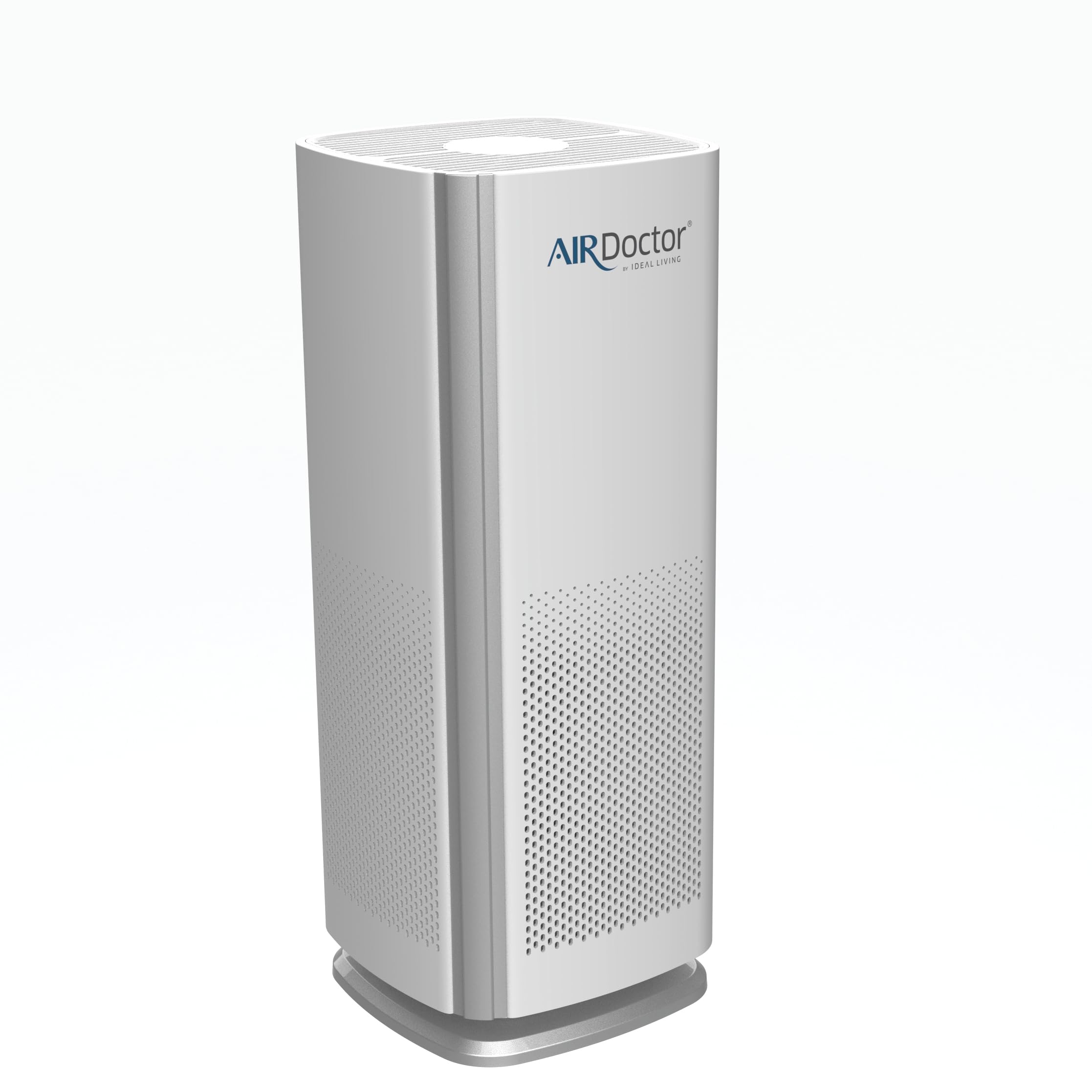
The AIRDOCTOR AD1000 brings hospital-grade filtration to smaller spaces. Its UltraHEPA filter captures 99.99% of airborne particles as small as 0.003 microns — 100 times smaller than the HEPA standard. The proprietary dual-action Carbon VOC filter tackles volatile organic compounds like formaldehyde, making this unit effective against chemical off-gassing from furniture or paint.
Engineered for rooms up to 285 sq ft with four air changes per hour, the AD1000 suits bedrooms, nurseries, and home offices. The whisper-jet fans operate 30% quieter than traditional air purifiers, and four fan speeds let you balance noise against purification speed. Auto mode uses built-in air quality sensors to adjust filtration levels in real time, ramping up when it detects cooking fumes or dust events.
Users consistently report reduced morning congestion and noticeable improvement in air freshness within the first week. The sleek tower design stands unobtrusively in any room, and the lightweight construction at 3.33 kilograms makes it easy to move between spaces. The compact form factor comes with the trade-off of smaller coverage compared to larger AIRDOCTOR models, but for targeted room purification, it delivers exceptional particle capture.
Why it’s great
- UltraHEPA captures particles at 0.003 microns for hospital-grade air
- Carbon VOC filter reduces formaldehyde and chemical odors
- Whisper-jet fans are genuinely quiet at low speeds
Good to know
- Replacement filters are proprietary and relatively expensive
- Coverage limited to 285 sq ft at 4 air changes per hour
5. AIRDOCTOR AD3500
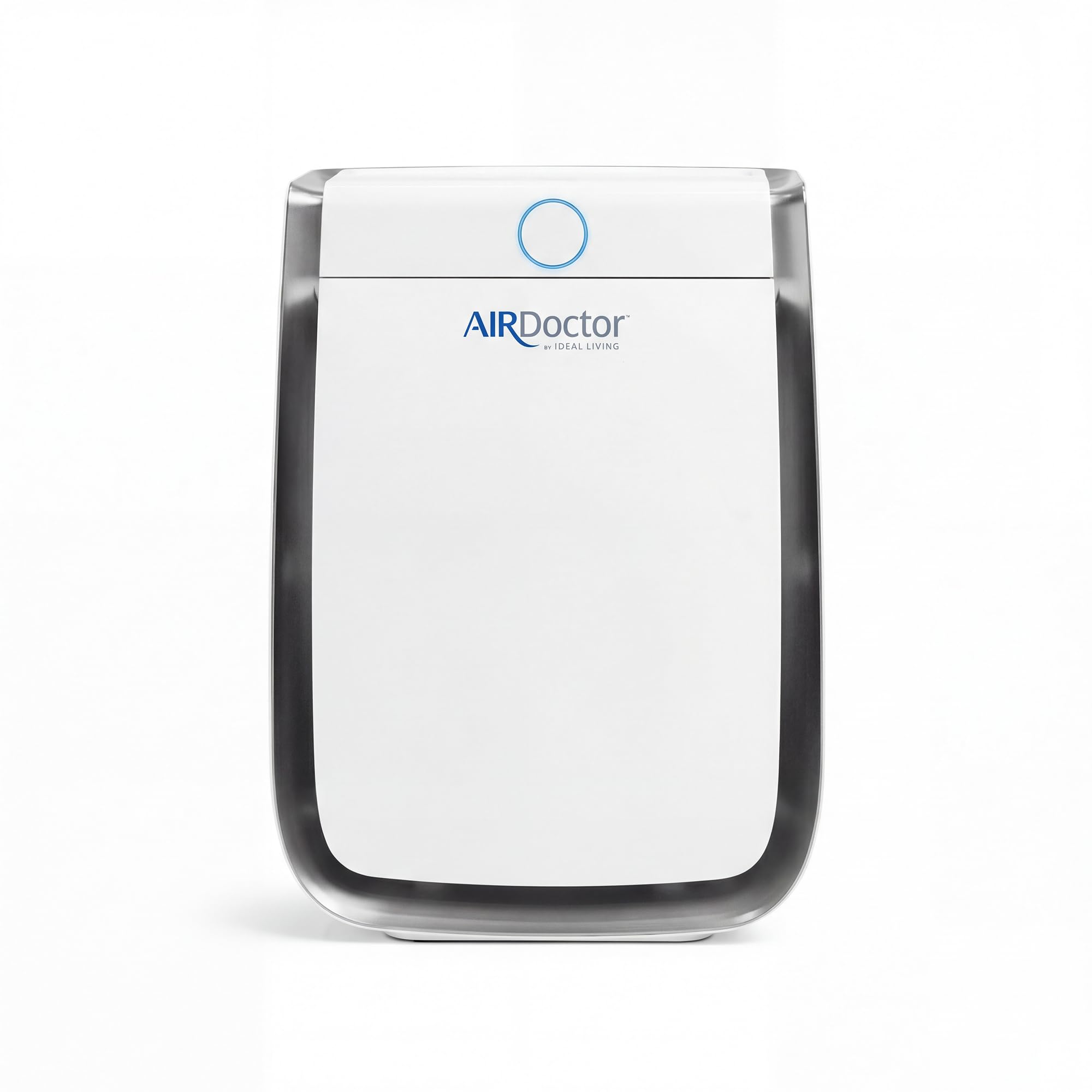
The AIRDOCTOR AD3500 is designed for large spaces, cleaning 630 sq ft in just 15 minutes and scaling up to 2,520 sq ft in one hour. Its three-stage filtration combines a pre-filter, premium activated carbon filter with potassium permanganate, and an UltraHEPA filter that captures 99.99% of particles at 0.003 microns. This combination handles dust, allergens, smoke, mold spores, pet dander, bacteria, viruses, and VOCs from cooking and cleaning products.
The Auto Mode with AIRDOCTOR Halo uses PM2.5 sensors to monitor air quality in real time, displaying color-coded levels on the front panel. The system automatically adjusts fan speed and activates Boost when needed. Users report noticeable reduction in morning dryness, stuffiness, and allergy symptoms within days of use. The carbon filter with potassium permanganate absorbs gases chemically, not just physically, giving it an edge over standard carbon filters for odor removal.
At 24 pounds and measuring 19.87 inches tall, this is a substantial appliance that requires dedicated floor space. The replacement filters cost more than smaller units — carbon every 6 months and UltraHEPA every 12 months — but the coverage area it handles means you may only need one unit for your entire main living space. FSA and HSA eligibility makes it accessible for those with flexible spending accounts.
Why it’s great
- Hospital-grade UltraHEPA captures 99.99% at 0.003 microns
- Carbon filter with potassium permanganate neutralizes gases and VOCs
- Rapid 15-minute cleaning for 630 sq ft spaces
Good to know
- Large and heavy at 24 pounds — not easy to relocate
- Replacement filter costs are higher than standard HEPA units
FAQ
How often should I replace the filter in my room air purifier?
Can an air filter for a room help with pet dander and odors?
Is a 20dB sleep mode actually silent in a bedroom?
What size air filter do I need for a 300 sq ft bedroom?
Final Thoughts: The Verdict
For most users, the air filter for room winner is the FreAire VisionAir HAP606 because it combines real-time AQI monitoring, whisper-quiet 20dB sleep mode, and 360-degree coverage that handles large bedrooms at a reasonable cost. If you want zero filter changes for years, grab the Shark BreatheClear MAX HP362 for its HEPA-exceeding filtration and 6-year NeverChange system. And for hospital-grade particle capture in smaller rooms, nothing beats the AIRDOCTOR AD1000.