
Buying a 4K compact camera means balancing portability against the sensor size and stabilization that actually deliver sharp, stable video. Too many pocketable options sacrifice low-light capability or battery life, forcing you to choose between convenience and quality.
I’m Min — the co-founder and writer behind Gadgets Feed. I’ve spent countless hours dissecting sensor specs, stabilization systems, and real-world battery drain across the current lineup to separate the truly compact performers from the compromises.
Whether you’re a vlogger, traveler, or everyday shooter, this guide breaks down the top contenders for the best 4k compact camera based on what actually matters in the field.
How To Choose The Best 4K Compact Camera
Picking the right 4K compact camera means matching your shooting style to the technical foundation of the camera. Sensor size, stabilization type, and lens range are the three pillars that determine what you can actually capture in a pocket-friendly body.
Sensor Size: The Light-Gathering Foundation
The 1-inch and APS-C sensors dominate the compact camera space. A larger sensor captures more light, giving you cleaner 4K footage in dim interiors or twilight scenes. A 1-inch sensor keeps the body truly pocketable, while an APS-C sensor delivers better depth-of-field control but typically requires a slightly larger lens housing.
Stabilization: IBIS vs. Lens-Based
In-body image stabilization (IBIS) moves the sensor to counteract hand shake, working with any lens you attach. Lens-based stabilization is common on zoom lenses and helps frame stability at the telephoto end. For handheld vlogging or walking shots, a camera with strong IBIS or a gimbal-stabilized design like the DJI Osmo Pocket 3 makes the biggest difference in final footage smoothness.
Lens Reach and Aperture
Optical zoom range defines what you can frame without moving your feet. A wide-aperture lens (f/1.8 or f/2.8) lets in more light for better low-light video and natural background blur. Fixed-lens cameras with wide apertures excel in low light, while superzoom models like the Panasonic ZS99 or Nikon P950 offer incredible reach at the cost of a slower aperture when zoomed in.
Quick Comparison
On smaller screens, swipe sideways to see the full table.
| Model | Category | Best For | Key Spec | Amazon |
|---|---|---|---|---|
| Sony RX100 VII | Premium Compact | All-in-one travel | 24-200mm f/2.8-4.5 Zeiss lens | Amazon |
| DJI Osmo Pocket 3 Creator Combo | Gimbal Vlog Camera | Shaky-free vlogging | 1-inch CMOS, 4K/120fps | Amazon |
| Canon EOS RP + RF24-105mm | Full-Frame Mirrorless | Low-light & depth control | Full-frame 26.2MP sensor | Amazon |
| Sony a7 III + 28-70mm | Full-Frame Hybrid | Pro-level photography plus 4K | 24.2MP BSI, 693 phase-detect AF | Amazon |
| Ricoh GR IIIx | Pocket APS-C | Everyday street snapping | APS-C 24.2MP, 40mm f/2.8 | Amazon |
| Nikon Z 30 + 16-50mm | Creator Mirrorless | Vlogging and streaming | APS-C, flip-out screen | Amazon |
| Panasonic LUMIX G85 + 12-60mm | Micro Four Thirds | Versatile hybrid shooting | 5-axis IBIS, 4K/30fps | Amazon |
| Canon EOS R100 + 18-45mm | Entry Mirrorless | Beginners stepping up from phone | 24.1MP APS-C, 4K/24fps | Amazon |
| Panasonic LUMIX ZS99 | Travel Superzoom | Concerts and distant subjects | 24-720mm Leica zoom, 4K | Amazon |
| Nikon COOLPIX P950 | Superzoom Bridge | Birding and moon shots | 83x optical zoom, 4K UHD | Amazon |
| DJI Osmo Nano (128GB) | Action POV Cam | Active sports and pet POV | 1/1.3-inch, 143° FOV | Amazon |
In‑Depth Reviews
1. DJI Osmo Pocket 3 Creator Combo

The Osmo Pocket 3 packs a 1-inch CMOS sensor into a gimbal-stabilized body that fits in a jacket pocket. Recording 4K resolution at 120fps, it delivers smooth, high-detail footage that rivals much larger rigs, especially in low-light scenes where smaller sensors fall apart.
The 2-inch rotatable touchscreen switches between horizontal and vertical framing instantly — a critical feature for cross-platform content creators. The Creator Combo adds the DJI Mic 2 transmitter, a wide-angle lens, and a battery handle, effectively removing the need for separate audio gear in most vlogging situations.
ActiveTrack 6.0 keeps you locked in the frame whether you’re walking, dancing, or cycling, and the 3-axis mechanical stabilization eliminates the need for post-processing correction. The trade-off is a fixed wide lens that lacks optical zoom, but for pure vlogging and run-and-gun shooting, nothing this compact competes.
Why it’s great
- Exceptional low-light performance from 1-inch sensor
- Gimbal stabilization delivers smooth handheld footage
- Includes premium wireless mic in Creator Combo
Good to know
- No optical zoom — fixed wide-angle lens only
- Gimbal is fragile; requires careful storage
2. Sony RX100 VII
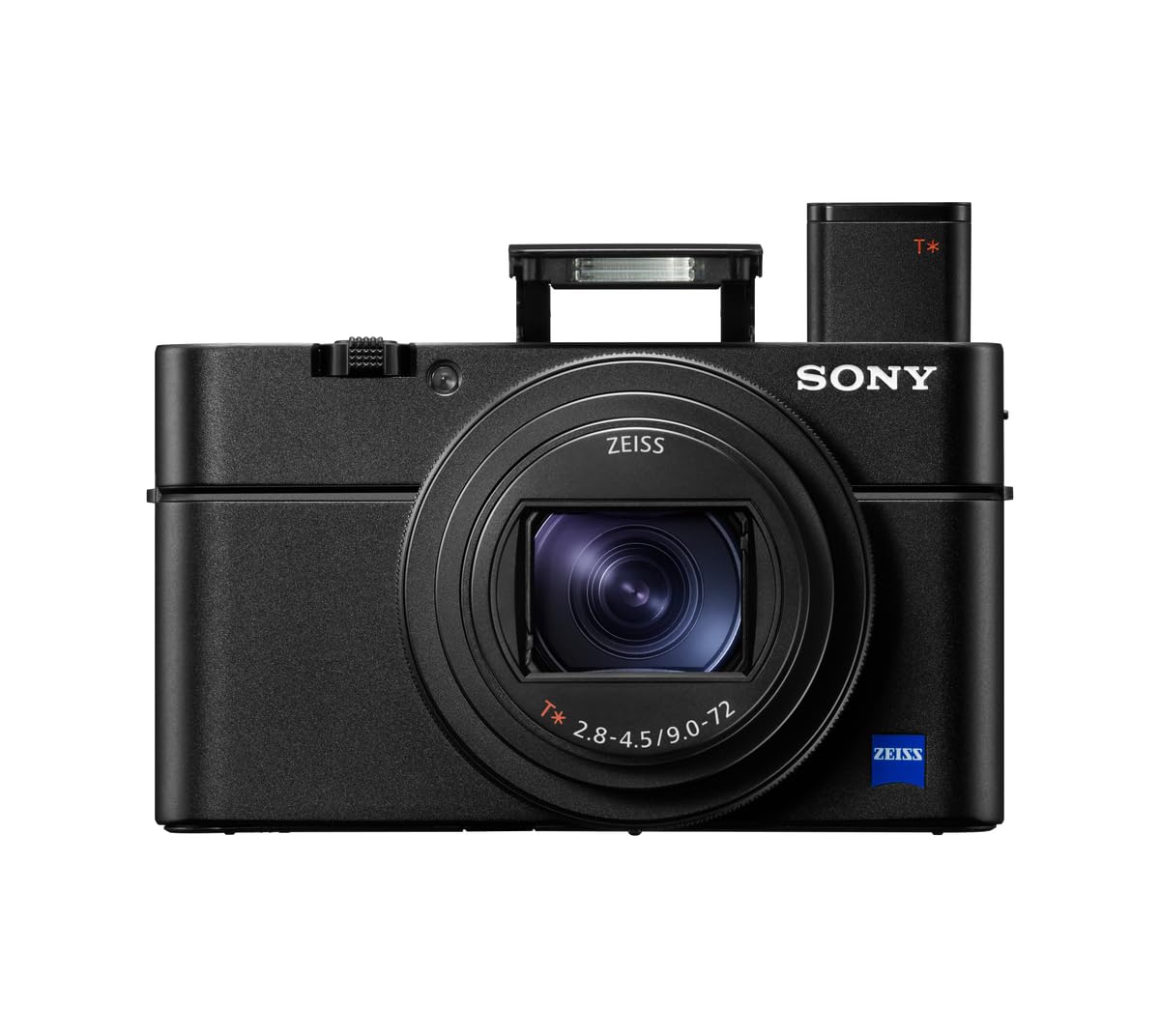
The RX100 VII squeezes a 24-200mm equivalent Zeiss lens into a true pocket-sized body. The 1-inch stacked CMOS sensor combined with 357 phase-detection AF points delivers autofocus lock in 0.02 seconds — fast enough to track moving subjects through the full zoom range.
Blackout-free shooting at 20 fps and real-time Eye AF for humans and animals make it a serious tool for action and portrait photography in a compact shell. The pop-up electronic viewfinder helps in bright sunlight, and the built-in microphone jack means external audio is an option for 4K video recording.
The lens aperture narrows to f/4.5 at the telephoto end, so low-light performance at 200mm is limited compared to faster lenses. The menu system is dense, and the body lacks a built-in grip, so an accessory grip is recommended for one-handed use.
Why it’s great
- 24-200mm zoom in a truly pocketable body
- Industry-leading autofocus speed and accuracy
- 4K video with log profile and mic input
Good to know
- No weather sealing for wet conditions
- Ergonomics are slippery without add-on grip
3. Canon EOS RP + RF24-105mm f/4-7.1

The EOS RP is the lightest full-frame mirrorless body Canon makes, and paired with the RF 24-105mm lens, it covers a versatile zoom range in a package that fits in a day bag. The 26.2MP full-frame sensor delivers shallower depth of field and cleaner high-ISO performance than any 1-inch or APS-C compact.
Dual Pixel CMOS AF locks onto faces and eyes during 4K video capture, though the 4K mode introduces a crop factor and a 30-minute recording limit. 1080p video is excellent with no crop and full autofocus support, making it a better choice for filmmakers who prioritize frameless 1080p over cropped 4K.
The RF lens ecosystem has grown rapidly, and using an EF adapter gives access to decades of Canon glass. The kit lens is optically stabilized at up to 5 stops, which helps with handheld video, but its slow f/4-7.1 aperture limits low-light performance compared to the f/2.8 zoom options available separately.
Why it’s great
- Full-frame sensor for superior low-light and bokeh
- Extremely light and compact for a full-frame system
- RF lens mount with broad compatibility
Good to know
- 4K video has a 1.7x crop and recording limit
- Kit lens aperture is slow in dim conditions
4. Sony a7 III + 28-70mm f/3.5-5.6

The a7 III remains a benchmark for hybrid shooters, combining a 24.2MP back-illuminated full-frame sensor with 693 phase-detection AF points covering 93% of the frame. It shoots 4K video with full pixel readout and no crop, and 14-bit RAW stills at 10 fps with continuous AF/AE tracking.
The NP-FZ100 battery delivers roughly 710 shots per charge — dramatically better than earlier Sony mirrorless bodies and one less thing to worry about during a full day of shooting. The 15-stop dynamic range gives you exceptional latitude for grading both video and stills.
The included 28-70mm kit lens is functional but optically unremarkable, especially in low light. The body is larger than the RP or the RX100 VII, and the menu system remains Sony’s reputation as a deep labyrinth of options. For sheer performance and system versatility, the a7 III is the pick for serious hybrid shooters.
Why it’s great
- Excellent battery life unmatched in its class
- Full-frame 4K with no crop and wide dynamic range
- Industry-leading autofocus coverage and accuracy
Good to know
- Menus are deep and complex to navigate
- Kit lens aperture is too slow for low-light use
5. Ricoh GR IIIx

The GR IIIx packs an APS-C sensor and a fixed 40mm equivalent f/2.8 lens into a body that slides into a jeans pocket — the smallest interchangeable-lens-class camera with this sensor size. The 40mm focal length sits between classic 35mm and 50mm, providing a natural field of view that works for street photography and environmental portraits.
It starts up in 0.8 seconds, and the hybrid AF system focuses quickly enough for spontaneous snaps. The sensor-shift IBIS keeps shots sharp at slower shutter speeds, and the GR engine 6 produces excellent JPEG colors straight out of the camera, reducing the need for post-processing.
Battery life is the main drawback — plan on carrying two or three spares for a full day. There is no 4K video, no weather sealing, and no built-in flash, making this a pure stills camera for the photographer who prioritizes image quality and portability over versatility.
Why it’s great
- APS-C sensor in a truly pocketable body
- Excellent image quality with film simulations
- Quick startup and responsive controls
Good to know
- Poor battery life — requires multiple spares
- No 4K video recording capability
6. Nikon Z 30 + 16-50mm f/3.5-6.3 VR

The Z 30 is Nikon’s most compact mirrorless camera, designed specifically for vloggers and streamers. The 16-50mm retractable lens keeps the package small, and the fully articulating flip-out touchscreen makes self-recording easy. Eye-detection autofocus works for both people and pets in 4K video.
It streams in 4K over HDMI or Full HD 60p over USB-C with plug-and-play webcam operation — no driver installation required. Unlimited 4K recording time with no overheating gives it a real advantage over the Z50 for content creators who shoot long takes.
The lack of an electronic viewfinder forces reliance on the rear screen, which can be tough in bright sunlight. The kit lens aperture is slow, so low-light rooms will push ISO higher than a faster prime would, but the VR stabilization in the lens helps hold steady handheld shots at lower shutter speeds.
Why it’s great
- Unlimited 4K recording with no overheating
- Flip-out screen and USB-C streaming out of the box
- Compact and lightweight for all-day carry
Good to know
- No viewfinder for bright daylight shooting
- Kit lens is slow in low light
7. Panasonic LUMIX G85 + 12-60mm f/3.5-5.6

The G85 brings 5-axis in-body stabilization to the Micro Four Thirds format at a price that undercuts most stabilized compacts. The 16MP sensor omits the low-pass filter for improved detail, and the Dual I.S. 2 combines IBIS with the 12-60mm lens’s optical stabilization for smooth handheld 4K video.
Burst shooting at 9 fps with continuous autofocus and 4K Photo mode (30 fps stills extraction from 4K video) give you multiple ways to capture fast-moving moments. The magnesium-alloy body with weather sealing makes it a rugged workhorse that survives light rain and dust.
The Micro Four Thirds sensor is smaller than APS-C, so low-light noise is more visible at higher ISOs. The autofocus struggles in dim environments for 4K video, and the kit lens’s variable aperture is a compromise, but the combination of IBIS, weather sealing, and price makes the G85 a strong value proposition.
Why it’s great
- Excellent 5-axis IBIS for handheld video
- Weather-sealed magnesium-alloy build
- Great value for a stabilized 4K mirrorless kit
Good to know
- Autofocus hunts in low light during video
- Smaller sensor limits low-light performance
8. Canon EOS R100 + RF-S18-45mm f/4.5-6.3

The R100 is the smallest and lightest body in Canon’s EOS R series, making it a natural step up from smartphone photography. The 24.1MP APS-C sensor paired with the DIGIC 8 processor delivers good image quality with Dual Pixel CMOS AF covering 143 zones for reliable face and eye detection.
It shoots 4K video at 24 fps and Full HD at 60 fps, with 120 fps HD available for slow-motion capture. The guided UI is beginner-friendly, and the compact body is easy to carry in a small bag without the bulk of larger mirrorless systems.
The 4K recording is limited to 24 fps with a crop factor, and the kit lens aperture is slow at f/4.5-6.3, restricting low-light performance. The lack of in-body stabilization means you’ll need a lens with IS or a tripod for smooth handheld video, which can be an issue for new shooters.
Why it’s great
- Very light and compact for an APS-C mirrorless
- Beginner-friendly UI with guided menus
- Dual Pixel AF with face and eye detection
Good to know
- 4K video cropped and limited to 24 fps
- No IBIS — relies on lens stabilization
9. Panasonic LUMIX ZS99

The ZS99 crams a 24-720mm Leica DC Vario-Elmar lens with 30x optical zoom into a pocket-friendly body — the definition of a travel companion. The 1,840k-dot tiltable touchscreen helps frame from awkward angles, and USB-C charging means you don’t need to carry a dedicated charger.
It shoots 4K video at 30p and 4K PHOTO burst mode at 30 fps, letting you extract still frames from video footage. The built-in Bluetooth v5.0 with a dedicated Send Image button simplifies transferring photos to your phone for quick sharing.
The small sensor (1/2.3-inch) means image quality degrades quickly in low light — indoor and nighttime handheld shots are often unusable. Autofocus can be slow and indecisive, especially at the telephoto end, and the menu system requires some time to learn. For bright outdoor use where zoom reach matters, it’s a solid choice.
Why it’s great
- 30x optical zoom in a pocketable package
- USB-C charging and Bluetooth sharing
- Tiltable touchscreen for versatile framing
Good to know
- Small sensor struggles in low-light conditions
- Autofocus can be slow at full zoom
10. Nikon COOLPIX P950

The P950’s 83x optical zoom (24-2000mm equivalent) puts distant subjects — birds, the moon, stadium performers — within reach without needing to carry a telescope. Built-in Bird and Moon scene modes optimize settings automatically for these specific subjects, reducing the guesswork.
It shoots 4K UHD video and includes a vari-angle LCD screen for framing from high or low angles. The Dual Detect Optical VR stabilization does a respectable job of keeping the frame steady at extreme zoom lengths when handheld, though a tripod is still recommended for maximum sharpness at 2000mm.
The small 1/2.3-inch sensor limits image quality in low light, and the variable aperture drops to f/6.5 at full zoom, requiring bright conditions for clean photos. Autofocus hunting is common on small, distant subjects like birds in branches, but the manual focus ring on the lens offers fine-tuned control. It’s a specialist tool for reach, not a general-purpose compact.
Why it’s great
- 83x optical zoom with 2000mm reach
- Dedicated Bird and Moon scene modes
- Decent VR stabilization for handheld telephoto
Good to know
- Small sensor and slow aperture limit low-light quality
- Autofocus can hunt on distant subjects
11. DJI Osmo Nano Standard Combo (128GB)
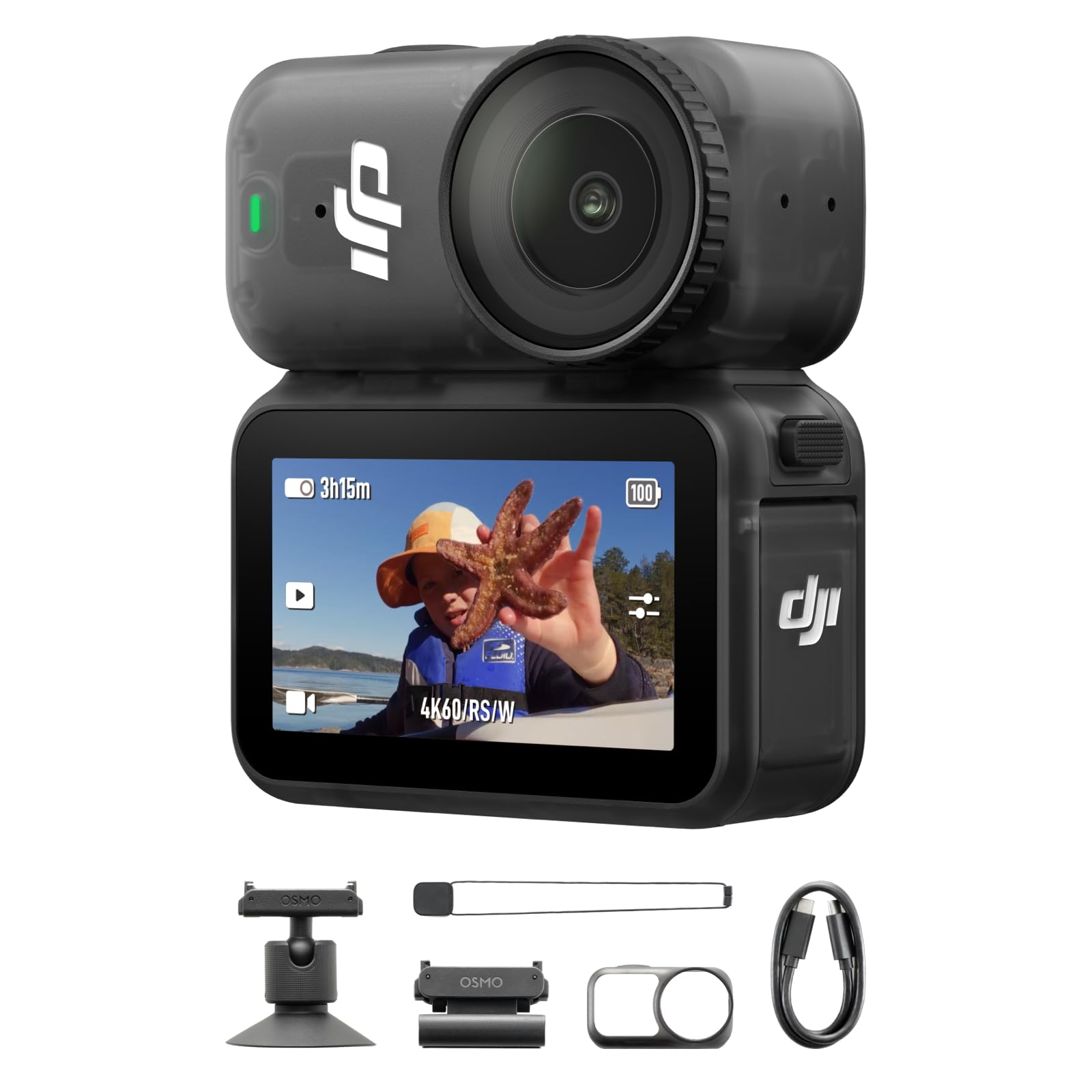
The Osmo Nano pairs a 1/1.3-inch sensor with a 143-degree ultra-wide FOV in an ultra-lightweight magnetic body designed for active POV filming. The 128GB built-in storage means you can start recording immediately without buying a memory card, and the 200-minute total battery life with the Vision Dock keeps you shooting through long adventures.
The magnetic mounting system — hat clip, lanyard, and ball-joint adapter — makes hands-free attachment simple, and the camera is waterproof to 10 meters for pool or shallow-water use. 10-bit and D-Log M color profiles give you more flexibility for grading footage in post-production compared to standard 8-bit action cameras.
The 4K video tops out at 60 fps, and the lack of a lens protector means the built-in glass is exposed to scratches in rugged use. The compact body heats during extended high-resolution recording, with overheat protection automatically stopping the recording to prevent damage. It’s a niche tool optimized for first-person sports and vlogs, not general-purpose 4K shooting.
Why it’s great
- Ultra-light magnetic mount for hands-free POV
- 128GB built-in storage is ready out of the box
- Waterproof to 10 meters with D-Log M color
Good to know
- No lens protection — glass is exposed to scratches
- Overheat protection can stop recording in long takes
FAQ
Is a 1-inch sensor good enough for 4K video?
What is the real battery life difference between a gimbal camera and a mirrorless for 4K?
Why do some compact cameras crop the 4K video?
Do I need an external microphone for a 4K compact camera?
Which is better for travel: a superzoom compact or a small mirrorless kit?
Final Thoughts: The Verdict
For most users, the best 4k compact camera winner is the DJI Osmo Pocket 3 because its 1-inch sensor, 3-axis gimbal stabilization, and included wireless mic deliver smooth, high-quality footage out of the box without add-ons. If you want a versatile optical zoom for travel photography and video, grab the Sony RX100 VII. And for the best low-light 4K video and professional stills in a compact system, nothing beats the Canon EOS RP full-frame kit.