
A home alarm system that triggers a false alert every time the wind blows, or one that requires a complex wiring setup you never finished, is worse than having no system at all. The best alarms para casa eliminate that anxiety by combining reliable motion detection, instant smartphone alerts, and optional professional monitoring without locking you into a contract.
I’m Min — the co-founder and writer behind Gadgets Feed. I’ve spent countless hours comparing wireless protocols, sensor ranges, and app ecosystems to find which home alarm kits actually deliver on their promises without draining your wallet on monthly fees.
Whether you need to protect a single apartment door or cover every window in a two-story house, this guide breaks down the specs and real-world performance of the best alarmas para casa available today.
How To Choose The Best Alarmas Para Casa
Selecting the right home alarm system depends on your home’s layout, your tolerance for technical setup, and whether you want a professional monitoring connection or just a loud siren and phone notification. These three criteria will guide your decision.
Connectivity: Wi-Fi vs. 4G Cellular Backup
Basic systems rely solely on your home Wi-Fi network (2.4GHz only, not 5GHz), which means a power outage or router failure disables your alarm entirely. Systems with a built-in 4G GSM module keep working even when the internet goes down, and they can send SMS or voice call alerts directly to your phone. For critical security, dual-network support is a smarter bet.
Sensor Coverage and Detection Range
The number of sensors in the kit matters less than how far they can detect motion and how reliably they transmit that signal. Entry sensors on doors and windows are the baseline, but passive infrared (PIR) motion detectors with a 20–35 foot range and a 90-degree field of view provide room-level coverage. Pay attention to placement — avoid positioning sensors where moving curtains, pets over 60 pounds, or blowing trees could trigger false alarms.
Monitoring and App Control
Most kits offer two paths: self-monitoring through an app like Tuya or Smart Life with push notifications, or a paid subscription for 24/7 professional monitoring. Self-monitoring has no monthly fee, but it requires you to act on alerts yourself. Professional plans add cellular backup, video verification, and priority police dispatch, often starting around – per month with no long-term contract.
Quick Comparison
On smaller screens, swipe sideways to see the full table.
| Model | Category | Best For | Key Spec | Amazon |
|---|---|---|---|---|
| SimpliSafe 11 Piece | Premium | Professional monitoring & indoor camera | 24h battery + cellular backup | Amazon |
| OSI Alarm Gen 2 | Premium | Large homes with many sensors | 7″ HD touchscreen, 160 sensors | Amazon |
| Ring Alarm 8-Piece | Premium | Ring ecosystem integration | Z-Wave, cellular backup | Amazon |
| YBJ PG-105-F | Mid-Range | Maximum sensor count per dollar | 5 motion + 10 door sensors | Amazon |
| tolviviov 15 Piece | Mid-Range | Entry-level with many door sensors | 10 door sensors, 120dB siren | Amazon |
| LWOHSI PG108 | Mid-Range | Wi-Fi + 4G dual connectivity | GSM module, 100 detector capacity | Amazon |
| BESTOONE MSA-42 | Budget | Simple motion alerts without Wi-Fi | 300ft range, 38 chime tunes | Amazon |
In‑Depth Reviews
1. SimpliSafe 11 Piece Wireless Home Security System Gen 3
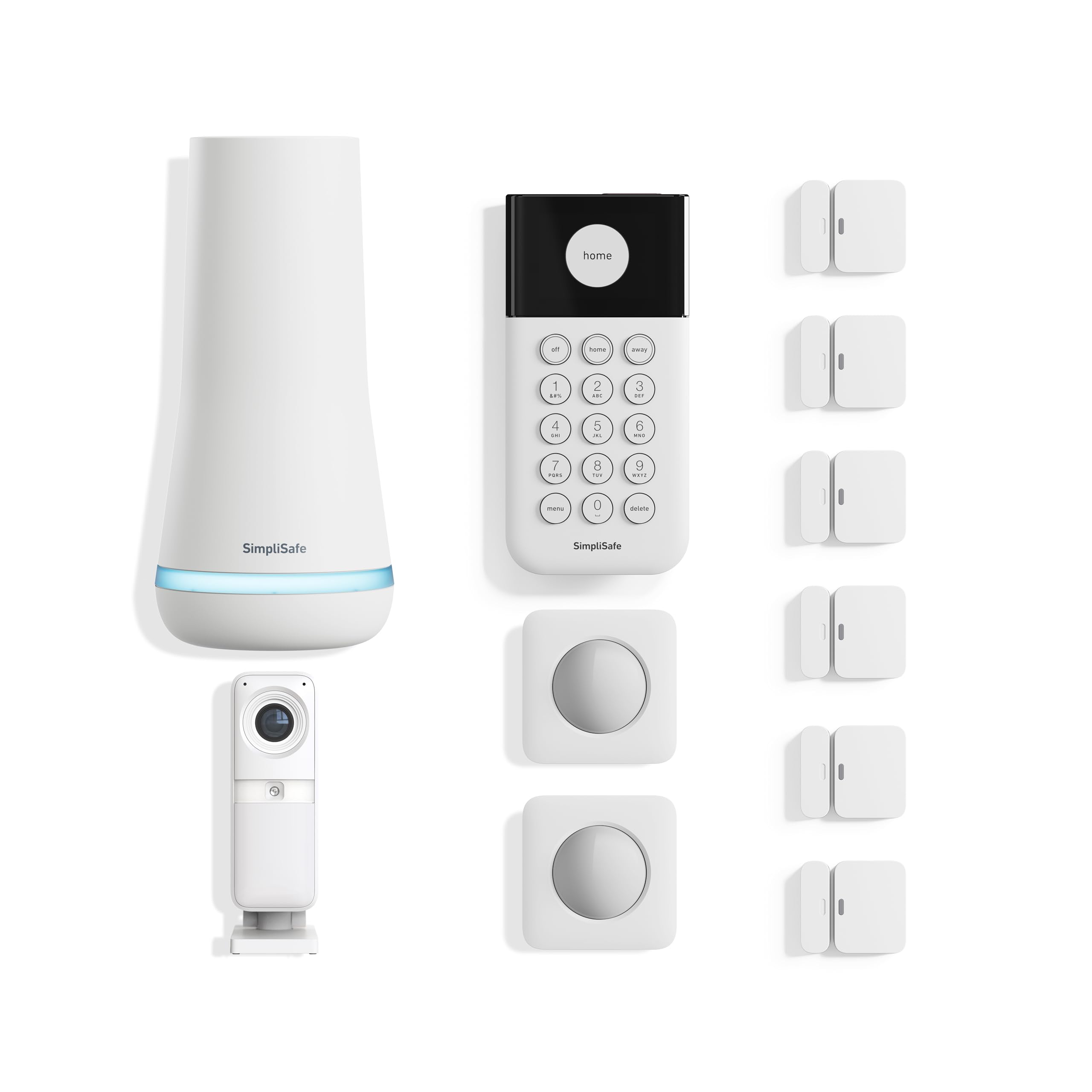
The SimpliSafe Gen 3 kit covers the essentials: a base station with a 24-hour backup battery and cellular connectivity (requires a monitoring plan), one keypad, one indoor HD camera, two motion sensors, and six entry sensors. The motion detectors handle a 35-foot range with a 90-degree field of view and ignore pets under 60 pounds, which greatly reduces false alarms in homes with dogs or cats.
Setup is genuinely DIY-friendly — peel-and-stick sensors, plug-and-play base station, and the app guides you through naming each zone. Optional professional monitoring starts at around per month with no contract, and when you enable video verification on the camera, monitoring agents can see and speak to an intruder via two-way audio. That video evidence also triggers priority police dispatch under the Fast Protect plan.
The main omission is the lack of an open/close event log without a subscription, and only one app account is allowed on the free self-monitoring tier. Still, for anyone who wants a polished, expandable system with real professional backup, this kit sets the standard.
Why it’s great
- True 24-hour backup battery plus cellular backup
- Indoor camera with two-way audio and video verification
- Pets under 60 lbs do not trigger motion sensors
Good to know
- Event history logs require a paid plan
- Only one app account on the free tier
2. OSI Alarm System Gen 2 (4G), 11pc
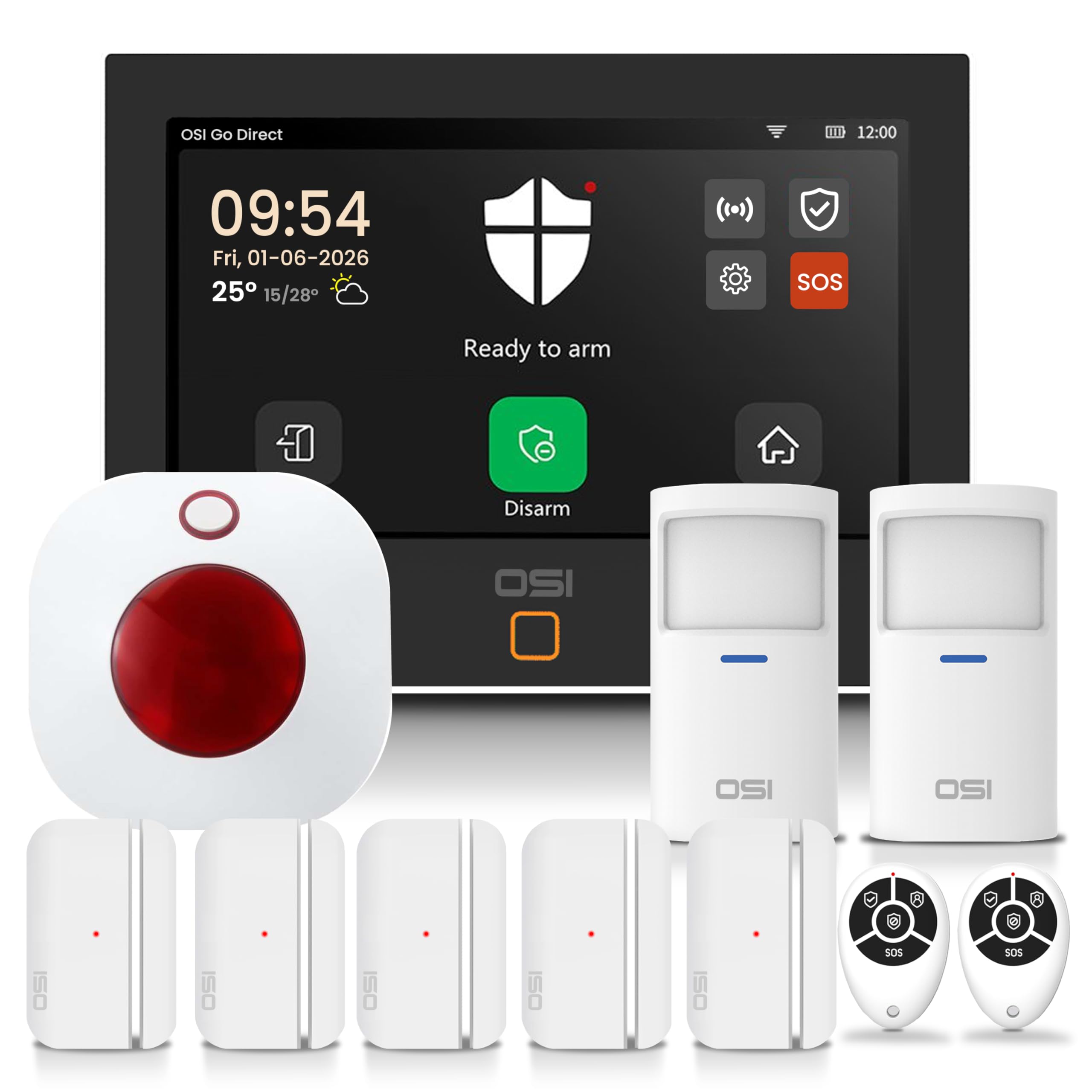
The OSI Gen 2 stands out for its 7-inch HD anti-fingerprint touchscreen (1024 x 600 px) that serves as the main control panel — a rarity at this price tier. The kit ships with two motion sensors, five contact sensors, one wireless strobe siren, and two remote controllers, and the system scales to 160 total sensors, six keypads, and six doorbells. The 24-hour lithium polymer backup battery keeps it running through extended outages.
Setting up is straightforward thanks to an on-screen wizard that walks you through pairing each component. The 433MHz wireless signals punched through cement and rebar in real-world installations with no dropouts, and response times from sensor trigger to siren felt instantaneous. The panel has an SOS panic button on the display and remote, which sends alerts to anyone sharing the system via the app. Self-monitoring has no monthly fee, and optional 24/7 professional monitoring (Canada only) starts at /month.
Potential downsides include a plug-in siren that takes up two wall outlet spaces and an app with no event history deletion or tablet-optimized layout. But for a house or small business that needs room to grow, the OSI is hard to beat.
Why it’s great
- Large 7-inch HD touchscreen interface
- Scalable to 160 sensors and 6 keypads
- 24-hour lithium polymer backup battery
Good to know
- Siren is a wall plug that occupies two sockets
- App lacks event history deletion and tablet view
3. Ring Alarm 8-Piece Kit (newest model)
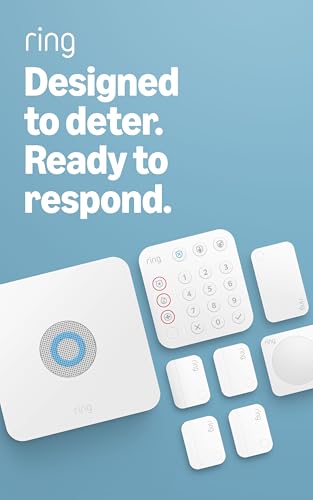
The Ring Alarm 8-piece kit is designed for 1–2 bedroom homes, packaging one base station, a keypad, four contact sensors, one motion detector, and a range extender. The base station supports both Wi-Fi and Ethernet, plus cellular backup via AT&T when you subscribe to a Ring Protect plan. The keypad arms and disarms the system, and it can be wired or run on its rechargeable battery — smart placement flexibility.
Installation is app-guided and took most users under 30 minutes. The contact sensors are thin and use standard CR2032 batteries, and their mount design lets you replace them without removing the adhesive from the door frame. Ring’s real strength is its ecosystem: the alarm integrates natively with Ring cameras, video doorbells, and Schlage Z-Wave deadbolts, so arming the alarm can automatically lock the front door and start recording.
Without a Protect subscription (/month for camera + alarm), the system is self-monitor only and you lose cellular backup and remote arming. The kit also omits a glass break sensor, though many users consider that a pro since it reduces false positives. For existing Ring owners, this is the obvious upgrade.
Why it’s great
- Seamless integration with Ring cameras and Schlage locks
- Thin, CR2032-powered sensors with easy-replace bracket
- Cellular backup via AT&T with Protect plan
Good to know
- No glass break sensor included
- Remote arming and cellular backup need subscription
4. YBJ 4G and WiFi Wireless Home Alarm System (PG-105-F)
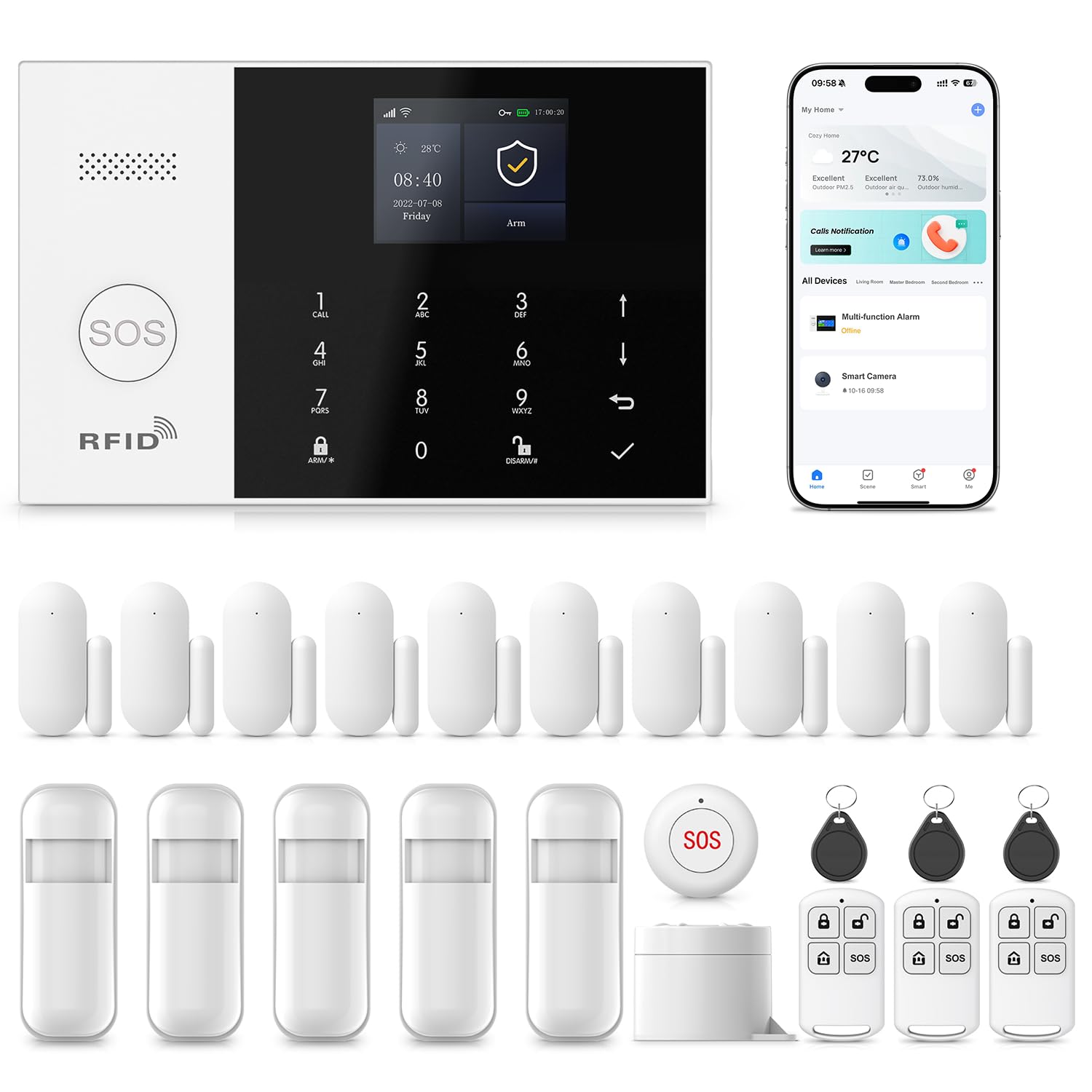
The YBJ PG-105-F delivers the highest sensor density in its class: five PIR motion detectors, ten door/window sensors, three remote controls, three RFID cards, a dedicated SOS button, and a separate siren. The alarm host supports both 2.4GHz Wi-Fi and a 2G/3G/4G SIM card for cellular fallback, so a disconnection from Wi-Fi doesn’t leave you blind. It can store up to 100 wireless sensors, making it expandable well beyond the included package.
Setup is screw-in for the main unit and peel-and-stick for sensors, and control happens through the Tuya or Smart Life app. You can program up to five phone numbers for auto-dial alerts if a SIM card is inserted — the host calls you the moment a sensor triggers. The 8-hour backup battery keeps the system online during short outages, though it is intended only as emergency power, not a full-day fallback.
The manual is poorly translated, and the system lacks zone-specific arming — it is all-or-nothing. Several users turned to YouTube for configuration help. For the price, however, the sheer number of sensors and the dual-network reliability make this a compelling pick for larger homes on a tighter budget.
Why it’s great
- 15 sensors + SOS button included in one box
- Dual Wi-Fi and 4G cellular connectivity
- Auto-dial to 5 phone numbers with SIM card
Good to know
- Manual is poorly translated
- No per-zone arming — arms/disarms the whole system
5. tolviviov Alarm System 15 Piece Kit

This tolviviov kit is the best entry point for securing multiple doors without breaking the bank. It includes one Wi-Fi alarm base station, a keypad, one motion sensor, ten door/window contact sensors, and two remote fobs — a total of 15 pieces. The base station outputs a loud 120dB siren, and the system supports expansion to 20 sensors and five remote controls.
All sensors come pre-linked to the base station, which speeds up the initial setup significantly. The system runs through the Smart Life app and works with Alexa and Google Assistant. It uses a 2.4GHz Wi-Fi connection (no 5GHz support, no cellular backup), so you need a stable router. Users added a 130dB siren later without compatibility issues.
The main limitation is the 8-hour battery average life on the base station, which is shorter than premium competitors. Also, the contact sensors lack the generous tolerance of some pricier options — alignment matters. For apartments or small homes where you mainly need window and door coverage, this kit provides enormous bang for the buck with zero monthly fees.
Why it’s great
- 10 door sensors cover every entry point
- Pre-linked sensors for fast DIY install
- 120dB siren included
Good to know
- No cellular backup — Wi-Fi only (2.4GHz)
- 8-hour base station battery is shorter than premium systems
6. LWOHSI PG108 Alarm System
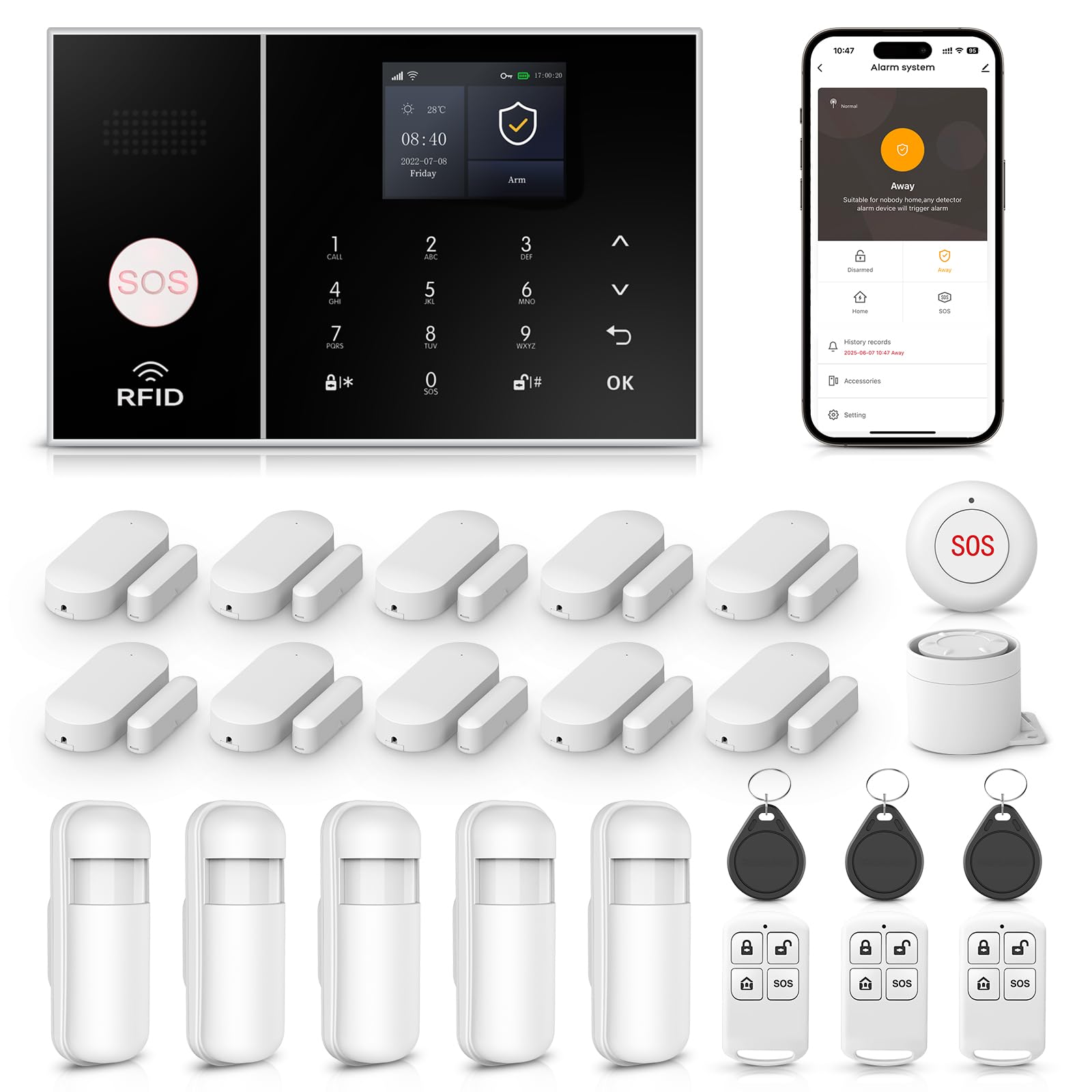
The LWOHSI PG108 is a mid-range system built around a central panel with a built-in 4G GSM module. It supports both Wi-Fi APP push notification and SMS/voice call alerts, meaning it can dial you directly even when the app is not running. The panel can learn up to 100 wireless detectors, RFID cards, or remote controls, giving you plenty of room to expand beyond the initial set.
The kit works with the Tuya platform and is compatible with both Alexa and Google Assistant. Users reported straightforward DIY installation, though the system uses the generic Smart Life app rather than a dedicated LWOHSI app, which makes menu navigation less intuitive. It also lacks zone-specific arming — the whole system arms or disarms at once. On the plus side, the motion sensors are reliable, and the ability to set five telephone alarm numbers adds a layer of security that pure app-based systems cannot match.
One frustration is that the main box is wall-mount only with no stand option, so placement is less flexible than freestanding panels. However, for a home where you want a cellular safety net without paying for a high-end subscription, the PG108 delivers solid 4G redundancy.
Why it’s great
- 4G GSM module enables SMS and voice call alerts
- Supports up to 100 wireless detectors
- Works with Tuya, Alexa, and Google Assistant
Good to know
- Uses generic Smart Life app, no dedicated app
- No zone-specific arming — arms entire system
7. BESTOONE Motion Sensor Alarm (MSA-42)

The BESTOONE MSA-42 is a standalone motion-alert system, not a full smart-home alarm kit. It includes four motion detectors and two alarm receivers, each with a 300-foot wireless transmission range. The infrared detection zone on each sensor extends about 20 feet. There are 38 selectable chime tunes and three volume levels, plus a silent LED-only mode that flashes without making noise — useful for late-night monitoring of a senior’s room or a sleeping baby’s door.
This system has no Wi-Fi, no app, and no cellular connectivity. It is purely a local alert system: when a detector senses motion, it sends a signal to the receiver, which plays a chime. You can place receivers in different rooms and assign distinct tones to each sensor so you know which zone was triggered. The detectors require AAA batteries (not included) and are not weatherproof, so they must stay indoors or under cover.
Placement is critical: wind-blown trees or curtains will cause false triggers because the sensor has no pet immunity. Some users also found the chime cycling method confusing — you cannot assign a single tone to a sensor easily. For a simple, cheap way to monitor a back door, a driveway, or an elderly parent’s room, this works well. For serious intrusion detection, you will want a smarter system.
Why it’s great
- 300-foot wireless range between detector and receiver
- Silent LED-only mode for discreet monitoring
- 4 detectors cover multiple entry points
Good to know
- Sensors are not weatherproof — indoor use only
- No pet immunity — wind or moving objects cause false alarms
FAQ
Can I install these alarm systems myself without professional help?
Do these systems require a monthly subscription fee?
How many doors or windows can a typical kit cover?
Final Thoughts: The Verdict
For most users, the best alarmas para casa winner is the SimpliSafe 11 Piece Gen 3 because it balances a professional-grade monitoring infrastructure with genuinely simple DIY setup and the crucial safety net of cellular backup. If you want a huge touchscreen interface and the ability to scale to 160 sensors, grab the OSI Alarm Gen 2. And for securing a large home on a tight budget with zero monthly fees, nothing beats the raw sensor count of the YBJ PG-105-F.