
Every chainsaw buyer wants the same thing: a saw that starts on command, cuts through whatever you throw at it, and doesn’t leave you stranded mid-job. But “all around” is a trickier promise than it sounds — it means the saw has to balance power, weight, runtime, and ease of use across very different jobs, from storm cleanup to firewood processing. The real question is which power source (battery, gas, or high-torque gas) and which bar length actually match how you’ll use it day to day.
I’m Min — the co-founder and writer behind Gadgets Feed. This guide is built by comparing the manufacturers’ published specifications and the patterns across verified customer reviews, so you get each pick’s real strengths and trade-offs instead of marketing spin.
After comparing six models spanning battery-electric to gas-powered, from a 12-inch trim saw to a 24-inch land-clearing machine, the bottom line is clear: the best all around chainsaw for most homeowners is a battery model that delivers gas-like performance without the maintenance headaches.
How To Choose The Best All Around Chainsaw
An “all around” chainsaw needs to feel comfortable for light pruning yet powerful enough to drop a medium tree. The three factors that define this sweet spot are power source, bar length, and weight — and they all trade against each other.
Power Source: Battery vs. Gas
Battery saws (like the EGO Power+ at 56 volts) give you instant start, no fuel mixing, less noise, and far less vibration — but you trade unlimited runtime for a fixed battery life (typically 45 minutes to 90 minutes of intermittent cutting). Gas saws (like the Husqvarna 450 Rancher at 50.2cc) run as long as you have fuel mix, but they demand pull-start effort, regular carburetor tuning, and more maintenance. For most homeowners doing less than a full day of cutting at a time, a modern battery saw now matches the cutting speed of a 40cc gas saw.
Bar Length: What the Inches Actually Mean
Bar length determines the maximum diameter log you can cut in one pass (you need a bar roughly two inches longer than the log’s diameter). A 12-inch bar handles branches and logs up to about 10 inches thick — ideal for pruning and storm cleanup. A 16- to 20-inch bar covers logs up to 18 inches thick, which handles 90% of homeowner tasks. A 24-inch bar is for large felling and firewood production, but it adds weight and makes the saw harder to maneuver for smaller cuts.
Weight and Vibration: Your Hands Will Thank You
A saw that weighs over 12 pounds feels manageable for the first five minutes, but after an hour of cutting, that weight multiplies fatigue. The PROYAMA at 11.5 pounds is on the heavy side for its class, while the Greenworks at 10.9 pounds and the EGO at 9 pounds are noticeably easier to handle. Anti-vibration systems (LowVib on Husqvarna, or the PROYAMA’s built-in dampeners) make a real difference when you’re cutting for more than 15 minutes at a stretch — less vibration means less hand numbness and better control.
Quick Comparison
On smaller screens, swipe sideways to see the full table.
| Model | Category | Best For | Key Spec | Amazon |
|---|---|---|---|---|
| EGO POWER+ CS1611 | Battery | All-around home use, quiet operation | 16″ bar, 56V, 2.3 HP gas equivalent | Amazon |
| Husqvarna 450 Rancher | Gas | Reliable gas power, home acreage | 20″ bar, 50.2cc, 3.2 HP | Amazon |
| Husqvarna 460 Rancher | Gas | Heavy cutting, large firewood | 24″ bar, 60.3cc, 3.6 HP | Amazon |
| PROYAMA 68CC | Gas | Budget big-bar cutting | 24″ bar, 68cc, 4.5 HP | Amazon |
| Greenworks 40V 12″ | Battery | Light pruning, camping, small yards | 12″ bar, 40V, 0.73 HP | Amazon |
| SALEM MASTER 62CC | Gas | High-power budget gas | 20″ bar, 62cc, 3.4 HP | Amazon |
In‑Depth Reviews
1. EGO POWER+ CS1611
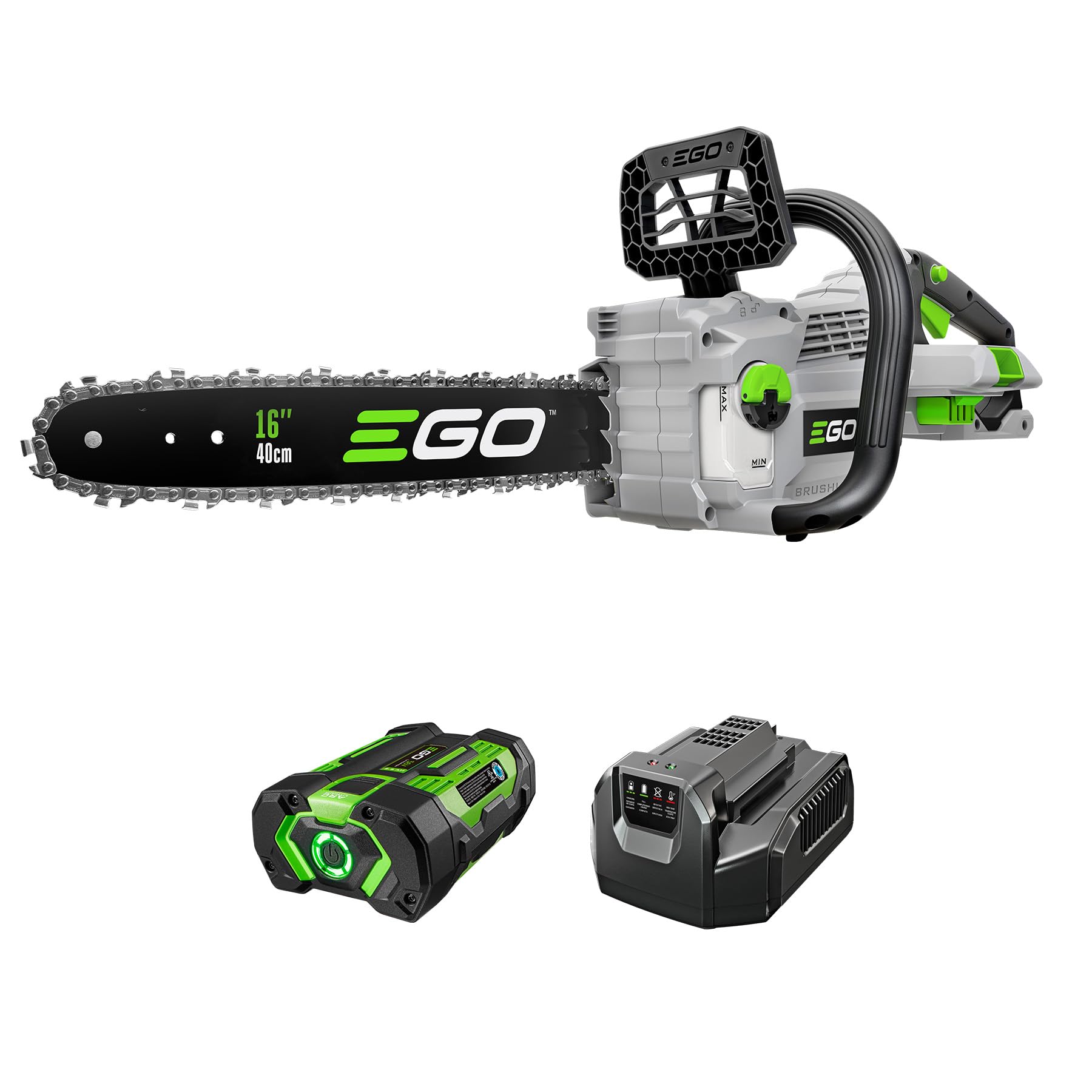
56 volts and a 2.3-horsepower equivalent make the EGO POWER+ CS1611 the top pick for the homeowner who wants one saw that handles everything from yard cleanup to fallen trees without the hassle of gas — enough to cut through a 12-inch oak limb in seconds, but starts every time with a simple trigger pull.
The 16-inch bar hits the sweet spot for all-around work: you get 130 cuts on a 4×4 from the included 2.5Ah battery, and buyers report that a single charge cuts a 25-foot, 12-inch tree before needing a swap. At 9 pounds, it is 28% lighter than the PROYAMA 68CC, which makes a huge difference when you are reaching up for pruning. The tool-free chain tensioning means you tighten the chain in seconds with one hand, no wrench needed.
The honest limit is battery runtime — the 2.5Ah battery equals roughly half a tank of gas, so if you plan to cut for hours straight, you will want a second battery. But for the vast majority of home users, this is the easiest, most capable all around saw you can buy. A confident verdict: this is the one to get.
Why it’s great
- Instant electric start, no pull cord, no fuel mixing
- Tool-free chain adjustment for quick field tuning
- IPX4 weather-resistant construction for outdoor use
- Low vibration and quiet operation reduce fatigue
Good to know
- Does not include bar oil, you will need to buy separately
- Battery life requires planning for longer cutting sessions
- Automatic oiler has no visible window, check chain regularly
2. Husqvarna 450 Rancher

If you want gas power but with the refinement of a premium brand, the Husqvarna 450 Rancher beats the top pick on unlimited runtime — run it all day as long as you keep the fuel coming — but loses on instant-start convenience.
The 20-inch bar handles logs up to 18 inches thick in a single pass, and the LowVib system (vibration-reducing handles) makes those long firewood sessions much easier on your hands. Owners mention it “cuts large trees easily like butter” and holds up well on acreage. The Smart Start technology means the pull cord requires less effort than older gas saws, and the Air Injection system (a centrifugal fan that throws dust away from the air filter) extends time between cleanings.
Choose this over the top pick if you need to cut all day without worrying about battery life, and you prefer the proven durability of a premium gas saw over the convenience of a cordless model.
Where it shines
- Smart Start reduces pull-start effort significantly
- LowVib anti-vibration system reduces hand fatigue
- X-Torq engine delivers more power with less fuel consumption
- Air Injection keeps air filter cleaner for longer
Worth noting
- Factory spark plug and chain tension may need adjustment out of box
- Oil spray output can be light on some units
- Consumes fuel quicker than older Stihl models per some reviews
3. Husqvarna 460 Rancher

Imagine you have a downed oak that is 36 inches across, and your 16-inch saw requires four cuts per log — flipping the saw each time. That is the exact scenario the 460 Rancher eliminates. With its 60.3cc engine producing 3.6 horsepower and a 24-inch bar, you can take 20-inch-thick logs in a single clean pass, turning a two-hour job into a 40-minute one.
The 24-inch bar paired with LowVib technology means you get the reach and power of a professional-class saw, but the ergonomics still feel manageable at 13.2 pounds. Customers note it has “hundreds of tanks and thousands of trees” through it with proper maintenance, and the automatic adjustable oil pump lets you dial in the chain lubrication rate depending on the wood hardness. The 7-degree offset front handle improves grip angle for better leverage on long cuts.
The standout spec here is the 60.3cc displacement paired with the 3.6 horsepower output — a 12% power increase over the 450 Rancher with a 20% longer bar, making this the right tool for property owners who process their own firewood or clear land regularly.
What stands out
- 60.3cc engine has the torque for large-diameter hardwood
- Automatic adjustable oil pump for precise chain lubrication
- Inertia-activated chain brake for kickback safety
- Proven reliability with thousands of trees reported by users
The trade-offs
- At 13.2 pounds, it is noticeably heavier for overhead pruning
- Some users recommend a 20-inch bar for better handling
- Not the fastest pro-saw speed, but excellent for typical property use
4. PROYAMA 68CC 2-Cycle Top Handle

The single number that matters most for value in gas saws is displacement per dollar, and the PROYAMA delivers 68cc at a price that beats the Husqvarna 460 by a wide margin. Its 4.5 horsepower rating exceeds the 460 Rancher by 32% (4.5 vs 3.6), making it the most powerful saw in this lineup on paper — and buyers confirm it rips through stumps: one reported “after break-in, cut a 40″ pine tree in one day (8-10 tanks).”
The catch is fit and finish. The 11.5-pound weight is 28% heavier than the EGO, which you feel during long sessions, and reviewers point out higher vibration levels than name-brand saws. The choke mechanism feels janky, and the stock plastics can warp under heavy heat. Several reviews mention needing to Loctite the bar nuts and adjust the carburetor needles out of the box to get it running right. But once dialed in, the cutting performance is genuinely impressive for the money.
This is a price-to-performance play for the buyer who needs 24-inch cutting capability but cannot justify spending multiple times more for a Husqvarna. It is a saw that rewards mechanical willingness to tune and maintain, delivering strong value for the upfront cost.
The upsides
- 68cc engine is the largest displacement in this comparison
- Cuts through 22-inch stumps in around one minute per user reports
- Includes face shield, gloves, and fuel bottle as a kit
Keep in mind
- Higher vibration levels than premium gas saws
- Plastic components can warp under sustained heavy use
- Requires out-of-box adjustment of carburetor and hardware
5. Greenworks 40V 12″ Cordless

What you actually get at this lower price is a 0.73-horsepower motor — a 3.2x gap compared to the EGO’s 2.3 horsepower — so it is not a felling saw, but for what it is designed for, it works exactly as intended.
What you give up is the ability to cut anything over about 8 to 10 inches in diameter, as shoppers say this is “light-duty, intermittent use for logs up to 8-10 inches.” The chain also loosens quicker than larger saws, requiring occasional re-tensioning during a session. On the positive side, the 2.0Ah battery delivers 50 cuts on a 4×4 and also functions as a portable power bank to charge phones or tablets — a clever extra for camping.
This is the exact budget buyer it is perfect for: someone with a small yard who needs to trim branches, clear storm debris up to arm thickness, and wants a tool that starts instantly and stores without fuel going bad. For that use case, it is a fantastic value.
Why we’d pick it
- Extremely lightweight for one-handed use on ladder or tight spaces
- Battery doubles as a portable power bank for camping
- Tool-free chain tensioning for quick adjustments
- Compatible with entire Greenworks 40V tool platform
A few caveats
- Limited to logs under 8-10 inches in diameter
- Chain loosens during use and needs frequent re-tightening
- Cuts slower than gas models, not designed for heavy tasks
6. SALEM MASTER 62CC
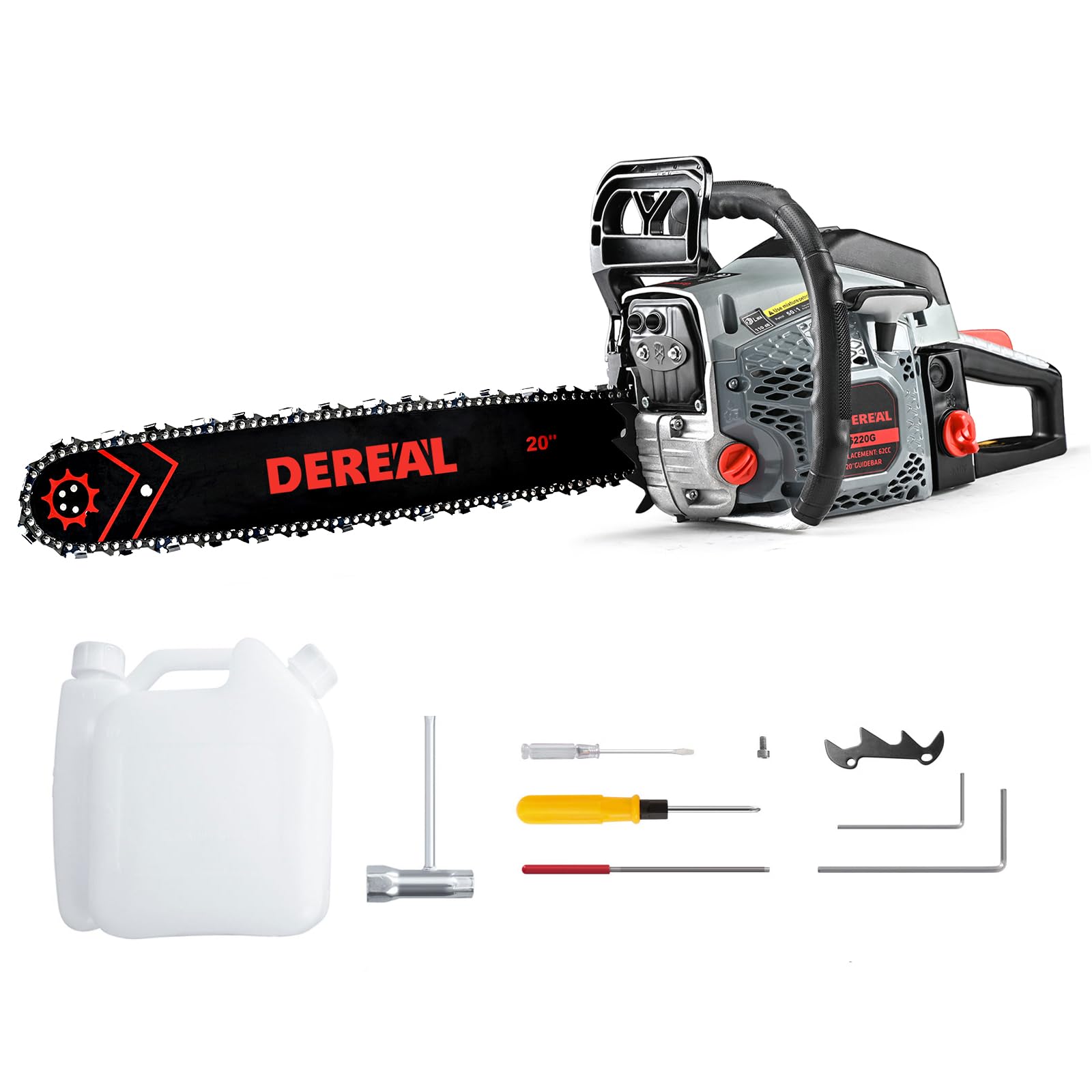
This saw is perfect for the budget-conscious buyer who needs gas-powered muscle for occasional heavy cutting—like clearing 14-16 inch logs—without spending premium money. Its 62cc 3.4-horsepower engine and 20-inch bar deliver raw torque that matches far pricier models, with buyers reporting it “ran 6 hours nonstop, refueling only.”
You get reliable starting (often on the second pull) and an automatic oiler that conserves bar oil, reducing mess. The 20-inch bar uses a .063 groove and .325 pitch, and the factory chain reportedly lasts 30+ hours with regular sharpening. However, the saw is very loud, and some units develop bar drift after 3-5 hours, requiring bar dressing to fix.
This saw offers roughly 90% of the cutting ability of a premium brand for a fraction of the cost, as long as you are willing to perform occasional maintenance like bar dressing. Just be aware that its one weakness is the potential for bar drift, which demands a bit of extra attention to keep it running smoothly.
Strong points
- 62cc engine and 20-inch bar for powerful cutting at low cost
- Starts easily (2nd pull consistently per user reports)
- Conservative bar oil consumption reduces mess
Before you buy
- Bar drift reported after 3-5 hours of use, needs dressing
- Extremely loud operation, hearing protection is mandatory
- Some units fail to start after sitting for 2 months per reviews
Understanding the Specs
Bar Length
Bar length determines the maximum thickness of wood you can cut in one pass. A general rule: the bar should be about two inches longer than the diameter of the log you are cutting. A 16-inch bar covers most homeowner tasks; a 20-inch bar handles larger firewood; a 24-inch bar is for serious felling and land clearing. Remember that a longer bar adds weight and makes the saw harder to maneuver for smaller pruning cuts.
Displacement and Horsepower
For gas saws, displacement (measured in cubic centimeters, or cc) is the engine size — more cc generally means more torque and the ability to keep cutting under load without bogging down. Horsepower (HP) tells you the peak power output. A 60cc saw with 3.6 HP will cut faster through hardwood than a 40cc saw with 2.3 HP, but it will also be heavier and louder. The sweet spot for all-around use is 45-55cc for gas, or the equivalent of 1.5-2.5 HP in battery terms.
FAQ
How long does a battery chainsaw battery last?
Can I use a 24-inch bar on a saw rated for 20 inches?
What fuel mix does a 2-stroke chainsaw need?
How often should I sharpen the chain?
Final Thoughts: The Verdict
For most people, the all around chainsaw winner is the EGO POWER+ CS1611 because it delivers gas-matching cut speed with zero start-up hassle, no fuel storage issues, and a weight that makes one-handed pruning comfortable. If you want unlimited runtime for acreage work, grab the Husqvarna 450 Rancher. And for heavy firewood production on a budget, the standout is the PROYAMA 68CC for displacement per dollar.