
If your feet ache after a few pick-up games or the insoles that came with your basketball shoes feel like cardboard, you are not alone — basketball puts more force through your arch (the curved middle of your foot) than almost any other sport. The right arch support does not just make your shoes more comfortable; it changes how you cut, jump, and land by keeping your foot aligned properly from the ground up.
I’m Min — the co-founder and writer behind Gadgets Feed. This guide is built by comparing the manufacturers’ published specifications and the patterns across verified customer reviews, so you get each pick’s real strengths and trade-offs instead of marketing spin.
If you have high arches, flat feet, or just want to stop your feet from burning during the fourth quarter, the right pair of basketball arch support insoles can protect your knees, improve your stability, and extend how long you can actually play before your feet give out.
How To Choose The Best Basketball Arch Support
Not all insoles that claim “arch support” are built to handle the lateral cuts, hard landings, and explosive jumps that define basketball. Here are the four things to look for before you buy.
Arch Profile — Low, Medium, or High
Your arch type (the curve underneath your foot) determines whether an insole will help or hurt you. A high-arch foot (where the arch is visibly raised when you stand) needs a pronounced, rigid support to fill the gap and distribute pressure evenly. A flat or low-arch foot needs a medium profile that cradles without pushing up too aggressively. Many premium insoles now come in multiple arch profiles — like the CURREX line — so you can match your specific foot shape.
Core Material — Carbon Fiber vs. Composite vs. PU Foam
A carbon fiber base (a very stiff, lightweight material also used in aerospace parts) offers the most rigid, energy-efficient platform for push-off power, but it is thicker and may not fit snug shoes. A composite blend (like polymer-fiberglass, a mix of plastic and glass fibers) is more flexible and forgiving, making it better for players who want some natural foot movement. Standard PU foam (polyurethane, a soft cushioning material) with a molded arch is the most comfortable for everyday wear but offers the least explosive energy return.
Heel Cup Depth and Anti-Slip Grip
A deep, decoupled heel cup (a separate, deep cradle at the back of the insole that wraps your heel independently) anchors your heel in place to prevent micro-movements during quick stops and pivots. This reduces the risk of ankle sprains and Achilles strain (the tendon connecting your calf to your heel). Look for models with silicone grip zones on the bottom — they stop the insole from sliding inside your shoe, which is a common irritation that reviewers mention when the insole shifts around mid-game.
Shock Absorption vs. Energy Return
Shock absorption protects your knees and lower back by softening the impact of a hard landing — measured in how well the foam or gel compresses under force. Energy return (sometimes called “rebound”) is how much of that force bounces back into your next step or jump, giving you a springy, responsive feel. For basketball, you want a balance: enough shock absorption to protect your joints, plus enough energy return to feel explosive off the ground.
Quick Comparison
On smaller screens, swipe sideways to see the full table.
| Model | Category | Best For | Key Spec | Amazon |
|---|---|---|---|---|
| CURREX BASKETBALLPRO | Premium | Dedicated basketball players needing explosive cuts and stability | ~50% energy return from ultra-light high-energy foam | Amazon |
| MOVE Game Day Pro | Premium | Pro-level athletes needing high arch support and torsional rigidity | X-Frame torsional support with Active Heel Technology | Amazon |
| Move Game Day Performance | Premium | Everyday athletes with plantar fasciitis or knee pain | Patented arch support with pressure relief technology | Amazon |
| CURREX ActivePro | Mid-Range | Multi-sport users needing customizable arch profile | Available in low, medium, and high arch profiles | Amazon |
| Pefuair Carbon Fiber Sports Insoles | Mid-Range | Players wanting carbon fiber rigidity without the highest price | High rigidity carbon fiber core with zero-drop design | Amazon |
| Welnove Carbon Fiber Sports Insoles | Mid-Range | High-impact players needing energy return and injury prevention | Aerospace-grade carbon fiber baseplate, 0.3-inch heel lift | Amazon |
| GED Basketball Shoe Insoles | Budget | Casual players looking for lightweight, trim-to-fit value | Medium H-type arch support, tested to 220 lbs | Amazon |
In‑Depth Reviews
1. CURREX BASKETBALLPRO – Arch Support Insoles for Basketball Shoes
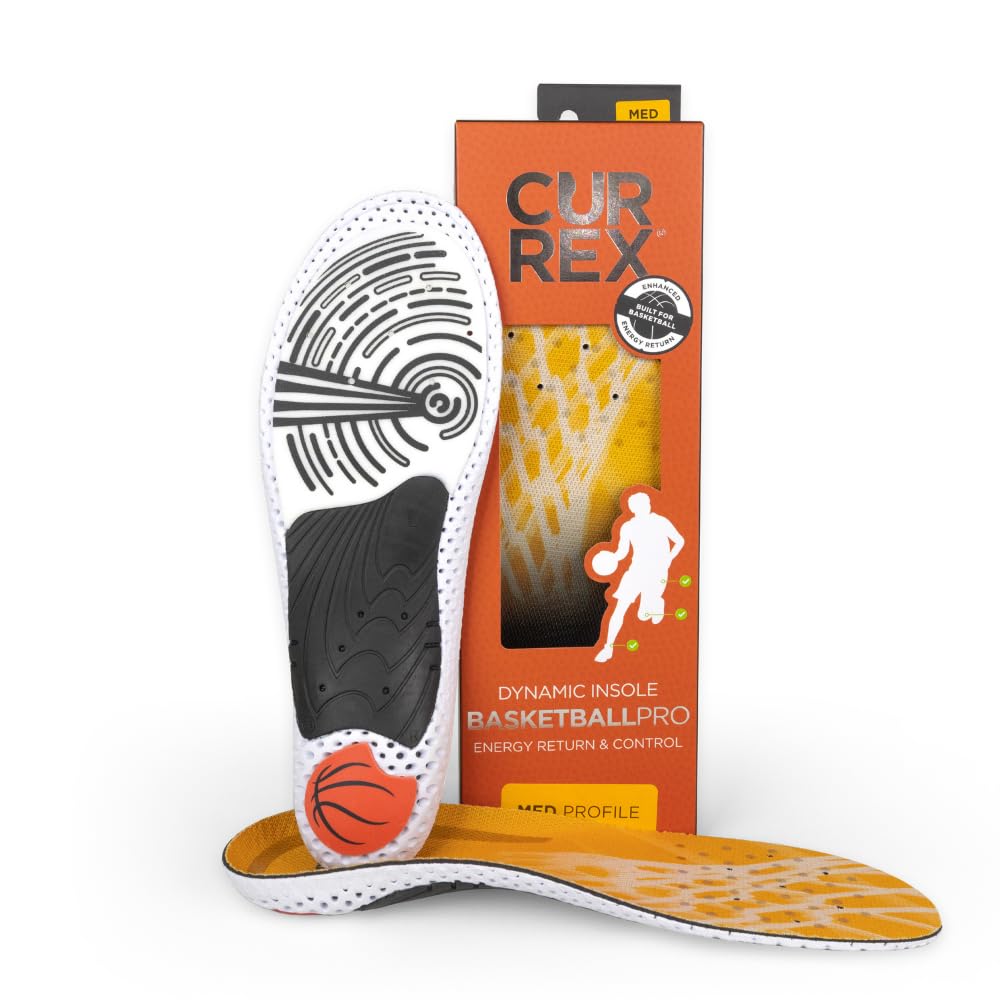
50% energy return makes this the top pick for any basketball player who wants explosive first-step quickness from a dedicated hoops insole, not a repurposed running or walking product. Its ultra-light high-energy foam, SuperGrip anti-slip surface, and deep decoupled heel cup lock the foot in place during crossovers, pivots, and sudden stops. Reviewers report that the firm shell supports jump landings well and the heel cushion softens impact during long sessions, keeping feet stable and comfortable through full games.
One honest trade-off: a few buyers report that the silicone grip zones can contribute to stronger shoe odor over time, though regular hygiene keeps it manageable. It is sharper in quick cuts than the MOVE Game Day Pro because of that higher energy return.
If you play hard and often — from high school to recreational leagues — this is the most complete, dedicated basketball insole you can drop into your shoes today.
Why it’s great
- Nearly 50% energy return for explosive cuts and jumps
- 3D Dynamic Arch Technology with low, medium, and high profiles
- SuperGrip anti-slip surface keeps foot locked during pivots
- Targeted shock pad disperses impact evenly on landings
Good to know
- May cause stronger shoe odor over time for some users
- Premium price point
2. MOVE Game Day Pro – Ultimate Performance Sports Insoles
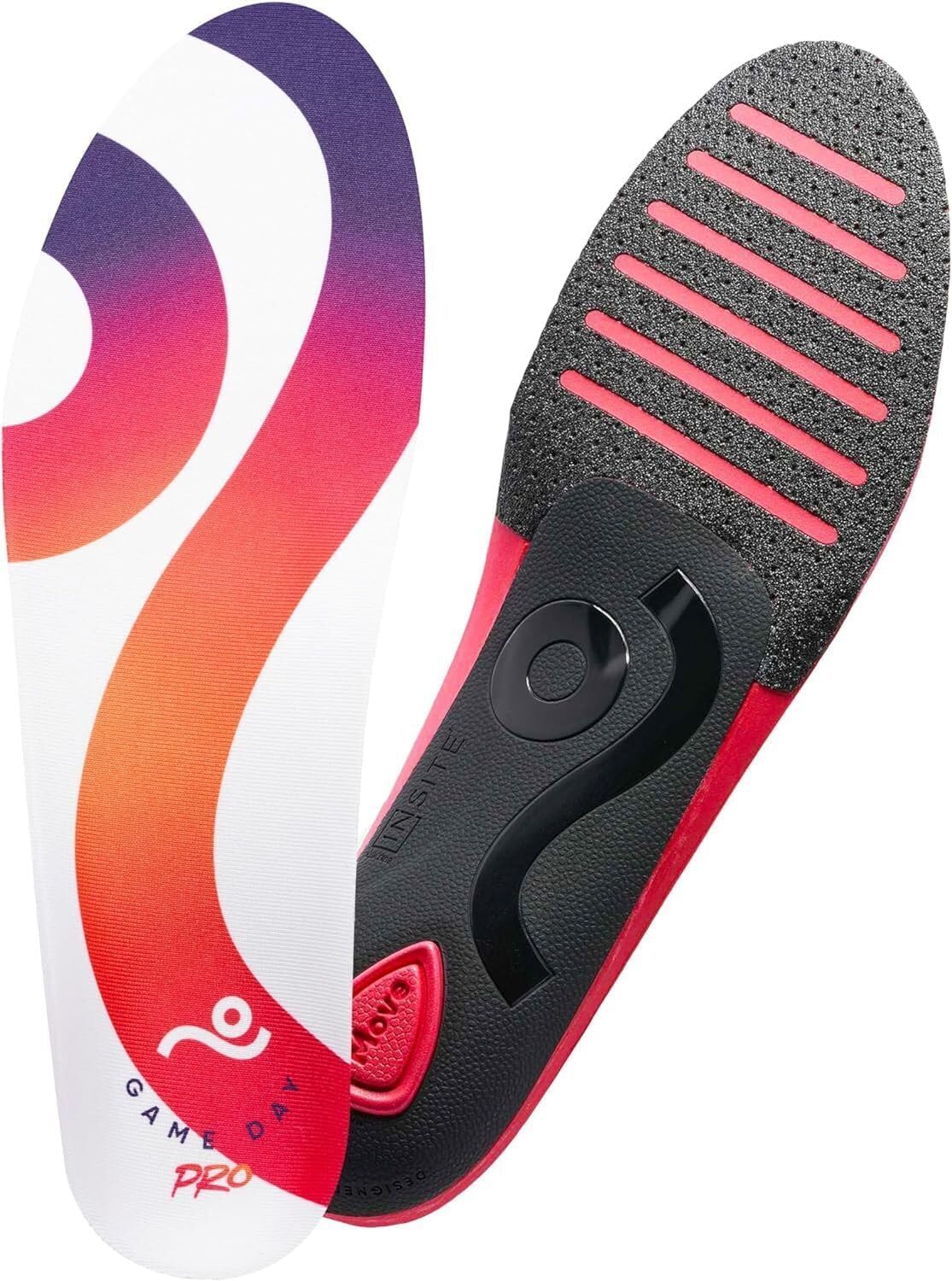
While the CURREX BASKETBALLPRO leads on pure energy return for quick cuts, the MOVE Game Day Pro beats it on torsional rigidity (resistance to twisting) and high-arch support, thanks to its X-Frame design that wraps the heel and midfoot for maximum stability during hard landings. Co-founded by NBA All-Pro Damian Lillard, this insole is built for serious athletes who want a locked-in, supportive feel under fast lateral movement. The Active Heel Technology targets pressure points in the heel to reduce shock, and the high arch support actively combats plantar fasciitis (a painful heel condition from a strained arch tendon) by keeping the arch from collapsing during explosive movements. One buyer — a 6’6″, 205 lb volleyball player — reports that the slight forward tilt of the insole actually improved his quickness and explosiveness off the ground, and that it lasted a full year of heavy use. This pick suits you best if you have high arches or ongoing foot issues like flat feet or Achilles tendonitis. You should skip it if your foot has a neutral arch that might find the rigid support too aggressive.
Where it shines
- X-Frame torsional support for heel and midfoot stability
- High arch support combats plantar fasciitis and flat feet
- Active Heel Technology reduces pressure on sensitive areas
- Durable, lasts up to a year with regular use
Worth noting
- Better for high-arch feet — less forgiving for neutral arches
3. Move Game Day Performance Insoles – for Plantar Fasciitis

This insole targets the player who shows up to the court with foot pain already nagging them — maybe plantar fasciitis from years of hard landings, or shin splints (pain along the shin bone from impact) that never quite go away. Move’s patented arch support replicates the benefits of a custom-molded insole, and the active heel protection minimizes shock to sensitive pressure points in the heel and ankle. One buyer who had dealt with shin splints for over five years reports that this insole eliminated the pain entirely, allowing him to run a mile pain-free on the treadmill and outdoors for the first time in years. The molded forefoot design helps the insole conform to your shoe so it does not shift around, and at just 4.66 ounces, it is lighter than many standard insoles (significantly lighter than the 8.82-ounce Welnove carbon fiber model). The main standout spec here is the patented arch support — it is the feature that lets this insole compete with custom orthotics at a fraction of the investment, making it the best dollar-for-dollar pick if you deal with chronic foot stress.
What stands out
- Patented arch support replicates custom orthotic feel
- Active Heel Technology reduces shock to sensitive pressure points
- Lightweight at 4.66 ounces
- Targets plantar fasciitis, flat feet, and shin splints
The trade-offs
- Heel cushion may feel less padded than competition for older players with bad knees
4. CURREX ActivePro Insoles for Basketball, Volleyball, Dance, Running

Getting the right fit for your foot’s arch height is critical — and the CURREX ActivePro is one of the only insoles in this roundup that offers low, medium, and high arch profiles as separate SKUs (individual products you choose from). That means you can get a precise fit for your exact foot type rather than settling for a generic one-size-fits-moderate approach. The catch you accept is that the arch support is flexible rather than rigid — it is not a stiff carbon fiber platform, so you lose some of the explosive energy return that a rigid base provides. But you gain all-day wearability: one buyer on a 13.5-hour hospital shift reports that the ActivePro significantly reduced foot fatigue and eliminated morning soreness, which matters if you wear your basketball shoes off the court too. This pair is ideal if you want one insole for both basketball and everyday wear, but pass on it if explosive push-off power is your top priority.
The upsides
- Available in low, medium, and high arch profiles for precise fit
- Deep decoupled heel cup wraps and locks the foot in place
- Moisture management keeps feet dry during long wear
- Flexible anatomic arch support for daily comfort
Keep in mind
- Flexible arch provides less rigid push-off power than carbon fiber insoles
5. Pefuair Carbon Fiber Sports Insoles with Arch Support & Heel Cup

For players who want the rigid, push-off power of a carbon fiber platform but are not ready to commit to the highest price tier, these Pefuair insoles deliver an ultra-rigid carbon fiber core that gives you a snappy, responsive feel when you push off for a jump or a sprint. At 5.61 ounces, they are significantly lighter than the Welnove carbon fiber insoles (which weigh 8.82 ounces), making them a better choice for players who want responsiveness without extra bulk. The zero-drop design (keeping your heel level with your forefoot, with no raised heel) suits runners or players with a natural midfoot strike for a smoother stride. Owners mention that after a week of wear, “the change in comfort is way noticeably” and that the arch support helps during entire days of standing at home or work — a sign that the rigid core does not sacrifice everyday comfort. This pair works best if you want the explosive power transfer of a premium insole at a mid-range price, but it’s not for you if you prefer a softer, more flexible feel under your foot.
Why we’d pick it
- Ultra-rigid carbon fiber core for maximum energy transfer
- Lightweight at 5.61 ounces
- Zero-drop design suits natural running and walking strides
- Breathable mesh top layer wicks sweat during intense play
A few caveats
- Rigid core may feel too stiff for players who prefer flexible support
6. Welnove Carbon Fiber Sports Insoles with Arch Support

If you are a high-impact player — someone who jumps hard, lands hard, and needs maximum shock absorption in the heel — the Welnove insoles’ aerospace-grade carbon fiber baseplate and 0.3-inch heel lift (a small raise at the heel) make them a strong choice. The heel lift changes your foot’s angle slightly to reduce strain on the Achilles and calf, which helps prevent common basketball injuries like turf toe and shin splints. One buyer who works 13,000-step shifts reports that these insoles “eliminated foot pain and cramps” without any break-in period, and that the carbon fiber arch support lasted over six months despite the recommended three-month replacement schedule. The thick design (0.3 inches at the heel) takes up noticeable shoe volume, so they will not work well in tight-fitting shoes — a point several reviewers specifically mention. At 8.82 ounces, these are the heaviest insoles here — 57% heavier than the GED basketball insoles — which might feel slightly bulky in lightweight basketball shoes if you prioritize nimble footwork. This is a solid pick over the lighter Pefuair model if your main concern is heel shock absorption, not weight.
Strong points
- Aerospace-grade carbon fiber baseplate minimizes bending
- 0.3-inch heel lift reduces Achilles and calf strain
- Eliminated foot pain for heavy-use, high-step users
- Durable, lasting over 6 months for some users
Before you buy
- Heaviest in the roundup at 8.82 ounces
- Thick heel requires enough shoe depth — may not fit tight shoes
7. GED Basketball Shoe Insoles for Men – Sports Inserts for Basketball
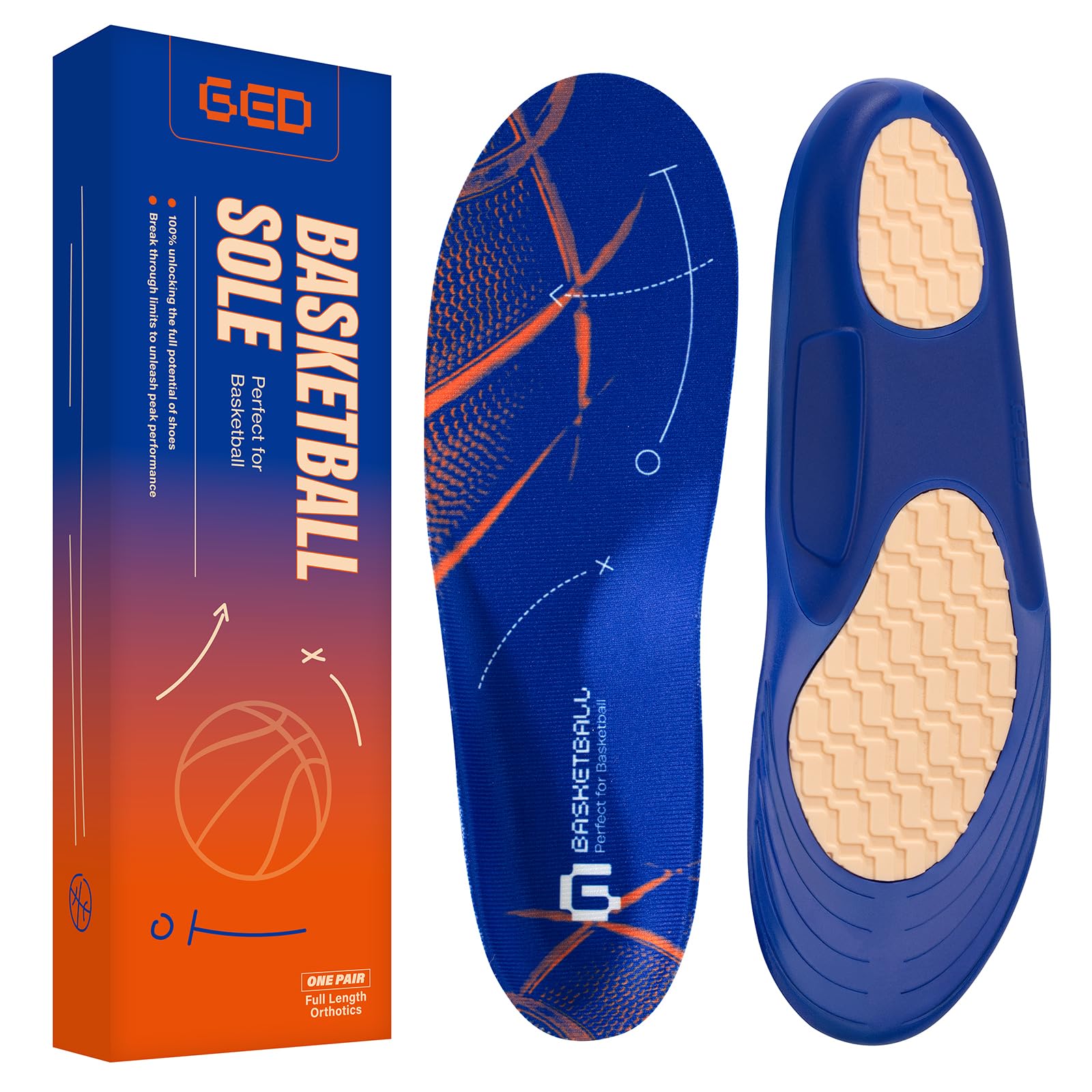
At the entry-level price point, the GED insoles give you exactly what a casual or budget-conscious basketball player needs: a lightweight 5.61-ounce design with a specialized H-type support structure (a support shaped like the letter H) that delivers medium-level arch support without the bulk or cost of carbon fiber models. They are “performance-tested under loads up to 220 lbs,” so younger players and lighter builds can trust the durability, according to the brand’s claim. What you give up is the rigidity and energy return that a carbon fiber platform provides — these are elastic foam-based insoles, meaning they absorb shock well but return less energy into your next step. They also have a trim-to-fit design that buyers find easy to cut, though the instructions warn to avoid cutting into the reinforced support areas near the arch. This pair is a smart choice for a high school player who needs better arch support than the stock insoles but does not yet need the performance engineering of a premium carbon fiber insole.
What we like
- Lightweight at 5.61 ounces for nimble movement
- H-type medium arch support promotes proper foot alignment
- Performance tested to 220 lbs
- Trim-to-fit design adapts to most basketball shoes
The downsides
- Foam-based design lacks the explosive energy return of carbon fiber
- Medium arch only — less suitable for very high or very flat arches
Understanding the Specs
Energy Return (Rebound)
This measures how much of the force from a landing is returned into your next movement — a higher percentage means a springier, more explosive feel. The CURREX BASKETBALLPRO claims roughly 50% energy return, meaning half the energy from your jump landing goes back into your next step. Standard foam insoles typically return about 20-30%, so this is a meaningful advantage for players who rely on quick first steps.
Arch Height Profile
Arch height is the vertical distance from the floor to the highest point of your foot’s inside curve. A high-arch foot (overhangs the ground when standing) needs a pronounced support to fill the gap and prevent the arch from collapsing. A low-arch or flat foot (nearly touches the ground) needs a gentler, wider support that cradles rather than pushes up. The CURREX ActivePro and BASKETBALLPRO are unique in offering separate products for low, medium, and high arches — most insoles only offer a generic medium profile.
Heel Cup (Decoupled vs. Standard)
A decoupled heel cup is a deep, separate cradle at the back of the insole that wraps around your heel independently from the arch section. This prevents heel slip (micro-movements during cuts and stops) and reduces rotational stress on the ankle. A standard heel cup is shallower and more connected to the rest of the insole, which is fine for walking but less ideal for the lateral demands of basketball.
Shock Absorption vs. Energy Return
Shock absorption and energy return are related but not the same. Shock absorption is about how well the material compresses to soften impact — measured by how much force is reduced upon landing (foam and gel excel here). Energy return is about how much of that compressed force springs back into your next push-off — rigid, springy materials like carbon fiber or high-rebound PU foam do this best. The best basketball insoles balance both: enough shock absorption to protect your knees, enough return to feel explosive.
FAQ
Do I need high, medium, or low arch support for basketball?
Will carbon fiber insoles make me jump higher?
Can I use basketball arch support insoles in non-basketball shoes?
How long should basketball arch support insoles last?
Final Thoughts: The Verdict
For most players, the basketball arch support winner is the CURREX BASKETBALLPRO because it delivers a dedicated basketball-specific design with near-50% energy return, 3D Dynamic Arch Technology that matches your exact foot type, and a SuperGrip anti-slip surface that locks your foot in place during the most aggressive cuts and pivots. If you want the most rigid, pro-grade support for high arches and ongoing foot pain, grab the MOVE Game Day Pro. And for the best blend of performance and everyday wearability at a mid-range price, the Move Game Day Performance insoles with their patented arch support and pressure relief technology give you the most value for your money.