
That moment when a sudden sleet storm hits and your lightweight summer dome starts flapping like a tarp on a highway—that’s the exact moment you realize a three-season tent will never cut it. An all-season tent isn’t just a thicker piece of fabric; it’s a complete system built around a snow-load capable frame, a full-coverage fly that blocks spindrift, and a tub floor that keeps meltwater from seeping into your sleeping bag. The wrong choice turns a winter camping trip into an emergency bivouac.
I’m Min — the co-founder and writer behind Gadgets Feed. For this guide, I’ve cross-referenced hydrostatic head ratings, pole diameters, fabric denier counts, and real-world storm survival reports from nine different models to separate the true four-season shelters from the marketing claims.
Whether you plan to park a wood stove inside the tent or simply need a reliable barrier against a whiteout, the best all-season tent for your next base camp will balance weight, space, and weather resilience in a way no single three-season shelter ever can.
How To Choose The Best All-Season Tent
Buying a tent that can handle a February nor’easter or a high-altitude summer squall means looking past the “4-season” label printed on the box. The real decisions come down to pole structure, fabric waterproofing, and whether the design includes a dedicated stove jack. These three factors determine if you’ll be dry and warm or wet and shivering.
Fabric and Hydrostatic Head Ratings
The fly and floor materials are your first line of defense. Look for a minimum 3000mm hydrostatic head on the fly—this is the standard for shedding snowmelt and heavy rain without the fabric wetting out. Premium models use silicone-coated nylon or polyester that resists UV degradation and stays supple in sub-zero temps. Canvas tents, like those from TETON Sports or WHITEDUCK, trade packability for breathability: the natural fibers manage interior moisture far better than any synthetic, but they weigh significantly more and need to be dried thoroughly before storage to prevent mildew.
Pole Architecture and Snow Load
A true four-season tent relies on a pole structure that can bear the weight of accumulated snow without collapsing. The best designs use multiple crossing points—often in an X or geodesic pattern—constructed from DAC aluminum or 7001-series alloy. Straight-wall cabin tents and bell tents rely on a central pole or a heavy steel frame, which gives them excellent interior space but makes them unsuitable for exposed ridgelines where wind loading is extreme. A freestanding dome with a low, aggressive profile sheds wind better than any cabin-style shelter.
Stove Jacks and Condensation Management
A stove jack transforms a tent from a cold refuge into a true winter haven, but it also introduces fire-safety and ventilation requirements. The jack must be made of fire-retardant material, and the tent fabric around it should include a flap or cinch to prevent ember escape. Even with a stove, double-wall designs with mesh inner doors and adjustable top vents are critical—without airflow, your breath creates a layer of frost that can drip onto your bag when the stove heats the air. The Naturehike Massif and Dune models, plus the WHITEDUCK Regatta, all demonstrate how proper vent placement and stove integration can keep interior condensation under control even after a night of single-digit temps.
Quick Comparison
On smaller screens, swipe sideways to see the full table.
| Model | Category | Best For | Key Spec | Amazon |
|---|---|---|---|---|
| Naturehike Dune Hot Tent | 4-Season | Winter camping with stove | 3000mm fly / 4000mm floor | Amazon |
| Naturehike Massif Hot Tent | 4-Season | Large group winter shelter | 161 sq ft / 6-pole frame | Amazon |
| NEMO Kunai | 3-4 Season | Backpacking and mountaineering | 3000mm floor / 2550 g | Amazon |
| Browning Glacier 4-Person | 4-Season | Car camping in extreme weather | 2000mm floor / straight walls | Amazon |
| Snow Peak Amenity Dome 5 | 3-Season+ | Family car camping | 1800mm floor / 8 kg | Amazon |
| OneTigris Stella 2P | 4-Season | Lightweight solo winter trek | 3000mm floor / 2.2 kg | Amazon |
| Kelty Grand Mesa 2P | 3-Season | Fair-weather spring/fall trips | 68D polyester / 1.8 kg | Amazon |
| TETON Sports Canvas Tent | 4-Season | Base camp with heater | Canvas / 78″ peak height | Amazon |
| WHITEDUCK Regatta Bell Tent | 4-Season | Luxury glamping with stove | Canvas / 314 sq ft | Amazon |
In‑Depth Reviews
1. Naturehike Dune Hot Tent

The Naturehike Dune checks every box for a serious winter camper: a dedicated stove jack with a flame-retardant surround, a 3000mm-rated fly with a 4000mm oxford cloth floor, and a snow skirt that blocks spindrift. Reviewers consistently report surviving 50 MPH gusts and hailstorms without damage, and the freestanding X-frame pole architecture makes setup straightforward even with gloved hands. At 16.5 pounds, it’s a car-camping or light-overland unit, not a backpacking shelter, but the interior volume—86.6 by 59 inches with a 63-inch peak—lets two adults sit up and move around with ease while a small wood stove burns inside.
What sets the Dune apart from cheaper stove-compatible tents is the double-layer construction. The mesh inner tent and four-sided doors provide unrestricted airflow during warmer shoulder seasons, eliminating the condensation issues that plague single-wall hot tents. The removable inner tent also lets you use the fly as a standalone sun shelter, adding versatility that most dedicated winter shelters lack. Reflective interior panels retain radiant heat from the stove, a detail that makes a measurable difference when temps drop below freezing.
The included stake set is adequate but not ideal for hard-packed snow—upgrading to longer snow stakes or deadman anchors is a wise move. Overall, the Dune delivers a premium winter camping experience at a price that undercuts most canvas rivals while matching their weather performance.
Why it’s great
- Stove jack with fire-retardant material is ready for a wood burner out of the box
- Double-wall design prevents interior frost even when the stove isn’t running
- Four full-size doors and mesh windows provide exceptional warm-weather ventilation
Good to know
- Stove sits close to the inner tent wall—use a heat shield and maintain clearance
- Pack weight of 16.5 pounds makes it a car-camping or canoe-camping tent only
2. Naturehike Massif Hot Tent

The Naturehike Massif is a supersized version of the Dune, designed for groups who need a roomy base camp that can accommodate a stove plus cots for up to four people. With 161 square feet of floor space—roughly 16.7 by 8.36 feet—and a 5.9-foot peak height, most adults can stand fully upright. The two-room layout uses two separate inner tents, creating a sleeping area and a living area separated by a central hall. That hall space is where you’ll place the stove, leaving the sleeping pads away from the heat source and reducing the risk of accidental burns during the night.
The fabric is a lighter 30D silicone-coated polyester on the fly, paired with a 70D nylon inner. Despite the lighter denier, the 3000mm waterproof rating holds up against rain and melting snow, and reviewers who spent two years using the Massif in high winds, snow, and rain report no structural failures. The TPU sky-view window on the roof adds a psychological lift on storm-bound days, letting natural light filter in even when the fly is fully sealed. Setup is a two-person job due to the six-pole frame, but the freestanding design means you can move the assembled tent to the perfect spot before staking it down.
The vestibule area, while large, has limited tie-out points; some owners have added extra guy lines to keep the side walls taut in blustery conditions. The included stakes are the same budget level as the Dune’s, so plan to upgrade. For groups who value interior space over minimum weight, the Massif is one of the most livable stove-compatible tents at this price tier.
Why it’s great
- Two-room layout lets you isolate the stove from sleeping gear
- High 5.9-foot peak allows standing room for most users
- Lightweight 30D fly with silicone coating packs smaller than canvas equivalents
Good to know
- Six-pole setup takes about 15 minutes and requires two people for easiest assembly
- Side door fly lacks a secure tie-out, flapping in high winds without additional guying
3. NEMO Equipment Kunai
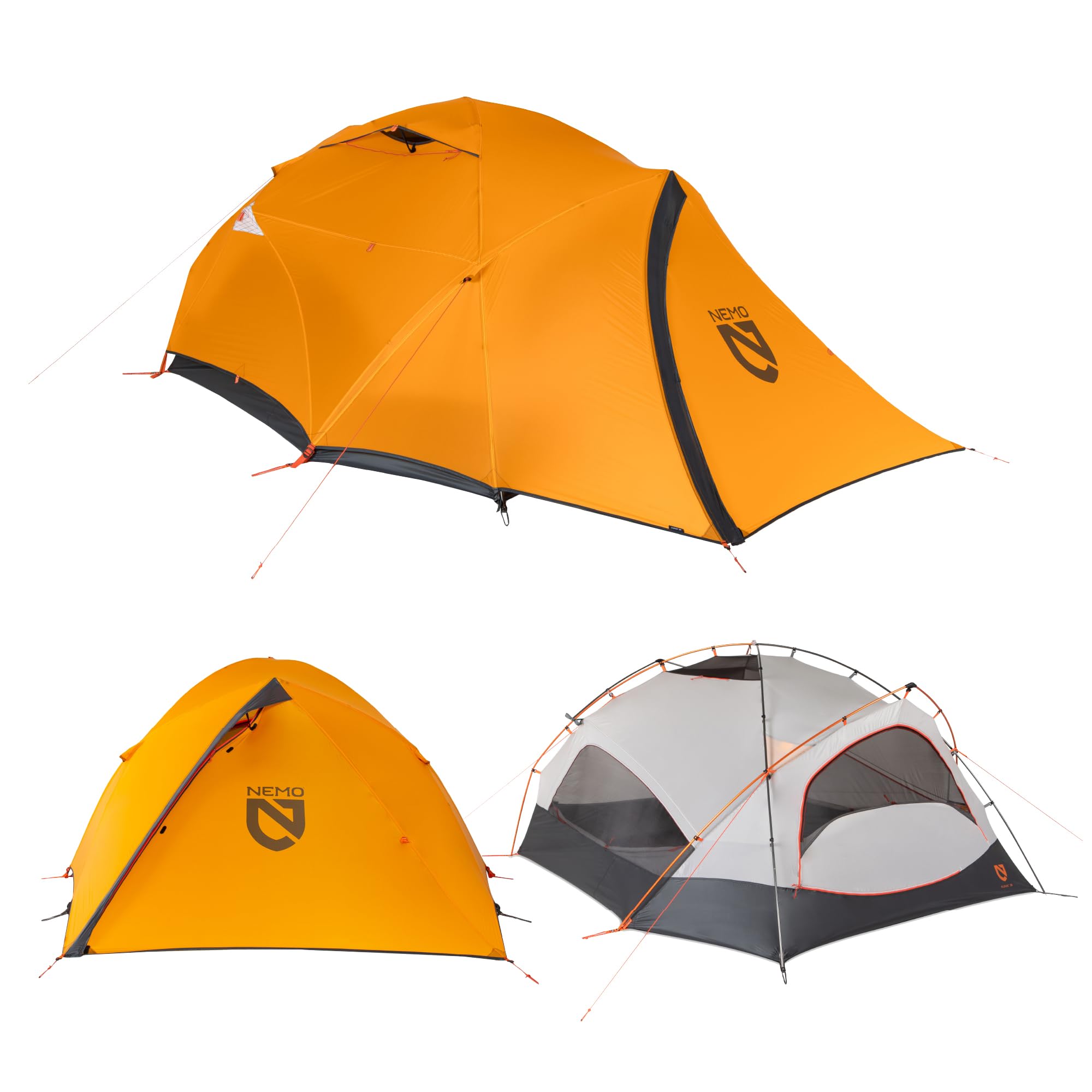
The NEMO Kunai is the lightest true four-season tent on this list, tipping the scale at just 2550 grams. It achieves this through a hybrid 3–4 season design: the inner tent panels swap between mesh for summer and solid fabric for winter, and the fly uses a 30D PeU nylon ripstop with a 3000mm coating that sheds snow effortlessly. The tapered profile and aggressive brow pole create a low frontal area that cuts wind loading, while a Dimension Polyant 375D X-Ply composite sailcloth patch reinforces the high-wear zones where a winter tent takes the most abuse. This is a tent designed for alpine bivouacs and high ridgelines, not car camping.
Reviewers who used the Kunai in 4°F conditions noted that the interior stayed about 20°F warmer than the outside air, thanks to the wind-blocking inner and full-coverage fly. The color-coded clip points make setup intuitive, and the tub floor construction guarantees a dry interior even when pitched on wet snow. Ventilation is handled by a large door vent and zippered mesh windows that can be opened from inside the fly, giving you fine-grained control over condensation without exposing the interior to spindrift.
The Kunai is expensive for its size—it is a snug two-person shelter, and the vestibule is barely large enough for a pack and boots. The rain-fly uses grommets instead of buckles, which some users find less secure in sustained winds, and the included six stakes are insufficient for a full guying-out. If you need a packable shelter that can handle winter peaks and summer thru-hikes in a single tent, the Kunai is the most versatile option here, but the price reflects its specialty engineering.
Why it’s great
- Ultralight 2.55 kg weight makes it the only true backpacking option in this list
- Swappable inner panels adapt the tent from three-season mesh to four-season wind block
- Composite sailcloth reinforcement handles high-wind stress points without added weight
Good to know
- Vestibule is too small for gear storage—adequate only for boots and a pack
- Rain-fly uses grommets instead of tension buckles, harder to adjust in wind
4. Browning Camping Glacier 4-Person

The Browning Glacier brings cabin-style living to the four-season category. Its straight sidewalls create a full 72 square feet of usable floor space with near-vertical walls, meaning you can place cots flush against the edges without losing headroom. The 210D polyester oxford floor carries a 2000mm waterproof coating, and the 75D 185T rain fly is factory seam-sealed. The two-pole aluminum frame is remarkably simple for a tent this size—most users report a five-minute solo setup—and the full-coverage fly buckles directly to the frame for a taut pitch that sheds wind and rain effectively.
Oversized #10 zippers on both doors and vestibules are a premium touch that outdoor brands often reserve for expedition-grade tents. These chunky zippers operate smoothly even when stiff from cold, and they resist jamming when sand or dirt works into the track. Two large vestibules provide covered storage for gear, keeping snow and rain off packs and boots. The mesh roof vents allow airflow even with the fly fully deployed, and the gear loft and mesh pockets keep small items organized inside the main living area.
At around 20 pounds, the Glacier is strictly a car-camping tent. Some users report minor stitch leaks at the vestibule corners during prolonged heavy rain, so treating the seams with additional sealant is a smart precaution. For family winter base camping where comfort and space matter more than pack weight, the Browning Glacier delivers a durable, weathertight shelter.
Why it’s great
- Vertical walls maximize interior space, allowing full-size cots along the sides
- #10 zippers on doors and vestibules operate reliably in cold, dirty conditions
- Full-coverage fly with buckled attachment creates a taut, waterproof pitch
Good to know
- Heavy and bulky at nearly 20 pounds, designed for car camping, not backpacking
- Some vestibule seam stitching may require additional sealant to prevent slow leaks
5. Snow Peak Amenity Dome 5

The Snow Peak Amenity Dome 5 is a Japanese-engineered hybrid that blends the spaciousness of a tunnel tent with the stability of a dome. Its unique frame uses three main arch poles plus a front room pole, creating a 10-by-10-foot footprint with a side vestibule that functions as a mudroom. The 75D polyester taffeta fly carries an 1800mm PU coating, and the floor uses a thicker 210D polyester oxford with the same 1800mm rating. While that waterproof level is lower than the 3000mm standard preferred for heavy snow, the Amenity Dome is designed for conditions where snow loads are moderate and rain is the primary concern.
Build quality is where Snow Peak justifies its premium price. The Duralumin A7001 poles are thicker and stiffer than standard aluminum, resisting bending under weight. Teflon water-repellent treatment on the fly fabric causes water to bead and roll off rather than soaking into the weave, and the Teflon treatment lasts longer than standard PU coatings. Two large front doors and a rear mesh window provide cross-ventilation that keeps condensation under control in humid conditions. The beige colorway also reflects sunlight better than dark tents, keeping interior temperatures lower on sunny days.
The Amenity Dome is not a true snow-rated shelter—the lower 1800mm hydrostatic head and the fly design leave gaps that can allow spindrift in heavy winds. The stock pegs are lightweight Duralumin pins that bend easily in rocky soil. It is also heavy at 8 kg, and the packed size is bulky. For fair-weather family camping with occasional rain, the Amenity Dome offers Japanese precision and a spacious layout that few other tents match, but it sits at the edge of the four-season category rather than at its center.
Why it’s great
- Hybrid dome-tunnel design creates a huge 10×10 interior with a covered front room
- Duralumin A7001 poles are much stiffer than budget aluminum, resisting flex in wind
- Teflon water-repellent finish keeps the fly dry and light, even in sustained drizzle
Good to know
- 1800mm hydrostatic head is marginal for heavy snow and sustained rain
- Stock Duralumin pegs bend easily in hard ground—plan to upgrade to steel stakes
6. OneTigris Stella 2P

The OneTigris Stella is the lightest true four-season tent available at an entry-level price point. Weighing just 2.2 kg, it uses 20D nylon for the body and 40D nylon for the floor, both with a silicone coating that delivers a 3000mm hydrostatic head. The single-layer fly is removable, and the mesh inner tent provides decent airflow when conditions allow. Setup is simple: two flexible poles cross at the top of the dome and anchor to the four corners, and the entire process takes under five minutes even on the first try. Reviewers who tested the Stella through 30-40 MPH wind and rain storms report no leaks and no structural damage, which is impressive for a tent that costs less than many premium three-season shelters.
The condensation management is better than expected for an entry-level four-season tent. The sil-nylon fabric breathes moderately well, and the mesh inner prevents the worst of the interior frost. However, the tent lacks side mesh vents; when both doors are fully zipped in storm mode, moisture buildup becomes noticeable. Opening a small gap on the leeward door helps, but a dedicated vent panel would have solved this entirely. The vestibule is tiny—large enough to stash a pair of boots but not a backpack—so wet gear must come inside.
For taller users, the Stella presents a problem: the 45-inch peak height is too short for anyone over six feet to sit upright on a cot or thicker sleeping pad, and the floor length of 82.7 inches means a tall person’s feet and head will press against the walls. The tent is better described as a spacious one-person shelter than a genuine two-person tent. If you’re a solo winter trekker looking for a lightweight, budget-friendly four-season shelter that punches above its price, the Stella is a compelling choice. For two people or anyone over six feet, it’s too cramped.
Why it’s great
- Lightest four-season tent on the list at 2.2 kg, ideal for solo backpacking
- 3000mm silicone-coated nylon fly sheds rain and snow reliably in storms
- Setup takes under five minutes with color-free, intuitive pole sleeves
Good to know
- Interior height of 45 inches forces tall users to hunch or lie down
- No side vents cause condensation buildup when doors are fully closed in storm mode
7. Kelty Grand Mesa 2P
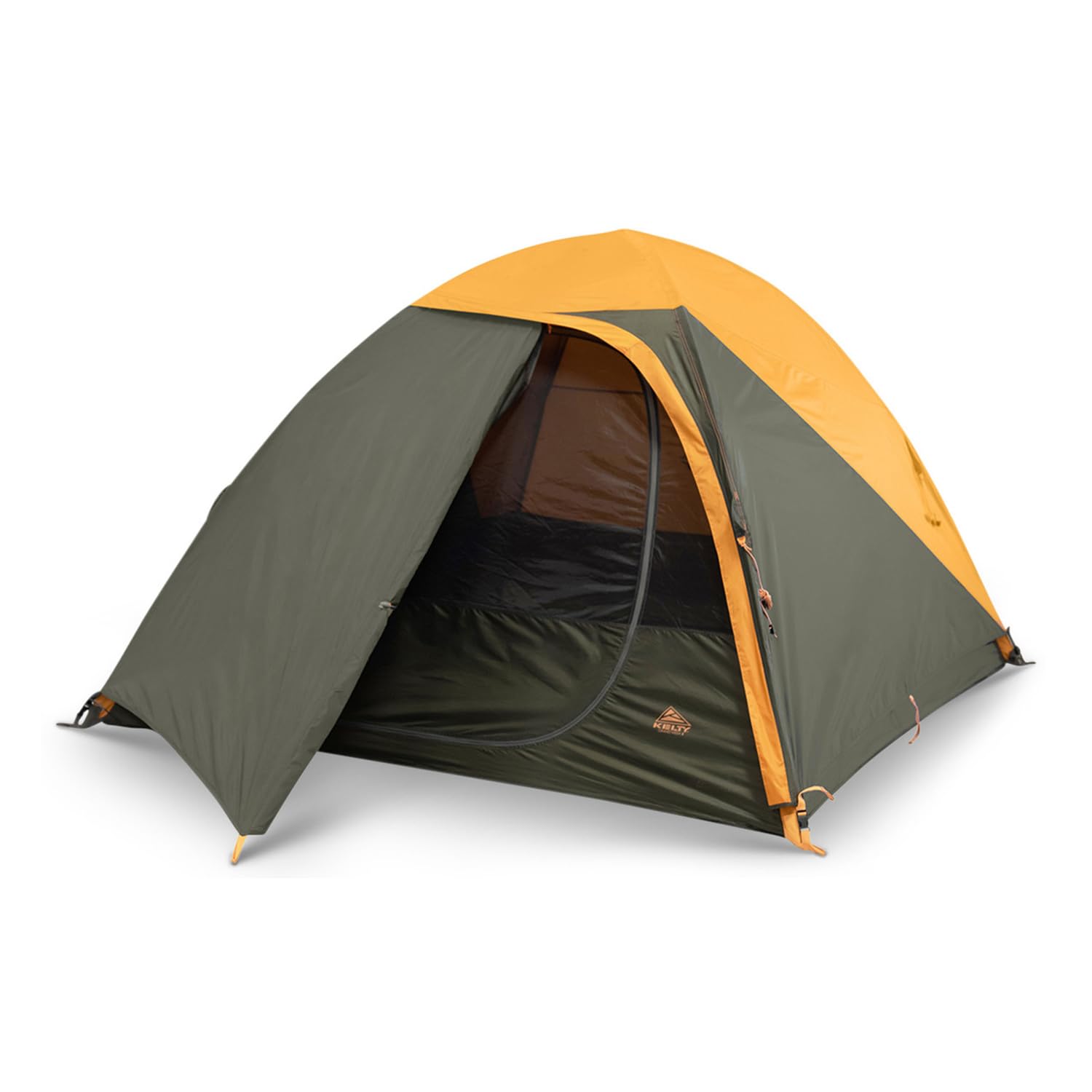
The Kelty Grand Mesa is a classic three-season backpacking tent that we include here because many budget-conscious buyers consider it a year-round option. It is not. The 68D polyester fly and floor lack the hydrostatic head needed to handle snowmelt or sustained winter rain, and the single-pole crossover design relies on guying out for stability in wind. For spring through fall use in mild conditions, the Grand Mesa offers great value—it sets up in under five minutes, the color-coded clips and corner attachments are foolproof, and the 54-square-foot interior fits two adults on sleeping pads with a small gear vestibule.
Kelty uses press-fit aluminum poles that are light and easy to handle, and the fully taped seams keep light rain out. The Shark Mouth carry bag makes packing easier than the usual stuff-sack struggle. Reviewers consistently praise the ease of setup—multiple accounts of 11-year-olds assembling the tent solo in under five minutes. The Grand Mesa is a well-designed, affordable entry-level backpacking tent that does exactly what it promises.
The limitation is clear: this tent will not survive the snow loads or wind pressure that a true four-season shelter handles. In a heavy winter storm, the 68D fabric wets out, the pole structure lacks the multiple crossing points needed to shed snow, and the single wall of the fly does not block spindrift. If your camping is limited to three-season conditions and you need a reliable, lightweight shelter under the mid-range price tier, the Grand Mesa is a solid pick. If you need any four-season capability, skip it.
Why it’s great
- Extremely easy setup with color-coded clips and corner attachments, even for beginners
- Lightweight 4 lbs 1 oz packed weight makes it a true backpacking tent
- Built-in vestibule with fully taped seams keeps gear dry in light rain
Good to know
- Rated for three seasons only—68D fabric cannot handle snow loads or winter rain
- Single-pole dome design lacks the structural rigidity for exposed, windy campsites
8. TETON Sports Canvas Tent

The TETON Sports Canvas Tent is built for hunters and winter base campers who need a shelter that can hold steady against heavy snow and sub-zero windchill. The 10-by-14-foot floor plan uses cotton canvas—a breathable natural fabric that dramatically reduces interior condensation compared to polyester or nylon. When paired with a propane heater or small wood stove, the canvas absorbs moisture vapor and releases it as the tent cools, preventing the frozen-inside-frost problem common in synthetic tents. The 78-inch peak height lets most adults stand fully upright, and the straight sidewalls create usable space from floor to ceiling.
Setup relies on a push-button pole mechanism: you push down the top bar, insert the pins, and attach the upright sections. Most users report a five-minute solo pitch for the main structure, though the heavy canvas and steel poles require muscle to lift. The oversized front and rear doors are wide enough to carry awkward gear like coolers or rifle cases in and out, and the two integrated gear lofts and pockets keep the floor clutter-free. The PVC rainfly and full awning over the entry add an extra layer of weather protection, keeping the door area dry in driving rain.
Canvas tents are heavy and require proper drying before storage to prevent mildew; the TETON Sports tent weighs roughly 80 pounds total, broken into manageable sub-bags. The carbon steel stakes included with the tent are robust enough for hard ground and frozen soil—no need to budget for upgrades. This is not a backpacking tent, nor is it suitable for alpine ridgelines where wind loading exceeds the structural limits of a cabin-style frame. For car-camping hunters, family winter trips, or any scenario where a comfortable, breathable base camp is the priority, the TETON Sports Canvas Tent delivers a level of livability that no synthetic dome can match.
Why it’s great
- Breathable cotton canvas virtually eliminates interior condensation, even with a heater running
- 78-inch peak height with straight walls provides full stand-up room across the entire floor
- Heavy-duty steel poles and carbon steel stakes handle rocky and frozen ground without bending
Good to know
- Total weight of 80 pounds requires a vehicle to transport—not packable in any backpack
- Canvas must be completely dry before storage to prevent mildew growth
9. WHITEDUCK Regatta Canvas Bell Tent
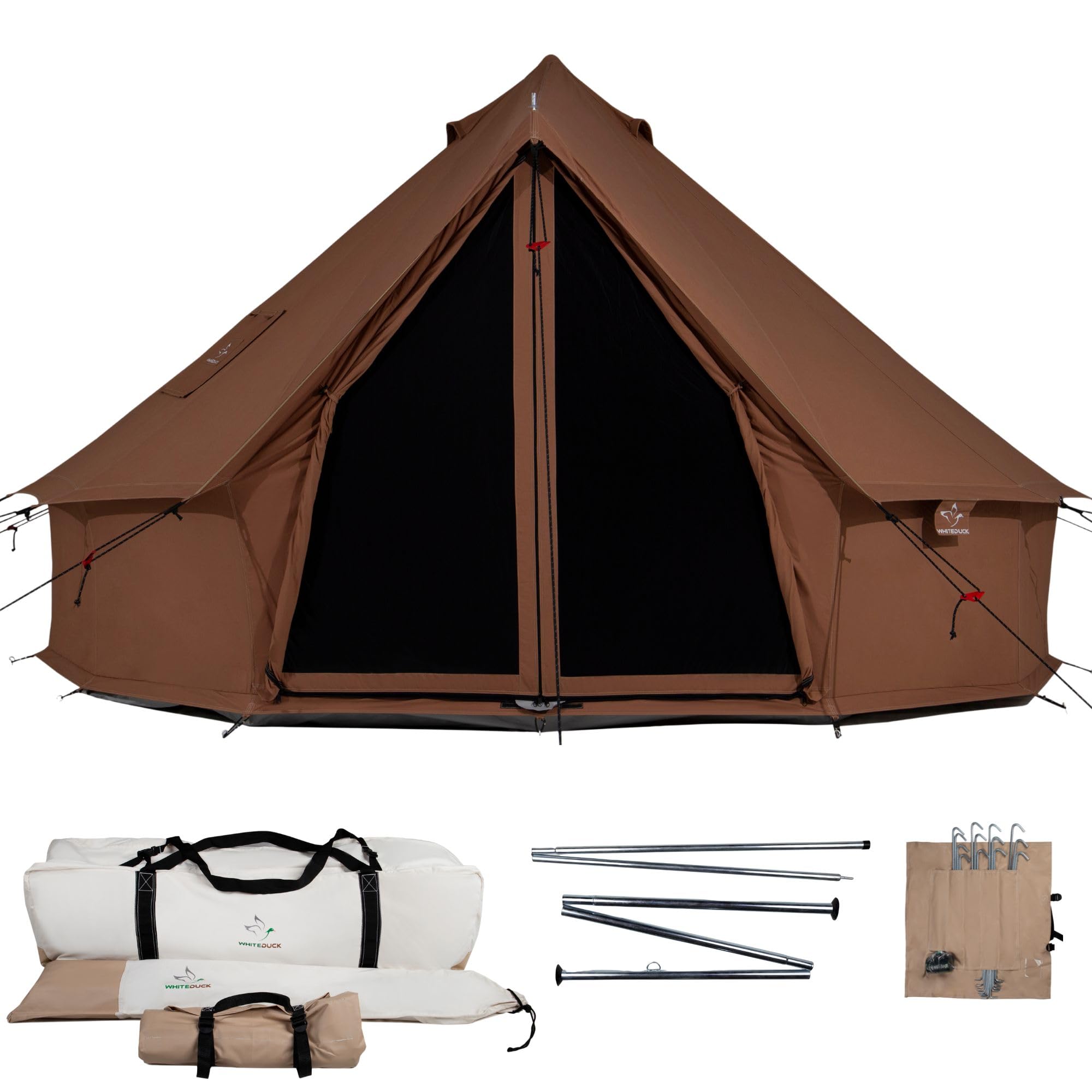
The WHITEDUCK Regatta is a premium canvas bell tent designed for luxury winter camping. The belled profile creates an interior volume that feels more like a small cabin than a tent—the 314-square-foot floor of the largest model can hold multiple cots, a full dining table, and a wood stove with room to spare. The standard wall height of 2 feet 7 inches is higher than most bell tents, which means you lose less usable perimeter space to sloping walls. The cotton canvas is PFC-free and treated for water resistance, and every Regatta includes a sewn-in groundsheet, stove jack, roof vents, and mesh windows as standard equipment.
Canvas bell tents manage condensation better than any synthetic structure when used with a stove. The natural fibers breathe, allowing moisture vapor to escape through the weave rather than condensing on the inner surface. The Regatta’s stove jack is made from fire-retardant material and is positioned near the center wall, keeping the heat source away from the main living area. The two-layered doors and windows feature heavy-duty weatherproof zippers that survive years of use without failing—a critical detail since a broken zipper on a winter bell tent means an immediate trip-ending cold leak.
The Regatta requires a larger investment than any other tent on this list, and it is not a shelter for high alpine or exposed ridgeline camping—the center pole design creates a single high point that catches wind, and the tent must be staked and guyed thoroughly to handle storm conditions. It also takes practice to pitch solo the first time. For base camps, glamping setups, and any scenario where you want the comfort of a heated cabin with the experience of sleeping under canvas, the WHITEDUCK Regatta is the most luxurious and well-engineered option here.
Why it’s great
- Cotton canvas breathes naturally, eliminating the frost-inside problem that plagues synthetic tents in winter
- Massive 314-square-foot floor plan accommodates cots, furniture, and a stove with ease
- Stove jack, mesh windows, roof vents, and sewn-in groundsheet are included as standard, not optional
Good to know
- Center pole and bell profile create wind-catching surface—requires solid guying in exposed conditions
- Heavy canvas and single-pole design make this a car-camping or glamping shelter only
FAQ
Can I use a three-season tent in light snow conditions?
How do I prevent condensation inside a four-season tent with the doors closed?
What size stove jack do I need for a tent like the Naturehike Massif?
Are heavy canvas tents worth the extra weight and cost for winter camping?
Final Thoughts: The Verdict
For most users, the best all-season tent winner is the Naturehike Dune Hot Tent because it combines a functional stove jack, double-wall ventilation, and proven storm survival at a price that leaves room for upgrading stakes and a small stove. If you need backpackable weight for alpine climbs, grab the NEMO Kunai. And for a base camp that feels like a heated cabin, nothing beats the TETON Sports Canvas Tent.