
Adult strategy board games have moved far past the family roll-and-move formula. The modern tabletop market now delivers tight, competitive experiences where every decision carries weight — from managing a finite resource pool in feudal Japan to balancing engine heat on a race track. The pain for most buyers isn’t finding a game; it’s distinguishing a shallow novelty from a genuinely replayable system with meaningful depth.
I’m Min — the co-founder and writer behind Gadgets Feed. I’ve spent hundreds of hours parsing rulebooks, cross-referencing player counts, playtimes, and mechanical complexity scores to separate the evergreen designs from the one-session wonders in this space.
Whether you are building a castle from oddly shaped tiles or navigating a candlelit labyrinth that vanishes behind you, the best adult strategy board games deliver intellectual tension that rewards repeat plays without punishing a slow learning curve.
How To Choose The Best Adult Strategy Board Games
Not every strategy board game is built for adult attention spans. The best titles offer layered decisions, variable paths to victory, and components that hold up to repeated plays. Focus on mechanics, player scale, and playtime to match your group’s tolerance for complexity.
Mechanics That Define Depth
Worker placement, dice drafting, tile laying, and resource management form the backbone of modern Euro-style games. A game like Devir – The White Castle uses dice placement to tighten action economy — each turn you commit dice to specific roles, making every roll a puzzle rather than a gamble. Engine-building titles such as Earth reward synergy discovery across 350 unique cards, creating combos that escalate as your island develops.
Player Count and Playtime Realities
A 90-minute game for 4 players feels very different from a 150-minute slog for 5. Castles of Mad King Ludwig clips along at 90 minutes because the Master Builder pricing mechanic forces quick, interactive rounds. In contrast, Le Havre can stretch to 2.5 hours, making it ideal for a dedicated game night rather than a casual weeknight. Always check the “best with” player count — many games shine at 2 or 3 but slow at the maximum.
Replayability Through Modularity
Titles that include variable goals, asymmetric powers, or expansion modules extend shelf life considerably. HEAT: Pedal to the Metal offers four distinct tracks plus weather tokens and a championship system that changes strategy between races. The Taverns of Tiefenthal structures its complexity into five modules, so you can start light and graduate to the full experience as your group’s comfort grows.
Quick Comparison
On smaller screens, swipe sideways to see the full table.
| Model | Category | Best For | Key Spec | Amazon |
|---|---|---|---|---|
| Le Havre | Premium Euro | Heavy resource management | 30-150 min playtime | Amazon |
| HEAT: Pedal to the Metal | Racing Strategy | Fast-paced hand management | 60 min playtime | Amazon |
| Castles of Mad King Ludwig | Tile Laying | Creative spatial optimization | 90 min playtime | Amazon |
| Earth | Engine Builder | Synergy discovery | 90 min playtime | Amazon |
| The Night Cage | Cooperative Horror | Atmospheric team escape | 40 min playtime | Amazon |
| The Taverns of Tiefenthal | Modular Euro | Progressive complexity | 60 min playtime | Amazon |
| Devir – The White Castle | Dice Placement | Tight 9-turn Euro | 85 min playtime | Amazon |
In‑Depth Reviews
1. Le Havre Board Game
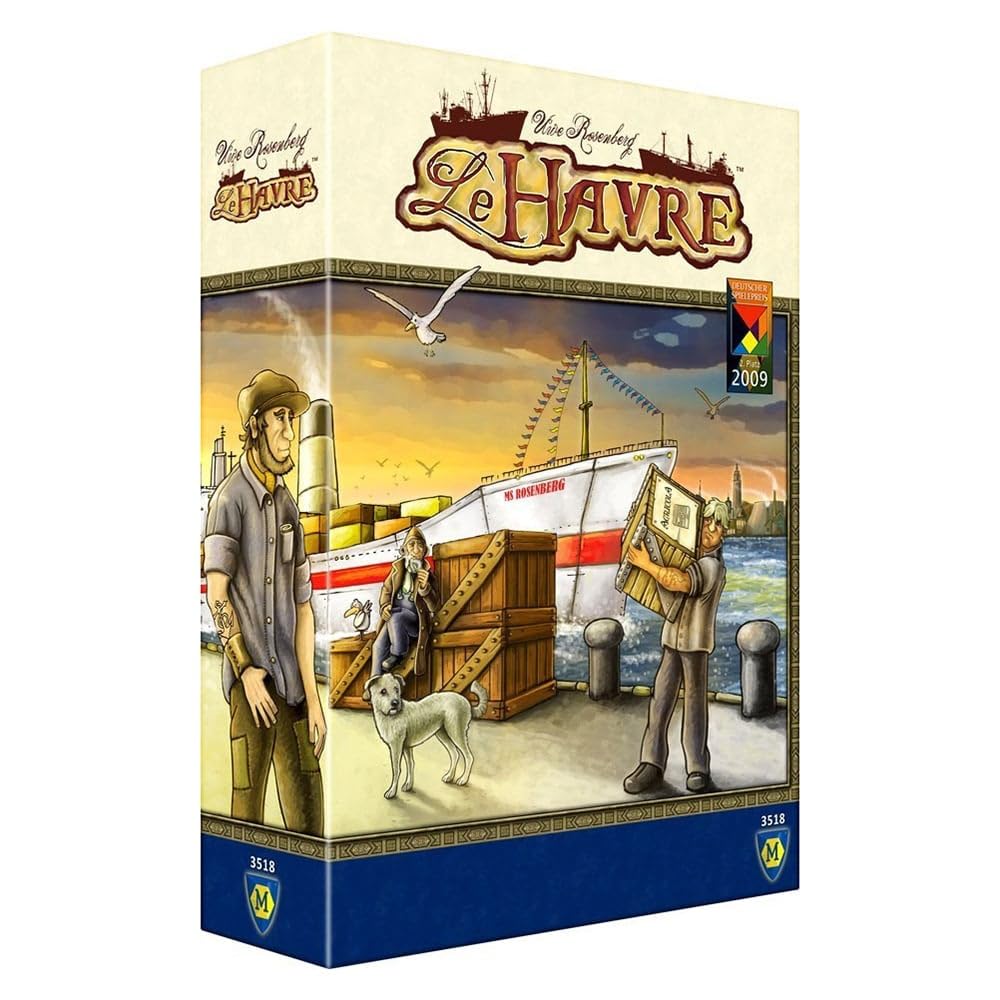
Le Havre is the definitive heavy Euro from Uwe Rosenberg, demanding tight resource management across a shipping economy. Players collect goods, build ships, and construct buildings on the Le Havre waterfront, with each turn forcing a choice between taking raw materials or using an opponent’s building at a fee. The Harvest phase introduces real tension — your cattle and grain multiply, but you must feed workers or face penalties.
At 30 to 150 minutes depending on the variant, this is not a casual filler. The core loop is simple (take goods or use a building), but the sheer number of paths to victory creates deep strategic paralysis for the first few plays. The 1-5 player range works best at 2-3, where the game moves briskly and interaction stays personal. Solo mode is excellent, offering a tight puzzle against a neutral opponent.
Components are standard cardboard but the wood tokens feel durable. The reprint includes bonus cards that add welcome variety to opening strategies. Beginners should expect a steep learning curve — worker placement experience is strongly recommended before tackling this one.
Why it’s great
- Deep, interconnected economy with multiple scoring paths
- Players invest in each other’s buildings, keeping everyone engaged
- Excellent solo mode with tight decision space
Good to know
- Playtime can stretch past 2.5 hours with 4-5 players
- Not recommended for casual board gamers
2. HEAT: Pedal to the Metal

HEAT: Pedal to the Metal translates car racing into a hand-management system where speed is balanced against engine temperature. Players use Speed cards to move, but Heat cards clog your deck if you push too hard. Stress cards inject luck at critical moments — you draw one when cornering, potentially losing control. The slipstream mechanic rewards smart positioning rather than pure aggression.
The box includes four double-sided tracks, weather tokens that affect corner difficulty, and a full Championship System that lets you upgrade your car between races. The Legends AI module makes solo or low-player-count games genuinely competitive, simulating opponent cars that drive according to programmed tendencies. Setup is straightforward, and the dashboard reference cards keep rules accessible.
Component quality is solid — thick boards and card stock — though the plastic car minis are average. The base game lacks a collision system, so some groups house-rule contact. At 60 minutes per race, this is one of the fastest high-strategy experiences on the list, making it ideal for groups that want depth without a four-hour commitment.
Why it’s great
- Elegant heat management mechanic creates real tension every turn
- Four tracks plus weather and upgrade modules ensure strong replayability
- Solo AI works intuitively without extra bookkeeping
Good to know
- No official collision or contact rules in the base set
- Dashboard and car mini quality feel thinner than the price point suggests
3. Castles of Mad King Ludwig 2nd Edition
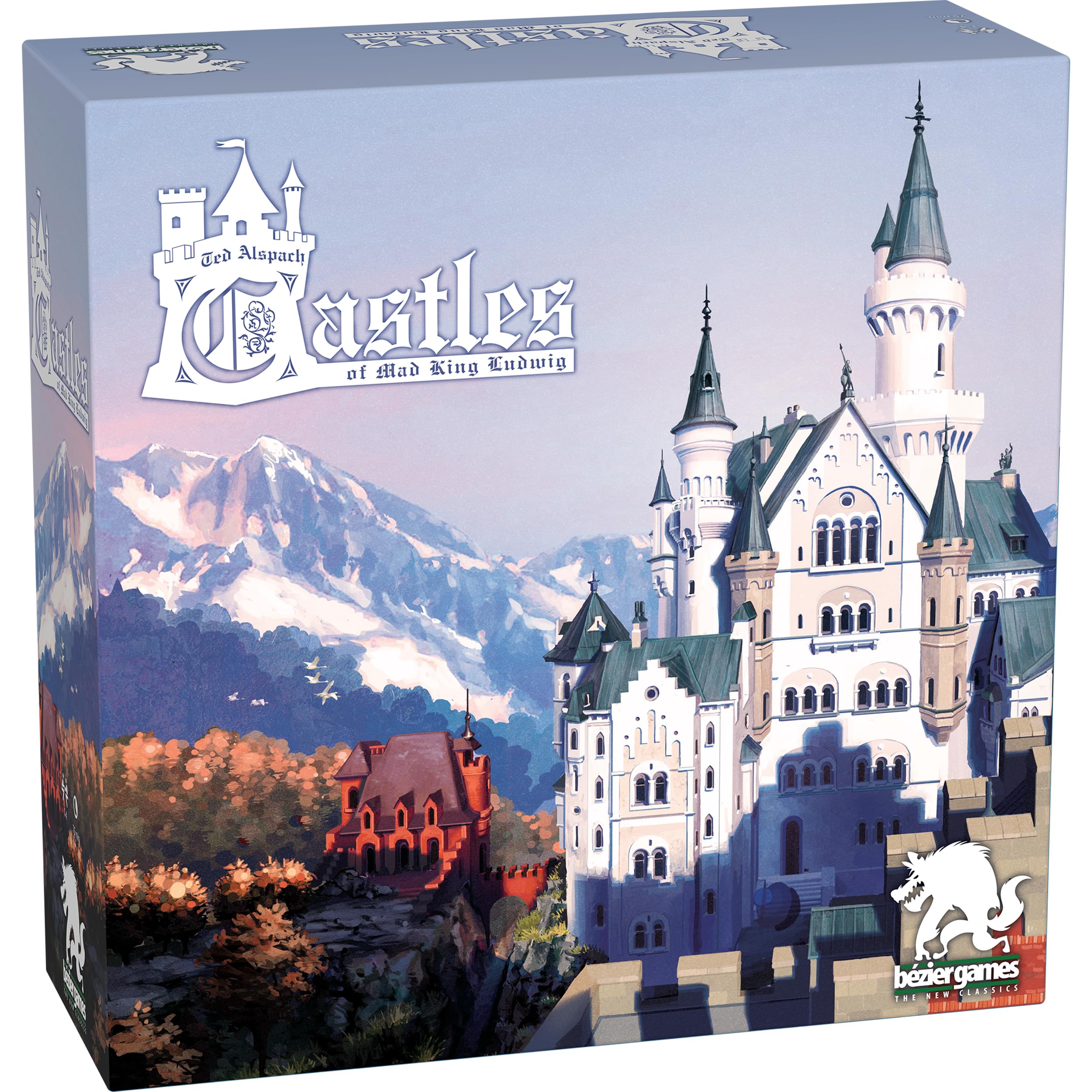
Castles of Mad King Ludwig is a tile-laying game where each player builds a sprawling royal castle room by room. The Master Builder mechanic is the standout feature — on your turn, you arrange available room tiles and set their purchase prices, so every choice you make shapes opponents’ options. Clever pricing can force rivals into suboptimal buys while funding your own expansion.
The 2nd Edition refines artwork and scoring without losing the original feel. Room adjacency bonuses, completion rewards, and private goal cards ensure no two castles look alike. The game supports 1-4 players in about 90 minutes, making it a consistent game-night candidate. The box is bulky due to lidded organization trays, but those trays make setup and teardown much faster than the first edition.
Component quality is strong with thick tile stock and vibrant art. The learning curve is moderate — new players grasp the Master Builder pricing within one round but will need a full game to internalize scoring synergies. Families will appreciate the creative freedom; hobbyists will respect the strategic depth hidden beneath the whimsical theme.
Why it’s great
- Master Builder pricing mechanic adds player interaction beyond tile placement
- High replay value from variable goals and room tile variety
- 2nd Edition trays speed up setup significantly
Good to know
- Many small pieces require organization; baggies recommended
- Setup can feel tedious despite improved trays
4. Earth

Earth is a card-driven engine builder where every player acts simultaneously — the active player chooses a major benefit, and all others gain a minor version. This simultaneous action structure keeps downtime near zero, a rare advantage in the strategy category. With over 350 unique cards, many double-sided, the starting setup can vary across 25,000 combinations, ensuring the puzzle changes each session.
Players build out a 4×4 grid of plants, habitats, and ecosystems on their personal island board. Ecosystem cards introduce public goals that shift scoring priorities, while fauna cards reward long-term synergy strategies. The FSC-certified materials reflect a genuine environmental commitment, and the art direction is clean and inviting — not intimidating despite the dense rules overhead.
The learning curve sits between Wingspan and Scythe. Most players grasp turn structure after 20-30 minutes, but optimal combo sequencing takes several games. Team mode adds a cooperative layer that works surprisingly well for mixed-skill groups. The growth tokens can tip over easily, so small containers or a playmat are helpful additions.
Why it’s great
- Simultaneous play eliminates downtime, keeping the table engaged
- Massive card library ensures no two games feel identical
- Team mode adds a fresh cooperative angle to competitive engine building
Good to know
- Analysis paralysis can slow play for deliberate thinkers
- Growth token stability is poor; containers recommended
5. The Night Cage

The Night Cage is a cooperative horror game where players navigate a shifting maze lit only by a candle. Tiles are placed as you move, but tiles behind you fade to black — you can never backtrack. This creates a constant tension that builds as the Wax Eaters stalk the party and the maze collapses around you. The candlelight theme is not cosmetic; the limited vision mechanic forces real strategic trade-offs between exploration and consolidation.
Setup takes under two minutes, and the game clocks in at roughly 40 minutes with 5 players — the shortest playtime on this list. The rules are simple: place tiles, collect keys, find the gate, and escape together. Yet the tile system introduces enough randomness that no two games play out the same. Advanced mode adds monsters and obstacles that escalate the challenge significantly.
Component quality is solid — thick tiles with eerie artwork that looks best under dim lighting. The rulebook could be clearer on edge cases, but the core loop is straightforward enough that most groups internalize it by the second round. This is an ideal pick for groups transitioning from party games to more strategic cooperative experiences.
Why it’s great
- Innovative tile-vanish mechanic creates genuine spatial tension
- Fast setup and short playtime suits groups with limited attention
- Advanced mode adds meaningful difficulty layers
Good to know
- Rulebook clarity is average; some edge cases need houseruling
- Best atmosphere requires dim lighting to fully appreciate
6. The Taverns of Tiefenthal

The Taverns of Tiefenthal puts you in the role of a tavern host who drafts dice to serve guests, earn gold, and upgrade the establishment. The game is structured into five modules, allowing groups to start with the base game and layer in complexity — Schnapps production, employee recruitment, and royal patron systems — as they grow comfortable. This makes it one of the most accessible gateways into medium-weight Euro strategy.
Dice drafting here is not purely random; the choice of which dice to take and how to allocate them to guest cards or upgrades creates meaningful trade-offs every round. Simultaneous play keeps the pace around 60 minutes even with 4 players. The theme is surprisingly sticky — the pub setting makes resource conversion feel intuitive rather than abstract.
Component quality is mixed: the dice are standard weight but the cardboard tokens are functional. The player boards feature coaster-like tracks where dice can accidentally slide off if bumped — a small annoyance in an otherwise polished production. Setup is slightly cumbersome due to multiple module decks, but the rulebook handles modular integration clearly.
Why it’s great
- Five modules let you scale complexity to your group’s comfort level
- Dice drafting with meaningful choice rather than pure luck
- Fast 60-minute playtime with simultaneous turns
Good to know
- Dice on coaster tracks can be knocked out of position easily
- Module sorting adds setup time before first play
7. Devir – The White Castle
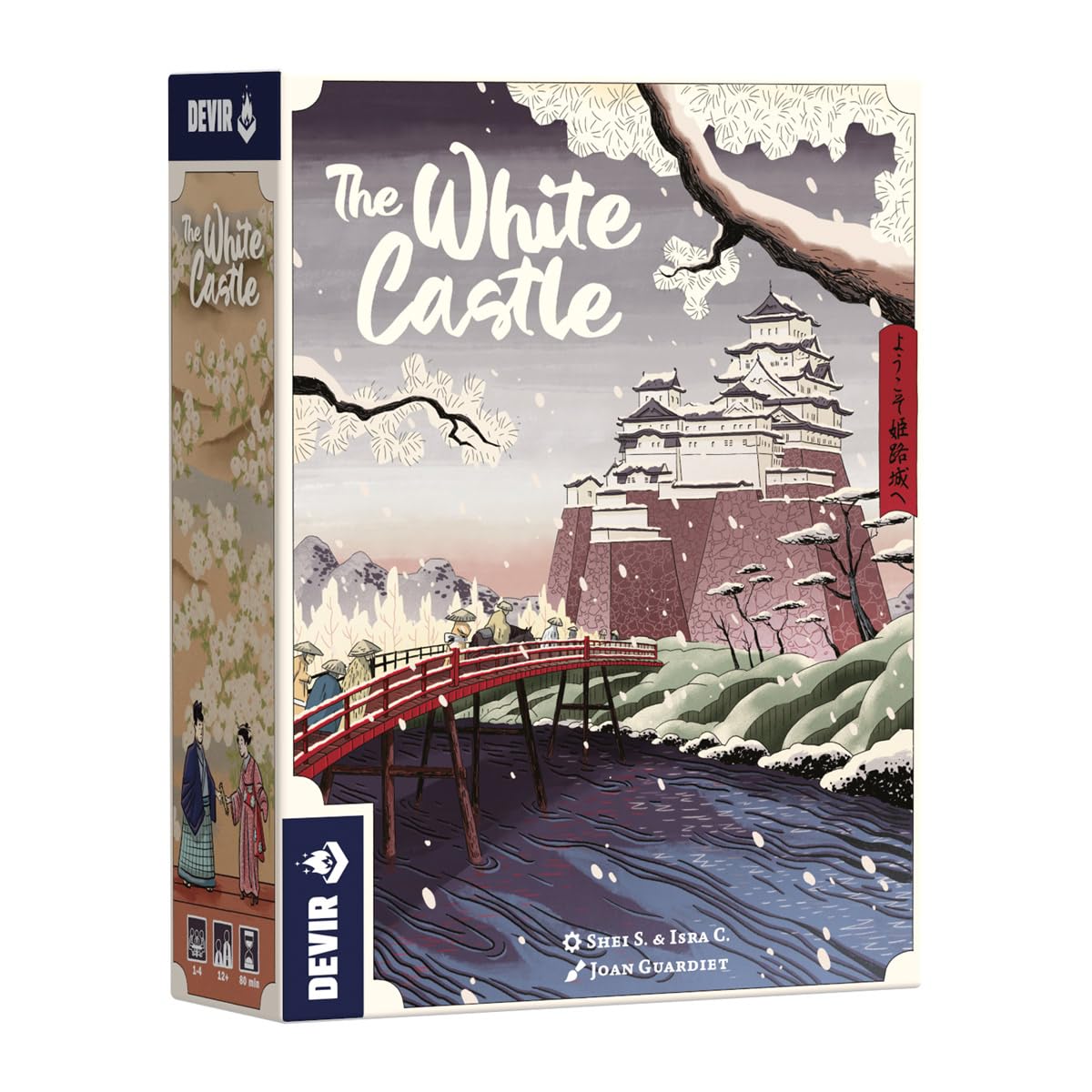
The White Castle packs a full Euro experience into a compact box with an elegant dice-placement system. Set in feudal Japan’s Himeji Castle, each player leads a clan by allocating dice to manage resources, send workers to gardens or castle guard posts, and rise through noble ranks. The action economy is punishing — only 9 turns per player — so every die placement must advance one of several scoring paths simultaneously.
Despite its small footprint, the game delivers surprising depth. The dice determine both what actions are available and their efficiency, creating a spatial puzzle on the player board. Combination bonuses are frequent and satisfying: a single move can trigger a cascade of resource conversions and point gains. Storage is exceptional — the insert holds all components neatly, no baggies required.
The solo mode is excellent, offering a tight challenge against an automated opponent with minimal overhead. Multilanguage support includes English, Spanish, and Portuguese. The recommended learning time is 20 minutes, and most players grasp the core loop after one full round. This is the ideal choice for groups with limited shelf space who refuse to compromise on strategic weight.
Why it’s great
- 9-turn game forces tight, high-impact decisions every round
- Compact box with excellent component storage
- Strong solo mode with easy AI management
Good to know
- Multilanguage components may require sorting before first play
- Short playtime may leave some wanting more depth per session
FAQ
What makes a board game a Eurogame versus a standard strategy game?
How important is the average playtime when choosing an adult strategy board game?
Can adult strategy board games be played solo effectively?
Final Thoughts: The Verdict
For most users, the best adult strategy board games winner is the Le Havre because its deep resource economy and player-owned building system reward repeated plays without ever feeling solved. If you want HEAT: Pedal to the Metal, you get fast-paced hand management with modular tracks that keep every race fresh. And for creative optimization that welcomes new players, nothing beats the tile-laying cleverness of Castles of Mad King Ludwig.